
10 Small Space Ideas for Tiny Apartments and Awkward Corners

No bay window. No landlord who answers texts. No drill. Those three facts kill most corner projects before they start, and they are exactly the constraints this list is built around.
Every idea below works in a rental, in under 40 square feet of floor, with tools you probably already own. Prices and dimensions come from IKEA and Target listings checked in September 2026, so the numbers are numbers, not guesses.
Here is what most small space ideas get wrong. They hand you a chair and a plant and call it finished. A corner that gets used has three parts working at three different heights, and it sits outside the path your feet already take. Get those two things right and the corner stops being where the laundry pile lives.
Ten ideas, ordered the way I would actually do them. Start with number one tonight. It costs about three dollars.
1. Tape your walking lane before you buy a single thing
Painter’s tape costs about three dollars and saves you a return trip to the store. Before anything else, mark the path your feet already take through the room, then leave it alone. A corner that narrows a main lane below 30 inches gets resented, then emptied, usually within a month.
Here is the order that works:Walk the room the way you do at 7am. Tape both edges of that lane on the floor.
Measure it. Under 30 inches wide, the corner plan has to shrink. Over 36 inches, you have room to spare.
Tape the outline of the chair or shelf you want, at its real depth, in the leftover space.
Live with the tape for two days. If you step on it, the piece is too big.
If the tape survives the weekend, buy the thing. If you want the whole-room version of this, the small living room layout ideas for a real floor plan post runs the same test across every wall.
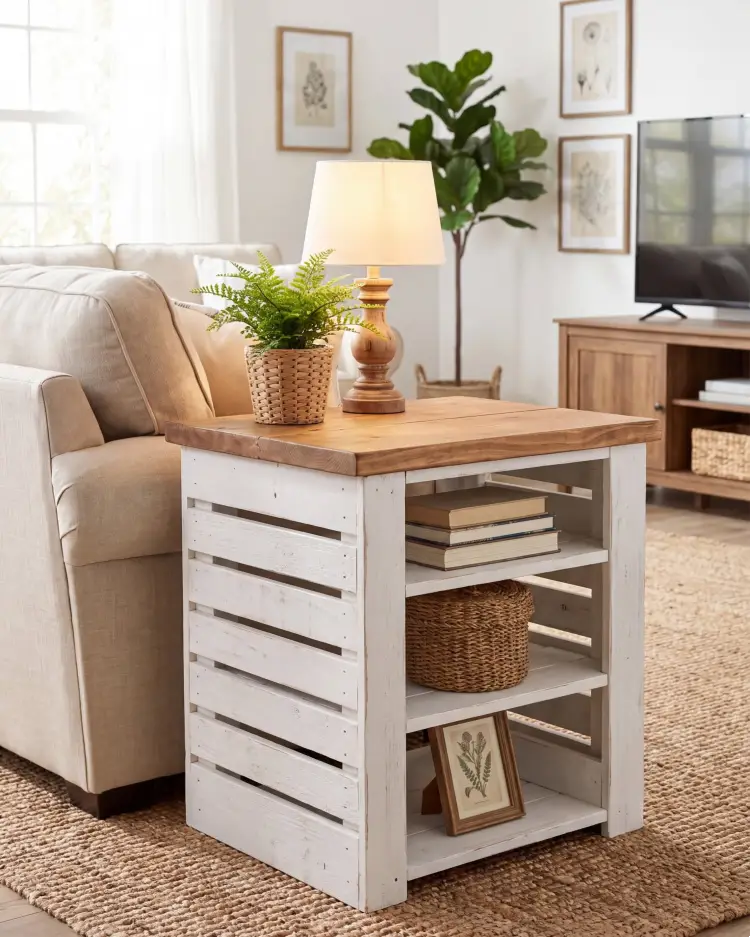
2. Give the corner three jobs at three heights, not one
Most empty corners fail for the same reason. They get one object instead of a working set. A single tall plant reads as a plant standing in a corner. A chair with nothing near it reads as a chair nobody sits in.
The fix I use is a rule I call the Corner Triangle. Three elements, three heights, and the corner starts behaving like a room instead of a leftover.Miss the middle one and the corner goes dark at night, which is when you would actually use it. Warm living room lighting that works after dark covers the fix in full.
[NO IMAGE PROMPT: the Corner Triangle card grid carries this entry.]
3. Size the chair to the corner, not to the room
Measure the chair, not the corner. People skip that step, then wonder why the corner technically fits and practically blocks everything.
An IKEA POÄNG runs 26 3/4 inches wide and 32 1/4 inches deep, with a seat 16 1/2 inches off the floor. Depth is the number that bites. On an 8-foot wall, that chair eats a third of your floor before you add a table.
Trade-off worth saying out loud: a deep frame chair is comfortable for an hour and awkward in a 10-foot room. A slim armless chair loses about 8 inches of depth and about half the sink-in.The full walkthrough of turning a dead living room corner into a reading nook covers the clearance test in detail.
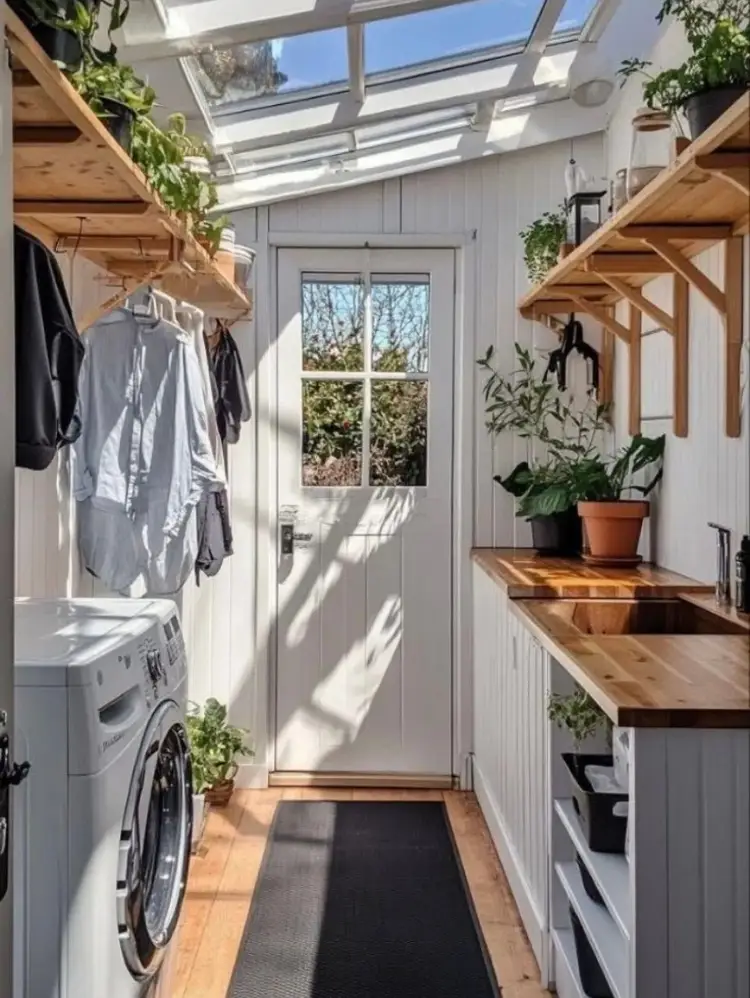
4. Put the light at shoulder height, and make it 2700K
Overhead light flattens a corner. It drops shadows straight down, which is exactly wrong for reading and exactly why your corner looks better in photos than it feels at 9pm. Light that arrives from the side, around 40 to 50 inches off the floor, is the whole difference.
Color temperature matters as much as position. The Department of Energy’s guide to buying energy efficient light bulbs describes 2700K as friendly and personal, and 4100K as neat and clean, which is a polite way of saying office. Buy warm.⚠️ Watch Out
Safety note: anchor tall furniture to the wall, keep candles and cords away from fabric, and use a licensed electrician or contractor for hardwired lighting, ceiling mounts, or anything structural.
Plug-in wins for renters every time. A cord run down the wall and clipped along the baseboard costs you nothing at move-out, and it takes about ten minutes.
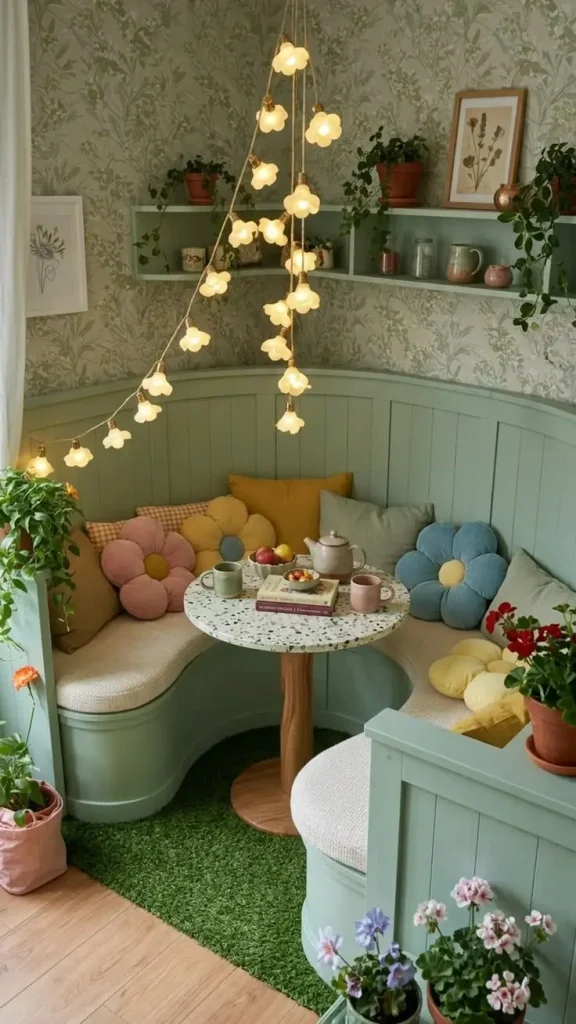
5. Zone the corner with a tension rod instead of a wall
Renters get told to skip room dividers. Wrong call. A curtain on a spring tension rod does most of what a divider does, costs a fraction of it, and leaves nothing behind.
A Room Essentials tension rod at Target adjusts from 48 to 84 inches, holds up to 20 pounds, and runs $25.00. That is enough for a light linen or cotton panel, which is all a corner needs. It is not enough for blackout velvet, so match the fabric to the rating and not the other way around.Mount it inside a flat alcove or between two walls, where the rod has real bite.
Hang a light panel that stops an inch above the floor so it never drags.
Decorative molding as a mounting surface. The rod slips, usually at 2am.
Heavy blackout fabric on a spring rod rated for 20 pounds.
The sound change surprises people more than the look does. A fabric panel takes the hard edge off a bare corner, and voices stop bouncing.
6. Go vertical, then read the weight rating before you fill it
Vertical space is free. Weight capacity is not. This is where most corner shelf plans quietly fail, because the narrow tall unit that fits the corner is rarely built for what you want to put on it.
An IKEA VITTSJÖ in the narrow size stands 68 7/8 inches tall on a footprint of 20 1/8 by 14 1/8 inches, sells for $59.00, and carries 15 pounds per shelf. That is roughly ten to twelve average hardcovers, by my estimate, not a library. IKEA’s own listing carries a tipping hazard warning and says outright that it must be anchored.Before you load a corner shelf
If kids or pets share the room, treat this as non-optional and read the CPSC furniture anchoring guidance before the shelf goes up. Tip-overs are the failure mode nobody plans for.
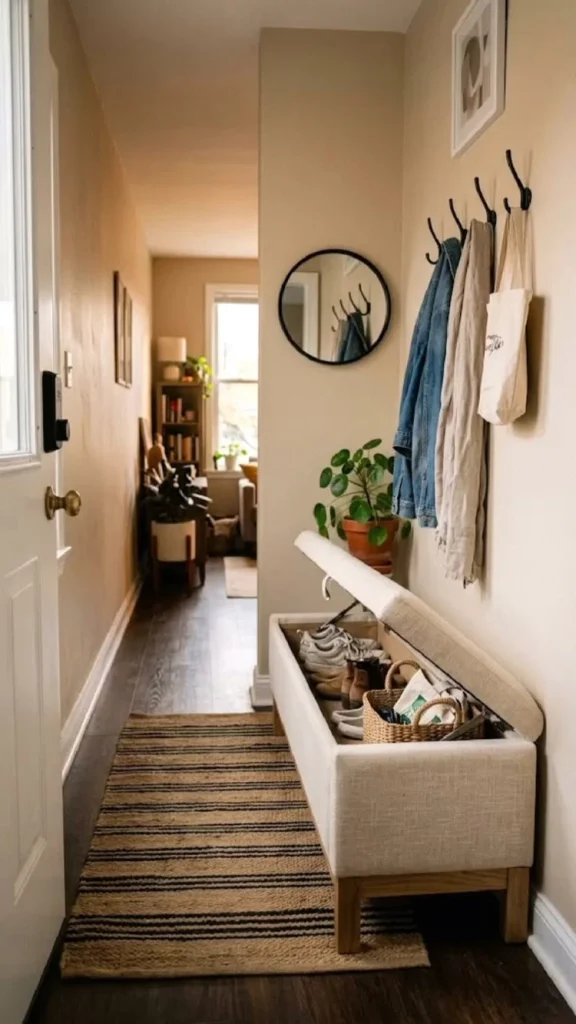
7. Match the idea to the corner shape you actually have
Not every corner is square. Radiators, diagonal cut-offs, and the wedge behind a door all behave differently, and the reason most small space ideas fail in real apartments is that they assume a clean 90 degree meeting of two flat walls. Sort yours first.
Stand in the doorway and name which of the five below you are actually dealing with. That answer changes what you should buy far more than your style does.| Corner you have | What actually works there |
|---|---|
| Behind a door that swings open | Nothing deeper than 12 in. Hooks, a slim ladder shelf, or leave it. |
| Radiator in the corner | A vented cover as a surface. Never fabric or plants directly against it. |
| Diagonal cut-off wall | A round table or pouf. Round shapes forgive angles that rectangles fight. |
| Between two windows | Low and soft only. Keep the sightline clear so daylight still crosses. |
| Corner your sofa already eats | Go up. A picture ledge or plant shelf above the sofa back. |
Screenshot that table before you order anything. It is the five minutes that saves the return.
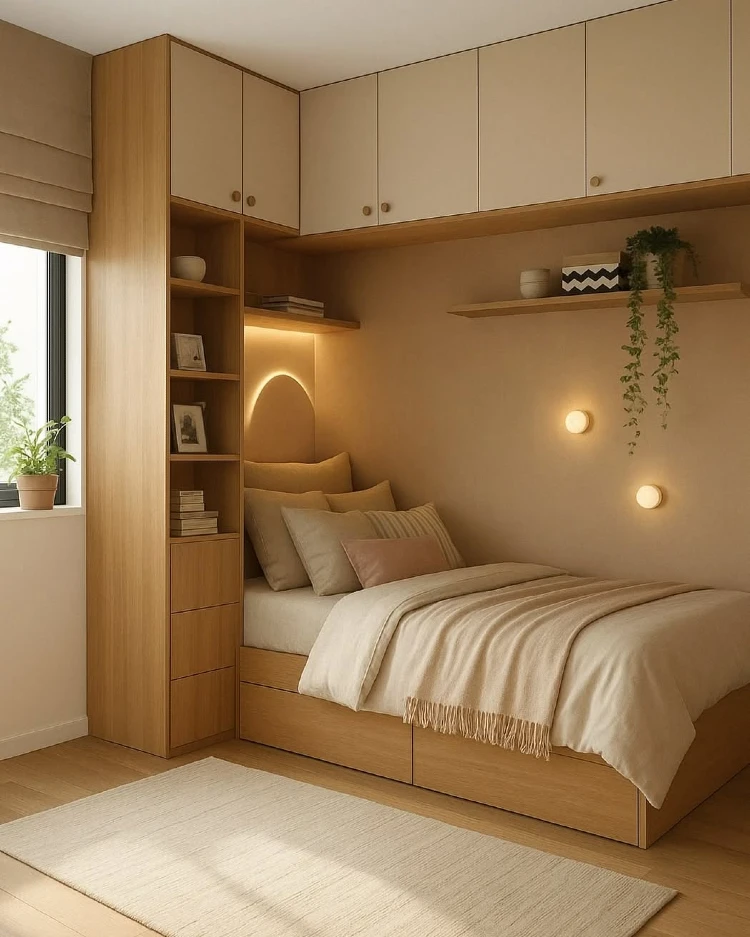
8. Total the corner before you buy it, floor inches included
Three pieces. Two hundred fifty-nine dollars. One afternoon. Here is a full corner priced from live IKEA listings in September 2026, with the number nobody else publishes: how much floor each piece actually takes.| Piece | Archetype | Floor it eats | Price |
|---|---|---|---|
| 🪑 Seat | IKEA POÄNG armchair | 26 3/4 x 32 1/4 in | $149.00 |
| 💡 Light | IKEA HEKTAR floor lamp, 71 in tall | 13 in base | $89.99 |
| ☕ Surface | IKEA GLADOM tray table, 20 5/8 in tall | 17 1/2 in round | $19.99 |
| Total | Bulb sold separately | about 9 sq ft | $258.98 |
Nine square feet is the honest cost of a working corner. If your taped outline from entry 1 is smaller than that, drop the armchair and run a floor cushion instead. Prices move, so check before you cart.
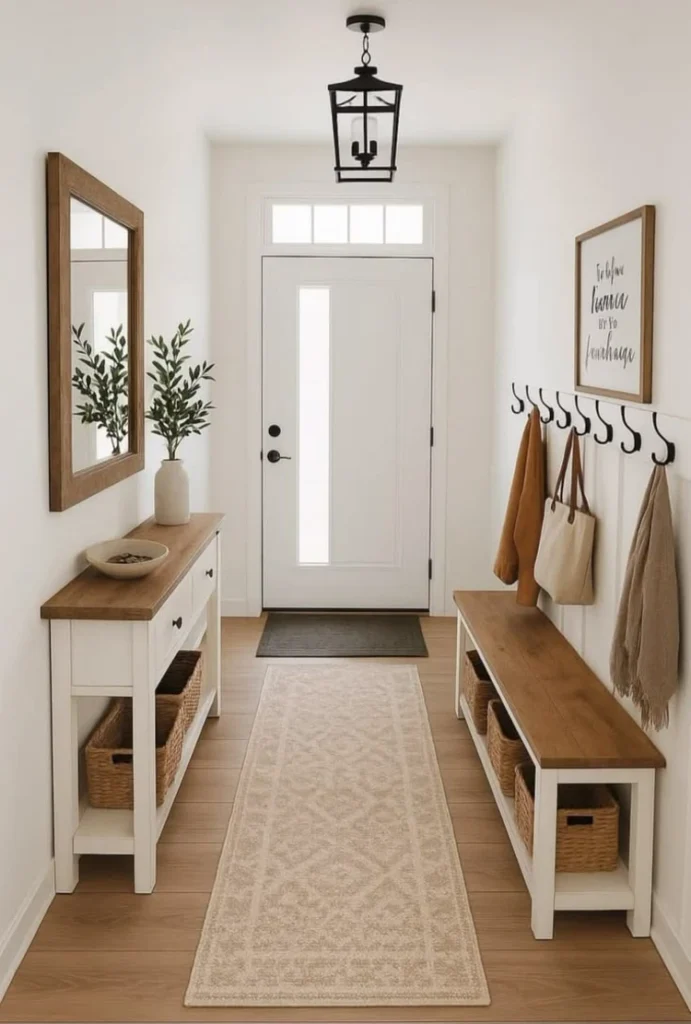
9. Add the soft layer last, and add it low
Soft goes last. Buying textiles first is the mistake almost everyone makes, mine included, because fabric is the fun part and a rug feels like progress. What actually happens is you buy a rug sized to the room, then discover the chair legs sit half on and half off it, and the whole corner reads unfinished forever.
Put the rug down after the furniture is placed, sized so all four legs land on it with at least 4 inches to spare. Keep the pile under half an inch so chair legs do not rock.Rug bought first, chosen for the room. Two chair legs on, two off. The corner tilts and never quite settles.
Rug bought last, sized to the taped outline. All four legs on, 4 inches of margin, low pile. The corner reads as one piece.
Then add the throw, and pick one you can actually wash. Wool feels better on the shoulders in January than anything else at the price, and it holds warmth without weight.
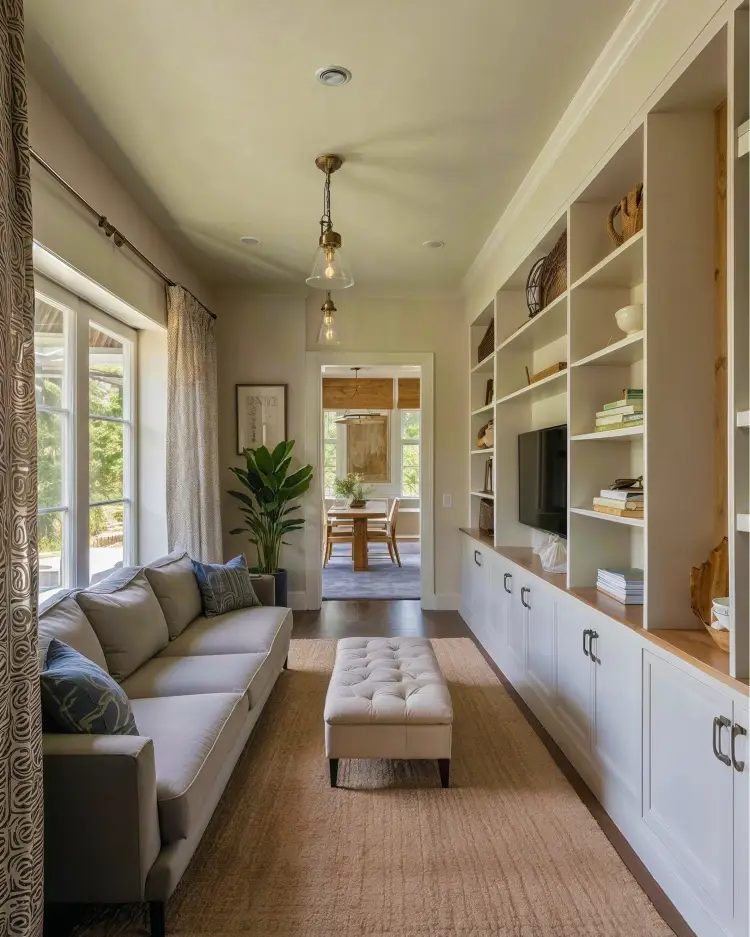
10. Leave one corner empty on purpose
Here is the entry nobody else will give you. One corner in your apartment should stay empty, and it is usually the one directly across from where you sit.
Small rooms read as small when every edge is occupied. The eye needs somewhere to stop. A bare corner with nothing but wall and floor gives the room a breath, and it makes the corner you did style look deliberate instead of desperate.Style one corner well and the room looks intentional. Style all four and it looks full. Empty is a choice, not a to-do item.
Nine corners of effort, one corner of restraint. That ratio is the whole trick.
Frequently Asked Questions
What should you do with an awkward corner space?
Give it one clear job first, then buy for that job. A corner works when it holds three things at three heights: a seat or surface around knee level, a light at shoulder level, and something soft or green above eye level. Decide the job before you shop, and measure your walking lane so the corner never blocks the path.
What can you put in an empty corner space?
The reliable options in a small apartment are a single armchair, a narrow shelf unit under 21 inches wide, a round side table against a diagonal wall, a floor cushion with a plug-in light, or a curtained zone on a tension rod. Match the piece to the corner’s shape and to how much floor you can actually spare.
How do you maximize space in a tiny apartment?
Work vertically and measure before buying. Tape furniture outlines on the floor first, keep main walking lanes at 30 inches or wider, choose pieces under 15 inches deep for tight spots, and use walls for storage instead of floor. Buying one correctly sized piece beats buying three that almost fit.
What should you put in a small corner of your room?
Something under 21 inches wide with a light beside it. A slim leaning shelf, a stool with a plug-in sconce above, or a round table 17 to 18 inches across all fit where a chair will not. Keep the depth under 14 inches so the piece does not push into the room’s usable floor.
What do you put in an odd corner of a living room?
Round shapes forgive odd angles that rectangles fight. For a diagonal cut-off wall, use a round table or pouf. For a radiator corner, a vented cover doubles as a surface. Behind a swinging door, stay under 12 inches deep. For the corner a sofa already eats, go up with a picture ledge.
What are the current small apartment trends right now?
Pinterest’s 2026 forecast leans toward comfort and personality over minimalism, with named color directions including Persimmon, Jade, Plum Noir, Cool Blue and Wasabi. On the home side, its 2026 trend list features bolder decor such as Neo Deco geometry and Afrohemian textiles. Warm neutrals with one saturated accent remain the safest small-space read.
One more thing before you start
Pick the corner you walk past most, not the one you can see from the couch. That is the one that will annoy you until you fix it, and the one you will actually use once you do. Tape the lane tonight, buy nothing for two days, then work through the Corner Triangle in order: seat, light, soft.
Small space ideas only pay off when they survive contact with a real Tuesday. These do.
Save this to your small space board so the numbers are there when you are standing in the aisle deciding.
Keep reading
More cozy nook ideas
 Small Spaces
Read →
Small Spaces
Read →
14 Modern Apartment Decor Ideas That Make a Small Room Feel Bigger
Four hundred and sixty square feet. That is the average size of a new US studio apartment, according to RentCafe’s 2025 numbers,…
 Small Spaces
Read →
Small Spaces
Read →
Small Bathroom Storage Ideas for Renters Who Can’t Drill a Single Hole
Most small bathroom storage ideas quietly assume you own the walls. You don’t. So here’s the version that works when your only…
 Small Spaces
Read →
Small Spaces
Read →
Cottagecore Dorm Room Ideas That Work Around a Twin XL, a Roommate, and an RA
No drilling. No painting. Half a room, one Twin XL, and a wall in a color somebody else picked in 1997. A…
5 Comments