
18 Rustic Cabin Ideas for Small Spaces That Actually Fit One Corner

Warm lamplight on one wall of visible grain. A seat low enough to sink into. A wool throw that has clearly been sat on rather than styled.
That is the whole feeling, and none of it requires a cabin.
Most rustic cabin ideas online are written for someone with forty feet of log wall and a stone hearth. You have a rental, one awkward corner, and a lease that says no holes. Those are different problems, and only one of them gets solved on the internet.
So this list is built at corner scale. Every idea fits a space smaller than a parking spot, leads with the version that leaves no mark on the wall, and names its own downside instead of pretending there isn’t one.
Start with entry one. Three pieces, one afternoon, and the corner reads cabin before you have bought a single decorative object.
1. Build the Corner From Three Pieces, Then Stop
Cabin corners fail for a dull reason: people buy decor before they buy a seat.
Three things carry the whole look. A seat you can stay in for an hour. A light source under eye level that runs warm. One surface with visible wood grain. Everything else, the throws and the lanterns and the little brass things, sits on top of those three and cannot rescue them.
Get the three right and the corner works on day one, empty. Get them wrong and no amount of plaid fixes it.
html
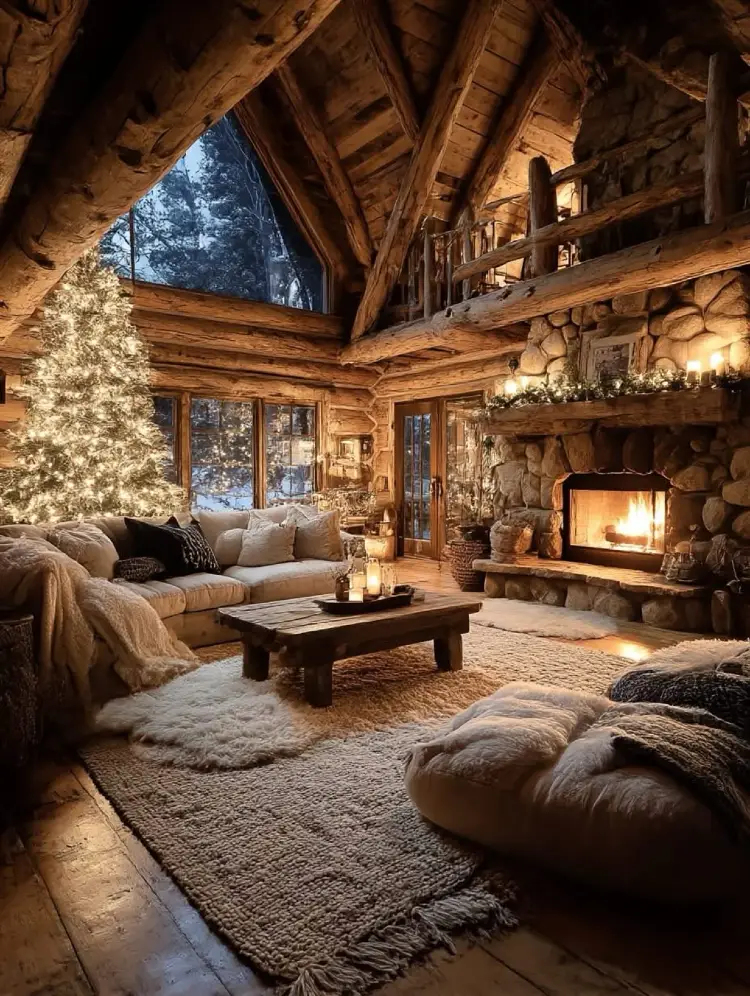
2. Cap the Corner at Two Wood Tones
Five wood tones read fine across forty feet of log wall. Across a six foot corner they read like a lumber yard.
Here is the contradiction nobody resolves. Every big cabin article tells you dark wood equals rustic, then admits a few paragraphs later that dark wood absorbs light and can make a small interior feel snugger and smaller than it actually is. Both statements are true. In a real cabin the windows are enormous and it does not matter. In your corner it matters a lot.
So cap it. Two wood tones maximum, plus one texture that is not wood. Pinterest’s own 2026 direction is already moving this way, favoring lighter oak, ash, and whitewashed pine with finishes that show the grain instead of hiding it.
In a corner under 100 square feet, use two wood tones and one non-wood texture. A third tone is the exact point a small rustic corner starts to read cluttered instead of collected.
3. Change the Bulb Before You Change Anything Else
Swap the bulb before you spend a dollar on anything else. One bulb costs less than any other move on this list and changes more than all of them.
Warm residential lighting lives between 2700K and 3000K, which reads amber and close to candlelight. Push past 3500K and the same corner, same chair, same throw, goes flat and office-like. Colour temperature is printed on the Lighting Facts label on every box, so you do not have to guess.
Worth knowing before you buy a stack of them: lighting runs about 15% of an average home’s electricity use, and LEDs use up to 90% less energy and last up to 25 times longer than old incandescents, according to the Department of Energy’s guide to lighting choices.
| 2700K warm white | 4000K neutral white |
|---|---|
| Amber cast, closest to candlelight | Clean white cast, closest to an office |
| Makes brown wood look warmer and redder | Makes the same wood look gray and dusty |
| Right for the corner lamp | Right for the kitchen, wrong here |
4. Put the Wood on One Wall, Not Four
Renters usually get told to skip the wood wall entirely. You do not have to.
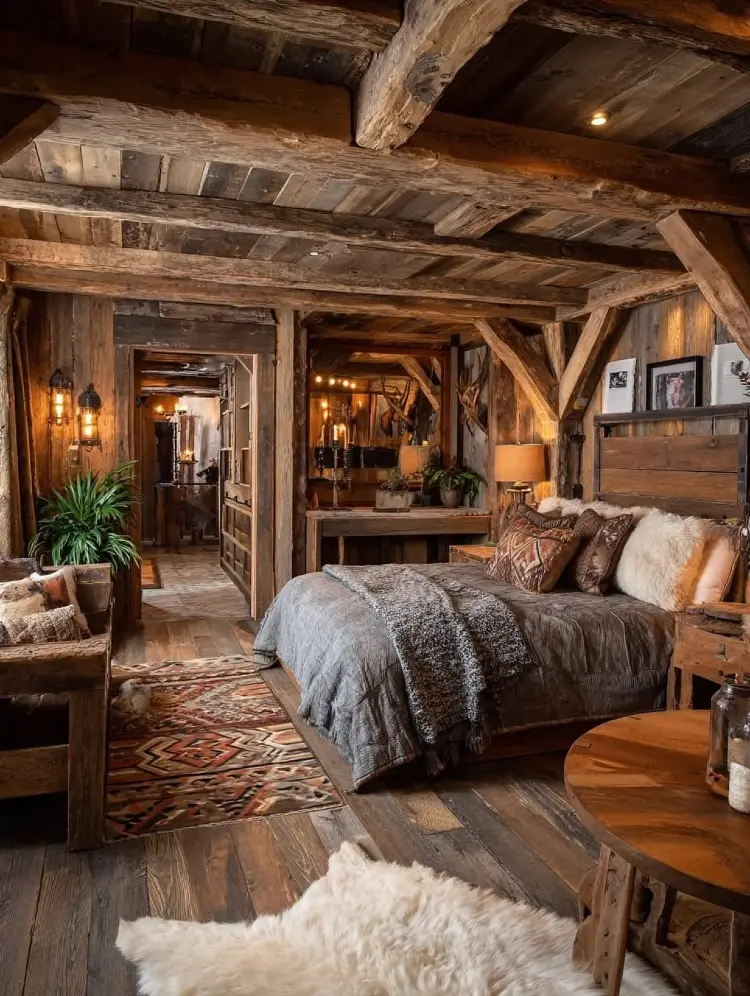
Peel-and-stick wood planks cover a small area without a single screw, and the area is the whole trick. Do not wrap the room. Do one panel behind the chair, roughly the width of a chimney breast, and let it act as a backdrop rather than a finish.
Stick one plank low behind furniture and leave it a full week. If it lifts, or if the paint lifts with it, you found out for the price of one plank.
Mark your panel width in painter’s tape before you commit. Most people go too wide and lose the backdrop effect.
Run planks vertically in a low-ceilinged room, horizontally in a narrow one. It is the same product doing two different jobs.
The honest downside: on old or chalky paint, removal can take a layer with it. Test first, every time.
5. Pick a Seat by Its Seat Height, Not Its Looks
Seat height does more work here than upholstery does.
Take the IKEA Poäng, the archetype for this kind of corner. It measures about 26¾ inches wide and 32¼ inches deep, with a seat front sitting 17⅜ inches off the floor and 19⅝ inches deep. That low, deep seat is why people stay in it. Its bentwood frame is deliberately springy, a design choice from the original 1972 version.
Now the trade-off. At 32¼ inches deep it eats a genuine chunk of a small room, and a dining chair pulled into the corner does not hold a reader past about twenty minutes. Depth is comfort. Depth is also floor space. Measure before you fall in love.
6. Give the Awkward Corner a Diagonal
Square corners are the meanest shape in a small apartment. Two walls meet at ninety degrees, furniture gets shoved flat against both, and the result looks like a waiting room.
Angle the chair forty-five degrees into the room instead. You lose a few inches of floor and gain a triangle of dead space behind the chair, which is exactly where the lamp base, the log basket, and the cord all disappear. The corner stops reading as leftover space and starts reading as a destination.
If your corner is genuinely tiny, the diagonal is usually the first move to try, and these ten small space ideas for awkward corners cover the rest of the layout problem.
Set the diagonal in four moves
7. Let One Wool Throw Do the Texture Work
Folded throws read like store displays. The ones that read like a real small rustic cabin have been sat under, pushed aside, and left where they landed.
Weight is the part people skip. A thin decorative throw drapes limply and photographs thin. A heavier wool or a chunky knit holds its own shape over a chair back, catches the lamp light across the ridges, and actually keeps you warm enough to stay put, which is the entire point of the corner.
html
- ▸One throw per chair. Two starts to look like a linen closet exploded.
- ▸Over the back corner at an angle, never squared across the seat.
- ▸Wool, mohair, or a chunky knit. Fleece goes flat under lamp light.
- ▸Solid or a quiet stripe if the corner already has a pattern anywhere else.
8. Stack Split Logs Where There Is No Fireplace
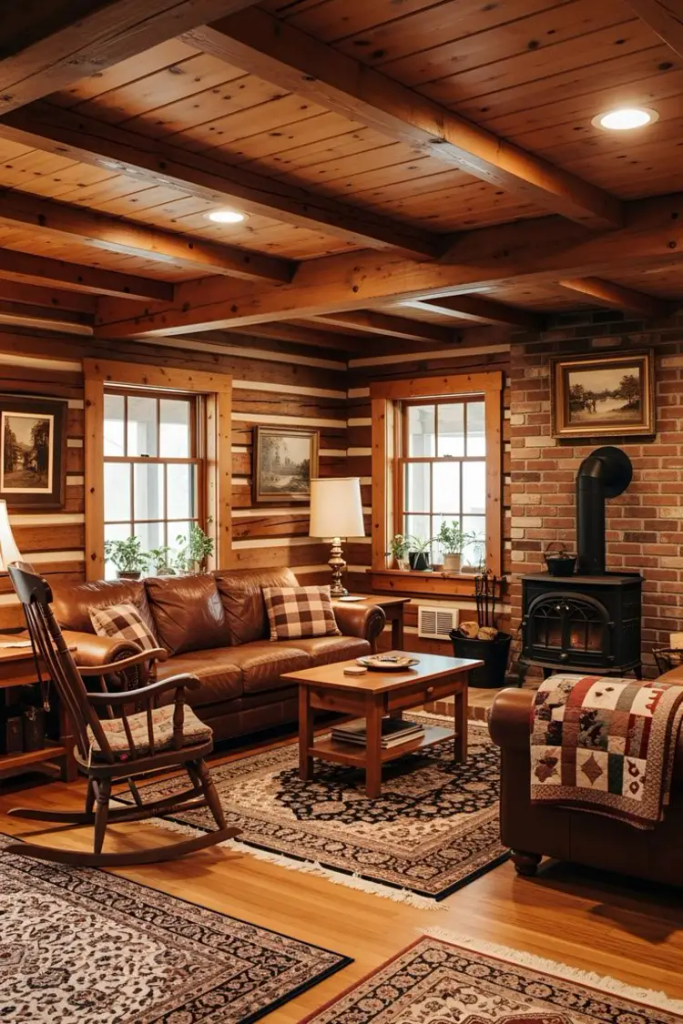
Split logs do the fireplace’s job without a fireplace. It is the single most recognisable cabin signal available to an apartment, and it costs you a basket and a trip.
A flat woven basket of split birch or oak beside the chair reads as hearth even when there is no hearth anywhere in the building. Cut ends face out so the growth rings show. Mixed diameters look real. Uniform diameters look like they came from a catalogue, because they did.
An empty stretch of wall beside the chair, with a phone charger and a power strip as the only things on the floor.
A low flat basket of split birch, cut ends out, sitting exactly where the power strip used to live.
Keep the bark outside if you can. Firewood brings insects indoors, which is a genuinely unglamorous thing nobody mentions in the pretty posts.
9. Stand One Tall Bookcase, Anchored to the Wall
One bookcase at roughly 79 inches tall does more for a small rustic cabin corner than three short ones ever will. Height pulls the eye up, which makes a low-ceilinged rental read taller rather than fuller.
The IKEA Billy is the archetype worth knowing by number. The standard US frame runs about 31½ inches wide, 11 inches deep, and 79½ inches tall. That last figure is the one to check at your door, because many US interior doors sit around 80 inches before trim and flooring eat into the clear height. Its shelf pins step in 32 millimetre increments, which is how you get a genuinely tall bottom bay for oversized books.
Eleven inches of depth is shallow enough to sit in a corridor or a corner without blocking a walkway, and if you want the whole wall rather than one unit, these library wall ideas for one blank wall scale the same idea up.
⚠️ Watch Out
Safety note: anchor tall furniture to the wall, keep candles and cords away from fabric, and use a licensed electrician or contractor for hardwired lighting, ceiling mounts, or anything structural. If your lease rules out the small hole an anchor strap needs, choose a low unit instead and put the height into art.
10. Use Plaid Once, Then Put It Away
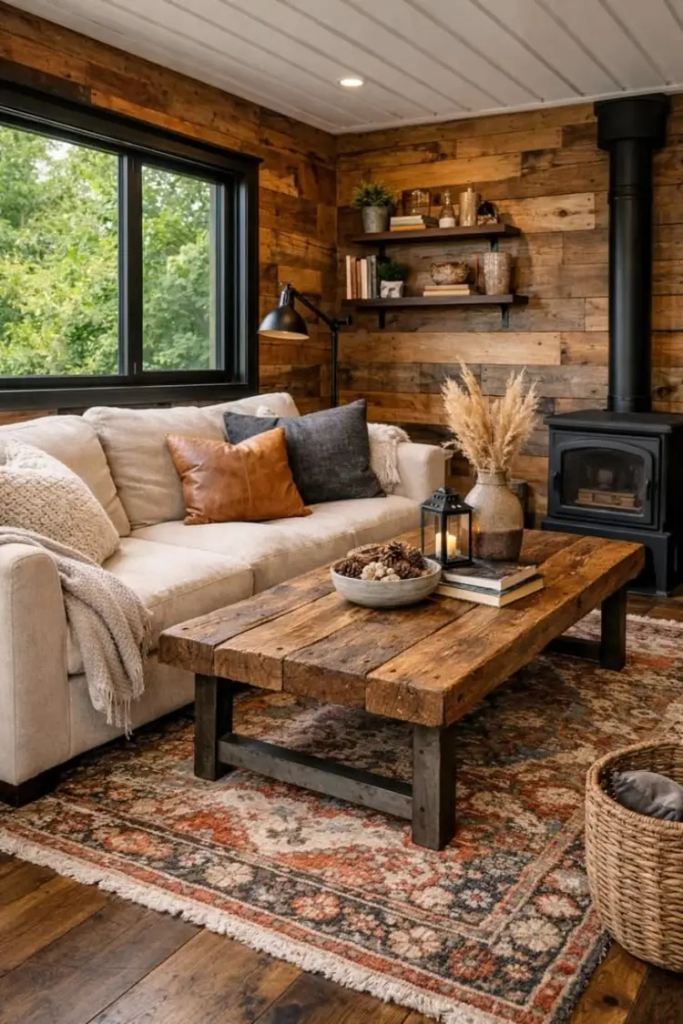
Plaid turns on you fast. One buffalo check pillow reads cabin. A plaid pillow plus a plaid throw plus a plaid curtain reads like a themed restaurant, and in a small space the tipping point arrives about three objects sooner than it would in a real cabin.
Treat it as a punctuation mark rather than a palette. One patterned object per corner, sized small, placed low, with everything around it solid and textural.
html
One check or plaid piece, no bigger than a lumbar pillow.
Let texture carry the rest: wool, jute, leather, raw wood.
Matching plaid sets sold as a bundle.
Antlers, bear silhouettes, and lettered signs about lake life.
11. Put Sheepskin on the Seat, Not the Floor
Sheepskin on the floor gets stepped on, flattened, and eventually vacuumed into a sad grey mat. It is the most common misstep in this whole look.
Move it up. Draped over the seat or the chair back, it stays fluffy, catches lamp light along the tips of the wool, and sits exactly where your body actually touches it. A single hide is enough for one chair. Two hides on one chair looks like an upholstery accident.
Where soft things actually belong
12. Trade the Open Flame for a Lantern
About twenty home candle fires get reported across the US every single day, and roughly three in five start because something that burns was sitting too close to the flame. In a corner packed with wool, paper, and a linen curtain, that is not an abstract risk.
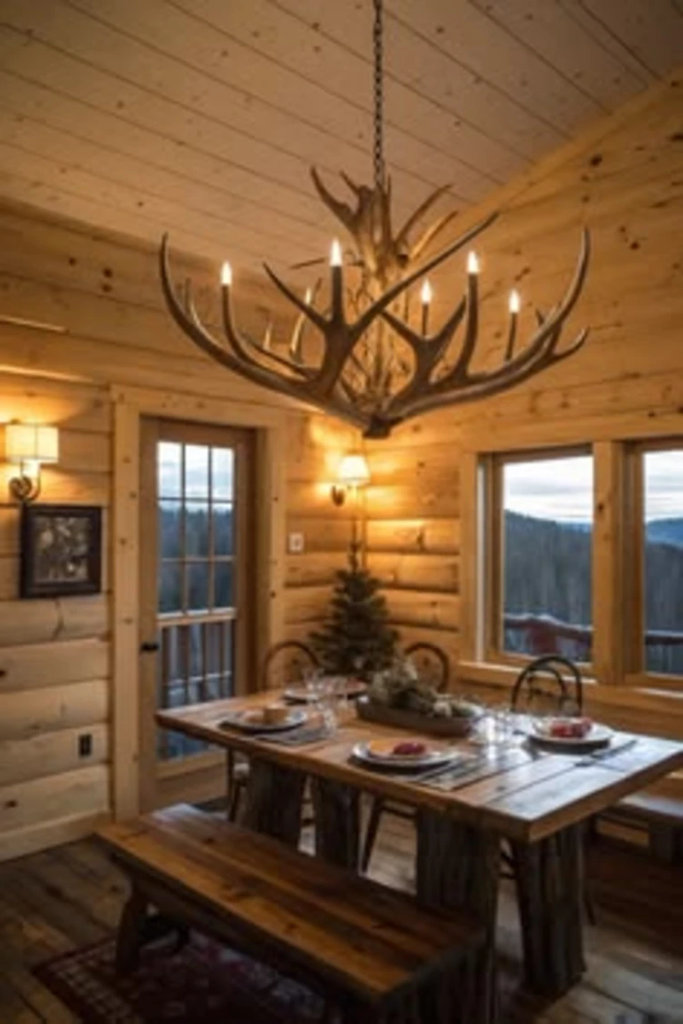
The guidance is simple and specific: keep a lit candle at least twelve inches from anything that can burn, put it out when you leave the room, and skip open flames where people fall asleep. Flameless options now look, smell, and flicker close enough to the real thing that the corner loses nothing, as the U.S. Fire Administration’s candle safety guidance lays out.
💡 Quick Tip
A metal or glass hurricane lantern with a flameless pillar inside gives you flicker plus a real cabin silhouette, and you can leave it running while you fall asleep mid chapter.
13. Hang a Cafe Curtain on a Tension Rod
Measure the window frame’s inside width first, then subtract nothing. A tension rod wants to press against both sides of the recess, which is precisely why it needs no bracket, no screw, and no conversation with a landlord.
A cafe curtain covers the bottom half of the window only. You keep the daylight up high where you read and lose the view of the parking lot down low, which is the trade most rentals need.
Measure the inside recess width and buy a rod whose range sits in the middle, not at its stretched limit.
Set the rod at the halfway point of the glass, or slightly above if the window is short.
Choose unbleached linen or a small check in the same family as your one patterned object from entry ten.
Tension rods do slip on glossy paint. Check it after a week before you trust it with anything heavy.
14. Paint One Small Surface Forest Green or Clay
Green or clay, pick one and put it somewhere small. Whole painted walls are where renters get stuck, and they are not necessary for a rustic cabin look in a small room anyway.
Paint the back panel of a bookcase. Paint a single leaning shelf. Paint a plywood board cut to size and lean it behind the chair as a removable backdrop that leaves the wall exactly as you found it. Colour delivered in a small dense patch reads richer than the same colour spread thin across four walls.
15. Keep a Wood Surface Within Arm’s Reach
Reach matters more than style on a side table. A mug you have to stand up for is a mug you stop making.
Match the table to the chair rather than to the room. With a seat front sitting around 17 inches off the floor, a surface somewhere between 17 and 20 inches tall lands at natural forearm height, so you can set a mug down without looking. Go much taller and you are reaching up and over the arm. Go much lower and everything tips.
Round beats square in a tight corner, since there is no sharp edge to catch your shin on the way past. If the corner opens onto a living room, these coffee table ideas for a small living room work off the same reach logic.
| Lands right | Lands wrong |
|---|---|
| Roughly level with the chair’s seat front | Dining height, which forces a reach up and over |
| Round or oval, no shin-catching corners | Sharp square edges in a walking path |
| Visible grain, oiled rather than glossed | High-shine lacquer that bounces the lamp back at you |
16. Buy One Old Thing, Not Ten
Ten thrifted objects look like a booth at a flea market. One looks like you have lived somewhere.
Pick a single object with real age and real weight: an enamel jug, a wooden bowl turned from one piece, a brass candlestick with a dent in it, an old folding rule. Put it where you will actually see it from the chair. The dent is the point. Age is the one quality in this entire look that genuinely cannot be bought new, and a small space only has room for one piece of it anyway.
html
17. Make the Corner Sound Different
Sound is the part nobody photographs, and it is half of why real cabins feel the way they do. Thick log walls and heavy textiles swallow noise. A rental swallows nothing, so your corner echoes the same as the hallway.
Soften it with what is already on the list. A wool rug underfoot, a lined curtain at the window, a loaded bookcase along one wall. Paper absorbs sound remarkably well, which is why a full shelf changes a room’s acoustics more than an empty one ever could. Sit in the corner at night with the lamp on and listen. If the room still rings, add fabric before you add anything else.
html
A full bookcase, a wool rug, a lined curtain.
An upholstered seat with a throw over it.
Bare walls, bare floor, glass-fronted anything.
A hard wooden chair with nothing soft on it.
18. Run the Same Three Pieces Onto the Balcony
Balconies take the same three pieces, in weatherproof form. Seat, warm light, visible grain. The rules do not change outdoors, only the materials do.
A small rustic cabin corner outside has one advantage the indoor version cannot match: you get real dusk, real air, and the sound problem solves itself.
| Piece | Outdoor archetype | Why it works out here |
|---|---|---|
| 🪑 Seat | Folding acacia chair or a small teak bench | Folds flat in winter, greys beautifully in summer |
| 💡 Light | Rechargeable cordless table lamp | No outlet, no cord across a walkway, no drilling |
| 🪵 Grain | Slatted wood balcony screen, zip-tied on | Hides the railing, adds grain, comes off in one evening |
| Soft layer | Outdoor-rated cushion plus one wool blanket | Brings it indoors when the weather turns |
Frequently Asked Questions
How do you make a small room feel like a rustic cabin?
Start with three things before any decor: a low deep seat, a warm light source below eye level, and one surface with visible wood grain. Those three carry the look on their own. Add texture next, in wool and jute rather than pattern, and cap the corner at two wood tones so a small space does not read cluttered.
Can renters get a rustic cabin look without drilling or painting?
Yes, and most of this list is built that way. Peel-and-stick wood planks cover one small wall, tension rods hang curtains inside a window recess with no brackets, and a painted plywood board leaned behind the chair gives you colour that lifts out on moving day. Freestanding furniture and plug-in lamps do the rest.
What lighting makes a small space feel like a cabin?
Warm colour temperature, placed low. Residential warm white sits between 2700K and 3000K and reads close to candlelight, while anything past about 3500K starts to look like an office. Skip the ceiling fixture entirely in this corner and use a floor lamp, a table lamp, or a plug-in sconce instead, all at or below eye level.
Does dark wood make a small room look smaller?
It can. Dark wood absorbs light rather than bouncing it, so a small room finished heavily in it will feel snugger and dimmer than its actual dimensions. Real cabins get away with this because they have enormous windows. In a rental corner, keep one tone dark for depth and let the second tone run pale so the light has something to reflect off.
How do I mix modern furniture with a rustic cabin look?
Let the modern pieces be the plain ones. Keep clean-lined seating and simple lamps, then bring the rustic in through materials and age: a raw wood surface, wool textiles, aged brass, one worn vintage object. Contrast does the work. Trouble starts when both the shapes and the materials compete for attention in the same small corner.
What should I buy first for a rustic cabin corner?
Change the bulb. A warm bulb costs less than almost any decor object and shifts the whole corner immediately, since colour temperature changes how every wood tone in the room reads. After that, move a chair you already own off the wall and onto a diagonal, then add one wool throw. No purchases beyond a bulb and a blanket.
Your Corner, By Next Weekend
Everything here scales down to one seat, one warm bulb, and one piece of wood you can actually see the grain on. That is the honest floor of this look. The logs, the sheepskin, the lantern, the old dented jug, those are all things you layer on afterward once the bones are right.
Do the bulb tonight. Move the chair off the wall tomorrow. Live with those two changes for a week before you buy anything, because a surprising number of corners are already most of the way there and just badly lit.
Save this to your reading nook board so the measurements are there when you are standing in the aisle wondering how deep a chair should be.
Keep reading
More cozy nook ideas
 Farmhouse & Country
Read →
Farmhouse & Country
Read →
Modern Farmhouse Bedroom Checklist: Everything to Decide Before You Start
Ten decisions, made in the right order, and a modern farmhouse bedroom stops being a pile of saved pins and starts being…
 Farmhouse & Country
Read →
Farmhouse & Country
Read →
18 Modern Farmhouse Kitchen Ideas on a Budget
Under $200, and not one of these ideas needs a contractor, a permit, or a conversation with your landlord. That matters, because…