
Two Seats, One Cozy Corner: Reading Nook Ideas for Couples

Picture 4 pm light, one linen throw pulled across two laps, and a single warm bulb doing all the work. That is a reading nook for two, and you do not need a spare room to build one.
Here is the honest problem nobody warns you about. Most reading nook advice is built for one body, one chair, one lamp. Add a second reader and everything shifts: where you sit, how you share light, whether you face each other or tuck side by side.
So this is the fix. Below are nine shared setups, from a $249 daybed to a no-drill floor corner your landlord will never notice. Each one lists a real size, a piece you can actually buy, and the one mistake that wrecks it. Your reader for two, sorted this weekend.
Start Here: The Two-Body Seating Decision
Before you buy anything, pick your seating shape. This is the whole game for a reading nook for two, and it is the step people skip.
You have three real options: side by side (a bench or daybed), facing (two chairs with a shared table), or L-shaped (a corner bench that wraps). Side by side feels close and shares one throw. Facing feels like a conversation and gives each person their own light. L-shaped splits the difference and eats the least floor.
Measure first. Two adults sitting comfortably side by side need about 52 to 60 inches of clear seat width so nobody’s elbow lands in the other’s book. For facing chairs, leave roughly 30 inches between the front edges so knees do not knock.
The 18-inch rule: keep any shared side table within 18 inches of both seats, or one person always ends up holding their mug.
Failure mode: buy the furniture before you measure the wall, and you will wedge in a loveseat that blocks the closet door.
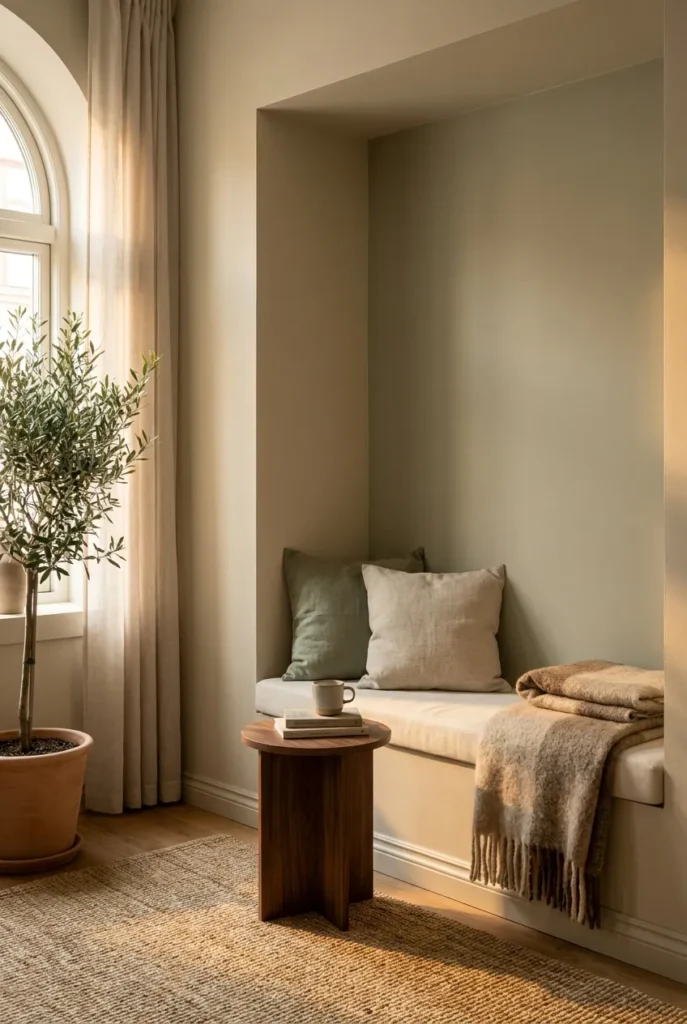
1. A Daybed You Both Sprawl On
If you want the easiest two-person nook, buy a daybed and stop overthinking it. It is a bench, a bed, and a couch pretending to be one piece of furniture.
A twin daybed frame gives you a 75 by 38 inch platform, which is plenty for two people to sit cross-legged at either end with a stack of books in the middle. Push it against a wall, prop three or four cushions along the back, and the wall becomes your headboard.
Real prices right now sit around $185 to $590 for a twin daybed, with IKEA frames like the FYRESDAL near $249 and the BRIMNES near $299. For more layouts built entirely around this piece, these daybed reading nook ideas break down cushion counts and corner placement.
Trade-off honesty: a daybed photographs like a dream, but a bare frame with no back support gets uncomfortable around the 40-minute mark. Line the wall with firm bolsters, not just floppy throw pillows.
Failure mode: skip the bolsters and you both slump into the mattress and fall asleep instead of reading. Which, some nights, is the point.
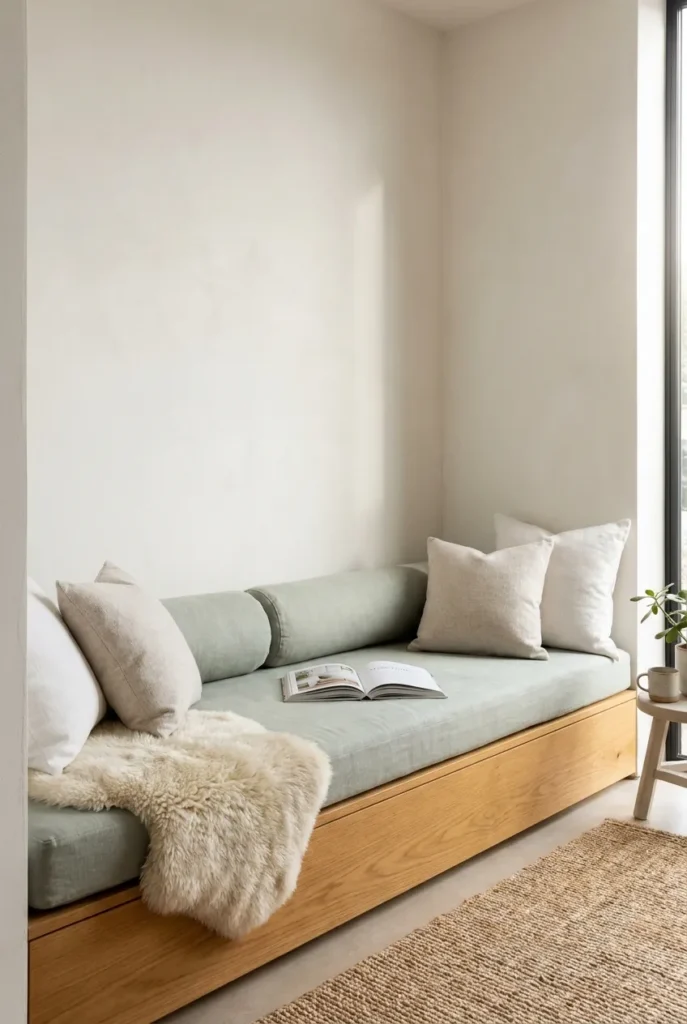
2. A Window Seat Built for Side-by-Side Reading
A window seat is the reading nook for two that Pinterest keeps showing you, and for good reason. Natural light, a built-in bench, and a view all in one spot.
Aim for a bench at least 54 inches wide and 20 inches deep so two adults can sit hip to hip without perching on the edge. A bay window is the jackpot here because the recess gives you extra depth for free. If you have one, this guide to a bay window seat reading nook shows how to use the full bay instead of just the flat middle.
Soften it with a firm foam cushion (not couch cushions, they compress), a jute runner underneath, and cafe curtains for glare control on bright afternoons.
Trade-off honesty: window seats run hot in summer sun and cold against winter glass. A wool throw earns its keep in December.
Failure mode: cheap 2-inch foam flattens in a month and you are basically sitting on plywood. Go with 4-inch high-density foam.]
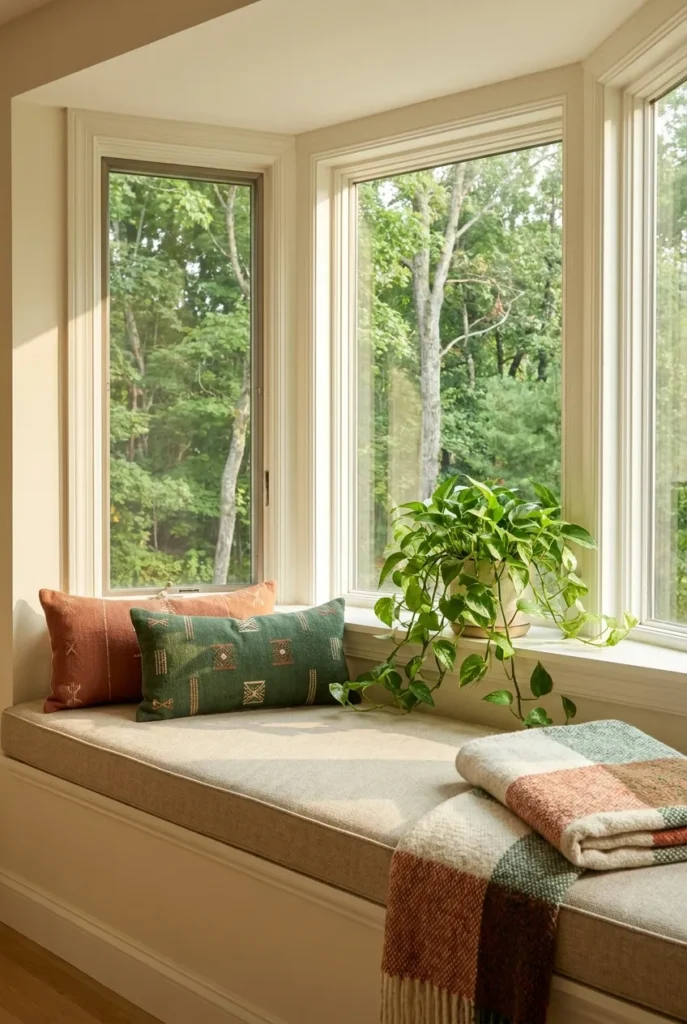
3. Two Chairs and a Shared Table (The Renter’s Answer)
No window, no bench, no landlord permission? Two matching armchairs solve a reading nook for two with zero drilling.
The classic archetype is a pair of IKEA POÄNG chairs, which run about $129 to $149 each and have a gentle recline that is genuinely comfortable for a long chapter. Angle them slightly toward each other, drop a 18 inch round side table between them, and you have a facing setup that still feels connected.
Because the chairs and table just sit on the floor, you can take the whole thing with you when the lease ends. That is the quiet superpower of this layout for renters.
Trade-off honesty: two full armchairs eat more floor than a bench. If your corner is under 6 feet wide, size down to a chair plus a pouf instead of two big frames.
Failure mode: mismatched seat heights make sharing a lamp awkward. Keep both chairs within a couple inches of each other in height.
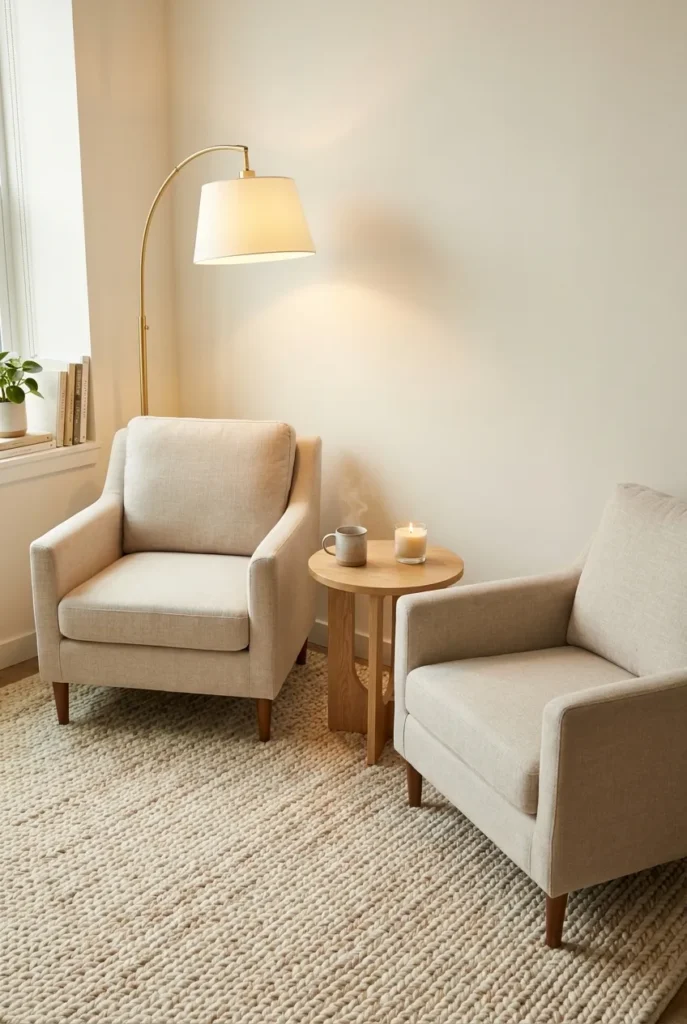
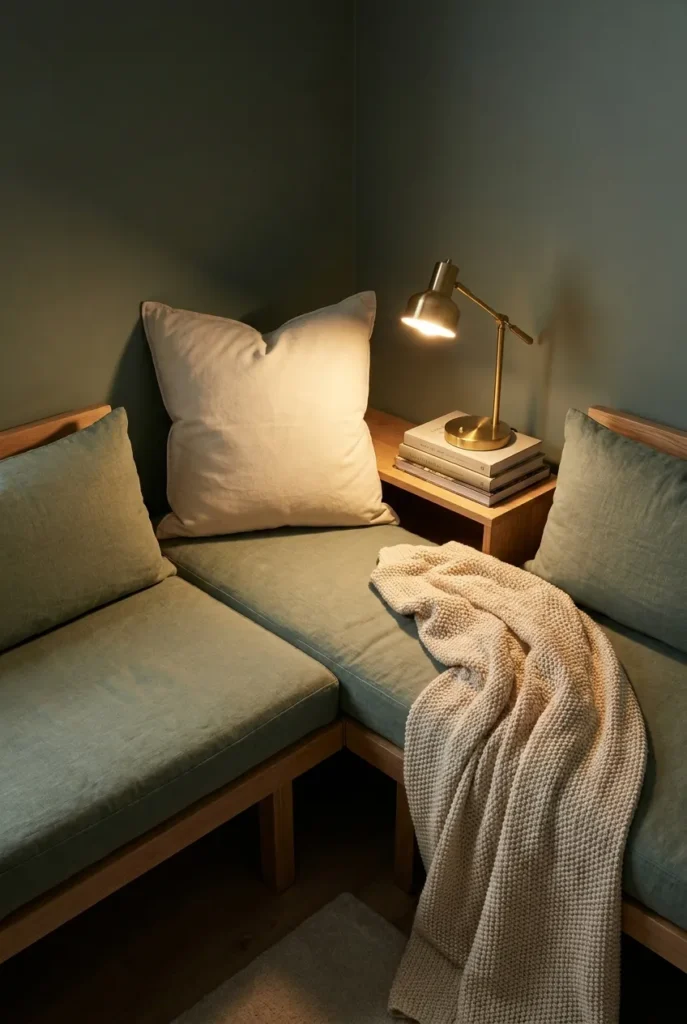
4. The L-Shaped Corner Bench That Wraps Two Readers
When floor space is tight, an L-shaped bench in a corner fits two people into a footprint that a loveseat could never manage.
Run one side about 48 inches and the short return about 36 inches, and two readers can sit on each leg of the L, facing slightly inward. It is the coziest of the small-space layouts because you are close without being on top of each other.
A no-build version: push a storage bench against each wall of the corner and top both with one continuous cushion run. Instant L, no saw required.
Trade-off honesty: the inside corner is a dead zone where cushions bunch. Fill it with one big floor pillow so nobody’s back hits a hard right angle.
Failure mode: forget the corner pillow and the seam gaps open every time someone shifts.
5. A Floor Cushion Setup for Small Rooms and Small Budgets
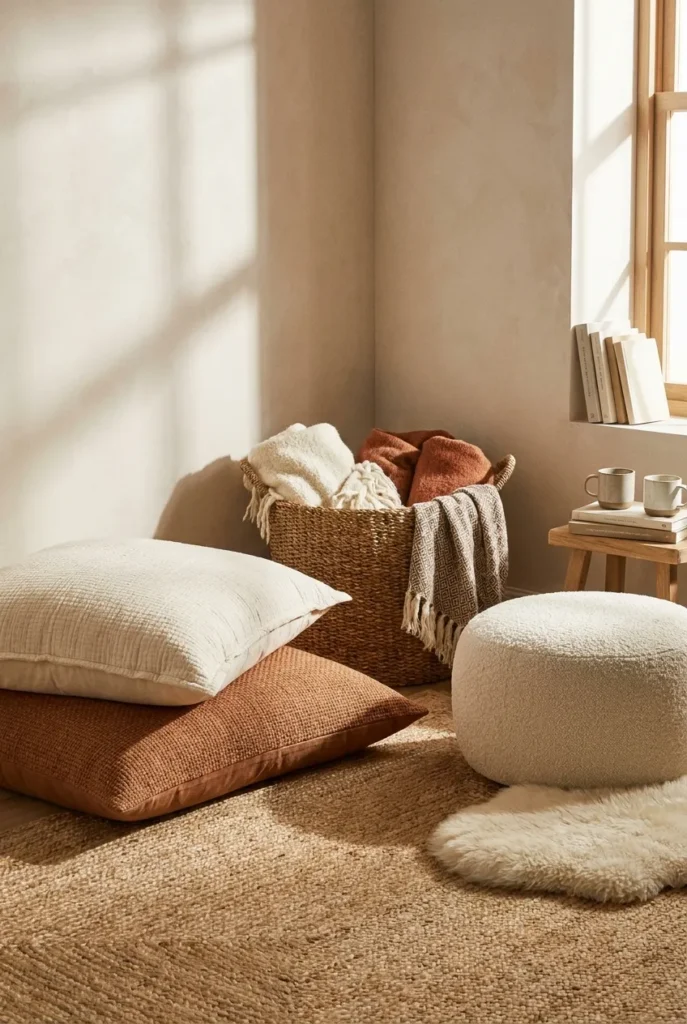
The most renter-proof reading nook for two costs the least and installs in minutes: a fat floor cushion pile in a corner.
Layer a washable rug, two large 26 inch floor pillows, a couple of bolsters against the wall, and a basket of throws. Two people can sprawl, and when guests come, the whole thing tucks away.
This is where a warm textural mix does the heavy lifting: a boucle pouf, a sheepskin, a chunky knit throw. You feel the difference before you see it.
Trade-off honesty: floor cushions look incredible and read young. After 40 minutes your lower back files a complaint. Add a firm bolster for lumbar support and rotate up to a chair for marathon reads.
Failure mode: thin cushions on a hard floor. Under 4 inches of fill and you are basically sitting on the subfloor.
6. Split the Light: One Bright Side, One Soft Side
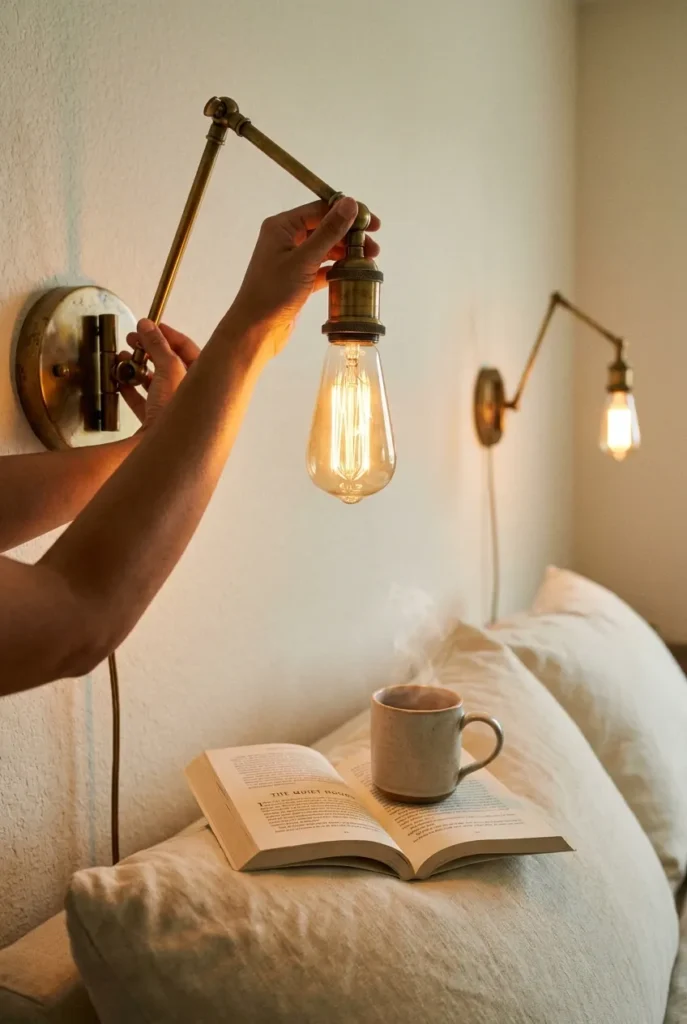
Here is the shared-nook conflict nobody names. One of you wants a bright task light for small print, the other wants a dim, cocoon glow. A reading nook for two needs two light zones.
Give each seat its own source: a swing-arm or plug-in sconce per person, both on 2700K warm bulbs, ideally on a dimmer. Task light for reading generally lands around 450 to 800 lumens per seat, enough to read without straining. The American Academy of Ophthalmology notes that matching your light to the surrounding brightness reduces eye strain, which is exactly why a dimmer beats one harsh overhead. See their guidance on preventing digital eye strain for the reasoning.
A pair of plug-in wall sconces is the renter move here, no wiring, no electrician. This roundup of reading nook wall sconces covers no-drill and battery picks that give each reader independent control.
Failure mode: one shared overhead light means someone is always squinting or someone is always too bright. Two small sources beat one big one every time.
7. A Chaise or Loveseat for the Stretch-Out Reader
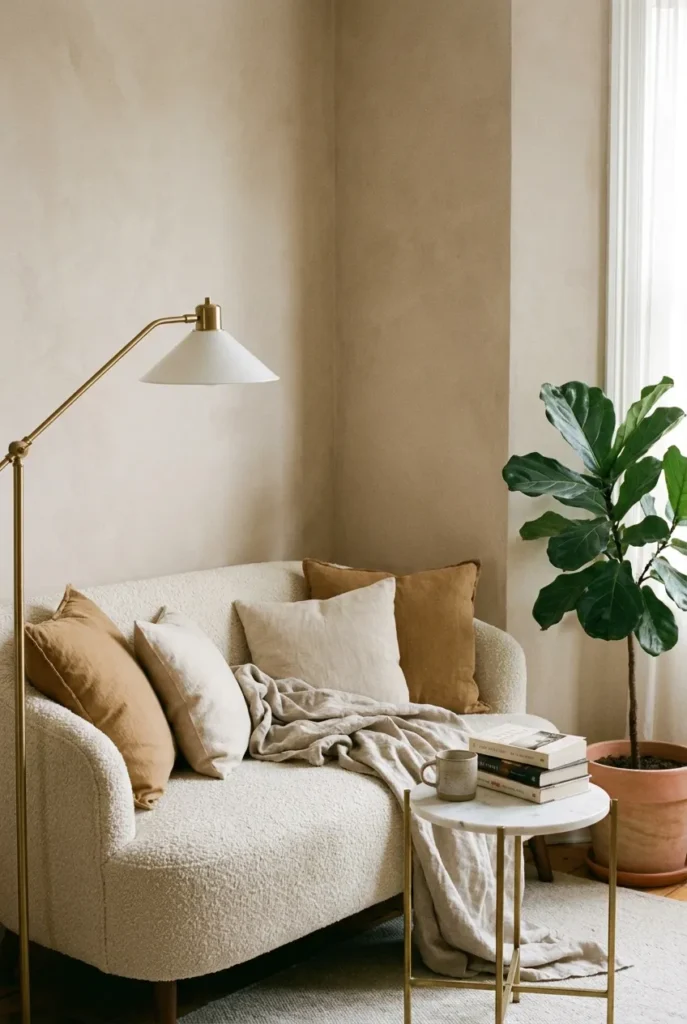
Some couples do not want to sit up straight. For you two, a chaise or a compact loveseat turns the nook into a place to fully recline.
A chaise lets one person stretch full length while the other curls at the foot, sharing one throw. A loveseat around52 to 58 inches wide seats two upright with a shared armrest for mugs. Either way, pull it a few inches off the wall so the back cushions do not scuff the paint.
Anchor it with a jute rug that extends at least 6 inches past the front legs, or the piece looks like it is floating.
Trade-off honesty: a chaise commits your floor to one big shape. In a room under about 120 square feet, a loveseat plays nicer with the rest of your furniture.
Failure mode: buying a deep-seat loveseat when you are both short, so your feet dangle and your back never touches the cushion. Test the seat depth against your own legs.
8. A Bedroom Corner Nook You Both Escape To
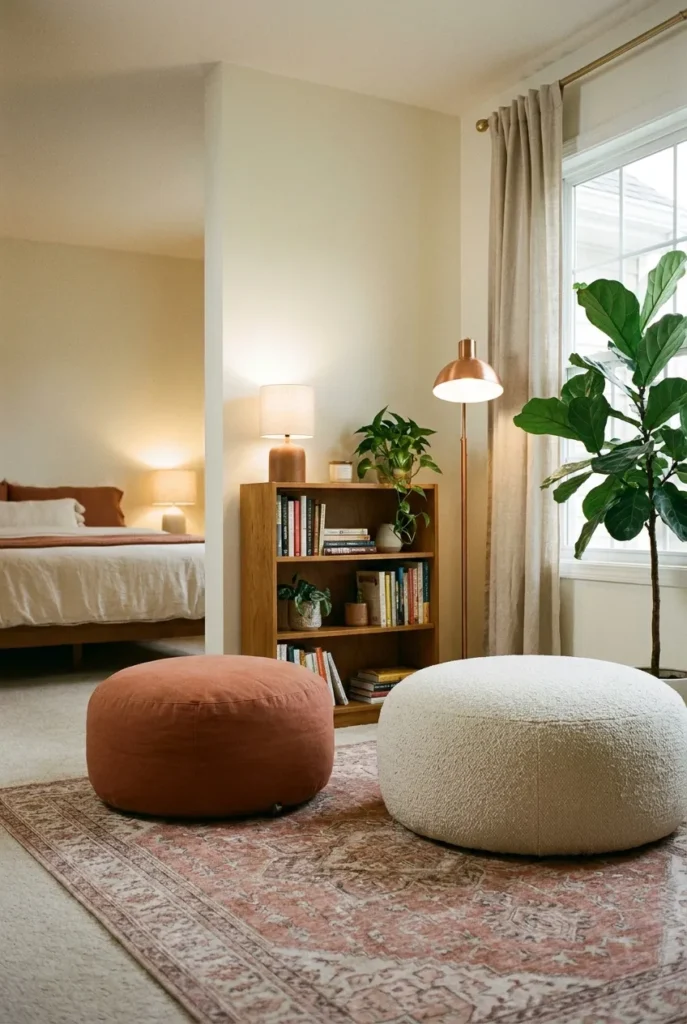
You do not need a whole room. An awkward bedroom corner becomes a reading nook for two with a bench at the foot of the bed or a pair of poufs by the window.
The trick in a bedroom is keeping the nook visually separate from the sleep zone. A 5 by 7 foot rug under just the nook draws the boundary. A tall plant or a slim bookcase on one side walls it off without blocking light.
Warm it with texture you notice at night: a wool throw, a sheepskin underfoot, and one soft sconce so you are not flipping the bright overhead when your partner is winding down.
Trade-off honesty: shared bedroom nooks tempt you to read in bed instead. If the goal is actually reading, keep the nook a few steps from the mattress so it feels like its own spot.
Failure mode: cramming the nook so close to the bed it just becomes extra pillow storage.
9. A Book-Lover’s Shared Wall of Shelves
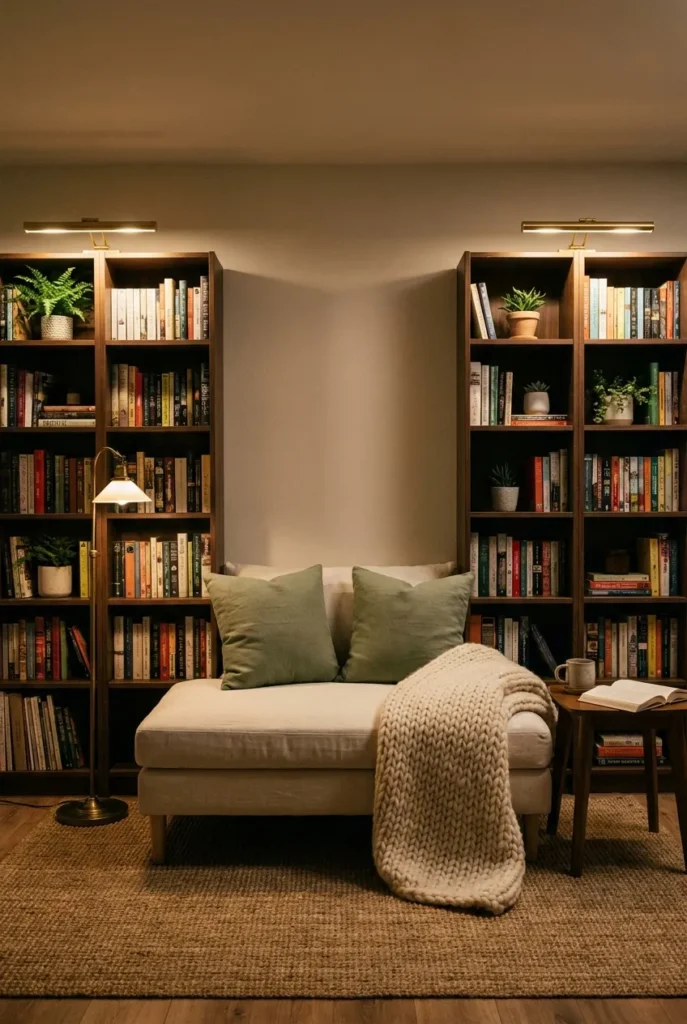
If you both have a growing TBR pile, build the nook into a wall of books so your seating floats in front of your shared library.
Flank a bench or loveseat with two tall bookcases and you frame the nook like a little private room. A 30 inch gap between the shelves gives just enough width for a two-person bench without feeling boxed in. Give each person a shelf at arm’s reach so nobody has to get up mid-chapter.
Style the shelves with more than books: a small lamp, a trailing plant, a couple of framed photos. It reads lived-in, not staged.
Trade-off honesty: floor-to-ceiling shelves in a rental need to be strapped to a stud for safety, and some landlords say no to anchors. A pair of low, freestanding bookcases sidesteps that.
Failure mode: packing shelves wall to wall with only book spines, which reads like a store display, not a nook you actually relax in.
Frequently Asked Questions
How do you make a good reading nook for two?
Start with the seating shape (side by side, facing, or L-shaped), leave about 52 to 60 inches of shared seat width for two adults, then add firm back support, two warm light sources, and one soft layer you both reach for. Comfort and light matter more than square footage.
Where is the best spot for a reading nook for two?
Anywhere with a wall to lean on and a light source. A window gives you daylight and a view, but a plain corner with two plug-in sconces works just as well, especially for renters who cannot build a window seat.
How do you decorate a shared nook without it feeling cramped?
Keep the palette calm and repeat two or three textures (wool, jute, wood) instead of many loud patterns. Give each person a personal touch, a shelf, a mug spot, a lamp, so the space feels shared rather than split.
What makes a nook feel cozy for two people?
Warm 2700K light on a dimmer, a throw big enough to cover two laps, and something soft underfoot. Coziness is mostly texture and warm light, not the price of the furniture.
Can you build a reading nook for two in a small apartment?
Yes. A twin daybed, an L-shaped corner bench, or two floor cushions all fit in a corner under 6 feet wide. The floor-cushion version tucks away completely when you need the room back.
What is the cheapest way to seat two readers?
A washable rug plus two large floor pillows and a couple of bolsters. It is the lowest-cost, most renter-safe setup, though you will want a firm bolster for back support on longer reads.
Your Weekend, One Cozy Corner
The best reading nook for two is not the one with the priciest chair. It is the one you both actually sink into on a rainy Sunday. Pick your seating shape, measure your corner, split the light, and you are most of the way there.
Not sure which layout fits your space? Start with the daybed guide if you want one easy piece, or the window seat ideas if you have the light to work with. Then go pull two books off the pile. Your corner is waiting.
Keep reading
More cozy nook ideas
 Living Room
Read →
Living Room
Read →
Cabin Living Room Checklist: Everything to Decide Before You Start
No log walls, no stone hearth, no lake outside the window. You can still build a cabin living room in a regular…
 Bedroom
Read →
Bedroom
Read →
English Cottage Bedroom Checklist: Everything to Decide Before You Start
You saved forty pins of floral quilts and sloped ceilings, then looked up at your own bedroom: beige walls, one window, a…
 Nursery & Teen Rooms
Read →
Nursery & Teen Rooms
Read →
25 Teen Boy Bedroom Ideas That Feel Grown-Up, Not Childish
If his room still has the race car lamp and the glow-in-the-dark stars, and the door has started staying shut, he’s telling…