
Daybed Reading Nook Ideas That Turn One Spare Corner Into Your Favorite Seat

That empty corner by the window is not dead space. It is a daybed reading nook waiting to happen. You need one frame, a handful of pillows, and an afternoon. Not a contractor, not a bay window, not your landlord’s blessing. This is the piece that lets you stretch out full-length with a book instead of folding yourself into a stiff armchair, and it does double duty as a guest bed when your sister visits.
Here is what most posts skip: a daybed is really just a twin mattress dressed to sit like a sofa. Once you know that, the whole project gets cheap and doable. Below are ten setups, each with a real measurement, a product type to look for, and the one mistake that trips people up. First list item is the highest-value move, so start there.
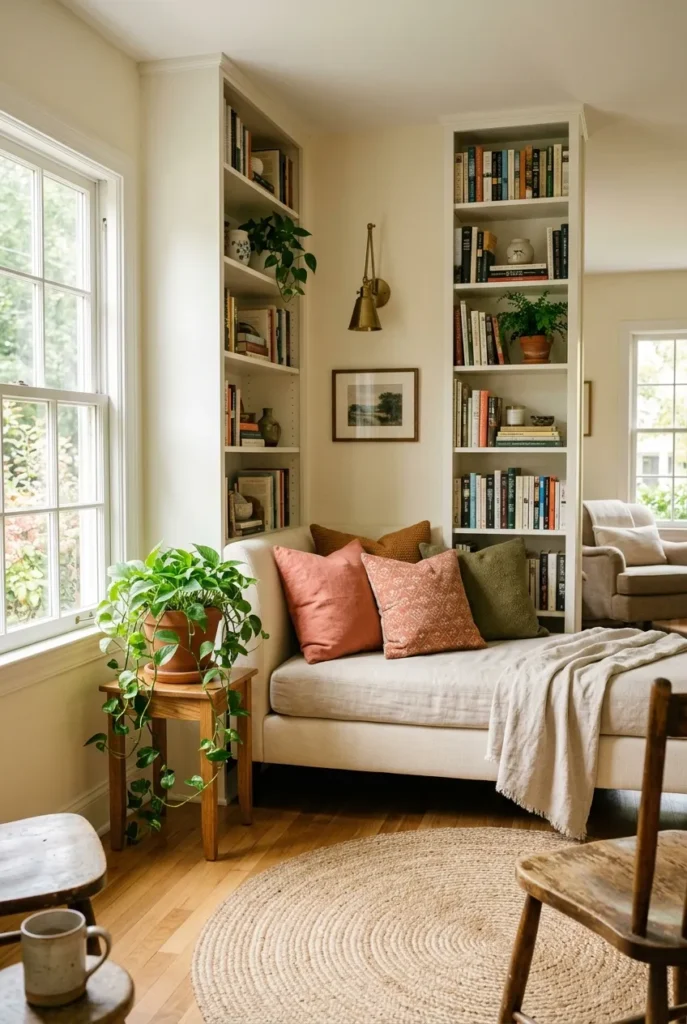
1. Start With the Right Daybed Size for Your Corner
Measure before you fall in love with anything. Most daybeds take a standard twin mattress, so the frame footprint runs about 40 inches deep by 78 inches long [VERIFY: confirm the exact frame you own or plan to buy]. That length surprises people. Pull a tape measure along your wall before you order.
If your corner is tight, look at a twin daybed. If you actually want to nap or read with a partner, size up. Here is the spec table competitors leave out.
| Daybed base | Mattress it fits | Rough footprint | Best for |
|---|---|---|---|
| Twin daybed | Twin (38 x 75 in) | ~40 x 78 in | Renters, tight corners |
| Twin-XL daybed | Twin-XL (38 x 80 in) | ~40 x 83 in | Tall readers |
| Full daybed | Full (54 x 75 in) | ~57 x 78 in | Two people, lounging |
| Daybed + trundle | 2 twins | ~40 x 78 in (closed) | Guest overflow |
Keep at least 24 inches of walking clearance in front so you are not shimmying past it sideways. That clearance rule is the difference between a nook you use daily and one you resent.
2. Put the Storage Underneath to Earn the Floor Space
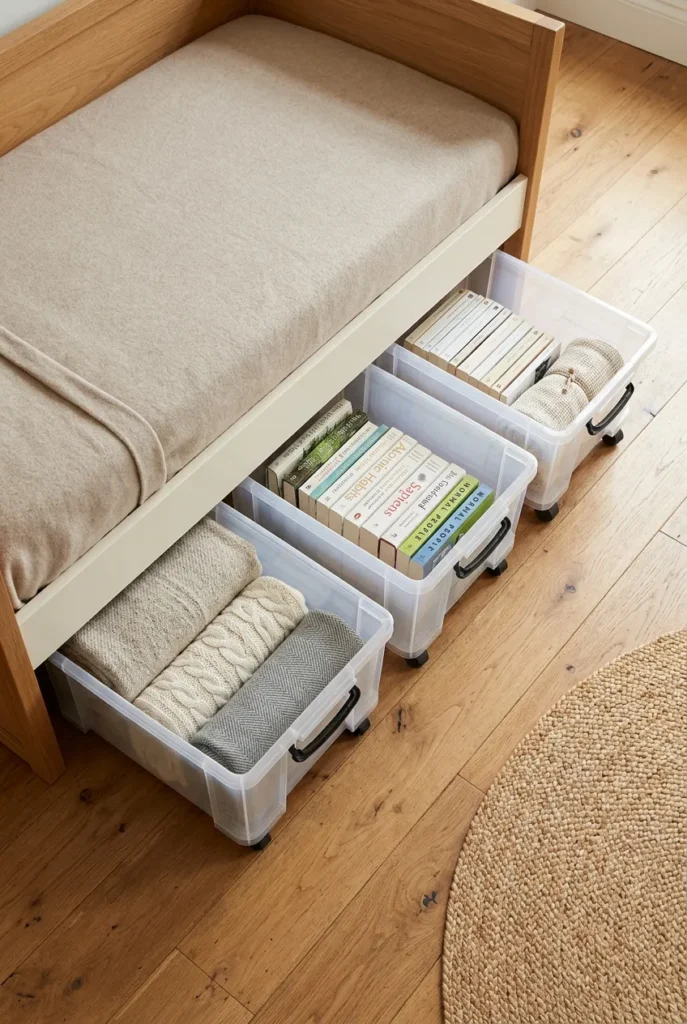
A daybed reading nook with storage is the version that actually makes sense in a small home. The space under the frame is roughly 8 to 12 inches of prime real estate [VERIFY: measure your frame’s under-clearance]. Waste it and you have given up a whole cabinet’s worth of room.
Two ways to play it. A daybed with built-in drawers hides blankets and off-season stuff behind a clean front. Or slide in clear stackable bins on casters for a renter-friendly swap you can roll out on cleaning day.
Books belong down there too. A low row of spines under the seat turns the base into a mini bookcase, and it looks intentional on camera. If you want more ways to hide clutter without a single power tool, this walkthrough of under-daybed hidden storage ideas covers the bins and baskets I keep coming back to.
3. Fake a Built-In When You Rent and Cannot Build
You do not need millwork to get that snug built-in daybed reading nook look. This is a gap most tutorials ignore, they assume you can drill and cut. You cannot, and that is fine.
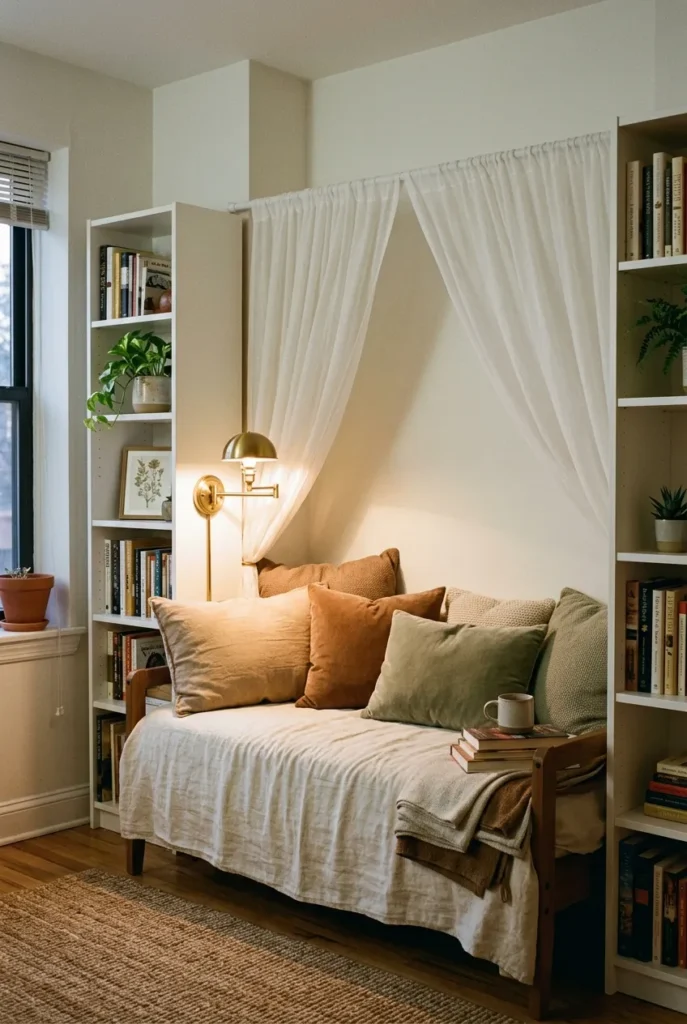
Flank the daybed with two tall freestanding bookcases pushed right up against it, like the IKEA Billy. Add a tension rod and a curtain overhead to suggest an alcove. The eye reads “built-in” even though every piece walks out with you when the lease ends. No anchors, no spackle, no lost deposit.
For readers with literally no window to build around, a windowless corner still works beautifully. Here is my full playbook for a reading nook without a window, which leans hard on lighting and layered textiles instead of a view.
4. Layer the Soft Stuff for Back Support, Not Just Looks
Pillows are where a daybed reading nook goes right or very wrong. Stack them for a photo and your lower back files a complaint forty minutes in [VERIFY: your own comfort test].
Build back to front. Start with two firm bolsters or euro shams against the wall for lumbar support, then a lumbar pillow at the small of your back, then softer throw pillows for looks. That geometry lets you sit upright and read for real, not just pose. A wool or boucle throw folded at the foot adds a layer you will reach for on rainy afternoons, and there is a quiet satisfaction to that heavier weight across your legs.
If two of you want to share the space, the pillow math changes. My guide to a cozy reading nook for two people breaks down how to split bolsters so nobody hogs the wall.
5. Nail the Lighting With a Warm 2700K Bulb
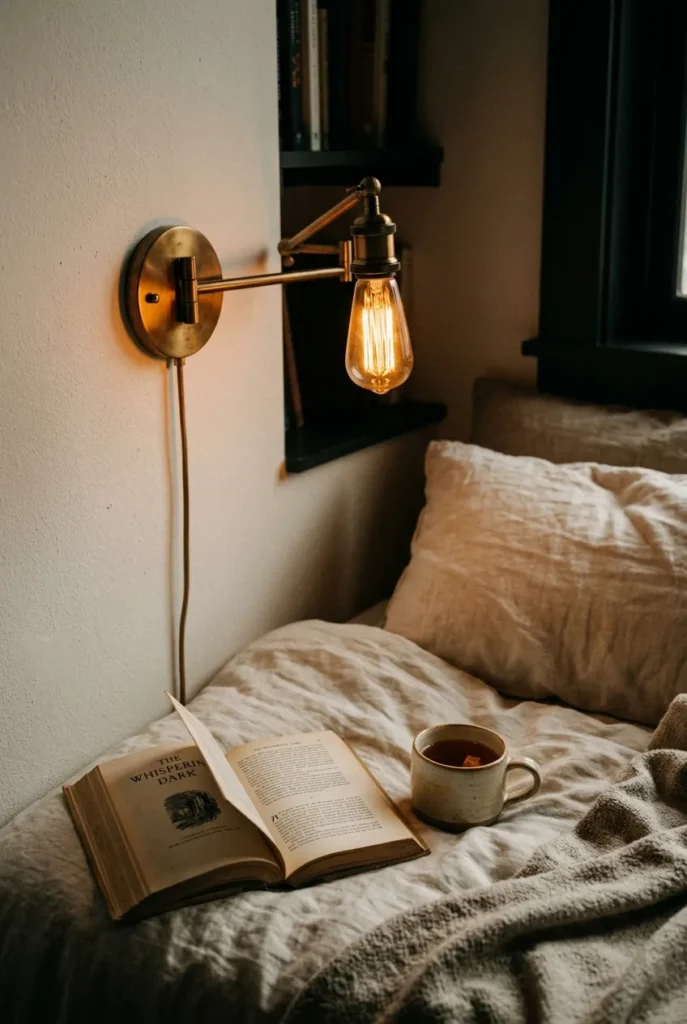
Overhead light kills the mood and strains your eyes. A daybed reading nook wants its own soft source. Reach for a swing-arm wall sconce or a plug-in picture light, and put a 2700K warm-white bulb in it. That Kelvin number matters: 2700K reads golden and calm, while anything above 4000K feels like a dentist’s office.
Add a dimmer if you can. You want bright enough to read, dim enough to relax. For fixtures that hit efficiency and warmth without guesswork, ENERGY STAR certified light fixtures are an easy shortlist to shop from.
6. Anchor It All With a Rug That Defines the Zone
A rug tells your brain “this is the reading zone.” Without one, the daybed floats and the corner feels unfinished. A round jute rug about 4 to 5 feet across suits most single daybeds [VERIFY: measure against your frame width].
Jute brings a scratchy, honest texture underfoot that photographs like a dream and hides crumbs between vacuums. If you want soft instead, a low-pile washable rug survives spilled tea and muddy socks. Slide the front edge of the rug just under the daybed legs so the whole grouping reads as one intentional set piece.
7. Give It a Style Point of View
A daybed is a blank canvas, so pick a lane. Cottagecore leans floral, ruffled shams, and a sheer cafe curtain. Dark academia goes moody: deep green walls, a leather bolster, brass fixtures, a stack of clothbound classics. Scandi and japandi strip it back to linen, pale wood, one plant, and nothing extra.
Pick one and commit. A daybed nook trying to be all four at once looks like a showroom clearance shelf. The style you choose should match the room it lives in, not fight it.

8. Slide In a Side Table Within Arm’s Reach
Your tea, your phone, your current read: they need a landing spot. Follow the 18-inch reach rule. Put a small side table within roughly 18 inches of where your hand falls when you are seated, so you are not stretching or setting a hot mug on the bedding.
Any 32-inch-round side table works, but for a daybed you often want something shorter and closer, a stool or a nesting table that tucks in. Keep the top small. A daybed reading nook clutters fast, and a tiny surface forces you to keep only what you actually use.
9. Add a Curtain or Canopy for the Cocoon Effect
This is the touch that makes people stop scrolling. A sheer curtain or a light canopy over the daybed creates the tucked-away, hideaway feeling that a bare corner cannot. Mount a curved rod or a ceiling hook and let fabric drape down one side.
Renters, use adhesive ceiling hooks rated for the weight or a tension setup between two walls. No drilling required. Fairy lights woven along the top edge add a soft glow after dark that pairs beautifully with your warm bulb.
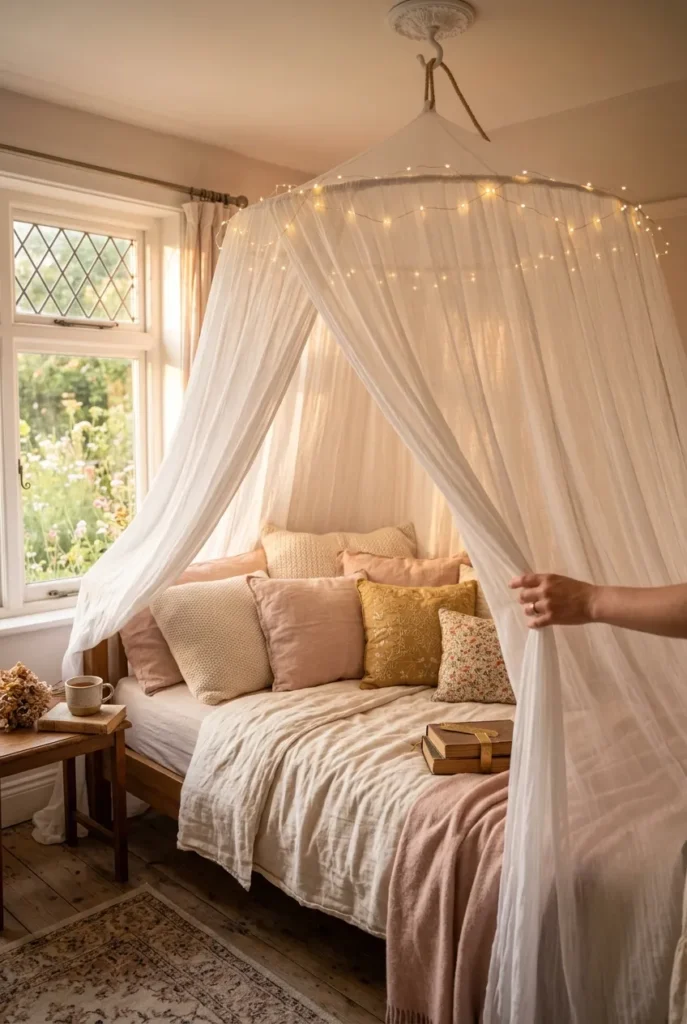
10. Style It for a Guest Bed That Hides in Plain Sight
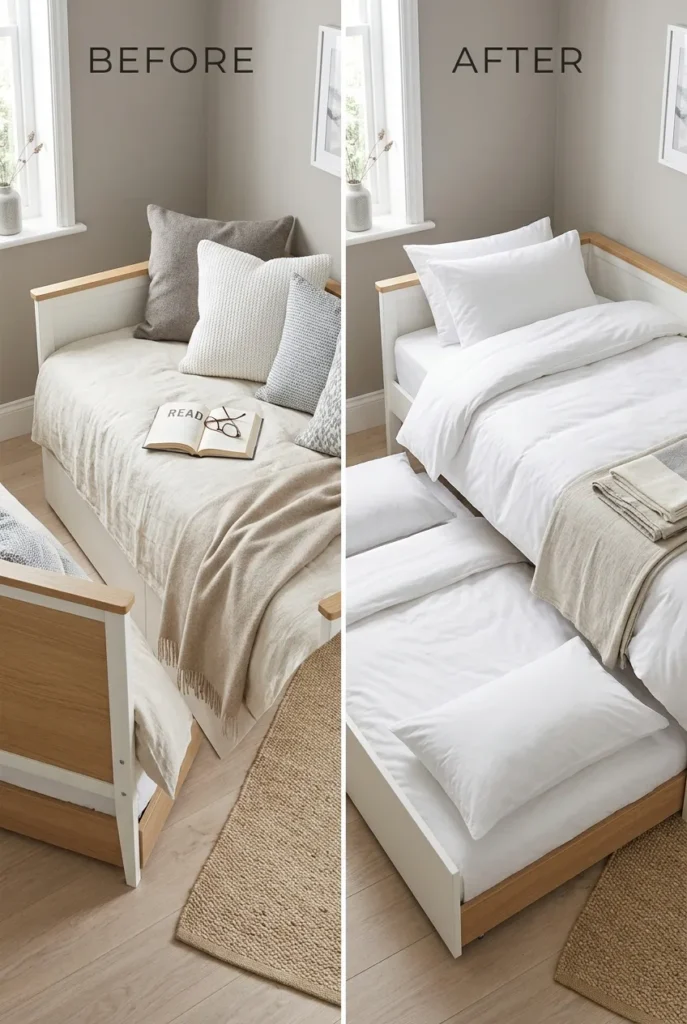
The best daybed reading nook idea for a small home: make it earn its keep twice. By day it is your reading corner. By night, when family crashes over, it is a real bed. A daybed with a trundle doubles your sleeping capacity without adding an inch of daytime footprint.
Keep the bedding swap simple. Store a fitted sheet and a spare blanket in the drawers underneath, and you can flip from “reading nook” to “guest room” in five minutes flat. That is the move that justifies the whole purchase to a skeptical roommate or partner.
A Quick Word on Reading, Rest, and Light
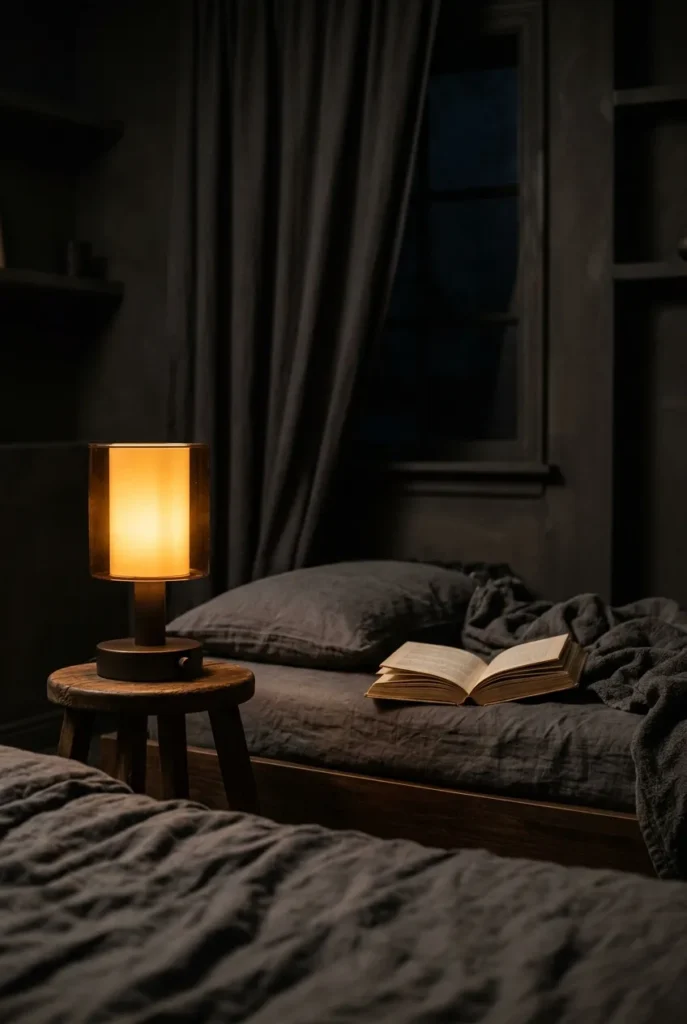
Since a daybed blurs the line between reading and napping, one small note. If your nook lives in a bedroom, the warm, dim lighting that feels cozy for reading is also gentler for winding down, and bright or blue-heavy light late at night can make rest harder. The Sleep Foundation has a plain-language rundown on how light affects rest if you want the reasoning. I am not a doctor, so treat this as general comfort advice, not medical guidance, and check with a qualified professional if sleep is a real struggle for you.
Your Build Order for This Weekend
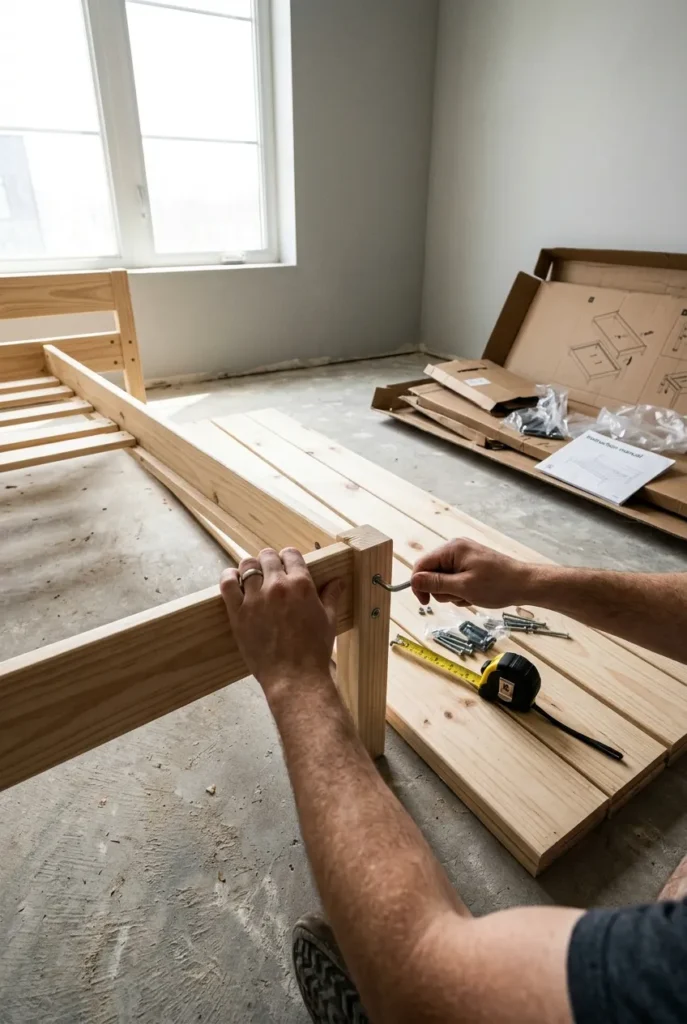
Do not overthink the sequence. Frame and mattress first, then storage underneath, then the soft layers, then lighting, then rug, then the styling touches. Get the first four done and you have a functional daybed reading nook by Sunday night. The curtain and canopy can wait for next weekend.
FAQ
What exactly is a reading nook?
A reading nook is a small, dedicated corner set up for comfortable reading, usually with a seat, good light, soft textiles, and books within reach. A daybed version simply uses a daybed as that seat so you can stretch out full-length.
How do you actually use a daybed?
Three ways: as a sofa-style seat by day with pillows against the back, as a full bed for sleeping or napping, and as a guest bed if it has a trundle or pull-out. In a reading nook, most people leave it seat-style and only convert it when guests stay over.
What is a reading nook called?
People call it a reading nook, a book nook, a reading corner, or a cozy corner. When it is built into a window it is a window seat, and when it is recessed into a wall it is an alcove.
Are daybeds still in style?
Yes. Daybeds have stayed popular for small-space living because they work as seating and sleeping in one footprint, and current cozy, cottagecore, and japandi looks all feature them heavily on Pinterest.
What is a nook in a bedroom?
A bedroom nook is a small secondary zone within the room, often a corner or alcove, set aside for something other than sleeping, like reading, a vanity, or a workspace. A daybed turns that corner into a reading-and-guest-bed combo.
Can I build a daybed reading nook if I rent?
Absolutely. Use freestanding bookcases, tension-rod curtains, adhesive ceiling hooks, and rolling storage bins so nothing gets drilled or anchored. Everything comes with you when you move.
Ready to Claim That Corner?
You now have ten ways to turn one spare corner into the seat everyone fights over. Start with the size table so you buy the right frame, add storage underneath, then layer up. Once your daybed is in, the next natural upgrade is the hideaway feeling, so take a look at how to build a reading nook without a window if your corner is short on light. Grab your tape measure and go measure that wall.
Keep reading
More cozy nook ideas
 Small Spaces
Read →
Small Spaces
Read →
10 Small Reading Nook Ideas for Adults
One high-back chair, one clamp-on lamp, one $19.99 tray table. At IKEA US prices this month, that’s a full reading corner for…
 Home Library & Bookshelves
Read →
Home Library & Bookshelves
Read →
14 Ideas for a Fireplace with Bookshelves on Each Side on a Budget
Two bookcases, two plug-in lamps, two wall straps. At IKEA US list prices this month, that adds up to $237.98 before tax,…
 Study & Craft Nooks
Read →
Study & Craft Nooks
Read →
16 Kids Homework Station Ideas Little Ones Will Love
Two IKEA pieces, one empty corner, $109.98 before tax. That’s the first kids homework station on this list, and it fits in…
2 Comments