
Greenhouse Reading Nook Ideas: 10 Ways to Build a Plant Lover’s Corner With a Chair

If your idea of a reading corner is currently a slumped pillow on the floor and a sad succulent you forgot to water, this fixes it. A greenhouse reading nook is the one corner where your plants and your TBR pile finally live in the same room and both look better for it. You don’t need a glass conservatory, a renovation budget, or a south-facing wall the size of a billboard. You need a chair, the right light, a few green things, and one free afternoon.
Here’s the build order, from the seat up. Ten ideas, each with a real measurement, a product type you can actually buy, and the one mistake that quietly ruins it. The first one is the highest-value move, so start there.
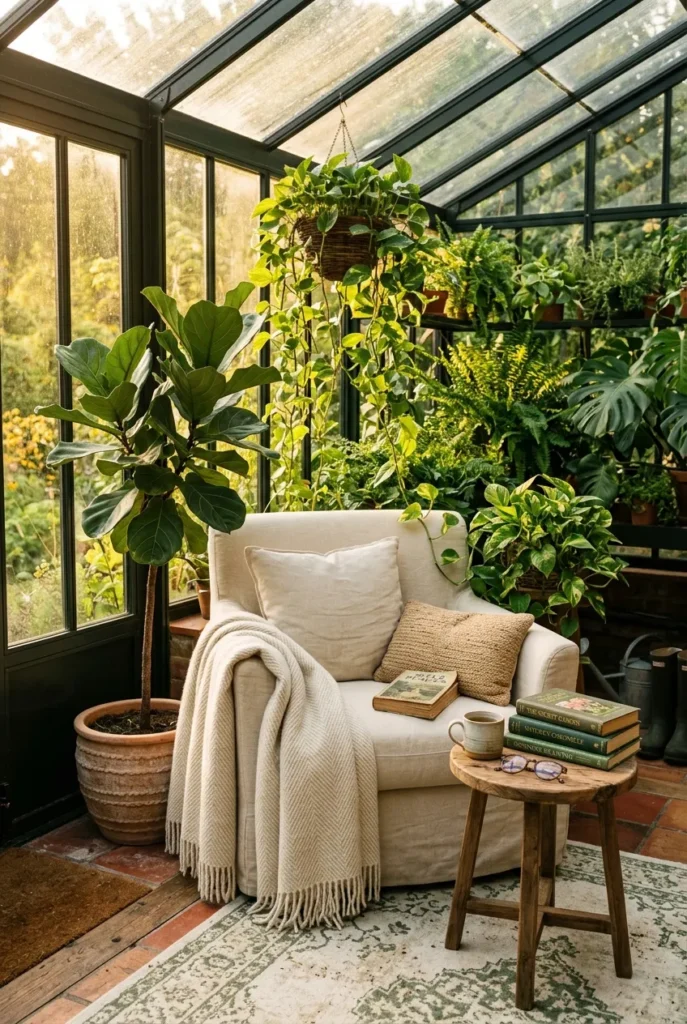
1. Anchor the Whole Nook With One Deep Reading Chair
Everything else hangs off the seat, so spend your attention here first. A reading chair wants a seat depth of around 30 to 36 inches so you can pull your knees up and turn sideways, which is how people actually read. The IKEA Poäng is the classic budget archetype at well under $150, but any wide armchair with a low, reclined back does the job. Set the chair 18 inches off the glass or wall so a lamp arm and a trailing plant can share the corner without crowding your shoulder.
In a real greenhouse or sunroom, angle the chair toward the brightest pane, not flat against it. You want the light falling across your page from the side, not glaring straight into your eyes at 4 pm. Late afternoon is when a glass room earns its keep, warm light, the quiet weight of a hardcover, the faint smell of damp soil after you’ve misted the ferns.
For a smaller sunroom or a renter’s corner, a single chair beats a loveseat every time. If you’re working with truly tight square footage, the layout logic in our tiny reading nook setups for under one square meter carries straight over to a glassed-in corner.
Failure mode: a chair shoved flat against cold glass. Your back leeches heat in winter, and the light blinds you at golden hour.
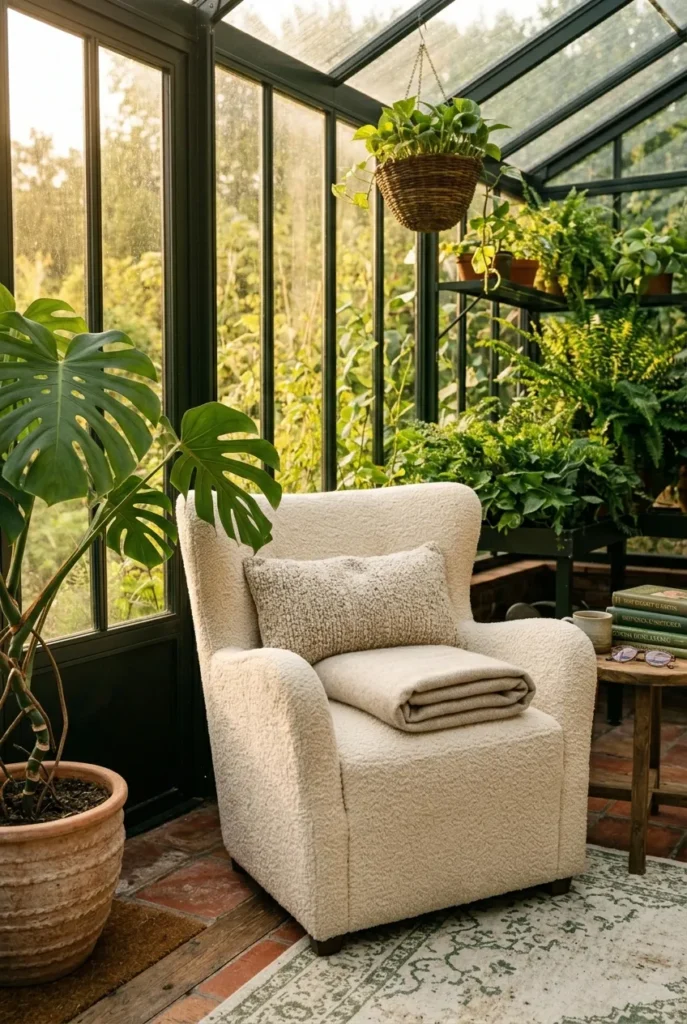
2. Get the Light Right Before You Buy a Single Plant
A greenhouse reading nook lives or dies on light, and not all light is equal for you versus your plants. Most common houseplants want bright indirect light, meaning a few feet back from the glass or filtered through a sheer, not baking directly against a south pane where leaves scorch. The University of Maryland Extension’s guidance on lighting for indoor plants breaks down low, medium, and high-light placement by window direction, and it’s worth a two-minute read before you commit a fern to a spot.
Your eyes have the opposite need at night. Once the sun drops, you want a warm pool of light on the page, not the whole glass box lit up like a checkout aisle.
Aim for a 2700K bulb, which reads as soft and warm. ENERGY STAR’s overview of light bulb color and brightness is a clean reference for picking shade and wattage without guesswork. Put that bulb on a dimmer. Skip the dimmer and your warm bulb still reads like a dentist’s office after dark.
Failure mode: one cold 5000K “daylight” bulb doing double duty. Great for the plants, miserable for your retina at 10 pm.
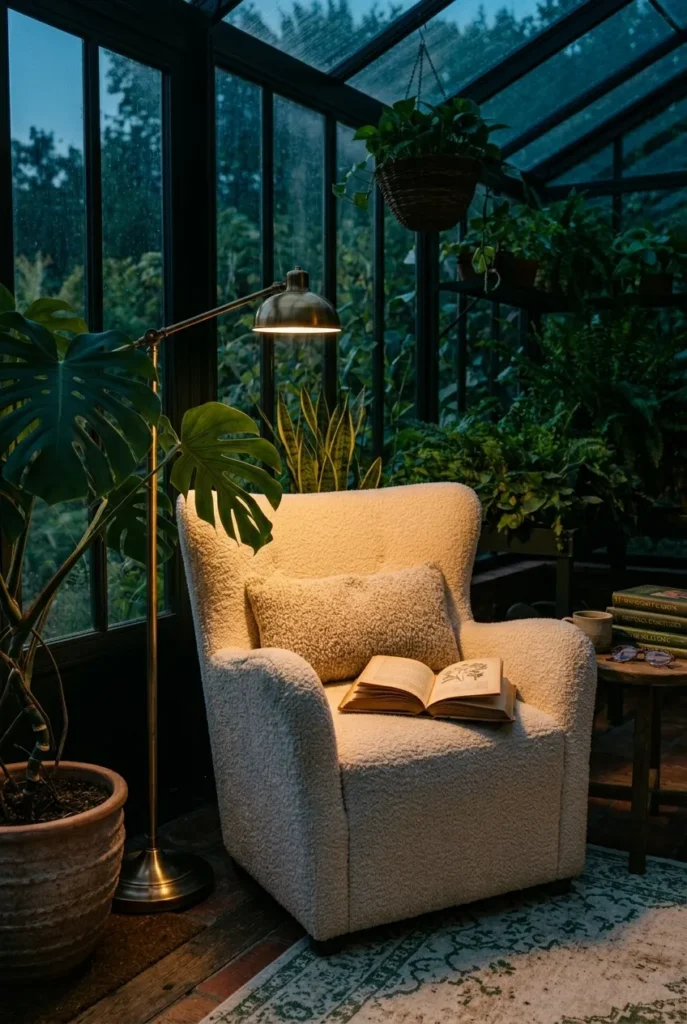
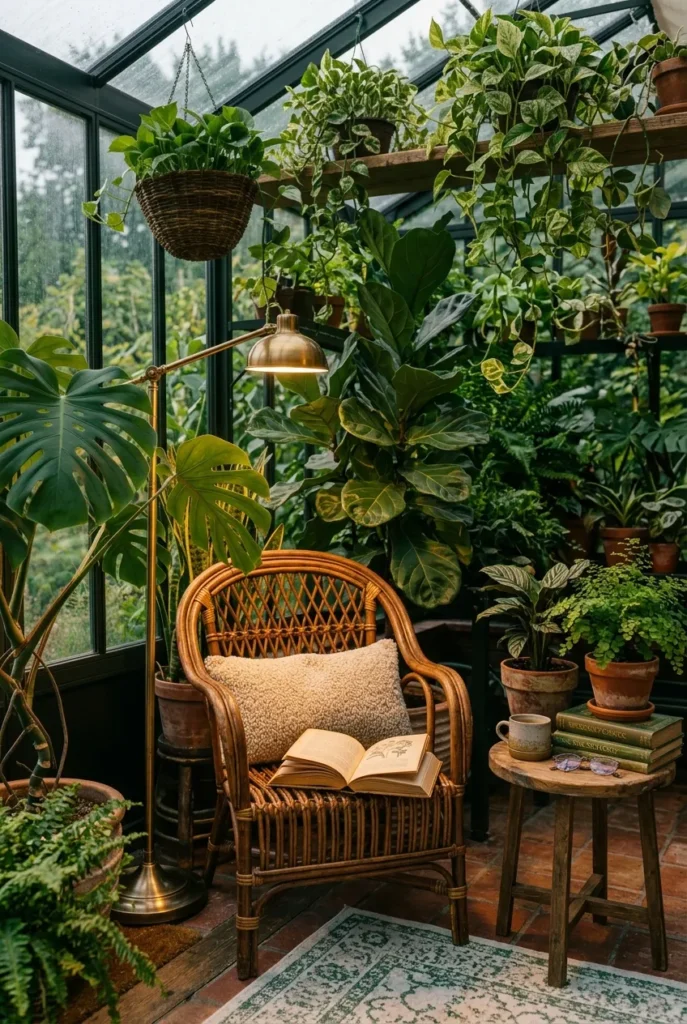
3. Build the Indoor Jungle in Layers, Not a Crowd
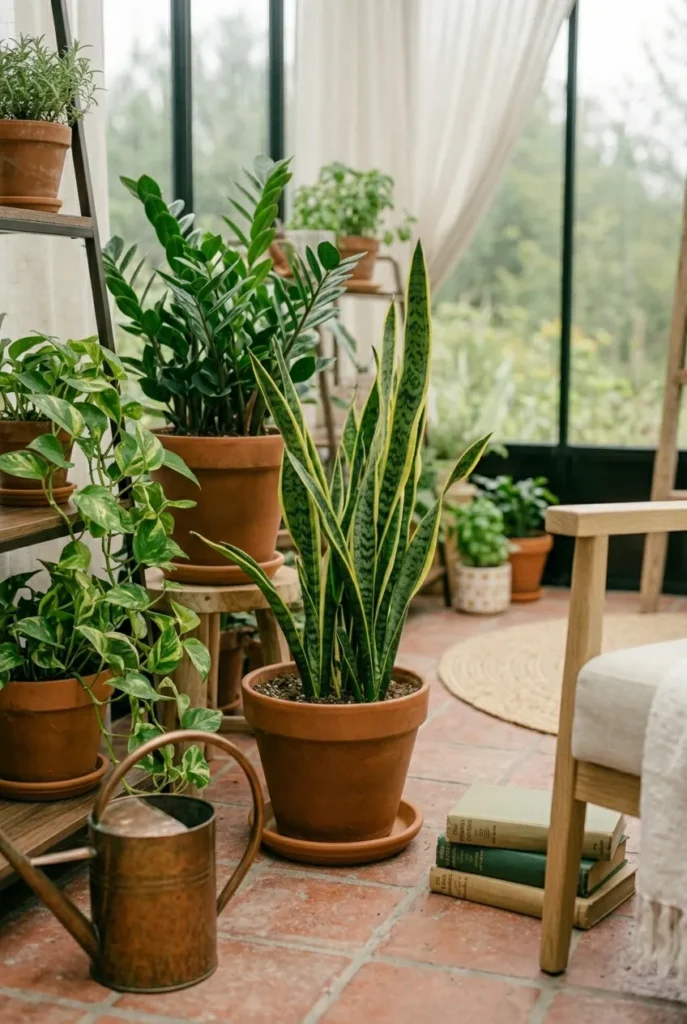
The “indoor jungle” look that performs so well on Pinterest isn’t a plant shop dumped in a corner. It’s three heights working together. Put one tall floor plant (a fiddle-leaf fig or a six-foot bird of paradise) to frame the chair, a couple of mid-height plants on a stool or plant stand at 24 to 30 inches, and at least one trailing plant up high so it spills down.
Trailing pothos on a shelf above the chair does more for the jungle feeling than five plants on the floor.
Keep the greenery off your actual reading zone. A leaf brushing your neck every time you turn a page goes from charming to annoying in about four minutes. Leave a clear 18-inch bubble around your head and your book.
Failure mode: every plant at floor level. The corner reads cluttered and flat, and you’ll knock one over reaching for your tea.
4. Add a Window Seat or Banquette If You Have the Glass
If your sunroom has a low sill or a bumped-out bay, a built-in window seat turns dead architecture into the best seat in the house. Aim for a seat height of 17 to 19 inches (chair height) and a depth of at least 20 inches so you’re not perched. Top it with a 4-inch foam cushion wrapped in a washable cover, because a glass room means sun fade and the occasional dropped plant.
A banquette along two glass walls gives you a corner you can stretch out in, knees up, book open, rain ticking the glass overhead on a gray Saturday.
For renters who can’t build in, a daybed pushed under the windows fakes the same effect with zero tools. The look is the payoff either way.
Failure mode: a hard wooden bench with no cushion. It photographs beautifully and punishes you after fifteen minutes.
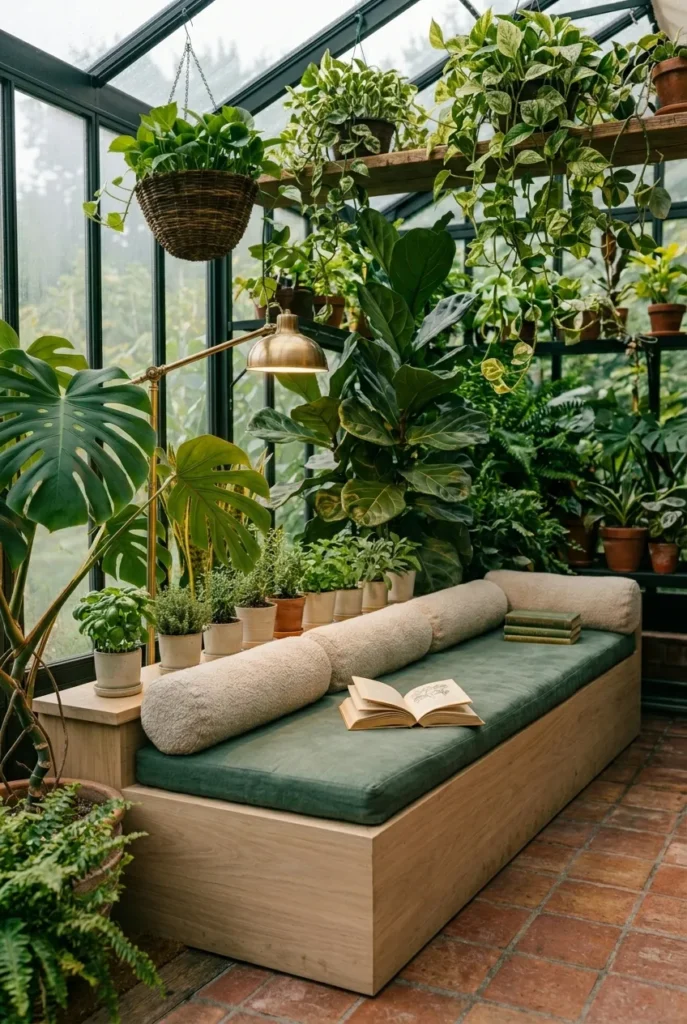
5. Ground the Corner With a Washable Rug
A rug pulls the chair, the plants, and the side table into one defined nook instead of three lonely objects on a cold floor. In a greenhouse or sunroom, go washable or go jute. Both shrug off dropped soil, watering-can drips, and muddy repotting days. A 5-by-7 sits well under a single chair plus a plant cluster, and you want the front legs of the chair on the rug, not floating off the edge.
A flatweave runner works if your nook is long and narrow, like a converted side return or a glassed-in porch.
Failure mode: a fluffy wool shag under a row of watered plants. It traps damp, it smells, and you’ll be spot-cleaning it monthly.
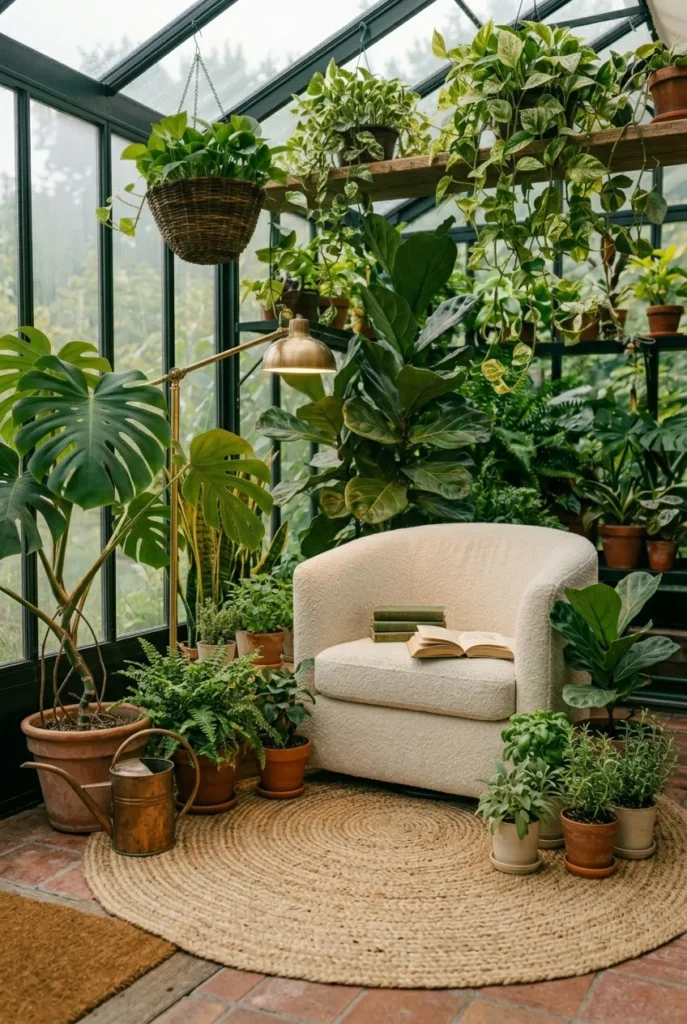
6. Solve the Humidity Problem Before Your Books Warp
Here’s the part the pretty pins never mention. A glass room with plants is humid, and paper hates humidity. Sustained damp above 60 percent will cup your paperbacks and freckle the pages with foxing over a season. You want the room sitting around 30 to 50 percent for both you and your books.
Keep your TBR pile off the floor and off the coldest glass, where condensation collects and drips.
A small hygrometer costs under $15 and tells you the truth at a glance. Crack a vent or run a quiet fan on muggy days, and store your good hardcovers a foot back from the panes. This is exactly the kind of “looks designed, not compromised” problem-solving we get into for tricky corners in our guide to a reading nook without a window, where airflow and book placement matter just as much.
Failure mode: a bookshelf pressed flat against an exterior glass wall. Cold pane plus warm room equals condensation, and your hardcovers pay for it.
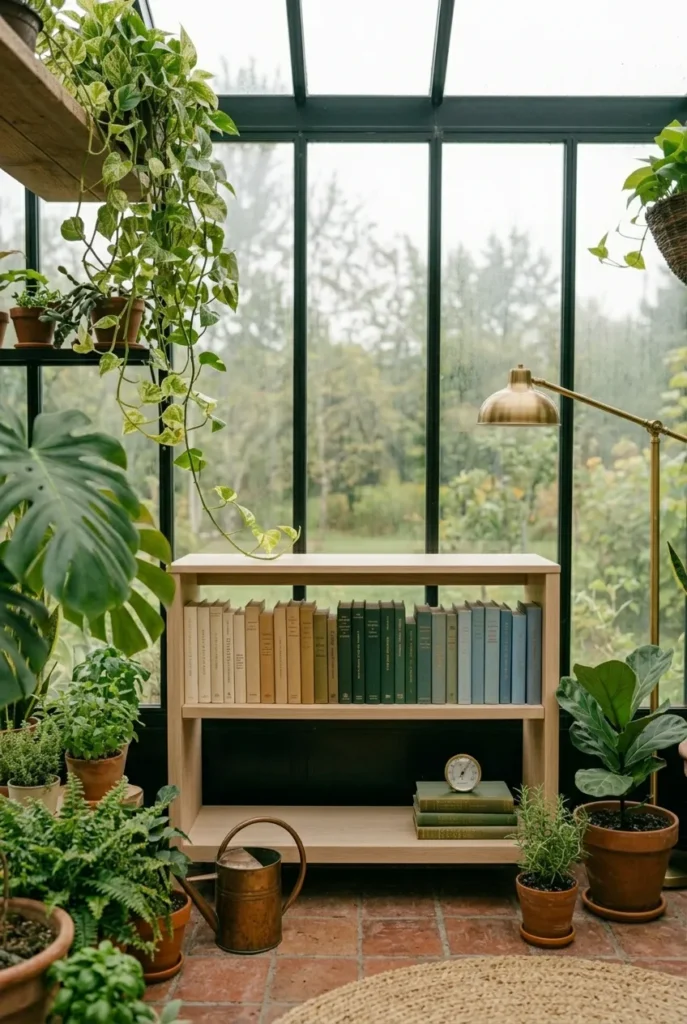
7. Fake the Greenhouse Feeling If You’re a Renter With No Sunroom
You don’t own a conservatory. Most readers don’t. The good news is the greenhouse reading nook is a feeling you can build against any bright-ish window with zero drilling. Start with the sunniest wall you’ve got, hang a sheer linen panel on a tension rod to scatter the light, and bank plants on a freestanding tiered stand instead of built-in shelves.
A cluster of plants on a $40 three-tier stand against a sheer-curtained window reads “greenhouse” from across the room.
Add a leaning ladder shelf for books, a single accent chair, and a clip-on plant grow light if your window is weak. Renting in a low-light apartment is the most common version of this whole project, and the workarounds in our loft reading nook ideas translate well to any awkward, light-hungry corner.
Failure mode: drilling shelf brackets into a rental wall you’ll have to patch. Tension rods and freestanding stands give you the look with your deposit intact.
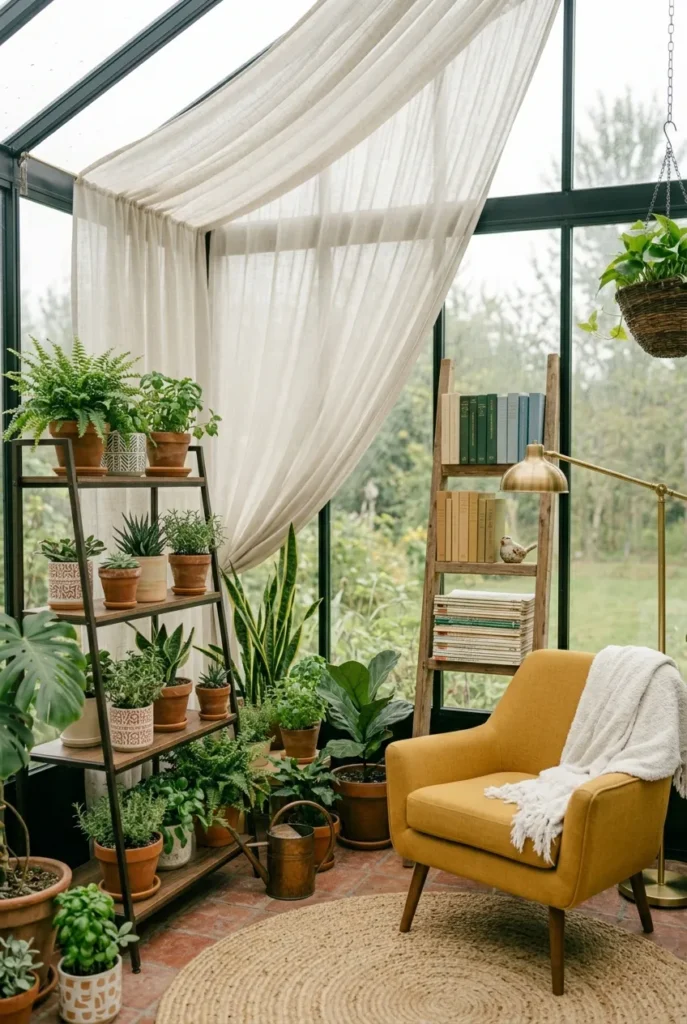
8. Pick Corner Plants That Survive Being Ignored
The dreamy jungle only stays dreamy if the plants live. For a reading corner you’ll often forget about mid-chapter, choose forgiving species: snake plant, ZZ plant, and pothos handle low light and erratic watering. Save the fussy calathea and maidenhair fern for the spots where light is genuinely bright and you’ll actually mist them.
Use the two-finger soil test before watering anything: knuckle into the soil, and if it’s damp two inches down, walk away.
Group plants with similar light and water needs together so one watering pass covers the cluster. It’s the difference between a five-minute Sunday routine and a slow graveyard of crispy leaves.
Failure mode: a moisture-loving fern parked in a dim corner. It browns, drops, and guilt-trips you for a month before it dies.
9. Layer the Soft Stuff for Cocoon-Level Comfort
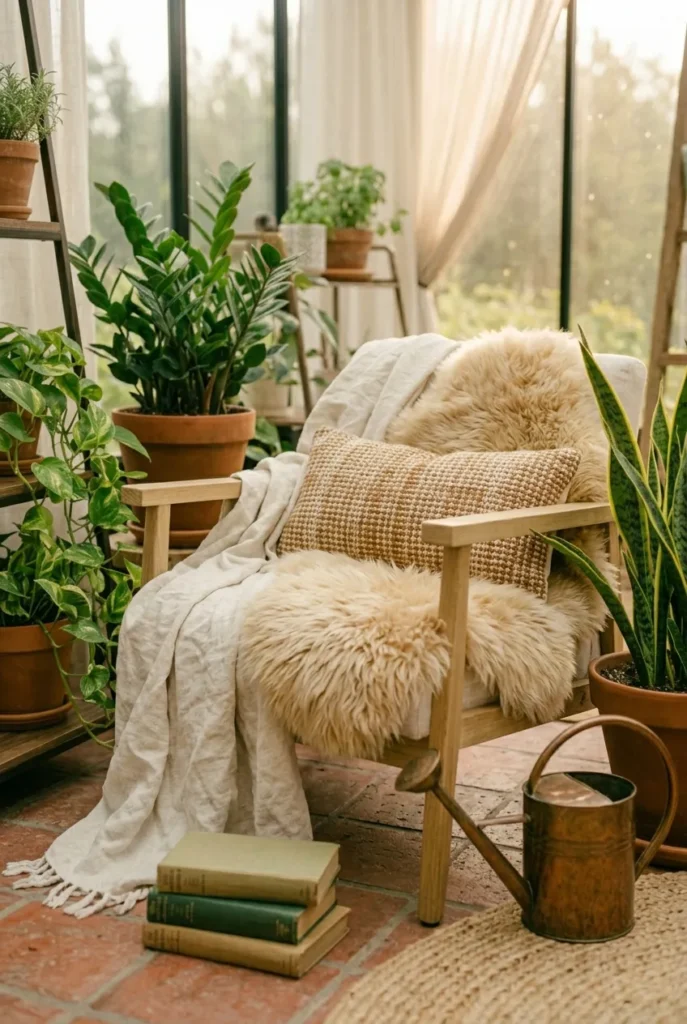
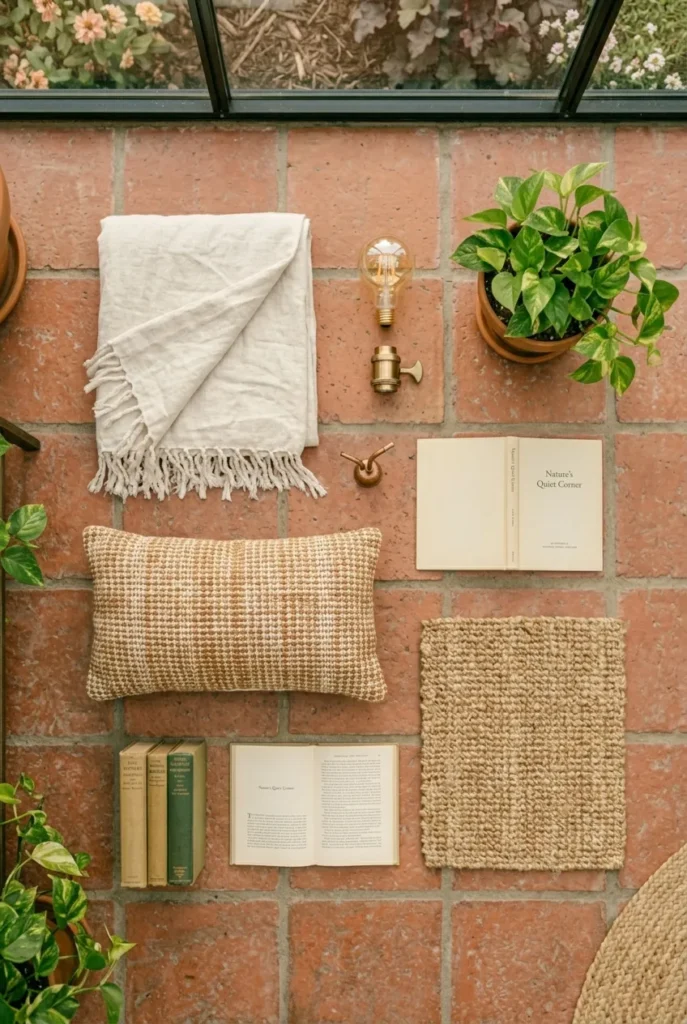
A glass room can feel hard and echoey, all panes and tile, until you soften it. This is where the nook turns from a photo into a place you sink into. Layer a linen throw, one lumbar pillow at the small of your back, and a sheepskin over the seat for cooler months. Texture does the heavy lifting: boucle, wool, jute, and linen together read warm even in a cold-edged room.
The first thing your body notices isn’t the view, it’s whether your lower back is supported. The lumbar pillow is non-negotiable.
In a sunroom that bakes in summer, swap the sheepskin for breathable cotton and a washable cover so you can toss it when the pollen settles.
Failure mode: a bare seat and one stiff decorative pillow. It looks staged and feels like a waiting room.
10. The Five-Minute Greenhouse Nook Starter Kit (Screenshot This)
Want the whole thing as a quick spec you can save before you shop? Here’s the minimum viable greenhouse reading nook, in build order, with realistic 2025 to 2026 US price bands. Buy top to bottom and you’ll have a working corner for well under $400.
| Piece | Archetype | Spec to hit | Typical price |
|---|---|---|---|
| Seat | IKEA Poäng or any deep armchair | 30 to 36 in seat depth | $130 to $250 |
| Light | Swing-arm lamp + 2700K bulb on a dimmer | warm, dimmable | $40 to $90 |
| Plants | Snake plant, pothos, one tall floor plant | bright indirect | $50 to $120 |
| Rug | Washable or jute, 5 by 7 | front legs on the rug | $60 to $120 |
| Soft layer | Linen throw + lumbar pillow | washable covers | $40 to $80 |
| Book storage | Leaning ladder shelf | 12 in foot back from glass | $50 to $90 |
Front-load the chair and the light. Everything else you can add over a few paychecks.
Failure mode: buying decor first and the chair last. You’ll end up with a beautiful empty corner and nowhere comfortable to sit.
A Quick Word on the Greenhouse Book Nook Kit (the Miniature Kind)
If you searched “greenhouse book nook” and landed here expecting a tiny model, you’re after a different thing, and that’s worth a clear answer. A greenhouse book nook kit (the Rolife and Michaels DIY type) is a miniature diorama that slots between real books on a shelf, a little lit-up glass house you assemble from wood and acrylic. Lovely, but it’s a craft project, not a place to sit.
This guide is about the full-size, sit-in-it version. If you want the miniature, search specifically for a “book nook kit” or “Rolife greenhouse” on Amazon. If you want a corner you can curl up in with an actual hardcover, keep the ten ideas above.
Frequently Asked Questions
What is a sunroom with plants called?
A sunroom filled with plants is usually called a conservatory, a garden room, or a solarium. Conservatory is the most common term when the room has a lot of glass, including a glass or partly glass roof. When people add a chair and books, that plant-filled glass corner becomes a greenhouse reading nook, the conservatory’s cozier, more personal cousin.
What furniture should you put in a greenhouse reading nook?
Keep it to a deep accent chair or a cushioned window seat, a small side table at about 24 inches high for your tea and book, a tiered plant stand, and a leaning ladder shelf for books set back from the glass. Choose moisture-tolerant materials like rattan, powder-coated metal, and washable cushion covers, since a glass room holds humidity.
What plants are good for a reading corner?
For a corner you might forget to water, pick hardy, low-light-tolerant plants: snake plant, ZZ plant, and pothos are nearly unkillable. Add one tall floor plant like a fiddle-leaf fig or bird of paradise to frame the chair, and a trailing plant up high for the indoor-jungle look. Group plants with similar needs so one watering pass covers them.
How do you decorate a sunroom with plants for reading?
Layer plants at three heights (floor, mid-level, and trailing from above), ground the seating with a washable or jute rug, and soften the glass with sheer curtains and textured throws. Add one warm 2700K lamp on a dimmer for night reading, leave an 18-inch clear bubble around your head, and keep books a foot back from the cold glass to dodge condensation.
Do I need an actual greenhouse to build this?
No. A greenhouse reading nook is a feeling, bright light, layered plants, a comfy seat, and you can build it against any sunny-ish window with no construction. Renters can use sheer curtains, freestanding tiered plant stands, and a grow light to fake the conservatory effect without drilling a single hole.
How do I stop humidity from ruining my books?
Aim to keep the room between 30 and 50 percent humidity, store hardcovers at least a foot back from the coldest glass, and use a sub-$15 hygrometer to monitor it. Crack a vent or run a quiet fan on muggy days. Damp above 60 percent will cup paperbacks and foxing-stain the pages over a season.
Your Corner Is Closer Than You Think
A greenhouse reading nook isn’t a renovation, it’s a chair, good warm light, a few plants that forgive you, and the patience to set them up in the right order. Start with the seat. Add the light. Let the jungle grow in around you over a few paychecks.
Which corner of your home gets the best afternoon light right now? That’s where this begins. Save this for your next free Saturday, and go claim it.
Keep reading
More cozy nook ideas
 Living Room
Read →
Living Room
Read →
Cabin Living Room Checklist: Everything to Decide Before You Start
No log walls, no stone hearth, no lake outside the window. You can still build a cabin living room in a regular…
 Bedroom
Read →
Bedroom
Read →
English Cottage Bedroom Checklist: Everything to Decide Before You Start
You saved forty pins of floral quilts and sloped ceilings, then looked up at your own bedroom: beige walls, one window, a…
 Nursery & Teen Rooms
Read →
Nursery & Teen Rooms
Read →
25 Teen Boy Bedroom Ideas That Feel Grown-Up, Not Childish
If his room still has the race car lamp and the glow-in-the-dark stars, and the door has started staying shut, he’s telling…