
10 Montessori Reading Nook Ideas Your Child Will Actually Use

The board books are shoved spine-out on a too-tall shelf. The picture books live in a plastic bin nobody opens. Your kid walks past the “reading corner” you spent a Saturday building and goes straight for the tablet. Sound familiar?
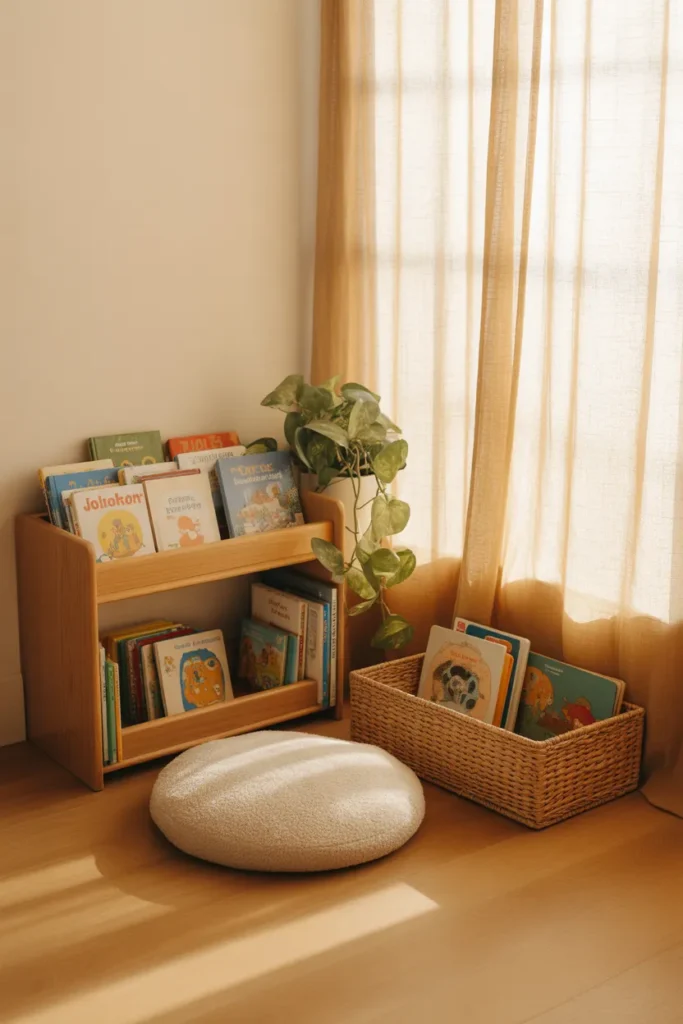
That gap between a pretty reading space and a used reading space is exactly what Montessori solves. These Montessori reading nook ideas are built on one principle: if a child can see the books, reach the books, and sit comfortably with the books, they will read the books.
I tested every setup below in my own 740 square foot rental over the last year, swapping pieces in and out until my toddler started pulling her own books at 18 months. We’re organizing this guide by zone and price tier, so you can build a nook whether you have a whole playroom or one quiet wall.
Related reads: Montessori Playroom Mistakes to Avoid & What to Do Instead and Toddler Bed Ideas: 10 Picks That Grow With Your Child
Who This Guide Is For
- Renters who can’t drill into walls (every idea includes a no-drill option)
- Small-space families working with under 100 square feet of living area
- Budget-conscious parents who want Montessori without the Lovevery price tag
- First-time Montessori parents unsure what “child-led” actually looks like in furniture
- Grandparents and caregivers building a part-time reading space for visiting kids
If you fall into more than one of those buckets, you’re in the right place. Each of the 10 ideas below tells you what it is, why it works, and exactly how to execute it.
What Makes a Reading Nook “Montessori”?
Before we get into the ideas, a quick frame so you can evaluate any setup (yours or someone else’s) on the fly. A Montessori reading nook checks four boxes:
- Child-height everything. If a 2-year-old can’t reach it, it isn’t theirs.
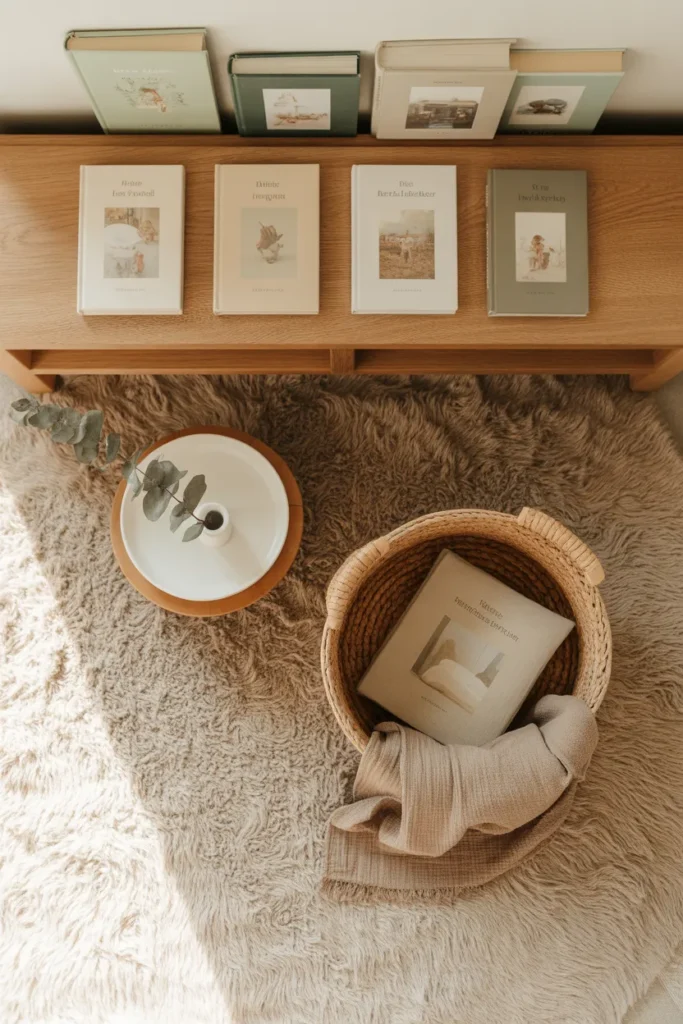
- Forward-facing book display. Covers visible, not spines. Kids choose with their eyes.
- Limited selection. Six to ten books on display, not sixty. Rotation beats overload.
- Soft, defined boundaries. A rug, a cushion, a small canopy. Something that says “this is the reading place.”
You’ll see these four principles repeat through every idea below. That’s the point.
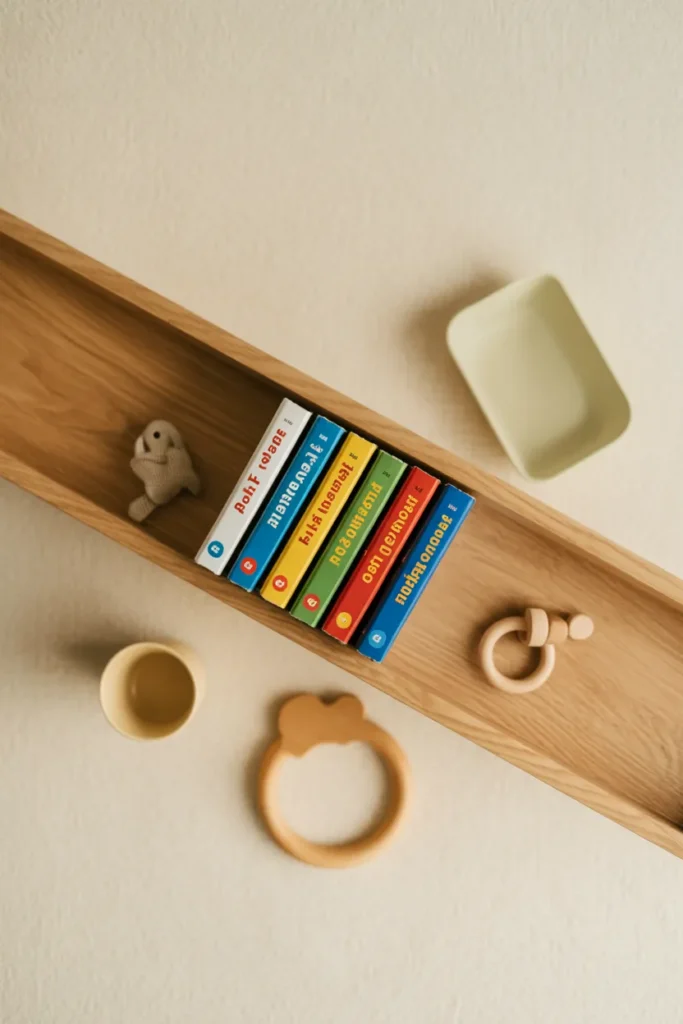
1. The Floor-Level Bookshelf Wall (The Foundation Setup)
What it is: A long, low shelf running along one wall at 18 to 24 inches high, with books displayed cover-out.
Why it works: Forward-facing display is the single biggest predictor of whether a toddler picks up a book. Spine-out shelving is for adults who already know what they want. Cover-out shelving lets a non-reader make a real choice.
How to execute it:
- Budget pick ($20): IKEA Mosslanda picture ledges, 22 inches wide, $9.99 each. Two ledges mounted with Command Strip Velcro picture hangers (rated for 16 pounds) give you a full no-drill display wall under $25.
- Mid-range ($79): IKEA Trofast frame turned on its side, books in the slots. Sturdy, looks intentional, kid-proof.
- Splurge ($249): Sprout Kids Montessori bookshelf in white oak. Beautiful, lasts a decade, resells well.
Works in pantries-turned-nooks as narrow as 20 inches wide.
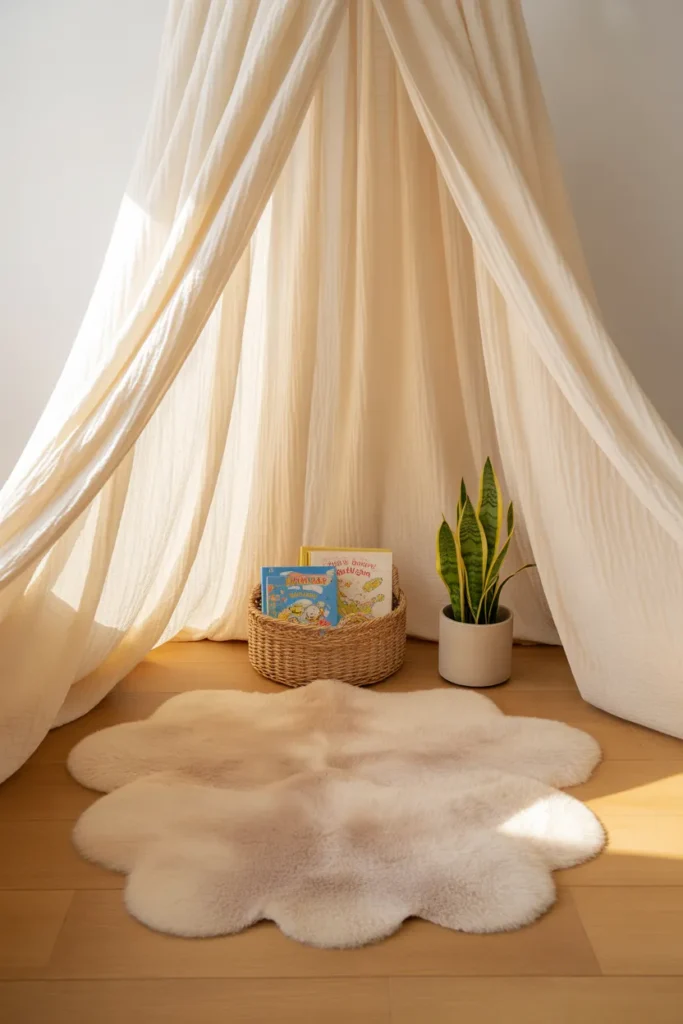
2. The Quiet Corner with a Canopy
What it is: A floor cushion or sheepskin tucked into a corner, with a fabric canopy or kid-sized teepee above.
Why it works: Montessori spaces honor the child’s need for solitude. A canopy creates a soft visual boundary that says “you can be alone here” without locking anyone out. It also dampens sound, which makes the space feel calmer.
How to execute it:
- Hang a simple muslin canopy from a ceiling hook (or a Command ceiling hook rated for 5 pounds, renter-friendly).
- Add a 32 inch round sheepskin or wool floor cushion from HomeGoods ($29 to $49).
- Drop in a small basket with two or three current favorite books.
- Skip stuffed animal piles. Montessori nooks stay visually quiet.
3. The Window Seat Reading Bench
What it is: A built-in or freestanding bench along a window with cushions and a book basket underneath.
Why it works: Natural light is non-negotiable in a Montessori space. Reading near a window pairs the physical pleasure of warmth and brightness with the act of opening a book. Kids start to associate one with the other.
How to execute it:
- Renter version: IKEA Bestå storage bench ($110) against a window, topped with a 16 by 48 inch linen cushion from Amazon ($35).
- Owner version: A built-in bench with a hinged lid for book storage underneath.
- Add a 24 by 36 inch wool throw in oatmeal or sage. Skip synthetic fleece, it pills and looks tired by month three.
4. The Pikler-Adjacent Floor Setup (Toddler-Specific)
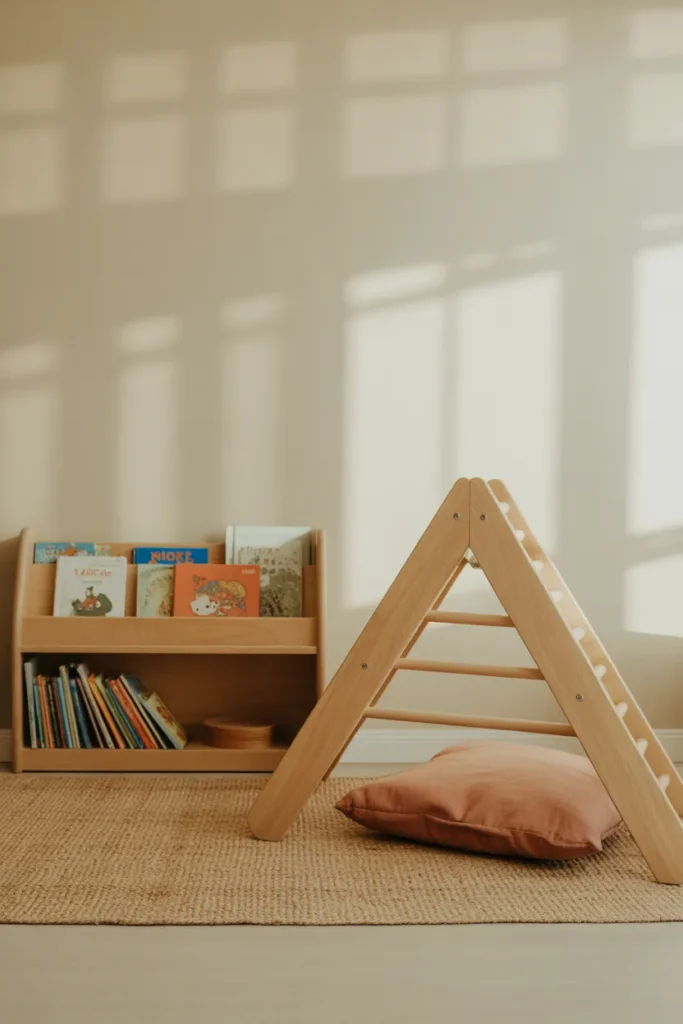
What it is: A reading area placed next to (not on) a Pikler triangle or climbing structure, with a wool rug defining the reading zone.
Why it works: Movement and reading are not opposites for toddlers. A child who climbs for ten minutes, then drops into a book for three, then climbs again, is doing exactly what Montessori predicts. Separating the zones with a rug gives the brain a cue to switch modes.
How to execute it:
- Use a 5 by 7 foot natural jute or wool rug to mark the reading side.
- Place a low book ledge along the wall on the rug side.
- Keep the Pikler on the bare floor side for grip.
- Best for kids 12 months to 4 years.
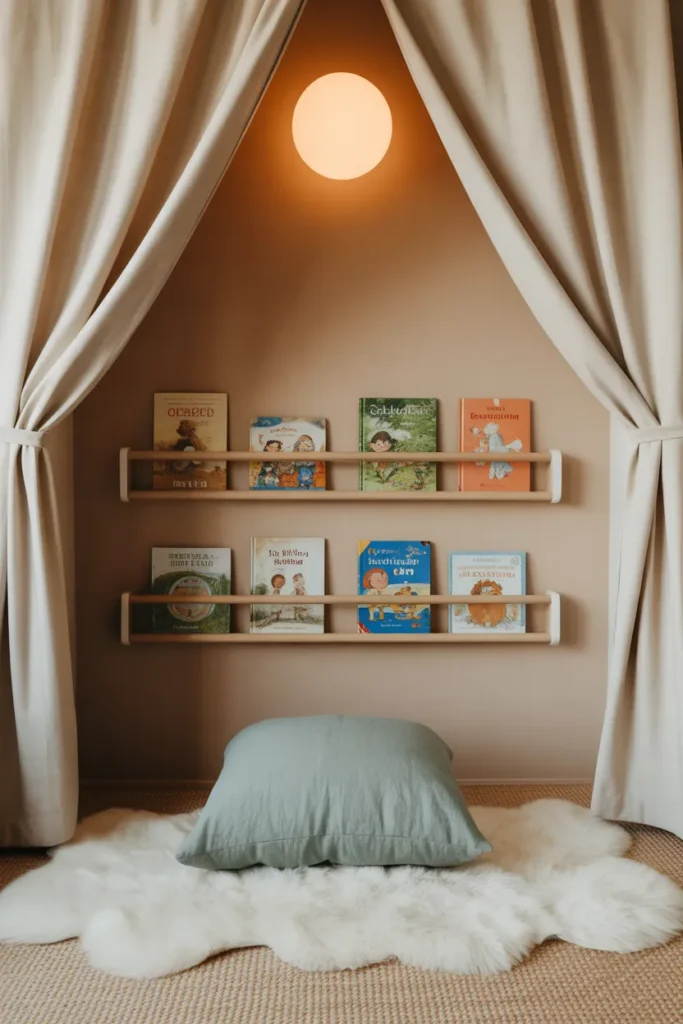
5. The Under-the-Stairs Book Cave
What it is: The triangular space under a staircase converted into a tiny reading room with a low light, a cushion, and a wall-mounted ledge.
Why it works: Kids are biologically wired to seek out small enclosed spaces (any parent who’s found their kid under a coffee table knows this). Building a nook into a cave-shaped space works with that wiring instead of against it.
How to execute it:
- Paint the back wall a warm muted color like Benjamin Moore Pale Oak or Sherwin Williams Accessible Beige.
- Add a single battery-operated wall sconce ($25 on Amazon) on a timer for evening reading.
- Mount two short Mosslanda ledges at toddler height.
- Place a 24 inch round floor cushion at the entrance.
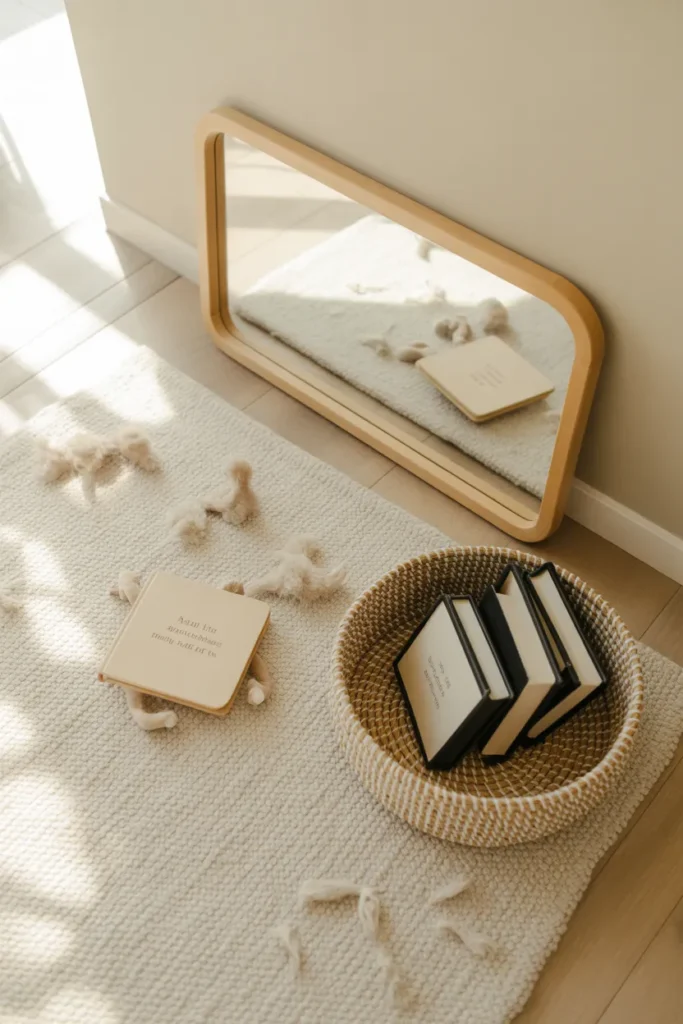
6. The Baby Floor Nook (Birth to 12 Months)
What it is: A Montessori baby room reading nook ideas variation, designed for pre-mobile and crawling babies.
Why it works: Babies need books too, but they need them at floor level where they spend their time. A baby reading nook is essentially a soft, safe patch of floor with three to five high-contrast or cloth books within reach.
How to execute it:
- Use a thick wool rug or a Toki mat (~$169) for joint support during tummy time.
- Add a low mirror at floor level, framed in unfinished wood. Babies read faces before they read books.
- Display three to five cloth or board books in a shallow basket, not on a shelf.
- Skip the playmat with built-in arches. Montessori favors visual quiet.
7. The Playroom Library Corner
What it is: A defined book zone within a larger playroom, separated by a low room divider or a rug change.
Why it works: In a multi-purpose playroom, the reading area competes with louder, flashier activities. Defining the zone visually trains the child to associate that specific patch of floor with quiet focus. Over time, just sitting down there triggers calm.
How to execute it:
- Use a low IKEA Kallax (laid horizontally, 30 inches tall) as both bookshelf and divider.
- Pair with a 4 by 6 foot natural-fiber rug.
- Hang one piece of framed art at child eye level (24 inches up), not adult eye level.
- Add a single floor lamp with a warm-toned bulb (2700K, not daylight 5000K).
8. The Rotating Book Basket System
What it is: A small basket holding six to eight books that get swapped out every one to two weeks, while the rest of the home library stays stored away.
Why it works: A toddler facing forty books makes no choice at all. Six books on rotation creates the illusion of newness every two weeks. Old favorites come back into rotation and feel fresh again. This is the single highest-leverage habit in this entire guide.
How to execute it:
- Keep a “library” bin in a closet with all the books not currently in rotation.
- Set a Sunday-night recurring task to swap five books for five new ones.
- Track seasonal books (Halloween, snow, spring flowers) and rotate them in on theme.
- The current selection sits in a 12 inch round seagrass basket from Target ($14).
9. The Closet-Turned-Nook (Smallest Space Win)
What it is: An empty closet (or one cleared of low-priority storage) converted into an enclosed reading hideout.
Why it works: This is the small-space, rental-friendly solution that nobody on Pinterest talks about enough. A closet has three walls already, a ceiling that creates instant coziness, and a door you can leave open or close for privacy. No drilling required, no furniture rearrangement.
How to execute it:
- Remove the closet door (store it flat behind a dresser) or leave it open and add a curtain on a tension rod.
- Mount two Mosslanda ledges using Velcro picture hangers.
- Lay a soft 24 by 36 inch sheepskin on the floor.
- Add a battery-operated puck light to the ceiling.
- Total cost under $80, all reversible.
10. The Outdoor Reading Nook (Spring and Summer)
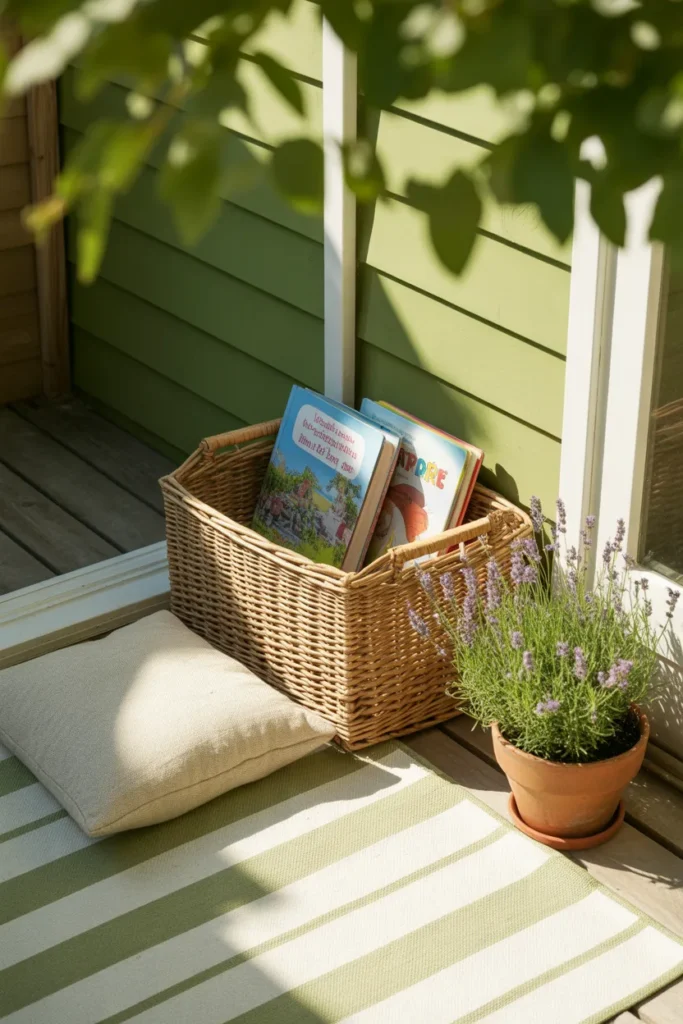
What it is: A seasonal Montessori reading setup on a patio, porch, or balcony for warm-weather months.
Why it works: Montessori values nature as the prepared environment in its purest form. Reading outdoors pairs books with birdsong, breeze, and natural light. Kids who fight indoor reading often surrender to outdoor reading without realizing it.
How to execute it:
- Use a weather-safe IKEA Sundsö storage box ($35) as a bookshelf-bench combo.
- Bring out three to five hardcover books in a canvas tote each morning, store them inside overnight.
- Add an outdoor rug (Target has 4 by 6 ft options for $39) and one floor cushion.
- Best for porches, balconies as small as 4 by 6 feet, and patios.
Budget vs Splurge: A Full Nook Breakdown
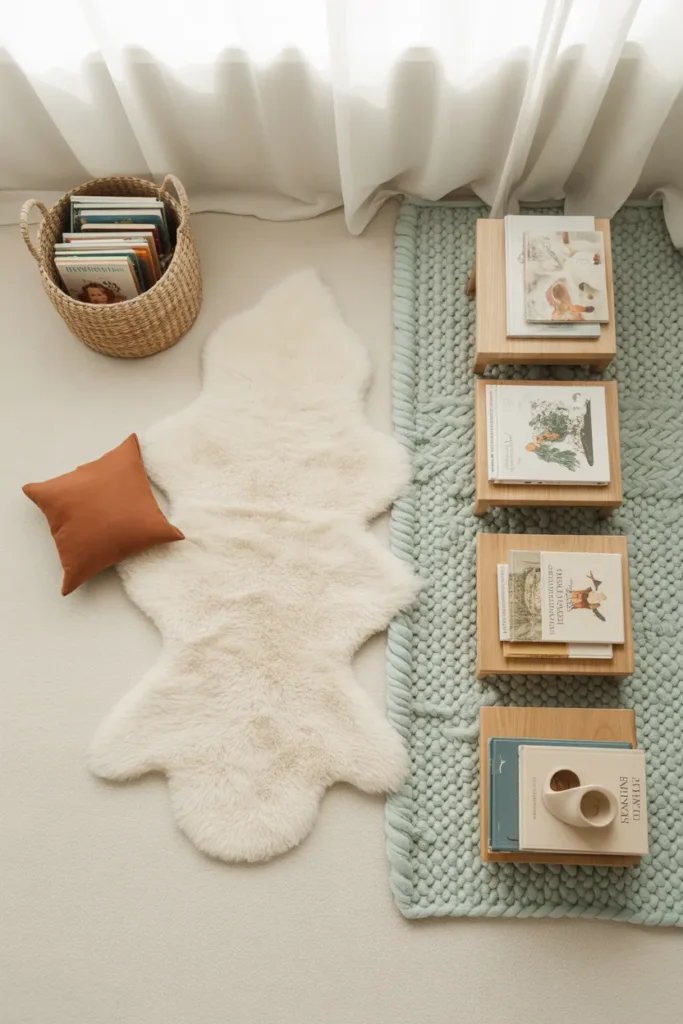
Here’s the same complete nook built three ways so you can pick your tier.
| Element | Budget (Under $90) | Mid-Range ($90 to $300) | Splurge ($300+) |
|---|---|---|---|
| Bookshelf | 2 IKEA Mosslanda ledges ($20) | IKEA Trofast frame ($79) | Sprout Kids oak shelf ($249) |
| Floor cushion | Target woven floor pillow ($25) | HomeGoods sheepskin ($45) | Lorena Canals washable wool ($189) |
| Rug | Amazon jute 3×5 ($35) | Target wool blend 4×6 ($99) | Armadillo wool 5×7 ($499) |
| Book basket | Dollar Tree seagrass ($3) | Target round seagrass ($14) | Cuyana waxed canvas ($85) |
| Lighting | Battery puck light ($12) | IKEA Skurup wall lamp ($25) | Schoolhouse sconce ($179) |
| Total | ~$95 | ~$262 | ~$1,200 |
The budget version genuinely works. I built it for my daughter’s first nook and she used it for eight months before we upgraded a single piece.
Common Mistakes to Avoid
After helping a dozen friends set up Montessori reading spaces, I see the same five mistakes on repeat. Skip these.
- Putting the shelf too high. If the top shelf is above your child’s shoulder, they can’t see the cover. Measure your kid, not your aesthetic.
- Overloading the display. Forty books out at once paralyzes a toddler. Six to ten max.
- Choosing the wrong rug. Synthetic shag pills, slides, and stops feeling cozy by month two. Natural fiber wins long-term.
- Cool-toned light. Daylight bulbs (5000K) feel like a classroom under fluorescent lights. Use 2700K to 3000K warm bulbs for reading.
- Adding screens or sound machines. A reading nook is a sensory-quiet zone. No tablets, no white noise, no music. The quiet is the feature.
How to Pick Books for the Nook (The 5 Finger Rule and What Replaces It For Toddlers)
The 5 finger rule (a child reads a random page and puts up a finger for every word they don’t know, five fingers means the book is too hard) is a great tool for early readers ages 5 and up. For toddlers and preschoolers who can’t read yet, use this instead:
- High-quality illustrations. Detailed enough to “read” the pictures alone.
- Realistic imagery before fantasy. Montessori favors books showing real animals, real children, real food before introducing talking pigs and dragons. Saved for age 3+.
- Diverse representation. Children, families, and homes that look like the real world.
- Sturdy construction. Board books for under 2, hardcovers for 2 to 4, paperbacks fine after 4.
- Short, calm text. Reading time is winding-down time. Save the action stories for the playroom.
A starter library of 30 books, with 6 to 8 rotated through the nook at a time, is plenty for a child under 4.
How to Keep the Nook Alive Across the Year
Reading nooks die one of two deaths: they become a clutter zone, or they become invisible because nothing ever changes. The fix is a quarterly micro-refresh.
- Spring (March to May): Swap in books about flowers, rain, birds. Add a small vase with a real seasonal stem.
- Summer (June to August): Outdoor nook activates. Indoor nook gets ocean and garden books.
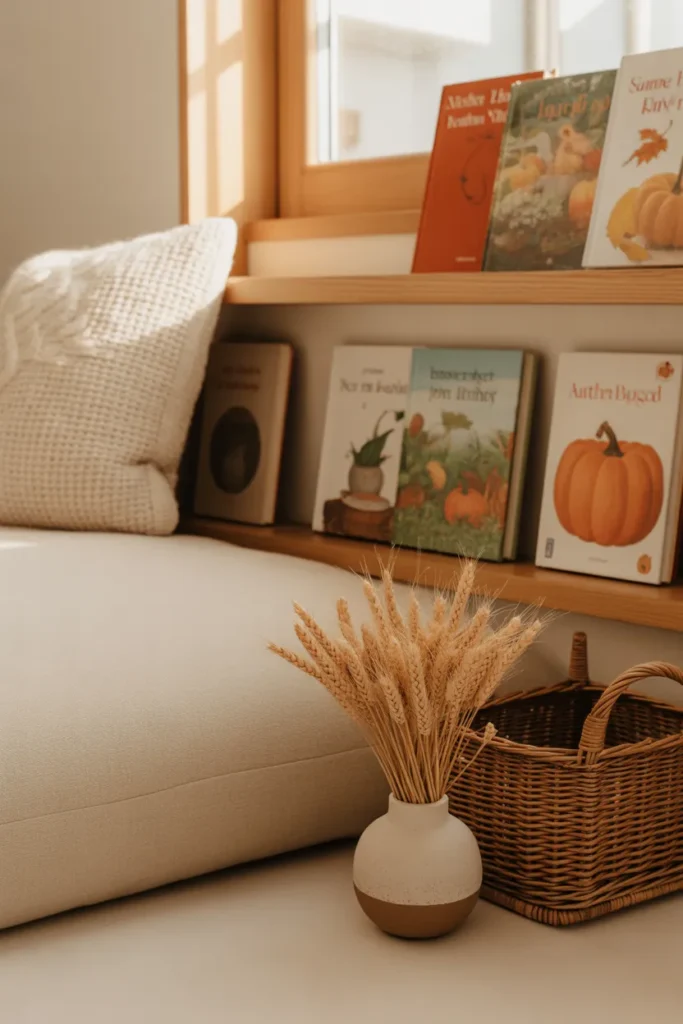
- Fall (September to November): Heavier wool throw appears. Books about leaves, pumpkins, harvest.
- Winter (December to February): Add a battery candle for cozy lighting. Snow and family-gathering books rotate in.
The nook stays the same. Only the books and one or two accents change. That’s the whole trick.
Frequently Asked Questions
How do I create a Montessori reading nook in a small apartment or rental?
Use the closet-turned-nook setup (idea #9). Mount IKEA Mosslanda ledges with Velcro Command picture hangers, drop in a sheepskin and one cushion, and you’ve built a complete reading space in 4 square feet with zero drilling. Total cost under $80, fully reversible at move-out.
What is the budget version of a Montessori reading nook?
A full budget setup runs about $95: two IKEA Mosslanda ledges ($20), a Target floor pillow ($25), an Amazon jute rug ($35), a Dollar Tree basket ($3), and a battery puck light ($12). My daughter used the budget version for eight months before we upgraded anything.
What if I don’t have a dedicated room or even a corner?
You don’t need one. A reading nook can be a 3-foot section of one wall. The defining elements are a low forward-facing shelf, a soft surface (cushion or rug), and a clear visual boundary. We had ours in the dining room for six months. Worked fine.
How long does it take to set up a Montessori reading nook?
The physical setup takes 60 to 90 minutes if you have the pieces. The harder part is the first two weeks of book rotation, where you’ll fiddle with which titles actually get pulled. Plan on a month of small adjustments before it feels “done.”
How do I make my child love reading books?
Three things, in order: make books visible (cover-out display), make books accessible (child height), and read aloud daily without screens nearby. The nook supports all three. Forcing reading sessions doesn’t work. Modeling reading yourself in the same room does.
What is the 5 finger rule for books?
The 5 finger rule helps early readers (age 5+) choose appropriately leveled books. The child opens a random page and holds up one finger for each unknown word. Zero to one finger means the book is too easy, two to three is just right, four to five is too hard. For toddlers and pre-readers, use illustration quality and topic relevance instead.
What are some popular themes for Montessori book nooks?
Nature-led themes (forest, ocean, garden), seasonal themes (fall harvest, winter cozy, spring bloom), and quiet-time themes (bedtime stories, slow mornings). Avoid character-licensed themes (Disney, superheroes). Montessori favors real-world imagery over branded fantasy, especially under age 4.
How often should I rotate the books?
Every one to two weeks for kids under 4. Every two to four weeks for older kids. Keep a “library bin” of out-of-rotation books somewhere out of sight, and treat each rotation like a tiny reveal. Old favorites coming back feels brand new to a toddler.
Can a Montessori reading nook work for siblings of different ages?
Yes, with two layers. Use a two-tier setup: the lower ledge holds board books for the younger child (12 to 24 inch height), the upper ledge holds picture books and early readers for the older child (30 to 36 inch height). One rug, one cushion, both zones share the space.
Build the Nook, Then Sit In It
The best Montessori reading nook isn’t the prettiest one on Pinterest. It’s the one your kid actually crawls into at 4 p.m. when the day is winding down. Start with the floor-level bookshelf, add a soft surface, rotate six books, and adjust from there.
Save this post to your home decor or playroom Pinterest board so you have the budget breakdown handy when you’re shopping. And if you’re building out the rest of the kids’ space, our guide to a Montessori-friendly playroom layout walks through the same principles for the bigger room, our Montessori bookshelf buying guide compares the eight shelves I tested, and our no-drill renter decor tips covers everything I’ve learned mounting nursery stuff without losing my deposit.
For deeper research on early literacy environments, the American Academy of Pediatrics literacy guidance and the American Montessori Society’s prepared environment principles are both worth bookmarking.
What corner of your home are you eyeing for your nook? Pin your favorite setup above and start there this weekend.
Keep reading
More cozy nook ideas
 Home Office
Read →
Home Office
Read →
The 12 Best Reading Chairs of 2026 (Ranked for Three-Hour Comfort)
The best reading chairs are not the prettiest chairs in the showroom. It’s the one you’re still comfortable in at the end…
 Living Room
Read →
Living Room
Read →
18 Small Apartment Living Room Ideas Worth Copying This Weekend
No extra square feet. No permission to paint. A sofa that already takes up half the floor. You can still make the…
 Kitchen
Read →
Kitchen
Read →
12 Warm Neutral Kitchen Ideas Worth Copying This Weekend
If your kitchen is beige and still feels cold at 8 p.m., the paint probably isn’t the problem. It’s usually the bulb,…
One Comment