
Reading Nook With Bookshelves: 16 Cozy Ideas That Make Books the Star

You know the corner. The one stacked with random pillows, a wobbly tower of unread paperbacks on the floor, and a lamp you keep meaning to replace. It looks like a reading spot if you squint, but no one actually sits there. The light is wrong, the books have nowhere to live, and the whole thing feels like an apology instead of a destination.
A reading nook with bookshelves fixes all of that in one move. You give your books a real home, you give yourself a real seat, and suddenly the corner does the heavy lifting your living room or bedroom never could.
This guide breaks down 16 ideas organized by layout type, from corner setups to floor-to-ceiling built-ins, with budget vs splurge breakdowns at every step. We’ll cover what works in small apartments, what works in rentals, and what to skip entirely. By the end you’ll have a clear plan, not just a Pinterest board.
Who This Reading Nook Guide Is For
- Renters who want the built-in look without drilling or losing a security deposit
- Small-space dwellers working with corners, alcoves, or walls under 4 feet wide
- Homeowners ready to commit to a real built-in
- Budget-friendly readers assembling a nook for under $200 total
- Style hunters drawn to Grandmillennial florals, Japandi calm, or Cottagecore warmth
If you’re somewhere on that list, the rest of this post is for you.
The 3 Layers Every Reading Nook Needs (Original Framework)
Before we get into individual ideas, here is the framework I use on every nook I style. Steal it, screenshot it, build from it.
- Structure layer: The bookshelves and seating that define the footprint. This is the bones.
- Lighting layer: Ambient, task, and accent light working together. This is what makes it photogenic AND functional.
- Soft layer: Cushions, throws, rugs, and curtains. This is what makes it cozy.
Skip any one of those three and the nook flops. Nail all three and even a 3-foot corner can feel like a destination.

Corner Reading Nook With Bookshelves
The corner is the easiest entry point because every room has at least one underused one. Tuck a chair into the angle, flank it with two tall narrow bookcases, and you’ve got an instant reading retreat with zero construction.
1. The L-Shaped Bookcase Hug
What it is: Two tall narrow bookcases placed perpendicular to each other in a corner, with a comfortable armchair tucked into the angle they create.
Why it works: The shelves form a partial enclosure that signals “this is a separate zone” without putting up actual walls. Your brain registers privacy, your books frame the space visually, and the chair gets a built-in side table on each side.
How to execute: Use two IKEA Billy bookcases (32 inches wide each, around $130 each) or a pair of slim Target Threshold bookcases for around $90 each. Set them perpendicular in the corner with a 30-inch gap for the chair. Anchor both to the wall with the included tip kits.
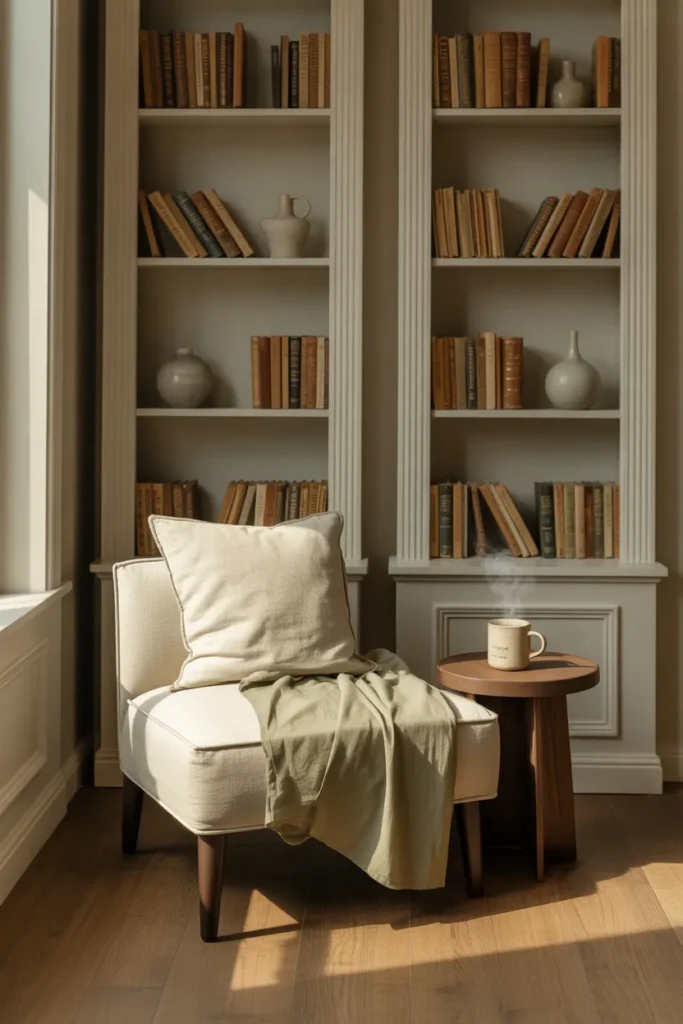
2. Reading Nook Between Bookshelves
What it is: A single chair or small bench positioned with bookshelves on both sides at exact symmetrical distance, creating a built-in look without the build.
Why it works: Symmetry reads as intentional and expensive even when the components are budget. This is the layout most “reading nook between bookshelves” Pinterest searches are looking for, and almost no editorial coverage exists for it.
How to execute: Place two identical bookcases with a 36 to 42-inch gap between them. Slide a wingback or barrel chair into the gap. Add a small round side table at the right height for a mug. Hang a single piece of art on the wall behind the chair to complete the framed effect.
Window Seat Reading Nook With Bookshelves
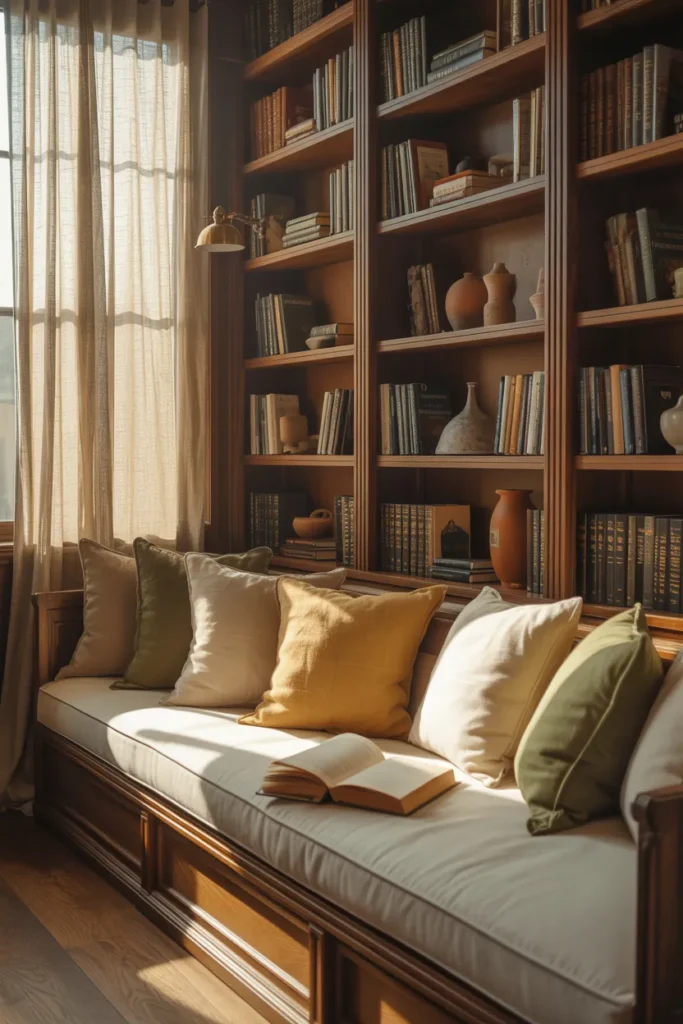
If you have a window with at least 36 inches of usable width below it, you have the start of the most-saved Pinterest reading nook layout in existence.
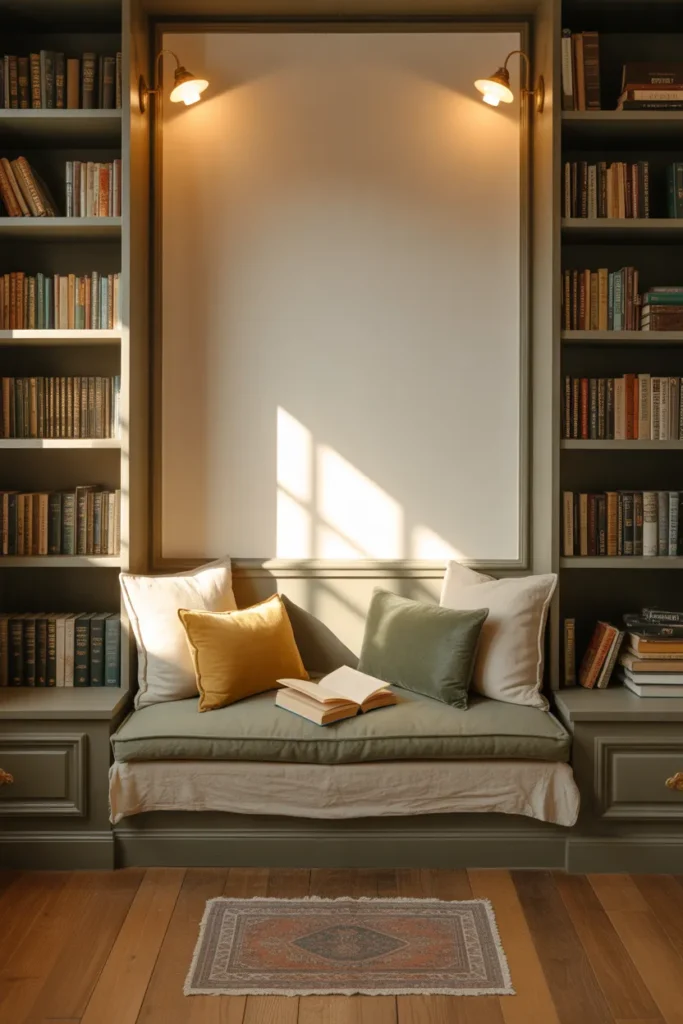
3. Cushioned Window Seat With Flanking Shelves
What it is: A built-in or bought bench sized to fit under a window, with bookshelves running up either side of the window frame.
Why it works: Natural daylight is the cheapest mood lighting available. Position your bench under a window and you get free atmosphere from sunrise to sunset, plus a frame for the bookshelves that flank it.
How to execute: For a no-build version, use an IKEA Hemnes shoe storage bench (around $200) or the IKEA Bestå bench system topped with a custom-cut foam cushion. Flank with two Billy bookcases. Add a thick linen cushion (HomeGoods or Amazon, $40 to $80) and three to five throw pillows in mixed textures.
4. Bay Window Library Bench
What it is: A continuous cushioned bench that wraps the inside of a bay window, with low bookshelves built underneath.
Why it works: The three-sided enclosure of a bay window creates instant privacy. Building shelves under the bench solves storage and seating in one structure.
How to execute: This one usually requires a contractor or confident DIY. Budget around $1,200 to $3,000 for a built version, or $500 to $800 for a clever IKEA hack using three side-by-side Bestå cabinets with custom cushion tops.
Built-In Bookshelves Reading Nook
When you’re ready to commit, built-ins are the version that adds resale value and the kind of magazine-worthy depth that store-bought furniture cannot replicate.
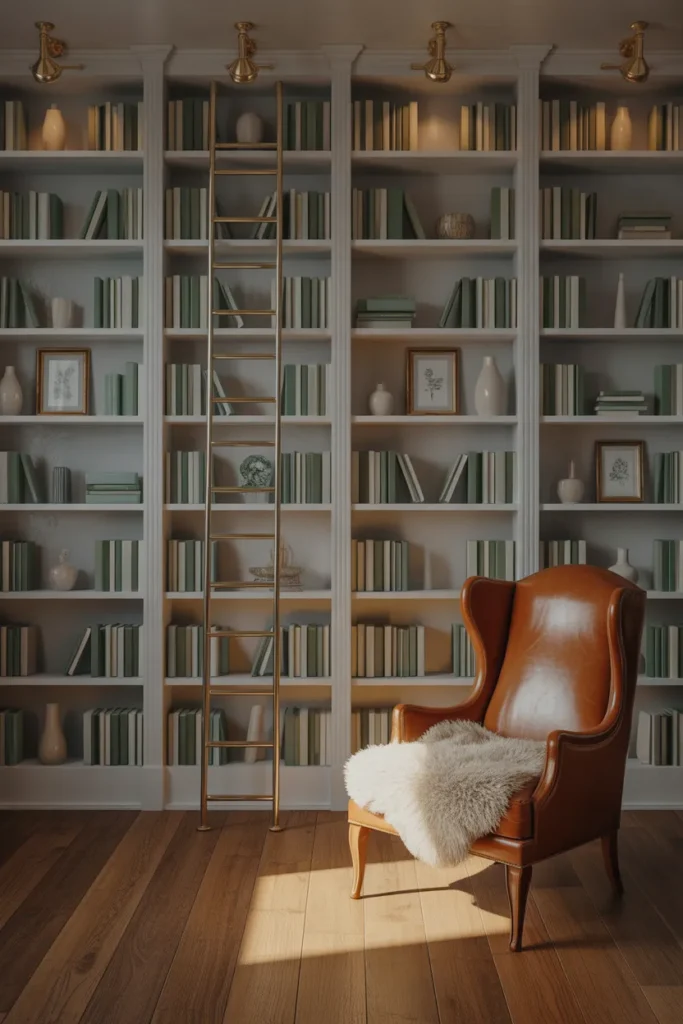
5. Floor-to-Ceiling Bookshelves With Ladder
What it is: Built-in shelves running from floor to ceiling on one entire wall, with a rolling library ladder mounted on a brass rail.
Why it works: Vertical drama. Even a small room reads as a private library when the eye travels all the way up. The ladder is functional AND it becomes the architectural focal point of the room.
How to execute: Splurge route: hire a finish carpenter ($3,000 to $8,000 depending on wall size). Budget route: stack IKEA Billy bookcases with the height extension units and add a decorative non-functional ladder from World Market or Pottery Barn ($150 to $400).
6. Recessed Alcove Built-In
What it is: A reading bench and bookshelves built into a recessed wall section, often beside a fireplace or chimney breast.
Why it works: You’re using dead architectural space that was already there. The recess creates natural enclosure, and the built-ins look like they’ve always been there because, visually, they have.
How to execute: Measure your alcove carefully. Have a carpenter build a bench seat at 17 to 18 inches high (standard seating height) with shelves above. Paint the entire alcove a contrast color, sage green and dusty blue are trending, to make it pop from the surrounding wall.
Small Space Reading Nook With Bookshelves
For everyone working with a studio apartment, a tiny bedroom, or a hallway corner. Small space does not mean small impact.
7. The 24-Inch Sliver Nook
What it is: A nook built into a space as narrow as 24 to 30 inches using a single tall narrow bookcase and a floor cushion.
Why it works: Even spaces too small for a chair can hold a floor cushion, a slim bookcase, and a clip-on light. This is the cheapest possible setup with the highest cozy return.
How to execute: Use the IKEA Billy 15-inch narrow bookcase (around $90) against the wall, layer a sheepskin or large floor cushion at its base, clip an Amazon Basics reading lamp to the bottom shelf, and hang a single piece of art directly above.
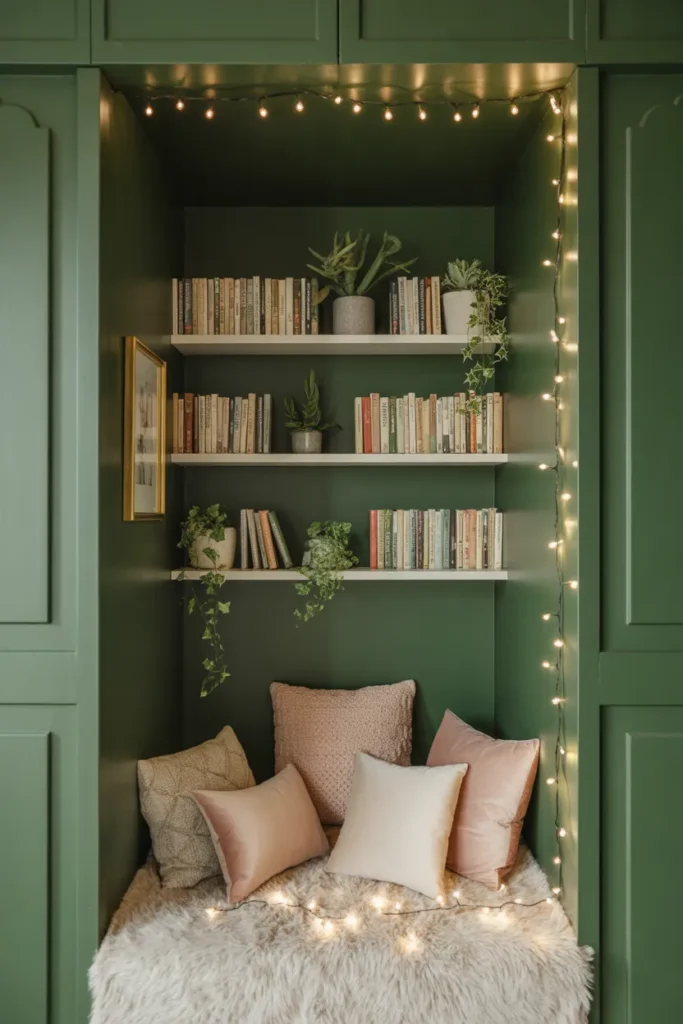
8. Closet Conversion Reading Nook
What it is: Remove the doors from a small closet, line the walls with floating shelves for books, and add a cushion or narrow bench inside.
Why it works: You get total enclosure on three sides, which delivers cocoon energy unmatched by any open layout. The closet becomes a private reading cave that doubles your storage.
How to execute: Remove doors, paint the interior in a deep moody color (Farrow & Ball Hague Blue dupes from Behr work great), install three IKEA Lack floating shelves on the back wall, add a thick floor cushion or a narrow upholstered bench.
9. The Behind-The-Sofa Floating Shelf Nook
What it is: A floating shelf or two installed on the wall behind your sofa, with a reading lamp clipped to the sofa back and a small basket of books on the floor.
Why it works: Renters love this one because nothing requires major commitment. You’re claiming the sofa as your reading chair and the wall behind it as your bookshelf.
How to execute: Install two 36-inch floating shelves from IKEA or Target (under $30 each) at staggered heights. Style with books, a small framed photo, and one tall vase or vine.
Rental-Friendly Reading Nook With Bookshelves
Built-ins are gorgeous but they need landlord permission and a drill. These ideas give you the same look without either.
10. Leaning Ladder Bookshelf Nook
What it is: A leaning ladder-style bookshelf paired with a chair, requiring no wall anchors beyond a single safety strap.
Why it works: The angled leaning shelves create visual interest without drilling. They look design-forward, not generic, and they move with you when your lease ends.
How to execute: Look at the Crate & Barrel Tate ladder bookshelf ($300+) or the budget version from Walmart and Target for under $80. Anchor with a single Command Strap kit at the top.
11. Tension Rod Curtain Nook
What it is: A reading chair tucked into a corner with a tension rod and curtain creating a soft partial enclosure overhead.
Why it works: No drilling, no permanent changes, and you get that canopy effect that signals private space. Pair with a slim bookcase and the corner reads like an intentional design moment.
How to execute: Use an Amazon tension rod ($15) across a corner, hang a sheer linen curtain panel ($25 to $40 at H&M Home or Target), add a chair and a slim bookcase. Done in under an hour.
Bedroom Reading Nook With Bookshelves
The bedroom is the most popular room for a reading nook because it’s already a quiet zone. For 18 more bedroom-specific setups, check our bedroom reading nook ideas roundup.
12. Foot-of-the-Bed Bench With Under-Bed Bookshelf
What it is: A long bench at the foot of the bed paired with a low bookcase against the wall opposite the headboard.
Why it works: You’re using a furniture piece (the bench) that already belongs in most bedrooms and giving it a dual purpose. The low bookcase keeps the visual weight balanced.
How to execute: Use an upholstered storage bench from Target or HomeGoods ($120 to $250), pair with a 3-shelf low bookcase from IKEA ($60). Stack books horizontally on the top shelf and add a small lamp.
13. Beside-The-Wardrobe Tuck-In
What it is: A reading chair placed in the gap between your wardrobe and the wall, with floating shelves above it.
Why it works: That awkward 24 to 36-inch gap most bedrooms have beside the closet finally becomes useful. The wardrobe acts as a wall, the floating shelves act as your bookcase.
How to execute: Slide in a slim accent chair (IKEA Pello at $90 or a thrifted vintage option), install two staggered floating shelves above, clip a reading light to the wardrobe edge.
Budget vs Splurge: Reading Nook With Bookshelves Breakdown
The most useful version of any decor article is the one that shows you what to spend money on and what to save on. Here’s how every component breaks down by price tier.
| Component | Budget (Under $50) | Mid-Range ($50–$150) | Splurge ($150+) |
|---|---|---|---|
| Bookcase | IKEA Kallax 1×4 ($45), thrifted finds | IKEA Billy ($130), Target Threshold ($90) | Pottery Barn ($600+), West Elm ($800+) |
| Seating | Floor cushion + sheepskin ($35) | IKEA Pello chair ($90), HomeGoods accent chair ($150) | Article Sven chair ($400+), West Elm ($700+) |
| Lighting | Amazon clip-on reading light ($15) | IKEA Skurup plug-in sconce ($25), brass picture light ($45) | Visual Comfort sconce ($250+), Schoolhouse picture light ($200+) |
| Throw + pillows | Walmart pillow inserts + Dollar Tree pillowcases ($15) | HomeGoods linen pillows ($25 each), Target throw ($30) | Pottery Barn velvet pillows ($80 each), CB2 throw ($100+) |
| Side table | Thrifted, $5 to $25 | IKEA Lack ($15), Target round table ($60) | Anthropologie ($200+), West Elm ($300+) |
My honest split: spend on seating and lighting. Save on bookcases and side tables. A $90 IKEA Billy looks identical to a $400 alternative once it’s full of styled books. A bad chair, however, is bad forever.
14. The IKEA Billy Built-In Hack
What it is: Three or four IKEA Billy bookcases lined up wall-to-wall, trimmed out with simple molding to look custom-built.
Why it works: This is the single highest-impact, lowest-cost hack in home decor right now. For around $500 to $700 in total, you get something that looks like a $5,000 built-in once the trim is painted to match.
How to execute: Buy 3 Billy bookcases (84-inch tall version). Line them up against a wall. Add 1×4 pine trim on top, on the sides, and at the bottom. Caulk every seam. Paint the entire unit one color, the same color as your wall, to make it disappear into the architecture.
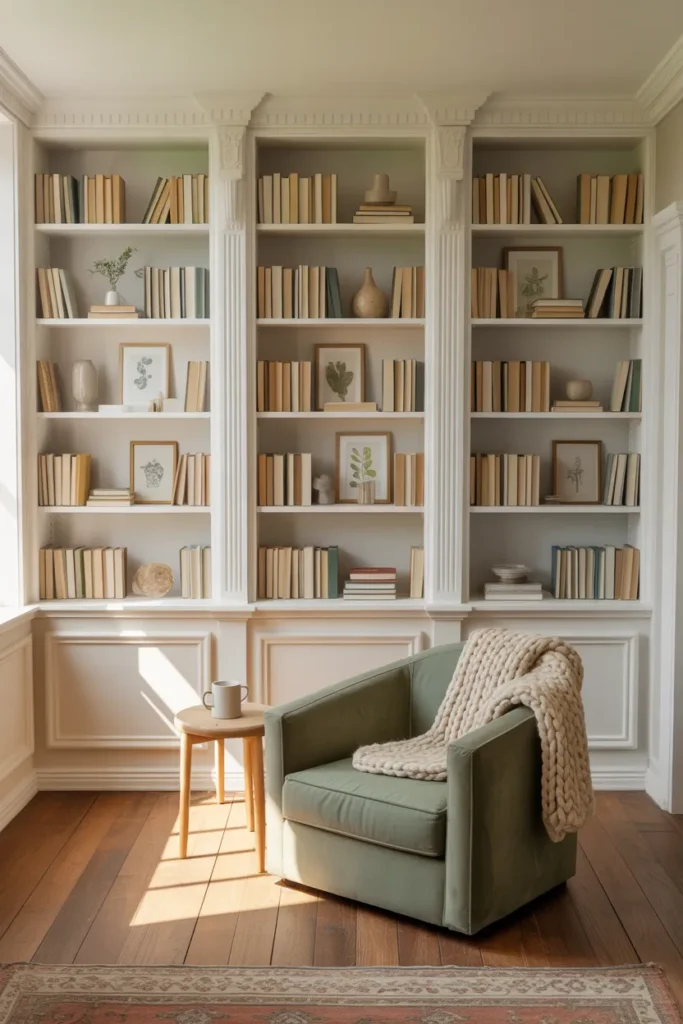
Reading Nook Lighting That Actually Works
You can nail the chair, the books, and the cushions and still wreck the whole thing with one bad bulb. Layered lighting matters more than any single piece of furniture in your nook. For 12 setups dedicated entirely to this, see our full reading nook lighting ideas guide.
The fast version: aim for warm bulbs in the 2700K to 3000K range, use three layers (ambient, task, accent), and dimmer-switch everything you can. The Library of Congress notes that light damage is cumulative, meaning dim light over a long period is just as damaging as bright light over a short period, so if you have rare or sentimental books, keep them away from direct sun and use UV-filtering shades. LOC
15. The Brass Picture Light Above the Shelves
What it is: A small brass picture light mounted just above the top shelf of your bookcase, pointed down to wash light across the spines.
Why it works: This single move makes any bookcase look like it belongs in a townhouse library. The downward wash highlights book spines, creates dramatic shadow, and adds an architectural detail bookcases usually lack.
How to execute: Use a hardwired version if you can ($150 to $300 from Schoolhouse or Rejuvenation), or a battery-operated plug-in version from Amazon for $30 to $60. Mount 4 to 6 inches above the top shelf.
Style Direction: Pick One Aesthetic and Commit
The fastest way to make a reading nook look amateur is to mix four styles in one corner. Pick a lane.
- Grandmillennial: florals, gingham, ruffled cushions, brass accents, layered patterns, deep colors, vintage books with worn spines.
- Japandi: oak wood, oatmeal linen, ceramic vases, single sprigs of dried grass, hardcover books with cloth bindings turned spine-in for calm visual texture.
- Cottagecore: light wood, floral cushions, vintage botanical prints framed above the shelves, books with patina, pressed flowers, ironstone pitchers.
- Modern Farmhouse: shiplap behind the shelves, black metal picture lights, neutral cushions, woven baskets, white ceramics, simpler shelf styling.
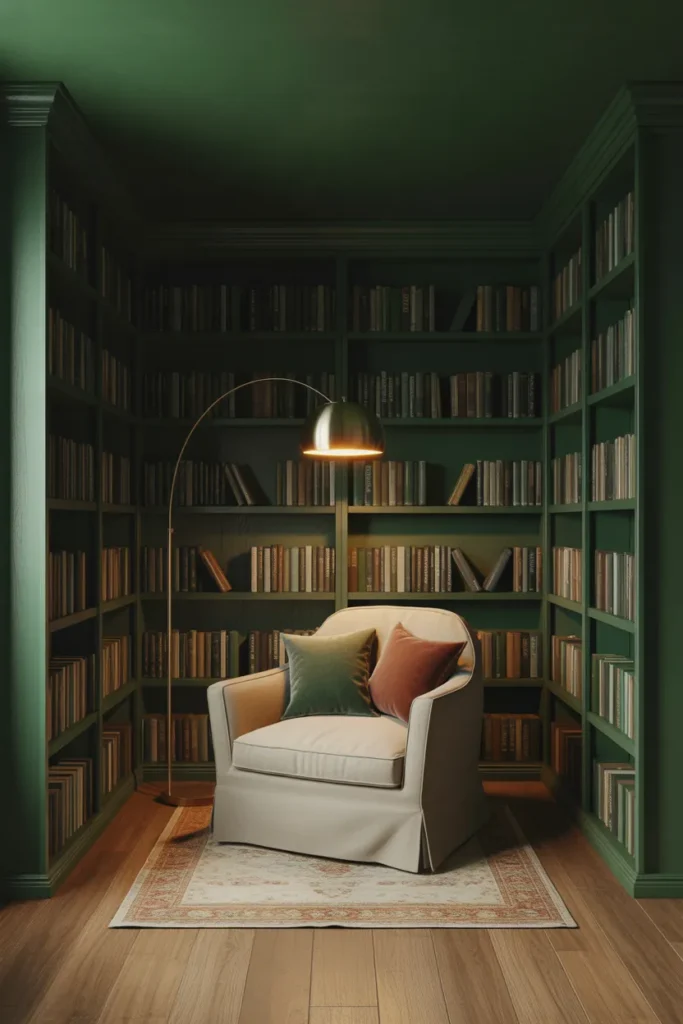
16. The Color-Drenched Reading Nook
What it is: Paint the walls, the bookcase, AND the ceiling of your nook the same saturated color, a single immersive envelope of color.
Why it works: Color-drenching is the biggest 2026 home decor trend, and it works beautifully on small enclosed nooks because the saturation makes the space feel intentional rather than just under-decorated. Pinterest searches for “color drenched reading nook” are climbing fast.
How to execute: Pick a deep, library-friendly color: forest green, navy, oxblood, terracotta, or a soft dusty pink. Paint everything (walls, ceiling, trim, bookcase) the same shade. Style the shelves with books in mixed colors to break up the saturation.
How to Style the Bookshelves Themselves
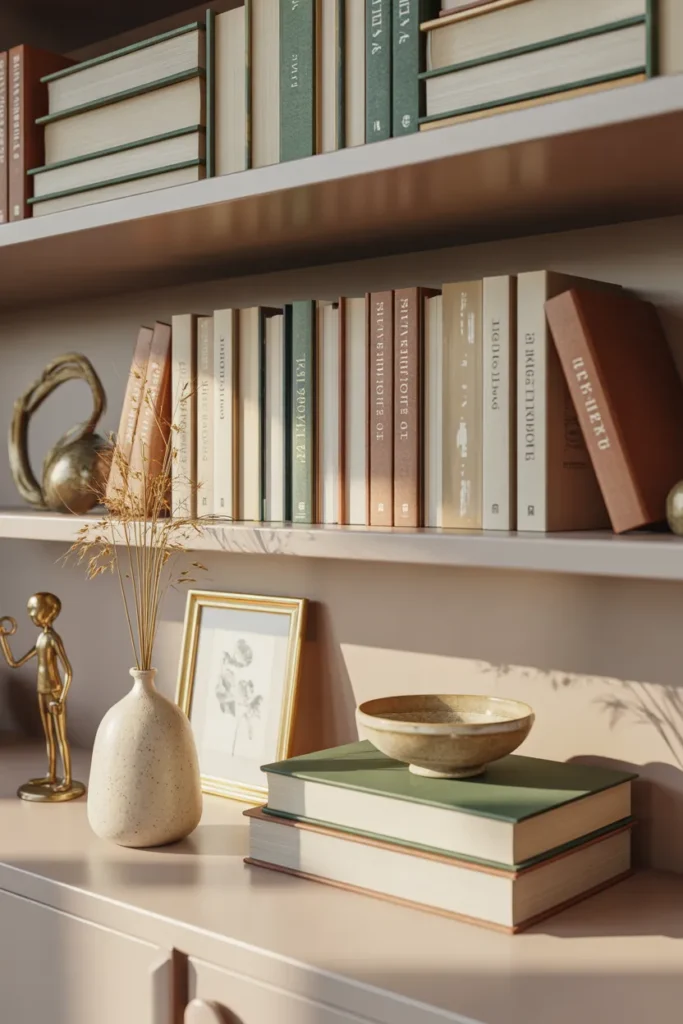
The shelves do half the work in a reading nook. If you stack them like a library, the whole room reads as serious. Style them right and the whole room reads as designed.
- Mix vertical and horizontal stacking. A row of upright books, then a small horizontal stack with a ceramic on top, then more upright books. Repeat down the shelves.
- Add 3D objects every other shelf. Small framed art, a vase, a sculpture, a brass animal, a bowl. Anything that breaks the line.
- Leave breathing room. A shelf that is 75 percent full looks intentional. A shelf that is 100 percent full looks like storage.
- Group by color in soft clusters. Not strict rainbow ordering, just gentle gradients (cream books together, then blue, then green). This is the look most people are after when they say “aesthetic bookshelf.”
- Turn 20 percent of your books spine-in. Yes, really. The exposed page edges create texture and quiet the visual noise of mixed dust jackets. Use this trick for books you’ve already read or don’t reference often.
Common Mistakes to Avoid
A few traps that wreck even well-styled nooks. Avoid these and you skip the most frustrating mistakes.
- Choosing a chair that looks good but feels bad. If you can’t sit in it for an hour without shifting, you won’t use the nook. Test the chair in store or read 50 reviews before buying online.
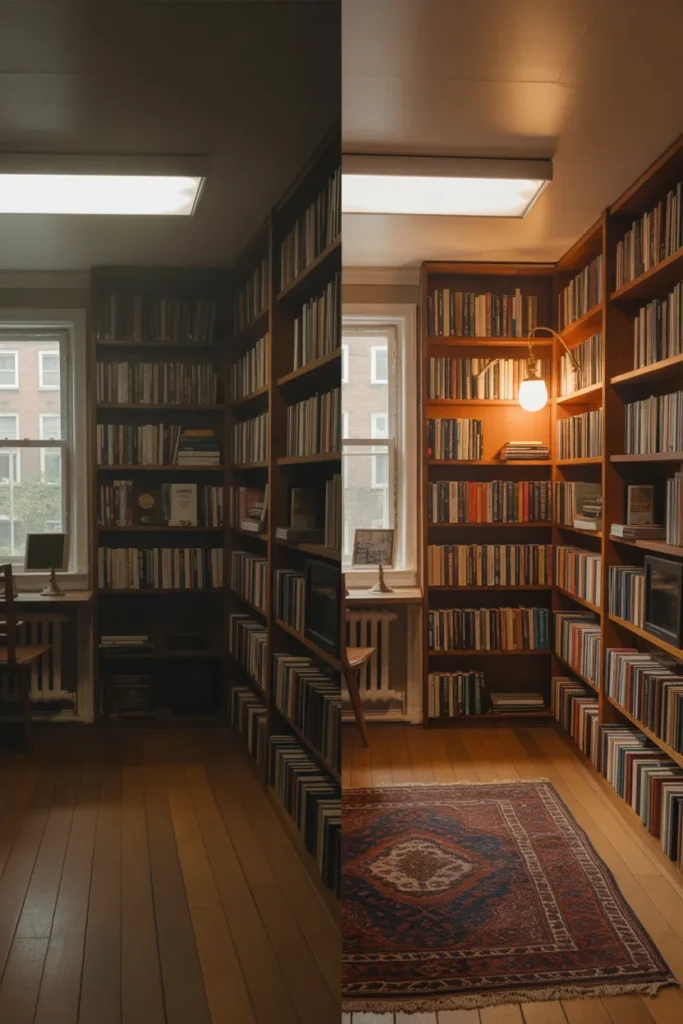
- One overhead bulb as your only light source. Pure mood killer. You need at least two light sources, ideally three.
- Cool white bulbs. Anything above 3000K makes the space feel like a hospital. Stay in 2700K to 3000K, always.
- Bookshelves crammed wall-to-wall. Negative space is what makes shelves look styled instead of stuffed.
- No throw or pillow. Soft textiles are what tip a nook from “chair in corner” to “reading retreat.”
- Direct sunlight on rare or sentimental books. This is the one that hurts long-term. Use UV-filtering shades or position prized volumes away from the window.
- Skipping the rug. Even a small 3×5 rug under the chair grounds the space and signals “zone.”
- Forgetting a side table. Where is your mug going? Your phone? Your reading glasses? A 12-inch round side table fixes everything.
Frequently Asked Questions
What is the bookshelf rule?
The most common bookshelf rule in styling circles is the 60-30-10 rule. Sixty percent of the shelf is books, thirty percent is objects (ceramics, framed art, baskets, plants), and ten percent is negative space. This ratio is what stylists use to make a shelf look curated rather than crammed or sparse.
What is an anxiety bookshelf?
An anxiety bookshelf, sometimes called a TBR shelf (To Be Read), is the shelf where readers stack books they own but have not yet read. The term gained traction in book communities to describe the quiet pressure that comes from staring at unread spines every day. Writer Molly Templeton at Tor.com described it as the feeling of seeing all the unread books looming in the corner at all times, a very specific sort of feeling familiar to anyone with more books than reading time. The fix: keep TBR books on a separate, smaller shelf out of your direct sightline, or rotate them in small batches so the pile feels manageable. Tor.com
What are common mistakes in reading nook design?
The top mistakes are picking a chair that looks better than it feels, using only one light source, choosing cool-white bulbs, overstuffing the bookshelf, skipping the rug, and forgetting a side table. Lighting and seating comfort are where most nooks fail. Style and shopping list come second.
What is the difference between a bookend and a book nook?
A bookend is a small weighted object that holds upright books in place on a shelf. A book nook is one of two things, depending on context. In interior design, it refers to a small cozy reading area, often paired with bookshelves. In bookish hobbyist communities, a “book nook” also refers to a miniature diorama (like a tiny illuminated alley scene) that slots between books on a shelf as decor.
How do I create a reading nook with bookshelves in a small space or rental?
For small spaces, use a single narrow bookcase (15 inches wide works in pantry-sized gaps), a floor cushion or slim accent chair, and a clip-on reading light. For rentals, lean on leaning ladder bookshelves, floating shelves with Command Strips rated for 16 pounds or more, and tension rods with curtains for soft enclosure. Skip anything that requires drilling, painting, or permanent modification unless your lease specifically allows it.
What is the budget version of a built-in reading nook?
The IKEA Billy bookcase hack is the gold standard. Three Billy bookcases lined up against a wall, trimmed with $30 of pine molding from Home Depot, caulked at the seams, and painted the same color as the wall reads as a custom built-in for under $500 total. Add a chair from HomeGoods ($150) and a brass picture light from Amazon ($45) and the whole nook lands under $700.
How long does it take to build or style a reading nook?
A no-build styled nook (bought furniture, no construction) takes 2 to 4 hours of assembly and styling. A semi-custom Billy bookcase hack with trim and paint takes a full weekend, around 10 to 14 hours including paint drying time. A true custom built-in by a carpenter takes 3 to 7 days of work plus 1 to 2 weeks of lead time for materials.
Final Thoughts
A reading nook with bookshelves does not require a renovation budget, an open floor plan, or a Pinterest-perfect house. It needs a corner, a layered lighting plan, a chair you actually want to sit in, and shelves that give your books a real home. Start with the 3-layer framework (structure, lighting, soft layer), pick a single style and commit, and pace yourself across the budget tiers.
If you’re ready to plan the whole thing from scratch, our ultimate guide to building a reading nook walks through location, seating, and lighting in detail. For book preservation tips, the Library of Congress recommends minimal exposure to light, a cool environment under 70 degrees, and regular dusting to prolong the life of your collection. LOC
Save this post to your “Cozy Home” Pinterest board so you can come back when you’re ready to start building. And tell me in a comment which idea you’re trying first, the IKEA Billy hack or the closet conversion has been a tie all month.
Keep reading
More cozy nook ideas
 Nook Ideas
Read →
Nook Ideas
Read →
10 Dog Nook Ideas You’ll Want to Curl Up In
Warm light from one floor lamp, a chair turned away from the TV, and your dog asleep on a bolster bed beside…
 Nook Ideas
Read →
Nook Ideas
Read →
21 Window Sill Reading Nook Ideas for Adults
Most apartment window sills are deep enough for a candle and not much else. By October the glass breathes cold on your…
 Home Library & Bookshelves
Read →
Home Library & Bookshelves
Read →
12 Ideas for Built-In Bookshelves Around the Fireplace for Book Lovers
Thirty-two inches between uprights. Six inches of bare masonry around the firebox. Twelve inches of shelf depth. Get those three numbers right…
3 Comments