
Vintage Cottage Bathroom Ideas That Work in Any Size Room

Your bathroom has a builder-grade mirror, a beige floor, and one overhead bulb that makes the whole room look like a gas station restroom at 11 pm. There is no bay window. There is no clawfoot tub. There is possibly a landlord.
None of that stops you. A vintage cottage bathroom is not a renovation, it is a stack of three surfaces and one bulb temperature, and the stack works the same whether you have 18 square feet or 80. What changes is how loud you go.
Below is the size-first version nobody writes: what to do in a powder room versus a small full bath, which materials actually last in a wet room, and how to tell a real 1920s fixture from a reproduction before you pay for it.
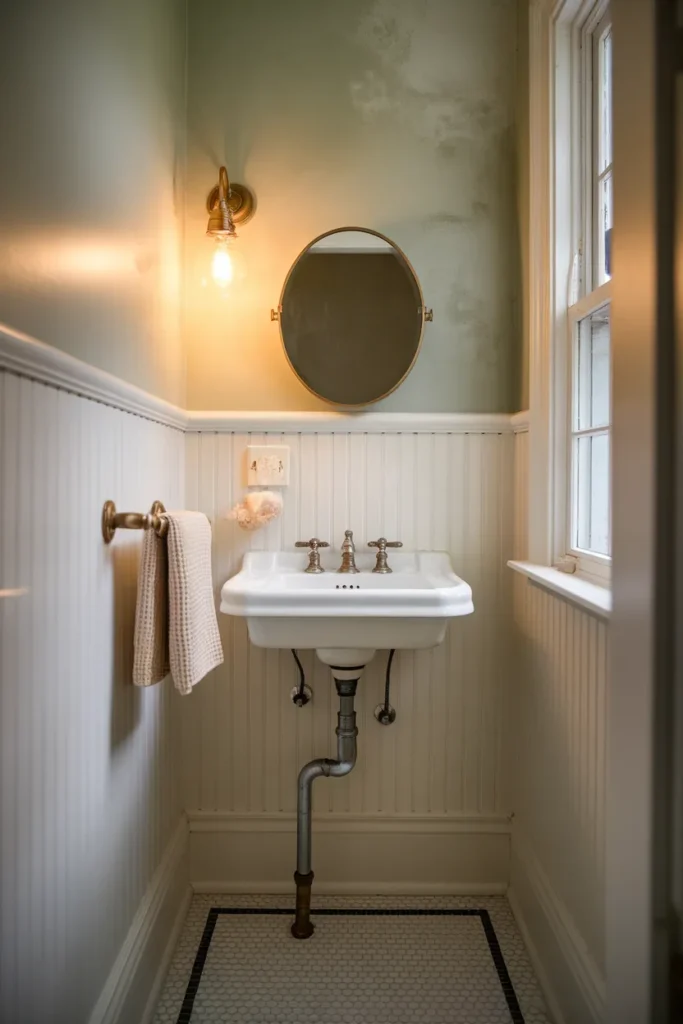
Start With Your Square Footage, Not a Mood Board
Every guide on this topic hands you the same fifteen ideas and lets you figure out which ones fit. That is backwards. The single biggest predictor of whether this look lands is how much air the room has, because pattern behaves completely differently in a windowless powder room than in a full bath with a shower running twice a day.
Find your room below and start there.
| Room size | What it usually is | Go this loud | Skip |
|---|---|---|---|
| 15 to 25 sq ft | Powder room, half bath, no shower | Full-wall pattern, dark color, real fabric, unsealed vintage furniture | Nothing. No steam means no rules |
| 35 to 50 sq ft | The standard small full bath | Wainscot below, one pattern above, one hero fixture | Full-room wallpaper, wood floors, anything porous at splash height |
| 60 sq ft and up | Primary bath, older homes | Freestanding tub, a real furniture piece as vanity, layered lighting | Going too sparse, big rooms read cold without soft goods |
The half bath is the cheat code and almost nobody uses it. No shower means no sustained humidity, which means every fragile, gorgeous, impractical thing you have been told to avoid is back on the table. Grasscloth. An unsealed antique washstand. A real silk lampshade. Put your boldest vintage cottage bathroom idea in the smallest room in the house.
The Three-Surface Rule (And Why Most Bathrooms Break It)
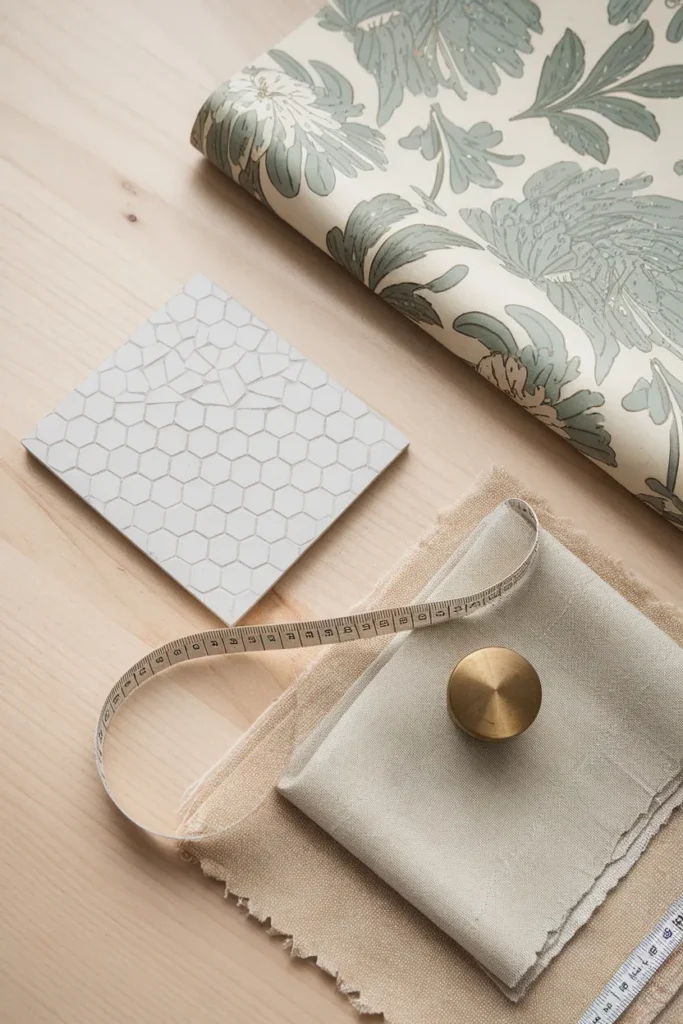
Here is the rule this whole style runs on. A vintage cottage bathroom needs exactly three surfaces doing three different jobs: one structural, one patterned, one soft. Get one of each and stop.
Structural is the surface with texture but no print. Beadboard, tongue-and-groove, board and batten, or plain painted plaster with visible trowel marks. It occupies the lower portion of the wall and does the work of making a room feel built rather than decorated.
Patterned sits above it. Floral wallpaper, a small-scale toile, a chintz, or a stripe. One print, one place.
Soft is fabric that is unmistakably fabric. A linen shower curtain instead of vinyl, a skirted sink, a washed cotton rug that looks like it came from somewhere. Bathrooms are hard-surface rooms by default, and the fastest way to make one feel like a room instead of a fixture closet is fabric that moves.
Rooms break this rule in the same direction every time: they add a fourth surface. Patterned floor tile plus patterned wallpaper plus a patterned curtain, and the room stops reading as vintage and starts reading as busy. If your floor already has a pattern, the floor is your patterned surface. Paint the wall.
The 60-inch line
For the structural surface, height matters more than material. Standard chair-rail wainscot lands around 32 to 36 inches, which is a dining-room proportion and looks slightly wrong in a bathroom. Cottage bathrooms historically ran their beadboard higher, often to about 60 inches, roughly shoulder height on a standing adult.
That extra two feet is the difference between a bathroom with paneling and a bathroom that looks like it has always been that way. It also puts the seam above splash height on the sink wall, which is a maintenance win disguised as a style choice.
Warm Light Is the Cheapest Vintage You Can Buy
Bulb color temperature will do more for this look than any single object you buy, and it costs less than a shower curtain.
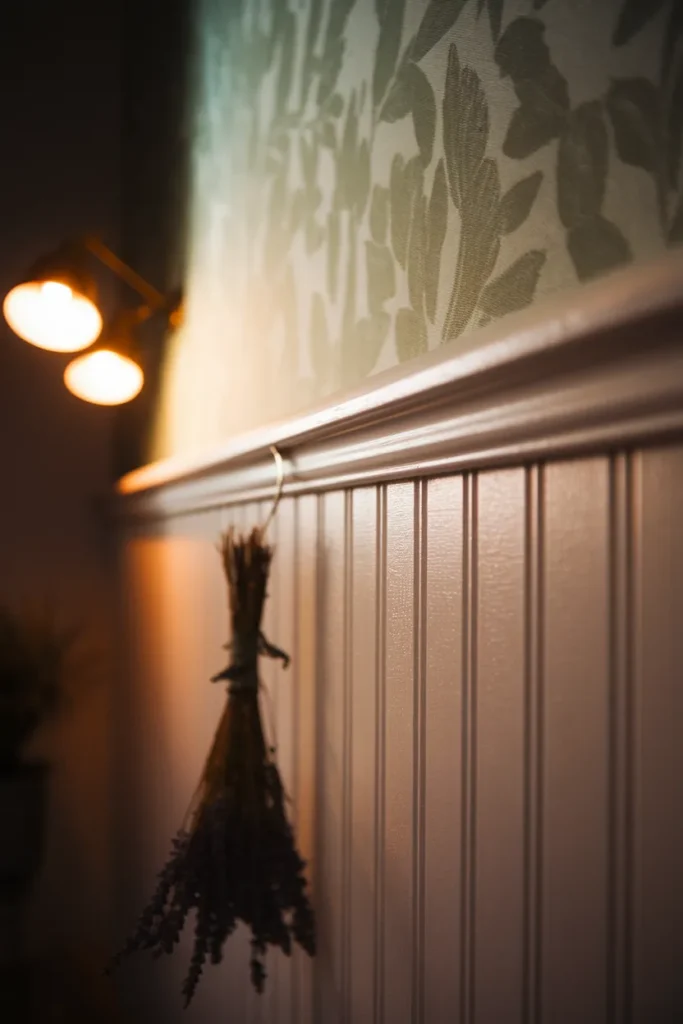
Aim for 2700K. That is the warm, slightly amber light that reads as incandescent and flatters both skin and old brass. Most builder bathrooms ship with 4000K or higher, which is the flat blue-white of a fluorescent-lit hallway. Swapping bulbs takes four minutes and changes the entire mood of the room before you have touched a wall.
Placement matters almost as much as temperature. One overhead fixture casts everything downward, which puts shadows under your eyes and flattens every texture you just installed. Vintage bathrooms lit at face height instead: a pair of sconces flanking the mirror at roughly 60 to 66 inches from the floor, spaced far enough apart to clear the mirror by a few inches on each side.
If you cannot wire a sconce, plug-in sconces with a fabric cord solve this, and the cord is period-appropriate rather than a compromise. Run it down the wall and let it show.
There is a sound component to this too, and it is worth naming. A bathroom with one loud exhaust fan and hard tile everywhere has a specific echo. Adding fabric (a curtain, a rug, a towel on an open bar) deadens that echo noticeably. The room gets quieter, and quiet reads as old.
What Actually Survives the Steam
This is where most vintage cottage bathroom guides quietly stop. They recommend wallpaper, unsealed wood, and vintage textiles, then say nothing about the fact that you are installing them in the wettest room in the house.
Moisture is a materials problem before it is a mold problem. The EPA’s guidance on remodeling and indoor air quality points to ASHRAE 62.99, which calls for exhausting 25 cubic feet per minute with a continuously running fan, or 50 cfm with a fan you switch on and off. It also makes a point that gets skipped constantly: the fan has to vent to the outside, not into an attic or a wall cavity. A fan that dumps humid air into your attic is not ventilation, it is relocation.
Run the fan during the shower and for a stretch afterward, not just while the water is on. That single habit is what determines whether your wallpaper is still flat in year three.
| Material | In a half bath (no shower) | In a full bath | Notes |
|---|---|---|---|
| Traditional paste wallpaper | Fine | Risky | Seams lift first, usually at the ceiling corner |
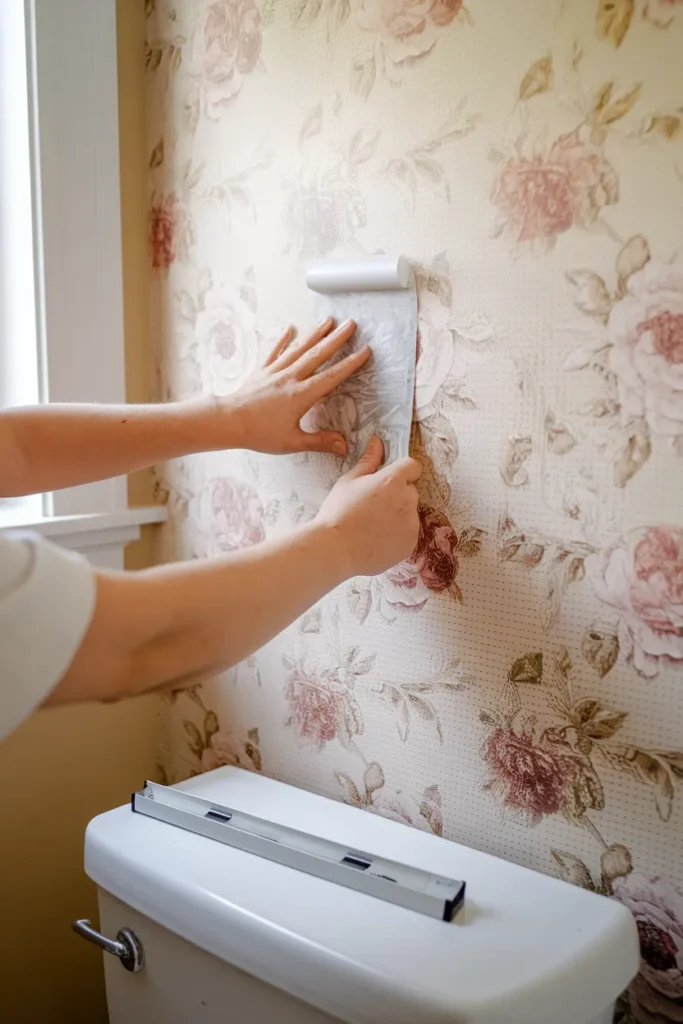
| Peel-and-stick wallpaper | Fine | Workable | Keep it off the shower wall entirely |
| Beadboard, painted | Fine | Excellent | Use a bathroom-formulated wipeable paint |
| Unsealed wood vanity | Fine | Poor | Seal the top and the underside, or expect swelling |
| Linen shower curtain | N/A | Good | Needs a separate liner, dries faster than cotton |
| Jute or sisal rug | Fine | Poor | Holds water, stays damp, goes musty |
| Washed cotton rug | Fine | Excellent | Must be machine washable, not “spot clean” |
The failure mode is predictable and always the same: the room looks incredible for one summer, then the wallpaper seam above the shower curls, the jute rug develops a smell, and the whole thing reads as neglected rather than aged. Aged is a look. Neglected is a different look.
Already Have the Old Tile? Read This Before You Rip It Out
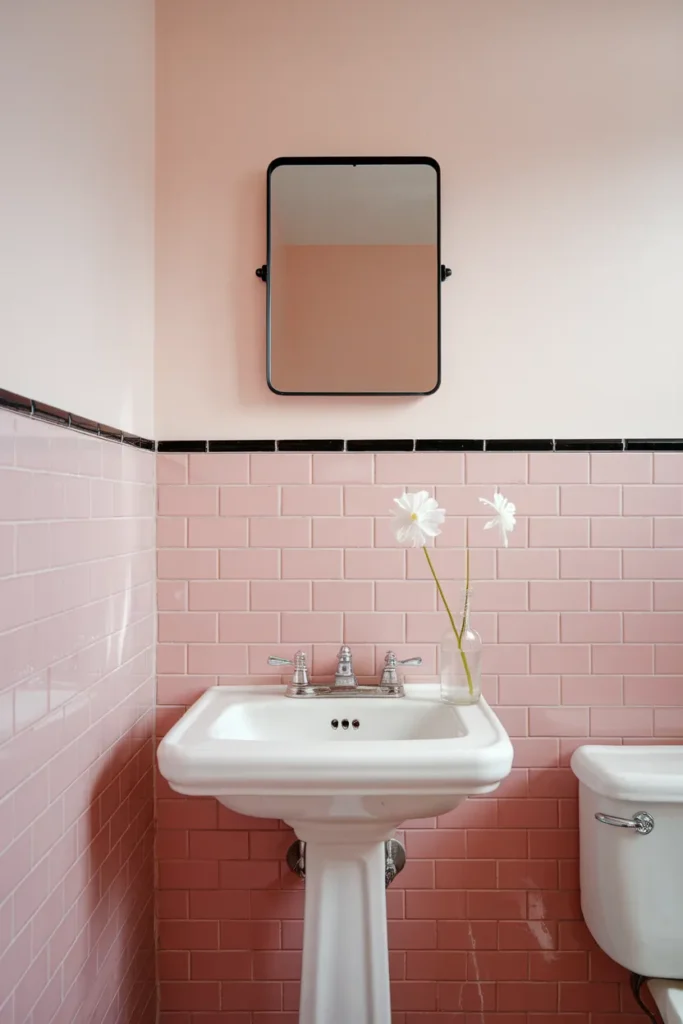
If you moved into a house with mint green, pink, or butter yellow tile from the 1920s through the 1950s, you have something most of the people pinning this aesthetic are trying to buy back.
Original tile from that era was generally fired denser and set on thick mortar beds, which is why it is still there. Federal preservation guidance leans hard in the same direction: the National Park Service brief on preserving historic ceramic tile walks through maintenance, cleaning treatments, and selective replacement of damaged tiles, with the working principle that repair beats replacement wherever it is feasible. Removal frequently causes more damage than restoration, particularly to the substrate underneath.
Practically, that means: before you demo, try grout. Regrouting and a deep clean transform old tile more than people expect, and it costs a fraction of a tear-out.
The styling problem with inherited color tile is not the tile. It is fighting it. Pink tile with gray walls and chrome reads dated because the room is apologizing for itself. Pink tile with warm white walls, black accents, aged brass, and one floral looks deliberate. Commit to the color you were given and the room stops looking like a mistake.
The Clawfoot Tub Math Nobody Runs
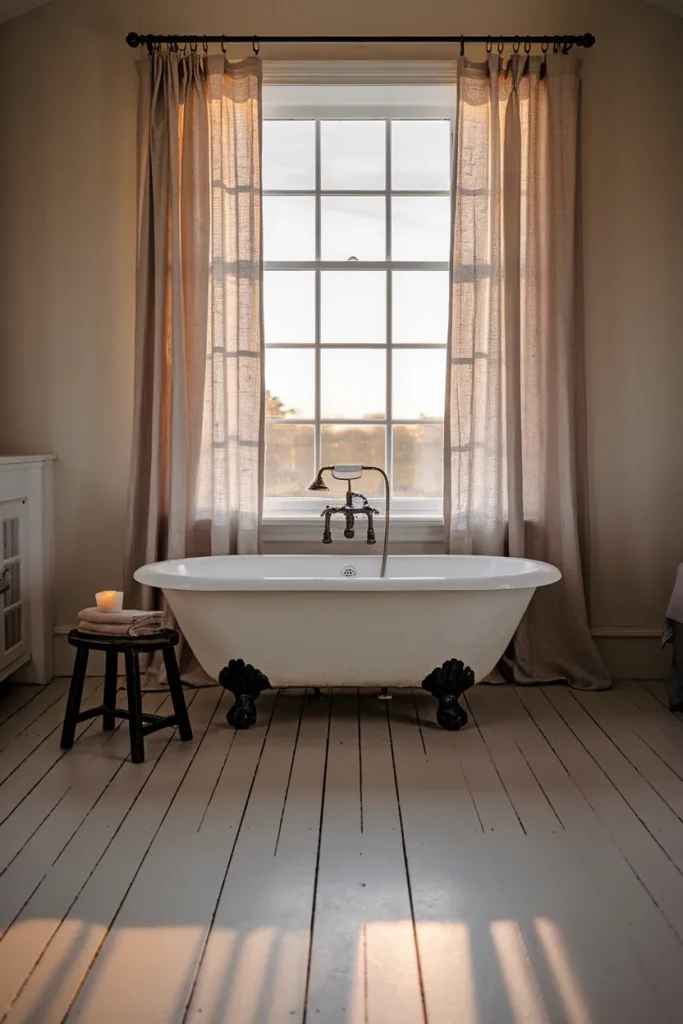
Every article on this topic opens with a clawfoot tub. Almost none of them mention what one weighs.
A cast iron clawfoot tub runs roughly 250 to 550 pounds empty depending on length. Water adds 8.34 pounds per gallon, and a deep soaking tub can hold 40 to 60 gallons or more. Add a person and the total load commonly lands between 900 and 1,100 pounds. As a concrete example, Signature Hardware’s 66-inch cast iron model is listed at around 406 pounds dry, and once filled it clears 900 pounds with a bather in it.
That load does not spread out. It concentrates onto four small feet, which is called point loading, and standard residential floors are typically designed around 40 pounds per square foot. On a second floor in an older house, that is a real conversation with a contractor or structural engineer, not a detail to sort out after delivery.
The honest trade-off nobody prints: clawfoot tubs are gorgeous, deep, and hold heat beautifully. They also use significantly more water than a standard alcove tub, they are awkward to shower in without a wraparound curtain rig, and the open floor underneath collects dust and hair in a way that requires actual attention.
Acrylic clawfoot reproductions weigh roughly 75 to 160 pounds and solve the structural problem entirely. They lose the heat retention and the cold-porcelain feel when you first sit down, which is either a small loss or the entire point, depending on who you ask.
If a tub is out of reach, the tub is not the assignment. Our guide to rustic cottage bathroom decor that survives real humidity covers the fixture-free version, which is where most of this style actually lives.
The Renter Version Where Every Move Is Reversible
Roughly seven in ten people reading this cannot drill, paint, or replace a single fixture. Here is the whole look with nothing that voids a deposit.
Bulbs first. Swap to 2700K. Free to reverse, takes minutes, and it is genuinely the highest-impact change on this list.
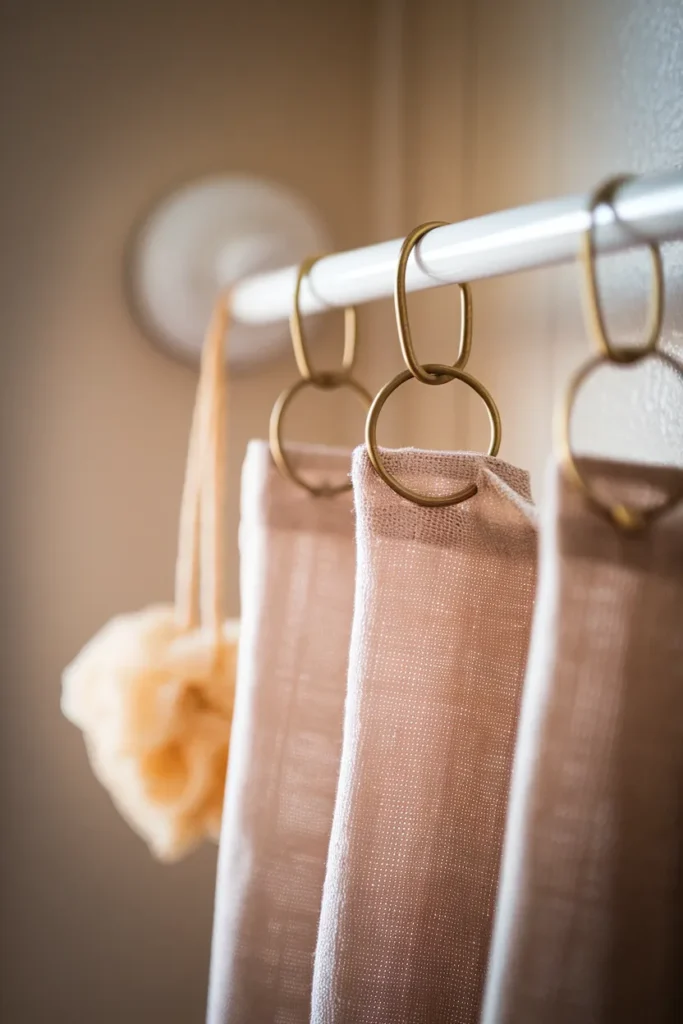
Tension rod plus a real curtain. A linen or heavy cotton shower curtain on a tension rod, hung as high as the rod will go rather than at standard height. Hanging it high makes the ceiling read taller, the same trick that works on windows.
Peel-and-stick on one wall only. Not the shower wall, not the wall that gets splashed. The wall behind the toilet or opposite the door is the safe one, and it is usually the one you see first when the door opens.
Adhesive brass hooks and a plug-in sconce. Removable hooks in aged brass finish, plus one plug-in sconce with a visible fabric cord. Both come down clean.
Fabric over the vanity. If you have a builder vanity you cannot replace, a gathered skirt on adhesive hook-and-loop tape hides it completely and is the single most cottage move available to a renter.
A washable cotton rug. Not a bath mat. A small flat-weave cotton rug in a faded print, which is the thing that makes a rental bathroom stop looking like a rental.
Keep every original part you remove in a labeled bag under the sink. Towel bars, cabinet knobs, the old shower rod. Reinstalling them on move-out takes an hour and protects your deposit.
For the full walkthrough with more reversible detail, see our guide to small cottagecore bathroom ideas for renters.
How Reproduction Vintage Gives Itself Away
Reproduction hardware and fixtures have gotten good, but they still tell on themselves in four consistent places. This matters if you are buying secondhand and paying a premium for “original.”
Weight. Solid brass and cast iron have a density that plated zinc and thin steel cannot fake. Pick it up. A real brass knob has an unexpected heft for its size.
Wear that makes sense. Genuine patina concentrates where hands actually go: the leading edge of a knob, the bottom of a faucet handle, the strike side of a latch. Factory distressing scatters wear evenly across the whole surface, including places no hand has ever touched. Even wear is the loudest tell there is.
Thread and fitting standards. Older plumbing fittings frequently do not match modern supply lines. If a “vintage” faucet threads cleanly onto a current standard connection with no adapter, it is very likely new. This is also the practical warning: a genuine salvaged fixture may need adapters, and that cost belongs in your budget before you buy.
Magnets. A magnet will not stick to solid brass. It will stick to brass-plated steel. Carry a small one when you go antiquing, it takes two seconds and settles the question.
The same sourcing logic applies well beyond the bathroom, and we go deeper on it in our piece on sourcing real antiques for a vintage living room.

Small Bathroom, Big Character
Small vintage bathroom ideas usually amount to “use light colors,” which is both boring and frequently wrong. Small rooms handle saturation better than large ones, because you take the whole room in at once and it reads as a decision rather than a wash of color.
A few tactics that specifically exploit small square footage:
- Wrap the color. Walls, ceiling, and trim in one shade. Where the walls stop becomes invisible, and the room stops announcing its own dimensions.
- Go vertical with storage. A narrow wall-mounted cabinet or a wall-hung shelf with a rail keeps floor space open. Floor space is what makes a small room feel small.
- Skirt the sink instead of replacing it. A skirted sink hides plumbing and storage in the same move and costs less than a vanity.
- One large mirror, not a small one. Undersized mirrors make rooms look smaller. An oversized mirror with a thin aged-brass or black frame does the opposite.
- Small-scale pattern. A large-repeat floral in a tiny bathroom cuts off mid-motif and reads chaotic. Small repeats read as texture.
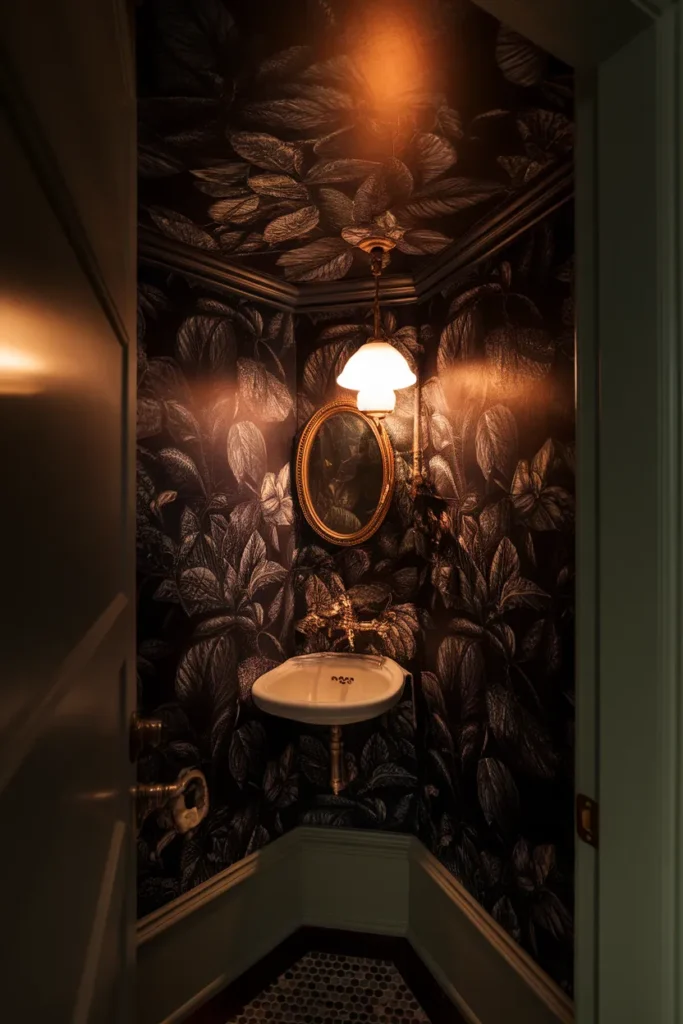
The half bath deserves repeating here because it is genuinely the best canvas in the house for this style. No shower, no steam, no compromise. Go as dark and as patterned as you can stand.
The Order to Actually Do This In
Sequence matters because some of these moves make the others easier, and doing them backwards means redoing work.
- Bulbs. 2700K everywhere. Do this tonight, before you decide anything else, because you are currently judging your bathroom under bad light.
- Textiles. Shower curtain, rug, towels. Reversible, fast, and it tells you whether your color direction is right before you commit to a wall.
- Hardware. Knobs, hooks, towel bar, switchplate. Small parts, outsized effect, and cheap to undo if you picked wrong.
- One wall treatment. Paint, beadboard, or peel-and-stick on the single wall that matters most.
- The mirror. Replacing a builder mirror with a framed one is the change people notice without knowing why.
- One real vintage object, last. A washstand, a brass sconce, a mirror with actual age. Buy it slowly, buy it right, and let it be the piece the room is built around.
Prices in this category move constantly and vary by region, so check current retail before you plan around any figure. What holds steady is the order: everything above item four is reversible, and everything below it is worth waiting for the right piece.
Frequently Asked Questions
What makes a bathroom cottage style? Natural materials, vintage or antique-style fixtures, soft muted color, and layered texture. The defining quality is that it looks collected over time rather than bought in one trip. Beadboard, a pedestal or skirted sink, aged brass, one floral or toile, and fabric that reads as fabric will get you most of the way.
Is a vintage cottage bathroom the same as a cottagecore bathroom? They overlap almost entirely in practice. Cottagecore is the broader aesthetic that also shows up in fashion and social media, while cottage style refers specifically to the interior approach. Side by side, the two bathrooms usually look nearly identical.
What colors work in a vintage cottage bathroom? Soft, warm, slightly dusty tones. Sage green, dusty blue, buttery cream, warm white, and blush pink are the historical mainstays. The category generally avoids cool gray and stark high-contrast black and white, which read modern rather than aged.
Can I get this look in a rental? Yes, and most of the highest-impact moves are reversible. Warm 2700K bulbs, a linen curtain on a tension rod, peel-and-stick wallpaper on one dry wall, adhesive brass hooks, a skirt on the vanity, and a washable cotton rug. Keep the original hardware in a labeled bag for move-out.
What is the difference between cottage style and farmhouse style? Farmhouse is more pared back, more neutral, and more utilitarian, leaning on shiplap and black-and-white. Cottage is softer and more ornamented: florals, toile, brass, and pattern layered rather than stripped away. Cottage is romantic, farmhouse is plain by design.
Should I keep original vintage tile or replace it? If it is structurally sound, keep it. Tile from the early and mid twentieth century was generally made to a higher standard than most current replacements, and removal often damages the substrate underneath. Regrout, deep clean, and style around the color rather than against it.
Where do I actually find vintage cottage bathroom decor? Estate sales, architectural salvage yards, and local marketplace listings for the one-of-a-kind pieces like washstands, mirrors, and sconces. For textiles, wallpaper, and hardware, new reproductions are fine and often more practical. Check weight and wear patterns before paying vintage prices for anything metal.
Start With the Bulb
If you take one thing from this: go change your bathroom bulbs to 2700K tonight, then look at the room again tomorrow morning. Half the problem was never the tile or the vanity, it was that you have been evaluating the space under light designed for a parking garage.
Everything else here builds on that. Three surfaces, one pattern, fabric that moves, and one real old thing you took your time finding.
If your bathroom is the very small kind, the renter section above is the one to reread. Start with the bulb, then the curtain, then decide about the wall.
Keep reading
More cozy nook ideas
 Living Room
Read →
Living Room
Read →
18 Small Apartment Living Room Ideas Worth Copying This Weekend
No extra square feet. No permission to paint. A sofa that already takes up half the floor. You can still make the…
 Kitchen
Read →
Kitchen
Read →
12 Warm Neutral Kitchen Ideas Worth Copying This Weekend
If your kitchen is beige and still feels cold at 8 p.m., the paint probably isn’t the problem. It’s usually the bulb,…
 Nursery & Teen Rooms
Read →
Nursery & Teen Rooms
Read →
8 Montessori Playroom Mistakes to Avoid (and What to Do Instead)
If your Montessori playroom looks calm for about an hour after you set it up, and then every basket ends up dumped…