
Small Cottagecore Bathroom Ideas for Apartments and Renters

No drilling, no landlord conversation, no tile saw. A small cottagecore bathroom in a rental comes down to three reversible layers you can put up on a Saturday and peel off the week you move. Most guides on this look assume you own a farmhouse and can install a clawfoot tub. You have a 5 by 8 room, one ceiling light, and a security deposit you would like back.
Here is what actually works in that room, what it costs, and what comes off the wall clean.
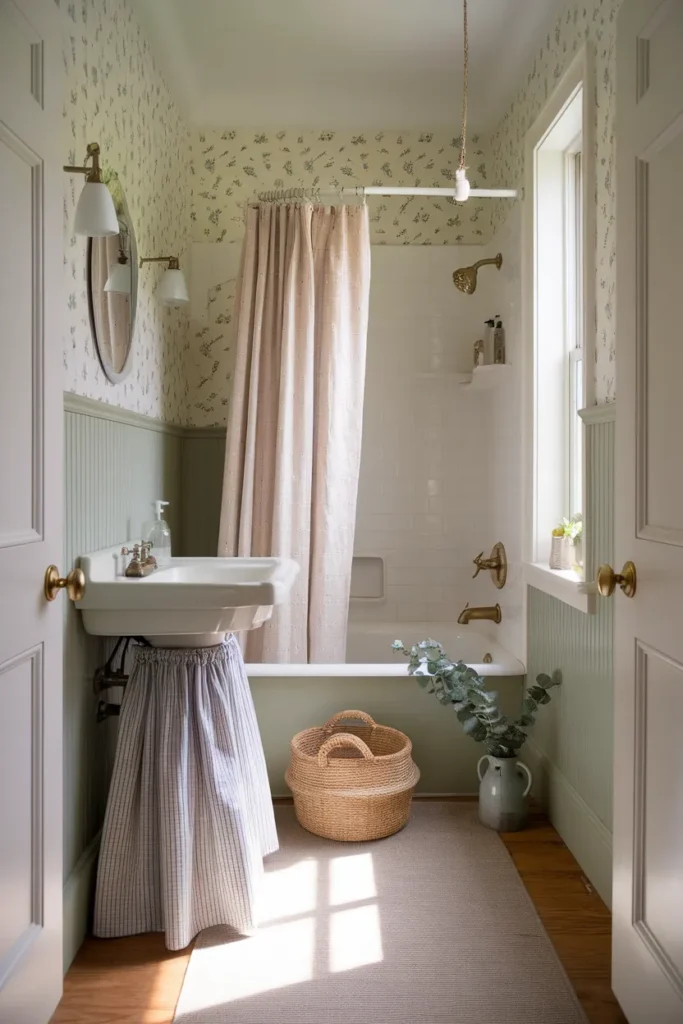
Start With the 3-Layer Rental Rule
Every renter-safe cottagecore bathroom is built in the same order. Skip a layer and the room reads like a dorm with flowers on it.
Layer 1: Wall. One peel-and-stick surface, either floral paper on the top two thirds or beadboard-look panel on the bottom third. Never both walls, never all four.
Layer 2: Water. The three items that touch water and read instantly as cottage: a linen or cotton shower curtain, a sink skirt or a curtain under a pedestal, and a bath mat with actual texture.
Layer 3: Warmth. One 2700K bulb, one brass-toned object, one living or dried plant.
That is the whole system. Three layers, roughly nine items, zero holes in the wall.
The order matters because the wall layer changes what colors work for everything else. Buy the shower curtain first and you will end up matching a $200 room to a $28 decision.
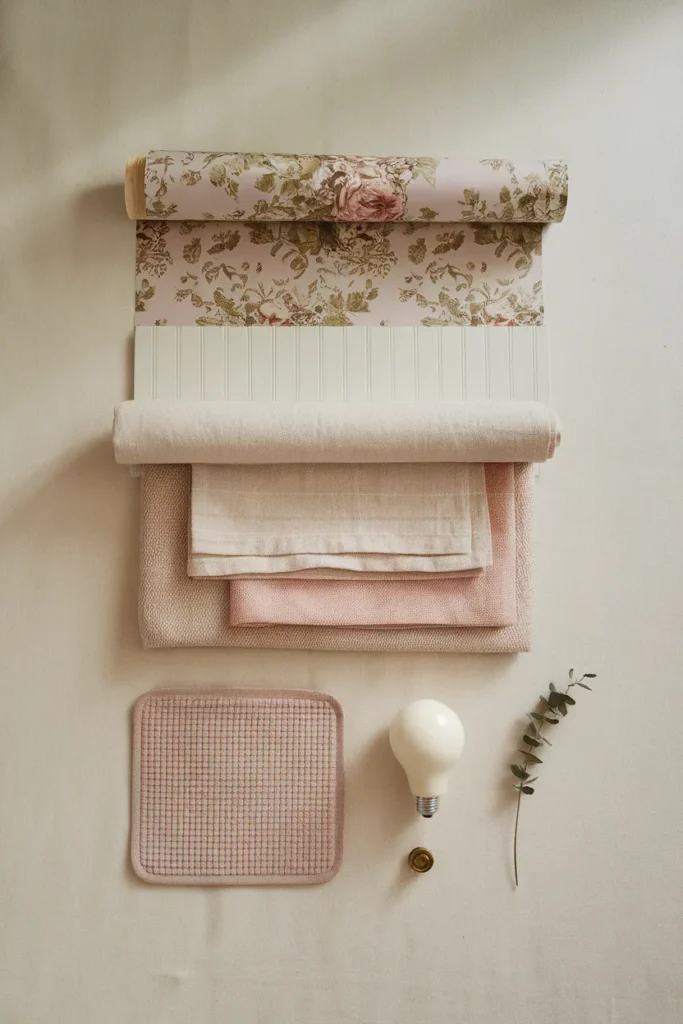
Swap the Bulb Before You Buy a Single Thing
The cheapest and most underrated move in this entire article costs about $6.
Most apartment bathrooms ship with a cool white bulb somewhere in the 4000K to 5000K range, which the US Department of Energy classifies at the cool end of the scale, with warm white sitting near 2700K in its guide to LED color temperature. That cool bulb is why your bathroom looks like a walk-in clinic no matter what you hang on the wall. Sage green goes gray under it. Brass goes yellow-brown. Warm wood goes flat.
Put a 2700K soft white bulb in the vanity fixture and every other choice in this article gets easier.
If your fixture is a bar of three or four bulbs, replace all of them, not one. Mixed color temperatures in a small room look like a mistake, because they are.
The failure mode: people buy the wallpaper first, hate how it looks, and blame the wallpaper. It was the bulb.
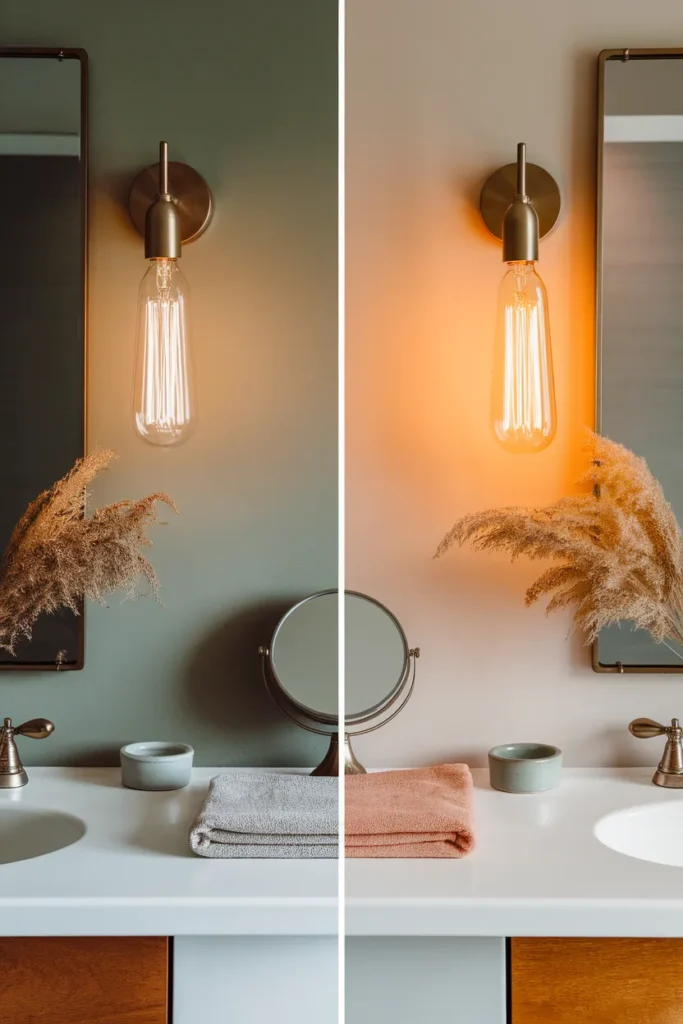
Floral on Top, Beadboard Below, Both Peel-and-Stick
This is the single highest-impact wall move for a small cottagecore bathroom, and it is fully reversible.
Peel-and-stick beadboard or shiplap panel goes on the bottom third of the wall, roughly 32 to 36 inches up, capped with a self-adhesive chair rail. Floral or botanical peel-and-stick paper goes above it. The horizontal break stops a busy print from swallowing a tiny room, and it puts the wipeable surface exactly where splashes land.
Peel-and-stick materials generally run about $1 to $5 per square foot, so a single 5 by 8 bathroom with one papered wall lands well under $100 in materials.
Two rules that save the job:
- Paper one wall, not four. The wall behind the toilet or facing the door does the most work per roll.
- Wait on fresh paint. Adhesive vinyl pulls new latex right off the drywall. If the unit was painted recently, give it a few weeks before you stick anything to it.
Small rooms make patterns look bigger, not smaller, so a print that seemed delicate on a phone screen can read as loud on 30 square feet. If you want the same layering logic applied to a bigger room, the approach carries over almost exactly to small cottagecore living room ideas for rented apartments.
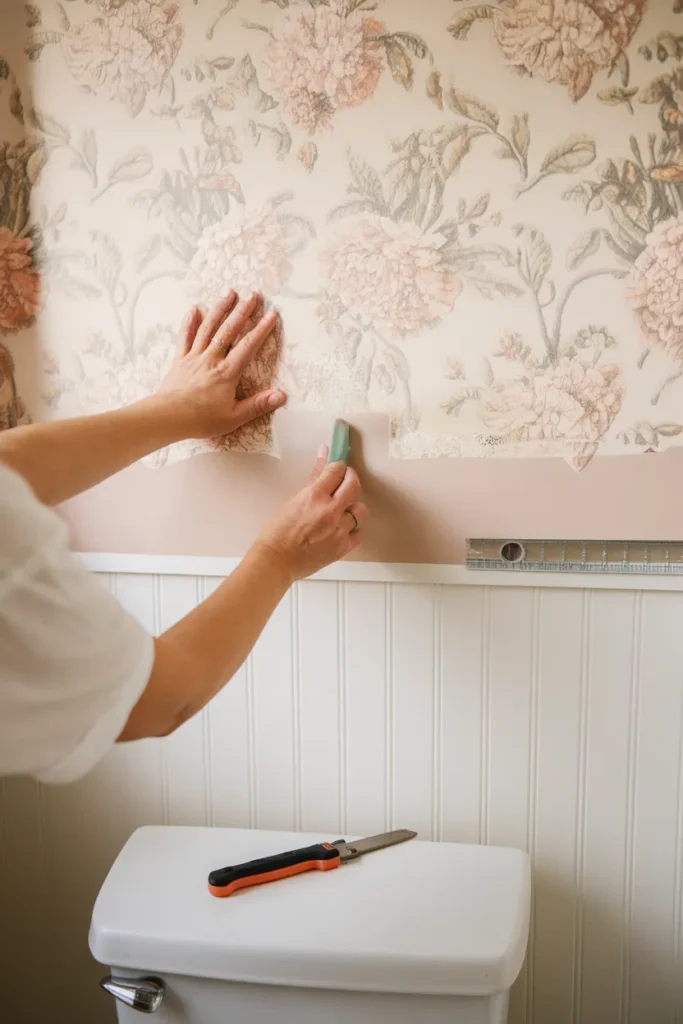
Give the Vanity a Cottage Face Without a Screwdriver
A builder-grade oak or white laminate vanity is the most common thing standing between you and this look. You do not have to replace it.
Three reversible options, roughly in order of impact:
Sink skirt. For a pedestal sink or a wall-hung basin, a gathered cotton or ticking-stripe skirt on a tension wire hides the pipes and adds the softest texture in the room. This is the closest a rental gets to the farmhouse-sink look those other guides keep recommending.
Adhesive vinyl wrap. Butcher block or aged marble vinyl over a laminate counter. Around $20 for a roll that covers a standard 24 to 30 inch vanity top.
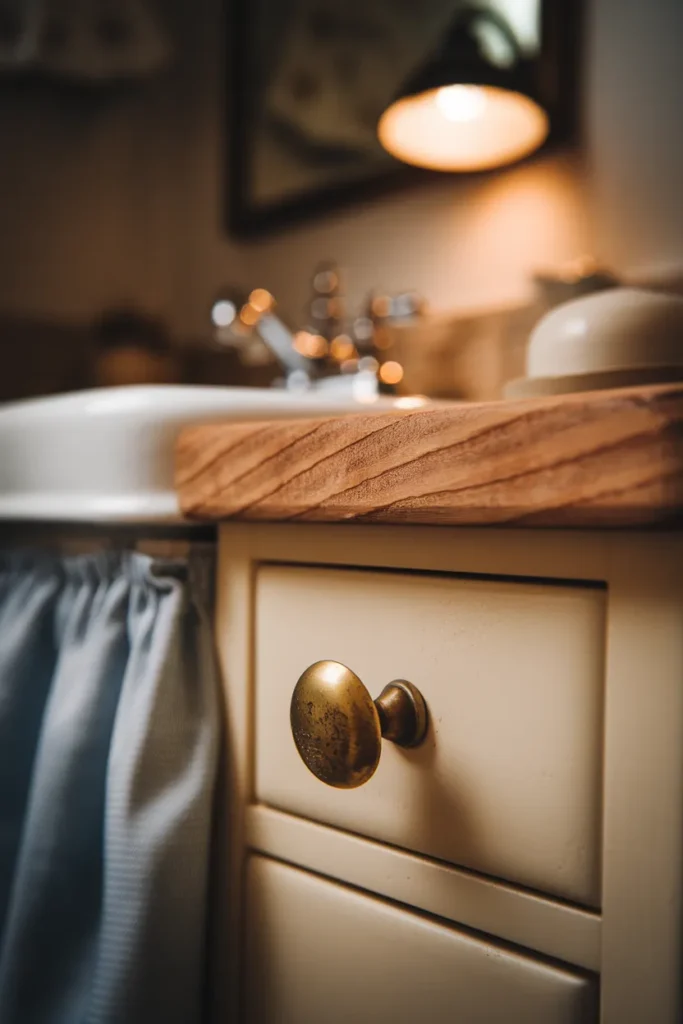
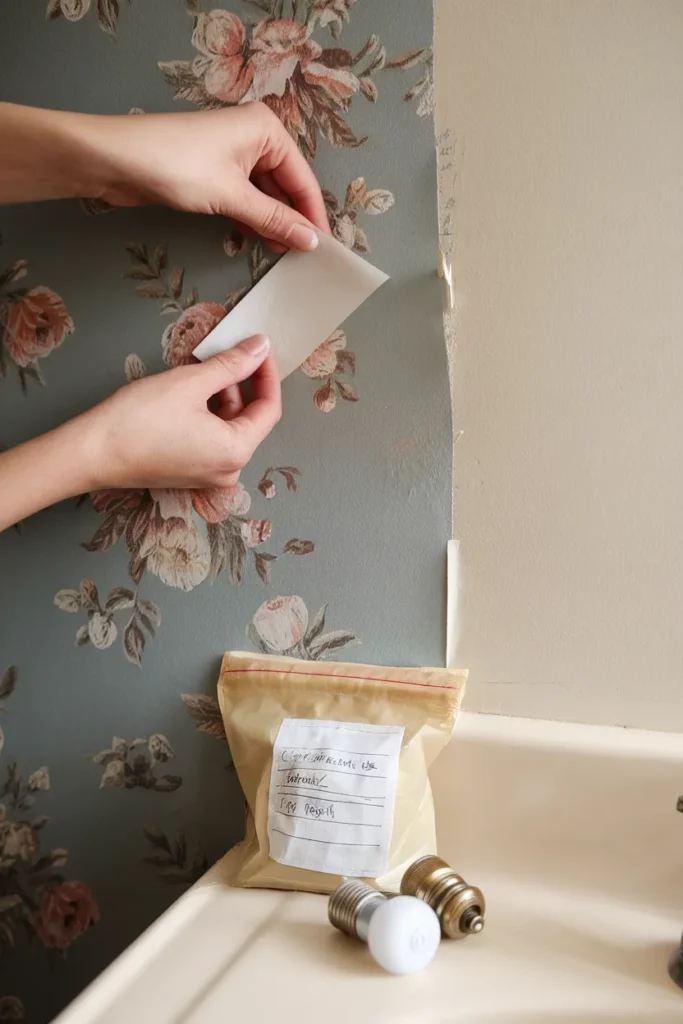
Hardware swap. Take the original knobs off, put aged brass or ceramic ones on, and keep the originals in a labeled bag in the cabinet. Two screws each, no new holes, and the most convincing 15 minutes of the whole project.
The honest trade-off: vinyl wrap on a counter that gets standing water will lift at the seams within a year, usually right behind the faucet. Run a bead of clear caulk along the back edge or accept that this is a two-year finish, not a ten-year one.
Let the Clawfoot Tub Go
Every guide on this aesthetic opens with a clawfoot or freestanding tub. In a rental you are not getting one, and in a bathroom under 40 square feet you would not want one anyway.
What actually reads as cottage on a standard alcove tub or a fiberglass shower surround:
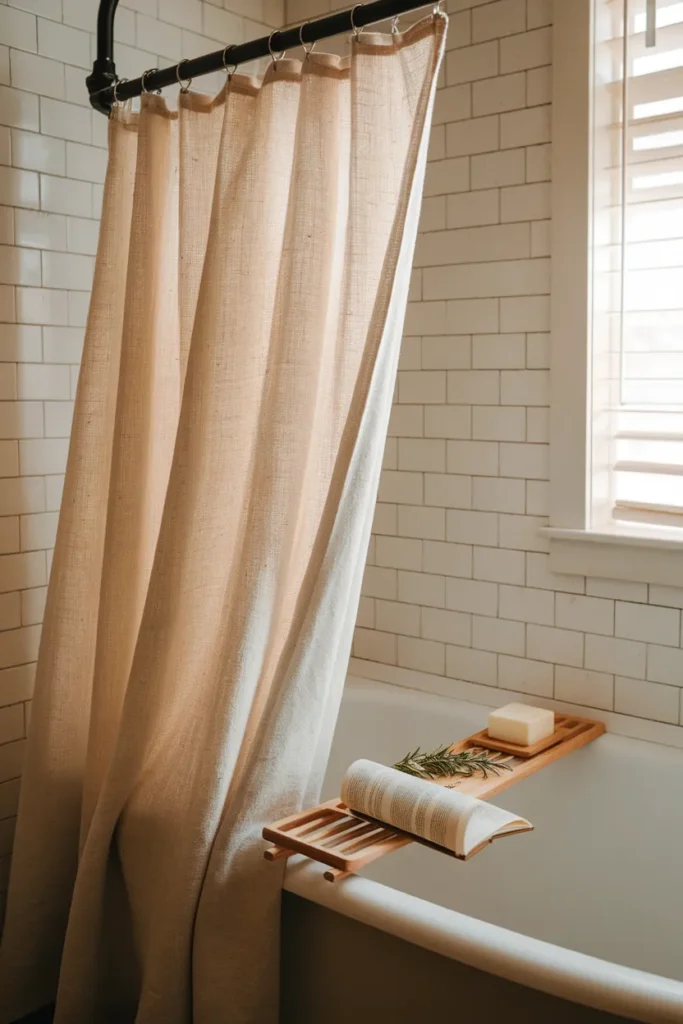
- A shower curtain in unbleached cotton, linen, or a small ditsy floral, hung on a curved or wooden rod
- A second curtain layered outside the liner, so the liner never shows
- A wooden bath caddy across the tub with a bar of real soap on it, not plastic bottles
The illusion is texture and fabric, not fixtures. A linen curtain in a 1990s builder tub photographs closer to a cottage bathroom than a bare clawfoot in a beige room does.
Failure mode: clear vinyl liners kill it instantly. If your liner shows, no amount of dried lavender saves the shot.
Storage That Hangs, Leans, or Sits
Small bathrooms fail on storage, and drilling is off the table. Everything here either leans, sits, or uses adhesive.
| Piece | Typical size | Mounting | Rough cost |
|---|---|---|---|
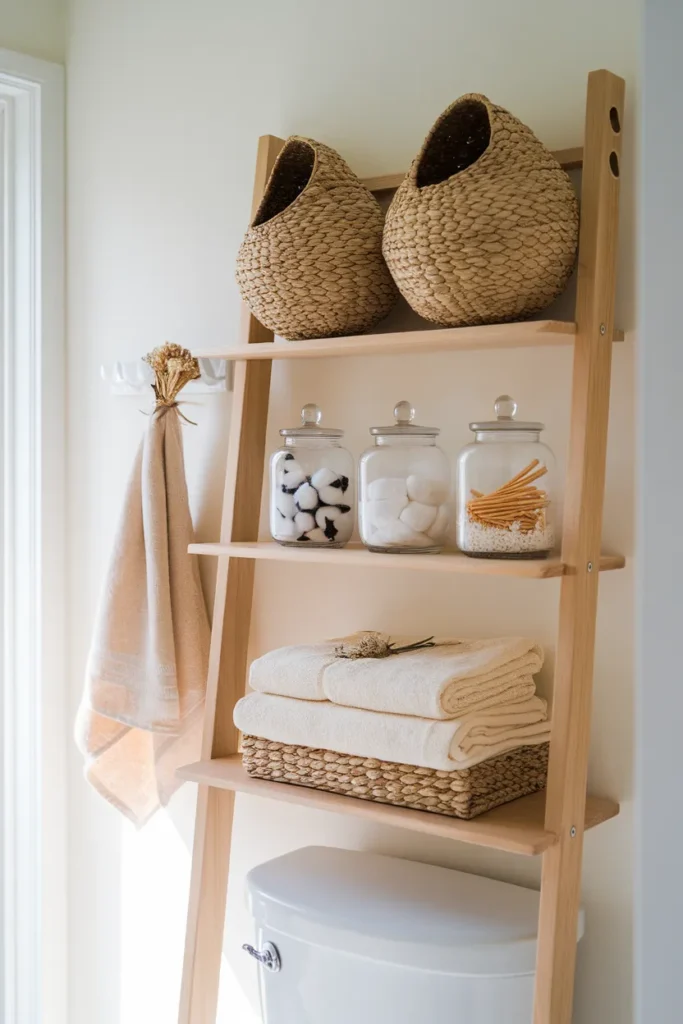
| Over-toilet ladder shelf | 24 in wide, 65 in tall | Leans, no anchor | $45 to $90 |
| Adhesive peg rail | 18 to 24 in | Heavy-duty adhesive strips | $15 to $30 |
| Woven baskets, pair | 10 to 12 in wide | Sits on shelf | $18 to $35 |
| Apothecary jars, set of 3 | 6 to 8 in tall | Sits on counter | $20 to $30 |
| Tension shower caddy | corner mount | Tension only | $25 to $40 |
Two placement numbers worth writing down. Keep the lowest usable shelf at 48 inches or higher so it clears the toilet tank lid, and leave at least 15 inches of clear width in front of the toilet, which is the standard clearance most US residential codes call for.
Decant what you can. Three matching apothecary jars holding cotton rounds, bath salts, and Q-tips replace six mismatched drugstore packages, and the visual quiet is the entire point of the style. The same decanting logic drives cottagecore kitchen decor in real kitchens, where it also does more work than any single purchase.
Plants for a Bathroom With No Window
Most US apartment bathrooms are interior rooms with a vent fan and no natural light. The advice to fill them with ferns is how people end up throwing away a $22 plant every six weeks.
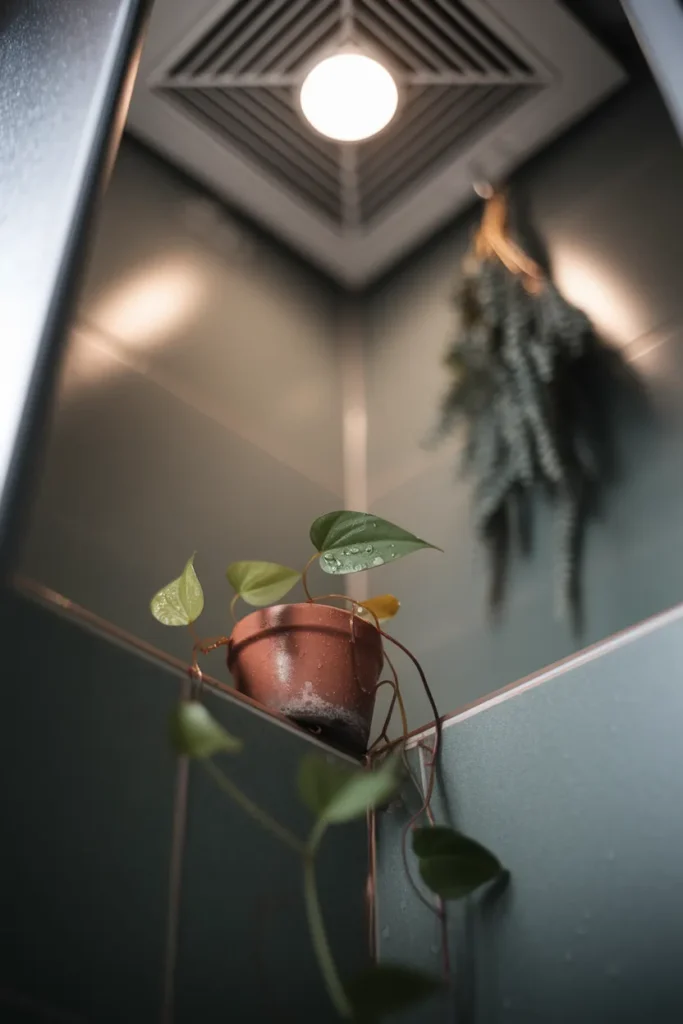
What survives low light and high humidity: pothos, snake plant, ZZ plant, cast iron plant. What does not: maidenhair fern, calathea, most orchids, anything sold as a “bright indirect light” plant.
If your bathroom light is off eighteen hours a day, even the survivors struggle. Two honest workarounds: rotate a pothos in and out of a brighter room every couple of weeks, or use dried flowers and eucalyptus and stop pretending. Dried bundles are arguably more period-correct for the style anyway.
One thing to keep in mind before you lean fully into plants, wallpaper, and fabric. The EPA recommends keeping indoor relative humidity between 30 and 50 percent and running the bathroom fan or opening a window when you shower, in its guide to mold, moisture, and your home. In a windowless bathroom that fan is doing all of the work. Run it during the shower and for a while after. Wet fabric and adhesive paper in a room that never dries out is how a pretty bathroom turns into a deposit dispute.
The Move-Out Test
Before you buy anything, sort it into two piles. This is the part no other guide on this term will tell you.
Comes off clean: peel-and-stick paper and panel on cured paint, tension rods, adhesive hooks rated for the weight, leaning shelves, sink skirts, swapped hardware with originals kept, everything textile, everything that sits on a surface.
Costs you money: anchors in tile, adhesive vinyl on a mirror face, peel-and-stick on wallpaper or on paint less than about four weeks old, command strips left up past their rated weight, and anything at all installed in a unit whose lease bans wall coverings. Read the clause before you read the color chart.
Keep every original part in one labeled bag in the vanity: knobs, the old bulbs, the towel bar if you take it down. On move-out day that bag is the difference between an afternoon and an argument.
What It Actually Costs: Two Real Build Lists
No vague “affordable.” Here are two totals at US big-box and online prices as of mid-2026. Prices move, so treat these as bands, not quotes.
The $150 version
- 2700K bulbs, pack: $8
- One roll peel-and-stick floral paper: $35
- Cotton or linen shower curtain: $28
- Wooden or matte black curved rod: $22
- Two woven baskets: $24
- Aged brass cabinet knobs, pair: $14
- Dried eucalyptus bundle: $12
- Bath mat with texture: $18 Total: about $161
The $350 version adds a leaning over-toilet ladder shelf ($70), peel-and-stick beadboard for the lower wall plus chair rail ($60), a sink skirt ($35), three apothecary jars ($25), and a small thrifted or vintage-look mirror ($40), landing near $390.
For scale: one documented cottagecore bathroom makeover covered on Apartment Therapy, which included paint, peel-and-stick tile, custom wallpaper, and new vanity lighting, came in at an estimated $700 to $800 and was still described as renter-friendly. That is the ceiling. You do not need to get near it.
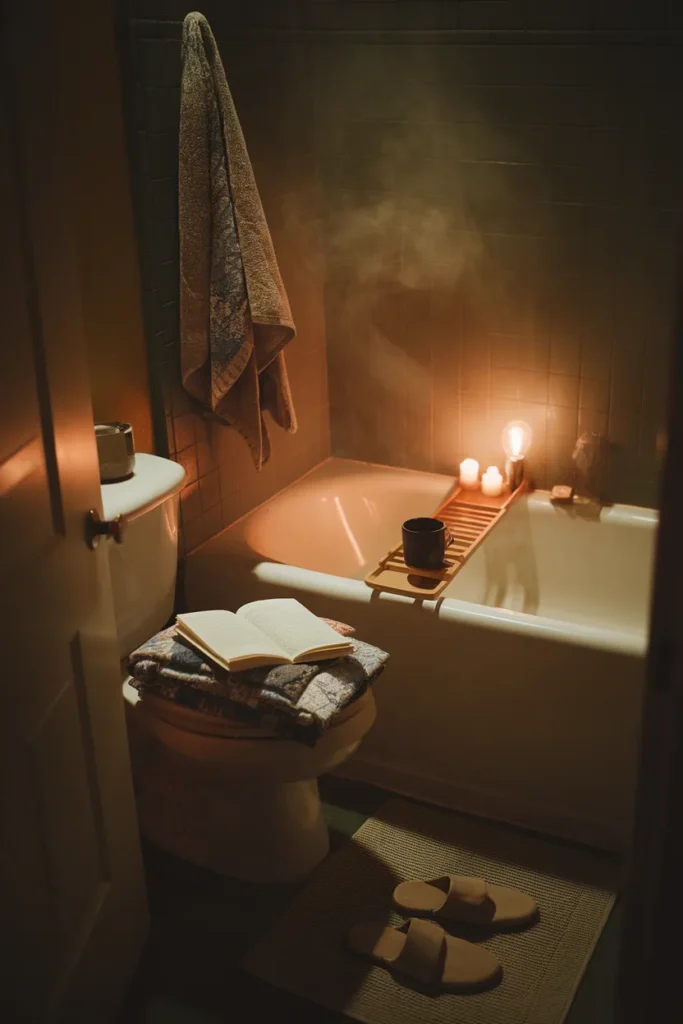
The Tub-Side Reading Corner
One last idea, and the reason this room deserves more attention than it usually gets.
A small bathroom is the only room in a rental with a lockable door. That makes it the most defensible reading spot in the whole apartment.
You need three things: a wooden caddy across the tub or a small stool beside it, a light you can actually read by, and somewhere dry for the book. A clip-on reading light at 2700K on the caddy, a rolled towel behind your neck, and a folded quilt on the closed toilet lid for the book to sit on. That is the entire setup, and it costs under $40.
The sensory beat is real: warm water, a bar of rosemary or lavender soap, the vent fan humming, and nobody able to get to you. If the moody version of this appeals more than the sunlit one, the same lighting and color logic shows up in a dark cottagecore bedroom that reads as storybook rather than cave.
FAQ
How do you make a small bathroom look cottagecore? Work in three layers, in order. One peel-and-stick wall surface, three fabric items that touch water, and one warm 2700K bulb with a brass object and a plant. Nine items total in a 5 by 8 room. Adding more than that makes a small bathroom feel cluttered rather than collected.
Can renters do a cottagecore bathroom without drilling or painting? Yes, and the whole look can be built from reversible materials. Peel-and-stick paper, tension rods, leaning shelves, adhesive peg rails, sink skirts, and hardware swaps cover every element. The only real constraints are your lease’s wall-covering clause and how recently the unit was painted.
What colors are cottagecore for a bathroom? Sage green, cream, warm white, dusty rose, butter yellow, and soft terracotta, usually with an off-white trim rather than a bright white. Small bathrooms handle a saturated color better than people expect, since the room is read all at once instead of wall by wall.
What is the difference between cottagecore and farmhouse? Farmhouse leans utilitarian and high contrast: black hardware, shiplap, crisp white, hard edges. Cottagecore leans romantic and softer: florals, curved shapes, aged brass instead of black, faded color instead of sharp. Farmhouse looks scrubbed. Cottagecore looks lived in.
What plants work in a bathroom with no window? Pothos, snake plant, ZZ plant, and cast iron plant handle low light and humidity. Ferns and calatheas will not survive a windowless bathroom no matter how humid it is. Dried eucalyptus and bundled flowers are the maintenance-free option and suit the style just as well.
Do I need a clawfoot tub for a cottagecore bathroom? No. A linen or cotton shower curtain layered outside the liner, hung on a curved or wooden rod, does more for a standard alcove tub than a freestanding tub does in a room with no space around it. The style comes from texture and fabric, not fixtures.
How much does a small cottagecore bathroom cost? A convincing version lands around $150 to $175 in materials: bulbs, one roll of peel-and-stick paper, a curtain and rod, baskets, knobs, dried flowers, and a bath mat. Adding a leaning shelf, lower-wall beadboard, a sink skirt, and a mirror pushes it to roughly $390.
Where to Start This Weekend
If you do one thing, change the bulb. It costs about $6 and it decides how everything else in the room will look.
If you do three things, change the bulb, hang a real fabric shower curtain outside the liner, and put one roll of peel-and-stick floral on the wall behind the toilet. That is under $75 and one Saturday afternoon, and it is most of the way there.
Then go find your quilt and a book, because the tub-side reading corner is the actual point of all this. If you want the version of that idea with more room to stretch out, our guide to small cottagecore living room ideas for rented apartments picks up where this one leaves off.
Note: this article covers decor only, not plumbing, electrical, or structural work. Check your lease before applying anything to walls, and consult your building manager or a licensed contractor before altering fixtures.
Keep reading
More cozy nook ideas
 Living Room
Read →
Living Room
Read →
18 Small Apartment Living Room Ideas Worth Copying This Weekend
No extra square feet. No permission to paint. A sofa that already takes up half the floor. You can still make the…
 Kitchen
Read →
Kitchen
Read →
12 Warm Neutral Kitchen Ideas Worth Copying This Weekend
If your kitchen is beige and still feels cold at 8 p.m., the paint probably isn’t the problem. It’s usually the bulb,…
 Nursery & Teen Rooms
Read →
Nursery & Teen Rooms
Read →
8 Montessori Playroom Mistakes to Avoid (and What to Do Instead)
If your Montessori playroom looks calm for about an hour after you set it up, and then every basket ends up dumped…