
Space Saving Furniture for a Small Apartment: 9 Pieces That Earn Their Footprint

If your apartment is currently a sofa you regret, a dining table nobody eats at, and a stack of books on the floor beside the radiator, you are not short on space. You are short on furniture that pulls double duty.
Space saving furniture for a small apartment only works if it physically fits with room left over to walk. So before I name a single piece, I want to hand you the measurement that rules out about half of what you were about to add to your cart. It takes ninety seconds and a tape measure.
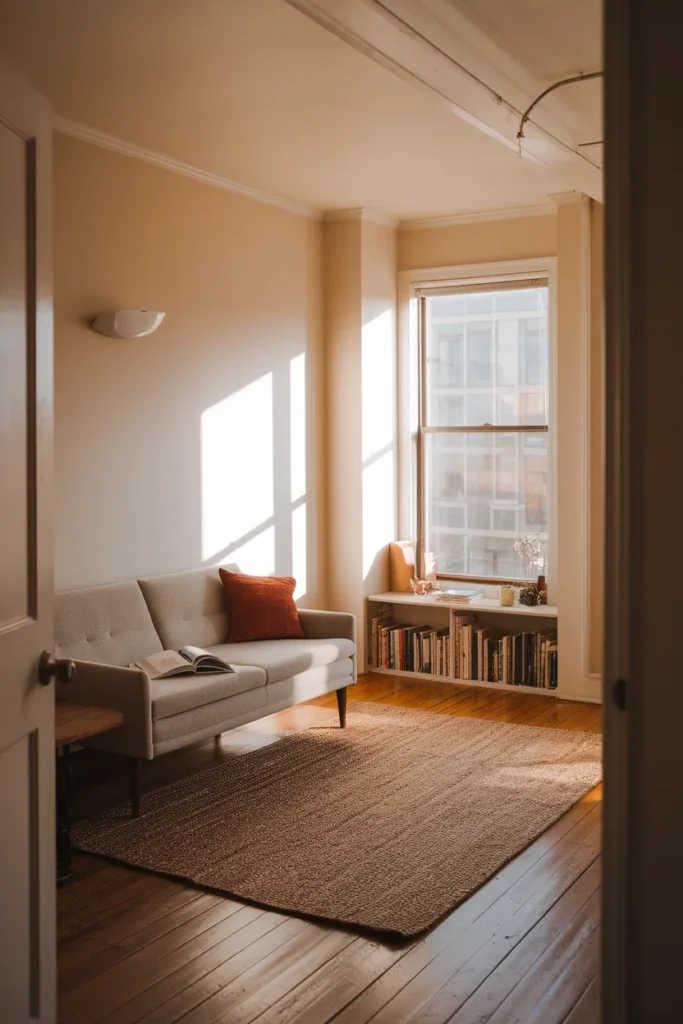
The 30-Inch Rule: Measure This Before You Buy Anything
Here is the whole rule. Every path you walk daily needs 30 inches of clear floor. Every path two people cross needs 36.
That is it. Chalk it on the floor with painter’s tape before you buy, and watch how many pieces disqualify themselves.
I borrowed the upper number from a source that has done far more testing than any furniture blog. Federal accessible route clear width standards set a 36 inch minimum continuous clear width, allowing a pinch down to 32 inches at points for a run of no more than 24 inches. Public buildings, not apartments, sure. But a hallway that meets that spec never feels tight, and 30 inches is the honest floor for a solo renter who is not squeezing past anyone.
Now the numbers that matter once you sit down:
| Clearance | Minimum that works | What breaks below it |
|---|---|---|
| Main walking path | 30″ solo, 36″ shared | You start turning sideways, then you start resenting the sofa |
| Sofa front to coffee table | 14″ to 18″ | Knees hit the table, or you cannot reach your mug |
| Behind a dining chair, pulled out | 30″ | Someone has to stand up so you can get by |
| In front of a dresser or drawer unit | 36″ | Drawers open into your shins |
| Around a reading chair | 24″ on the approach side | You have a chair you never actually walk over to |
That third column is the part competitors skip. A number without a consequence is just trivia.
The 18 inch figure is worth calling out on its own, because it doubles as a reach rule: any surface you want to set a mug on should land between 14 and 18 inches from where you sit. Closer and you kick it. Farther and you lean, and after two weeks of leaning you stop using the table.
Average studio in the US is 457 square feet, per RentCafe’s 2024 national data. One-bedrooms average 735. You have less margin than the catalog photos suggest, which is why the tape comes first.
A Daybed Instead of a Sofa
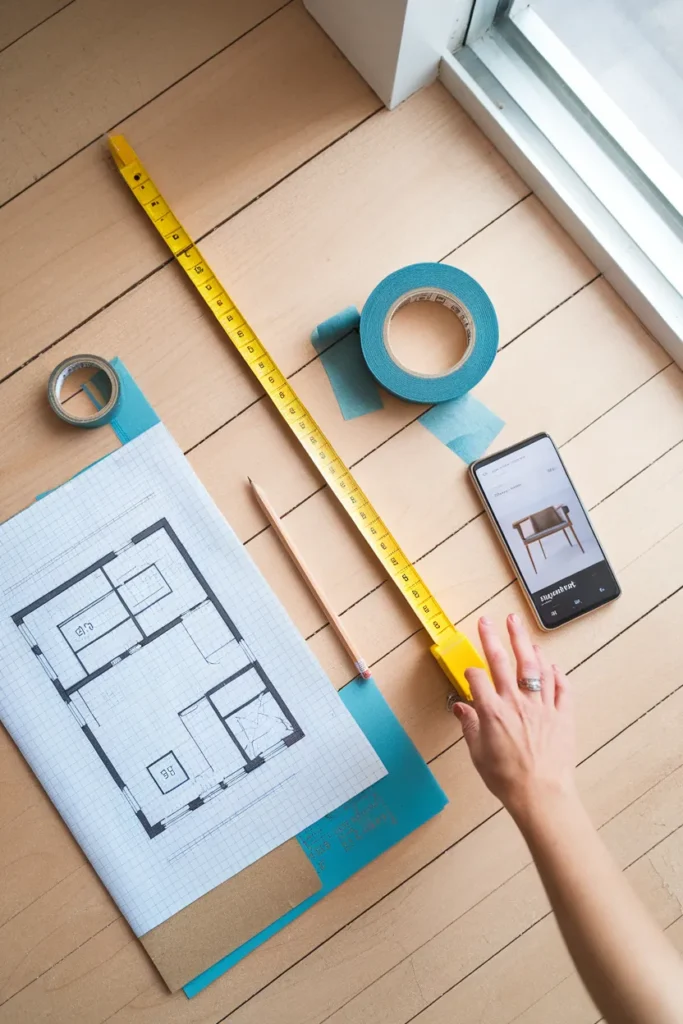
One frame, three jobs: seating by day, guest bed by night, and drawers underneath for everything that has no home.
Real numbers on a common example. The IKEA HEMNES daybed with three drawers runs $399.00, measures 78 3/8″ long by 41 3/8″ deep, and pulls out to a 76 3/4″ wide sleeping surface. Each drawer takes 44 pounds, so you get 132 pounds of hidden storage inside a footprint that is only about six inches deeper than a standard loveseat.
Push it against the long wall, add a bolster and three cushions along the back, and it reads as a banquette rather than a bed. Add a lumbar pillow at each end so two people can sit facing in without sliding down.
Failure mode: skip the back cushions and you have a mattress in your living room. It will look like one in every photo you take.
The honest trade-off: the seat depth that makes a daybed a good bed makes it a mediocre sofa. You sit back and your feet leave the floor, unless you build the back out with 6 to 8 inches of cushion. Do that first, not later.
Worth knowing: Pinterest named leather banquette a rising 2026 search under its Neo Deco trend, up 35%. A daybed styled with a leather bolster and a brass floor lamp lands squarely in that look for a fraction of a built-in bench.
The Table That Folds Flat Against the Wall
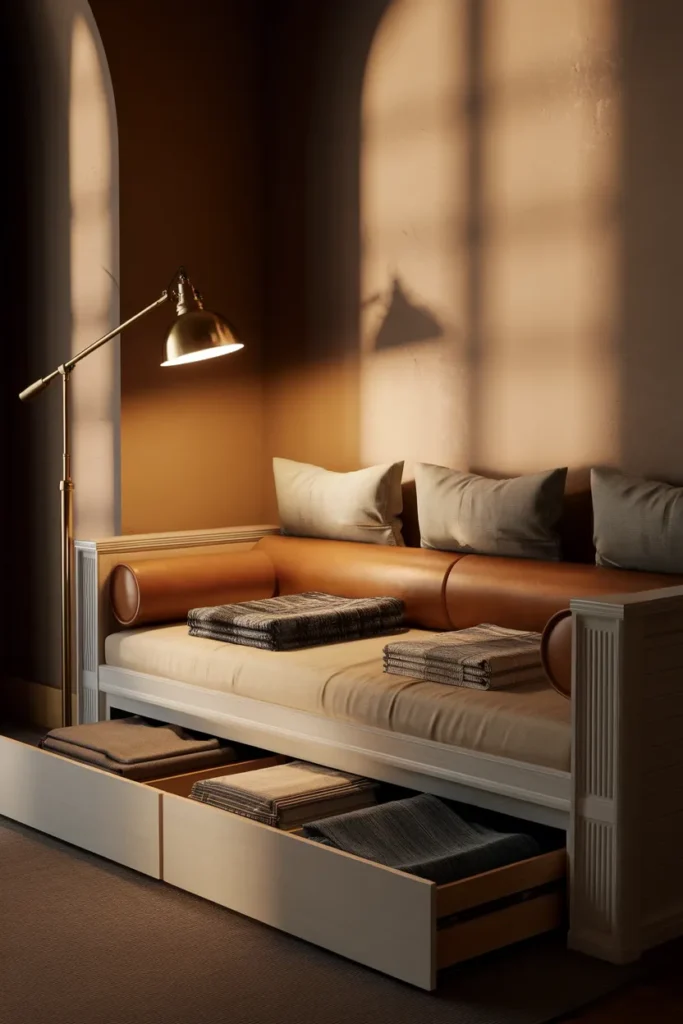
A gateleg or drop-leaf table is the highest-return swap in a small apartment, because it is the only dining surface that costs you nearly nothing when you are not eating.
The IKEA NORDEN gateleg is the archetype and the numbers explain why it keeps showing up on every list: $349.99, folds down to 10 1/4 inches deep, opens to 59 7/8 inches, and seats two to four. Folded, it is shallower than most bookshelves. It also has six small drawers built into the frame, which is where flatware lives when you have no sideboard.
Cheaper versions of the same idea: a wall-mounted drop-leaf shelf that hinges down to 12 inches, or a console table that unfolds into a full dining table.
Failure mode: buying a folding table with legs that swing into the walking path when open. Measure the open footprint including the leg swing, not just the tabletop.
A sensory tell that it is working: you stop hearing chair legs drag. When the table lives folded and the chairs live elsewhere, the constant scrape of pulling furniture around goes quiet. That silence is the actual feeling of a room that fits you.
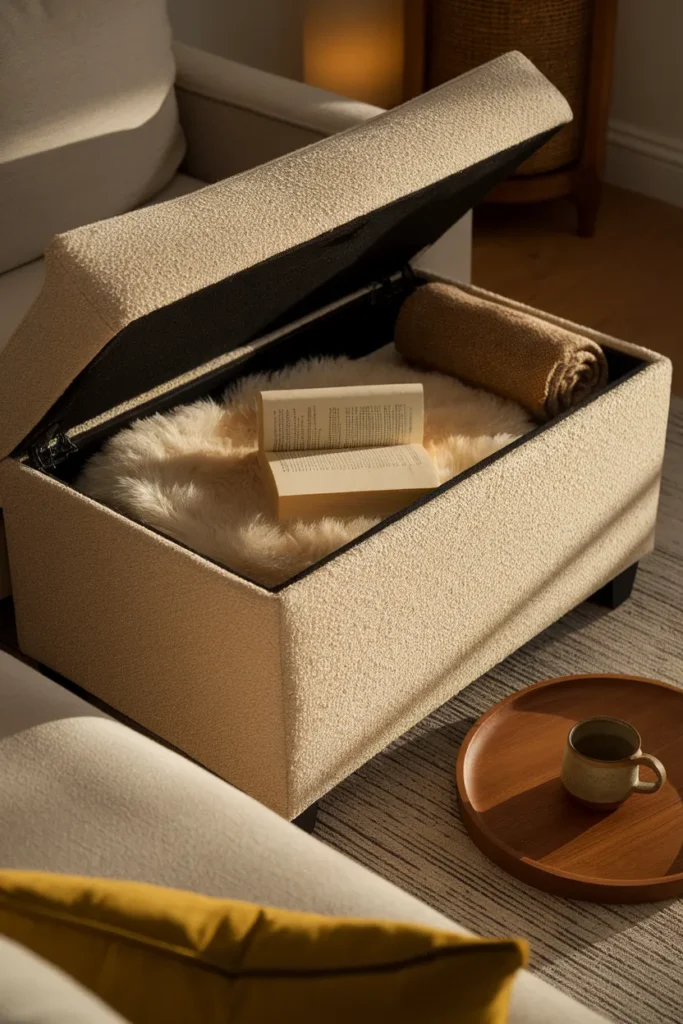
The Storage Ottoman Is Not a Compromise
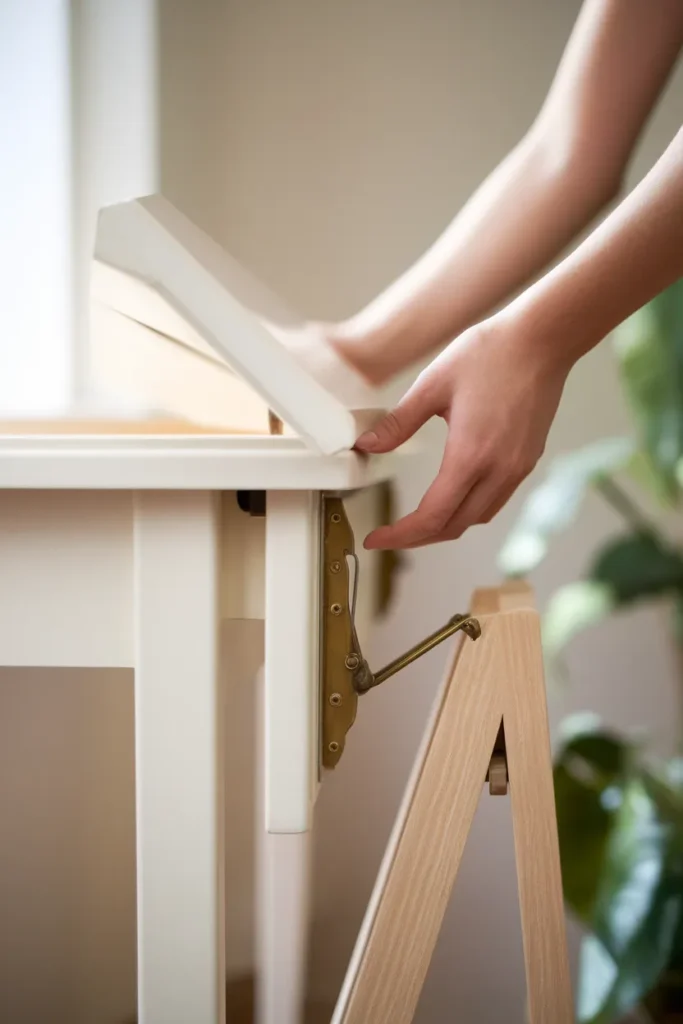
An ottoman that opens is the rare small-space piece that gets better the smaller your apartment is. It is a footrest, a spare seat, a coffee table with a tray on top, and a place to hide two blankets and a laptop charger.
Size it against the 18 inch reach rule from earlier. If it sits more than 18 inches from your seat, it stops being a footrest and becomes an obstacle.
Look for a lid that lifts on a hinge, not one you have to lift off and set somewhere. Lids that need a landing spot get left open. Open ottomans get tripped over.
Failure mode: upholstered lids with no rigid top panel. Set a full mug on one and you will find out fast.
Buy-once tip: pick a fabric you would put on a chair, not one you would put on a floor cushion. This piece takes shoes, elbows, and mugs. Performance weave or a tight boucle survives; loose linen pills within a season.
Go Vertical Without Losing Your Deposit
Floor space is finite. Wall space, in most apartments, is barely touched above 60 inches.
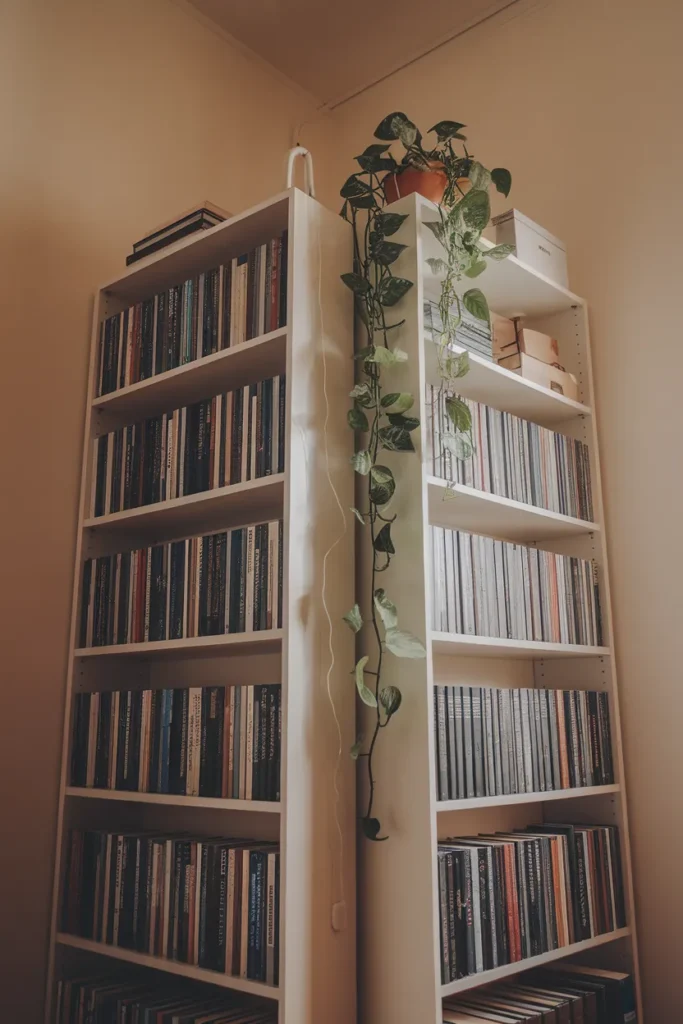
Swap one wide, low bookcase for two narrow tall ones and you gain shelf feet without gaining footprint. A KALLAX 2×2 at $44.99 covers 30 1/8″ by 30 1/8″ with a 15 3/8 inch depth and holds 29 pounds per compartment, which is roughly 20 hardcovers. Stack the same footprint vertically instead and you double the storage on the same square of floor.
Here is the part every competitor leaves out. Tall units tip. The Consumer Product Safety Commission’s furniture tip-over prevention guidance is blunt about it: anchor existing furniture with anti-tip brackets and follow the manufacturer’s instructions. That advice does not come with a renter exemption.
Renter-safe ways to do it:
- Two drywall anchors and a strap. A 1/4 inch anchor hole patches with spackle in ten minutes and costs you nothing at move-out. Landlords expect nail holes. They do not expect a toppled bookcase.
- Load low, always. Heaviest books on the bottom two shelves, lightest on top. A bottom-loaded unit is dramatically harder to tip even before you anchor it.
- Anchor to a stud where you can. Studs sit 16 inches apart in most US apartment framing. A $5 magnetic stud finder pays for itself once.
- Never skip it in a home with kids or pets. This is the one line in this article I would not treat as optional.
Failure mode: anchoring to drywall alone with a single small anchor. One anchor in soft drywall is theater, not safety.
Protect One Real Chair
Every list you have read optimizes for storage. Almost none of them protect a single spot where you can sit down and actually rest.
This is the piece I would fight for. In a 457 square foot studio you can justify exactly one chair that exists purely for sitting in, and it will do more for how the apartment feels than four clever storage cubes.
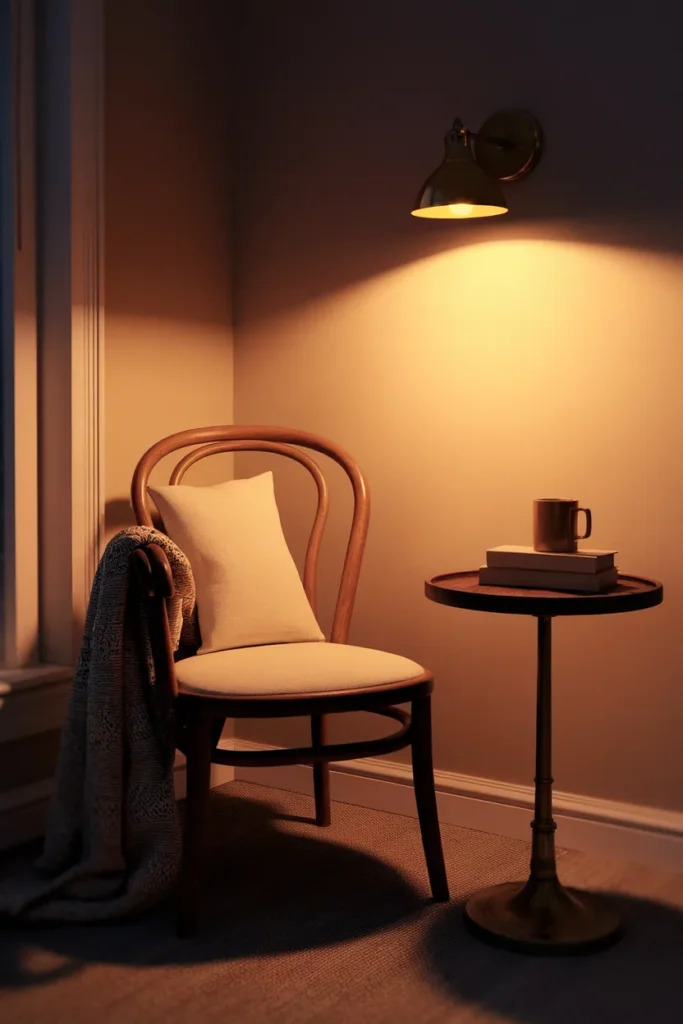
Small-scale seating that still fits an adult body: the IKEA POÄNG at $149.00 runs 26 3/4″ wide by 32 1/4″ deep, with a 16 1/2 inch seat height and a 19 5/8 inch seat depth. That depth is the number to check. Anything under 19 inches and taller readers perch instead of sinking in. Anything over 22 and short readers get no thigh support, which is the real reason certain chairs feel wrong without anyone being able to say why.
Give it 24 inches of clear approach on one side, a surface within 18 inches, and one warm light source at 2700K. That is a whole reading corner in three moves.
If you want a longer shortlist with prices already checked, we broke down the options in our roundup of reading nook accent chairs under $300.
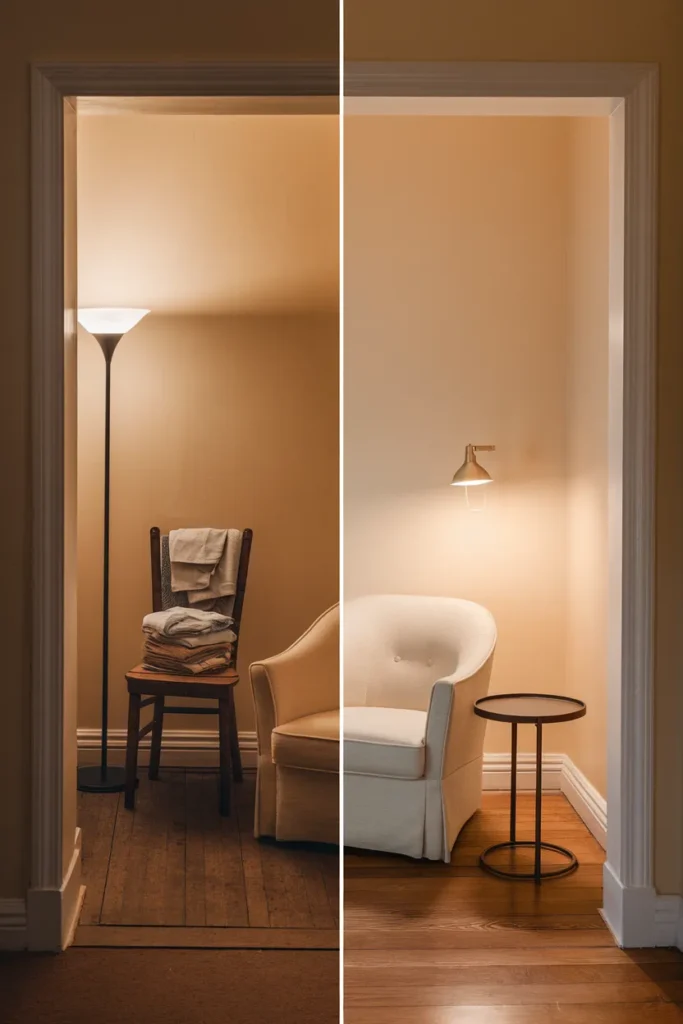
Failure mode: putting the chair in the corner with nothing beside it. A chair with no side table and no lamp becomes a laundry pile within a month. I would put money on it.
The Fold-Down Desk That Vanishes at 5pm
Working from a small apartment breaks when your desk is permanent and your living room is not.
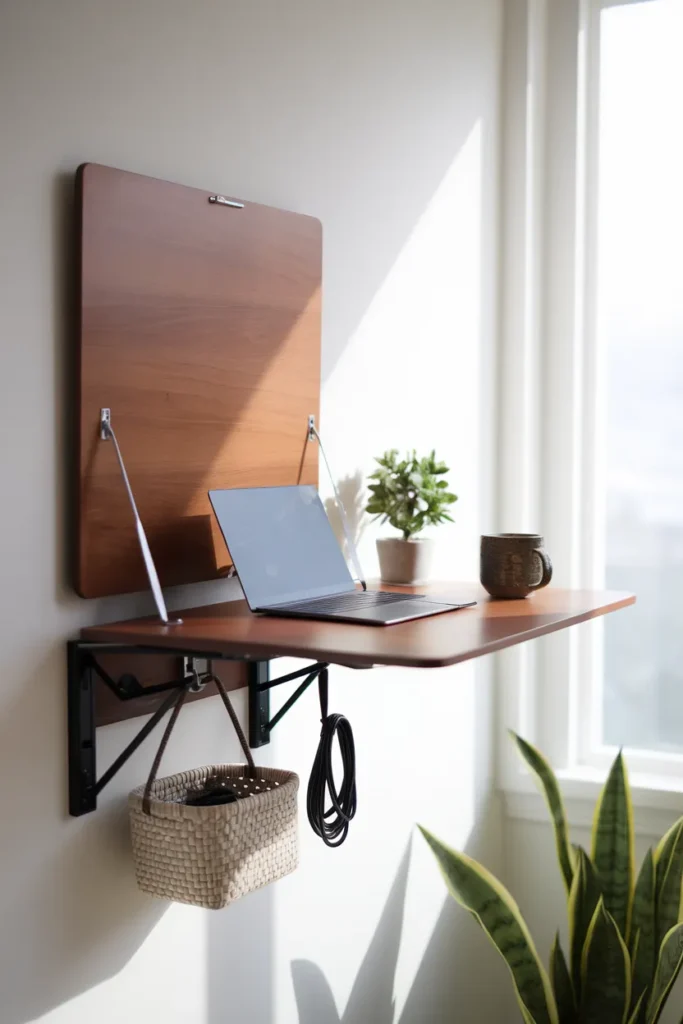
A wall-mounted fold-down desk gives you a 30 inch work surface that collapses to about 5 inches of wall depth. Closed, it reads as a cabinet. Open, it is a full desk with the same clearance you would get from a real one, as long as you keep 30 inches of chair pull-out behind it.
Alternatives that need zero hardware: a narrow console at 15 inches deep doubles as a desk and an entry table, and a rolling cart tucks into a closet when the workday ends.
The move that matters most is not the desk itself. It is putting your chair somewhere else when you finish for the day. A desk chair parked at a desk keeps the room in office mode, and rolling it back to the table switches the room out of it.
For more on making one room hold several functions without it feeling like a showroom, our guide to small apartment decor ideas for tiny homes covers the zoning side.
Failure mode: mounting the desk at standard 30 inch height without checking your chair. Seat height plus 10 to 12 inches is the comfortable gap. A 16 1/2 inch seat wants a 28 inch surface, not 30.
Nesting Tables and the Layer You Can Move
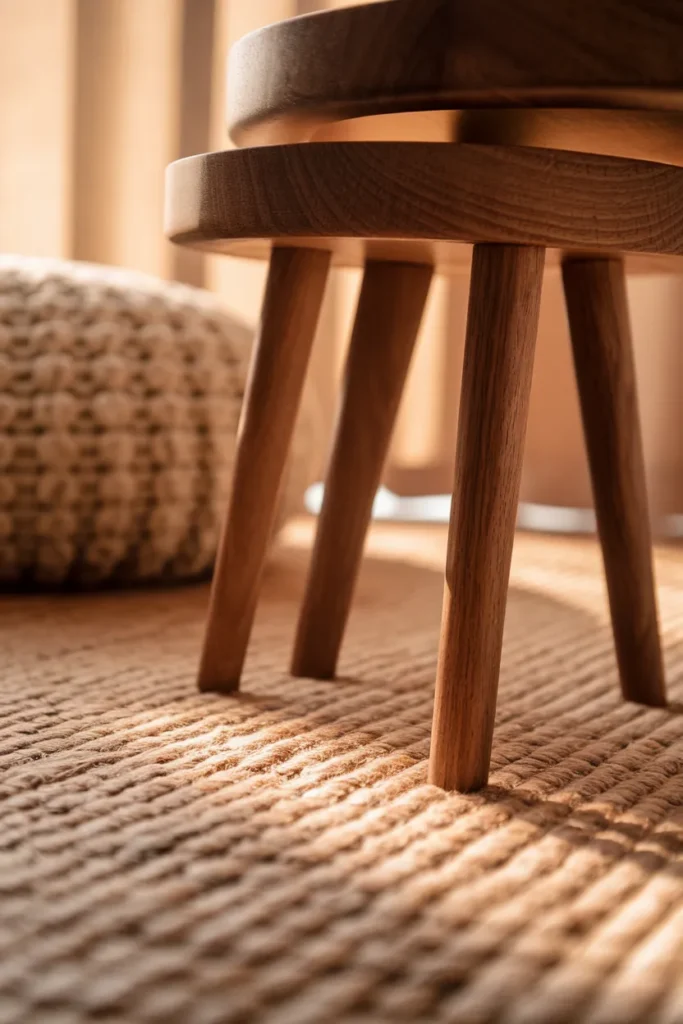
Not every surface should be committed to one spot. Nesting tables are the flexible layer: one lives by the sofa, one migrates to wherever you are actually sitting, and both stack back into a single footprint when guests arrive.
Rules that make them work rather than clutter:
- Buy a set where the smallest table is genuinely light. If you need two hands, it will never move.
- Match the tallest table to your sofa arm height, within 2 inches either way.
- Round over square in tight rooms. You will walk past it a dozen times a day and corners find shins.
Same logic applies to a pouf or a floor cushion. Both stack, both slide under a console, and both turn into extra seating in ten seconds.
Failure mode: three lightweight pieces in a small room start to read as visual noise. Cap the movable layer at two.
The Two Zones You Are Not Using
Under the bed and behind the door are the two largest unclaimed storage volumes in most small apartments, and neither costs a dollar of floor space.
Under-bed: a standard platform bed clears 7 to 9 inches. Bed risers add 3 to 8 more, which is the difference between fitting a duffel and fitting flat bins. Rolling bins beat static ones by a wide margin, because storage you have to crawl for is storage you never open.
Behind the door: an over-door rack holds coats, bags, and a lint roller on a strip of wall that is otherwise dead. Check your door swing clearance first, since a loaded rack can foul the frame.
Two more overlooked volumes: the 12 inches above most kitchen cabinets, and the vertical inside of a closet door.
If you rent and want the version of this that leaves no trace, we mapped it out in our post on small space storage ideas that protect your deposit.
Failure mode: filling under-bed storage with things you use weekly. That space is for seasonal items only, or you will be on the floor every other day.
The Subtraction Pass
Here is the step no other article on this topic will give you, because it does not sell anything.
Before you buy your ninth space-saving piece, remove one thing. Walk the apartment and find the item that gets used least per square foot it occupies. Nine times out of ten it is a coffee table that only holds a remote, a dining chair that only holds clothes, or a floor lamp standing where a wall sconce would do the same job on zero floor.
Take it out for two weeks. Not to the curb, just to a closet or a friend’s garage. If you do not miss it, you found free square footage that cost you nothing and required no assembly.
Do this pass first and you will often discover you needed three pieces, not nine.
One rule to leave with: in a small apartment, the piece that earns its footprint is the one doing two jobs at once. Everything else is negotiable.
Frequently Asked Questions
Which type of sofa is best for a small living room? A loveseat or a daybed, in most cases. A two-seat loveseat typically runs 52 to 62 inches wide against 84 or more for a standard three-seater, and a daybed adds a guest bed and drawer storage for a similar footprint. Sectionals only make sense in a small room if the chaise side replaces your coffee table and ottoman entirely.
What types of furniture work best in small spaces? Anything doing two jobs: storage ottomans, daybeds, drop-leaf and gateleg tables, nesting tables, fold-down desks, and beds with drawers underneath. Legs help too. Furniture raised on visible legs shows floor beneath it, and visible floor is what makes a room read as larger.
How do you make a small apartment look bigger with furniture? Keep the sightline to the far wall clear, raise pieces on legs, use one large rug instead of two small ones, and hang shelving high enough that the eye travels up. Low, leggy, and consistent beats small and scattered.
How much space should you leave between furniture? Thirty inches for a solo walking path, 36 where two people cross, 14 to 18 inches between a sofa and a coffee table, and 30 inches behind a dining chair so it can be pushed back. Tape those distances on the floor before you order anything.
What is the cheapest way to furnish a small apartment? Buy the multi-purpose pieces new and everything else secondhand. Storage ottomans, mattresses, and desk chairs are worth the new price. Bookcases, side tables, dining chairs, and mirrors are consistently available secondhand for a fraction, and a $44.99 shelf unit does the same job whether you paid full price or not.
Can renters use tall bookcases safely without drilling into studs? Yes, with care. Load the heaviest items on the bottom two shelves, keep the top shelf light, and use rated drywall anchors with an anti-tip strap. Federal safety guidance recommends anchoring existing furniture with anti-tip brackets regardless of tenancy, and two small anchor holes patch with spackle at move-out.
Is a Murphy bed worth it in a rental? Usually not, unless your lease specifically permits wall mounting and you plan to stay several years. Most wall bed systems require structural mounting and start well above $1,500. A daybed at around $400 solves the same problem with zero installation and moves with you.
Where to Start This Weekend
Tape the 30 inch line on your floor first. Then do the subtraction pass. Then, and only then, buy the one piece that does two jobs.
Most people reverse that order, which is how a small apartment ends up holding nine clever solutions and nowhere comfortable to sit.
If you want the next step, pick the corner you walk past most often and give it a chair, a surface within 18 inches, and one warm light. That is the smallest project on this page and reliably the one people write in about.
Keep reading
More cozy nook ideas
 Small Spaces
Read →
Small Spaces
Read →
14 Modern Apartment Decor Ideas That Make a Small Room Feel Bigger
Four hundred and sixty square feet. That is the average size of a new US studio apartment, according to RentCafe’s 2025 numbers,…
 Small Spaces
Read →
Small Spaces
Read →
10 Small Space Ideas for Tiny Apartments and Awkward Corners
No bay window. No landlord who answers texts. No drill. Those three facts kill most corner projects before they start, and they…
 Small Spaces
Read →
Small Spaces
Read →
Small Bathroom Storage Ideas for Renters Who Can’t Drill a Single Hole
Most small bathroom storage ideas quietly assume you own the walls. You don’t. So here’s the version that works when your only…