
18 Twin Bed Ideas for a Small Room

A twin bed in a small room can look like a leftover dorm setup or like the best seat in the house. The difference is rarely the bed. It’s where it sits, what surrounds it, and how many inches you leave to walk.
These twin bed ideas for small room layouts are built for real bedrooms: the 10 x 10 guest room, the narrow kids’ room with two sleepers, the rental where you can’t paint or drill. Every idea comes with numbers you can check with a tape measure, a renter-safe option wherever one exists, and the honest trade-off that most photos leave out.
You’ll find corner daybed styling, two-bed layouts that fit a 10-foot wall, storage beds that replace a dresser, bunks and lofts with the safety rules that matter, and a few nook tricks borrowed from window seats and alcove beds.
Start with idea 1 for the fastest win. Not sure two beds will even fit? Jump to idea 2 and grab some painter’s tape first.
1. Push the Twin Into a Corner and Style It Like a Daybed
Floor space is the whole game in a small room, and a bed floating in the middle eats most of it.
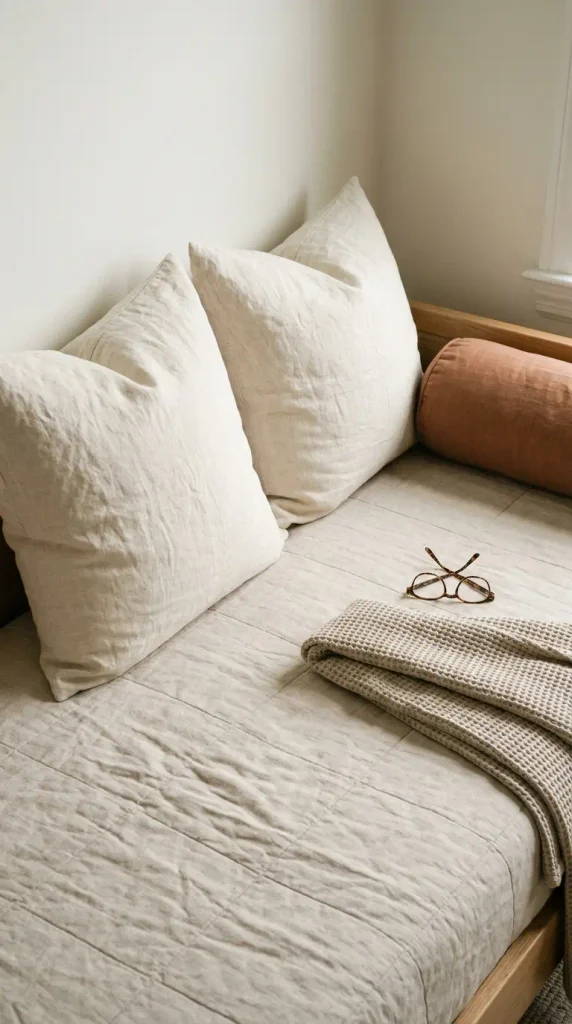
Slide the twin so its long side runs along one wall and its head tucks into the corner. Then dress it like a sofa:
- Two euro shams (26 x 26 inches each) standing against the long wall as a backrest
- A round bolster at each end, so it reads as a twin daybed, not a bed
- A fitted quilt instead of a tucked duvet, so the top stays flat when people sit on it
Pick back cushions that actually hold their shape, because soft fill pillows slump within a week and the daybed look falls apart.
Here’s the trade-off: making a bed wedged against two walls is a small daily wrestle. A fitted quilt or a zip-on cover cuts it to about ten seconds.
2. Tape the Bed’s Footprint Before You Buy Anything
Painter’s tape saves more returns than any product review ever will.
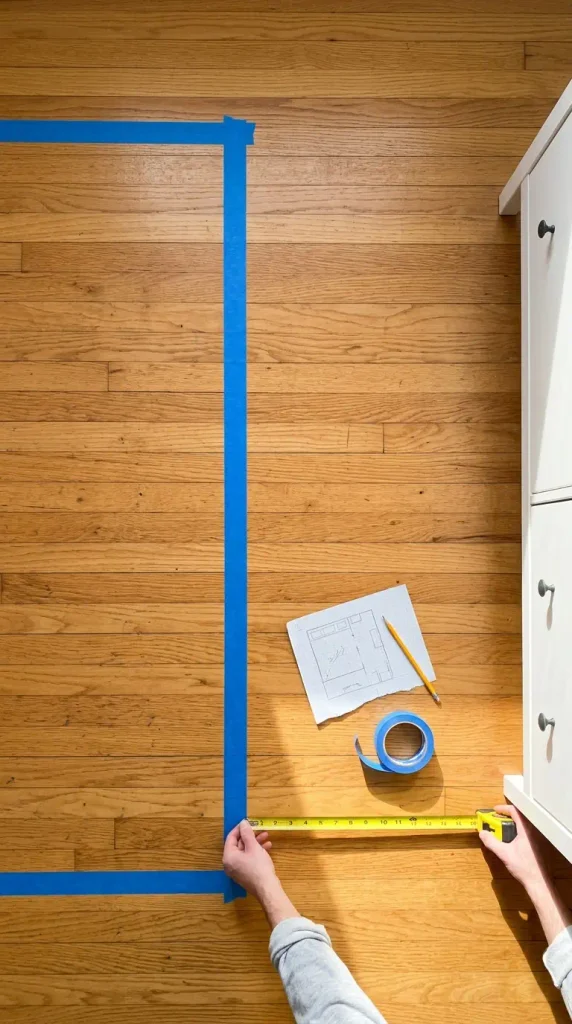
A twin mattress measures 38 x 75 inches, and most frames add a few inches on top of that. On paper it always looks like it fits. In the room, the closet door hits the footboard.
Do it in this order:
- Mark the bed’s full frame size on the floor with painter’s tape.
- Open every door and drawer near it, all the way.
- Live with the tape for a day and walk the path you’d use at 2 a.m.
Then check your gaps against the three numbers below. A dresser drawer that only opens halfway is the most common way this goes wrong.
The 24/30/36 Fit Check
3. Set Two Twin Beds in an L to Free the Middle of the Floor
Two beds side by side claim the whole headboard wall. Turn one bed 90 degrees and the open floor moves to the center of the room, where kids actually play and guests actually drop their bags.
The math decides which layout works. These are mattress-only numbers, so add your frame’s real size before you commit.
| Layout | Wall space it needs | Fits a 10 x 10 room? |
|---|---|---|
| 🛏️🛏️ Side by side, 24″ aisle | about 100″ on the headboard wall | Yes, with room left for frames |
| 📐 L-shape | 75″ on one wall, 113″ on the other | Yes, and it opens the center |
| ↔️ Foot to foot | about 150″ on one long wall | No, it needs a 12.5 ft wall |
| 🪜 Bunk | one 38″ x 75″ footprint | Yes, if the ceiling allows |
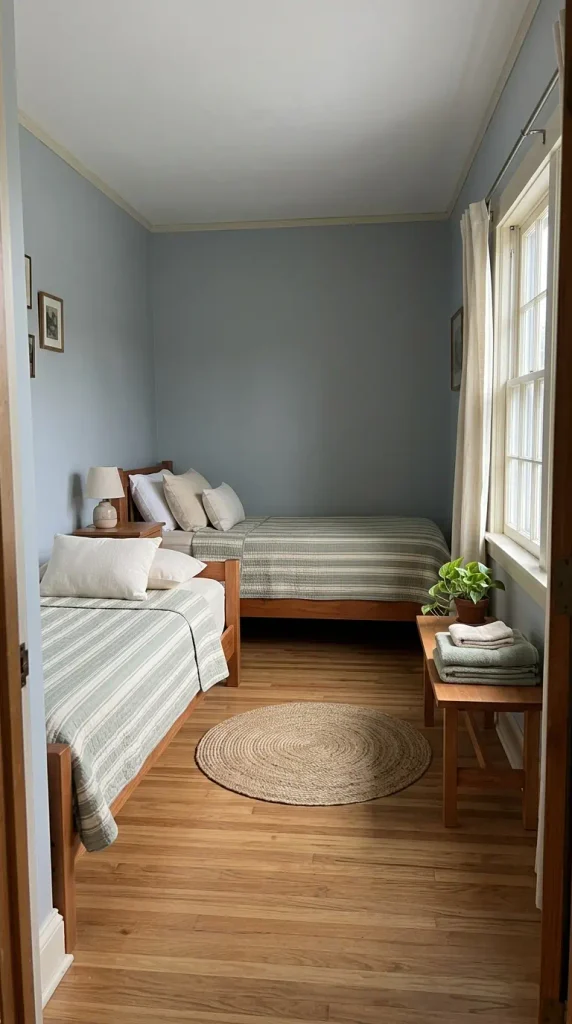
The L does have one weak spot: the bed that turns has its head beside its neighbor’s side rail, so it loses a nightstand. A plug-in wall light (idea 5) solves that without a table.
4. Share One Nightstand Instead of Squeezing In Two
Matching nightstands between two twins look fair on paper. In practice they kill your walkway.
The fix is one narrow table, roughly 16 to 20 inches wide, sitting in the aisle at the head of both beds. That still leaves a clear path at the foot, and each sleeper reaches the same surface.
Choose one with a drawer on top and an open shelf underneath, so each person owns a level. You’ll find more small-space layout tricks for awkward corners if the room also has to hold a desk or a dresser.
💡 Quick Tip
Put a two-outlet charging cube on the shared table and route both cords down the back leg. One table, two phones, zero cords stretched across the walkway.
The result is a room that reads as planned, not crammed.
5. Hang Plug-In Swing-Arm Sconces Over Each Pillow
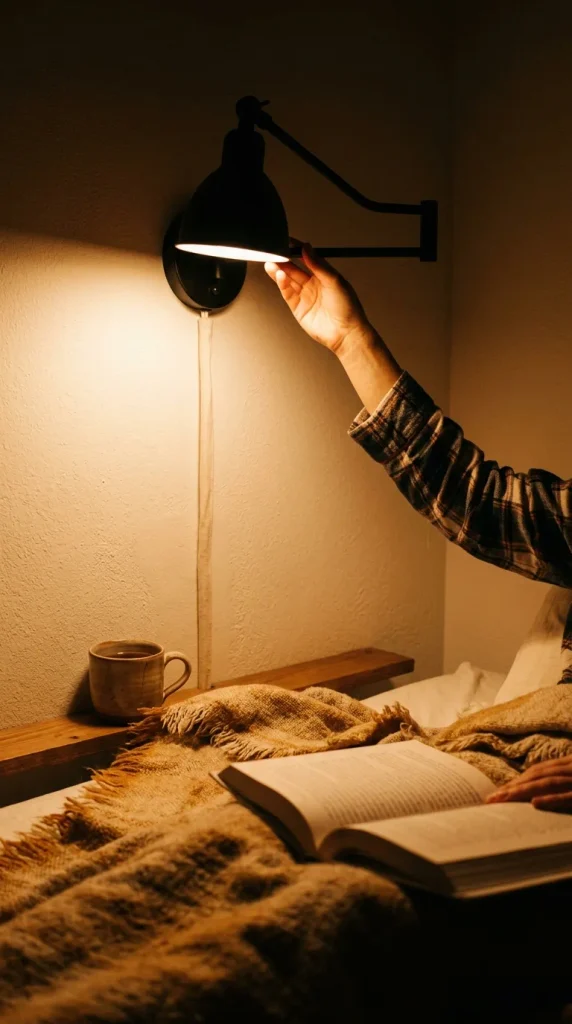
Table lamps are the first thing to go in a tight room. A wall sconce gives back the whole tabletop, and a swing-arm version lets you pull the light right over your page, then push it back flat against the wall with a soft click.
Plug-in models are the renter path. No electrician, no new junction box, just one small screw hole that a dab of spackle hides at move-out.
Sit up in bed against your pillow and mark the wall at about shoulder height. That’s roughly where the arm should sit.
Mount the bracket with the screw and anchor in the box. Skip adhesive strips unless the maker rates them for the lamp’s weight.
Run the cord down a paintable cord cover to the outlet, then add a warm 2700K bulb so the light reads golden, not blue.
Safety note: anchor tall furniture to the wall, keep candles and cords away from fabric, and use a licensed electrician or contractor for hardwired lighting, ceiling mounts, or anything structural.
6. Pick a Captain’s Bed With Drawers, Then Measure the Pull-Out
Under-bed drawers can replace a dresser in a room with no wall left for one. Lift-up storage frames hide even more, but you have to strip the bedding to reach anything.
The split is simple. Drawers for daily clothes. Lift-up for off-season bins and spare bedding you touch twice a year.
The catch with drawers is the floor in front of them. A 20-inch-deep drawer needs those 20 inches plus room for you to kneel, and a nightstand parked in that zone turns every morning into a tug of war. Listen for the drawer runners when you test one in a store. A smooth glide sounds like a hush. Bare wood runners scrape and stick by spring.
Put the drawers on the open side of the bed, facing the walkway.
Pick metal ball-bearing glides for drawers you open every day.
Measure drawer depth plus about a foot of kneeling room.
Drawers that face a wall or another bed less than a drawer’s depth away.
Lift-up storage for anything you need every week.
Get the clearance right and the dresser can go.
7. Tuck a Trundle Under for the Nights Someone Sleeps Over
Guests show up a few nights a year. The room belongs to you the other 360-odd nights, so the second bed should disappear.
A pop-up trundle rises to sit level with the twin. Side by side, two twin mattresses make a 76 x 75 inch surface, close to the width of a king, which turns a sleepover into an actual bed instead of a floor pallet.
One twin against the wall, a clear floor, and the trundle hidden behind a bed skirt or low frame.
The trundle rolls out and pops up level, giving two sleepers a 76 x 75 inch bed in about a minute.
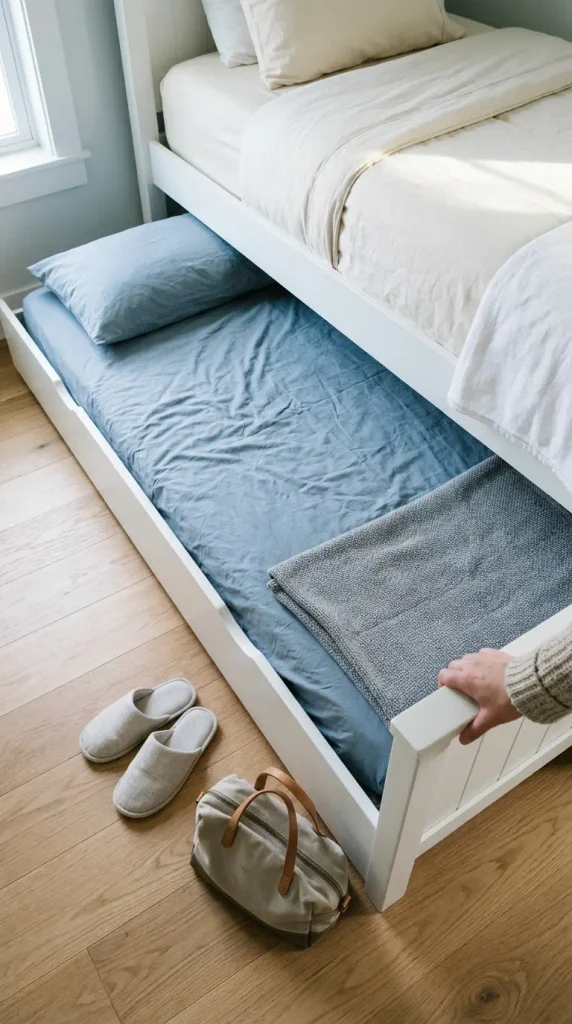
Check two specs before you buy: the maximum mattress thickness the trundle allows, and your floor. Casters roll fine on hardwood and low-pile rugs, but they snag on thick shag every single time.
8. Choose Twin Bunk Beds With Guardrails on Both Sides
Stacking is the oldest small-room trick there is, and it’s still the most floor you’ll ever get back. Two sleepers share a single 38 x 75 inch footprint.
The safety details matter more than the style here. Under the federal bunk bed safety standard, an upper bunk higher than 30 inches off the floor needs guardrails on both sides, with a continuous rail on the wall side, and openings in the upper structure have to be under 3.5 inches.
⚠️ Watch Out
Bunk beds sold in the US carry a label warning against putting children under 6 on the top bunk. Use the mattress size the label lists, too. A thicker mattress quietly lowers the guardrail.
Headroom is the other thing photos hide. Sit on the top mattress in the store, or measure from your ceiling down. If an older kid can’t sit up without hunching, the bunk will become the place nobody wants to sleep.
9. Raise It to a Loft and Claim the Floor Underneath
Lifting the bed hands back about 20 square feet of floor, the full 38 x 75 inch footprint of a twin.
What fits underneath depends on the loft’s clearance:
- A desk and chair for homework or a small home office
- A low armchair, a floor lamp, and a basket of books for a reading spot
- A short dresser, which frees up a whole wall elsewhere
Before you buy a loft
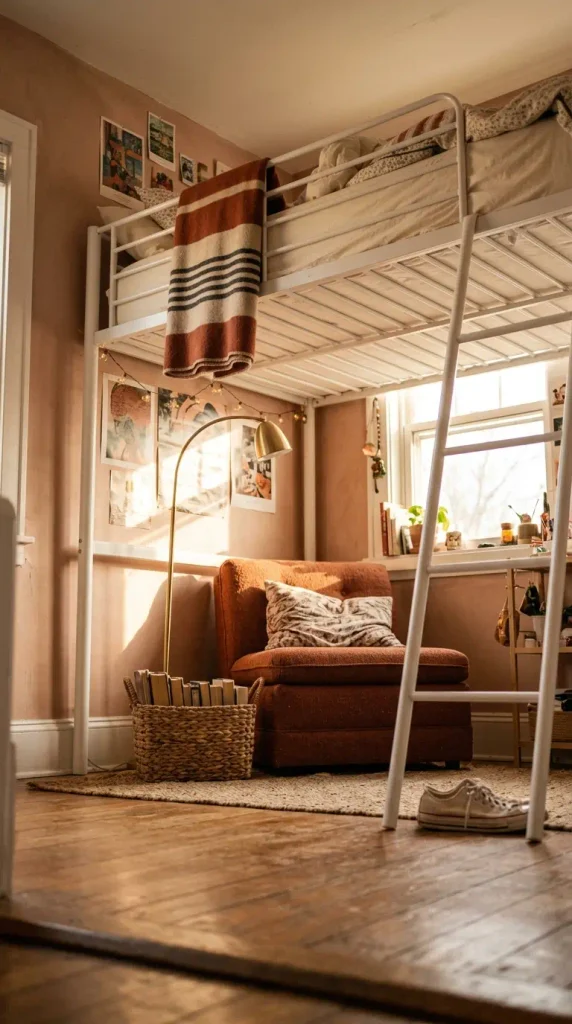
The space under a loft only feels like a room if it gets its own light.
10. Use a Low Bookcase as the Headboard
Books behind your head beat a padded panel nobody leans on. Slide a low horizontal bookcase against the wall, then push the bed right up to it.
Go a little wider than the bed if you can. The extra few inches on each side give you a top surface that works as a nightstand, so the room needs no side table at all.
One piece does three jobs: headboard, nightstand, and the only book storage a tiny room has room for.
Even a low shelf can tip when a kid climbs it to reach the top. The CPSC’s guidance on anchoring furniture with shelves and drawers applies here. For renters, one anti-tip strap leaves a single small hole, easier to patch than a fall.
11. Fake a Headboard Without a Single Nail
Renters, this one’s yours. A bare twin against a bare wall is what makes a small room feel like a dorm, and a headboard fixes it in an afternoon.
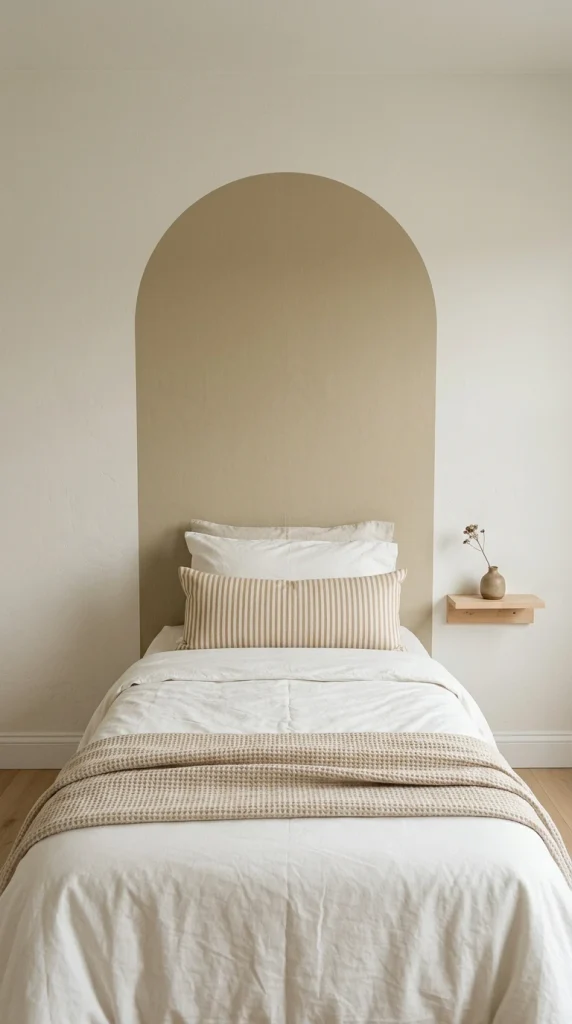
One warning on peel-and-stick: test a small piece in a closet first. On some flat paints, the adhesive lifts the paint right along with the paper.
12. Go Twin XL if an Adult or Tall Teen Sleeps There
Five inches sounds like nothing until your feet hang off the end. A twin XL keeps the same 38-inch width, so it fits the same tight wall, but adds length where grown-ups need it.
| Twin | Twin XL |
|---|---|
| 38 x 75 inches | 38 x 80 inches |
| Standard twin sheets, sold everywhere | Needs XL sheets, easiest to find in dorm sections |
| Two side by side: 76 x 75 inches | Two side by side: 76 x 80 inches, the size of a king |
Bonus: two twin XLs pushed together become a split king later, so the beds can move with you to a bigger room.
13. Dress the Twin Like a Grown-Up Bed
Kid-room energy usually comes from the bedding, not the bed. Cartoon prints, a thin comforter that stops halfway down the frame, a lone flat pillow.
Swap a few layers and the same twin reads like a guest bed in a nice hotel:
- ▸A full-size quilt on the twin, so it drapes close to the floor and hides a plain metal frame.
- ▸A tailored box-pleat bed skirt instead of a ruffle, which looks sharp and hides under-bed bins.
- ▸Solid percale or linen sheets in one color. Percale feels cool and crisp; linen softens with every wash.
- ▸A folded wool throw across the foot, heavy enough that it stays put when you sit down.
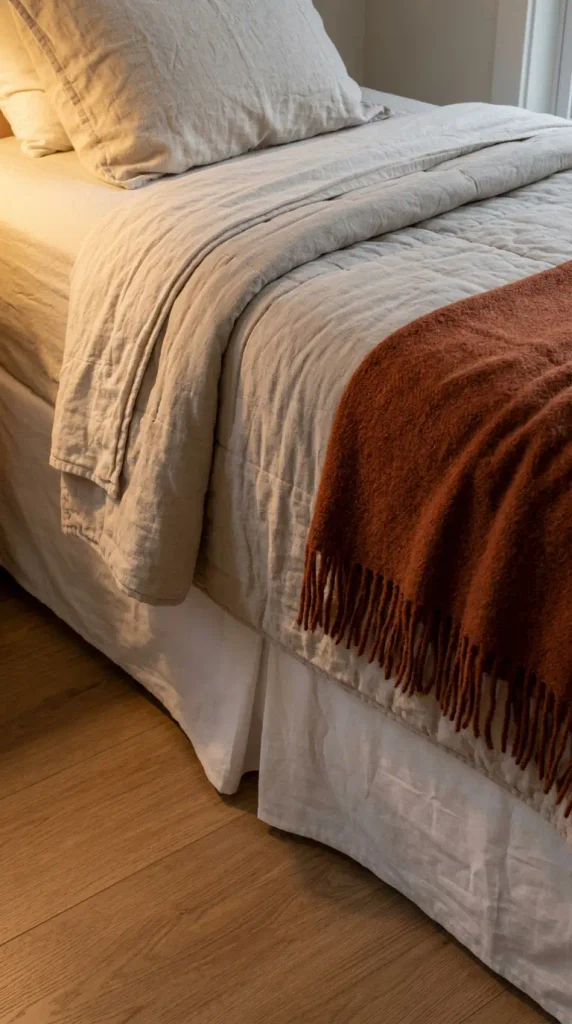
Same bed. Different decade.
14. Hang a Curtain to Turn a Twin Into an Alcove Bed
The usual mistake is a ceiling canopy kit. It needs a hook in the ceiling, sags in the middle, and ends up looking like a mosquito net.
What works better in a rental is a tension rod. If the bed sits in a recess, between a closet wall and a side wall, or between the wall and a tall anchored bookcase, wedge a rod across the opening at ceiling height and hang one sheer linen panel. Pull it halfway and the bed becomes a little room inside the room. The rings make a soft scrape when you slide them, and the panel softens the overhead light into a glow.
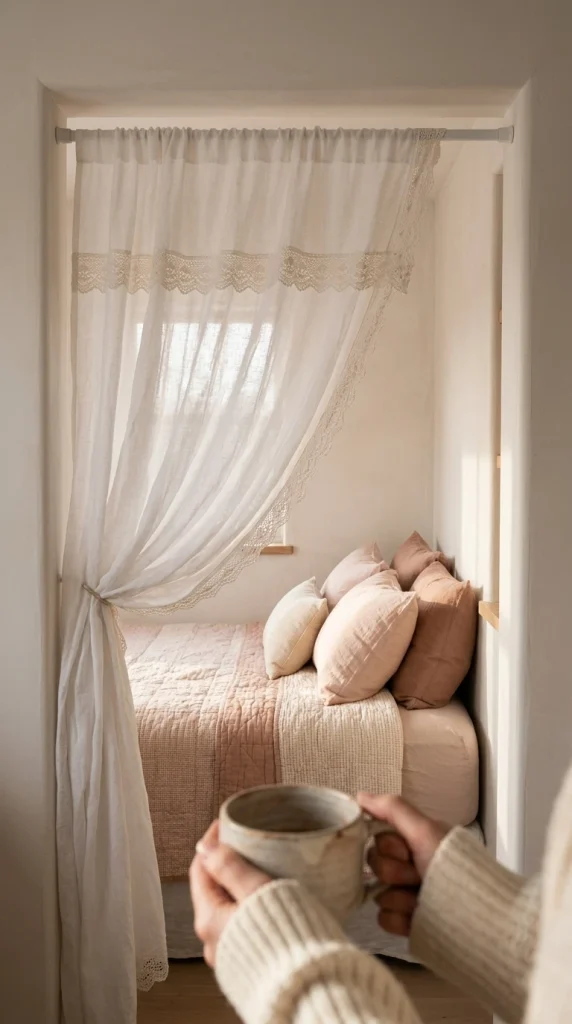
Keep string lights LED only if you add them, and never let a bulb rest against the fabric.
15. Fold the Bed Away When the Room Has a Day Job
Some rooms work as an office all week and a guest room on Friday night. A bed that folds away lets one room do both.
You have two real options, and they suit different homes.
Cabinet bed: a freestanding chest that opens into a twin, with the mattress folded inside. Nothing touches the wall, so it’s the renter pick. The trade-off is the mattress, usually thinner than a regular one, so it’s best for short stays.
Wall bed: the classic Murphy. It holds a normal mattress and disappears fully into the wall, but it has to be fastened to studs. That makes it an owner upgrade, and a job for a pro installer.
Measure the bed open, not closed. It needs the full twin length plus walking room in front.
Keep a lamp off the folding zone, or put it on the wall.
A rug thick enough to stop the bed from folding flat.
Mounting a wall bed yourself into drywall alone.
16. Size the Rug to the Bed, Not the Room
Most small-room rugs miss in the same direction: too small. A 3 x 5 floating in the middle of the floor makes the room look busier and leaves your feet on cold floorboards at 6 a.m.
Match the rug to where feet land instead. A runner along the open side of a wall-pushed twin gives you a soft first step. For two twins side by side, a 5 x 8 turned sideways under the lower half of both beds ties them together as one set.
A small rug centered in the room, bare floor beside the bed, and a room that reads as scattered.
A washable runner along the bed’s open side, so the first step of the day lands on something soft.
Washable matters more than you’d think in a kids’ room or guest room. Spills happen, and a rug you can throw in the machine actually gets cleaned.
17. Put the Twin Under the Window and Call It a Window Seat
No bay window? The bed can play one. Run the twin’s long side under the window, stand a row of pillows against the sill, and you’ve got a daytime reading seat with a view, plus the sound of rain right on the glass.
Two checks keep it comfortable. First, make sure the sill sits higher than the pillow tops, or they’ll block the light you came for. Second, feel the glass on a cold night. Older windows radiate chill, and a thermal curtain panel you can close at bedtime fixes that.
If you’d like a real built-in look later, these IKEA hacks for reading nook builds show how to box in a bench base around a mattress.
Keep the bed off radiators and heat vents, and swap any corded blinds for cordless ones in a kid’s room.
The bed gets the best light in the room, and the window finally gets used.
18. Give Each Sleeper a Zone in a Shared Room
Sharing goes smoother when each bed comes with its own territory. Siblings argue less about space when the space is clearly marked, and a guest feels less like they’re camping in your room.
Build each zone
Two colors, one palette. Each sleeper gets something of their own, and the room still reads as one design.
Twin Bed Ideas for Small Room Frequently Asked Questions
Can two twin beds fit in a 10 x 10 room?
Yes. Side by side, two 38-inch mattresses plus a 24-inch aisle take about 100 inches of a 120-inch wall, which leaves room for frames. An L-shape needs about 75 inches on one wall and 113 inches on the other, and it keeps the center of the floor open. Frame sizes vary, so tape the real footprint on the floor before you buy.
What size room do you need for a twin bed?
A twin mattress is 38 x 75 inches. Add about 24 inches of walkway on the side you use and roughly 28 inches at the foot, and the bed with its clearance needs about 62 x 103 inches. With the long side against a wall, a room around 7 x 9 feet can hold a twin, though it won’t fit much else.
How do you arrange two twin beds in a small room?
You have three main options. Put them side by side with one shared nightstand between them, set them in an L along two walls to open the center, or stack them as bunks. Side by side works on a wall of about 100 inches. Foot to foot only works in a long, narrow room with a wall of 12.5 feet or more.
How can I make a twin bed look more grown-up?
Focus on the bedding and the wall. Use a full-size quilt that drapes toward the floor, a tailored bed skirt, and solid sheets in one color. Add a headboard, even a no-drill one such as an upholstered panel bolted to the frame or a peel-and-stick arch. A wall sconce instead of a kid-style lamp finishes the look.
Is a twin XL better than a twin for a small room?
For adults and tall teens, usually yes. A twin XL is 38 x 80 inches, the same width as a twin but 5 inches longer, so it fits the same tight wall. The downside is bedding: standard twin sheets won’t fit, so you’ll need XL sheets, which are easiest to find in dorm sections.
Should a twin bed go against the wall?
In a small room, pushing the long side against a wall usually gives you the most usable floor and lets the bed double as a daybed. The trade-off is making the bed, since you can’t walk around it. A fitted quilt or zip-on cover makes that easier. Leave about 24 inches clear on the open side.
Are bunk beds safe for young kids?
Bunk beds sold in the US must carry a label warning against putting children under 6 on the top bunk. Upper bunks over 30 inches high need guardrails on both sides, and openings must be small enough that a child can’t slip through. Use the mattress size the label lists so the guardrail stays high enough.
Make the Room Work Before You Make It Pretty
A small room doesn’t need a smaller dream. It needs a tape measure, a plan for where feet land, and one or two pieces that each do more than one job.
Start with the fit check, choose the layout your walls can actually hold, and then layer in the softer stuff: the daybed pillows, the warm sconce, the curtain that turns a bed into an alcove. Any one of these twin bed ideas for small room setups can be done in a weekend, and most can come with you when you move.
Save this list to your small-bedroom board so the measurements are there when you’re standing in the store aisle with a tape in hand.
Keep reading
More cozy nook ideas
 Small Spaces
Read →
Small Spaces
Read →
10 Small Reading Nook Ideas for Adults
One high-back chair, one clamp-on lamp, one $19.99 tray table. At IKEA US prices this month, that’s a full reading corner for…
 Small Spaces
Read →
Small Spaces
Read →
14 Modern Apartment Decor Ideas That Make a Small Room Feel Bigger
Four hundred and sixty square feet. That is the average size of a new US studio apartment, according to RentCafe’s 2025 numbers,…
 Small Spaces
Read →
Small Spaces
Read →
10 Small Space Ideas for Tiny Apartments and Awkward Corners
No bay window. No landlord who answers texts. No drill. Those three facts kill most corner projects before they start, and they…