
Dark Cottagecore Bedroom Ideas That Feel Like a Storybook, Not a Cave

A dark cottagecore bedroom runs on one ratio: 70 percent deep color, 20 percent warm wood, 10 percent glow. Get that split right and a plain rented room turns into the kind of place where a rainy Sunday and a fat novel feel like a plan. You don’t need a cottage. You don’t need a landlord who answers email, either. Most of what follows works with zero paint and zero drilled holes, and the look builds one piece at a time, so your budget sets the pace instead of the other way around. The rule comes first. Eight ways to build on it come right after.
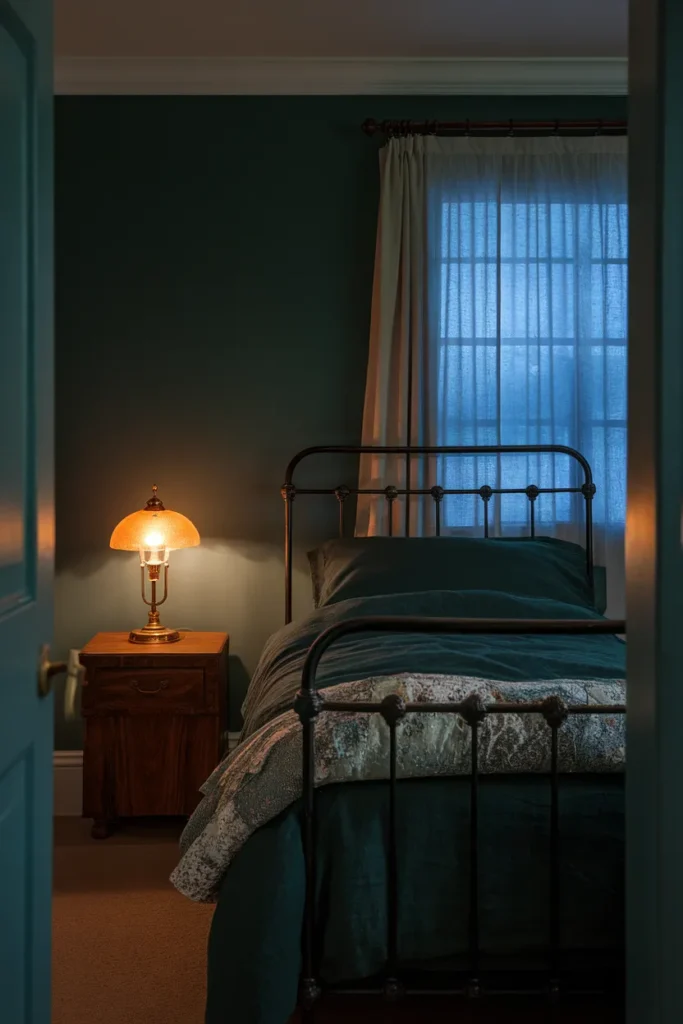
The 70/20/10 Shadow Rule (Start Here)
Dark rooms rarely fail because they’re too dark. They fail because the glow layer is missing. So before you buy a single thing, split the room into three jobs. Shadow takes about 70 percent: the walls, the duvet, the curtains, the rug. Warmth takes about 20 percent: wood tones, cream contrast, brass. Glow takes the last 10 percent: every light source and every surface that bounces one.
| Layer | Share | What carries it | Starter pieces |
|---|---|---|---|
| Shadow | ~70% | Walls, bedding, curtains, rug | Forest green paint or dark floral peel and stick wallpaper, deep green linen duvet, blackout curtains |
| Warmth | ~20% | Furniture, floor, contrast | Walnut dresser, wrought iron and wood bed, jute rug, cream sheet band |
| Glow | ~10% | Light and reflection | Warm 2700K bulbs, brass candlesticks, fairy lights, one ornate mirror |
Screenshot the table. It’s the whole article in one box, and it’s the checklist you’ll use in every thrift aisle from here on. The failure mode is spending the entire budget on the 70 and wondering why the room reads like a basement: the 10 percent is small, but it does the talking.
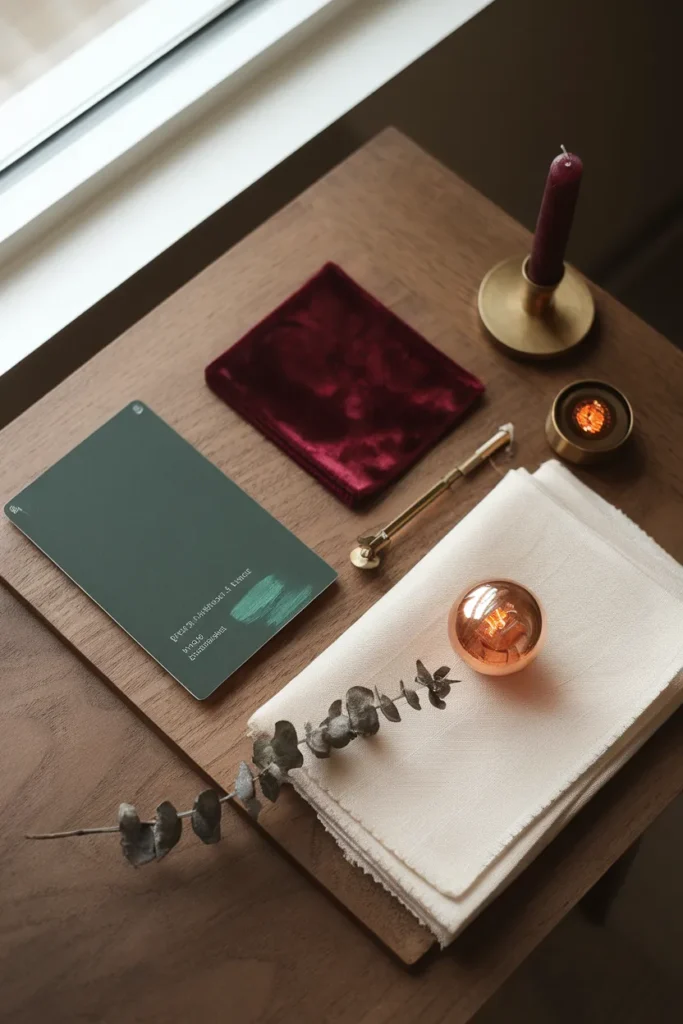
Paint One Wall the Color of the Woods at Dusk
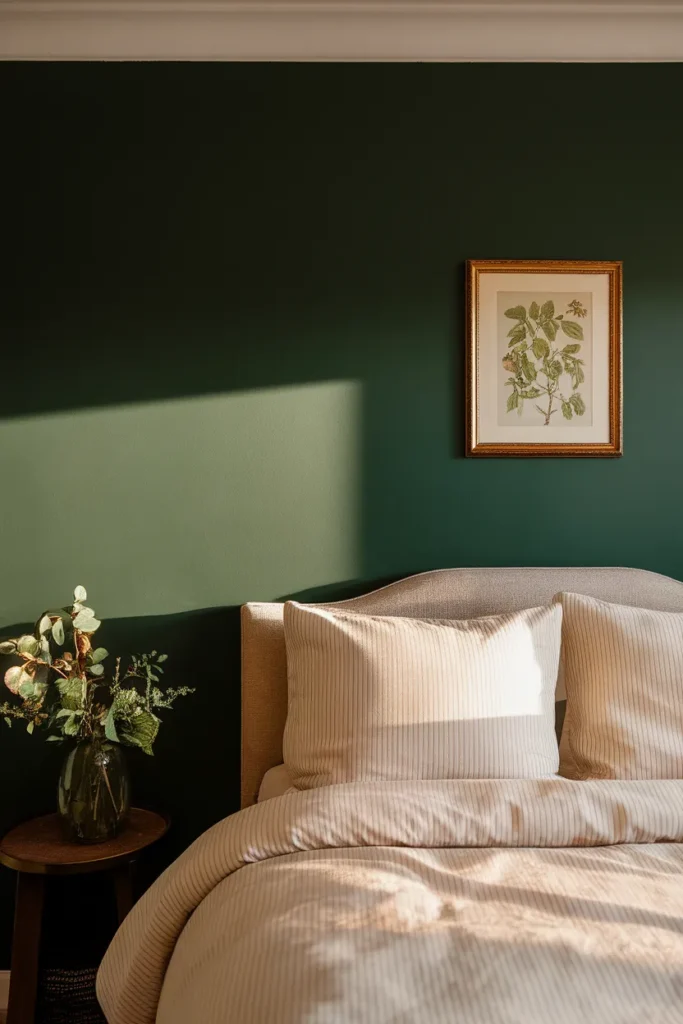
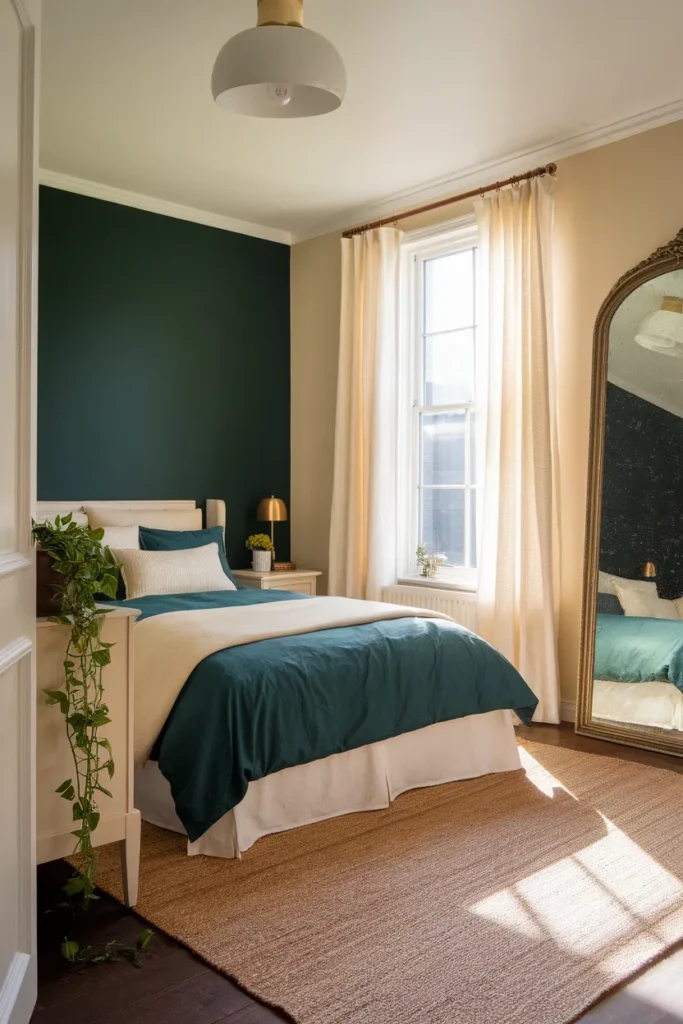
If paint is on the table, start behind the bed and go properly deep: Benjamin Moore Essex Green, Farrow and Ball Studio Green, or Benjamin Moore Hale Navy if your heart leans midnight over moss. Deep burgundy works too, on one wall, balanced by cream everywhere the fabric touches it. One saturated wall gives you the fairy tale without swallowing a small room whole.
Buy the sample pot, paint a big piece of poster board, and judge it at 9 p.m. under your actual lamp, because that’s when this room lives. The classic mistake is choosing at noon by the window, then meeting a completely different color after sunset. The same palette logic runs our dark cottagecore kitchen guide, if you’d like the whole home telling one story.
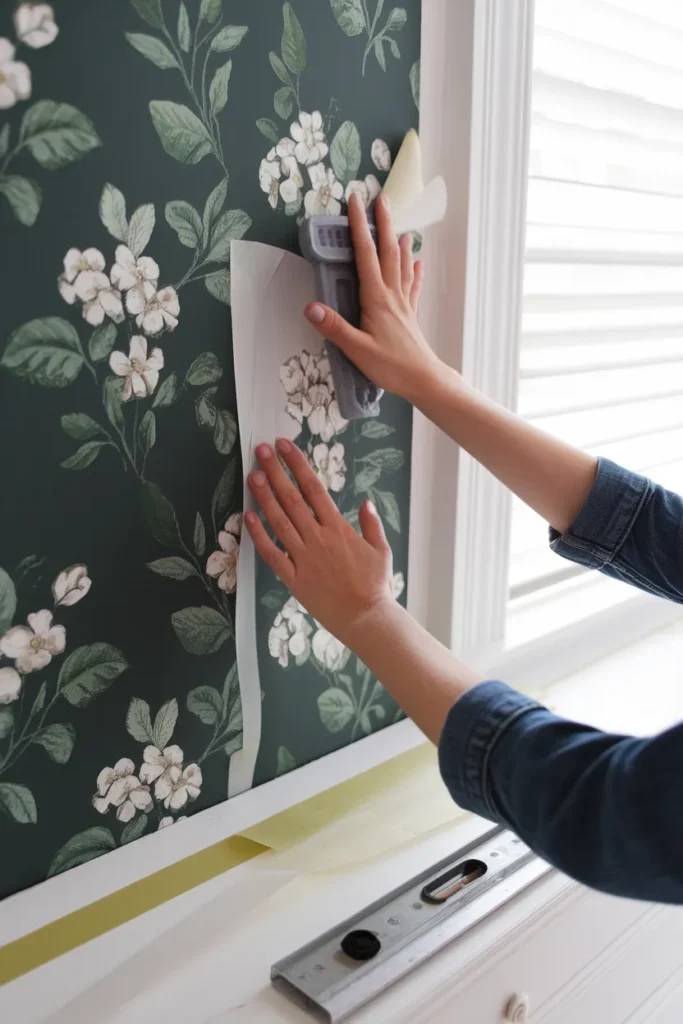
The No Paint Version: Dark Floral Wallpaper That Peels Off Clean
Renters, this section is yours. Dark floral peel and stick wallpaper delivers the moodiest wall in the room and comes off without a security deposit conversation. At the big box retailers, most rolls land between roughly $20 and $50, and a premium roll runs 27 inches wide by 20 feet long, about 45 square feet, so a typical wall behind a queen bed takes two to three rolls. Look for muted greens, deep browns, or near-black grounds with climbing florals.
Order the sample first, always. A pattern that looks lush on a phone screen can read as flat black from six feet away, and that’s the one failure that costs real money. Wipe the wall down with rubbing alcohol before you start, work from the ceiling line, and chase bubbles out with a smoothing tool as you go. No wallpaper courage at all? Lean an oversized framed botanical against the wall behind the nightstand, or hang a large dark textile with damage free adhesive strips.
Layer the Bed Like It’s October All Year
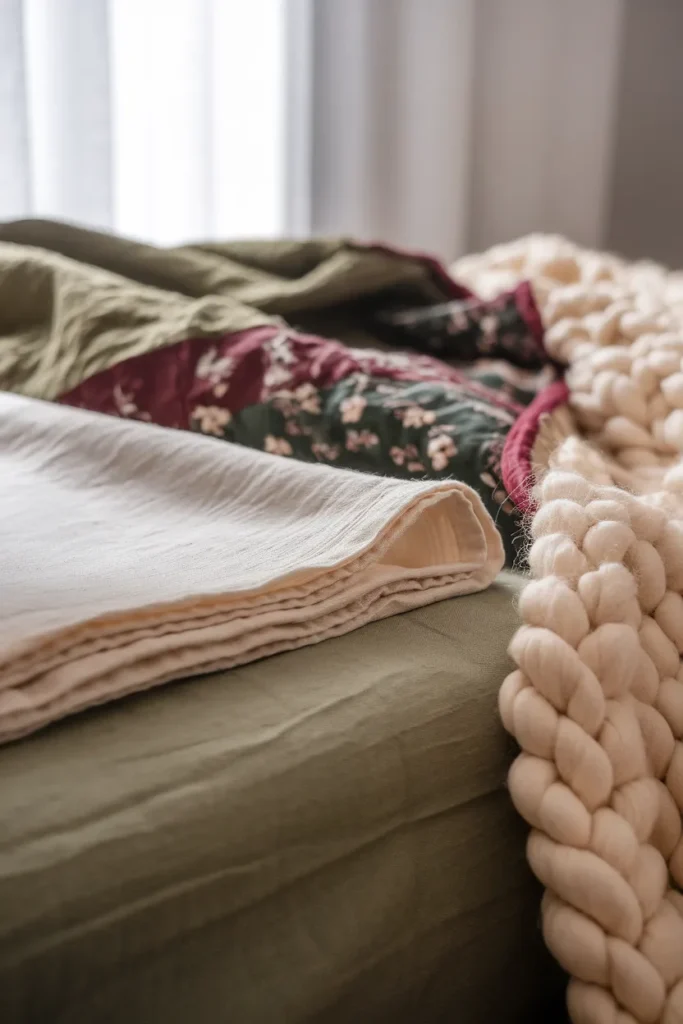
The bed is the biggest object in the room, which makes it your second wall. Build it in strata: cream sheets, then a washed linen duvet in deep green or charcoal, then a floral patchwork quilt folded in thirds across the foot, then one velvet lumbar pillow and a wool throw dragged off a corner like someone just got up. Cool linen against the skin, real weight from the wool: this style is as much about touch as color.
Keep the sheet band cream on purpose. An all-dark bed photographs like a hole and sleeps like one too, visually speaking, and that pale stripe is what makes the deep tones look rich instead of heavy. Failure mode: matching every layer to the wall color until the bed disappears into it.
Light Everything at 2700K or Lower
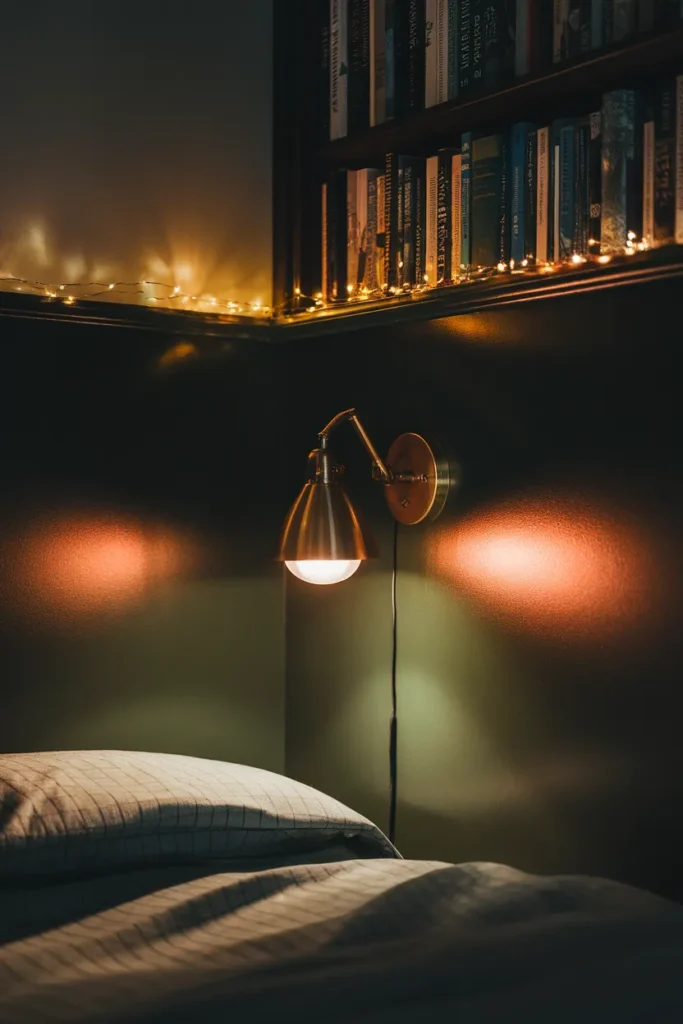
Here’s the number that quietly does all the work: 2700K. That’s the warm end of the bulb spectrum, the one that reads as lamplight instead of office light, and it’s the standard advice for bedrooms and living spaces.
Swap every bulb in the room to warm 2700K, or drop to amber 2200K strands where you want firelight without fire. Then spread the glow across three heights: a plug-in swing-arm sconce beside the bed (no hardwiring, so renters are covered), a floor lamp behind the reading chair, and fairy lights woven along the top shelf of the bookcase.
Add a plug-in dimmer and the room gets a volume knob. The swap pays for itself too: the Department of Energy’s lighting guide puts average savings from LED lighting around $225 a year per household, and basic LED bulbs now commonly sell for under $5. One warning, and it’s the big one: a single 5000K daylight bulb in the ceiling fixture will undo every other decision in this article. Check that bulb first.
Candlelight, With One Honest Rule
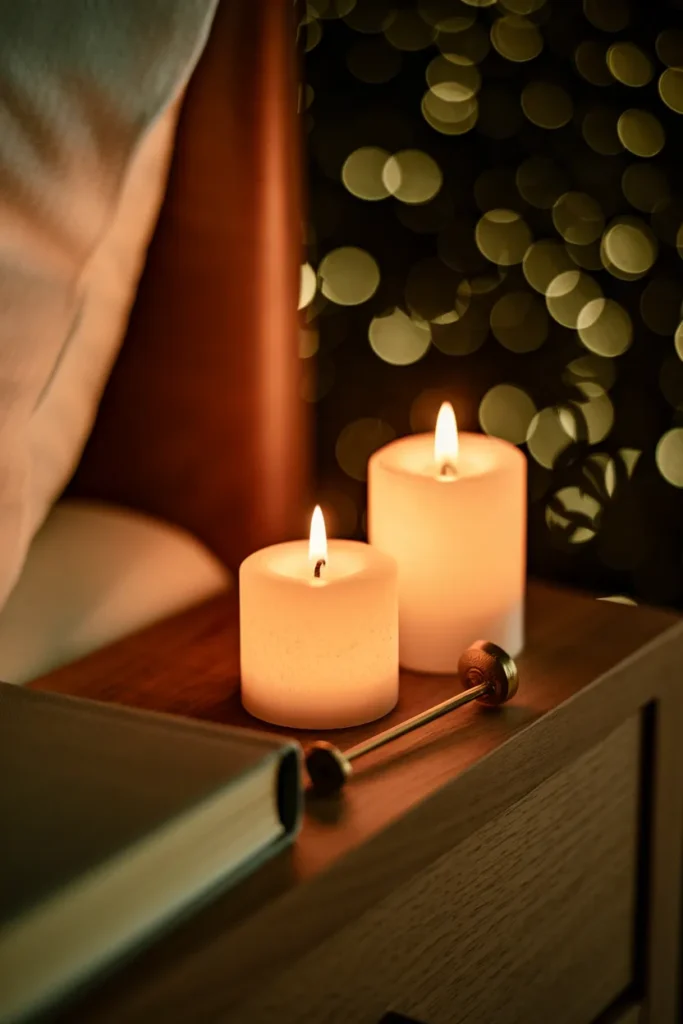
Brass candlesticks with ivory tapers are the single most storybook object you can put on a dresser, and thrift stores are full of them. But I’ll say the unpopular part: the flicker you love at 10 p.m. is the hazard you forget at 2 a.m. The National Fire Protection Association’s candle guidance is blunt about it: keep any flame at least 12 inches from anything that can burn, and avoid lit candles in rooms where people fall asleep. More than a third of home candle fires in the U.S. start in bedrooms.
So split the job. Real flames live on the dresser for awake hours, snuffed before you’re horizontal (a snuffer beats blowing wax across the wood). Flameless pillars with a timer take the nightstand shift, and the good ones flicker convincingly enough that nobody’s checking. You keep the glow, you lose the 2 a.m. plot twist.
Thrift the Storybook Layer
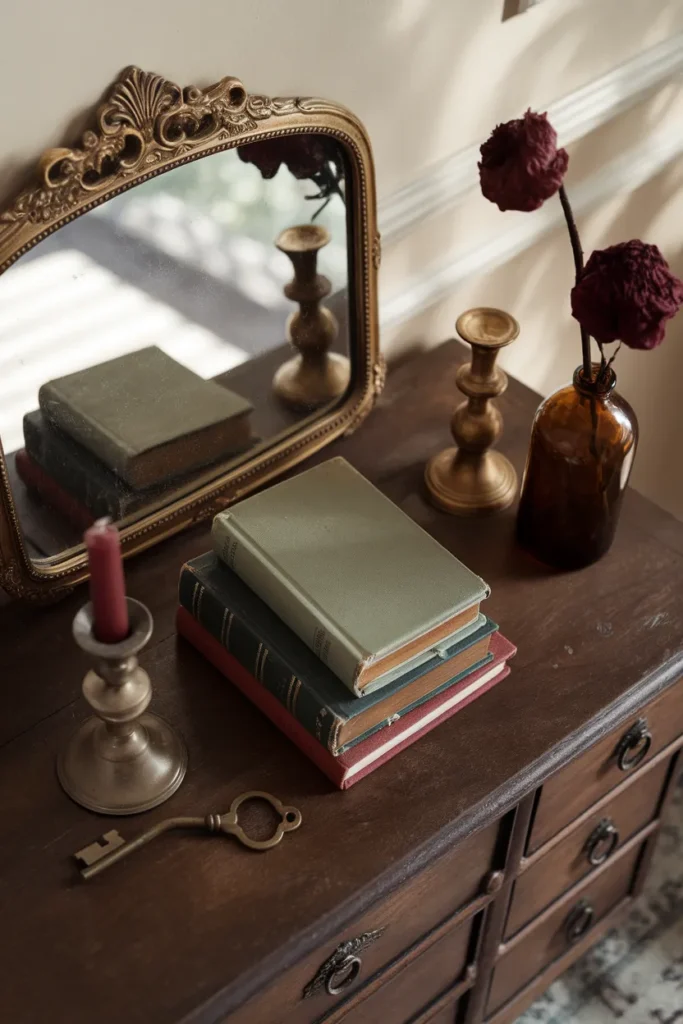
One genuinely old thing beats five reproductions, every time. Hunt secondhand for a wrought iron headboard, an ornate brass mirror, mismatched brass candlesticks, a stack of clothbound or leather bound books, and an amber glass bottle for dried flowers. That faint old-paper smell when you crack a 1960s hardcover is a detail no big box order can ship. Hang the mirror above the dresser where it can catch a lamp: it doubles your glow layer for free.
Then let the bookcase carry the story. Spines do half the decorating in this style, and styling a reading nook bookshelf walks through keeping shelves moody instead of messy. Failure mode: ordering a matched “vintage style” set in one cart. Rooms like this need at least two eras in them to feel found rather than bought.
Give the Fairy Tale a Corner to Live In
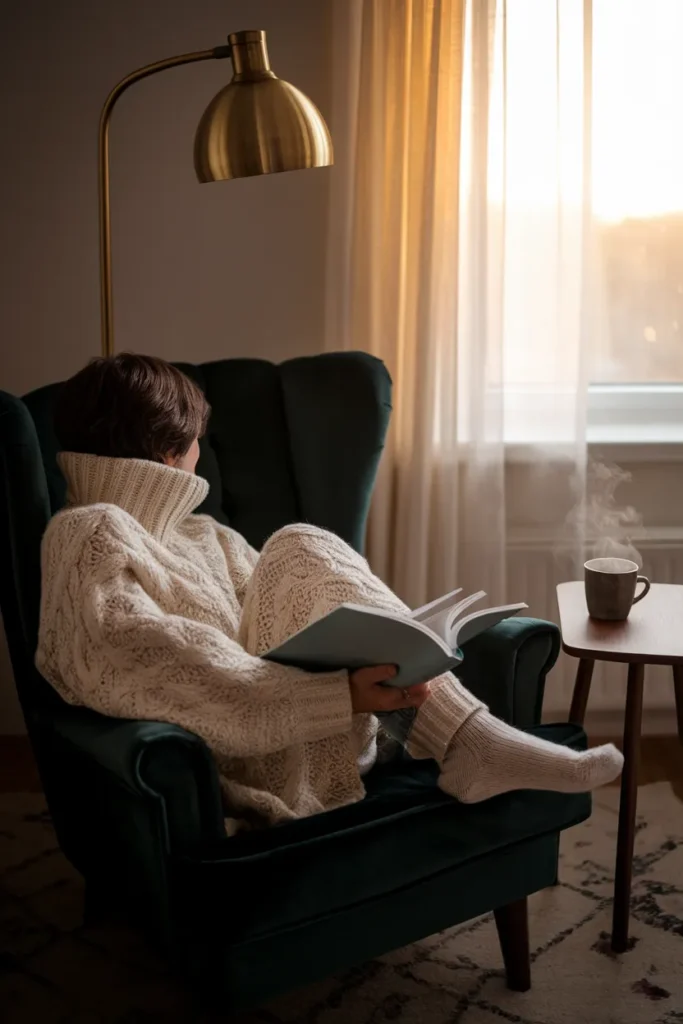
Every dark cottagecore bedroom deserves one genuinely cozy square yard with a single purpose: an accent chair angled toward the window, a floor lamp glowing over your shoulder, a small side table in easy reach, the wool throw, and the TBR pile stacked where guilt can see it. That’s the whole recipe for the tucked-away hideaway where you curl up and get lost in a book while the rain does its thing.
Don’t overthink the chair. A secondhand armchair in dark green velvet or worn leather beats a new one in the wrong shape, and a sheepskin over the seat fixes almost any fabric sin. If your corner wants the softer, daylight version of this exact spot, a renter friendly cottagecore reading corner builds it floral-side up.
Keep Moody From Turning Into a Cave
This is the section the idea boards skip, and it’s why so many dark rooms get repainted white a year later. Depth and gloom are different outcomes, and the difference is the 20 percent. Keep the ceiling white or cream. Keep the sheet band pale.
Layer ivory sheers under the blackout curtains so daytime light arrives filtered instead of blocked. Choose a washable rug two shades lighter than the floor. Place the mirror where it faces the window, not the door. Add one live plant; a pothos will forgive a dim corner all year.
Scale matters too. In a bedroom under about 120 square feet with one window, go dark on one wall and let the other three hold a warm off-white, then push the depth through textiles instead. The failure mode is painting all four walls and the ceiling in a small north-facing room, skipping every pale surface, and then blaming the color. The color was never the problem. The missing contrast was.
FAQ
How do I get the dark cottagecore look without repainting? Work the other three surfaces: dark floral peel and stick wallpaper on one wall, a deep green duvet with a patchwork quilt, blackout curtains over ivory sheers, and every bulb swapped to warm 2700K. Wall color is the loudest move, but it was never the required one.
What colors count as dark cottagecore? Forest and moss green, walnut and other deep browns, charcoal, deep burgundy, and muted navy, always balanced with cream, brass, and faded florals. Think of a garden at dusk rather than a black box.
What’s the difference between dark cottagecore and dark academia? Both are moody and vintage-hearted. Dark cottagecore leans nature: florals, quilts, dried herbs, a cottage after sunset. Dark academia leans study: leather, plaid, dark wood shelves, a library after hours. Stacked old books and brass candlesticks sit happily in either, which is why the two blend so well.
Can I mix dark cottagecore with boho? Yes, and the 70/20/10 rule keeps the mix from getting noisy. Hold the deep base palette, then bring boho in through the warmth layer: jute, rattan, woven wall texture, and macrame in cream or rust rather than brights.
Is dark cottagecore doable on a small budget? It’s one of the friendlier styles for it, because thrift stores are full of the right objects. Start with the glow layer: warm bulbs often run under $5 each, fairy lights and a secondhand brass mirror rarely break $30 combined, and a quilt plus throw gets you most of the mood before any wall decision costs real money.
Will dark walls make my small bedroom feel smaller? Closer, not smaller, and that’s a feature here. Dark color blurs the room’s edges, which reads as depth when the glow layer and cream contrast are in place. In a very small or single-window room, one dark wall plus dark textiles gives the effect with less risk.
Start With the Glow
Tonight, before any cart gets filled: swap the bedside bulb to 2700K, set a flameless candle flickering on the nightstand, and drag the warmest blanket you own onto the chair. Sit in it for ten minutes and let the room vote. If it votes yes, buy in this order: glow first, textiles second, the wall last, because each layer teaches you what the next one should be. Pin this for the weekend the wall finally happens, and leave a comment with the color you’re circling. The moody little hideaway is closer than it looks.
Keep reading
More cozy nook ideas
 Bedroom
Read →
Bedroom
Read →
English Cottage Bedroom Checklist: Everything to Decide Before You Start
You saved forty pins of floral quilts and sloped ceilings, then looked up at your own bedroom: beige walls, one window, a…
 Bedroom
Read →
Bedroom
Read →
21 Small Bedroom Ideas for Couples
Sixty-two and a quarter inches. That’s the width of a common IKEA queen storage frame, and in a 10 by 10 foot…
 Bedroom
Read →
Bedroom
Read →
Floral Bedding Ideas for a Cottagecore Bedroom That Still Looks Right in Daylight
No painting. No drilling. No conversation with your landlord. Floral Bedding Cottagecore is the one cottagecore move you can make in an…