
Small Cottage Garden Ideas That Work on a Balcony or a 10-Foot Strip

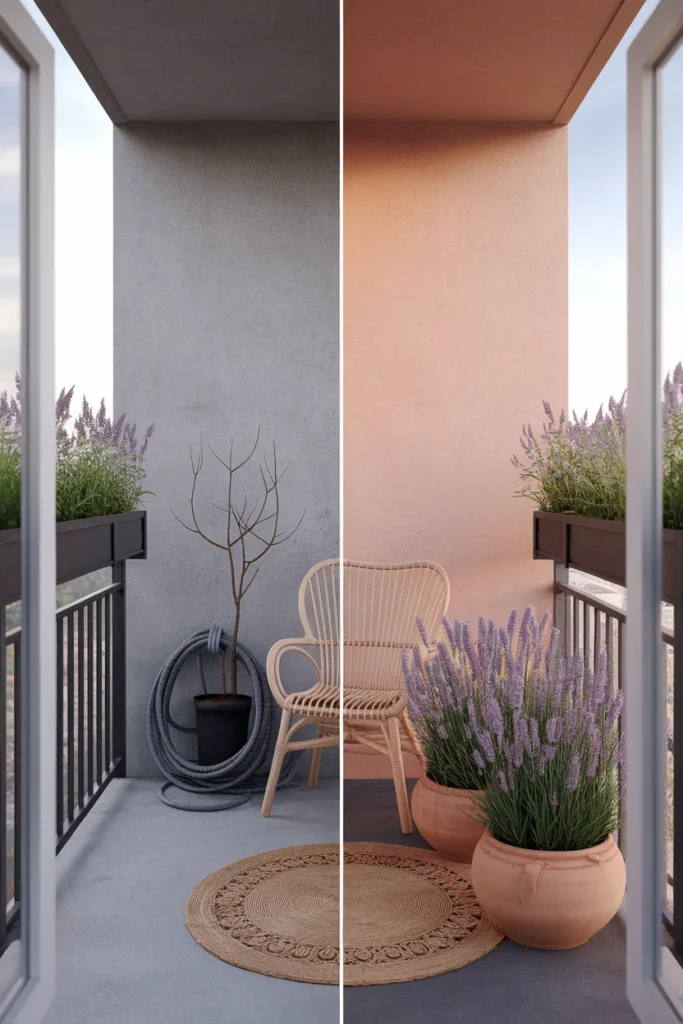
No yard, no raised beds, no landlord who will let you dig. You need one chair, four pots, and about $180.
Most small cottage garden ideas online quietly assume you own dirt. Winding gravel paths, curved borders, a front yard to fill. Useless if your outdoor space is 6 by 9 feet of concrete with a railing around it and a lease that says nothing gets attached to anything.
This is the version for that space. Real pot sizes, plants that survive in containers, and a build order that puts the seat in before the flowers, because a garden you look at from inside is just extra chores.
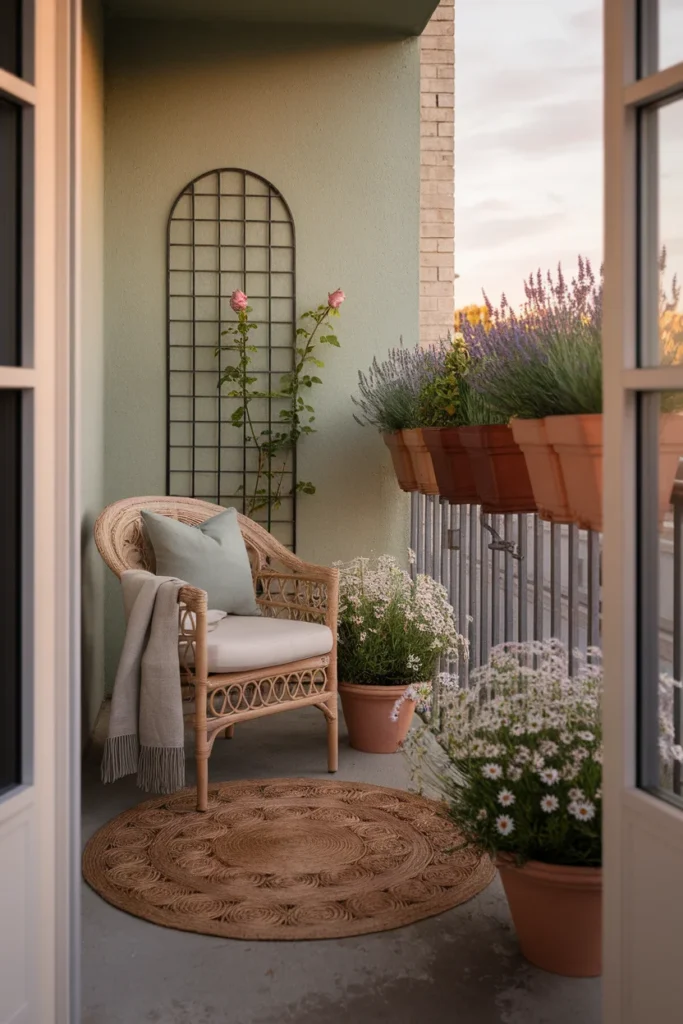
Start With the Seat, Not the Plants
Here is the rule that changed how I build these, and I call it the One-Chair Rule: before you buy a single plant, put a real seat in the space and sit in it for ten minutes.
Not a folding camp chair. Something you would keep.
I got this backwards the first time. I filled a balcony railing with pots in April, spent about $140 on plants, and by July I had watered that garden maybe forty times and sat in it twice. There was nowhere comfortable to land. So it became a maintenance list instead of a retreat.
Sit first, and the whole layout tells you what it wants. You find out which corner gets the 4 pm light. You notice the neighbor’s window you want screened. You learn that the left side is where your knees go, so no pot lives there.
Give the chair 30 inches of clear floor in front of it, minimum. That is roughly the depth you need to stretch out without kicking a planter over. A 32-inch round bistro table works if you have the room, but a stool at 18 inches from the chair arm does the same job for a mug and a book, and it costs a tenth as much.
If your outdoor space is a balcony specifically, the seating math gets tighter and the options get weirder. Our full breakdown of compact balcony reading nook setups covers thirteen layouts that fit under 40 square feet, including the ones that fold flat when you need the floor back.
Buy the chair. Then buy plants with whatever is left.
The Container Math That Decides Everything
Pot size is the single decision that determines whether your small cottage garden looks full in August or crispy by mid-July. Everyone skips it. Do not skip it.
Small pots dry out fast. A 6-inch nursery pot on a hot west-facing balcony can go from wet to bone dry between breakfast and dinner, and cottage plants punish you for that with brown edges and no second flush of blooms.
The UGA Extension container gardening guide puts standard growing containers at 3 to 7 gallons, and recommends three or four plants per 5 to 7 gallon container. That is the number to anchor on. In pot-shop terms, a 5 gallon container is roughly a 12-inch diameter pot, and 7 gallons is roughly 14 inches.
Three more specifics worth having:
- Fill soil to within 2 inches of the rim. Higher and every watering sheets over the side. Lower and the rim shades your seedlings.
- Feed with a liquid soluble fertilizer every two to three weeks through the growing season. Container plants have no soil bank to draw from, so they eat what you give them.
- Use bagged potting mix, never garden soil or topsoil. Garden soil compacts into a brick in a container and suffocates roots.
My working ratio: one 14-inch pot per 10 square feet of usable floor, plus railing planters. On a 6 by 9 balcony that is five large pots, not fifteen small ones. Fewer, bigger pots hold moisture longer, look more abundant, and cut your watering time roughly in half.
There is a real trade-off here and nobody says it out loud. Big pots are heavy, and once they are planted and wet, you are not moving them alone. Decide where each one lives before you fill it.
Nine Cottage Plants That Actually Survive in Pots
Cottage garden lists love delphiniums and hollyhocks. Both are gorgeous. Both want deep ground and will sulk in a 14-inch pot on a windy fifth floor.
Here is what holds up in containers, with the specs that matter. Check your zone on the USDA plant hardiness zone map before you buy anything perennial, because the map was revised in 2023 and a good number of US addresses shifted half a zone warmer.
| Plant | Zones | Mature size | Min pot | Sun |
|---|---|---|---|---|
| English lavender | 5 to 10 | 1 to 2 ft | 12 in | Full |
| Salvia (perennial) | 4 to 9 | 18 to 30 in | 12 in | Full |
| Shasta daisy | 5 to 9 | 1 to 3 ft | 12 in | Full |
| Catmint (nepeta) | 3 to 8 | 12 to 18 in | 10 in | Full |
| Hardy geranium | 4 to 8 | 12 to 18 in | 10 in | Sun to part |
| Coneflower | 3 to 9 | 2 to 4 ft | 14 in | Full |
| Sweet alyssum | annual | 4 to 8 in | edge of any | Sun to part |
| Cosmos | annual | 2 to 4 ft | 12 in | Full |
| Thyme | 5 to 9 | 6 to 12 in | 8 in | Full |
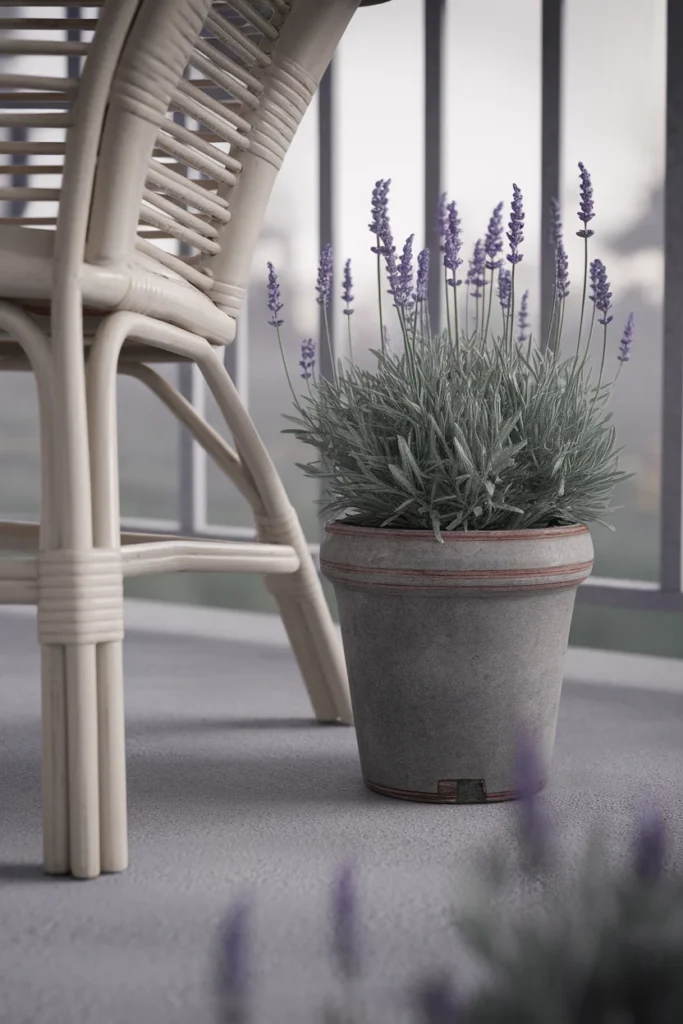
The lavender numbers come straight from Utah State University Extension: hardy in zones 5 to 10, mature size 1 to 2 feet tall and wide, spacing 18 to 24 inches, soil pH 6.5 to 7.5, and about 1 gallon of water per plant per week until it establishes. After that it wants far less water than you think. I have drowned more lavender than I have ever lost to cold.
One sensory reason lavender earns the best pot: put it where your leg brushes it on the way to the chair. That is the whole trick. The scent releases on contact, so every trip out becomes a small event instead of a walk across concrete.
Sweet alyssum belongs on the list for a different reason. It spills over pot rims and softens every hard edge, which is the entire visual grammar of a cottage garden compressed into a $4 plant.
The Knee-Waist-Eye Rule for Layout
Small space layout advice usually stops at “layer by height,” which tells you nothing you can act on. Here is the version you can actually execute, and it takes about four minutes.
Stand where you will sit. Then fill three bands.
Knee band (0 to 18 inches). Trailing and mounding things at floor and pot-rim level. Sweet alyssum, thyme, hardy geranium. This band is what makes the space feel planted rather than decorated.
Waist band (18 to 40 inches). The workhorses. Lavender, salvia, shasta daisy, catmint. Most of your color lives here, and it is at the exact height your eye rests when you are sitting down with a book.
Eye band (40 inches and up). One vertical gesture only. A trellis with a climber, a tall narrow planter, an arch if your space allows. One. Two competing verticals in a space under 60 square feet reads as clutter, not abundance.
The mistake I made for two seasons was loading everything into the waist band because that is where the pretty stuff is at the garden center. It looked like a shelf of plants. Add the knee band and the eye band and the same plants suddenly read as a garden.
Leave one gap on purpose. A cottage garden looks generous because it looks slightly out of control, and you cannot get slightly out of control if every square inch is assigned on day one.
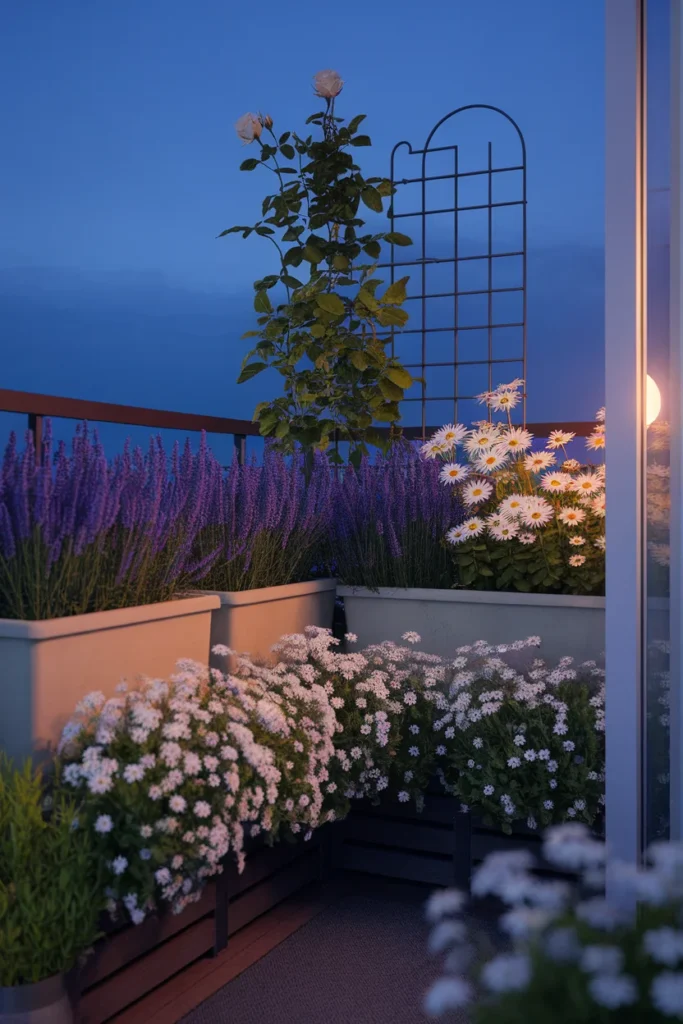
Go Vertical When You Run Out of Floor
On a small balcony your floor is spoken for the moment the chair lands. Everything after that has to go up or hang.
Railing planters are the highest-value purchase in this whole article. A standard 24-inch railing box holds enough soil for three to four plants and uses zero floor. Two of them along the rail will do more for the look than four floor pots, and they put blooms at seated eye level.
Get the ones with adjustable brackets that clamp rather than screw. Renter-safe, no drilling, and they come off in twenty minutes when you move. Check the fit against your rail width before you buy, because a 2-inch square rail and a 4-inch flat cap need different hardware.
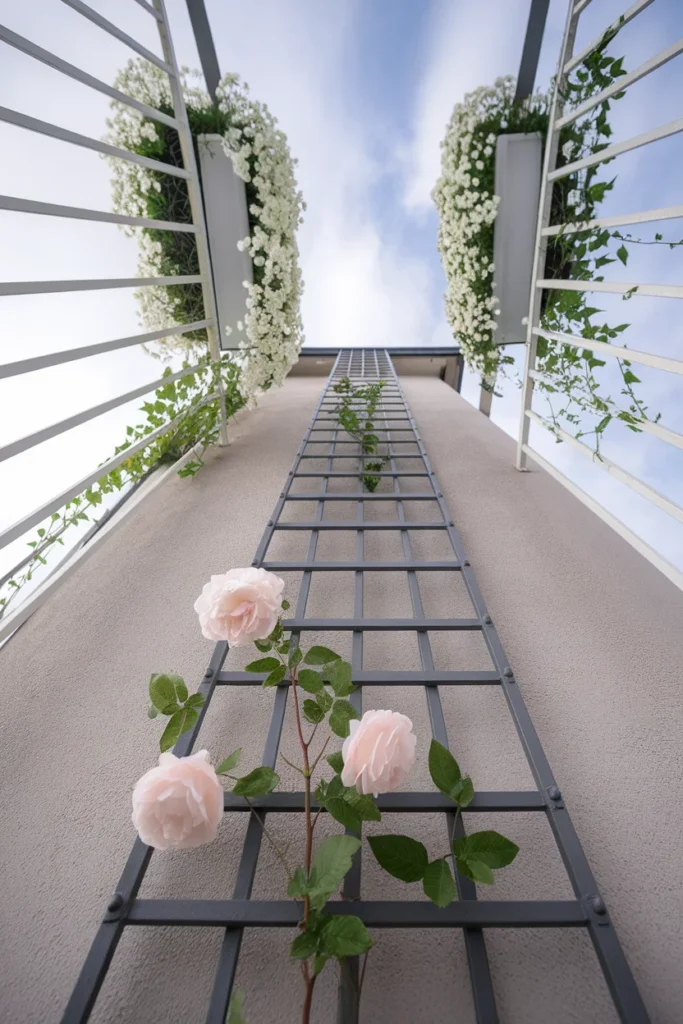
A slim wall trellis is the second move. Lean it, do not mount it, if your lease is strict. Weight the base with a heavy pot and let a climbing rose or clematis do the work. It will take a full season to fill in, and that is normal. Anyone selling you an instant covered wall is selling you a photograph.
Third option, the one people forget: a narrow ladder shelf. Three tiers of small pots in the footprint of a single large one. Herbs on top where they get sun, shade lovers below.
Shade and Cover, or You Will Not Sit Out There
This is the section every small garden article leaves out, and it is the reason most balcony gardens get abandoned by August.
If your outdoor space bakes from noon to 6 pm, you will not use it. You will water it at 8 am and then avoid it for the rest of the day. The plants will be fine. You will not be there.
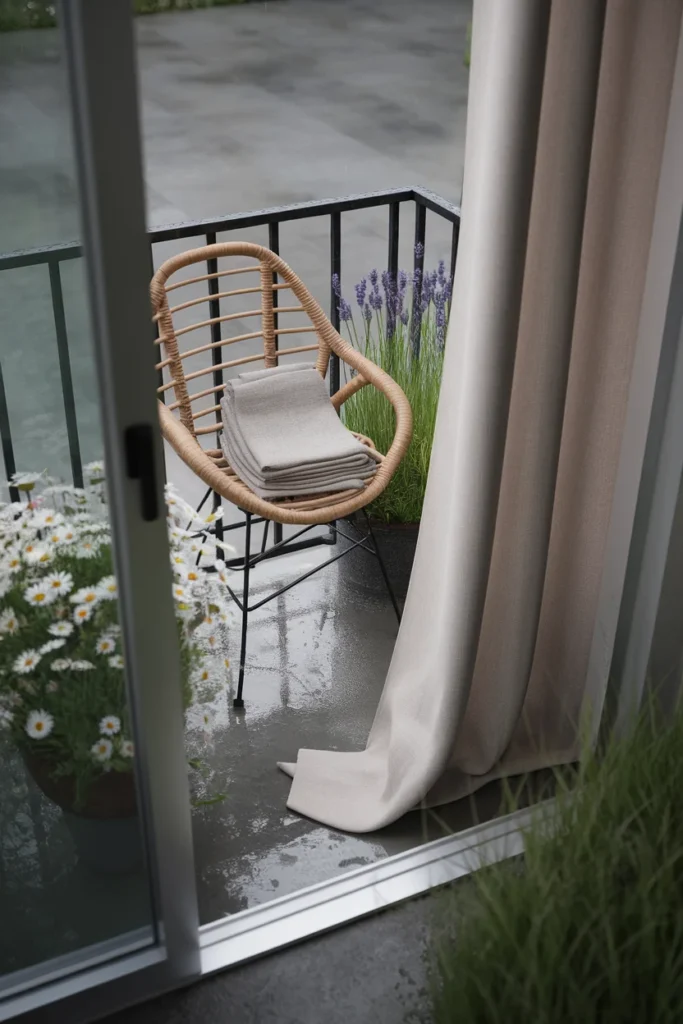
Solve for shade before you solve for anything else aesthetic. A clamp-on umbrella, a fabric sail hooked to two existing anchor points, or an outdoor curtain rod with a linen-look panel that you can pull across the hot side. That last one does double duty: shade in the afternoon, privacy screen from the neighbor’s window, and it moves in the breeze, which the space needs.
There is a sound argument here too. A bare balcony is acoustically dead, all hard surfaces and traffic noise. Add fabric and dense foliage and the space gets quieter in a way you feel before you notice it. That is the difference between sitting outside and being outside.
Bugs are the other quiet dealbreaker. If you are working with a ground-level patio rather than a balcony, our guide to covered and bug-free patio reading setups walks through screening, citronella placement, and which fabrics actually survive weather.
Light It or Lose It at 7 PM
A small cottage garden that only exists in daylight gives you maybe two usable hours on a weekday. Light it and you double that.
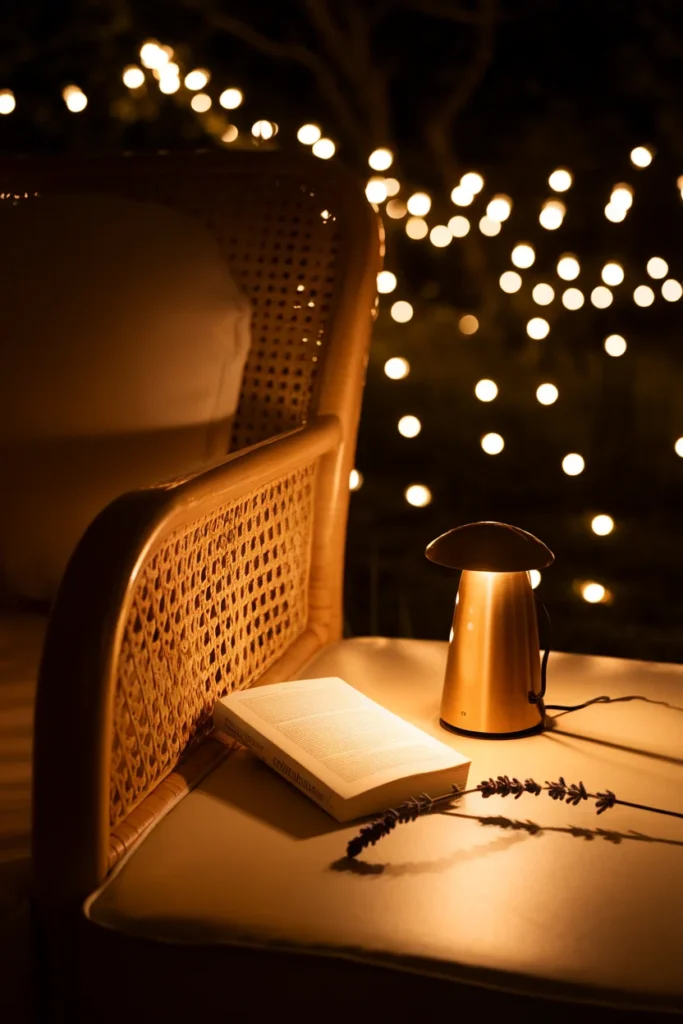
Warm light only. Look for 2700K on the box. Anything at 4000K or above turns green foliage a strange gray and makes the whole space read like a parking garage. This is the single cheapest upgrade in the article and the one people get wrong most often.
Three fixtures that work outdoors without wiring:
- Solar-charged string lights clipped along the railing. Get warm white, not cool white, and accept that they will be dimmer than plug-in.
- A rechargeable table lamp on the side stool. Cordless, USB-charged, most run 6 to 8 hours on a charge, and it puts light at reading height instead of overhead.
- A clip-on book light if you actually intend to read out there. Unglamorous. Works better than anything else.
Skip the ground-stake solar path lights. They are designed for lawns, they need direct soil, and on a balcony they do nothing but fall over.
Warm bulbs behave the same way indoors, and the reasoning carries over directly. Our breakdown of warm lighting choices that make a room feel cozy explains the Kelvin scale in plain terms and where each temperature belongs.]
What This Actually Costs
Here is the build I would repeat, priced from a big box garden center in spring 2026. Your numbers will shift with region and season, and clearance racks in late June change the math entirely.
| Item | Qty | Spend |
|---|---|---|
| Secondhand rattan or metal chair | 1 | $45 |
| 14-inch pots | 3 | $36 |
| 24-inch railing planters, clamp bracket | 2 | $34 |
| Potting mix, 2 cu ft bags | 2 | $22 |
| Perennial starts (lavender, salvia, daisy) | 6 | $30 |
| Annual filler (alyssum, cosmos) | 6 | $14 |
| Total | $181 |
For price context you can verify: Lowe’s lists its perennials category as ranging from roughly $4.98 to $60 per plant, so buying small starts rather than gallon-size specimens is where the savings live. Home Depot also carries a Costa Farms Starter Cottage Perennial Garden 15-pack of 4-inch plugs (lavender, shasta daisy, salvia), which is a reasonable shortcut if you want the classic palette in one order.
Two ways to cut this further. Buy perennials in fall when nurseries clear stock, since they establish over winter and come back stronger. And ask any gardening friend to split a mature catmint or hardy geranium in early spring, because both divide easily and one plant becomes three.
The chair is the line item worth overspending on. Everything else can be thrifted.
Renter Rules: Weight, Water, and Your Deposit
Three things will get you in trouble, and all three are avoidable.
Weight. Wet potting mix is heavier than most people expect, and five large pots plus a chair adds up fast. The International Residential Code sets a minimum design live load of 40 psf for exterior balconies and decks under Table R301.5, though local codes and older buildings vary widely. Practical version: keep the heaviest pots close to the building wall rather than out at the rail edge, spread the load instead of clustering it in one corner, and if your building is older or you are unsure, ask your property manager before you install anything permanent. Structural questions belong to a licensed engineer or your building’s management, not to a blog post.
Water. Every pot needs drainage, and every drop that leaves a pot lands on the neighbor below. Use saucers or a drip tray under anything on a railing, water slowly, and never leave a saucer standing full in hot weather because that is how you get root rot and mosquitoes in the same week.
Deposit. Clamp brackets over screws. Freestanding trellises over mounted ones. Outdoor rugs that lift, so moisture does not sit on the concrete and stain it. Take the rug up after heavy rain and let the slab dry.
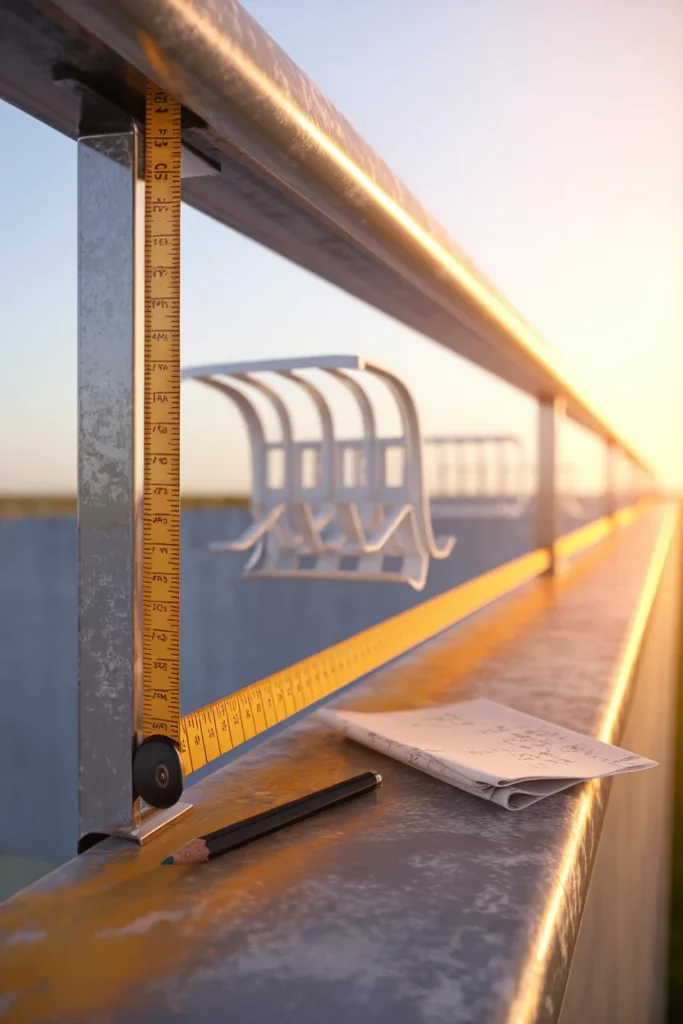
Check your lease for a balcony clause before you buy. Some buildings restrict what can hang on the exterior of a railing for exactly the reason you would guess.
What Goes Wrong (Read This Before You Buy Anything)
Nobody writing about small cottage garden ideas tells you how these fail. Five ways, from most to least common.
- Pots too small. You water twice a day in July, get tired of it, stop, and lose the lot in one hot week. Fix: 12 inches minimum, 14 preferred.
- No seat, or a bad seat. The garden becomes a chore list. Fix: the One-Chair Rule, above.
- Full sun plants in a shady corner. Cottage classics mostly want 6 or more hours of direct sun. Count your actual hours on a real day before choosing, not from memory.
- Garden soil in containers. It compacts, drains badly, and roots suffocate. Fix: bagged potting mix only.
- Everything planted at once, all the same height. Reads like a shelf. Fix: knee, waist, eye.
One honest note on maintenance. A container cottage garden is not low-effort. It is low-commitment, which is different. You will water most days in peak summer, and that is roughly ten minutes with a watering can for a setup this size. If ten minutes a day is not realistic, buy three pots instead of five and plant thyme, lavender, and salvia, all of which forgive neglect better than the rest of this list.
Frequently Asked Questions
What is the easiest cottage garden plant for beginners?
Catmint. It is hardy roughly in zones 3 to 8, blooms for months, tolerates drought once established, and it is nearly impossible to kill by neglect. Salvia is a close second. Both give you the loose, spilling cottage look without demanding anything.
Can you have a cottage garden in a very small yard?
Yes, and the constraint helps. A cottage garden is defined by density and informality, not acreage. Six well-chosen plants packed into a 10-foot strip reads more convincingly cottage than the same six spread across a lawn.
How do I make my small garden look bigger?
Three moves. Use fewer, larger pots rather than many small ones. Keep to a tight color palette, two or three flower colors maximum, so the eye reads it as one space. And add one vertical element to draw the eye upward instead of across the floor.
What is the best way to start a cottage garden on a budget?
Buy perennials as small starts rather than gallon-size plants, shop the fall clearance when nurseries move stock, and fill gaps the first year with cheap annuals like alyssum and cosmos while the perennials establish. Splitting a friend’s mature catmint or hardy geranium costs nothing.
Do cottage gardens need a lot of maintenance?
Less than a formal garden, more than a gravel bed. In containers the daily task is water, not weeding. Expect about ten minutes most summer days, plus deadheading spent blooms every week or two to keep flowers coming.
Can you grow a cottage garden entirely in pots?
Yes, with two adjustments. Choose compact varieties over tall spire plants like delphinium and hollyhock, and go bigger on pot size than feels necessary, 12 to 14 inches for anything perennial.
How much does a small cottage garden cost?
A starter balcony setup with a secondhand chair, five containers, soil, and a dozen plants runs somewhere near $180 in most US markets. Individual perennials commonly fall between roughly $5 and $60 depending on size, so plant choice drives most of the variance.
Start With One Corner
Pick the spot that gets the most afternoon light, put a chair there this weekend, and sit in it before you buy a single plant. That one step is what separates a small cottage garden you use from a collection of pots you water out of guilt.
Then build outward. Three pots the first month, two more when you see what survives.
If your space is a balcony rather than a yard, the seating question gets more specific fast, and that is worth solving before the planting question. Start there and let the garden grow around the chair.
This article covers general gardening and container basics. Any question about your balcony’s structural capacity, load limits, or lease compliance should go to a licensed professional or your building management before you install anything.
Keep reading
More cozy nook ideas
 Garden Nooks
Read →
Garden Nooks
Read →
Container Gardening Ideas for Small Cottage Gardens That Fit a Rental Patio
One anchor pot, two mid-size pots, three little ones. That’s the whole cottage garden, and it fits on a patio smaller than…
 Garden Nooks
Read →
Garden Nooks
Read →
Raised Garden Bed Ideas for a Cottage Garden (Without the Tidy Box Look)
No English manor, no in ground borders, no landlord who’ll let you dig up the yard. You can still get the raised…
 Garden Nooks
Read →
Garden Nooks
Read →
Cottage Garden Path Ideas That Wander, Bloom, and Hold Up to Real Feet
Most cottage garden path ideas fall apart in the same place: the moment you actually have to move dirt. So this one…
One Comment