
Raised Garden Bed Ideas for a Cottage Garden (Without the Tidy Box Look)

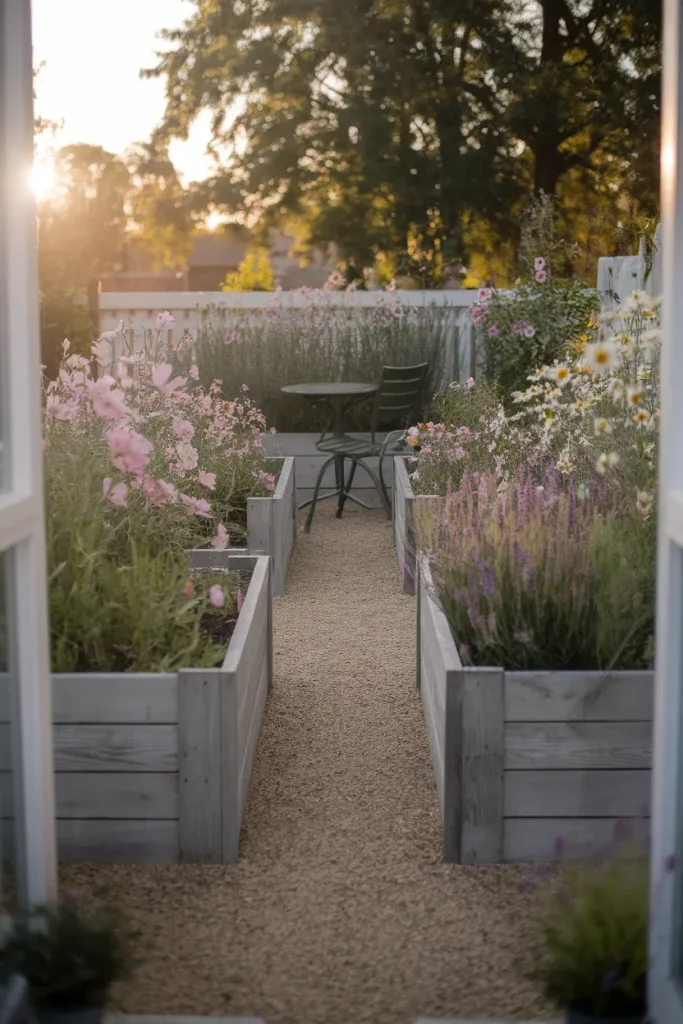
No English manor, no in ground borders, no landlord who’ll let you dig up the yard. You can still get the raised garden bed cottage look, and it comes down to three things: how deep the bed is, what spills over the edge, and where you put the chair.
Nine setups below. Each one has a real footprint, a real soil depth, and what the materials actually run at July 2026 cedar prices.
First though, the rule that fixes the most common problem, which is a raised bed that reads as a wooden box with flowers standing at attention inside it.
Start Here: The One-Third Spill Rule
A raised bed stops looking like a box the moment you can’t see the whole top edge of it.
That’s the entire trick. Here’s the version we use and the one worth screenshotting:
The One-Third Spill Rule: at least one third of your bed’s outside perimeter needs something tumbling over the lip.
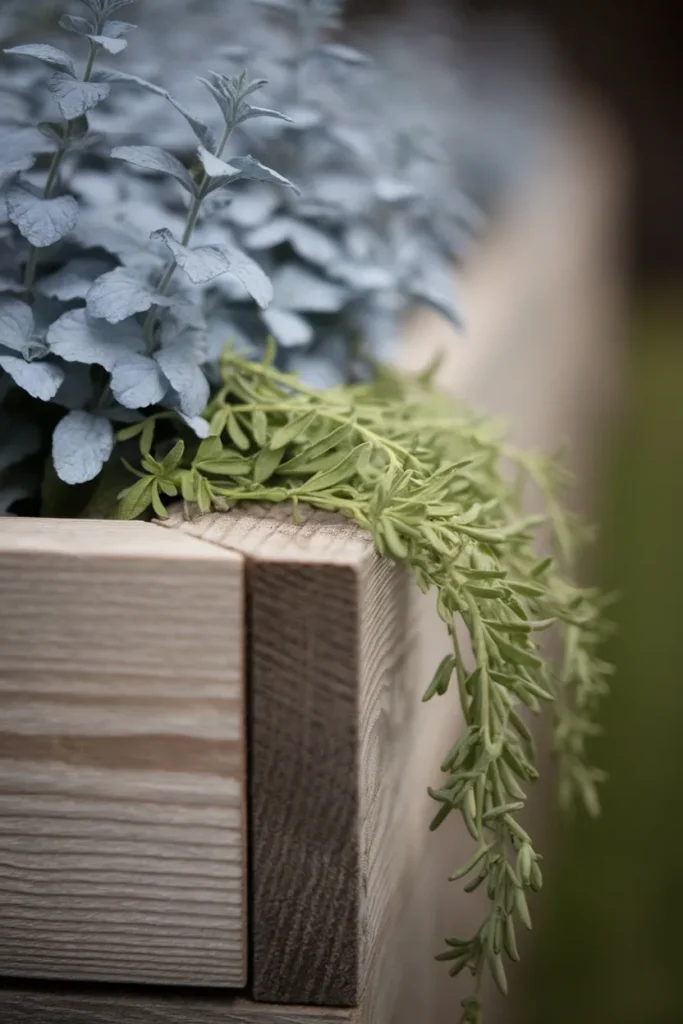
Run the math on a 4 ft by 8 ft bed and the perimeter is 24 linear feet, so you need roughly 8 feet of spill. Catmint, lady’s mantle and sweet alyssum each sprawl about 18 to 24 inches wide once settled, which means four to five plants along the front edge and one short side will do it. Not twenty. Four.
Front edge first, then whichever side you look at from the house. Skip the side that faces the fence, nobody sees it and the plants there just get leggy reaching for light.
Size the Bed Before You Style It
Get this part wrong and no amount of planting saves it.
Four feet is the standard adult width because you can reach the center from either side without stepping into the soil, and University of Georgia Extension puts the child friendly version at 3 feet. If the bed sits against a fence or wall, Iowa State drops that to 1.5 to 2 feet, because now you only have one side to reach from.
Depth depends on what you’re growing. Shallow rooted annuals are fine at 8 inches, while anything with a serious taproot wants 12 to 24 inches according to Maryland Extension’s guidance on raised bed soil. For a mixed cottage planting with perennials in it, 12 inches is the honest floor.
Here’s the math nobody puts in the inspiration posts:
| Bed size | Depth | Soil needed | 1.5 cu ft bags | Cedar 1×6 frame, 2 courses |
|---|---|---|---|---|
| 4 ft x 8 ft | 12 in | 32 cu ft (1.19 cu yd) | 21 bags | 48 linear ft, about $173 |
| 4 ft x 4 ft | 12 in | 16 cu ft (0.59 cu yd) | 11 bags | 32 linear ft, about $115 |
| 3 ft x 6 ft | 12 in | 18 cu ft (0.67 cu yd) | 12 bags | 36 linear ft, about $130 |
| 2 ft x 8 ft, against a fence | 12 in | 16 cu ft (0.59 cu yd) | 11 bags | 40 linear ft, about $144 |
Cedar figures use July 2026 pricing of $3.60 per linear foot for 1×6 western red cedar. Two courses of 1×6 gives you about 11 inches of finished height.
Look at that bag column again. Twenty one bags for one bed. Bulk compost and soil blend runs $30 to $70 per cubic yard before delivery, and a 4×8 bed needs barely more than a single yard, so bulk wins on almost any bed larger than 4×4.
1. Cedar Boards, Two Courses, Left to Silver
Footprint: 4 ft x 8 ft. Depth: 11 inches from two courses of 1×6. Archetype: any 1×6 western red cedar board, surfaced four sides.
Untreated cedar starts a warm honey color and weathers to soft driftwood gray in about a season outdoors. Don’t fight it. That gray is doing half the cottage work for you, because new lumber reads as construction and weathered lumber reads as old garden.
Iowa State specifically names cedar and redwood as the decay resistant choices worth using.
Failure mode: 1 inch stock needs a vertical support roughly every 4 feet, per UGA. Skip that on the long side and 32 cubic feet of wet soil will bow the board out by midsummer.
2. The Renter’s Bed You Can Take With You
Footprint: 4 ft x 4 ft, kept small on purpose. Depth: 11 inches. Archetype: any galvanized corner bracket kit sized for 2×6 boards.
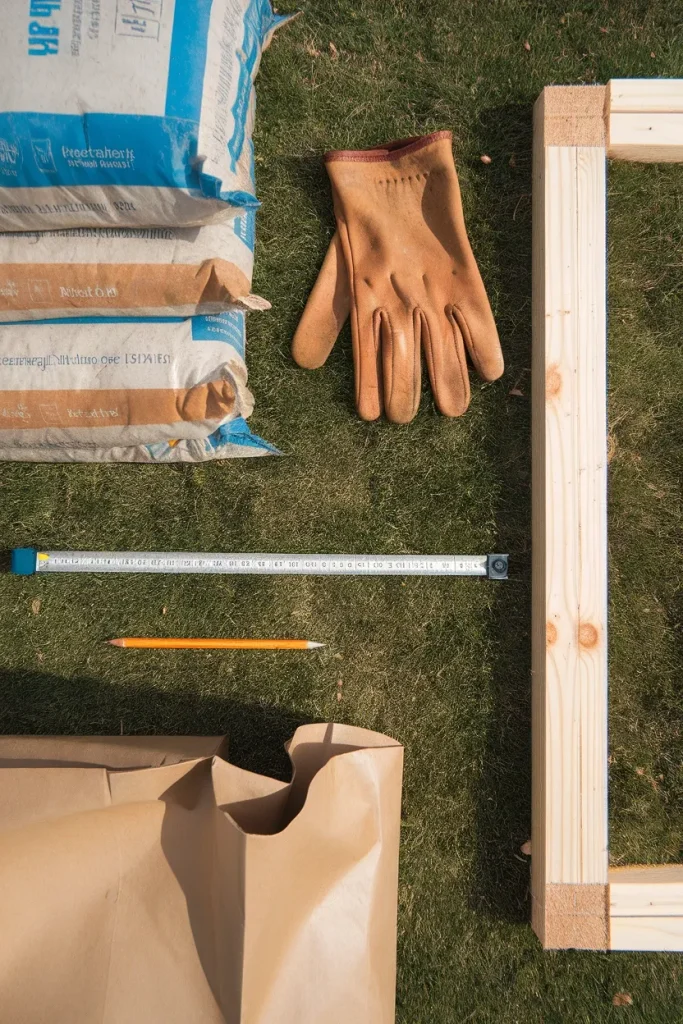
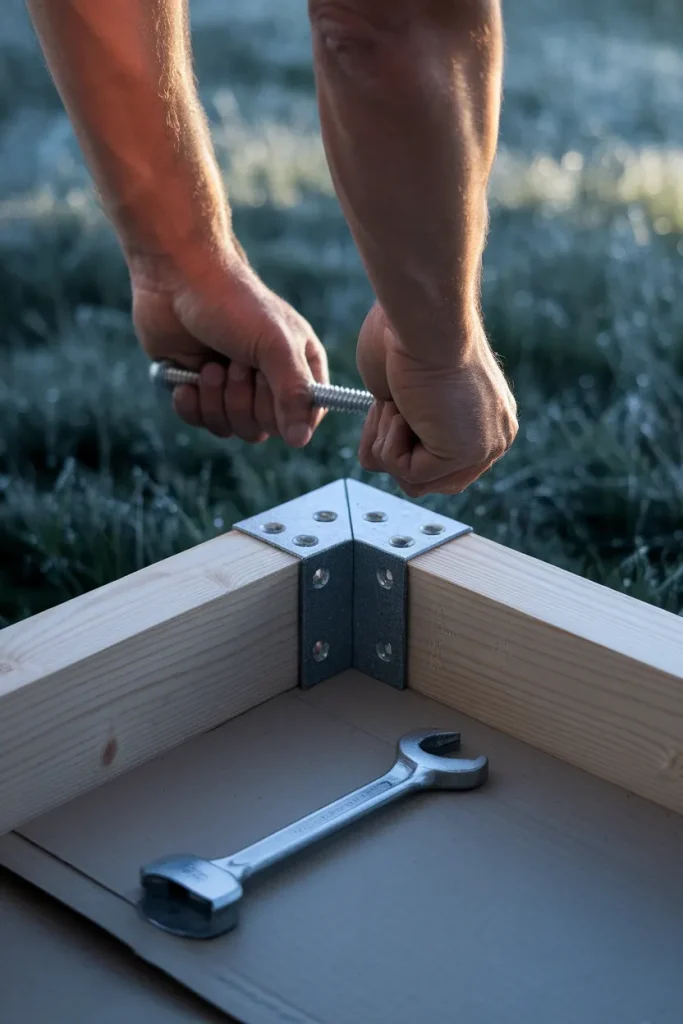
Nothing sunk, nothing drilled, nothing that upsets a landlord. Lay cardboard over the turf, set the frame on top, fill it. Corner brackets mean the whole thing unbolts into four boards and four brackets when your lease ends.
Keep it at 4×4 rather than 4×8 and you’re moving 16 cubic feet of soil instead of 32 if you ever need to shift it. A filled bed does not slide, so choose the footprint before you fill, not after.
If you’re working with a balcony or a strip of concrete instead of turf, the container version of this covers weight limits and drainage in more detail in our guide to small cottage garden ideas for balconies.
Failure mode: building it 17 inches deep because it looks better in photos. Deep beds are permanent beds, whatever the brackets promise.
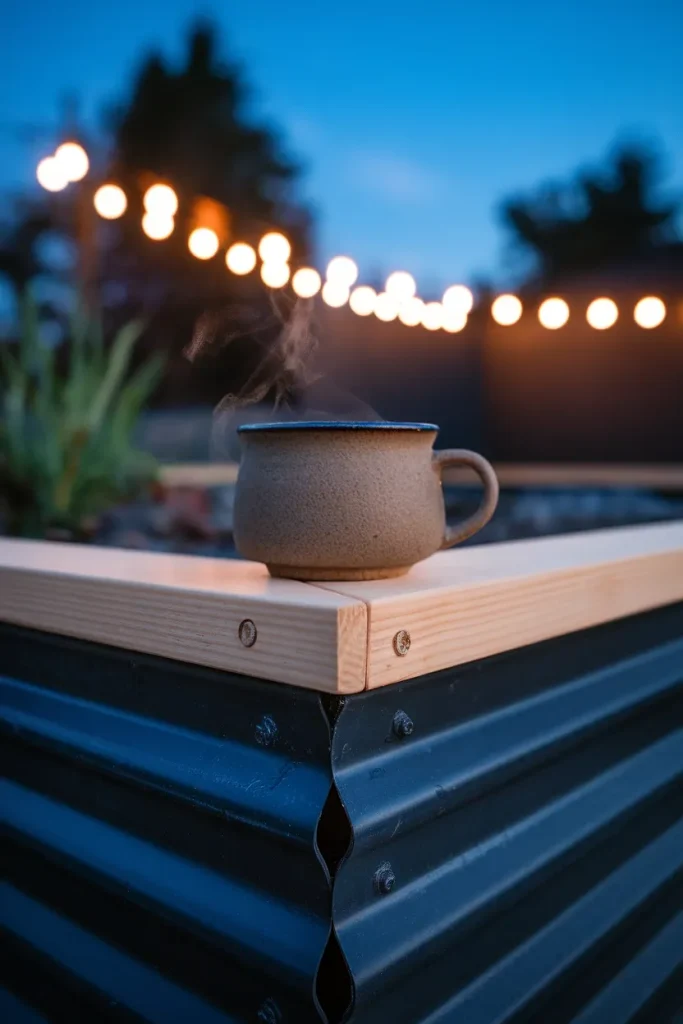
3. Galvanized Metal With a Wood Cap Rail
Footprint: 42 in x 60 in on the common modular kits. Depth: 17 inches, which holds about 25 cubic feet. Archetype: a modular coated steel bed kit, the kind sold as 6-in-1.
Corrugated steel on its own can read a bit agricultural. Cap the top edge with a 1×4 cedar rail and it turns into something you’d sit beside. You also get somewhere to set a mug, which matters more than it sounds.
Better kits use zinc, magnesium and aluminum coated steel rather than plain galvanizing, and the coating spec is usually printed right on the listing.
Failure mode: budgeting soil for the footprint and forgetting the height. 42 by 60 inches sounds small until you realize 17 inches deep is nearly a full cubic yard of fill.
4. Salvaged Brick or Dry Stacked Stone
Footprint: budget an extra 8 inches on every side for the wall itself. Depth: 12 inches of soil inside. Archetype: reclaimed clay brick, fieldstone, or 8 inch recycled concrete block.
Masonry is the one material that genuinely looks a hundred years old on day one. Reclaimed brick with a bit of lime bloom on it, laid two or three courses, does more for cottage character than any plant you put in it.
The catch is footprint. A 4 ft by 8 ft interior becomes roughly 5 ft 4 in by 9 ft 4 in once the walls are in, which eats a real chunk of a small yard.
Failure mode: going tall with a dry stacked wall. Wet soil pushes outward, so the higher you stack without mortar or a slight inward lean, the more the wall wants to walk itself apart.
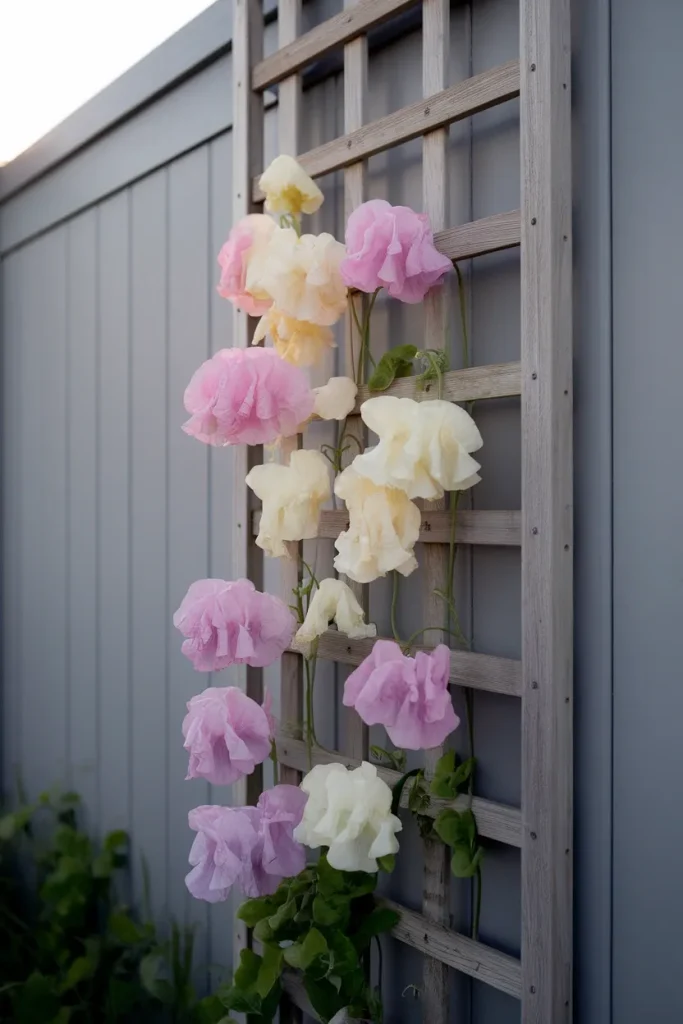
5. The Trellis Bed for Sweet Peas and Climbing Roses
Footprint: 2 ft x 8 ft along a fence. Depth: 12 inches. Archetype: a cattle panel arch or a cedar lattice panel bolted to the bed, not to the fence.
Narrow beds against a boundary are the most under used shape in a small yard. Two feet is plenty deep for sweet peas, clematis and a climbing rose, and Iowa State’s 1.5 to 2 ft guidance for beds against a structure exists precisely because you can only reach in from one side.
Vertical growing is where a small cottage garden gets its volume. For which climbers belong at the back and what carries the border once they finish, our layered cottage garden flower border breakdown covers the three height bands in order.
Failure mode: fixing the trellis to the fence. You will need to stain or repair that fence eventually, and a rose grown into it turns a two hour job into a weekend of damage.
6. A U Shaped Bed Built Around One Chair
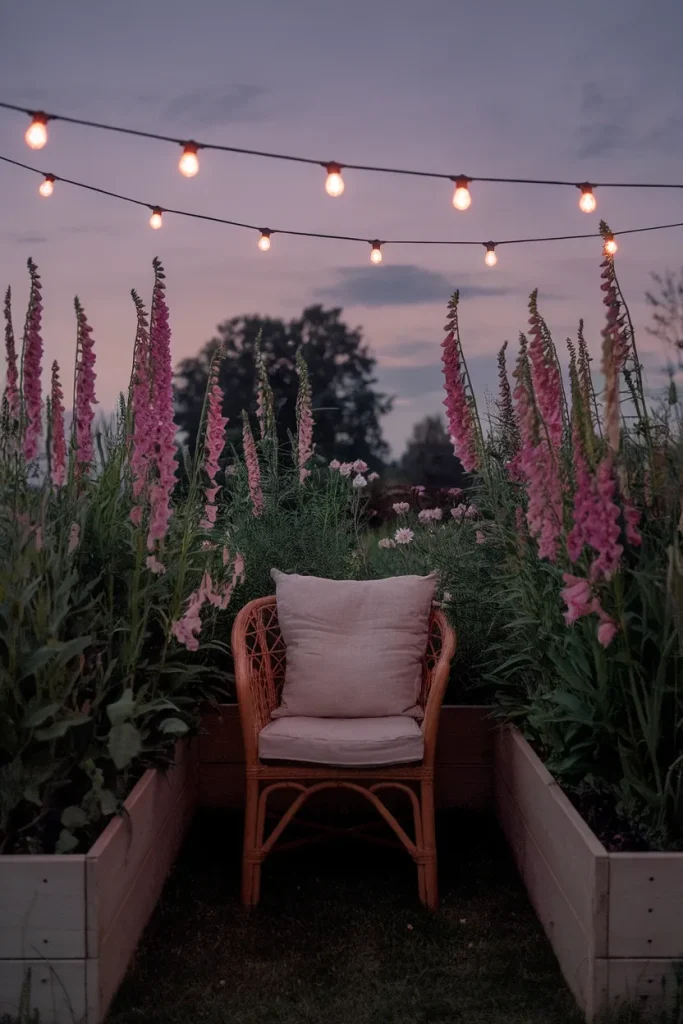
Three beds arranged in a U with the open end facing the house, and a chair sitting in the middle of it. Nobody in the top search results does this, which is odd, because it’s the version people actually sit in.
Clear floor for the chair: 30 inches minimum. Path between chair and bed edge: 18 to 24 inches, which UGA calls the comfortable range.
Anything tighter than 18 inches and you’ll clip a plant every single time you stand up. Ask how we know. The bed height also matters here: at 17 inches the bed edge lands near seated elbow height, so the flowers sit in your eyeline instead of below it.
Then light it. A string of warm 2700K bulbs over the U turns a garden you use until 6pm into one you use until 10pm. The shade, weather and bug side of making an outdoor seat usable is worked through in our covered patio reading nook setups.
Failure mode: building the beds first and finding the chair afterward. Mark the chair position on the grass with a spare cushion before a single board gets cut.
7. Half Barrels for the Awkward Corner
Footprint: roughly 26 inches across for a standard half whiskey barrel. Depth: deep enough to clear the 8 inch minimum several times over. Archetype: a half whiskey barrel or an oak wine half barrel.
Every yard has one corner that no rectangle fits. Barrels solve it. Group three at staggered heights by setting one on two courses of brick, and the cluster reads as intentional rather than leftover.
Failure mode: not drilling drainage holes. Barrels arrive sealed, they were built to hold liquid, and a sealed barrel drowns roots by the second heavy rain.
8. Terraced Beds Down a Slope
Footprint: keep each tier to 4 ft wide maximum. Path between tiers: 12 inches is the absolute minimum, 18 to 24 is livable.
Sloped yards are usually treated as a problem. Terracing turns the slope into the feature, because you get to look at three layers of planting at once instead of one flat plane, which is the effect old cottage gardens got for free by being built on hillsides.
Failure mode: the top tier dries out fastest and it’s the one furthest from the spigot. Run drip line to the top tier first or plan on hauling a can up there in August.
9. The Narrow Herb Bed by the Door
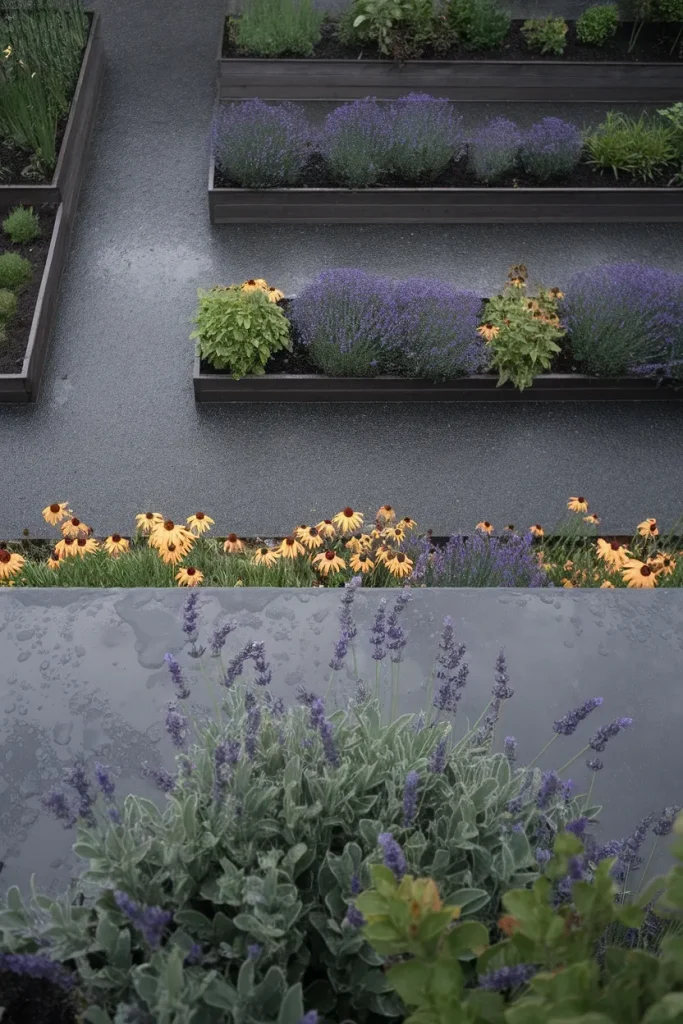
Footprint: 18 to 24 inches wide against the house wall, any length that fits. Depth: 8 inches is genuinely enough for most culinary herbs.
Put this one where you walk past it every day, not where it composes best. Rosemary, lavender, thyme and oregano all release scent on contact, so brushing the bed on the way to the car is the entire point. Cold morning, damp air, and a handful of crushed rosemary on your sleeve for the rest of the drive.
Failure mode: mint. Plant it directly in the bed and it will own the whole thing inside two seasons. Sink it in its nursery pot instead.
What to Plant So the Bed Blooms May Through October
The organizing principle is old and it still holds: short in front, tall in back, per NC State Extension’s cottage garden plant list, which also names agastache, allium, dahlia, delphinium, echinacea, lavender, peonies, salvia and zinnias among its picks.
In a raised bed you compress that into three bands:
- Back band, 3 to 6 ft: delphinium, hollyhock, foxglove, a climbing rose on the trellis
- Middle band, 2 to 4 ft: peony, echinacea, salvia, phlox, Shasta daisy
- Front band, under 2 ft: catmint, English lavender, lady’s mantle, sweet alyssum
Year one will look thin, because perennials spend their first season on roots. Fill the gaps with zinnias and cosmos from seed. Zinnias want full sun for 6 to 8 hours, take 60 to 70 days from seed to flower, and need thinning to 6 to 18 inches apart, mostly for airflow, because crowded zinnias in a raised bed get powdery mildew fast.
The Winter Version Nobody Photographs
Here’s the part the inspiration pins leave out. An above ground bed has soil exposed to cold air on all four sides, so root zones freeze harder and thaw faster than the same plants would in the ground.
Plant Select’s working rule for above ground plantings is to choose perennials rated two hardiness zones colder than your own. Zone 6 gardener, buy zone 4 plants. It sounds overcautious until you lose a bed of lavender in February.
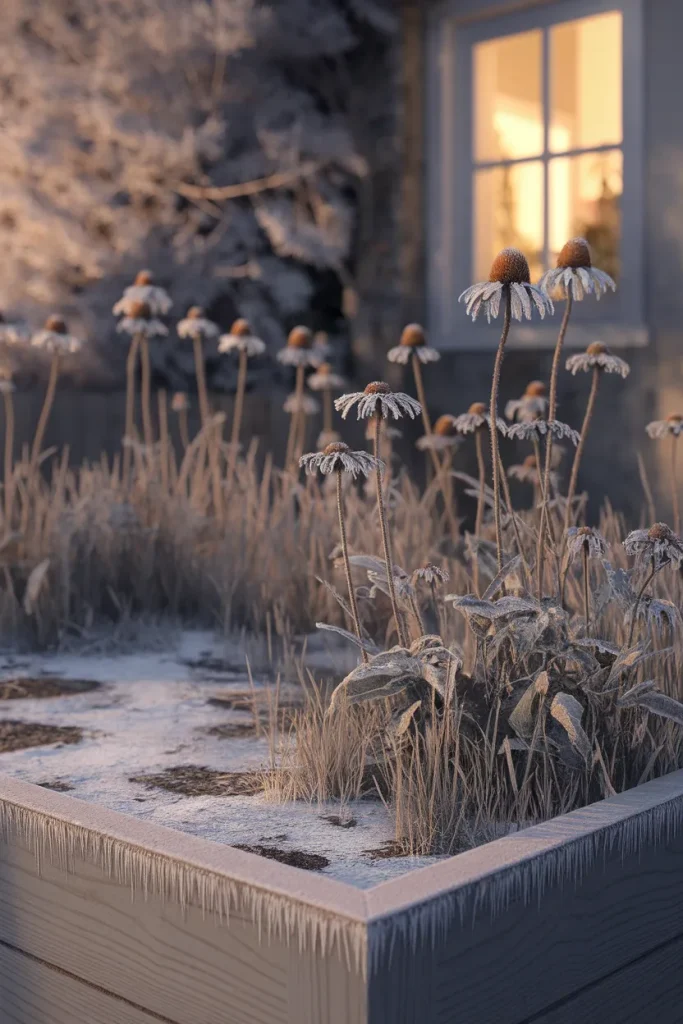
Two more things carry the bed through winter. Leave the seed heads standing on echinacea and rudbeckia, because frost on a coneflower seed head is the whole reason to look out the window in January, and the goldfinches agree. Then top dress with a few inches of compost each year, which University of Illinois Extension recommends simply to keep pace with soil settling.
Three Mistakes That Cost the Most
Building before you decide where you’ll sit. Beds are heavy and permanent. Chairs are not, so let the chair choose the layout.
Buying bagged soil for a big bed. Twenty one bags for one 4×8 bed at $3 to $10 a bag versus roughly one cubic yard of blend at $30 to $70. Bulk delivery runs $40 to $150 on top, and it still usually wins.
Using pressure treated lumber without thinking it through. Iowa State’s position is that it can be used, but depending on the treatment the interior may need lining with a woven geotextile fabric to keep roots away from the chemicals. Cedar sidesteps the question entirely.
Raised Garden Bed Cottage Frequently Asked Questions
How deep should a raised garden bed be for a cottage garden? Twelve inches is the practical floor for mixed planting. Maryland Extension puts 8 inches as the minimum for shallow rooted crops and 12 to 24 inches for deep rooted ones, and cottage borders mix both. UGA’s blanket figure for most garden crops is at least 10 inches.
What size raised bed is best for flowers? Four feet wide if you can walk both sides, because that’s the reach limit for an average adult. Drop to 1.5 to 2 feet if the bed sits against a fence or wall. Length is up to your yard, though lumber costs jump noticeably past 12 feet.
Can perennials survive winter in a raised bed? Often yes, but treat the bed as colder than your ground. The standard workaround is to buy perennials rated about two hardiness zones below your own, since above ground soil freezes on all sides rather than just the top.
Are galvanized metal raised beds safe? Coated steel beds are widely sold for edible growing, and the better kits specify a zinc, magnesium and aluminum coating with a food safe paint layer. Check the coating spec on the listing rather than assuming, and if you’re growing food in a highly acidic soil mix, ask your local extension office.
Is pressure treated wood safe for raised garden beds? Iowa State Extension says it can be used, with the caveat that some treatments call for lining the inside with woven geotextile fabric so roots don’t contact the chemicals. Untreated cedar or redwood avoids the debate.
What do you put in the bottom of a raised bed? On turf, flattened cardboard is the simplest option and it breaks down within a season while smothering grass. Skip solid plastic sheeting, which traps water. If gophers are a local problem, hardware cloth stapled under the frame before filling is the time to do it.
How much does a cottage garden raised bed cost? For a 4×8 bed at 12 inches deep, expect roughly $173 in 1×6 cedar at July 2026 pricing plus about 1.19 cubic yards of soil. Bulk blend runs $30 to $70 a yard with $40 to $150 delivery, so call it somewhere in the mid $200s to low $400s per bed depending on your soil source.
Pick One Bed and Build It This Weekend
You don’t need four beds. One 4×4 with four spilling plants along the front edge and a chair beside it will teach you more about your yard’s light and your own habits than a whole planned layout will.
Start with the chair position, then the bed, then the plants in that order. And if you want the planting side worked out properly before you buy anything, the three band border breakdown is the next thing to read.
Keep reading
More cozy nook ideas
 Garden Nooks
Read →
Garden Nooks
Read →
Container Gardening Ideas for Small Cottage Gardens That Fit a Rental Patio
One anchor pot, two mid-size pots, three little ones. That’s the whole cottage garden, and it fits on a patio smaller than…
 Garden Nooks
Read →
Garden Nooks
Read →
Cottage Garden Path Ideas That Wander, Bloom, and Hold Up to Real Feet
Most cottage garden path ideas fall apart in the same place: the moment you actually have to move dirt. So this one…
 Outdoor
Read →
Outdoor
Read →
Wildflower Garden Ideas That Look Romantic, Not Neglected
Most wildflower garden ideas skip the part that decides whether yours works, which is the math. Half a pound of seed covers…