
18 Modern Farmhouse Kitchen Ideas on a Budget

Under $200, and not one of these ideas needs a contractor, a permit, or a conversation with your landlord.
That matters, because almost every roundup you have scrolled through this week is showing you a $55,000 renovation. That is the median cost of a major kitchen remodel in the current Houzz study. Nobody says so out loud. They just post the photo and let you assume.
Modern farmhouse kitchens do not actually live in the cabinets. They live in six or seven small decisions about warmth, and most of those decisions cost less than dinner out. A wood surface left visible. A bulb at the right temperature. Hardware that is not builder-grade nickel. One old thing on a shelf that nobody can buy new.
What follows is 18 of them, ordered by how much they change per dollar. Number one is the whole starter set with the prices attached. Everything after that is a single swap you can finish in an afternoon.
Renter first, always. Where an idea has a permanent version, the no-drill version comes first and the owner upgrade comes second.
1. The starter set that does about 80 percent of the work, for $120 to $190
Six items. One Saturday. No tools beyond a screwdriver.
The reason this set works is that each piece hits a different sense. Two add wood grain, one fixes the light, one adds texture at counter height, and two kill the plastic. Skip any one of them and the room still reads rental. Do all six and it reads farmhouse before you have touched a single cabinet door.
Start here, then add from the list below only where your kitchen actually has a gap.
| Piece | What to look for | Price band |
|---|---|---|
| 🔩 Hardware | Matte black cup pulls, 10 pack | $25 to $35 |
| 🧱 Backsplash | Peel and stick subway, 10 sq ft | $30 to $45 |
| 💡 Light | 2700K warm LED bulbs, 4 pack | $12 to $18 |
| 🪵 Wood | Solid wood board, 18 inches or wider | $25 to $40 |
| 🧺 Texture | Washed linen runner or tea towels | $15 to $25 |
| 🧼 Swap | Amber or clear glass soap pump | $10 to $15 |
| Total | US retail bands, checked September 2026 | $117 to $188 |
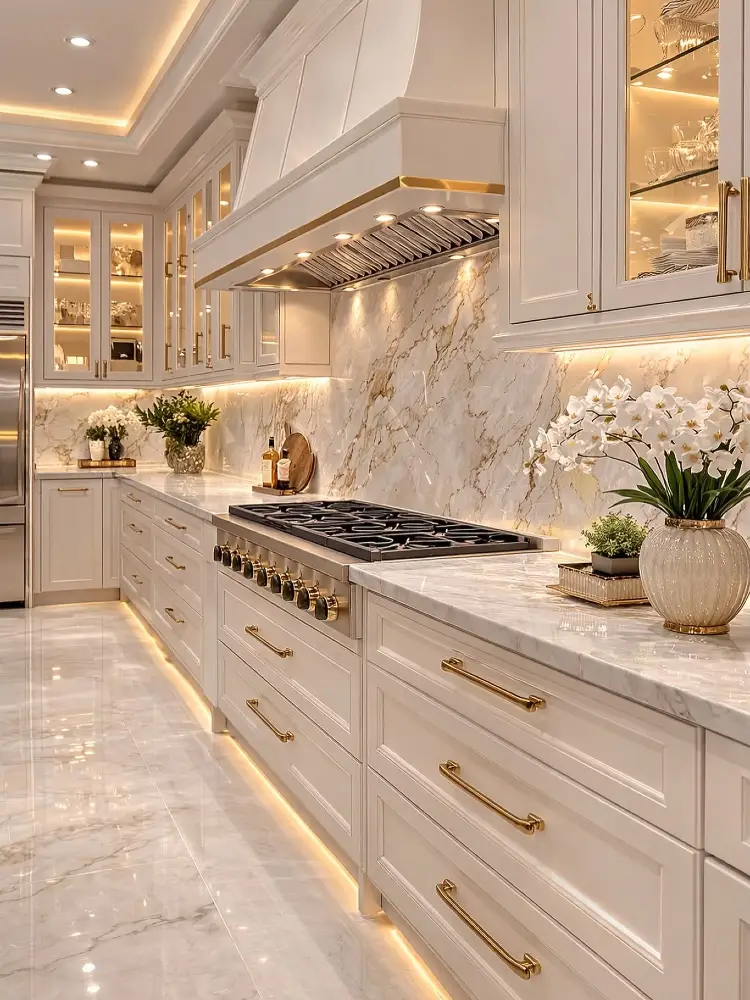
2. Swap every knob for a matte black cup pull before you touch anything else
Cabinet hardware is the cheapest lie you can tell about your kitchen, and it is the one that works.
Builder-grade satin nickel is the single loudest rental signal in the room. Cup pulls read farmhouse because the shape is borrowed from old hoosier cabinets and card catalogs. Swapping them out costs under $100 in most kitchens and takes roughly an hour.
Keep the original screws and hardware in a labeled zip bag. Move-out day gets a lot easier.
html
Measure the hole spacing on one existing pull. Most US cabinets use 3 inch or 96 mm centers.
Buy cup pulls in that exact spacing so you reuse the existing holes and drill nothing.
Put cup pulls on drawers only. Knobs stay on doors. Mixing both is the correct look, not a compromise.
Bag the old hardware with the screws and tape it inside a cabinet door.
3. Paint the island or the lower cabinets, and leave the uppers alone
White cabinets lost their crown last year.
In the 2026 Houzz kitchen study of more than 1,700 renovating homeowners, wood tones took the top spot at 29 percent, edging white down to 28 percent. That is the first time white has not led. About a quarter of those kitchens went two-tone, and in those, the lower cabinets skewed dark: wood at 37 percent, then blue, then green.
The reason it works visually is simple. Light on top keeps the room from closing in. Weight on the bottom gives the eye somewhere to rest. You can read the full breakdown of the Houzz 2026 kitchen trends report if you want the rest of the numbers.
Renting? Skip paint entirely and get the same two-tone effect with a dark runner and dark lower-shelf baskets.
Paint lowers or the island only, and keep uppers light.
Pick a warm-based color so the room glows at 4 p.m. instead of going gray.
Test the color on the inside of one door first.
Painting every cabinet one flat white.
Cool grays. They read 2016, not farmhouse.
Painting a rental without written permission.
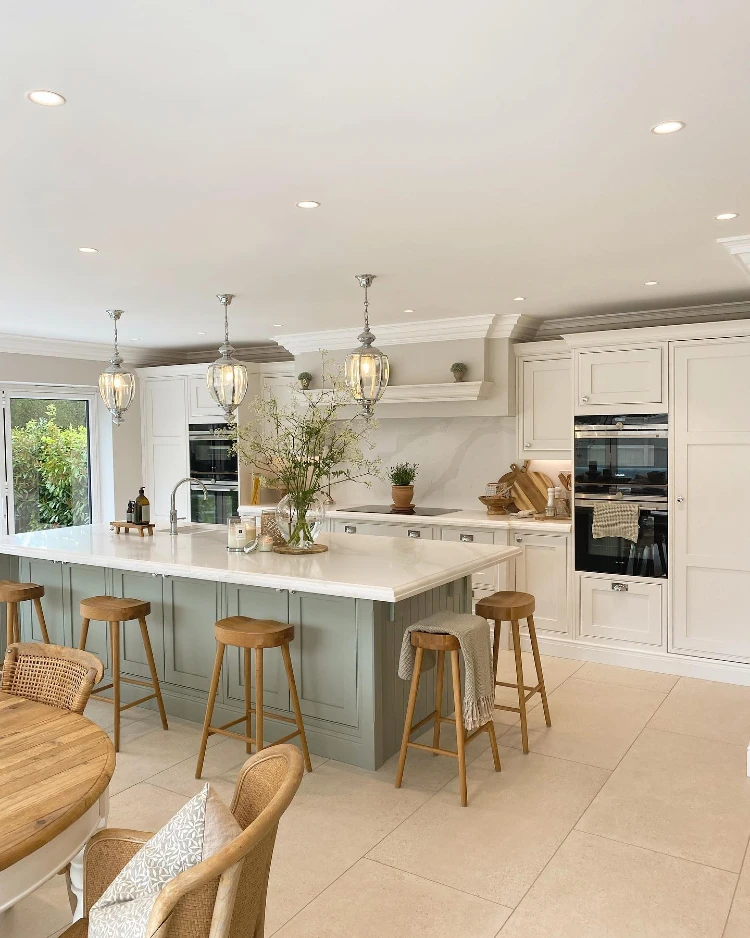
4. Hang one open shelf, not five
Five open shelves look great in photos and terrible by Thursday.
Grease film is the reason. Anything within about six feet of a range picks up a thin haze within a few weeks, and every single item on those shelves has to be washed, not just wiped. One shelf you can maintain beats five you resent.
Ten inches deep is the number to hit. Deep enough for dinner plates standing on edge, shallow enough that you cannot stack junk behind the front row. If you want the full math on bracket spacing and load, I broke it down in this guide to how deep to make open shelves.
| Spec | What works in a real kitchen |
|---|---|
| Shelf depth | 10 inches. Plates fit, clutter does not. |
| Height above counter | 18 inches, so a stand mixer clears. |
| Bracket spacing | Into studs at 16 inches, never drywall anchors alone. |
| Distance from range | Six feet or more, or accept the grease. |
| Renter version | Remove one upper cabinet door instead. Zero holes. |
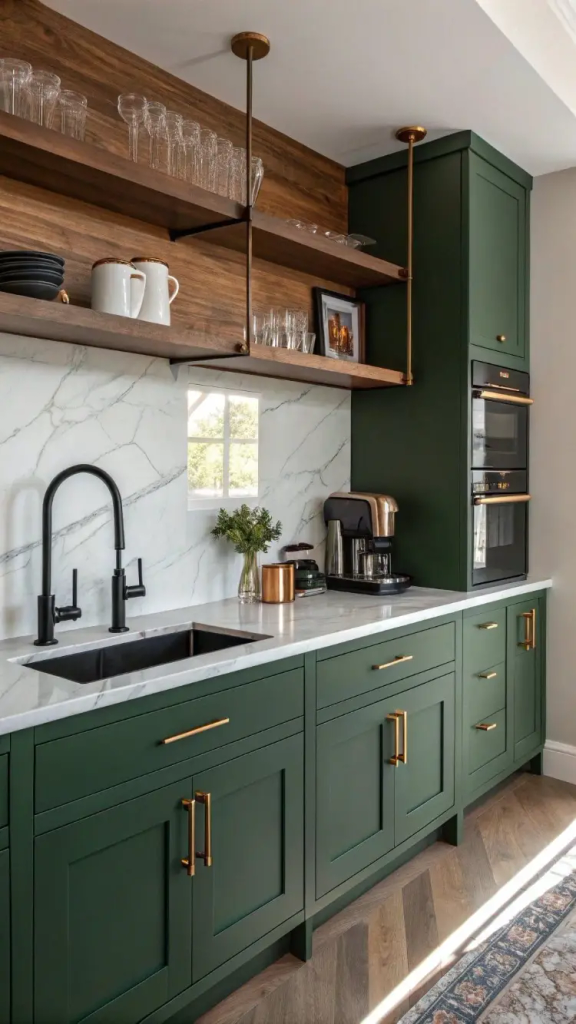
5. Trade the overhead bulb for 2700K and watch the whole room change
Your bulb is doing more damage than your cabinets.
Most rentals ship with 4000K or 5000K bulbs in the ceiling fixture, which is daylight-colored. Daylight light makes warm wood look orange, cream cabinets look dingy, and every surface look flat. Warm white sits around 2700K, which is the range the Department of Energy uses to describe the warm end of white-tunable LEDs, and it is the single closest thing to a free fix in this entire list.
Twelve dollars. Five minutes. It changes more than a $400 backsplash would.
⚠️ Watch Out
Buy 2700K for the ceiling and over-counter fixtures, but keep one brighter task light over the sink or cutting area. All-warm everywhere looks lovely and makes chopping harder.
Safety note: anchor tall furniture to the wall, keep candles and cords away from fabric, and use a licensed electrician or contractor for hardwired lighting, ceiling mounts, or anything structural.
Full explainer on how Kelvin numbers actually behave is on the Department of Energy’s LED color-tunable products page.
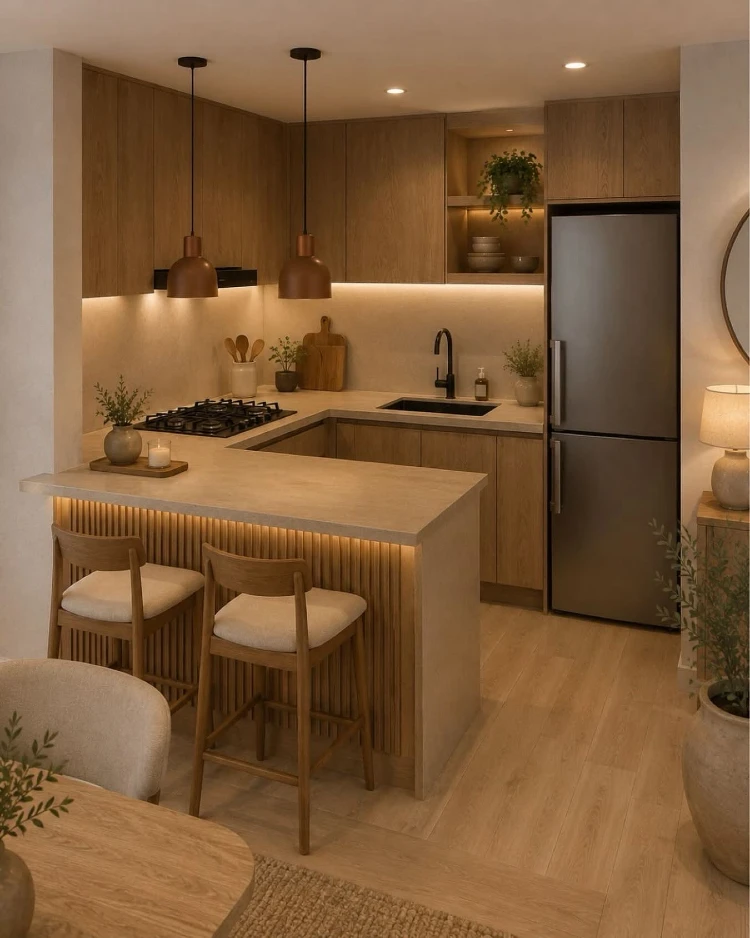
6. Peel and stick a subway backsplash behind the range only
Behind the range is the only wall anyone actually looks at.
Tiling the full kitchen means 40 or more square feet and a weekend of grout. Tiling the three-foot section behind your burners means about 10 square feet, $30 to $45, and an hour with a utility knife. The visual payoff is close to identical because that patch is what sits in every photo and every line of sight from the doorway.
Heat and moisture resistance is standard on the better peel and stick lines, and they lift off at move-out without pulling paint.
Flat painted drywall behind the burners, scuffed where the pans sit, one grease shadow nobody can scrub out.
Ten square feet of cream subway tile with a soft gray grout line, wiping clean in one pass, ending at the cabinet edge on both sides.
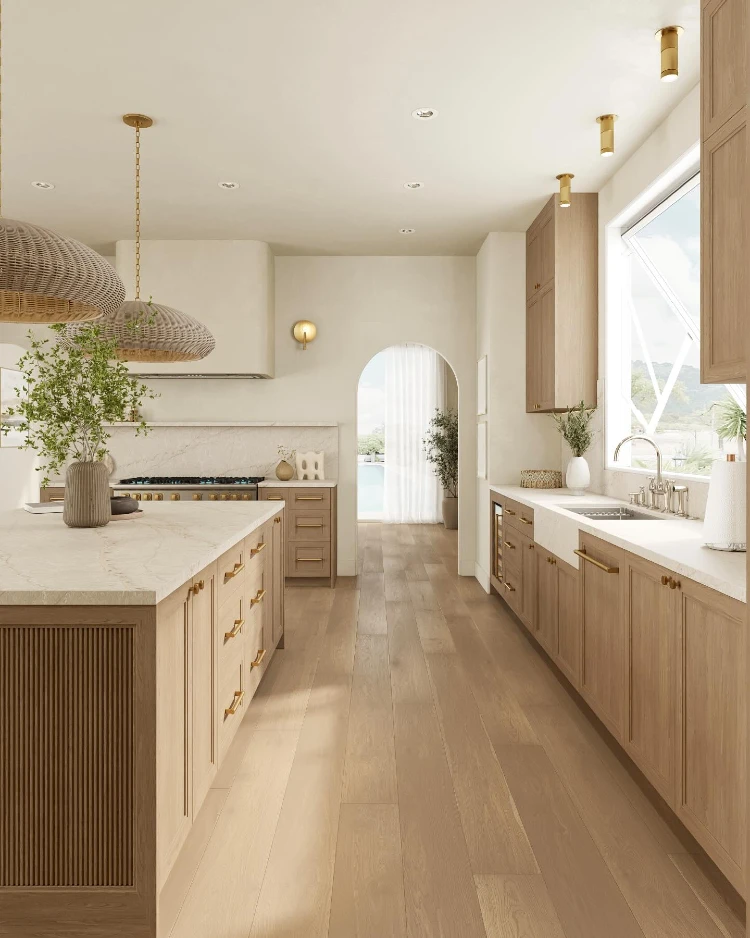
7. Leave one real wood board out on the counter permanently
Wood grain on a counter reads farmhouse faster than any sign ever will.
The trick is that it has to look used, not displayed. A board propped against the backsplash with a knife mark or two on it does something a pristine decorative tray cannot. It tells the eye that someone cooks here.
Pick one 18 inches or wider so it holds its own visually against a range or a sink. Anything smaller disappears.
What makes a board read farmhouse instead of decorative
8. The Three-Height Wood Rule
Warm wood in one spot reads like an accident.
Here is the rule that fixes almost every kitchen that feels close but not quite right: wood has to land at three different heights before the room reads farmhouse instead of beige. Floor level, counter level, eye level. Hit all three and the warmth feels intentional. Hit one and it looks like you own a cutting board.
None of the three has to be expensive, and in a rental none of them require permission.
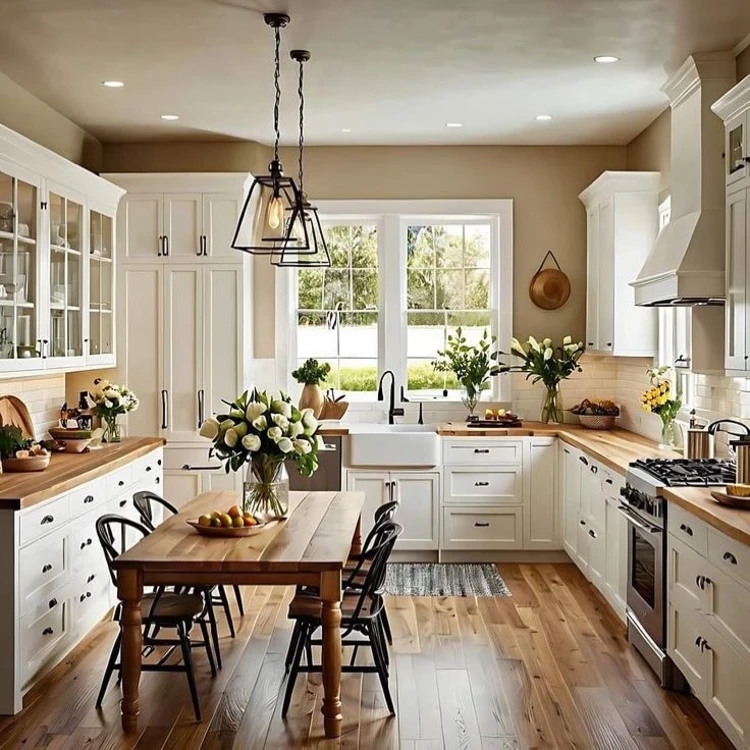
9. A $15 linen runner instead of a $200 rug
Runners beat rugs in a kitchen for a reason nobody mentions.
Kitchen rugs get wet. They get wet at the sink, they get wet when the dishwasher vents, and the backing starts to break down inside a year. A washed linen or cotton runner goes in the machine on Sunday and comes out looking better than it went in.
html
- ▸Run it along the counter, not in front of the sink, so it stays dry.
- ▸Stonewashed linen creases on purpose. That is the look, not a flaw.
- ▸Oatmeal, flax and faded clay all work. Bright white shows every drip.
- ▸Buy two and rotate. One in the wash, one on the counter.
10. Kill the plastic on the counter, one bottle at a time
Squint at any farmhouse kitchen photo and count the plastic. There isn’t any.
That is most of the gap between your kitchen and the photo, and it costs almost nothing to close. The dish soap bottle is the worst offender because it sits at the sink, which is the busiest sightline in the room. A glass pump in amber or clear runs $10 to $15 and lasts years.
After that: the paper towel holder, the utensil caddy, the sponge. One a month is a fine pace.
💡 Quick Tip
Refill the glass pump from the big plastic jug and keep the jug under the sink. You get the look without paying boutique prices for soap every three weeks.
11. Sage green on one cabinet door, not on all of them
Sage is having a moment, and most people are doing it wrong.
Pinterest logged searches for sage green and cream kitchen up 410 percent in its 2026 spring report, and the Houzz study shows green passing gray as the top non-neutral cabinet color. Both true. Neither means you should paint the whole kitchen.
Green over a large area goes cold fast, especially in a north-facing room. Green on one element, a pantry door, an island end, a single base cabinet, stays warm because there is enough cream around it to hold the temperature up.
Renting? Same effect with a sage runner, sage dish towels and one sage ceramic canister.
html
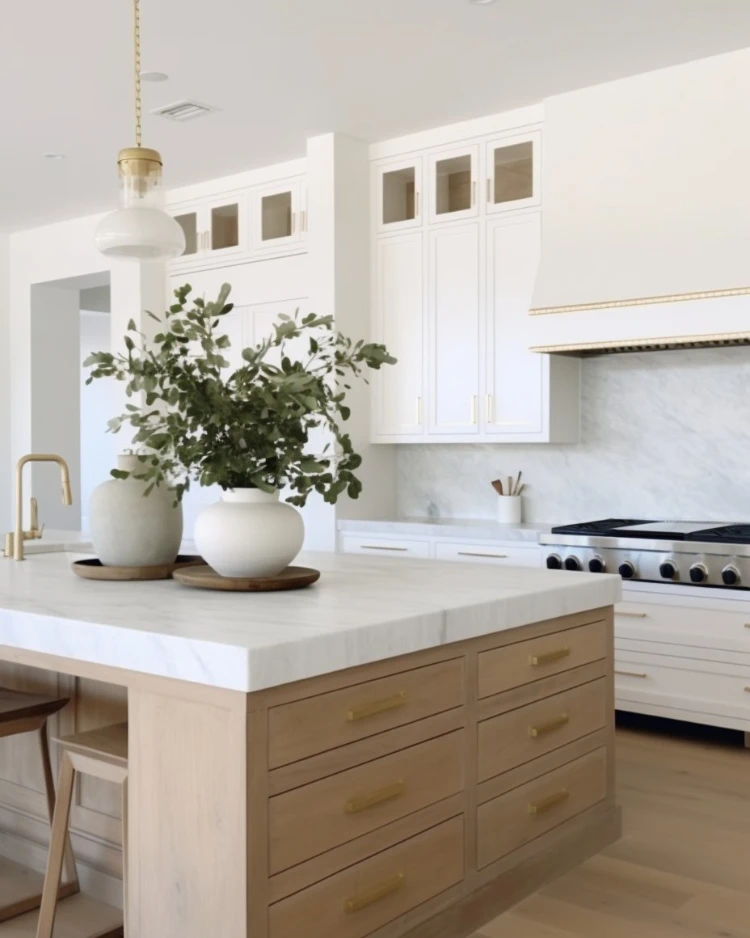
12. Leather pulls on the uppers, metal on the lowers
Leather pulls cost more per unit and still come out cheapest.
The math: a run of uppers usually needs six to eight pulls, and leather ones run a few dollars each. That is a $25 decision that does something no metal finish can, which is add a texture nobody else on your street has. Metal stays on the drawers below because it takes the daily grab and pull without stretching.
Skip them entirely if your uppers are glass-fronted. The leather fights the glass.
Leather on upper doors, metal cup pulls on lower drawers.
Match the leather tone to your wood, not to your floor.
Leather on heavy drawers. It stretches within months.
Faux leather. It cracks and the edges go white.
13. The galley kitchen version, where nothing fits and nothing can move
Galley kitchens get skipped in every roundup, which is odd given how many US apartments have one.
The constraint is real: two parallel runs, maybe 36 inches between them, no island, no room for a stool. Every idea above still works, but the order changes. Warmth has to go vertical because the floor and counter are both spoken for.
Same logic I use for renter-safe fixes in awkward corners applies here. Go up, not out.
Bulbs first. In a narrow room the light source is half the mood.
Hang a rail on the end wall for mugs and a basket. Vertical storage buys back counter space.
Pick one counter to keep completely empty. In a galley, empty space is the luxury.
Run a narrow runner down the middle. It lengthens the room instead of chopping it.
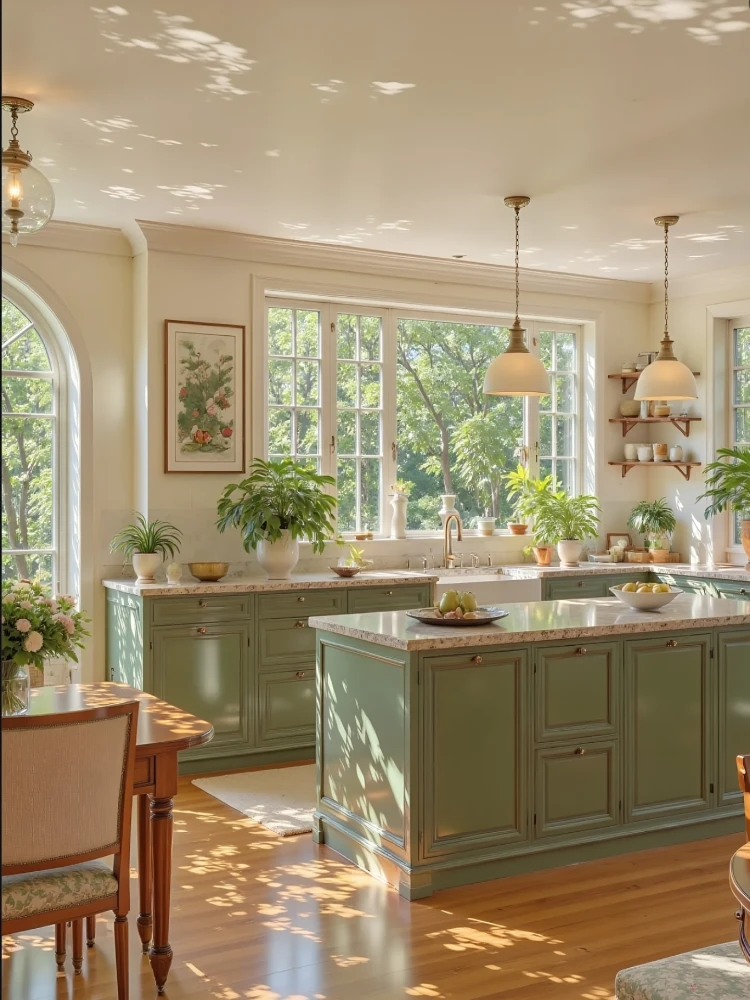
14. Corral the counter clutter onto one tray
Counters get messy because nothing tells the mess where to stop.
A tray draws a border. Oil, salt, pepper, the thing you use daily, all of it goes on a 12 by 18 inch wood or rattan tray and suddenly reads as a deliberate grouping instead of a pile. Everything outside the tray gets put away. That is the whole system.
The same move works on a coffee table, which is where I first tested it in a small living room and wrote up the tray-and-surface styling trick.
What earns a spot on the tray
15. Hang the pans, but only the ones you actually cook with
Pans hanging in the open sound charming until you cook with them.
Here is the honest trade-off. Anything hanging within range of the stove collects the same grease film as open shelving, so you are committing to washing before use or cleaning the rack every few weeks. Worth it for the three pans in daily rotation. Not worth it for a full set you are storing in public.
Wall-mounted racks run under $30 and ceiling racks around $70. The ceiling version needs joist mounting and a weight rating from the manufacturer, which is contractor territory, not a Saturday job.
Hanging storage only reads farmhouse when it looks used. Three well-worn pans beat a full matching set every time.
16. Put a cafe curtain on the lower half of the window
Curtains in a kitchen sound like a dust problem. A cafe curtain is not, because it covers the bottom half only and comes down in seconds.
The reason it earns its place: it softens the hardest, coldest edge in the room, which is the window frame meeting the counter. It also hides whatever is on your sill without you having to tidy the sill. And on a tension rod, it puts zero holes in a rental wall.
html
- ▸Hang it at the midpoint of the glass, not the top. Half the window stays clear.
- ▸Tension rod inside the frame. No brackets, no holes, no deposit conversation.
- ▸Unlined cotton or linen so daylight still comes through as a glow.
- ▸Keep it well clear of the range. Fabric near a burner is not worth the look.
17. Bring in exactly one old thing
Every kitchen in this style needs exactly one object nobody can buy new.
That is the difference between a kitchen that looks farmhouse and one that looks like it was ordered in a single checkout. A chipped stoneware crock, a scale with a patinated face, a wooden bread board with a split in it. Thrift stores, estate sales and the back of your grandmother’s cabinet all count.
One. Not a collection. Two old things look intentional, five look like a booth.
Every object on the counter bought in the same year, from the same two stores, in the same three finishes.
One chipped stoneware crock holding the wooden spoons, older than everything around it, and the whole counter suddenly has a timeline.
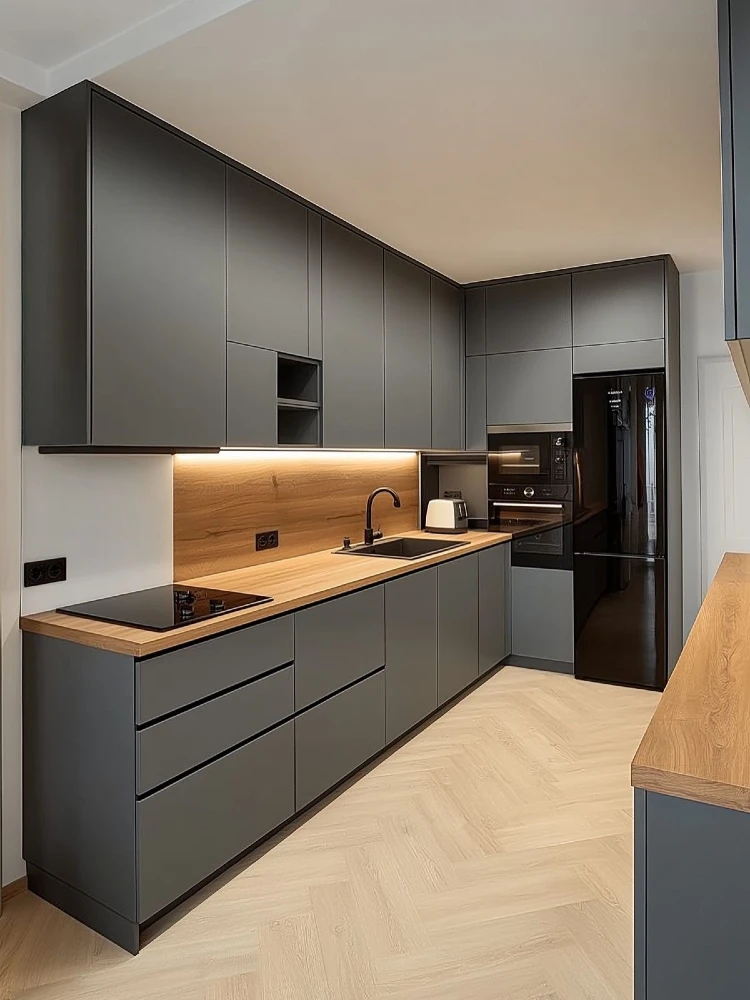
18. Is the modern farmhouse kitchen over? The honest answer
Fair question, and the design press has been loud about it this year.
One designer told The Spruce the look brought warmth and approachability but is now everywhere and feels uniform. That is a real criticism and it is worth taking seriously. What died is the 2016 version: gray distressed wood, shiplap on every wall, a sign telling people to gather, black hardware on absolutely everything.
What did not die is the underlying idea, and the numbers back that up. Wood cabinets just overtook white for the first time. Green passed gray. Every trend report points the same direction, toward warm and away from cold. That is farmhouse logic, wearing better clothes.
Build the warm version. Skip the props.
| The version that aged badly | The version that is still working |
|---|---|
| Gray-washed distressed wood | Warm oak and walnut, left plain |
| Shiplap on every available wall | One texture, used once, on purpose |
| Decorative signs and word art | One genuinely old object |
| All-white everything | Cream, wood, one muted color |
| Black hardware on every surface | Two finishes, mixed deliberately |
[NO IMAGE PROMPT: the comparison table carries this entry.]
Frequently asked questions
What is a modern farmhouse kitchen?
A modern farmhouse kitchen mixes rustic materials with clean contemporary lines. The usual markers are shaker cabinets, an apron-front sink, warm wood accents, open shelving used sparingly, and hardware in black or unlacquered brass. The modern half shows up in the restraint: smooth painted surfaces instead of heavy distressing, and simple layouts instead of decorative clutter.
How much does a modern farmhouse kitchen cost?
Two very different numbers. A full renovation runs to a median of about $55,000 according to the 2026 Houzz kitchen study. A styling-level version, the kind covered on this page, lands between $120 and $190 for a six-item starter set of hardware, peel and stick backsplash, warm bulbs, a wood board, linen textiles and a glass soap pump. Most of the visual payoff sits in the second number.
Is modern farmhouse still in style in 2026?
The heavily themed version is fading, and several designers have said publicly that it feels overexposed. The underlying direction is stronger than ever. Wood cabinets overtook white for the first time in the 2026 Houzz study, 29 percent to 28 percent, and green passed gray as the top non-neutral cabinet color. Warm materials are winning. Gray shiplap and word art are not.
What colors work in a modern farmhouse kitchen?
Warm cream and off-white on the walls, natural wood tones as the constant, and one muted color carrying the accent. Sage green, soft navy and deep clay all hold up. Pinterest logged sage green and cream kitchen searches up 410 percent in spring 2026. Avoid cool grays and stark pure white, both of which read cold once the afternoon light drops.
How do you make a rental kitchen look farmhouse without renovating?
Five moves, none of them permanent. Swap hardware using the existing screw holes. Change ceiling bulbs to 2700K. Apply peel and stick tile behind the range only. Hang a cafe curtain on a tension rod. Add wood at three heights using a stool, a cutting board and a shelf-free basket. Keep the original hardware bagged for move-out.
Are farmhouse sinks still worth it?
Functionally, yes. The deep single basin handles sheet pans, stockpots and full-size cutting boards that will not fit a standard divided sink. Style-wise, the apron front reads current when it is treated as a practical feature rather than a theme, paired with warm cabinets and simple hardware rather than surrounded by distressed wood and signage.
What is the fastest single change I can make today?
The bulb. Most rentals ship with 4000K or 5000K daylight bulbs, which flatten wood and make cream cabinets look dingy. A four pack of 2700K warm white costs $12 to $18 and takes five minutes. Nothing else in this entire list changes the feel of a room that much for that little money.
Start with one and see what happens
Pick the bulb or the hardware. Do it this week, stand in the doorway on Saturday morning with a coffee, and see whether the room reads differently. It will.
Modern farmhouse kitchens are not built in a weekend and they are not bought in a checkout. They accumulate: a warm light, a wood surface, one old crock, a curtain that softens the window. Six small decisions, made in the right order, that quietly add up to a room you want to stand in.
Save this to your kitchen board so the price bands are there when you are standing in the hardware aisle wondering whether $30 is too much for drawer pulls. It isn’t.
📌 Good To Know
Doing all 18? Work top down: light, then walls, then counters, then the small objects. Styling a counter before you fix the bulb means styling it twice.
Keep reading
More cozy nook ideas
 Farmhouse & Country
Read →
Farmhouse & Country
Read →
Modern Farmhouse Bedroom Checklist: Everything to Decide Before You Start
Ten decisions, made in the right order, and a modern farmhouse bedroom stops being a pile of saved pins and starts being…
 Farmhouse & Country
Read →
Farmhouse & Country
Read →
18 Rustic Cabin Ideas for Small Spaces That Actually Fit One Corner
Warm lamplight on one wall of visible grain. A seat low enough to sink into. A wool throw that has clearly been…