
20 Coffee Table Ideas That Make a Small Living Room Feel Warmer

Your coffee table is probably holding two remotes, a charging cable, yesterday’s mug, and a candle nobody has lit since spring. That is not a decorating problem. It is a fit and function problem, and most coffee table ideas online skip right past it to trays and stacked books.
What follows is built for a real US apartment, the kind between 600 and 1,400 square feet where the living room table is also the desk, the dinner table, and the place the mail goes to die. Every idea is sized, priced, or measured. You get the three numbers that decide whether a table looks right in a room, a $150 setup totaled from tables actually on sale this month, and the one candle rule that every styling roundup leaves out.
Cozier rooms almost never come from buying more. They come from getting the height, the gap, and the light right, then adding four things instead of eleven.
Start with number one. It takes a tape measure and about four minutes.
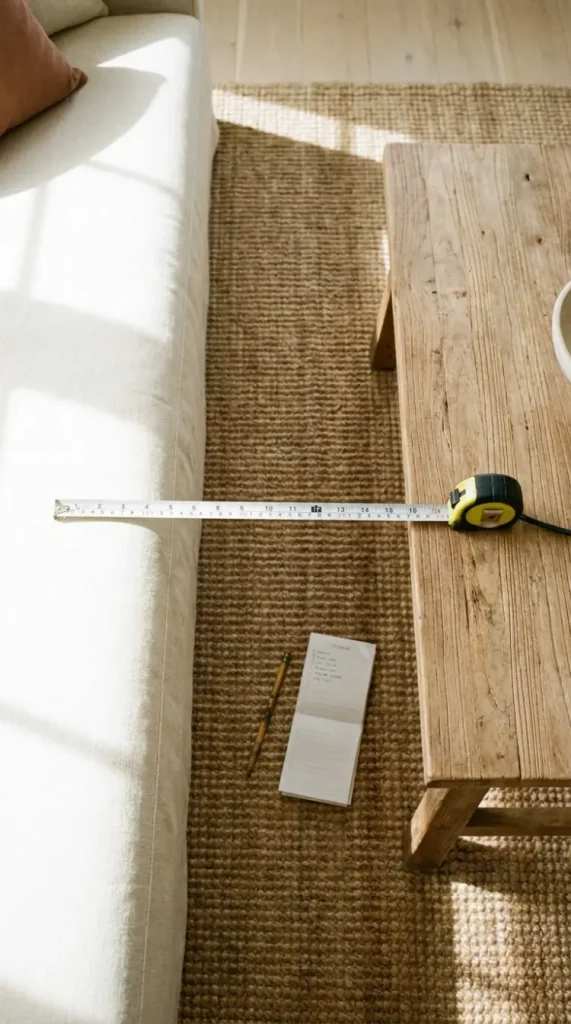
1. Start with the three numbers, because comfort is a fit problem first
Warmth reads as a feeling but behaves like a measurement. A table two inches too tall makes you reach. A table pushed too close makes you turn sideways to get past. Get these three right and the room settles before you buy a single candle.
Measure your sofa. Measure the gap. Check the height against the seat cushion. That is the whole test, and it is the reason this list starts here instead of with a tray.
If your room is fighting you on more than the table, the small living room layout measurements go deeper on walking lanes and viewing distance.
2. Give the remote pile a lidded home
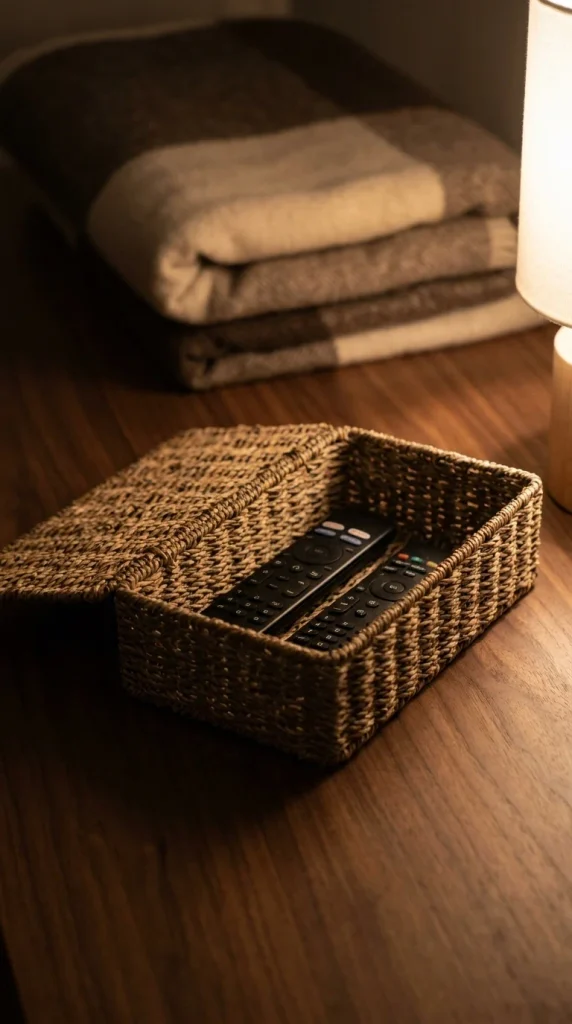
Remotes are the fastest way to make a styled table look unstyled, and they come back every single night. A shallow lidded box solves it permanently: lid off in the evening, lid on when you leave the room.
Look for something roughly 8 to 10 inches long so two remotes lie flat without stacking. Woven seagrass, a wood cigar-style box, or a soft leather catchall all work.
The failure mode is buying one that is too pretty to open. If the lid is fussy, you will leave it off, and you are back to a remote pile with an extra box next to it.
💡 Quick Tip
Measure your longest remote before you buy the box. Most decorative boxes run 6 to 8 inches inside, and a soundbar remote is often 9.
3. Round or rectangle is decided by traffic, not by taste
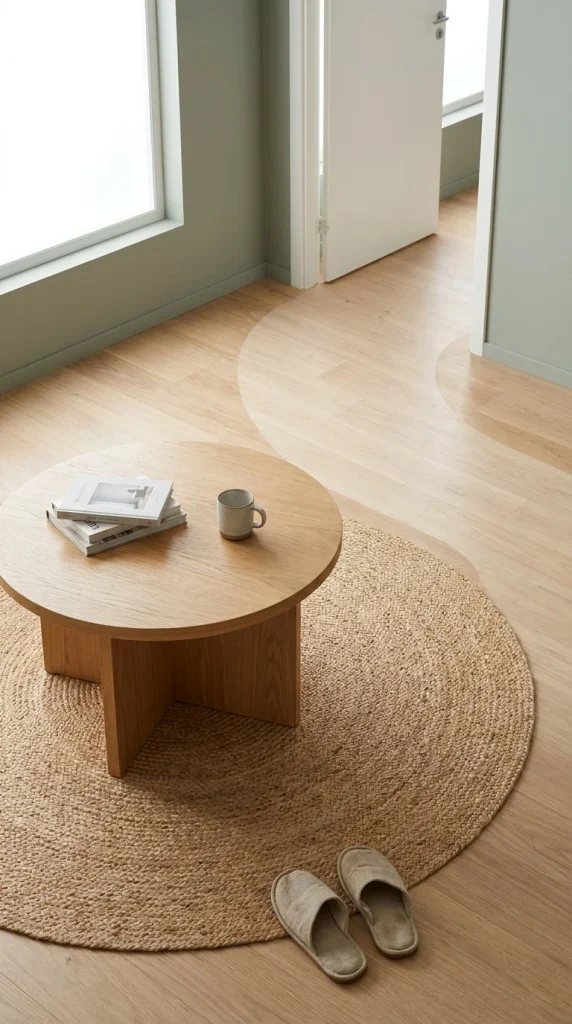
Round tables get recommended for small rooms as a style call. It is actually a circulation call. In a room where people cut the corner between the sofa and the doorway, a rectangle puts a hard edge exactly at shin height in the busiest square foot of the house.
Walk your normal path from the door to the sofa. If you turn a corner inside the seating area, go round or oval. If your path runs straight down one side, a rectangle gives you more usable surface for the same footprint.
| Round or oval | Rectangle |
|---|---|
| You turn a corner inside the seating area | Your path runs straight past one side |
| Kids or pets move fast through the room | You eat or work at the table often |
| Sofa is against a wall, chairs float | Sofa and loveseat face each other |
| Less surface for the same floor space | Corners land at shin height |
4. Build the tray as a stopping point, not as decoration
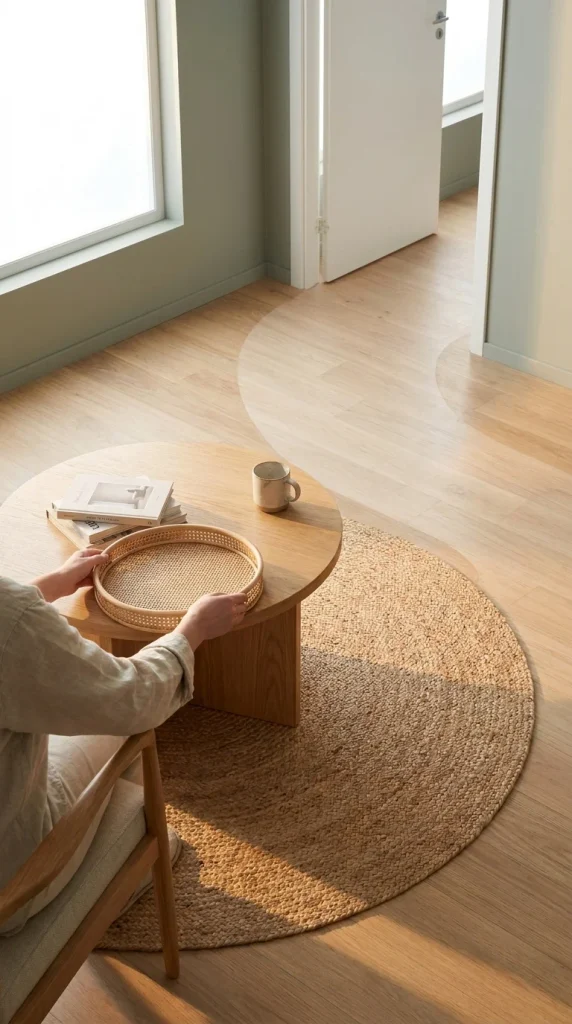
Trays get recommended in every roundup, and half the time they end up as one more object on a crowded surface. A tray only earns its place when it has a job: it is the boundary that stops your small stuff from spreading.
Everything that would otherwise migrate goes inside it. Coasters, lighter, lip balm, the little glasses case. Everything outside the tray stays deliberate.
Pick one about a third the width of your table. Too small and it overflows in a day.
What actually belongs in the tray
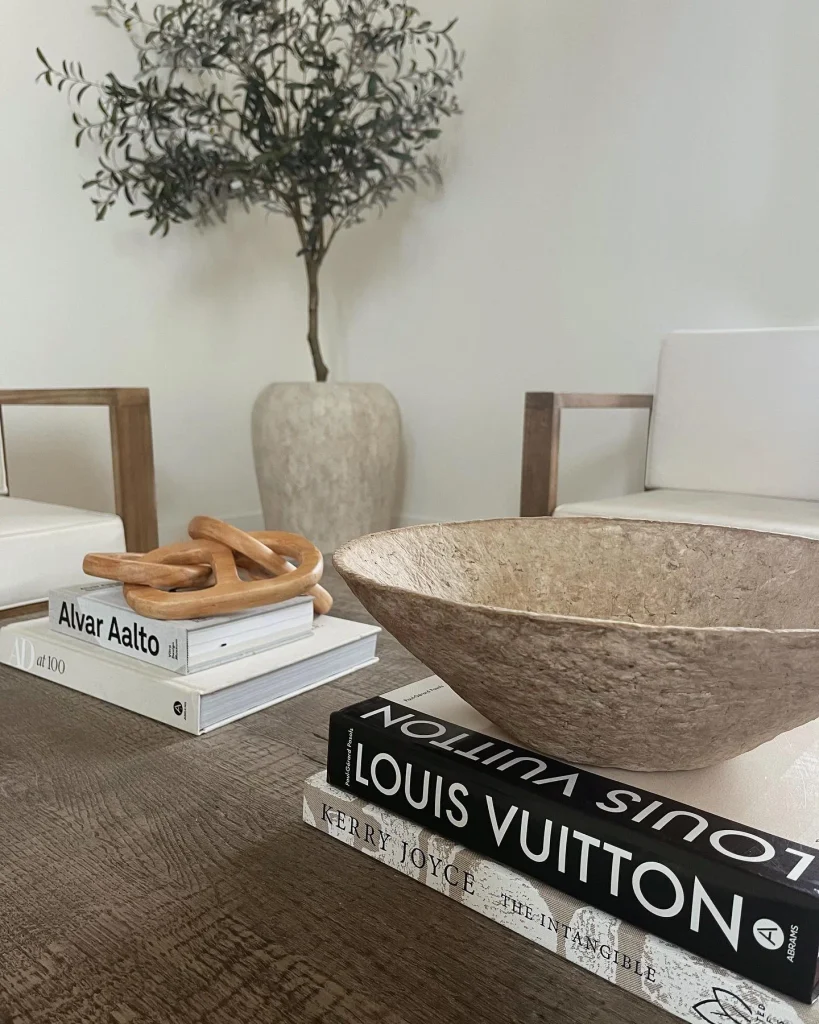
5. Books work as furniture before they work as decor
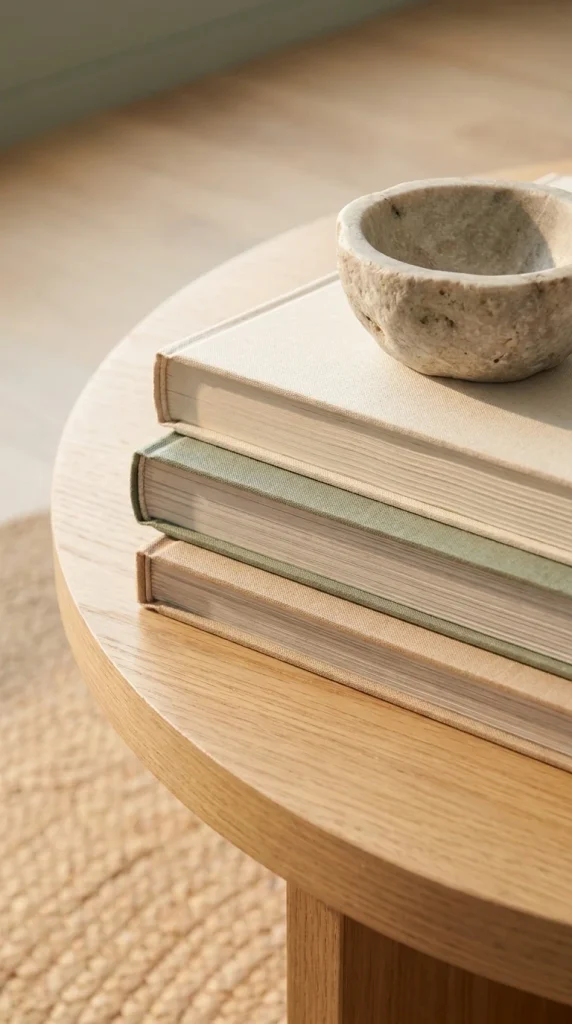
Books add height for free if you already own them, and most people use them backwards. Do not fan them out. Stack two or three flat, largest on the bottom, and treat the stack as a small plinth for one other object.
A stack of three average hardcovers gives you roughly 3 to 4 inches of lift. That is exactly enough to pull a small bowl or a candle up out of the flat plane so your eye has somewhere to go.
Spines out, facing the sofa. You will actually read one eventually, which is more than can be said for the fanned-out version.
6. Put a small rechargeable lamp on the table itself
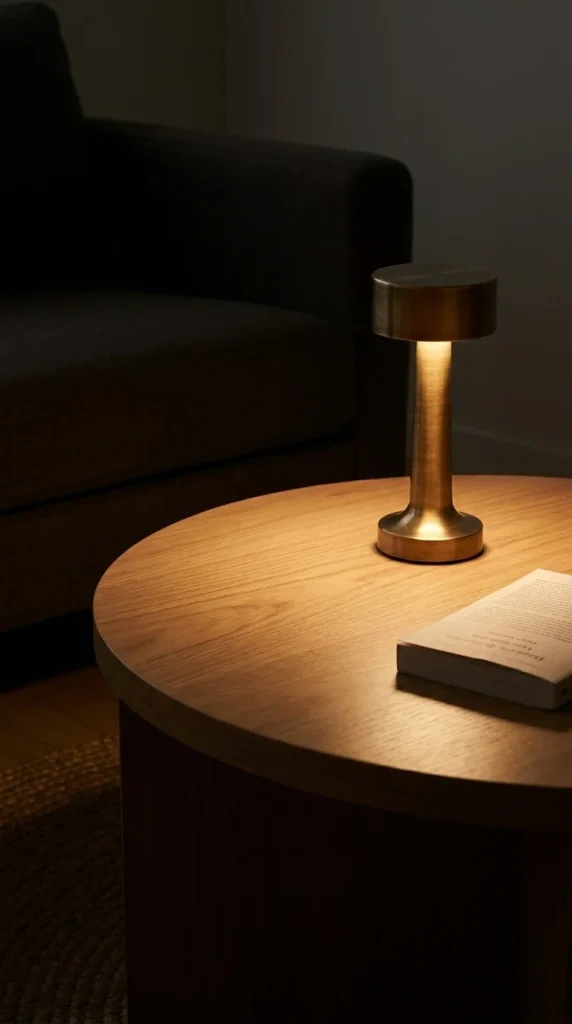
Overhead light flattens a room and makes 9 p.m. feel like a waiting area. Light at table height does the opposite: it pools, it throws shadow, and it makes a 700 square foot living room feel like it has corners worth sitting in.
Cordless rechargeable table lamps have made this easy for renters. No outlet under the sofa, no cord taped down the rug.
Here is the order that works:
Set the lamp on the corner of the table furthest from where you sit, not the middle.
Turn the overhead off completely and see what the room does.
Add a second low source across the room so the light is not a single island.
Two low sources beat one bright one every time. That principle runs through all eight cozy living room lighting fixes if you want the full version.
7. Leave one quadrant completely empty
Split the tabletop into four in your head. Keep one quarter bare, permanently, and treat it as the mug quadrant.
This is the single thing that separates a table you use from a table you photograph. Every competing styling guide fills the whole surface, then the first person to sit down has to relocate a vase to put down a plate.
The empty quarter goes nearest to where you actually sit. Not the far corner, not the middle.
Once it exists, the rest of the styling stops feeling precious, which is the whole point.
Keep the quarter nearest your seat bare.
Group everything else toward the far edge.
Centering one big arrangement in the middle.
Spreading small objects to all four corners.
8. Layer three heights and let one break the plane
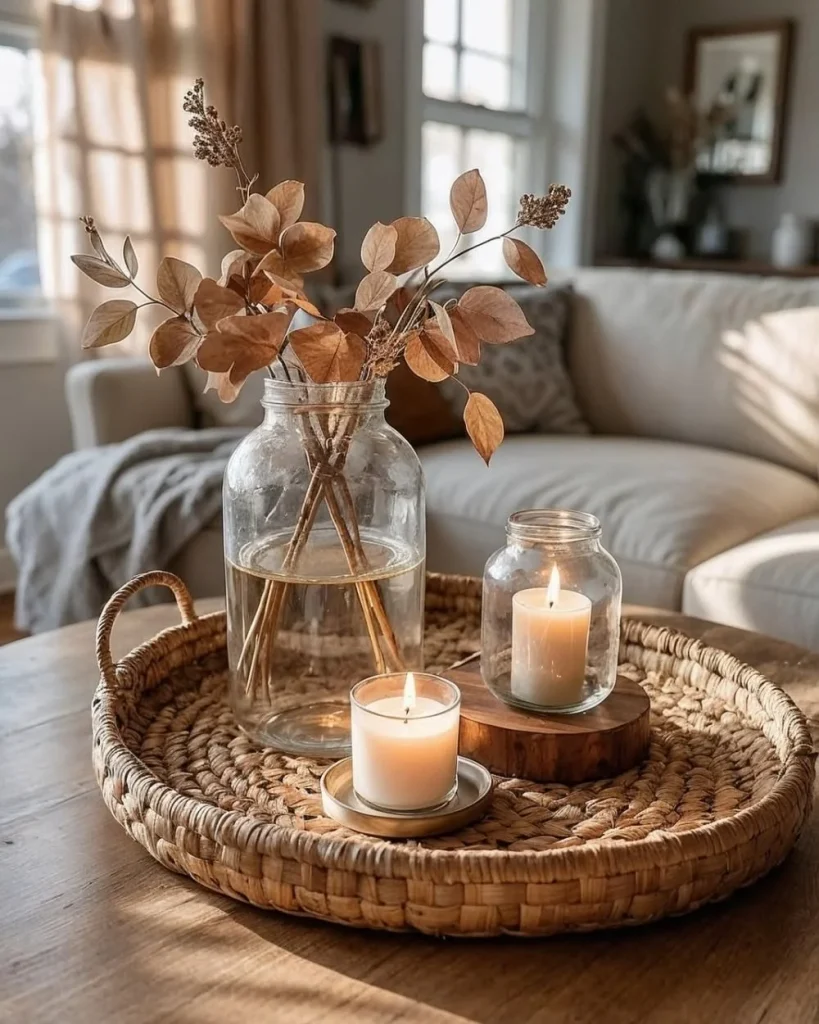
Height is what your eye reads as “styled.” Flat is what it reads as “cluttered,” even when the same number of objects is on the table.
Work in three tiers:
- ▸Low: the tray, the book stack, a shallow bowl.
- ▸Mid: a candle, a small sculptural object, a squat vase.
- ▸Tall: exactly one thing, and keep it under 12 inches.
Twelve inches is not arbitrary. Above that, people sitting on opposite sides stop being able to see each other’s faces, and the table quietly kills the conversation it was supposed to host.
9. Swap the glass coffee table for something you can put your feet on
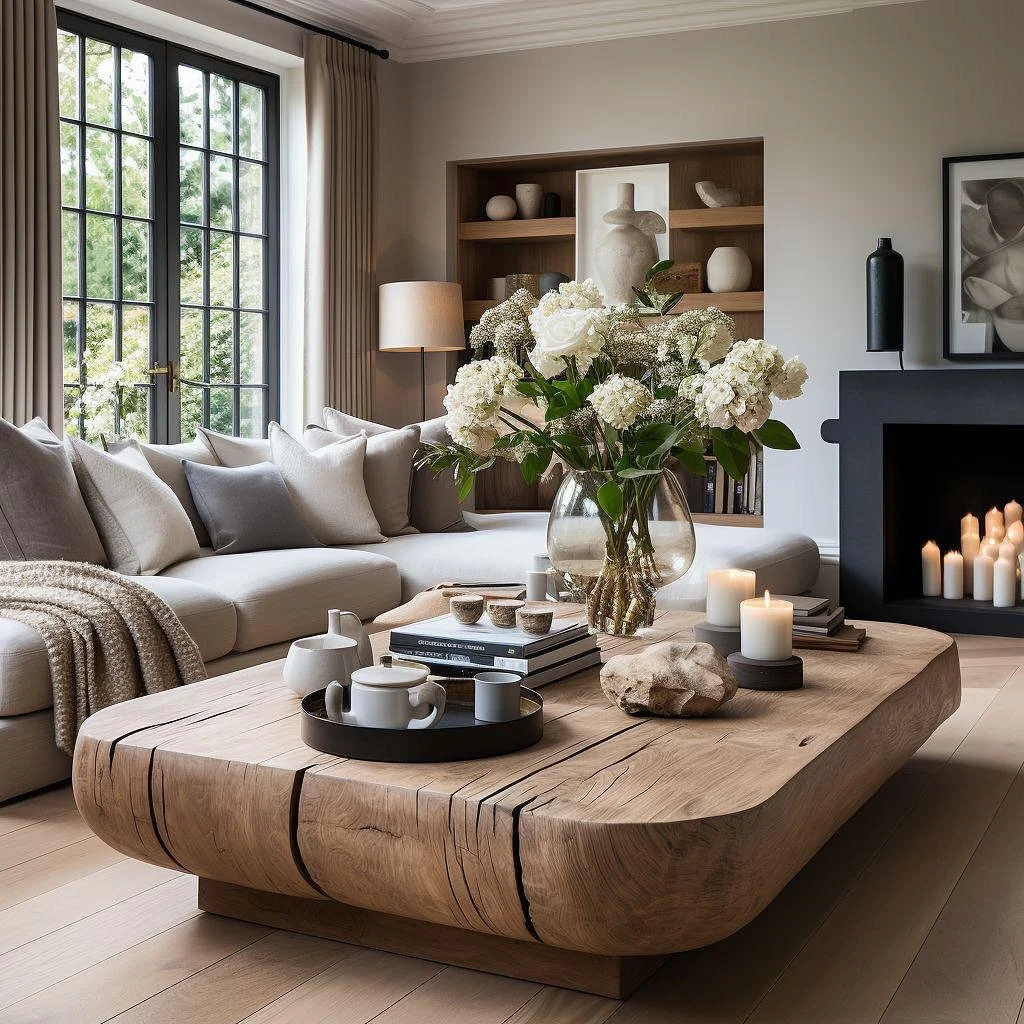
Glass tops photograph beautifully and live badly. Fingerprints show at every angle, and nobody puts their heels up on glass, which means the table stops being a place to relax and becomes a thing to be careful around.
An upholstered storage ottoman with a firm tray on top fixes three problems at once: a soft edge, a hidden home for throws, and a surface you can genuinely rest on.
Buy the tray at the same time as the ottoman. Without a hard surface, drinks are off the table permanently and you have bought a large footstool.
Glass top, visible fingerprints, throws draped over the sofa back because there is nowhere to put them.
Fabric ottoman with a hard tray, two throws stored inside, feet up without a second thought.
10. Bring in one living thing, sized to the table
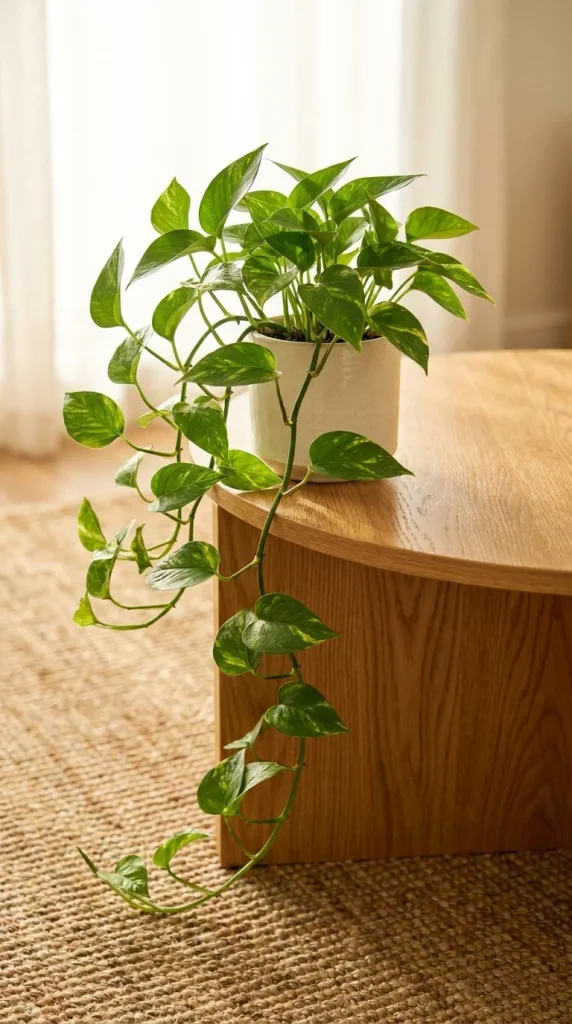
Plants earn their spot when they are scaled right and lose it fast when they are not. On a coffee table you want something that reads at a glance and does not block sight lines, so think wide and low rather than tall.
Good picks for a low-light living room: a small pothos in a 4 inch pot, a trailing string of pearls at the table edge, or three stems of eucalyptus in a squat bud vase.
Skip anything that needs turning every week. On a coffee table you will forget, and a lopsided plant reads as neglect rather than as greenery.
📌 Good To Know
Cut eucalyptus dries in place and keeps its shape for months, so it survives the weeks you forget to water anything. Real greenery, near-zero upkeep.
11. Total a real $150 coffee table setup, priced this month
Here is what $150 actually covers, using tables and pieces that were genuinely listed at these prices in early September 2026. Prices move, so treat these as bands rather than promises, but the shape of the budget holds.
The IKEA LACK is the workhorse here at $49.99 for the 46 1/2 by 30 3/4 inch size, standing 17 3/4 inches tall, which lands inside the seat-height rule for most standard sofas.
| Piece | What to buy | Price band |
|---|---|---|
| 🪵 Table | IKEA LACK, 46 1/2 x 30 3/4 in | $50 |
| 🧺 Tray | Round rattan or wood, 15 to 18 in | $20 to $30 |
| 💡 Light | Cordless rechargeable table lamp | $25 to $40 |
| 📦 Box | Lidded seagrass or wood catchall | $15 to $25 |
| 🕯️ Candle | One vessel candle in a stable holder | $12 to $20 |
| Total | Five pieces, one afternoon | $122 to $165 |
Want to spend more on the table instead? The same Google shopping shelf showed lift-top storage tables from about $92 to $168, and solid wood options from World Market around $360.

12. Burn one candle, and give it 12 inches of nothing
Candles show up in nearly every coffee table roundup online. Almost none of them mention that the US Fire Administration puts the number at roughly 20 home candle fires reported every day, or that the standing guidance is simple and specific: keep a burning candle at least 12 inches away from anything that can burn.
On a coffee table that matters more than anywhere else in the house, because a coffee table is where paper, throws, and sleeves all end up.
So: one candle, in a stable holder, on a hard tray, with a foot of clear space around it. Blow it out when you leave the room. Battery-operated flameless candles are worth a look if a pet or a toddler shares the room, and they solve the sleeve problem entirely.
The full federal candle fire safety guidance is short and worth two minutes.
⚠️ Watch Out
Safety note: anchor tall furniture to the wall, keep candles and cords away from fabric, and use a licensed electrician or contractor for hardwired lighting, ceiling mounts, or anything structural.
13. Add one texture your hand actually wants to touch
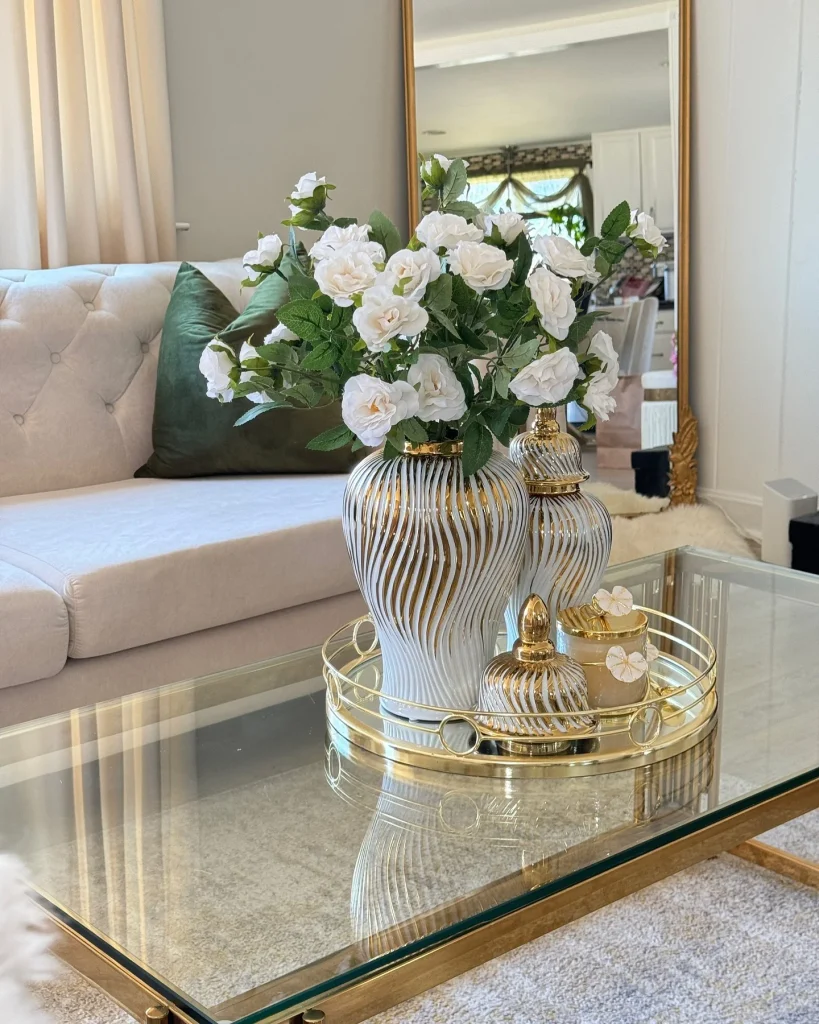
Your table is probably all hard surfaces: wood, glass, ceramic, metal. Warmth in a room is partly a tactile thing, and a surface with nothing soft on it reads as a display case.
One rough or soft element is enough. A raw-edged stone coaster, a small woven basket, a chunky knit runner folded in half, or a piece of unglazed pottery.
Put it where your hand lands, not where it photographs best. The arm of the sofa side, usually.
14. Thrift one odd object with an actual story
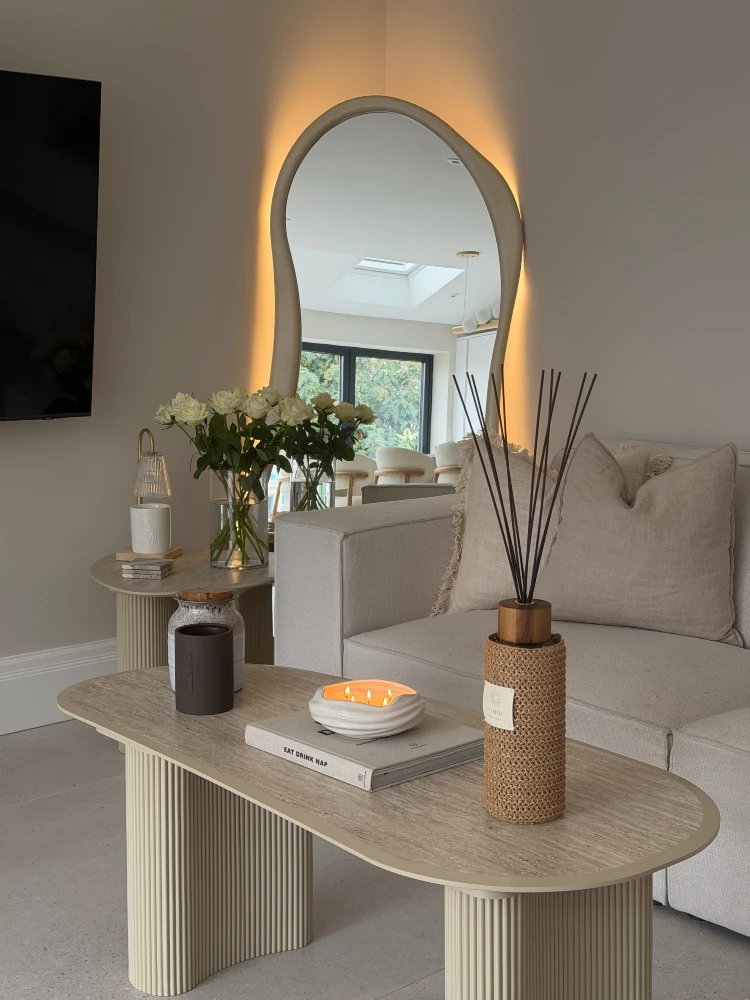
Thrifted objects beat matched sets because they carry information. A brass candlesnuffer, a wooden fishing float, a small ceramic animal your grandmother had, a paperweight from a place you liked. One of these does more for a room than three coordinated decor-store pieces.
The test is whether someone could ask about it and you would have an answer longer than “Target.”
Keep it to one per table. Two odd objects start reading as a collection, and a collection needs a shelf, not a coffee table.
Where to look, in order
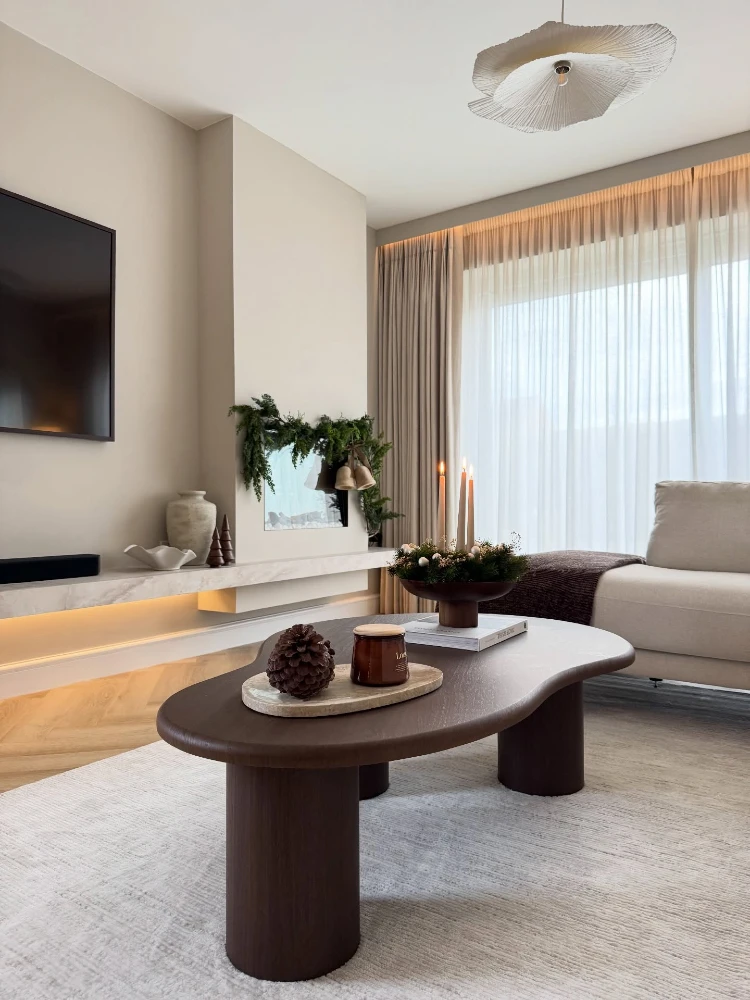
15. Match the undershelf to your clutter, not to your style
The shelf underneath is the most misused square foot in the living room. Most people either leave it empty because it looks cleaner, or fill it with more books.
Match it to whatever actually piles up in your room. Two woven bins if it is kid stuff. A flat basket if it is magazines and mail. A single folded throw if it is blankets. One category only, so putting things away stays a two-second decision.
If the table sits next to a chair you read in, the undershelf becomes the book landing zone, and that corner starts working like a proper nook. There is more on turning a dead corner into a reading nook if that is where your room is heading.
One category per shelf means putting things away takes two seconds instead of a decision. Storage fails on friction, not on capacity.
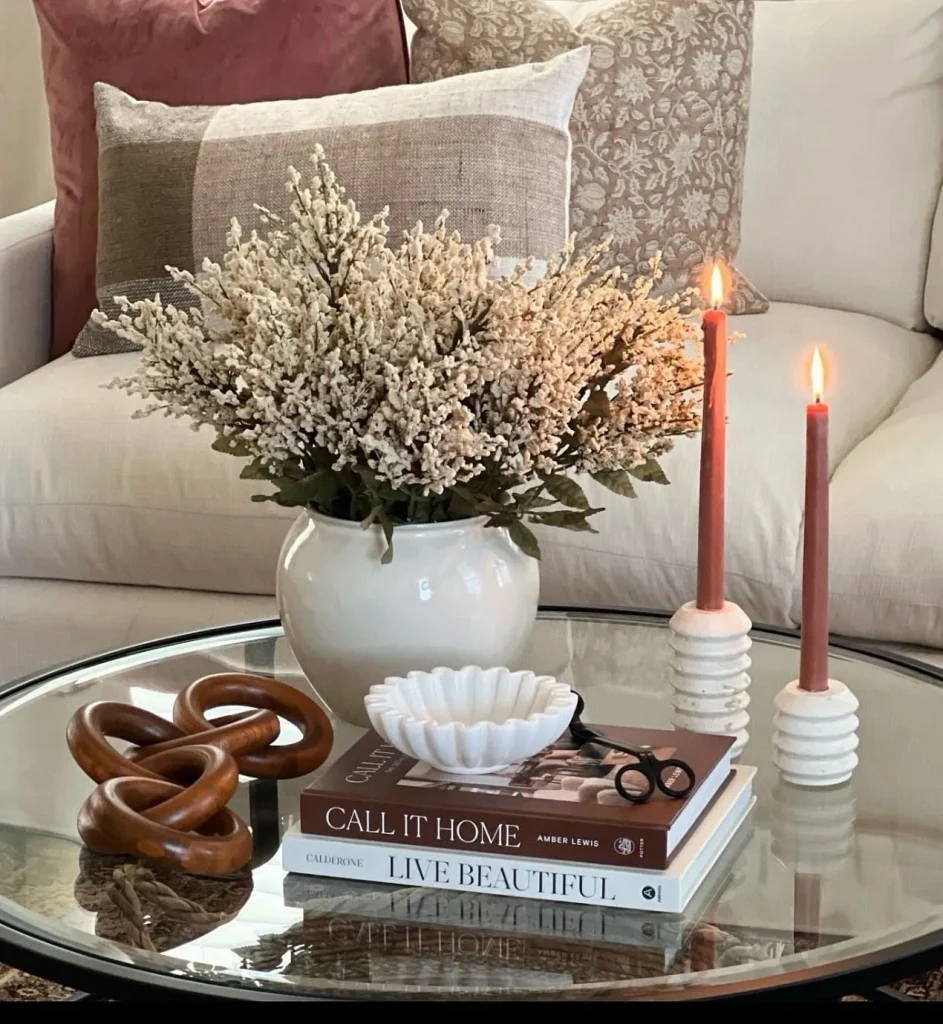
16. Nesting tables beat one big table in a tight room
Nesting tables solve a problem a single table cannot: they change size. Pull them apart when two people are eating in front of a movie, push them together when you need the floor back.
In a room narrower than about 12 feet, this is usually the better call. Two pieces at roughly 20 inches each read lighter than one 46 inch slab, and you can move one to the armchair without moving furniture.
The trade-off is real: less continuous surface, and two things to dust.
| Nesting pair | One large table |
|---|---|
| Splits for two people eating | One continuous styling surface |
| Moves without help | Anchors a floating seating group |
| Best under 12 ft room width | Best with an 84 in sofa or longer |
| Two things to dust | Blocks the room when you rearrange |
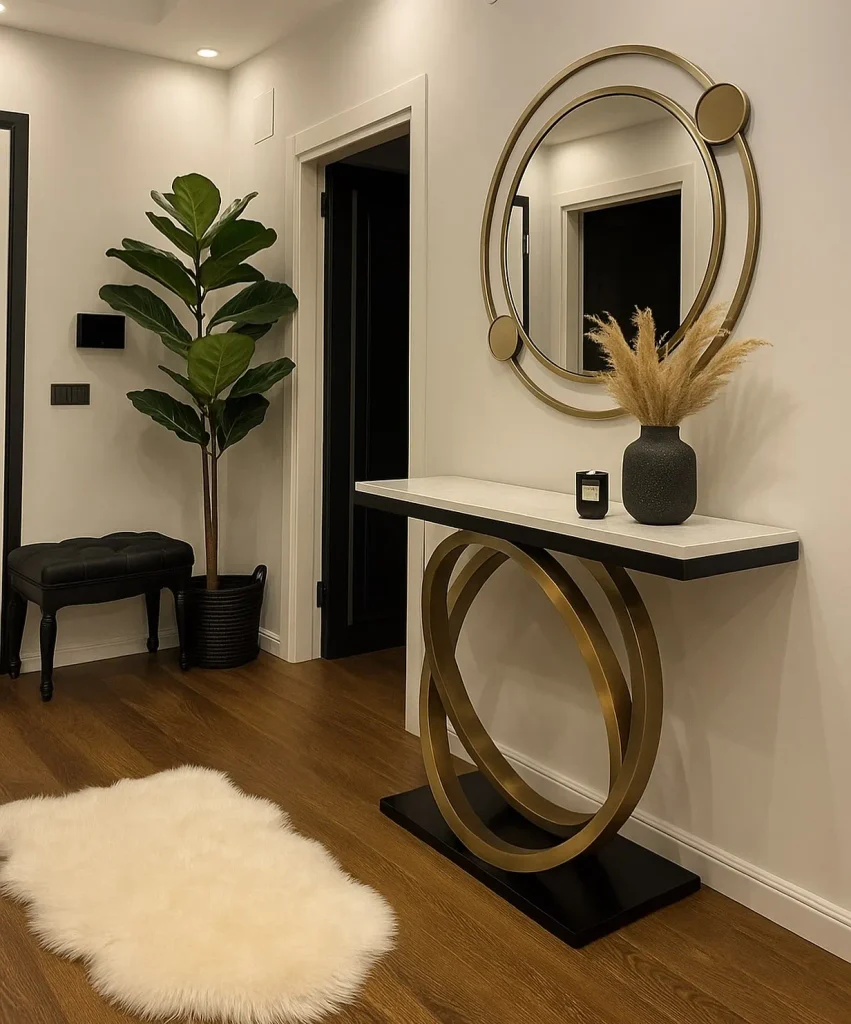
17. Warm the room to 2700K before you buy anything else
Bulb color changes a room faster than any object on the table, and it costs a few dollars. A cool white bulb overhead will make a beautifully styled table look like a product photo, no matter what is on it.
Check the Lighting Facts label for the Kelvin number, not the wattage.
Swap every bulb the coffee table can see, including the hall.
Put the lamp nearest the table on a plug-in dimmer for evenings.
Going LED while you are at it is the easy part of this. The Department of Energy puts residential LEDs at using at least 75% less energy and lasting up to 25 times longer than incandescent, which is worth knowing before you buy a six-pack. Their guide to LED lighting at home covers the label in plain language.
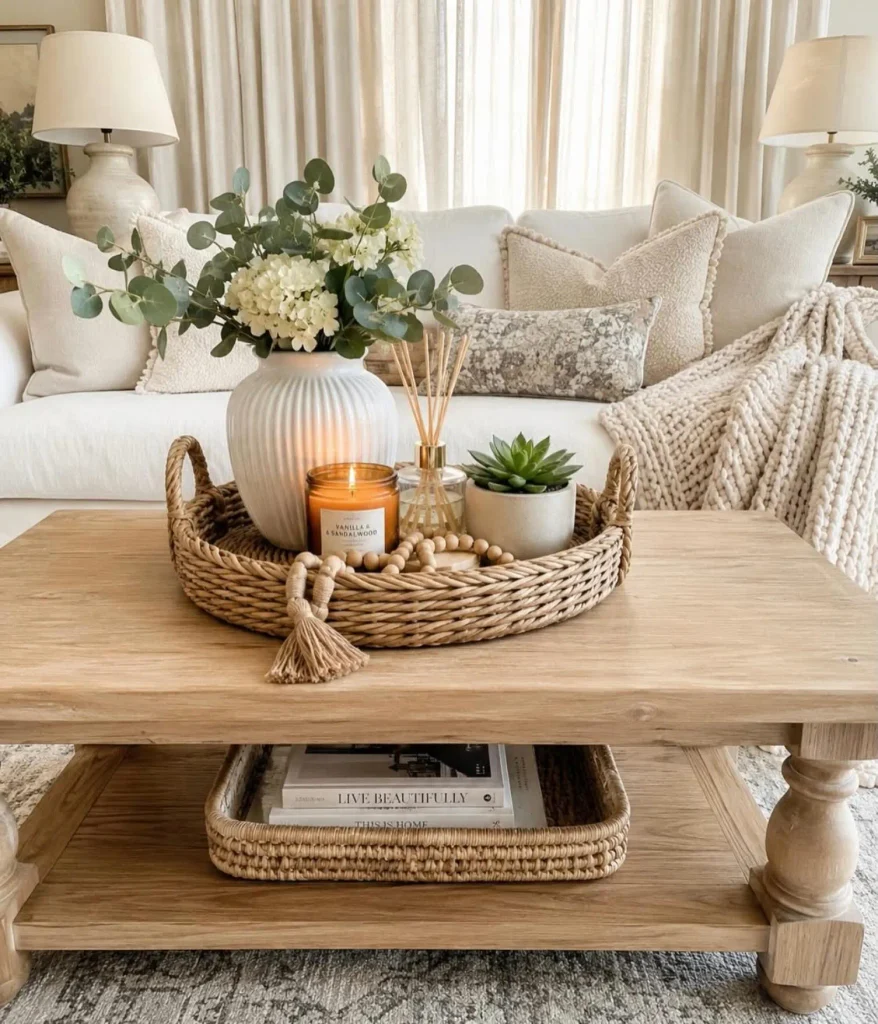
18. Run a linen runner on a table that is too big for the room
Runners rescue a table you already own and cannot replace. If your table is wide enough that the surface reads as a blank field, a runner cuts it into proportion and gives you a lane to arrange things along.
Use a length that leaves 4 to 6 inches of bare table at each end. Washed linen, cotton canvas, or a folded flatweave all work. Skip anything with fringe near a candle.
Running it lengthwise makes a rectangle look longer. Running it across the short way visually shortens a table that is crowding the walkway.
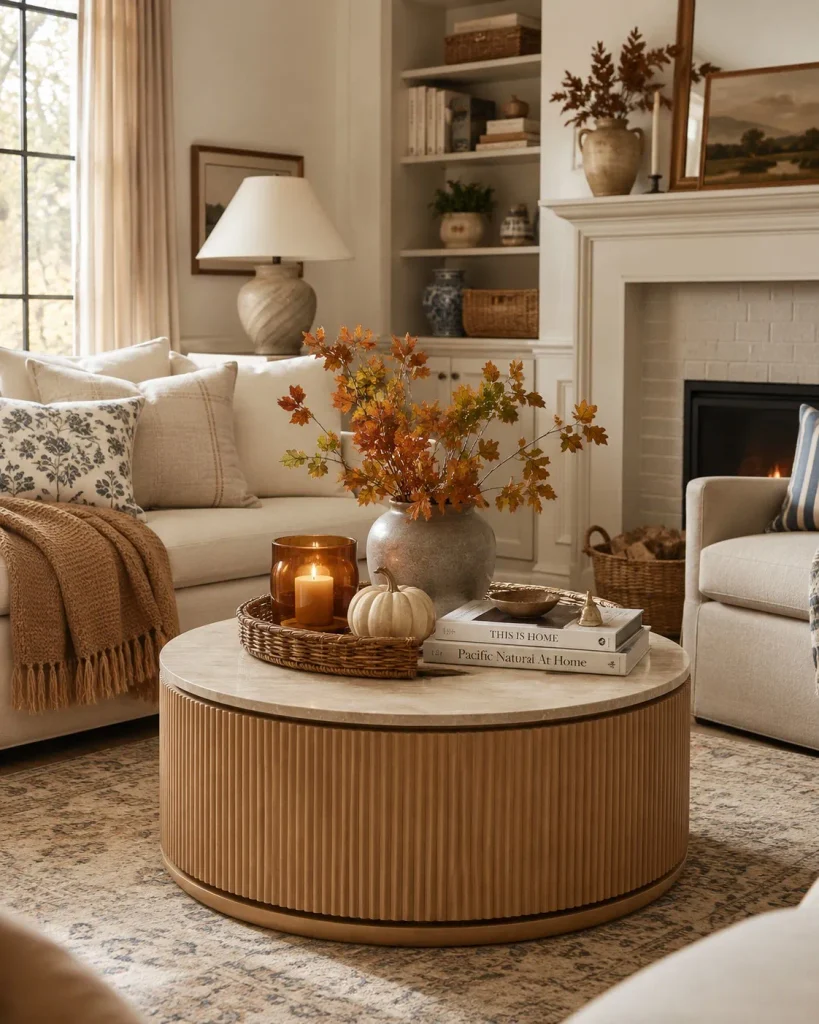
19. Corner-proof the table if a toddler or a dog lives there
Sharp corners at forehead height for a two-year-old are the reason a lot of coffee tables get pushed against a wall and abandoned. There are better answers than giving up the middle of your room.
Round and oval tops remove the problem entirely. An upholstered ottoman removes it and adds storage. If you are keeping a hard rectangular table, clear silicone corner guards are close to invisible on wood and cost very little.
Whatever you choose, the candle rule from number 12 tightens here: flameless only, or nothing at all.
Choose a round top or a soft ottoman.
Switch to flameless candles at kid height.
Glass edges and stone corners at head height.
Tall unstable objects near the table edge.
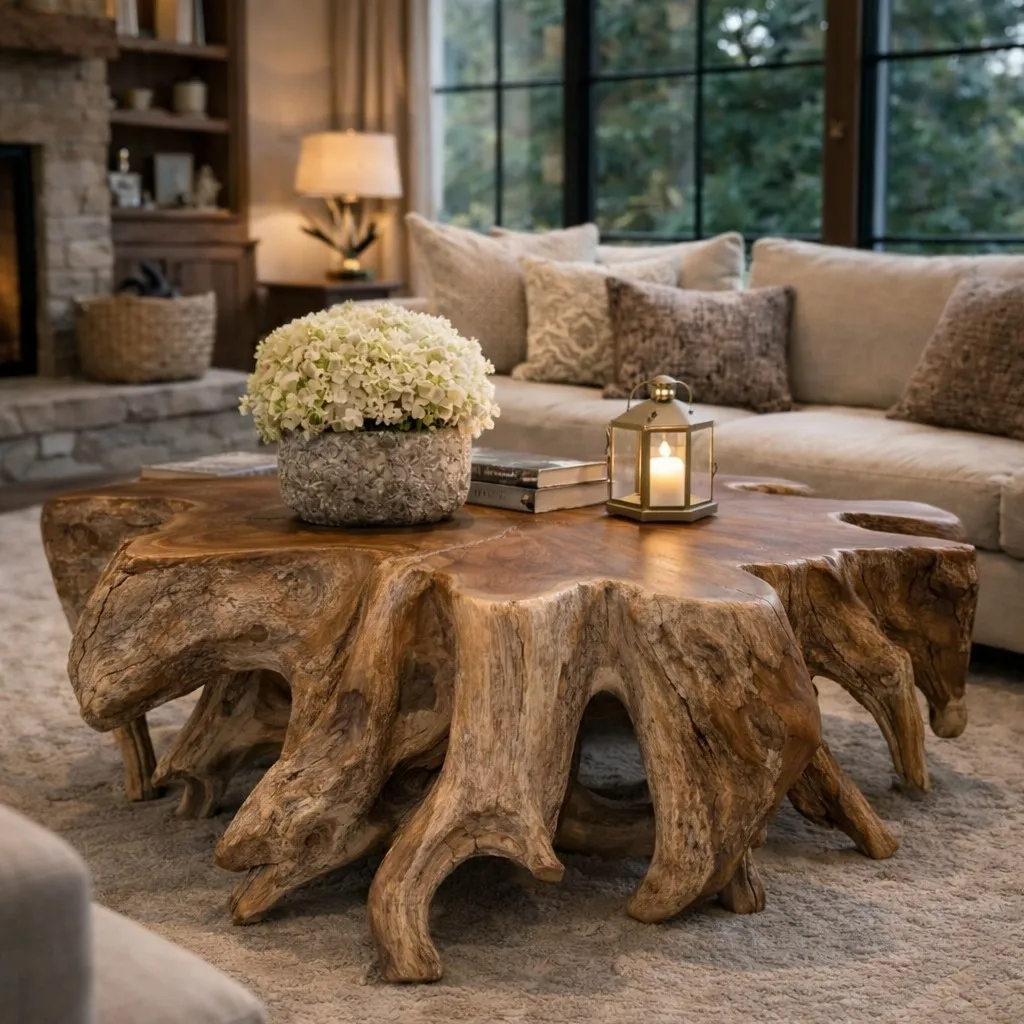
20. Build the 10-second reset that keeps all of this alive
None of the previous nineteen ideas survive contact with a normal week unless resetting the table is fast. A styled table that takes five minutes to rebuild gets abandoned by Thursday.
So design the reset, not just the arrangement. Everything on the table should belong to one of three destinations: inside the tray, inside the lidded box, or on the shelf below. Nothing has a home on the open surface except the book stack and the one tall thing.
Do it while the kettle boils. That is the actual test of whether your setup works.
Small stuff into the tray. Remotes into the box. Everything else onto the shelf below. If it takes longer than the kettle, you own too much table decor.
Coffee Table Ideas Frequently asked questions
What is the 2/3 rule for coffee tables?
The two-thirds rule says your coffee table should run about one half to two thirds the length of your sofa. On a standard 84 inch sofa that lands you between roughly 42 and 56 inches of table. Go much shorter and the table looks stranded in the room. Go longer and it starts crowding the walkway. Measure your sofa first, then shop.
How much space should you leave between your sofa and coffee table?
Leave 14 to 18 inches between the sofa edge and the table. That gap is wide enough to walk through sideways and short enough that you can set a mug down without standing up. Under 14 inches your shins hit it. Over 18 and you have to lean forward. Main walking paths around the whole arrangement want 30 to 36 inches.
What should I put in the middle of my coffee table?
Put one thing with height in the middle, then build low around it. A short vase with greenery, a single candle in a stable holder, or a small sculptural bowl all work. Keep that middle piece under about 12 inches tall so people sitting opposite each other can still see faces. Everything else sits on a tray or a book stack.
What can I put on my coffee table to make it look nice?
Four things cover almost every table: a stack of two or three hardcover books, a tray to corral small items, one living or natural element, and one object with a story behind it. Vary the heights so your eye moves across the surface. Then leave at least a quarter of the table bare for a mug, a plate, or a laptop.
What can I do instead of a coffee table?
Swap in an upholstered storage ottoman with a hard tray on top, two nesting stools you can pull apart, a low bench, or a vintage trunk. Each one gives you a surface plus a place to store throws. In a room narrower than about 12 feet, two small pieces almost always work better than one large table.
What is the new trend in coffee tables for 2026?
Low-profile chunky shapes, warm woods, and round or oval tops are leading right now, alongside lift tops and undershelves that hide daily clutter. Pinterest’s 2026 color forecast names Persimmon and Plum Noir among its five hues, so warm terracotta and deep burgundy accents pair well. The steady move is toward tables people actually use rather than only look at.
Where to start tonight
Pick one number and one object. Measure the gap between your sofa and the table, fix it if it is outside 14 to 18 inches, then clear everything off and put back only four things: books, tray, one living thing, one object you would tell someone about.
That is a warmer, calmer living room in about fifteen minutes, with no shopping at all. The tray, the lamp, and the lidded box can come later, and the $150 build in number 11 tells you exactly what they cost.
If you want to come back to this list when you are standing in the store, save it to your living room board so it is there when you need it.
💡 Quick Tip
Take a photo of your table before you clear it. When you rebuild with four things instead of eleven, the before shot is the only proof you will need that less was the fix.
Keep reading
More cozy nook ideas
 Living Room
Read →
Living Room
Read →
How to Make a DIY Coffee Table That Feels Cozy, Not Cluttered
Most DIY coffee table plans hand you a cut list on line one. That is why so many finished tables end up…
 Living Room
Read →
Living Room
Read →
Vintage Living Room Decor That Reads Thrifted Cottage, Not Thrift Store
No estate sale connections. No reno budget. No landlord who says yes to paint. Vintage living room decor still works in a…
 Living Room
Read →
Living Room
Read →
Floral Sofa Living Room Ideas That Read Cottage, Not Dated
Your floral sofa isn’t the problem. The three beige things sitting around it are. That’s the whole diagnosis. A floral sofa living…