
14 Reading Nook Ideas for Adults That Fit a Real Apartment

No bay window, no landlord permission, no drill. What you need is about three feet of floor you have been ignoring and a willingness to point a chair away from the television. Most reading nook ideas for adults fall apart on that last part, because they were built for a house with a spare room rather than a 700 square foot rental where the only free corner is currently holding a laundry basket and a phone charger.
So this list is measured, not wishful. Every idea below names the piece, the placement, and the reason it works, and the ones that need a drill are labeled as such so you can skip them. There is a build you can total up, a three-number rule you can check with a tape measure, and a handful of corners nobody else writes about, including what your nook sounds like and how to read at 11 p.m. without waking the person next to you.
Start with number one if you rent. It is the whole setup in three pieces and zero holes in the wall.
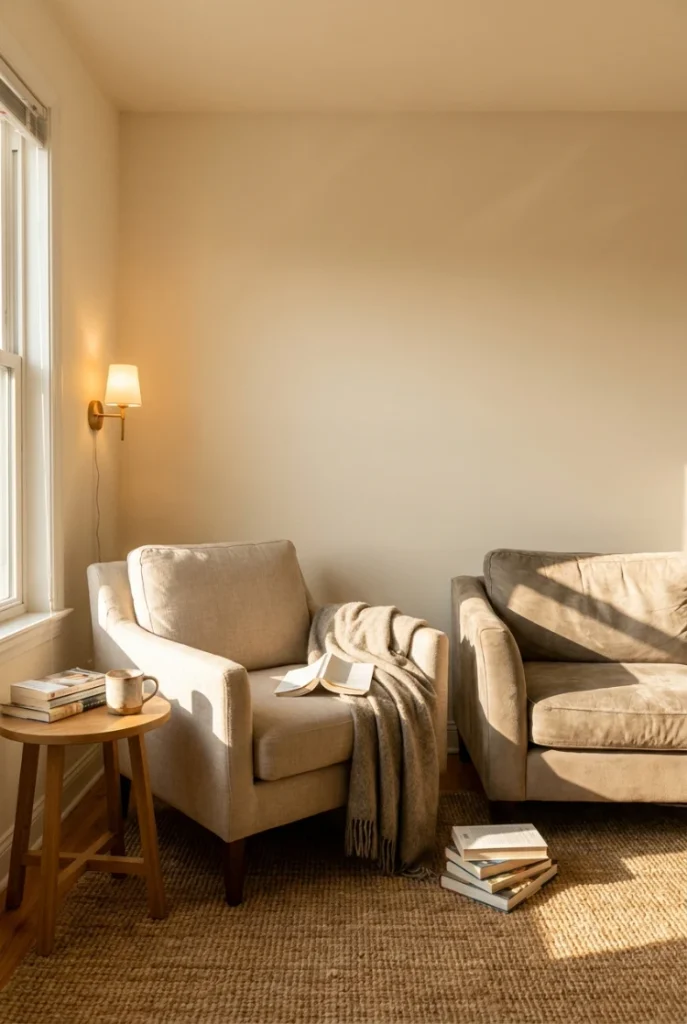
1. The Three-Piece Corner That Needs Zero Holes in the Wall
Three pieces make a working nook: something to sit in, something to light the page, something soft. Everything after that is styling you can add whenever.
The IKEA POÄNG is the archetype worth starting from, because its numbers are published and nothing about it touches a wall. Fabric versions run $139 to $249 for frame plus cushion, the matching ottoman is $80 on its own, and IKEA bundles the pair from $229. Pair it with a plug-in sconce or a floor lamp and you have a nook your landlord will never know about. If your lease is strict, we go deeper on no-drill setups built for renters in a separate post.
| Piece | Archetype | What it runs |
|---|---|---|
| 🪑 Seat | IKEA POÄNG armchair, frame plus cushion | $139 to $249 |
| 🦶 Footrest | Matching ottoman, sold on its own | $80 |
| 💡 Light | Plug-in swing-arm sconce or arc floor lamp | varies by retailer |
| 🧶 Soft layer | Wool or linen throw plus one lumbar pillow | varies by retailer |
| Chair plus footrest | bundled together at IKEA from $229 | $219 to $329 |
Buy the footrest. Getting your feet up changes how long you stay in the chair far more than a second throw pillow ever will.
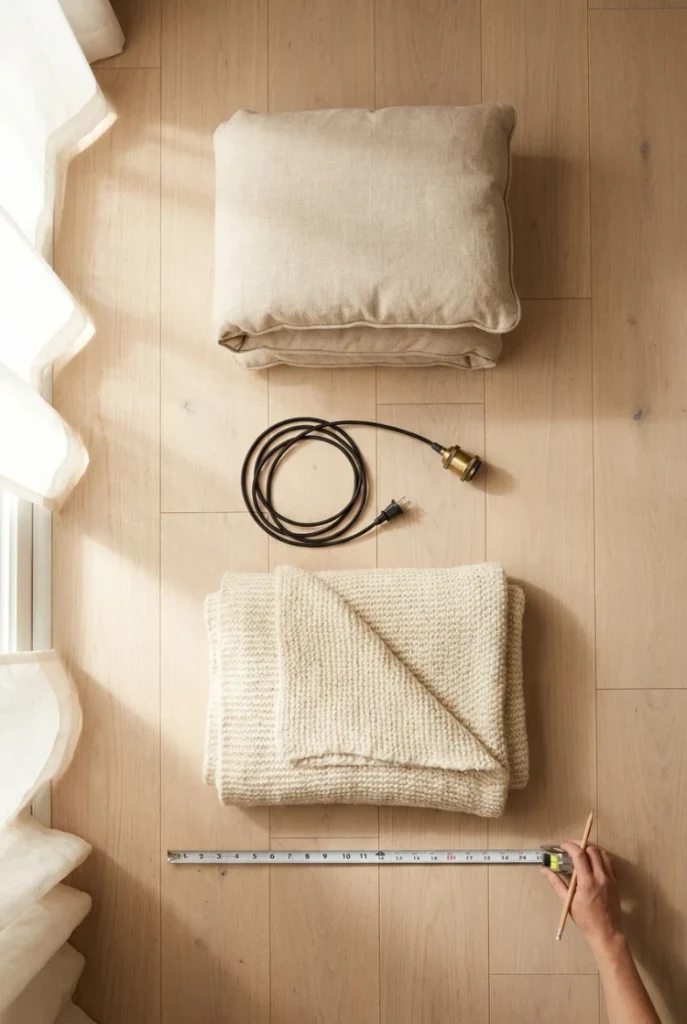
2. Turn the Chair 40 Degrees Off the Sofa
Angle does more for a reading corner than square footage. A chair pushed flat against the wall, facing the same direction as the couch, reads as spare seating, and spare seating collects laundry. Rotate that same chair roughly forty degrees so it faces into the corner instead of at the television, and the brain files it as a separate room.
Nothing is bought. Nothing is drilled. You are moving one piece of furniture eighteen inches and turning it.
Turn the seat toward the corner so the TV sits behind your shoulder.
Pull the chair 6 to 8 inches off the wall so it reads as placed, not parked.
Lining the chair up square with the sofa, which makes it look like overflow.
Facing the screen, which quietly turns your nook into a second couch.
Give it a week before you judge it. A chair you have to walk around gets used far more than one you walk past.
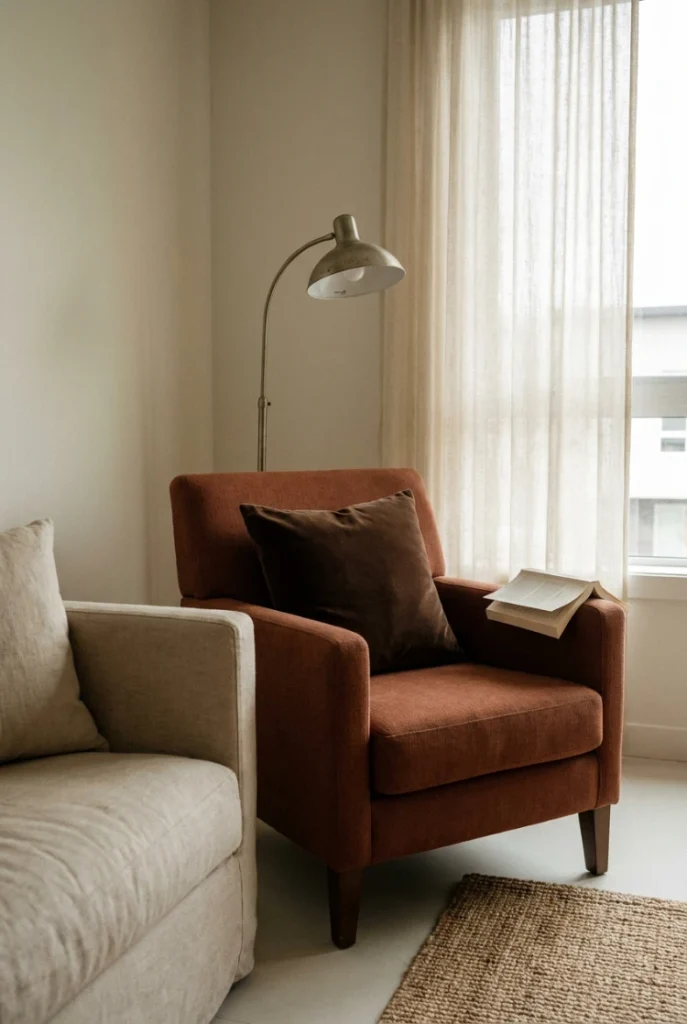
3. Check the Corner Against the 34/17/2700 Rule
Measure before you shop. Three numbers decide whether a corner will hold an adult reader, and all three are checkable in under two minutes with a tape measure and a bulb box.
Thirty-four inches of floor depth, because a full-size armchair like the POÄNG is 32 1/4 inches deep and needs clearance behind it. Seventeen inches of seat height, close to that chair’s published 16 1/2, so your feet sit flat and your knees stay level instead of climbing toward your chest. And 2700K on the bulb, which is the warm end of what US bulbs are labeled with, rather than the blue-white 5000K most rentals ship with.
Miss on depth and you can swap in a slipper chair. Miss on the bulb and no amount of styling saves the corner.
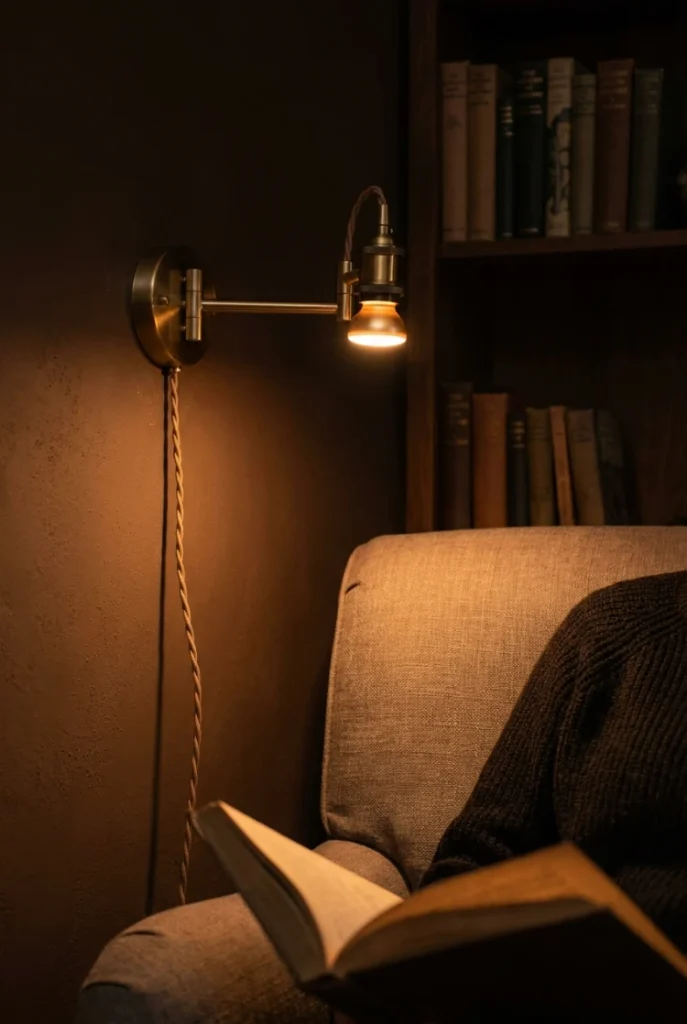
4. Put the Light Behind Your Shoulder, Not Over Your Head
Overhead light lands on the top of your head and leaves the page in your own shadow. That single placement error is why so many good-looking corners go unused after dark. The fix is to get the source behind and slightly above one shoulder, roughly at head height when seated, aimed down at the book rather than out at the room.
Sit in the chair first, then hold your phone flashlight where the lamp would go. Watch for your own shadow on the page.
Mark that spot. For most seated adults it lands just behind one shoulder, around 48 to 54 inches off the floor.
Match the fixture to your lease. A plug-in swing-arm hits that mark with one small screw or a clamp. Hardwiring hits it with an electrician.
Renters should stay on the plug-in side of that third step, and we keep a running list of plug-in wall sconces for no-wiring corners if you want somewhere to start.
Safety note: anchor tall furniture to the wall, keep candles and cords away from fabric, and use a licensed electrician or contractor for hardwired lighting, ceiling mounts, or anything structural.]
5. Claim the Bay Window Without Building Anything Into It
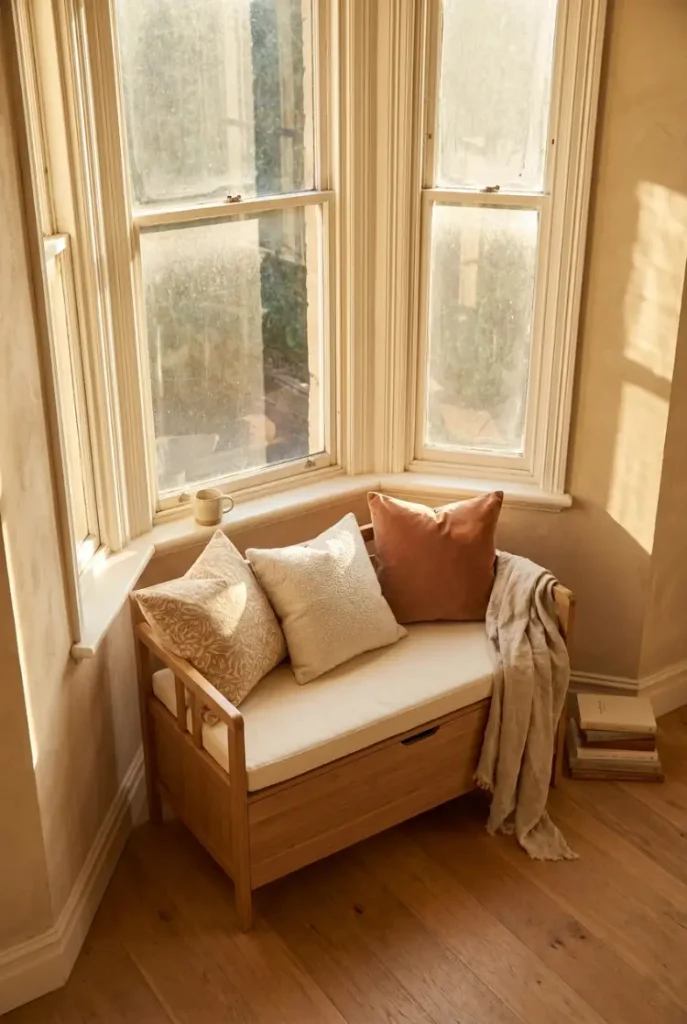
Skip the built-in. A bay window is the corner everyone wants and the one most people talk themselves out of, because every photo they have seen involves millwork, a contractor and a six-week wait. There are two ways in, and only one of them needs a saw.
| Freestanding bench, renter path | Built-in bench, owner path |
|---|---|
| A storage bench or two low cube units pushed into the bay, topped with a cut-to-size foam cushion. | Framed seat deck scribed tight to the window opening, hinged lid, trim painted to match the casing. |
| Moves with you. Leaves no holes. | Fits the odd angles a rectangle never will. |
| Gap at the back unless you scribe a filler strip. | A weekend of work, and it stays with the house. |
Either way, keep the seat depth at 19 to 21 inches. Deeper looks generous in photos and leaves your back unsupported in real life.
6. Float a Chair Behind the Sofa in an Open-Plan Room
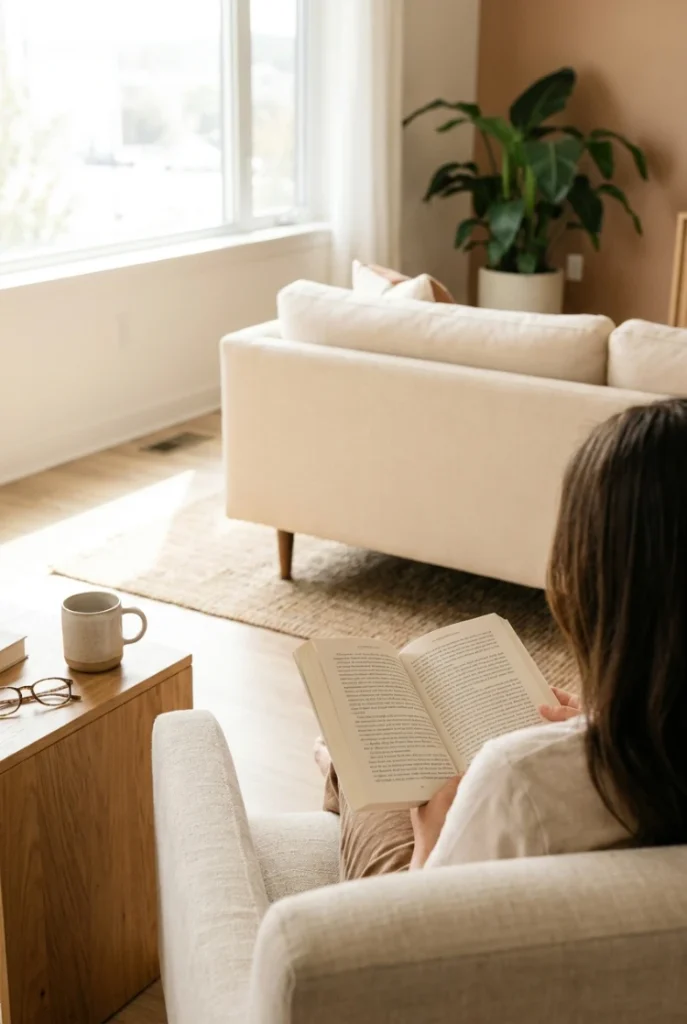
Behind the sofa is the most overlooked strip of floor in any open-plan apartment. Most people leave it as a two-foot walkway and a place where the vacuum lives. Put the back of a chair against the back of the couch, add a slim side table and a light, and that dead strip becomes a reading corner that is physically separate from the television without a single wall being involved.
💡 Quick Tip
Leave at least 30 inches of walking room behind the floated chair. Anything tighter and people will squeeze past the back of your head all evening, which is the fastest way to stop using a nook.
The payoff is a room that suddenly holds two activities at once. Someone watches. Someone reads. Nobody negotiates.
7. Make the Corner Sound Softer, Not Just Look Softer
Sound is the part nobody photographs. A corner with a hard floor, a bare wall and a single wooden chair rings faintly. You will not consciously register it, but you will find yourself getting up after ten minutes and blaming your attention span. Textiles are what fix it, and they do it by absorbing the high-frequency reflections that make a small room feel busy.
Quiet the corner in four layers
Three of those four you probably already own. Move them into the same eight square feet and listen to the difference.
8. Read at 11 p.m. Without Waking the Person Beside You
Reading in bed next to someone already asleep is the constraint nobody writes about, and it kills more bedroom reading corners than bad taste ever has. A bedside lamp throws light across the whole room. What you want instead is a narrow, aimed beam that lands on the page and nowhere else.
LEDs happen to be built for exactly this. As the Department of Energy’s LED lighting guide puts it, they “emit light in a specific direction, reducing the need for reflectors and diffusers that can trap light,” which is what makes them suited to task lighting. Pick a clip-on or a small directional sconce, put a warm bulb in it, and aim it down.
Keep the output low and the color warm. Bright cool light at midnight wakes the reader too, which rather defeats the point of reading yourself sleepy.

9. Fix the Cold Floor Before You Buy Another Throw
Cold feet end reading sessions faster than boring books. Window seats and exterior-wall corners are the two spots most likely to be sold to you in photographs and abandoned by November, because glass radiates cold and a bare floor pulls heat out of your feet within about fifteen minutes. Piling on blankets treats the symptom.
Bench in the bay, bare floorboards, thin curtain pushed to one side. Looks right in October, sits empty from December to March.
Wool rug underfoot, lined curtains closed behind the seat at night, sheepskin on the bench. Same corner, eleven usable months.
Lined curtains are the piece people skip. Drawn behind you after dark, they put a layer of fabric between your back and the glass, and the corner stops feeling like a porch.
10. Empty the Coat Closet and Keep the Door Off
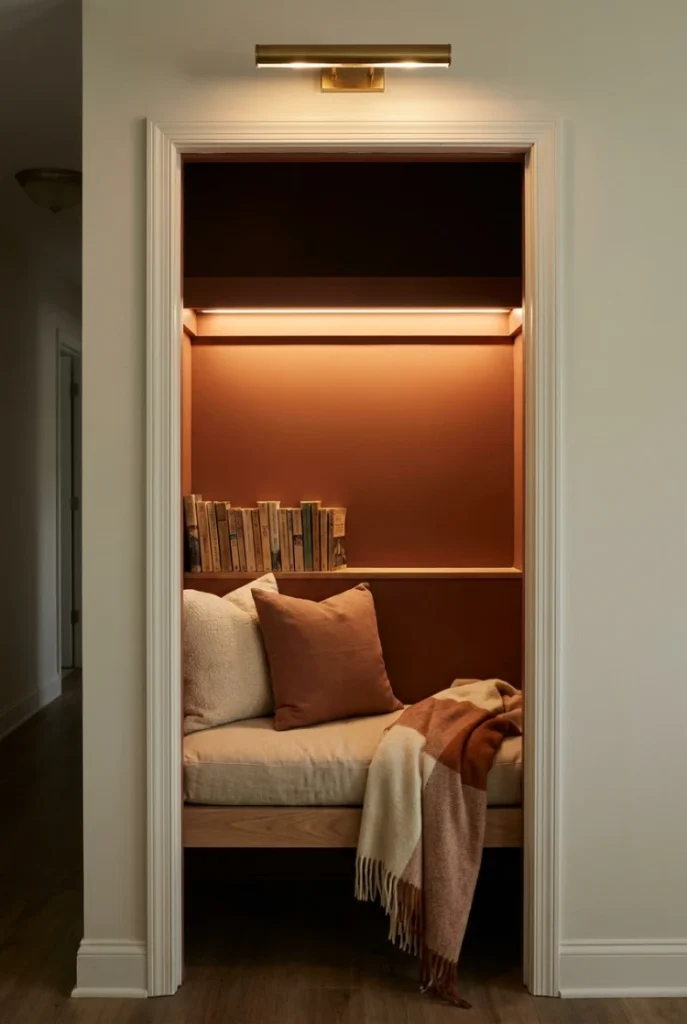
Empty closets are already three-sided rooms with a light fixture and a floor nobody walks on. Strip out the rod and shelf, take the door off its hinges, and you have the closest thing to a built-in nook that a rental will ever hand you for free.
- ▸Keep the door and the hardware in a labeled bag. You are putting them back at move-out.
- ▸A standard reach-in runs about 24 inches deep, so a floor cushion or a low bench fits where a chair will not.
- ▸Paint the inside a shade darker than the room. Depth reads as intentional rather than unfinished.
- ▸Hang a curtain on a tension rod in the door track if you want to close it off.
Our walkthrough of a full closet conversion reading nook covers the cushion sizing and the lighting order if you want to take it further. Watch the ceiling height at the back, though, because a sloped or boxed-out closet ceiling will stop you sitting upright.
11. Take Over the Landing or the Wide Part of the Hallway
Most landings hold a laundry basket and a smoke alarm. If yours is wider than about 40 inches and catches daylight from a stair window, it can carry a real reading spot, and it costs you no floor space from any room you actually use.
Measure the clear walking lane first and protect at least 36 inches of it. What is left over is your nook.
Choose shallow pieces. A slipper chair or a 16 inch deep bench works where a 32 inch armchair would block the route.
Go vertical for books with a narrow picture ledge, so nothing sticks out into the path.
One caution worth respecting: a landing is an escape route. Never let the seating or the books narrow the way out.
12. Build the Seat Into a Bookcase Wall
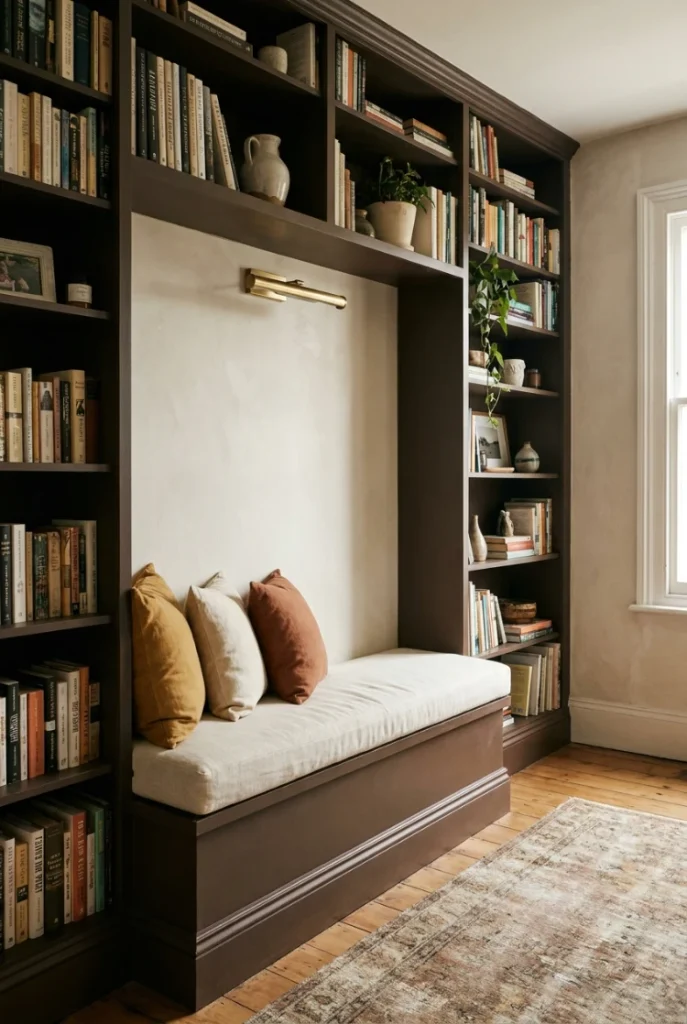
Owners who can drill get the one thing renters cannot fake, which is a nook that looks like it came with the building. Two tall bookcases flanking a low bench, all three scribed to the wall and trimmed as a single unit, turns roughly six feet of blank wall into a small library with a seat in the middle. It is the most common DIY route people search for, and it stays with the house.
Trim is what sells the illusion. A strip of baseboard carried across the bench front and a shared crown across both cases makes three separate boxes read as one built piece.
13. Secure Anything Tall Before You Style It
Before you put a single book on a new shelf, deal with the tip-over risk. A loaded bookcase is top-heavy by design, and the taller and narrower it is, the less it takes to bring it down. The federal Anchor It tip-over campaign is blunt about the fix: anchoring furniture with drawers, doors or shelves to the wall is what prevents these injuries, and it puts almost every anchoring kit under $20, with plenty of good ones under $10. Two straps per piece is normal.
⚠️ Watch Out
Renting is not a reason to skip this. Anchor It addresses movers and renters directly, and two small screw holes patch and paint over in about ten minutes. If a kit feels flimsy in your hand, buy a different one, and check that its weight rating exceeds the loaded weight of your shelf.
Do it on delivery day, before the shelves fill up. Nobody ever comes back to it later.
14. Move the Whole Setup Outside for Three Seasons
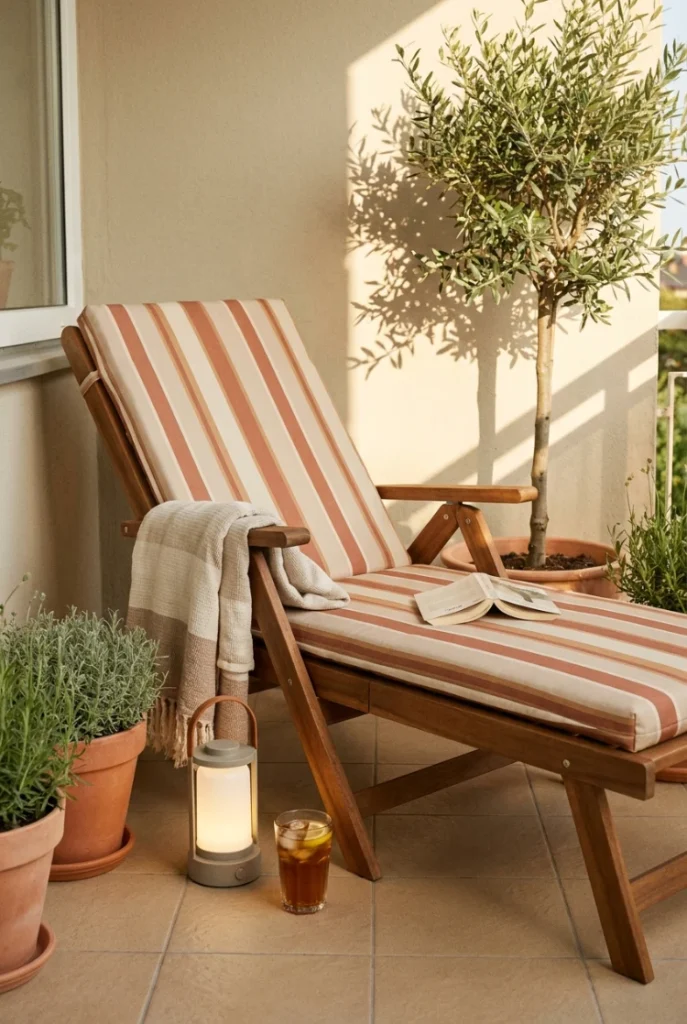
Porches, balconies and small patios give you a reading spot with no square footage cost at all, and in most of the country they are usable from April through October. A weatherproof cushion, a folding chair that actually reclines, and one solar or battery lantern is the entire kit. The pieces come inside when the weather turns.
An outdoor nook borrows space you already pay for and never has to compete with the sofa, the television or anyone else in the apartment.
One honest warning before you commit: glare. Direct sun on a page is harder to read than a dim lamp, so put the seat where something casts shade by mid-afternoon, or you will last twenty minutes.
Reading Nook Ideas for Adults Reading Nook Questions People Actually Ask
What are the essential reading nook items?
Four things, in this order: a seat with around 19 to 21 inches of depth, a light that reaches the page from behind your shoulder, a surface within arm’s reach for a mug, and books you can grab without standing up. Everything else is decoration. A corner missing any one of those four tends to sit unused, no matter how it photographs.
What are some good reading nook furniture options for adults?
A full-size armchair with an ottoman is the most forgiving choice, and the IKEA POÄNG is the common starting point at $139 to $249 for the fabric versions, with the ottoman at $80. Where depth is tight, a slipper chair, a 16 inch deep bench, or a chaise along a wall all work. Bean bags and floor cushions look good and stop supporting your back after about forty minutes.
What are some good ideas for a reading nook in a small space?
Use space that is already dead rather than carving into a room. An emptied coat closet with the door removed, the strip behind a floated sofa, a wide landing, or a bay window with a freestanding bench all give you a nook without losing usable floor. Shallow furniture is the trick. Keep at least 36 inches of clear walking lane and build into whatever is left.
What are common mistakes in book nook design?
The big three are overhead lighting that leaves the page in your shadow, a seat too deep to support your lower back, and no surface for a drink. Add two more that go unmentioned: a hard, bare corner that sounds harsh and quietly drives you out, and a window seat with a cold floor under it that goes unused every winter.
How do you make a reading nook feel cozy without making it dark?
Warmth comes from color temperature and texture, not from low light. Use a 2700K bulb rather than a 5000K one, aim it at the page instead of the room, and layer a pile rug, lined curtains and one heavy throw. You get a soft, quiet, warm-toned corner that is still bright enough to read a paperback in comfortably.
Can you build an adult reading nook yourself without power tools?
Yes, and most of this list is designed that way. Freestanding benches, floated chairs, tension-rod curtains, clip-on lights and closet conversions need no drilling at all. Power tools only enter the picture for a built-in bench or a bookcase wall. One exception worth making: anti-tip anchors for tall shelving do need a drill, and they are not optional.
Your Corner Is Probably Already There
Almost every reading nook in this list started as floor someone had written off. Behind the couch. Inside the coat closet. The wide bit of the landing. You do not need a bigger apartment, you need thirty-four inches of depth, a light in the right place and a warm bulb.
Pick one idea and try it this weekend before buying anything. Move the chair, change the bulb, put the rug down, and see whether you stay in it for an hour.
Save the ideas you want to come back to on Pinterest, and check number three with a tape measure before you order a single thing.
Keep reading
More cozy nook ideas
 Nook Ideas
Read →
Nook Ideas
Read →
18 Library Reading Nook Ideas for Renters (No Drilling Required)
No drill, no paint, no awkward email to your landlord. You can still build a library reading nook with full shelves, a…
 Small Spaces
Read →
Small Spaces
Read →
14 Modern Apartment Decor Ideas That Make a Small Room Feel Bigger
Four hundred and sixty square feet. That is the average size of a new US studio apartment, according to RentCafe’s 2025 numbers,…
 Home Library & Bookshelves
Read →
Home Library & Bookshelves
Read →
21 Modern Bookshelf Ideas for Small Spaces That Actually Fit
Your books are in three stacks on the floor and every bookcase you like is 32 inches wide. That is the whole…
One Comment