
Floating Shelf Ideas Around a Reading Chair That Actually Frame Your Seat

Picture 4 pm light, a linen throw over the arm of your chair, and one warm bulb glowing off a wood shelf you can reach without standing up. That is the corner we’re building with reading nook floating shelves, and you don’t need a bay window or your landlord’s blessing to do it.
Here’s the promise, cashed right away: three shelves, placed at the right heights around your chair, turn a plain wall into a nook that holds your current read, your lamp, and your tea, all within arm’s reach. Below are nine layouts, each with a real spacing number, a shelf you can actually buy, and the one mistake that ruins it.
If you rent and can’t drill, skip ahead. Idea 3 is built entirely for you.
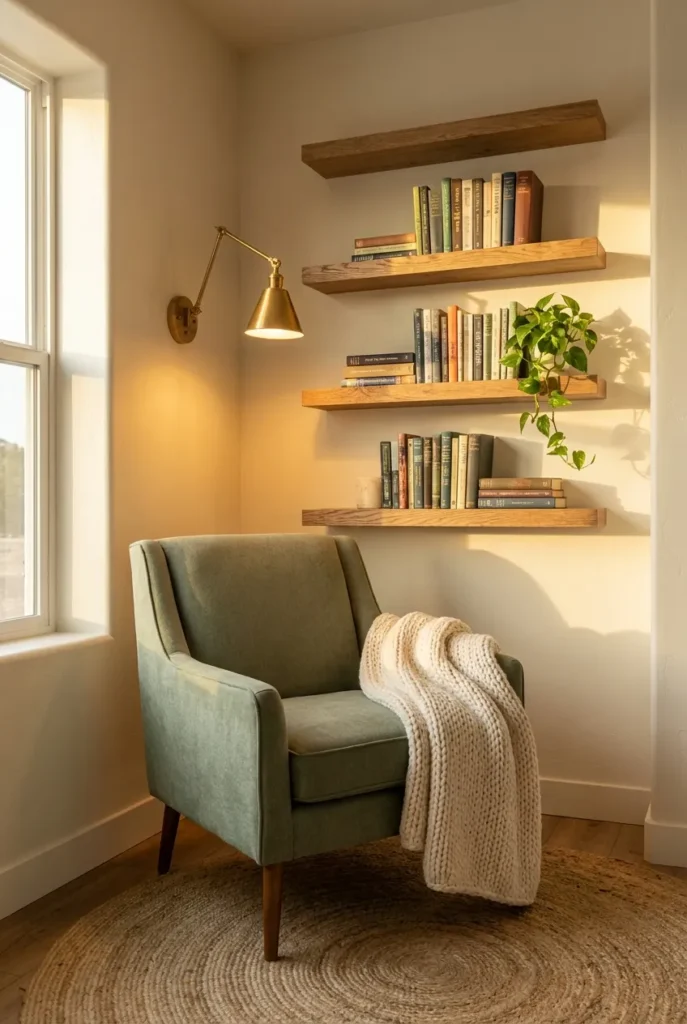
The 3 Shelf Heights That Frame a Reading Chair (start here)
Before the pretty stuff, the geometry. This is the content most shelf guides skip: your shelves get placed around the seated you, not the standing you.
Three zones do the work:
- Reach zone. The shelf holding your current book and mug sits so you can touch it without leaving the seat. From a standard chair, that lands roughly at 24 to 28 inches above the seat cushion, off to your dominant-hand side.
- Eye zone. The shelf you actually look at, styled with a few spines and one object, sits near seated eye level, about 40 to 46 inches off the floor.
- Sky zone. Anything above that is display only. Put the heavy stuff low and the light stuff high.
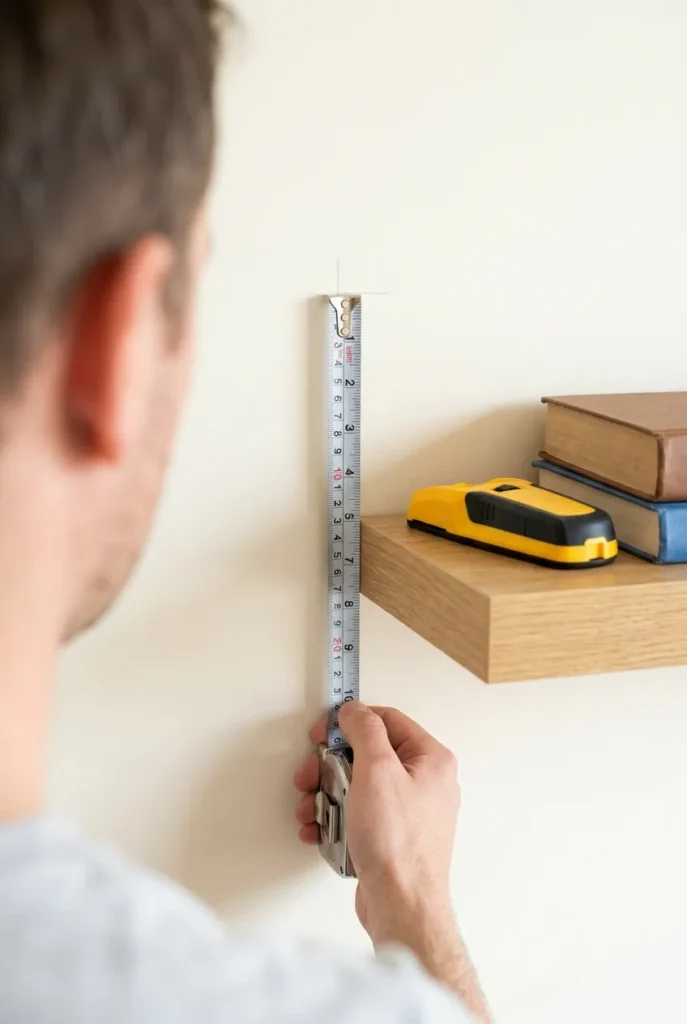
A quick word on weight, because this is a safety thing, not a style thing. Wall-mounted shelves loaded with books pull hard on the wall, and unsecured wall units are a real tip-over hazard. The U.S. Consumer Product Safety Commission’s furniture and wall anchoring safety campaign is the plain-English source for doing this right: hit the studs, or use anchors rated well above your load.
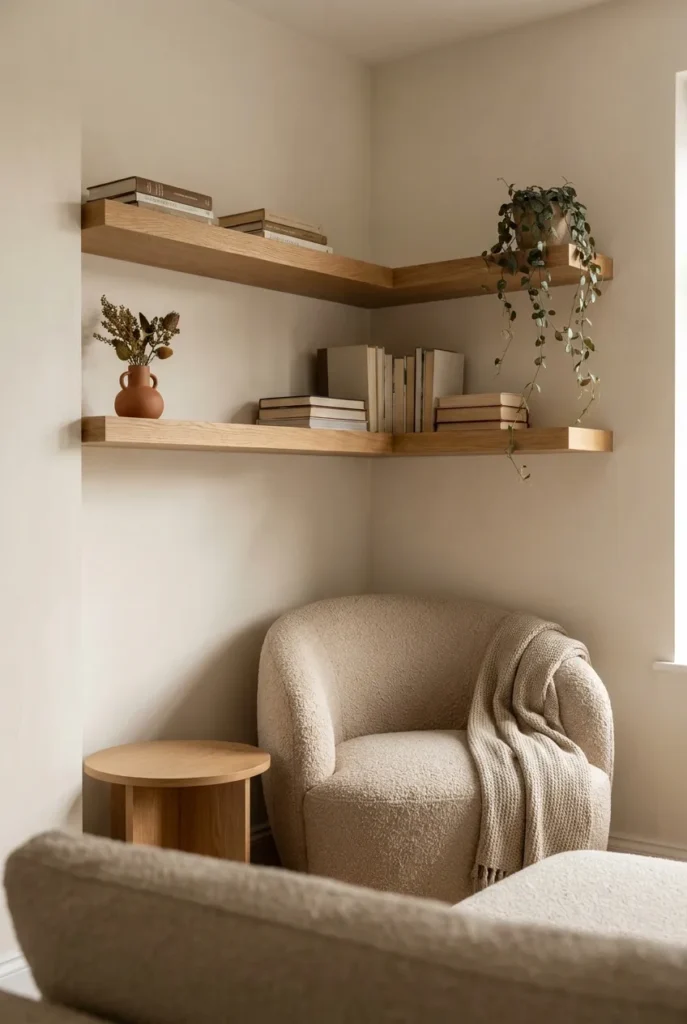
1. The L-Wrap Corner (best for an armchair in a corner)
Run one shelf along the wall behind the chair and a second down the side wall so they meet in the corner, wrapping the seat like a bracket. This is the layout the top Pinterest pins keep showing, and it works because it hugs the chair instead of floating off to one side.
Use two shelves around 30 to 36 inches long, one per wall. A 24-inch round side table archetype tucks under the corner where they meet.
Failure mode: if both shelves sit at the same height, the corner reads flat. Stagger them by at least 8 inches so the eye moves.
2. The Stacked Column (best for a narrow wall)
No room to go wide? Go up. Stack three short shelves in a vertical column beside the chair, each one 18 to 24 inches long. This is the move for a slim wall between a window and a doorframe, the exact spot the primary Little Nook reader is usually staring at.
Space them about 12 inches apart so a standard hardback stands upright without tilting. That spacing number matters more than people think, and it’s the difference between books that stand and books that slump.
Failure mode: cramming five shelves in because you can. Three breathe. Five look like a filing system.
3. The No-Drill Renter Setup (zero holes, deposit safe)
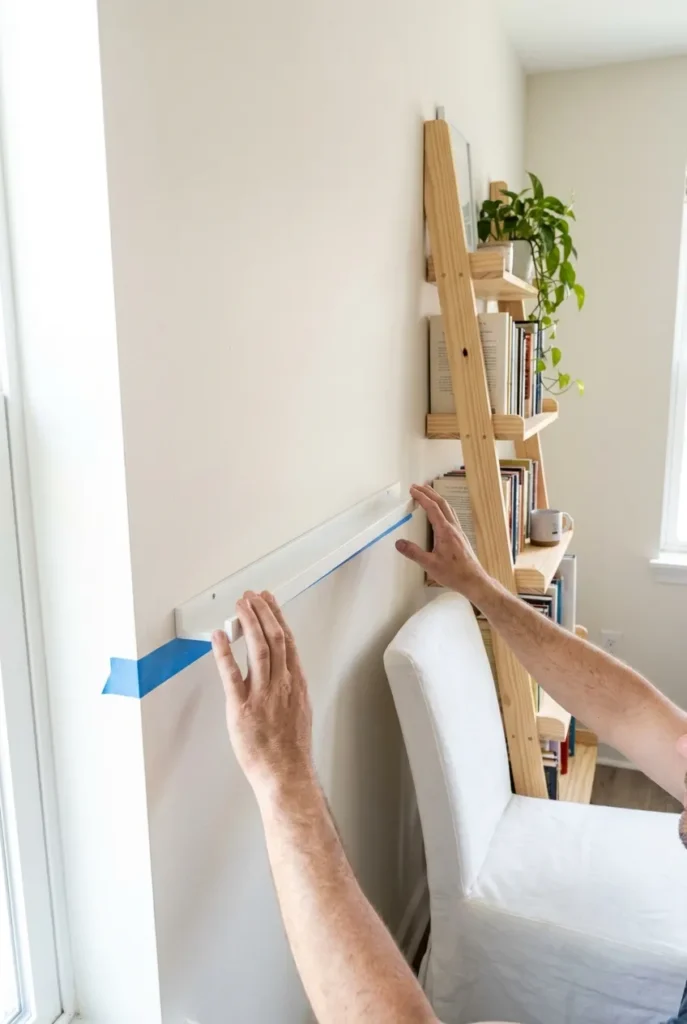
Renters, this one’s yours, and it comes before anything fancier on purpose. You can build a floating-shelf look without a single drilled hole using a leaning ladder shelf beside the chair plus one adhesive-mounted picture ledge for your current read.
Honest limits, because this is where guides lie to you: adhesive strip ledges hold light loads only, usually a few paperbacks and a candle, not a row of hardbacks. Keep the heavy books on the floor-standing ladder shelf and treat the stuck-on ledge as display.
Real cost band the publisher has seen around $60 to $110 for a ladder shelf plus a ledge.
Failure mode: trusting an adhesive ledge with hardcovers. It lets go at 2 am and you’ll never sleep near that wall again.
This layout also pairs well with a stretch-out seat instead of an upright chair. If you’d rather recline, these daybed reading nook ideas for a spare corner show how to build the seating side of the same corner.
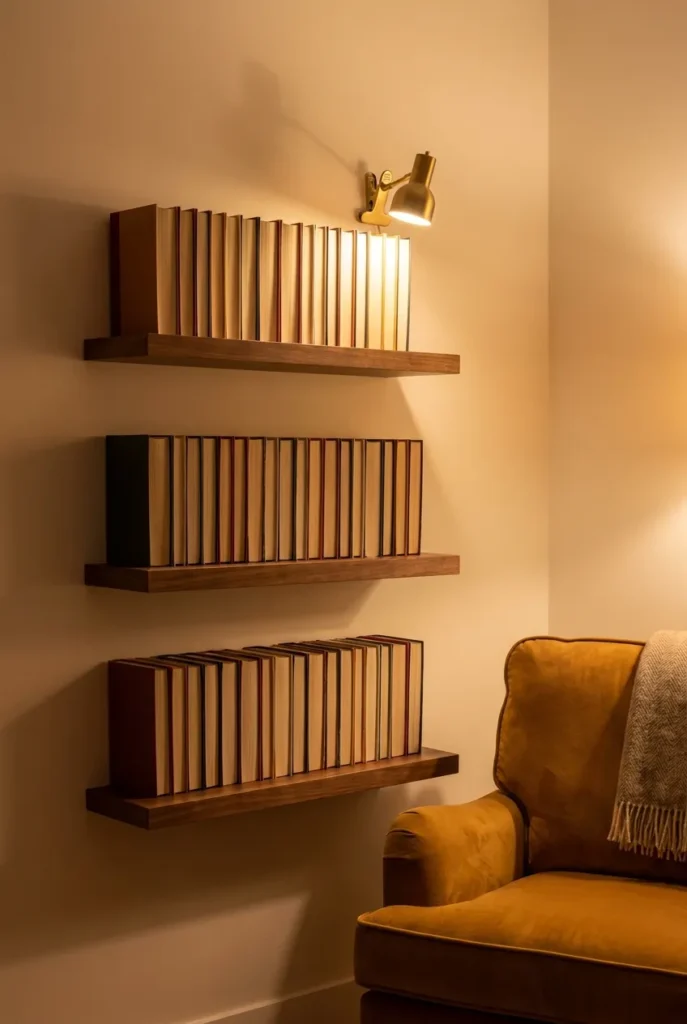
4. The Picture-Light Gallery Shelf (best for mood)
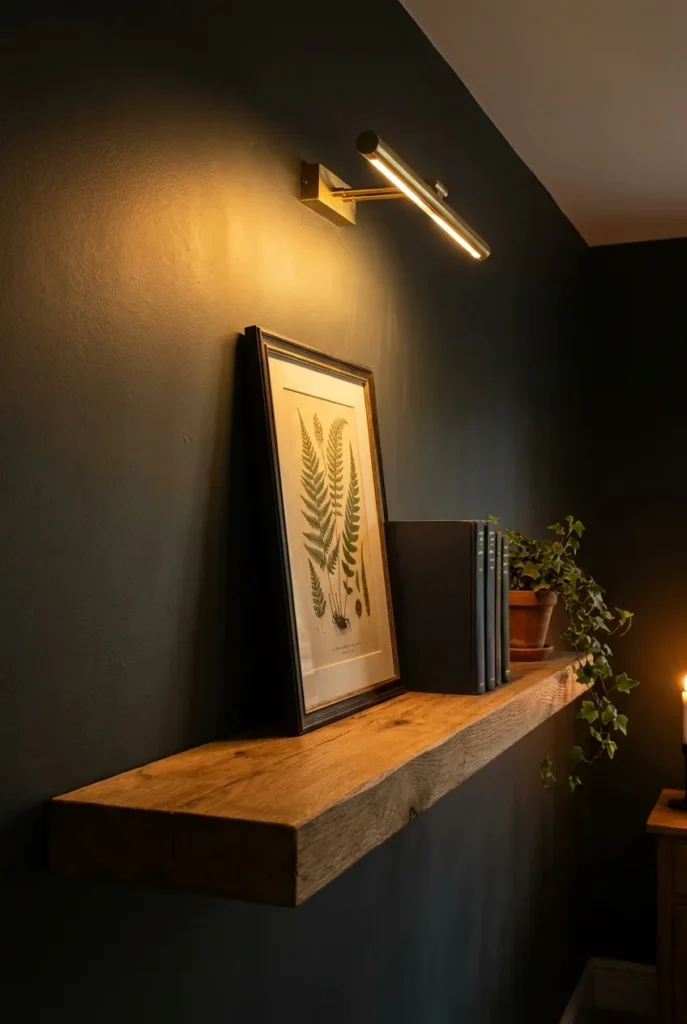
One long shelf at eye level, styled like a gallery ledge: a couple of standing books, one framed print, one small plant. Then wash it with a picture light or a plug-in sconce set to a warm bulb.
Color temperature is the whole game here. Warm home light lands around 2700K, and per the U.S. Department of Energy’s guidance on choosing energy-efficient light bulbs, that warm tone is the one that flatters wood finishes and furniture. Cool white will make your cozy nook look like a dentist’s office.
A single shelf here runs 36 to 48 inches. Depth of 6 inches holds a standing hardback with room to spare.
Failure mode: a bright 4000K bulb. Right shelf, wrong light, dead mood.
5. The Backlit Floating Shelf (the Pinterest hero)
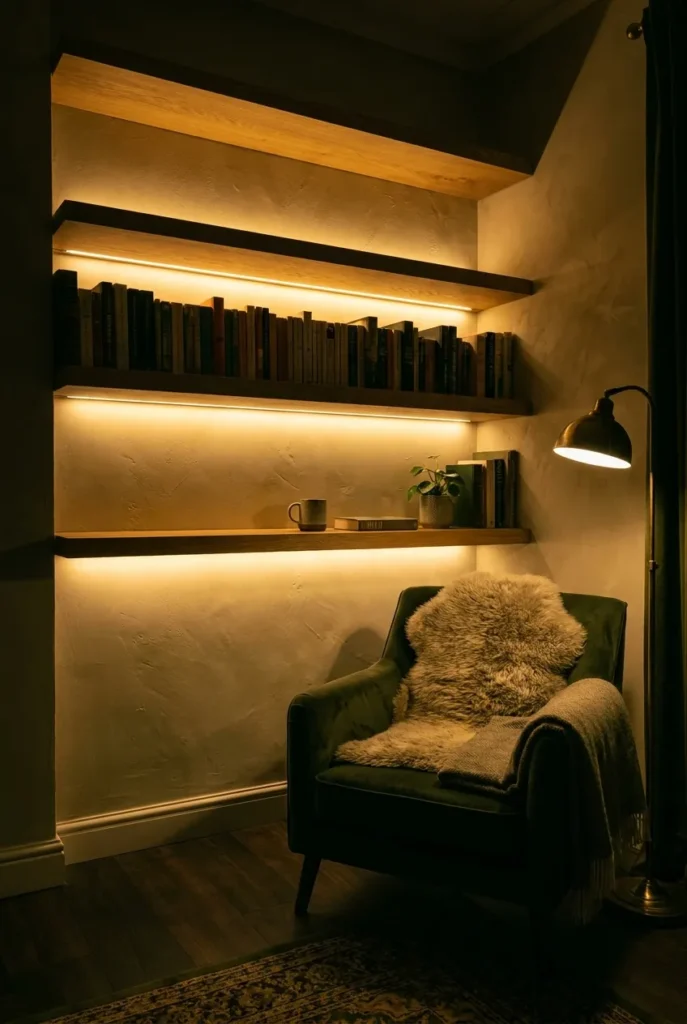
This is the shot that stops the scroll: shelves with an LED strip hidden underneath, so warm light spills down the wall behind your chair. It reads expensive and costs about $15 to $25 in strip lighting.
Tuck a warm-white LED strip (again, aim for that 2700K range) into the underside lip of each shelf and run it to a dimmer. Keep the strip fully hidden behind the front edge so you see the glow, never the diodes.
Failure mode: a visible strip or a blue-white strip. Both instantly cheapen it.
6. The IKEA Ledge Hack (cheapest real build)
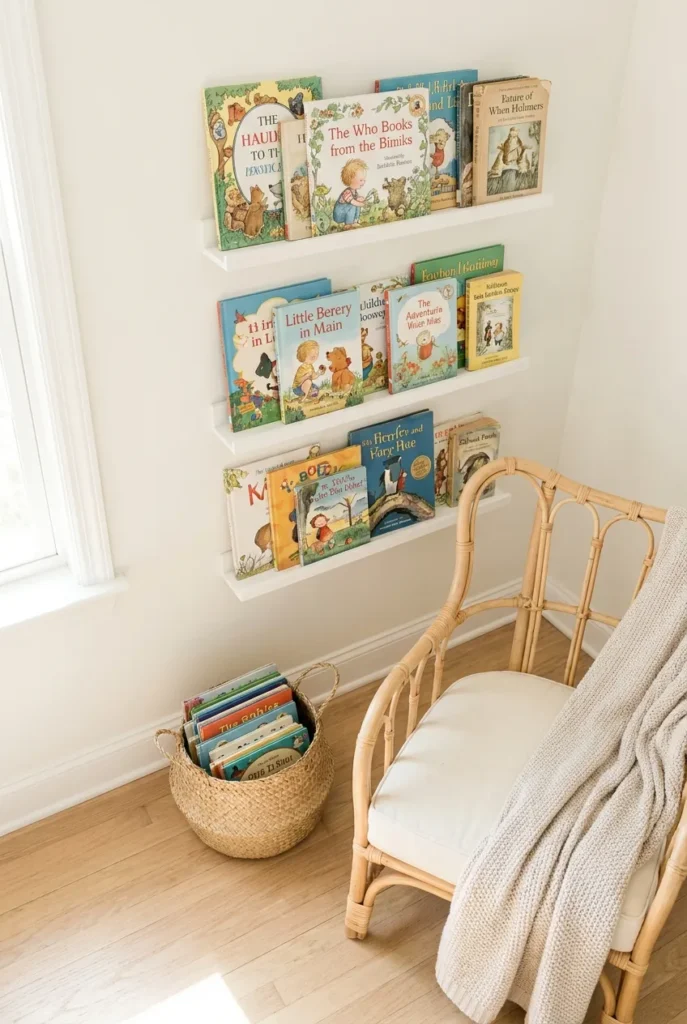
The classic budget path: a row of IKEA-style spice or picture ledges turned into forward-facing book displays beside the chair, covers out. Kids’ and cozy corners love this because you see the art, not just spines.
Ledges like these run narrow, about 4 inches deep, which is plenty for front-facing books but too shallow for deep hardbacks stood sideways. Plan around that.
Failure mode: overloading a shallow ledge until the front rail can’t hold the lean. Front-facing books are heavier than they look.
For a bigger version of this idea that climbs the whole wall, the no-carpenter reading nook bookcase wall builds scale these ledges into a full floor-to-ceiling surround.
7. The Asymmetric Float (best for a modern look)
Skip the matched rows. Mount shelves of different lengths at offset heights so they scatter across the wall behind the chair like a considered afterthought. Japandi and mid-century corners live on this look.
Vary the lengths clearly, say a 36-inch shelf paired with a 18-inch one, so the asymmetry looks intentional instead of accidental.
Failure mode: near-equal lengths at near-equal heights. That’s not asymmetry, that’s a mistake wearing a costume.
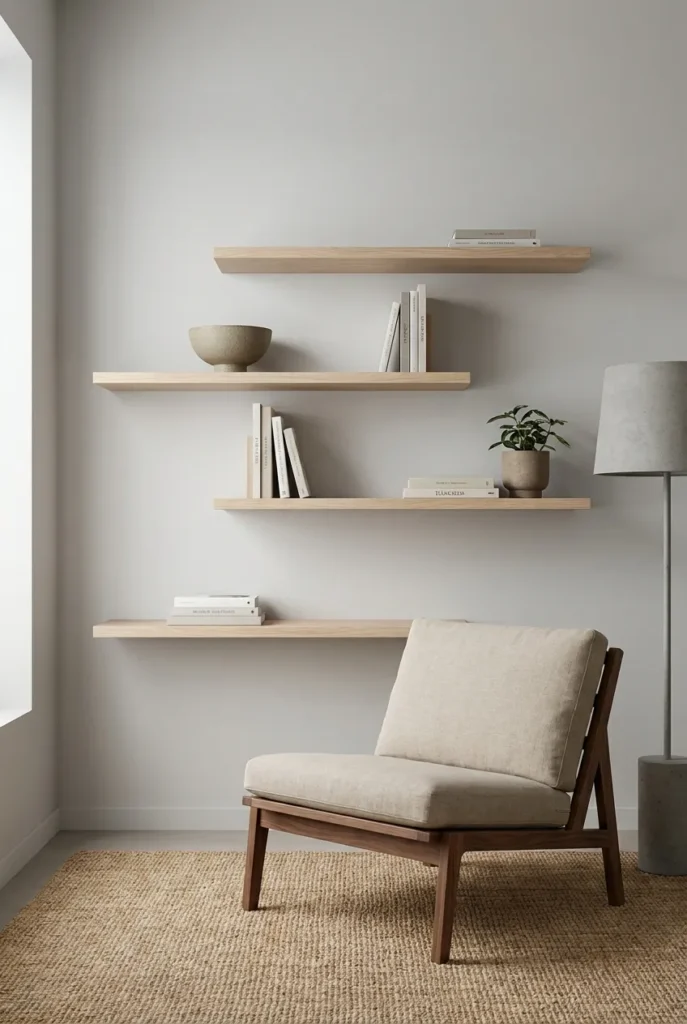
8. The Reading-Chair Halo (shelves that arch overhead)
Run shelving up one side, across the top, and down the other, framing the chair in a soft arch or squared surround. It turns an ordinary armchair into a built-in-looking hideaway, no millwork required.
Keep the top shelf high enough to clear your head when you stand, at least 6 inches above your standing reach, and anchor everything into studs. This one carries real weight overhead, so the safety piece is non-negotiable.
Failure mode: skipping stud mounting on the overhead run. A book falling on your head from that height ends the cozy fast.
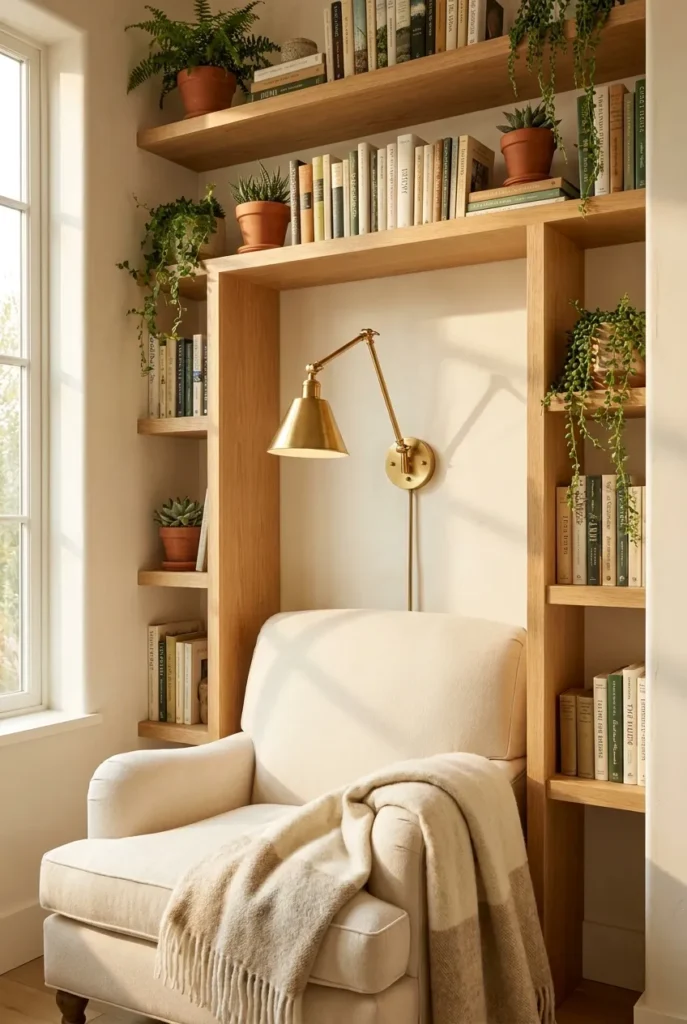
9. The One-Shelf Minimalist (best when you have almost no wall)
Not every corner needs a system. Sometimes one well-placed shelf, in the reach zone, holding your current read, your lamp base, and a mug, is the entire nook. This is the honest answer for the reader with 30 inches of wall and a rented studio.
One shelf, 24 to 30 inches, at that 24 to 28 inch reach height above the seat. Done.
Failure mode: treating one shelf like storage and piling it. One shelf is a stage, not a cabinet. Three objects, maximum.
There’s a texture payoff people forget too: run your hand along a real wood shelf versus laminate and you feel the difference every time you reach for your book.
Reading Nook Floating Shelves Frequently Asked Questions
How deep should floating shelves be for books?
Around 6 inches deep holds standard hardbacks standing upright with a little breathing room. Narrow 4-inch picture ledges work only for front-facing display or paperbacks, not deep books stood sideways.
How far apart should reading nook shelves be spaced?
About 12 inches of clearance lets a standard hardback stand up straight without tilting. Drop to 9 or 10 inches only for paperbacks and small display objects.
Can I put floating shelves in a rental without drilling?
Yes, for light loads. Adhesive picture ledges hold a few paperbacks and a candle, while a leaning ladder shelf carries the heavy hardbacks with zero holes. Never trust an adhesive ledge with a full row of hardcovers.
Are floating shelves strong enough to hold books?
They can be, but only when anchored correctly. Books are heavy and concentrated, so mount into wall studs or use anchors rated well above your load, and follow the CPSC’s anchoring guidance so nothing tips or pulls out.
What IKEA shelves work best for a reading nook?
The narrow picture and spice ledges are the go-to hack for cover-out book display beside a chair, and standard longer wall shelves handle upright book rows. Match the depth to how you plan to stand the books.
Do floating shelves work in a corner reading nook?
They’re ideal there. Wrapping two shelves around the corner in an L shape hugs the chair and uses the dead corner wall that furniture usually can’t reach.
What color light should I use on reading nook shelves?
Warm light around 2700K. The Department of Energy notes this warm tone flatters wood and home furnishings, while cooler 4000K-plus bulbs make a cozy corner feel clinical.
Your next 20 minutes
Pick your chair’s reach side, mark that first shelf at seated height, and hold a book against the wall before you drill a thing. That one test tells you more than any measurement I can give you. Start with a single shelf in the reach zone, live with it for a week, then add the second.
Safety note: shelves loaded with books pull hard on a wall and can become a tip-over risk. Anchor into studs or rated anchors, and if you’re unsure about your wall type or load, check with a qualified contractor before hanging anything heavy overhead.
Keep reading
More cozy nook ideas
 DIY
Read →
DIY
Read →
Corner Bookshelf Reading Nook Ideas: 9 Cozy Builds for a Small Space
No bay window, no reno budget, no friendly landlord required. You need one empty corner, a corner bookshelf, and a chair that…
 DIY
Read →
DIY
Read →
How to Build a DIY Book Nook Shelf Insert in One Weekend
Three pieces of foam board, a string of warm lights, and one quiet afternoon. That’s the whole recipe for a DIY book…
 DIY
Read →
DIY
Read →
Reading Nook Bookcase Wall: 9 No-Carpenter Builds That Actually Work
You don’t need a finish carpenter, a Saturday with a contractor, or a saw you’ve never used. A reading nook bookcase wall…