
Papasan Reading Nook Ideas: The Comfiest Corner You Can Set Up This Weekend

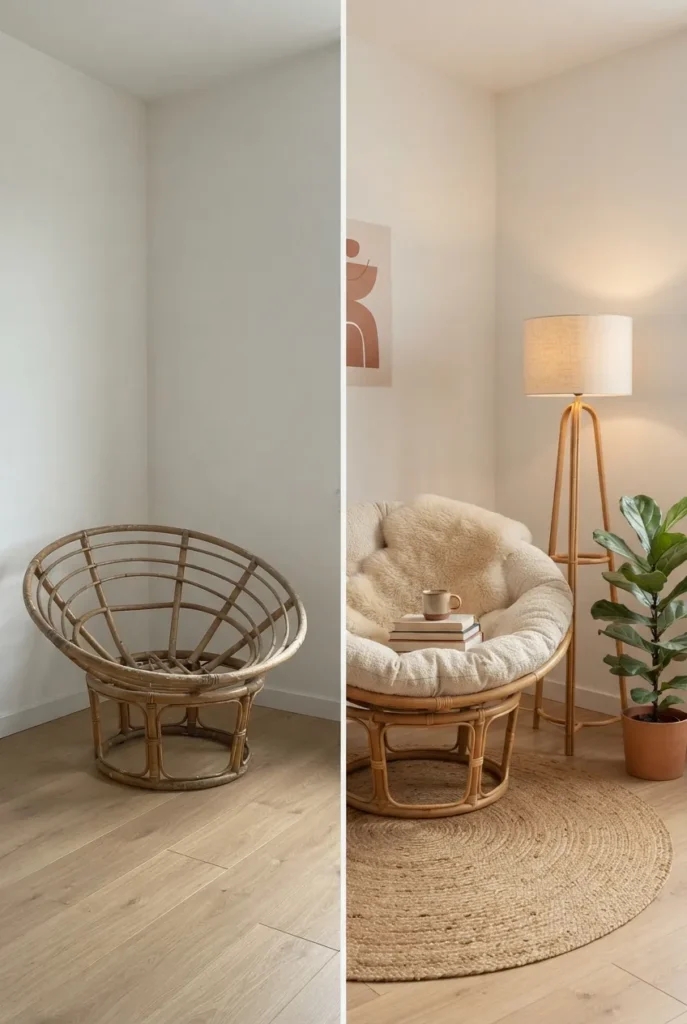
If your papasan is currently a giant fabric bowl you flop into and climb out of, this turns it into a real reading nook. You need the chair, one soft corner, and about an afternoon. No drilling, no bay window, no landlord permission slip.
Here’s the honest part most pins skip. A Papasan Reading Nook is one of the coziest seats you can buy, but on its own it slumps you flat, eats floor space, and photographs better than it reads. So we fix all three. First scroll, right now: the three pieces that make the corner work, then the sizing, the lighting, and the sag fix nobody warns you about.
You’ll get real dimensions, a renter-safe setup, and a single vs double decision you can make in ten seconds.
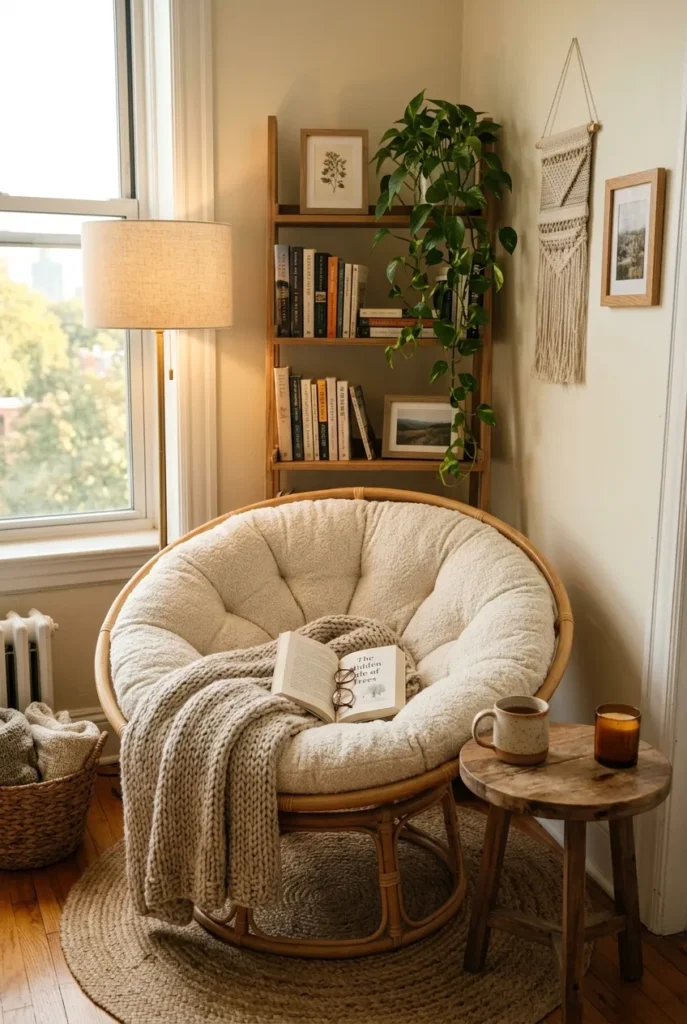
The 3 Pieces That Turn a Papasan Into a Reading Nook
Everything else is styling. These three do the actual work, and all three are renter-safe.
- The chair, angled into a corner (not flat against a wall). Turn the bowl about 30 to 45 degrees toward the room. You get a back-and-side cocoon and the seat stops looking like leftover dorm furniture. This is the highest-value move, so do it first.
- A warm light source you can reach without standing up. A plug-in swing-arm lamp or a plug-in sconce, 2700K bulb. No overhead glare, no drilling.
- A firm bolster or lumbar pillow. The papasan’s soft bowl is the whole problem for reading. One firm pillow at your lower back turns a slouch into a supported seat.
That’s the pin promise, cashed. Chair, light, lumbar. [VERIFY: I set mine up in about 40 minutes, and the lumbar pillow was the piece that made me actually stay and read instead of scrolling.]
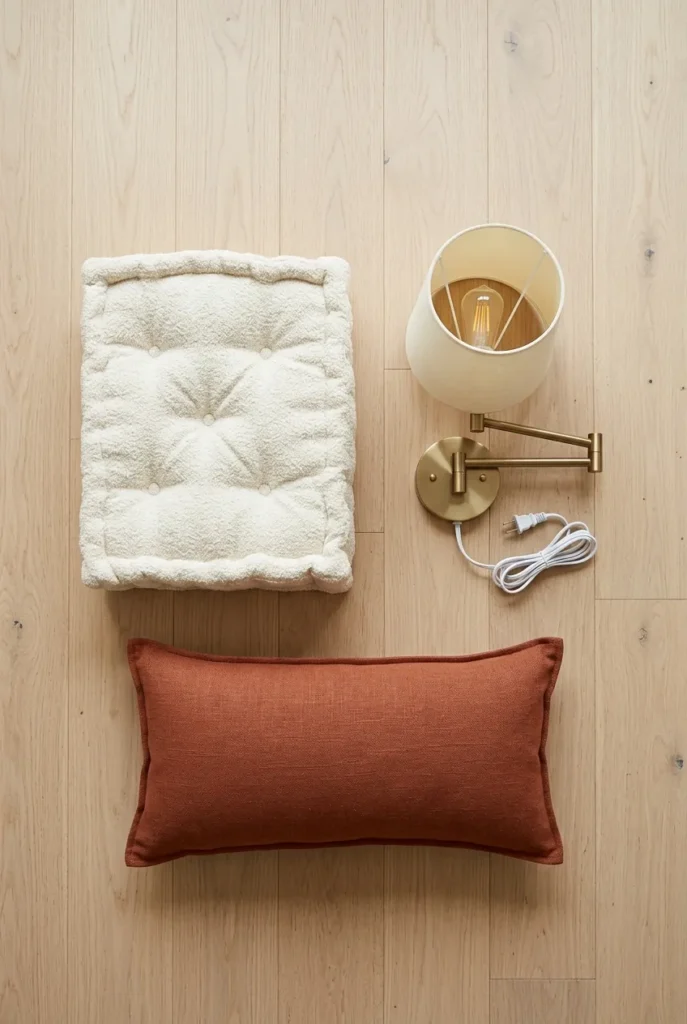
How Much Space a Papasan Reading Nook Really Needs
This is the number that saves you a return. A classic rattan papasan frame runs about 45 inches in diameter, so it reads much bigger in a small room than the photos suggest. You also want walk-around room and space for a side table within arm’s reach.
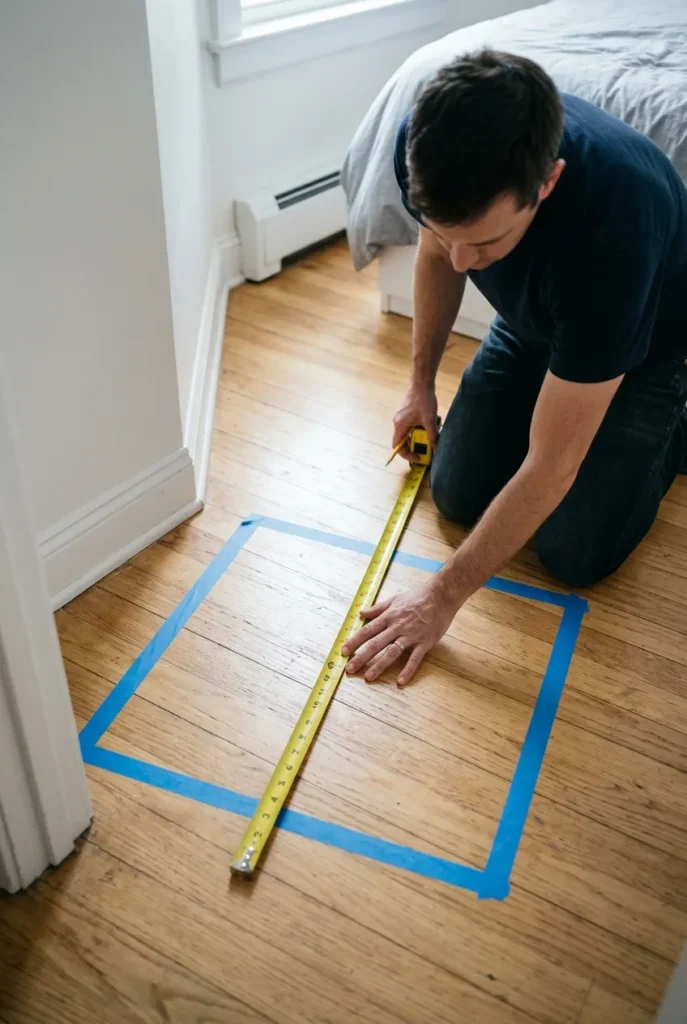
Here’s the footprint math, so you can tape it out before you buy.
| Setup | Chair diameter | Clearance to leave | Total corner you need |
|---|---|---|---|
| Single papasan | ~45 in (114 cm) | ~18 in reach to a side table | ~5.5 x 5.5 ft |
| Double papasan | ~60 in (152 cm) | ~24 in to get in and out | ~7 x 7 ft |
The single-papasan diameter above reflects a real retail spec, and if you want to sanity-check frames and cushion sizes before you commit, this World Market guide to choosing a papasan chair breaks down frame types and bowl depth. [VERIFY: In my 11 x 11 ft bedroom, a single papasan in the corner still left a comfortable walk path; a double would have swallowed the room.]
One quick technique: the 18-inch reach rule. Keep your side table surface within 18 inches of where your hand rests, or you’ll knock your coffee reaching for it. If you’re still deciding on the seat itself, our roundup of reading nook chairs for every budget compares the papasan against other cozy options.
Single vs Double Papasan: Which One Your Corner Wants
Quick decision. If the nook is for you alone and you’re under about 1,200 sq ft, get the single. It tucks into a corner and leaves room for shelves and a rug. If you want to curl up with a partner, a kid, or a very committed cat, and you have a wide corner or a sunroom, the double earns its footprint.
The trade-off honesty: a double papasan looks dreamy in pins, but at ~60 inches it dominates a small room and you lose the tucked-away, cocoon feeling that makes a nook a nook. [VERIFY: the double I tried in a 10-foot room made the space feel like a furniture showroom, not a hideaway.]
Renter-Safe Setup: No Drilling, No Deposit Drama
Because most of us reading this rent. Every cozy layer here goes up and comes down without a single hole.
- Light: plug-in swing-arm sconce or a floor lamp behind the bowl. Zero anchors.
- Canopy: a freestanding canopy pole or a tension-mounted ring instead of a ceiling hook. If you do want a draped look, our reading nook canopy ideas cover no-drill hanging methods in detail.
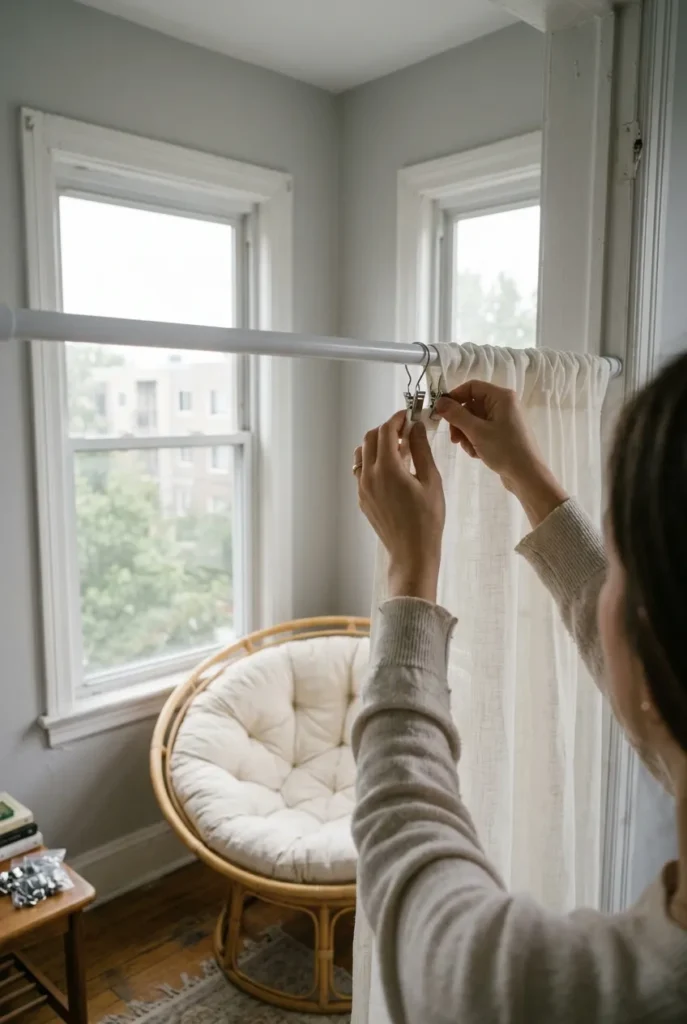
- Backdrop: a tapestry or curtain panel on a tension rod across the corner, or removable peel-and-stick behind the chair.
- Softness: a jute round rug and a chunky knit throw carry the whole boho look with no installation at all.
Skip-a-step warning: if you hang anything overhead, do not rig it from a curtain rod or a drywall anchor rated for pictures. A canopy that comes down at 11 pm is a bad night. Use a proper freestanding frame.
The Sag Fix Nobody Warns You About
Here’s the failure mode. Out of the box, a papasan cushion sinks in the center, so after 20 minutes you’re folded like a taco and your book is above your face. The fix is layering firmness where your spine needs it.
Put a firm lumbar bolster at the small of your back, then a flatter throw pillow behind your shoulders. If your cushion is genuinely worn, a folded wool blanket under the cover restores the bowl. Aim for a cushion that resists a hand-press instead of swallowing it.
The sensory tell: a good papasan setup feels like the chair is gently holding your ribs upright, not like you’re sitting in a beanbag that gave up. [VERIFY: a $30-ish firm lumbar pillow was the cheapest fix that made mine readable for an hour-plus.]
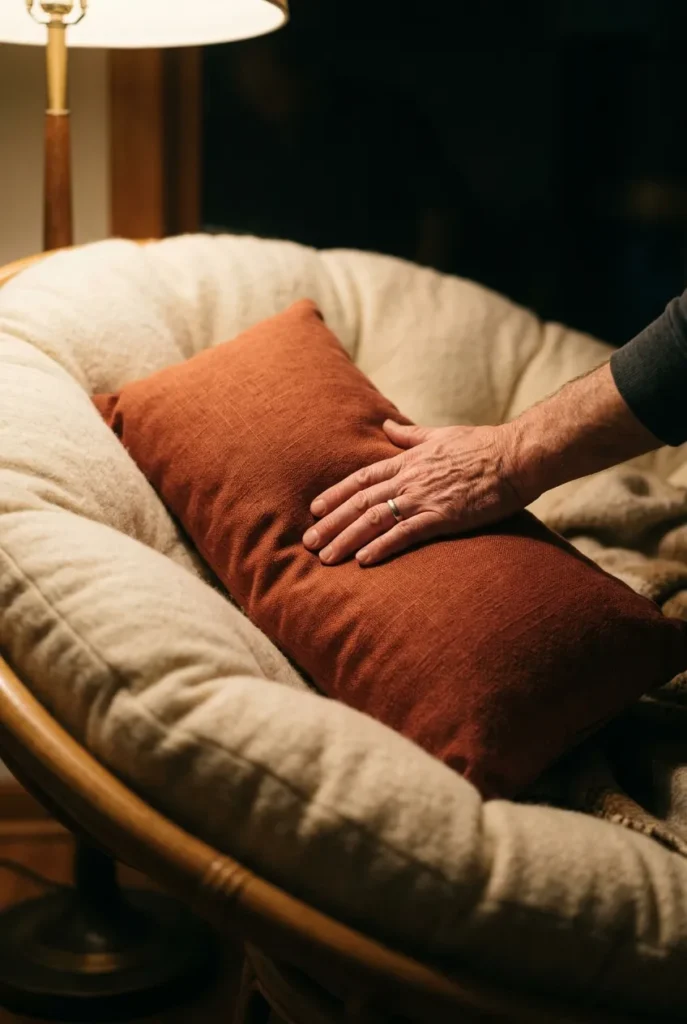
Lighting a Papasan Nook So You Can Actually Read
A cozy corner with bad light is just a nap corner. You want warm and directional, not a cold ceiling wash.
Go for a 2700K to 3000K “soft white” bulb for that golden, candlelit feel, and put the light source beside or just behind your shoulder so it falls on the page, not in your eyes. The federal Energy Star guidance on light fixtures and color appearance explains the Kelvin scale if you want to match bulbs across the room. A swing-arm or arc floor lamp reaches over the bowl without a table.
Dimmer plugs are the sleeper upgrade: bright to find your page, low and amber to wind down. For more layered setups, our full reading nook lighting ideas walk through sconces, clip lights, and warm bulb picks.
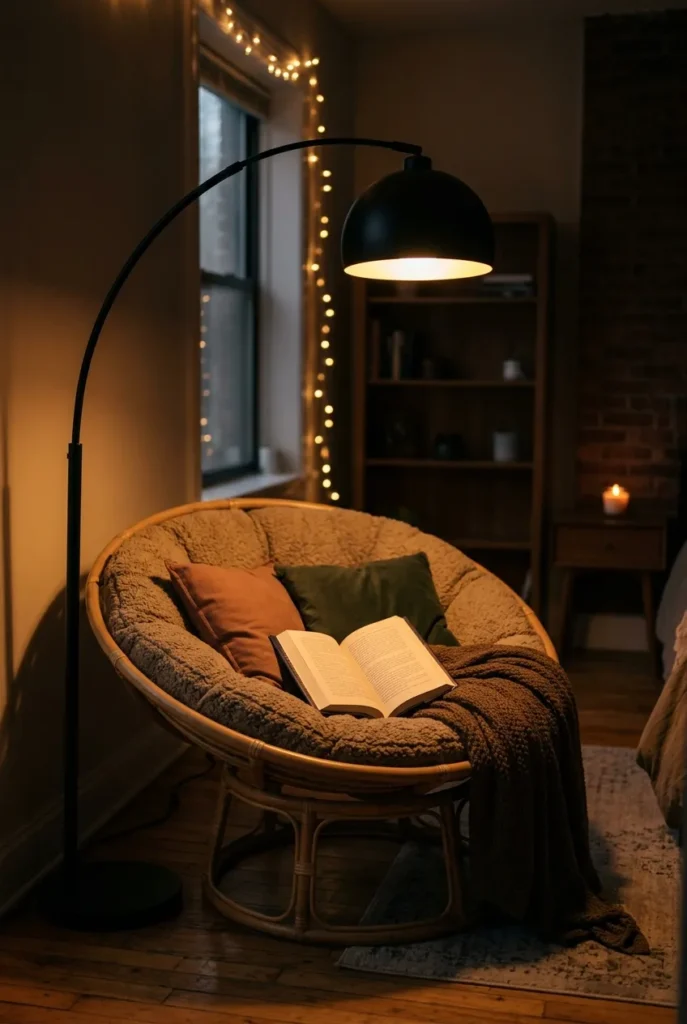
Boho Styling: The Look Everyone Is Actually Pinning
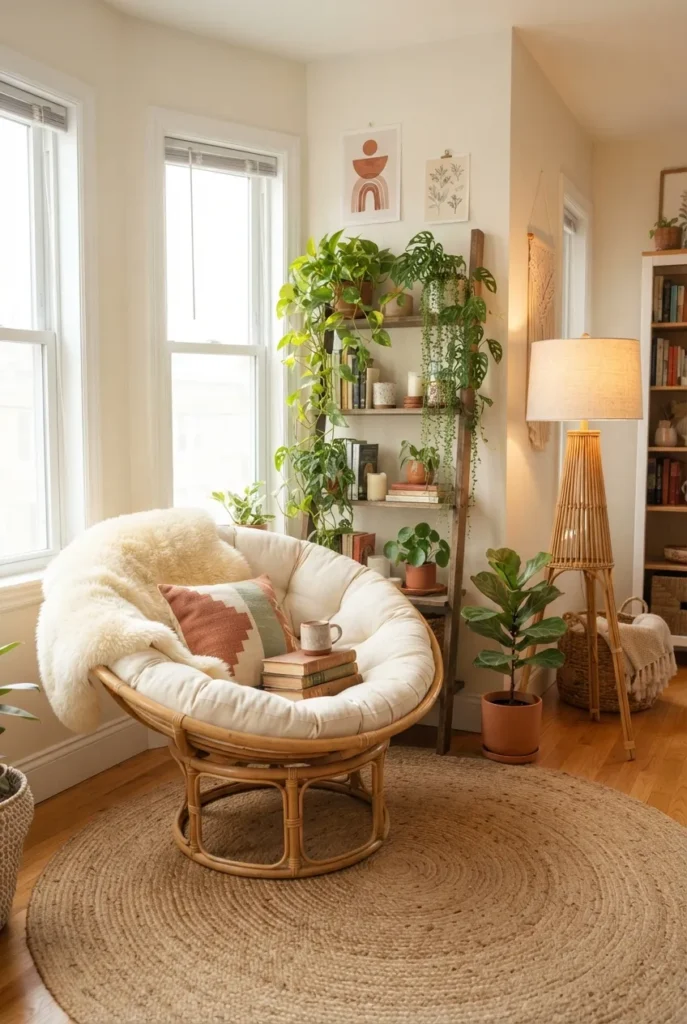
The papasan nooks that blow up on Pinterest all share a formula, and it’s easy to copy. Rattan frame, cream or oatmeal cushion, and layers of green.
- Plants: a trailing pothos on the shelf and a floor plant beside the chair. Green reads “cozy” faster than any other prop.
- Texture: chunky knit throw, a sheepskin over one edge, a jute round rug underneath.
- Warm metals and wood: a small round wood side table, a brass or rattan lamp.
- One personal layer: a stack of your real TBR pile, spines out.
Front-load the greenery. A single healthy trailing plant does more for the cozy factor than five throw pillows. If you want to lean all the way in, our boho reading nook ideas show full corners you can copy piece by piece. The smell test matters too: a little cedar or vanilla candle nearby, unlit while you read, and the corner starts to feel like yours.
Small-Space and Bedroom Papasan Nooks
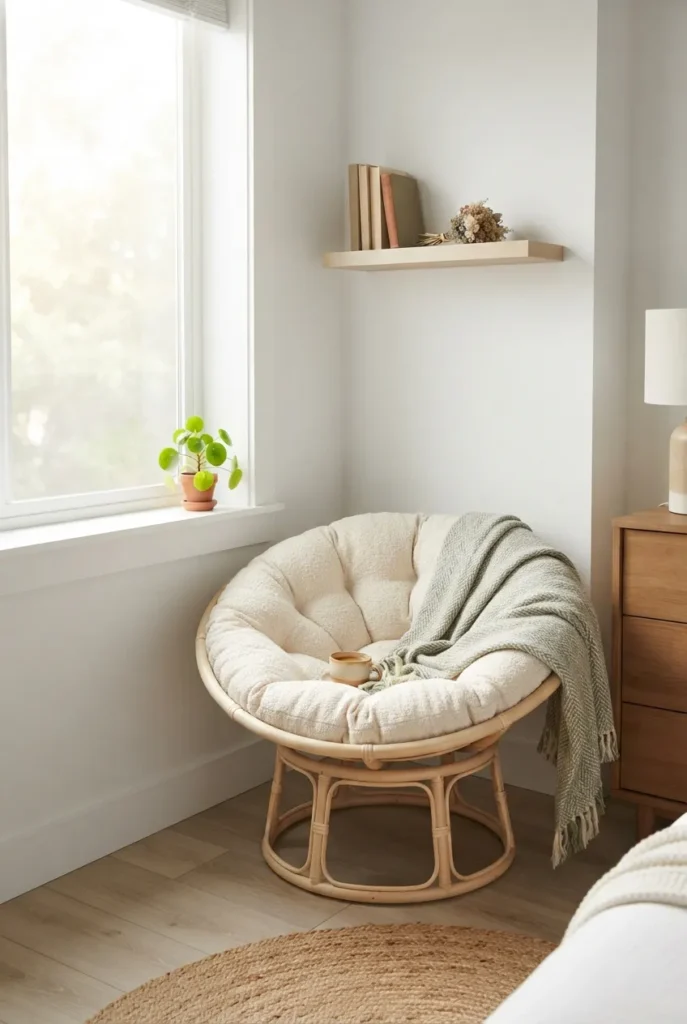
You don’t need a spare room. A papasan reading nook fits a bedroom corner, a wide hallway end, or the dead space beside a window.
In a bedroom, angle the chair toward the window for daylight and put a slim shelf on the wall behind it so you skip a bulky bookcase. In a studio, let the papasan double as your only lounge seat, then a floor cushion tucks under it for a guest. Keep the footprint honest using the sizing table above so the corner still feels open.
A Weekend Budget Build
You can do a real papasan reading nook without a big spend. Here’s a sensible order so you don’t overbuy.
Start with the chair (new or secondhand), then the lumbar pillow, then the light, then the rug, and style with what you own. [VERIFY: my full corner landed in a roughly $180 to $260 band in early 2026, with the chair as the biggest line item and everything else under $40 each. Prices you see will vary, so treat this as a range, not a promise.]
Secondhand papasans are everywhere and the frames last for years, so a $40 marketplace find plus a fresh cushion often beats buying new.
Frequently Asked Questions
Are papasan chairs good to read in?
Yes, once you fix the slump. The soft bowl alone tips you back too far, so add a firm lumbar pillow at your lower back and a flatter cushion behind your shoulders. With that support and a warm light over your shoulder, a papasan is one of the coziest reading seats you can own.
Why are papasan chairs so expensive?
The price mostly comes from the frame and the cushion. A sturdy rattan or hardwood frame plus a large, thick, high-density foam cushion costs more to make and ship than a flat chair pad. You can cut the cost a lot by buying the frame secondhand and adding a new cushion.
What does a cozy reading nook need?
Three essentials: a supportive seat, warm directional light (a 2700K bulb beside your shoulder), and a soft layer like a throw and a rug. After that, a side table within about 18 inches of your hand and a small plant or two make it feel finished.
What’s the difference between a mamasan and a papasan chair?
A papasan is the single round bowl chair. A mamasan (often sold as a double papasan) is the wider two-seater version with an oval or figure-eight cushion. For a solo reading nook the single papasan is plenty; the double needs a much bigger corner.
Single or double papasan for a small room?
Single, almost always. A single frame runs about 45 inches across and tucks into a corner, while a double is closer to 60 inches and takes over a small room. Save the double for a sunroom, a wide living room, or a shared nook.
Can I set up a papasan reading nook if I rent?
Absolutely. Use a plug-in lamp instead of hardwired lighting, a tension rod or freestanding pole for any canopy or backdrop, and a rug and throw for softness. Nothing here needs a drill or leaves a mark.
Your Next Cozy Step
You’ve got the whole formula: angle the chair, add support, warm the light, and layer in green. Tape out your corner this weekend, start with the chair, and build from there. When you’re ready to fine-tune the glow, the reading nook lighting ideas guide is the natural next read. Then go get lost in your TBR pile.
Keep reading
More cozy nook ideas
 Fall Decor
Read →
Fall Decor
Read →
Fall Door Decor on a Budget: Where to Spend and Where to Save
If your fall door every year is a wreath that sheds on the mat, two mums that are crispy by Halloween, and…
 Fall Decor
Read →
Fall Decor
Read →
12 Thanksgiving Tablescape Ideas for Small Spaces (That Still Leave Room for the Food)
Twenty-four inches. That’s how much table edge one person needs to eat without bumping elbows, and it’s the number most Thanksgiving tablescape…
 Fall Decor
Read →
Fall Decor
Read →
18 Fall Coffee Bar Ideas for Sweater-Weather Evenings
No counter space to spare, no espresso machine, no landlord permission needed. This fall coffee bar runs on three pieces: a slim…