
Your Green Reading Nook, Three Ways: Sage, Olive, and Forest

If your reading corner right now is a lamp you never turn on and a stack of books doubling as a side table, green is the fastest way to fix the whole mood. You rent, you have one weird corner, and your budget is real. Good. This is built for you, mobile in bed, thumb already scrolling. We are going to pick your exact Green Reading Nook, layer it so it feels like a hideaway instead of a paint swatch, and keep every option no-drill and deposit-safe.
Here is the promise, cashed right now: three greens, three feelings, one corner. Pick your tone first, everything else gets easy.
Start Here: Sage vs Olive vs Forest (Pick Your Green First)
The mistake people make is buying a green chair before choosing a green mood. Tone decides everything after it: your throw, your bulb, your plants. So decide this in the next 30 seconds.
Sage is the soft one. Gray-green, quiet, reads bright and airy, and it plays nice in a small studio because it recedes instead of closing in. Olive is the warm middle: earthy, a little retro, cozy without going dark. Forest is the drama. Deep, moody, cocoon energy, and it swallows light fast, so it wants a real lamp plan.
Here is the cheat sheet I keep coming back to:
| Tone | Feels like | Best for | Watch out for |
|---|---|---|---|
| Sage | Calm, airy, scandi | Tiny or dark corners | Can read cold with white light |
| Olive | Warm, earthy, retro | Living room + bedroom corners | Muddy next to orange wood |
| Forest | Moody, cocoon, dark academia | Rooms with good daylight | Eats light, needs 2 sources |
If you want the deepest end of this, the full moody build lives in our forest green reading nook guide, where the mossy, tucked-away version gets its own step list.
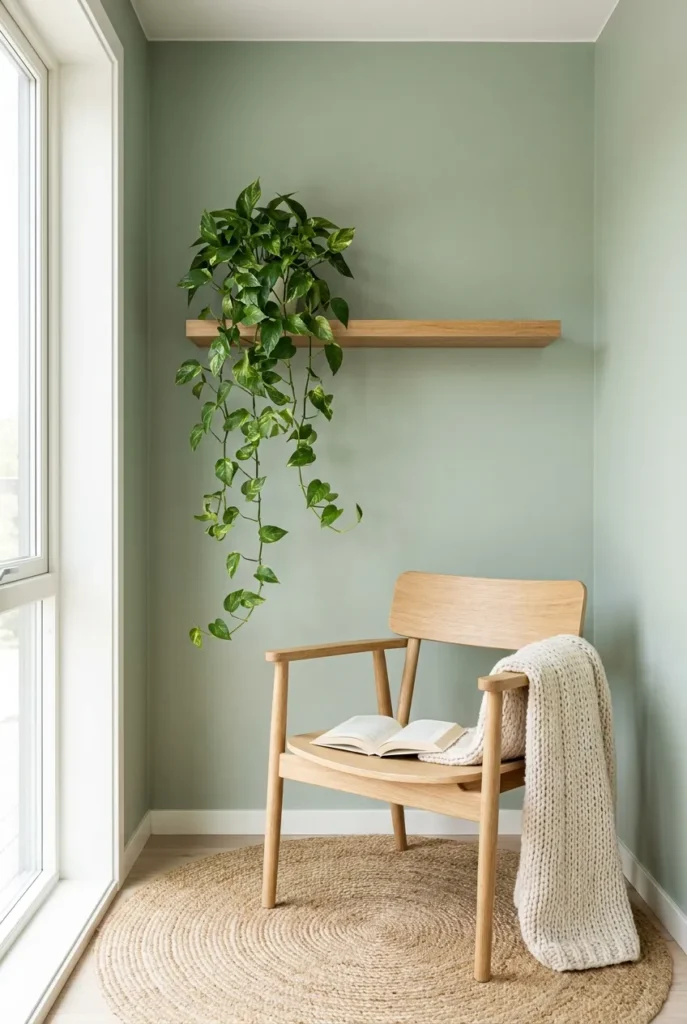
The One Rule That Makes Any Green Look Expensive
Flat green on a wall looks like a rental hallway. Green with three textures looks like a magazine. That is the whole trick.
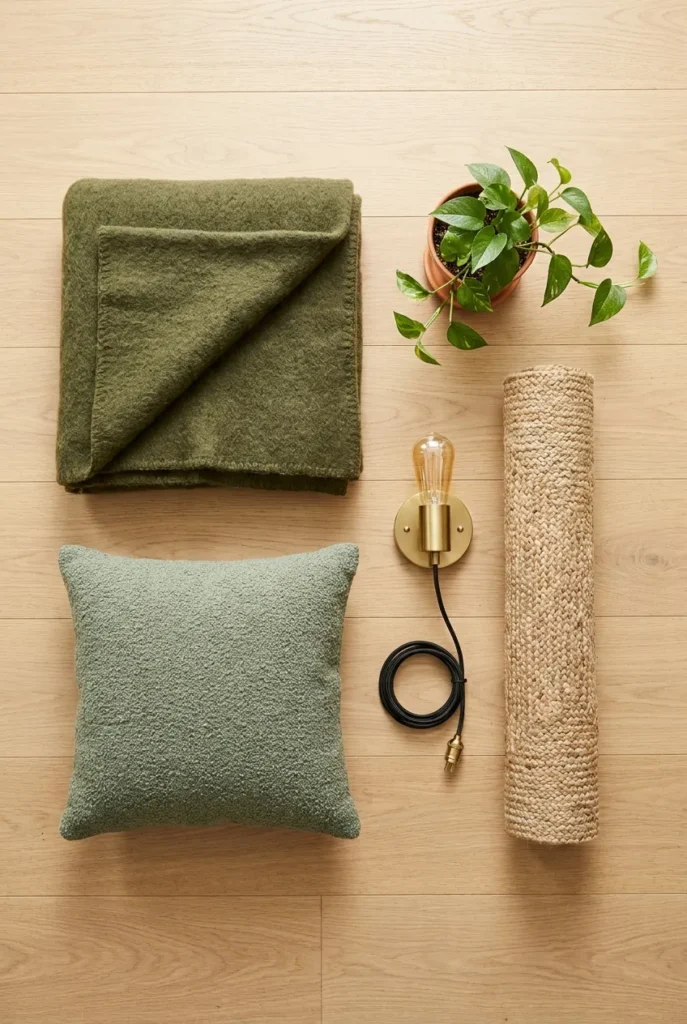
Pick your green, then layer at least three different textures on top of it: something nubby (a boucle or sherpa pillow), something smooth (a linen or wool throw), and something natural (jute, rattan, or a live plant). Your eye reads the variety, not the color, and that is what makes it feel intentional.
Texture also does the sensory work a photo cannot. A wool throw over sage feels warm and slightly scratchy in the best way, the kind of thing you tug up to your chin on a rainy afternoon. That physical detail is what turns a corner into a spot you actually sit in.
[VERIFY: the specific throw and pillow textures you layered, and one that photographed well but felt wrong to sit against, so the reader learns from a real trade-off]
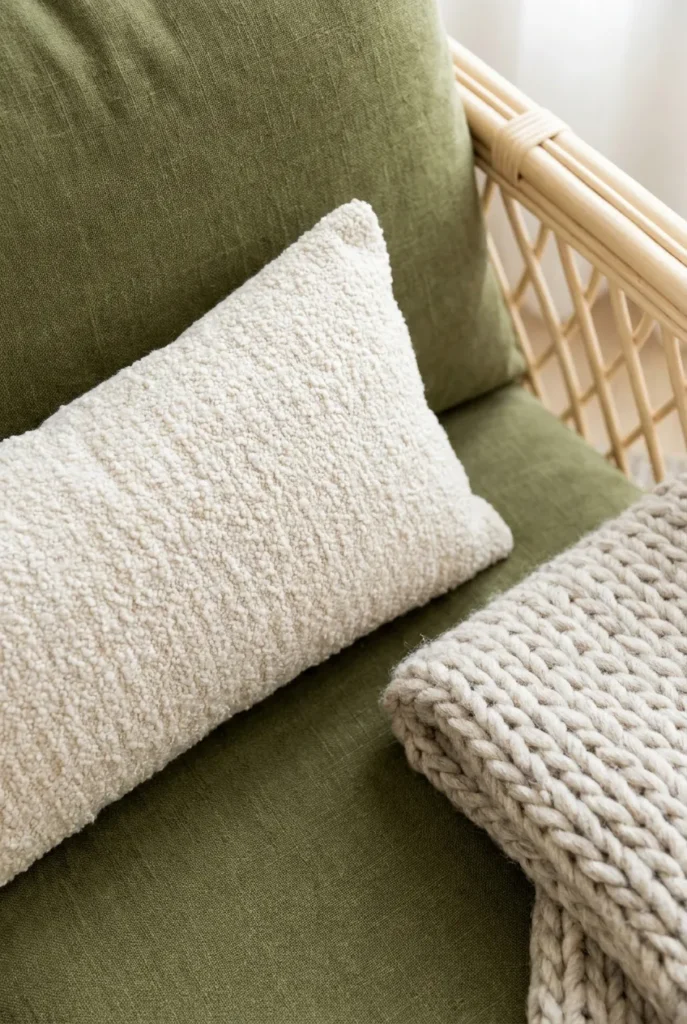
Sage Green: The Small-Space and Renter Favorite
If your corner is tiny, dark, or you cannot paint, sage is your green. It reflects more light than the deeper tones, so a north-facing corner does not turn into a cave, and it works beautifully with the no-commitment renter tricks.
You do not need a single drill hole. Peel-and-stick sage wallpaper on one accent wall, a leaning ladder shelf instead of mounted shelves, a plug-in swing-arm sconce clamped to the shelf, and a floor cushion or a compact accent chair. That is a full nook with zero landlord drama.
A good starting footprint is about 4 feet by 4 feet [VERIFY: the actual dimensions of your sage corner], which fits one armchair, a slim side table within the 18-inch reach rule (your mug should land within 18 inches of your hand, no leaning), and a plant stand.
The whole no-drill playbook, including damage-free wall options and how to fake a built-in, is in our renter-friendly reading nook setups.
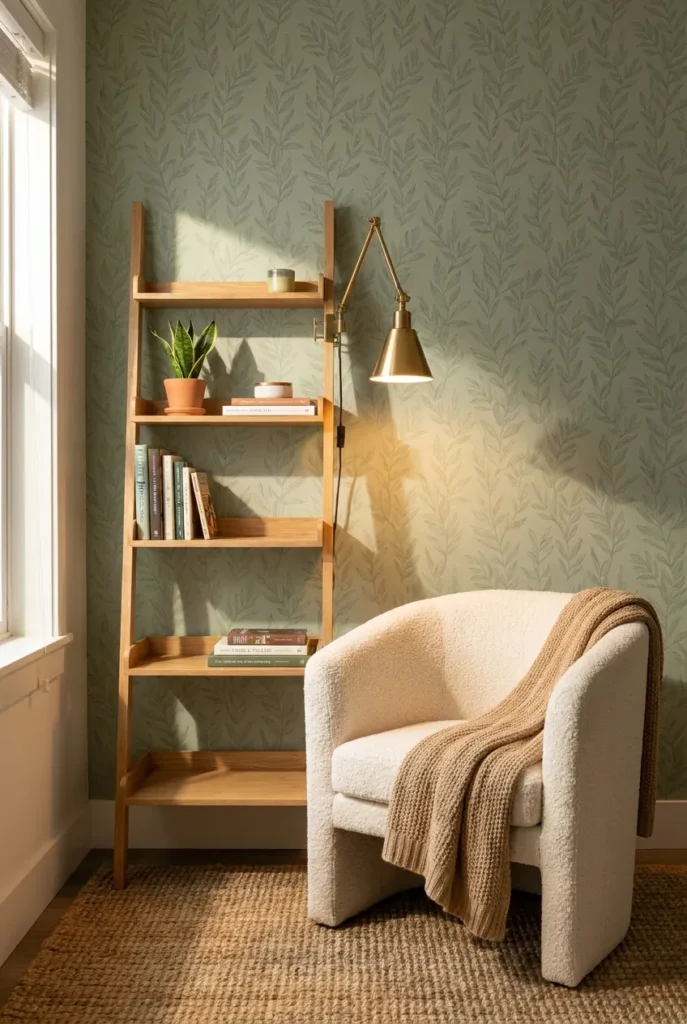
Olive Green: The Warm, Lived-In Middle
Olive is the one people underestimate. It has warmth baked in, so it works in a living room corner or a bedroom without the chill sage can pick up under the wrong bulb.
Pair olive with warm wood tones (walnut, oak) and brass, not chrome. Skip pairing it directly against orange-toned wood floors though, that is the “watch out” from the table, the two greens-and-orange fight and the whole thing goes muddy. A jute rug or a cream washable rug breaks them apart and fixes it instantly.
Olive also loves a papasan or a wide armchair you can actually curl sideways in. Floor cushions photograph great in olive, just know the trade-off: after about 40 minutes on the floor, your lower back starts filing complaints. Have a real chair as the anchor and use cushions as the extra layer.
[VERIFY: a real olive piece you own, brand and price you paid, so the reader gets a true 2025–2026 price band instead of a guess]
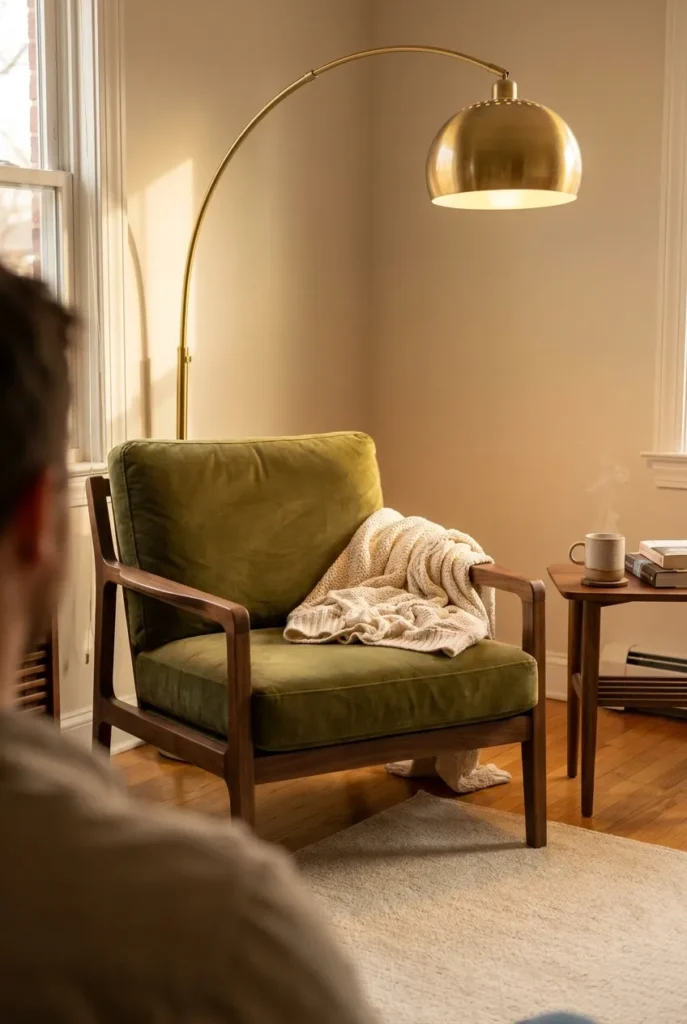
Forest Green: Moody, Cocoon, Dark-Academia Energy
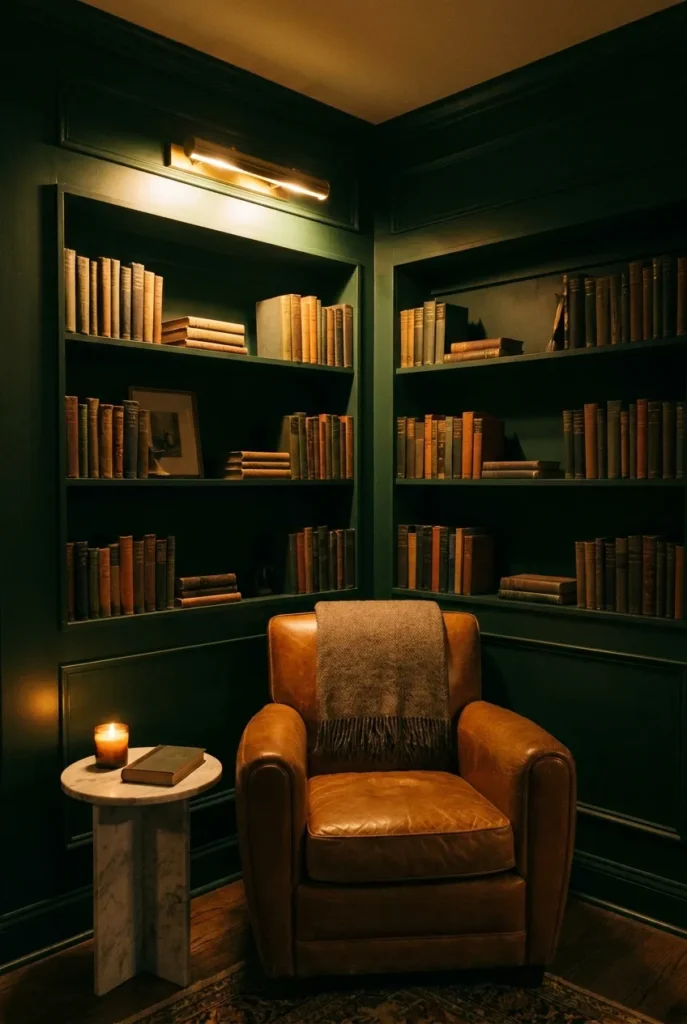
Forest green is where a reading corner turns into a proper hideaway. Deep green walls, a leather or velvet chair, a picture light over a shelf of hardbacks, and you have a mood you want to disappear into on a gray Sunday.
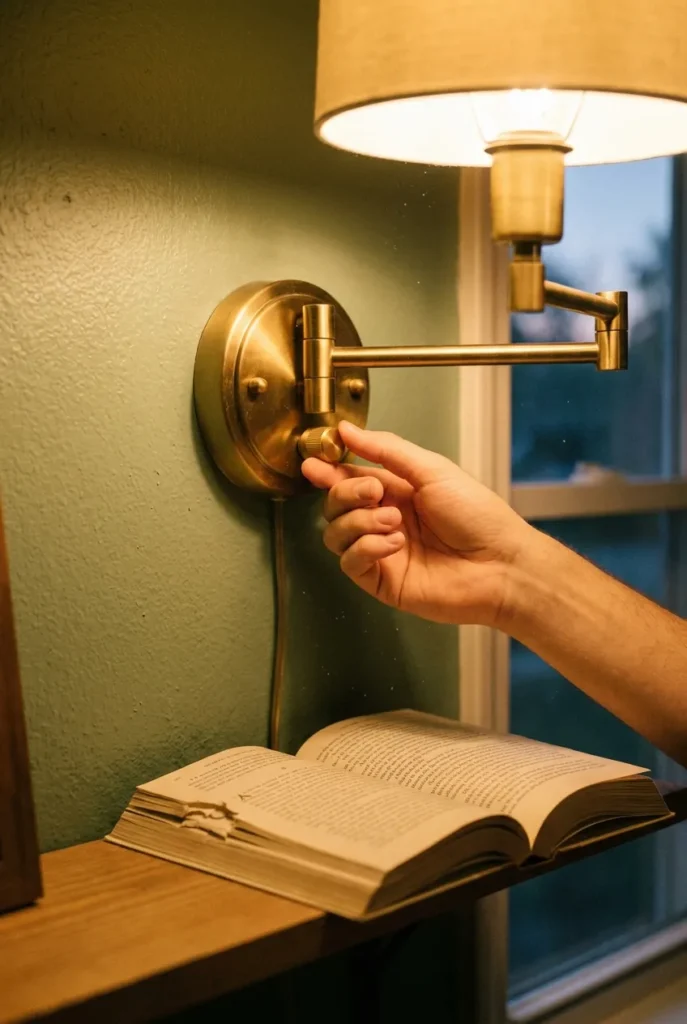
The one non-negotiable: light. Dark walls eat brightness, so plan two warm sources, never one overhead. Think a picture light or wall sconce plus a swing-arm reading lamp right over your shoulder. Skip cool daylight bulbs here entirely, they make forest green look flat and gloomy instead of rich.
If you skip the second light source, here is the failure mode: the corner looks stunning in photos and unusable at night, you strain to read, and you stop sitting there. Two lights, both warm. That is the rule.
Getting the Light Right (This Makes or Breaks the Green)
Green is the most light-sensitive color you can put in a corner, so your bulb choice matters more here than in any other palette. Go warm.
Aim for a warm white bulb in the 2700K range. That is the “soft white” glow, close to old incandescent light, and it makes every green read cozy instead of clinical. According to the ENERGY STAR bulb color guidance, warm white sits at roughly 2700 to 3000K, which is exactly the band you want for a reading corner. Put it on a dimmer if you can, so afternoon reading and 10 p.m. reading feel different.
One number to hold onto: around 400 to 800 lumens per reading source is plenty for close-up book light without blowing out the mood. [VERIFY: the exact bulb and fixture you use, wattage and Kelvin, so the reader can buy the same one]
For a soft-glow layer that flatters all three greens, string lights are the easy win. We broke down warm, non-tacky placements in our fairy lights reading nook ideas.
Plants: The Free-ish Way to Make a Green Nook Feel Alive
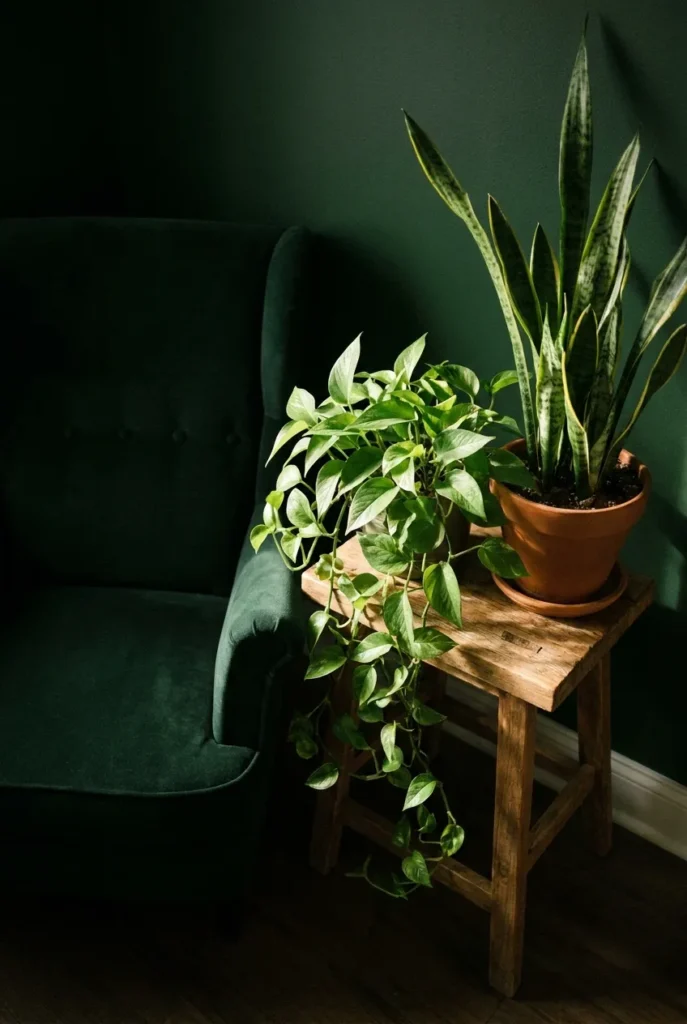
A green nook without a real plant looks staged. One trailing plant does more than three throw pillows, and it is the detail that makes the corner feel like it belongs to a person, not a catalog.
The catch is light. Most cozy reading corners are dim, so match the plant to the corner honestly. For a dark corner, a snake plant or pothos will forgive you. The University of Minnesota Extension guide to lighting for indoor plants notes that low-light plants suit a north window or a fairly dark corner, which is exactly what most reading nooks are.
Real vs faux, honestly: real plants add scent and that faint just-watered freshness, but they drop leaves and need light. Faux plants photograph identically and never die, but they collect dust and never smell like anything. My take, one real low-light plant you can actually keep alive beats five faux ones. [VERIFY: the specific plant you keep in your nook and whether it has survived, so this is a true recommendation not a guess]
A Real Green Reading Nook Under $200
Here is the build order for a no-drill green nook that totals around $200, so you know where the money actually goes instead of “affordable.”
Start with the seat, because comfort is the whole point. Then the soft layer. Then light. Then one plant. In that order, so if you run out of budget, you still have somewhere comfortable to sit.
| Piece | Archetype | Rough price band |
|---|---|---|
| Seat | Compact accent chair or papasan | $$$ (biggest line) |
| Soft layer | Olive/sage cushion + wool throw | $$ |
| Light | Plug-in swing-arm sconce, 2700K bulb | $$ |
| Green touch | Peel-and-stick panel or one plant | $ |
[VERIFY: your actual itemized list with the real store, item, and price you paid for each line, and the true total, so this reads as a genuine build and not an estimate. Only publish the “$200” claim if your real total actually landed near it]
The failure mode to avoid: blowing the whole budget on the chair and having nothing left for light. A gorgeous chair in a dim corner still goes unused. Protect the lighting line.
Small-Space Fixes: Green Nooks for Awkward Corners
No bay window, no spare room, one weird corner. That describes most first apartments, and green actually helps because a single painted or papered green wall defines a nook where there is no architecture to do it for you.
Use the green as the boundary. A sage accent wall, a round jute rug to anchor the floor, and a chair angled into the corner tells your brain “this is the reading zone” even in an open studio. No walls required.
Vertical is your friend when floor space is tight: a tall narrow ladder shelf for books, a clip-on reading light instead of a floor lamp, and a lumbar pillow instead of a bulky cushion. [VERIFY: the real square footage of the corner you did this in, so small-space readers can compare to their own]
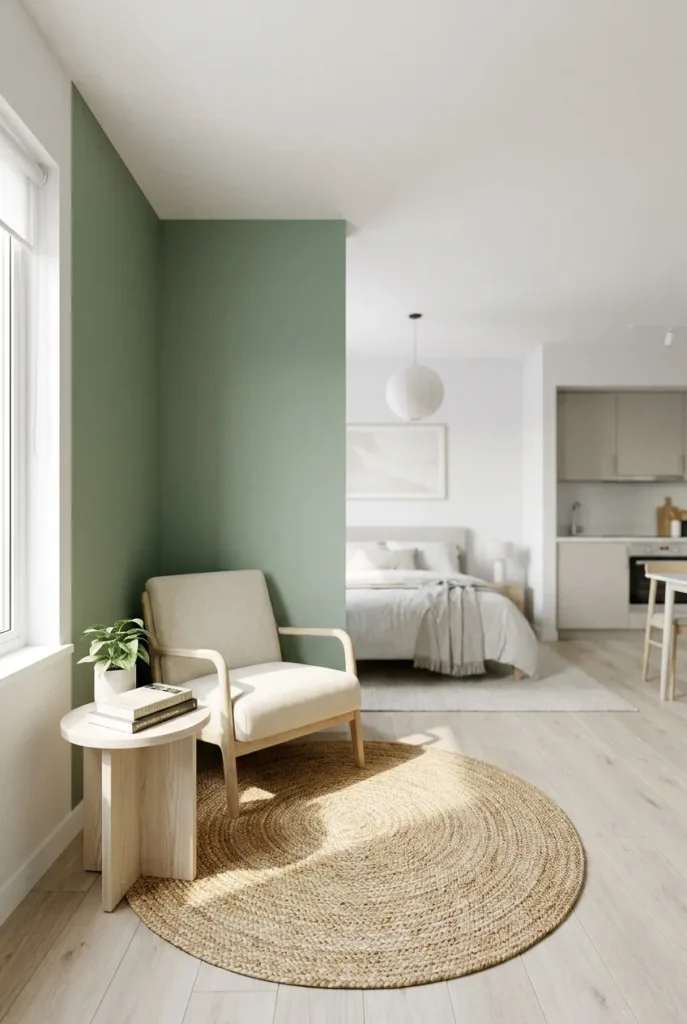
Styling the Shelf and Finishing Touches
The last 10 percent is what makes people screenshot it. Once the chair, light, and green are in, style the shelf so it feels collected, not cluttered.
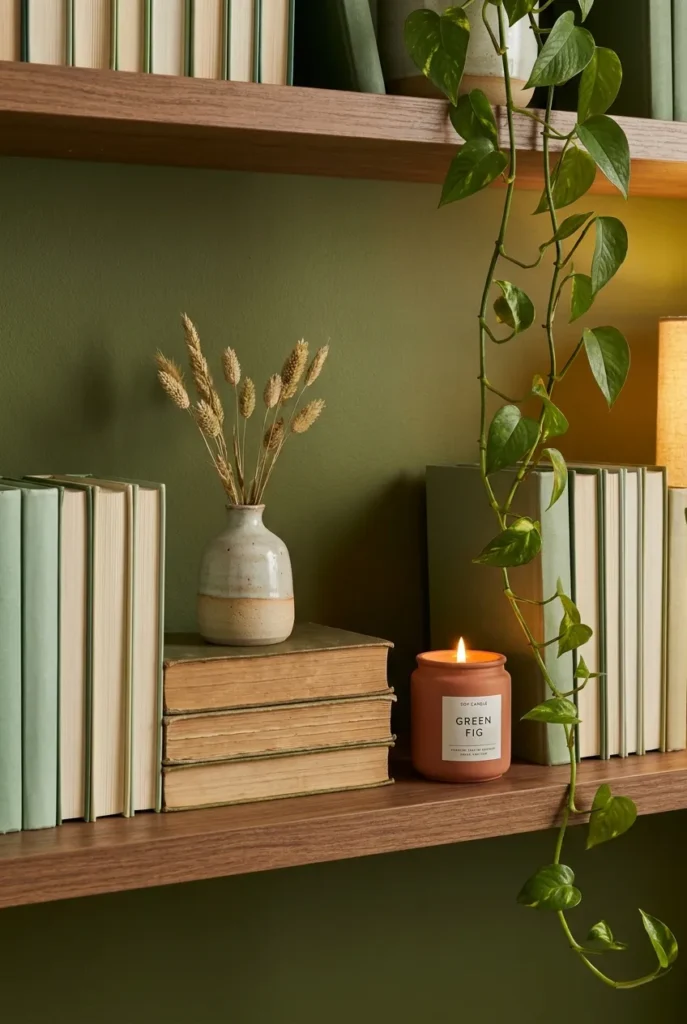
Group books by color if it soothes you, or by height if color-coding feels fussy, then break the rows with one horizontal stack and one object (a small ceramic, a candle, a tiny framed print). Leave a little empty space on purpose. Empty space is what separates styled from stuffed.
For scent, a beeswax or green-fig candle adds the finishing sensory beat, that faint warm smell that says “settle in” the second you sit down. Keep it within arm’s reach but off the reading surface so it is nowhere near a dangling throw.
Frequently Asked Questions
What is the purpose of a reading nook?
It gives reading its own dedicated spot, which is mostly a psychological trick that works. When one corner is set up only for reading, comfortable seat, good light, books within reach, you sit down and actually read instead of scrolling. A green one adds a calming, nature-adjacent backdrop that helps you settle faster.
What is a reading nook called?
People use nook, book nook, reading corner, cozy corner, or reading alcove interchangeably. “Alcove” usually means a recessed architectural space, while “nook” or “corner” can be any spot you carve out, even in an open room with no walls to work with.
Is sage or forest green better for a small reading nook?
Sage, in most cases. It reflects more light and keeps a small or dark corner feeling open, while forest green absorbs light and can make a tight space feel closed in unless you have strong daylight and two warm lamps to compensate.
Can I make a green reading nook if I rent and cannot paint?
Yes, and it is easier than you think. Peel-and-stick wallpaper, a green accent chair or cushion, a green throw, and one plant deliver the whole effect with zero paint and zero drill holes, so your deposit stays safe.
What kind of light bulb is best for a green reading nook?
A warm white bulb around 2700K. It keeps every green tone cozy instead of clinical, and warmer light flatters deep greens especially. Add a dimmer so the same corner works for bright afternoon reading and low evening wind-down.
What plants work in a dim green reading nook?
Low-light-tolerant ones like pothos, snake plant, or ZZ plant. They handle a north-facing or fairly dark corner, which describes most reading nooks, without dropping leaves in protest.
Now Go Claim Your Corner
Pick your green first (sage to stay airy, olive to stay warm, forest to go full cocoon), layer three textures, keep the light warm, and add one plant you can actually keep alive. That is the entire formula, and none of it needs a drill or a landlord’s blessing.
Start with the tone that matches your corner’s light, then build outward one piece at a time. If you landed on the deep end, the forest green reading nook guide walks the moody version step by step. Save this, screenshot the tone table, and go make the corner you will actually sit in tonight.
Keep reading
More cozy nook ideas
 Fall Decor
Read →
Fall Decor
Read →
Fall Door Decor on a Budget: Where to Spend and Where to Save
If your fall door every year is a wreath that sheds on the mat, two mums that are crispy by Halloween, and…
 Fall Decor
Read →
Fall Decor
Read →
12 Thanksgiving Tablescape Ideas for Small Spaces (That Still Leave Room for the Food)
Twenty-four inches. That’s how much table edge one person needs to eat without bumping elbows, and it’s the number most Thanksgiving tablescape…
 Fall Decor
Read →
Fall Decor
Read →
18 Fall Coffee Bar Ideas for Sweater-Weather Evenings
No counter space to spare, no espresso machine, no landlord permission needed. This fall coffee bar runs on three pieces: a slim…