
10 Indoor Jungle Gym Playroom Ideas With the Safety Checks Each One Needs
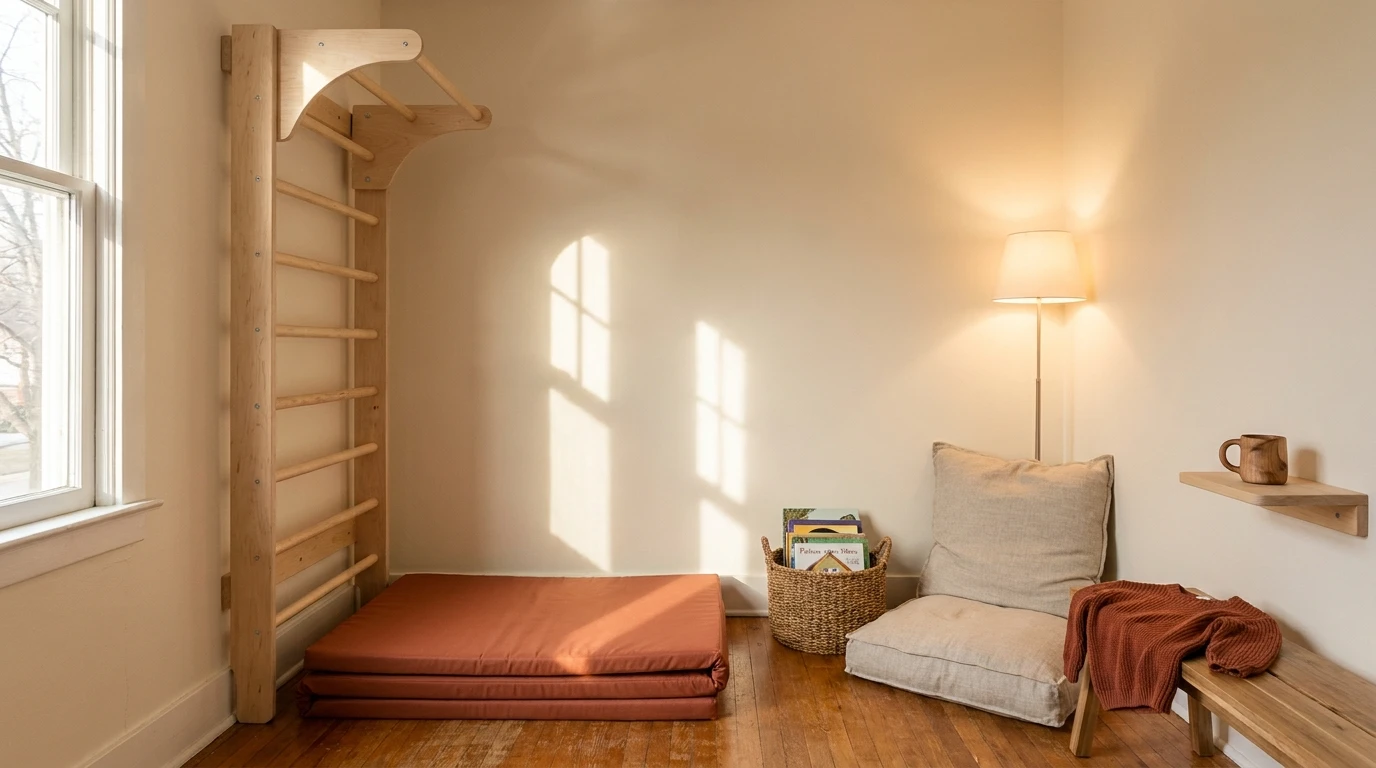
Rainy weekends and cramped living rooms turn high-energy kids into couch jumpers fast. If you are planning an indoor jungle gym playroom, you need 10 setups that fit standard 8-foot ceilings, protect your floors, and pass real safety checks before you buy a single bolt.
Most inspiration photos skip the measurements that keep kids safe. A climbing frame that looks charming in a tall studio can clip a ceiling fan blade or tip over on slick hardwood in an average home or rental. Below, you will find ten distinct playroom setups sized for real rooms, paired with the exact landing pad thickness, wall anchor rule, and clearance zone each one demands.
1. No-Drill Tension-Mounted Steel Gym for Renters
Safety note: anchor tall furniture to the wall, keep candles and cords away from fabric, and use a licensed electrician or contractor for hardwired lighting, ceiling mounts, or anything structural.
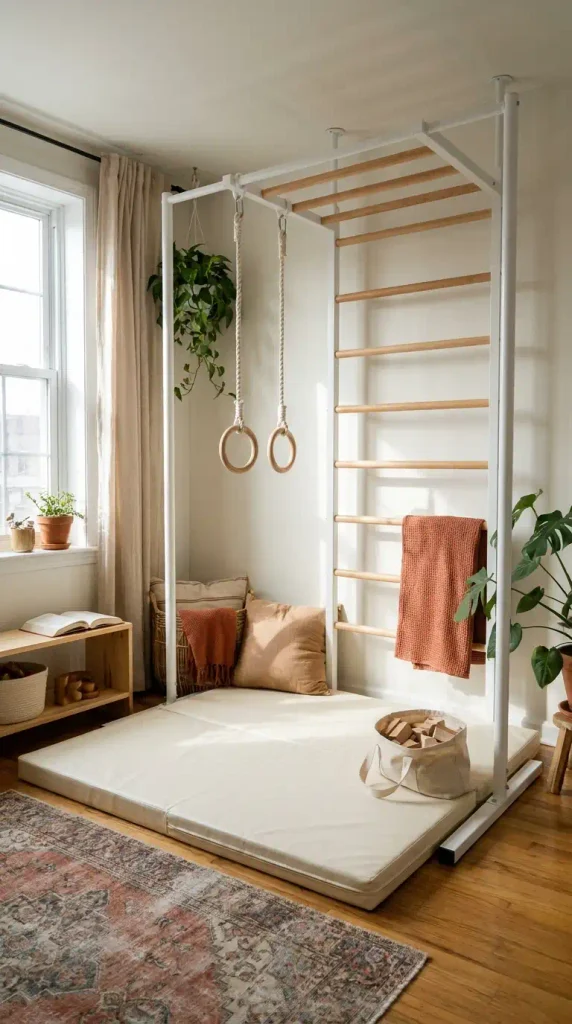
Renters usually assume monkey bars and gymnastic rings are off the table because landlords ban drywall anchors. Floor-to-ceiling tension frames solve that problem by wedging rubber-capped steel poles tightly between your subfloor and ceiling joists without drilling a single hole.
Before ordering, measure from the finished floor to the drywall ceiling and map out a 3-foot clear fall zone around every climbing side. According to the CPSC indoor climbing surface safety alert, regular carpet alone will not absorb a fall impact, so always pair a tension frame with a dedicated foam mat underneath.
Clear 3 to 6 feet around all swing and drop sides so elbows never hit baseboards or dressers.
Lay at least 2 inches of high-density EPE foam over hardwood, tile, or low-pile carpet.
Verify ASTM F1148 residential compliance and keep rung gaps under 3.5 inches or over 9 inches.
Expect to spend roughly $1,899 to $2,399 for a heavy-duty tension system like the Brainrich Kids Model T3, which fits ceilings from 6 feet 9 inches to 10 feet 5 inches and holds a 220-pound working load. Check the top tension bolts every two weeks, because seasonal humidity changes can cause wood joists to expand and contract slightly.
2. Slim Wall-Mounted Swedish Ladder for Narrow Rooms
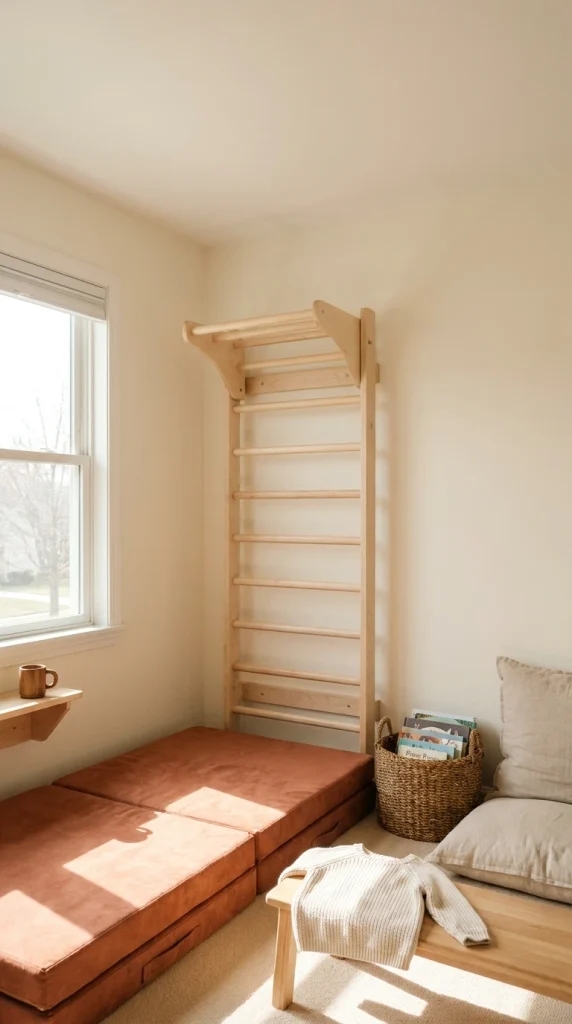
When floor space is tight, building vertically keeps the center of the playroom open for train tracks and floor puzzles. A birch Swedish ladder hugs the wall at less than 8 inches deep while still giving kids a vertical ladder, pull-up bar, and optional rope attachment.
- Wall check: Lag bolts must sink directly into solid wood wall studs, never hollow drywall toggles.
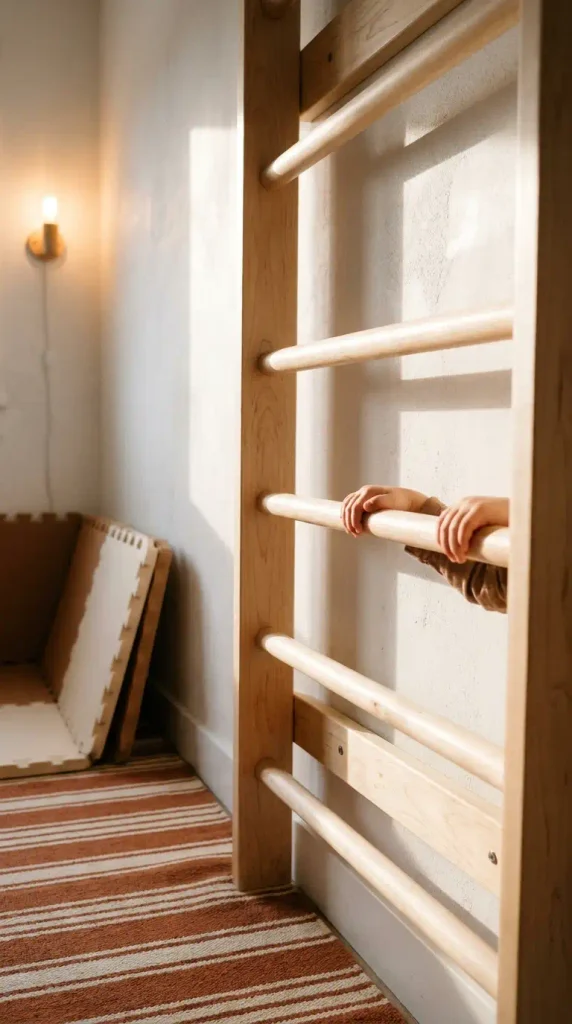
- Spacing check: Rungs should sit 3.5 inches or less apart, or more than 9 inches apart, to prevent head entrapment.
- Price band: Target lists wall-mounted Swedish ladder sets between $349.99 and $719.99 depending on wood grade and accessories.
Review the CPSC home playground equipment guidelines before choosing between a fixed wall ladder and a portable climber, since permanently mounted structures require stricter fall-zone surfacing than fold-away toys.
3. Foldable Pikler Triangle and Ramp Station for Shared Living Spaces
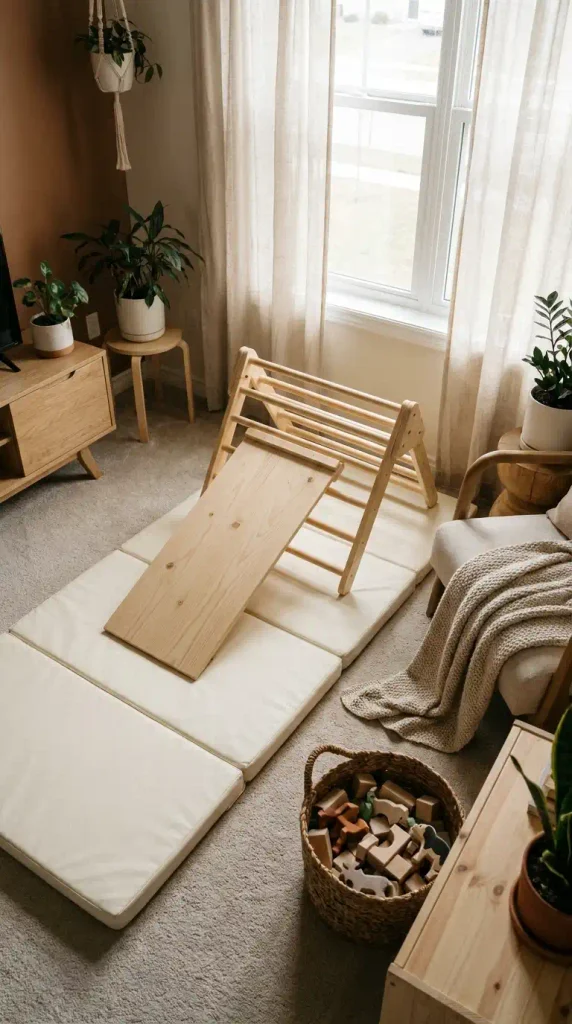
Not every family has a spare bedroom to dedicate to climbing gear. A foldable wooden Pikler triangle with a reversible slide ramp gives toddlers a steep climb at 10 a.m. and folds flat behind the sofa by dinner.
I initially set a folding wooden climber directly over a woven wool rug, and the first tumble sounded way too sharp on the subfloor underneath. Sliding a 2-inch folding EPE foam mat under the frame softened the landing right away and stopped the wooden legs from creeping across the floor.
Look for locking safety knobs on the triangle hinges so curious fingers cannot collapse the A-frame mid-climb. Three-piece sets with an arch and ramp run from $47.99 to $135.99 at Walmart, with most models standing 25 to 32 inches tall and rated between 132 and 220 pounds.
4. Sensory Pod Swing Corner With a Quiet Book Nook
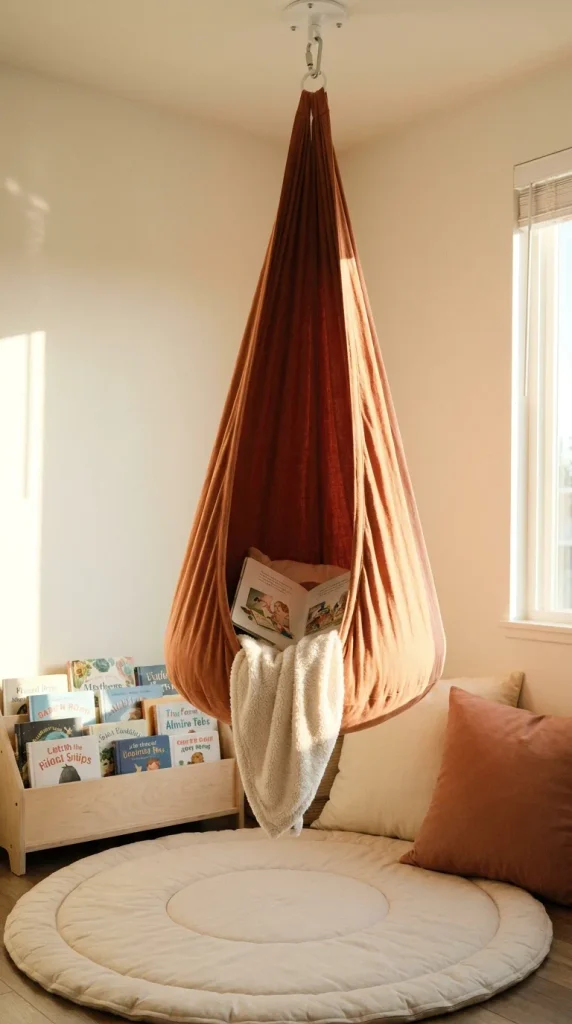
Swinging gives restless kids deep vestibular input that calms their nervous system faster than almost any other indoor activity. Hanging a cotton sensory pod swing in one corner leaves plenty of floor room beside it for a child-led Montessori reading corner with low front-facing bookshelves.
Ceiling Swing Safety Checklist
Indoor sensory swings with ceiling mounting hardware cost $26.15 to $76.70 at Walmart. If you rent and cannot drill into ceiling joists, skip ceiling mounts and use a freestanding A-frame hammock stand instead.
5. Basement Ceiling Monkey Bars for Older Kids
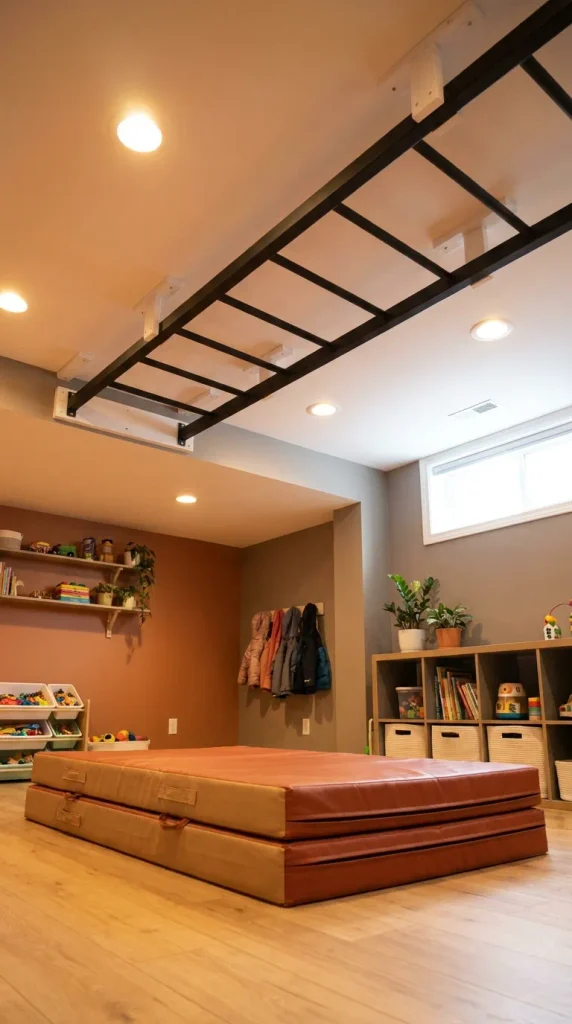
Unfinished or drywalled basement ceilings give you exposed framing or sturdy joists that handle upper-body swinging better than upstairs bedrooms. Mounting steel monkey bar rungs across a 6-foot span lets kids aged 5 and up build grip strength without taking up a single square foot of floor space.
⚠️ Watch Out
CPSC playground guidelines cap horizontal ladder height at 60 inches for children ages 4 and 5. In a basement with 8-foot joists, use drop-down brackets so kids do not drop more than 3 feet onto the mat below.
Check the rung diameter before buying: bars between 0.95 and 1.55 inches wide fit small hands best so fingers wrap securely around the steel. Place a full 4-by-8-foot folding gymnastics mat ($54.99 to $116.08 at Walmart) directly under the entire ladder run.
6. Plywood-Backed Climbing Wall With Resin Holds
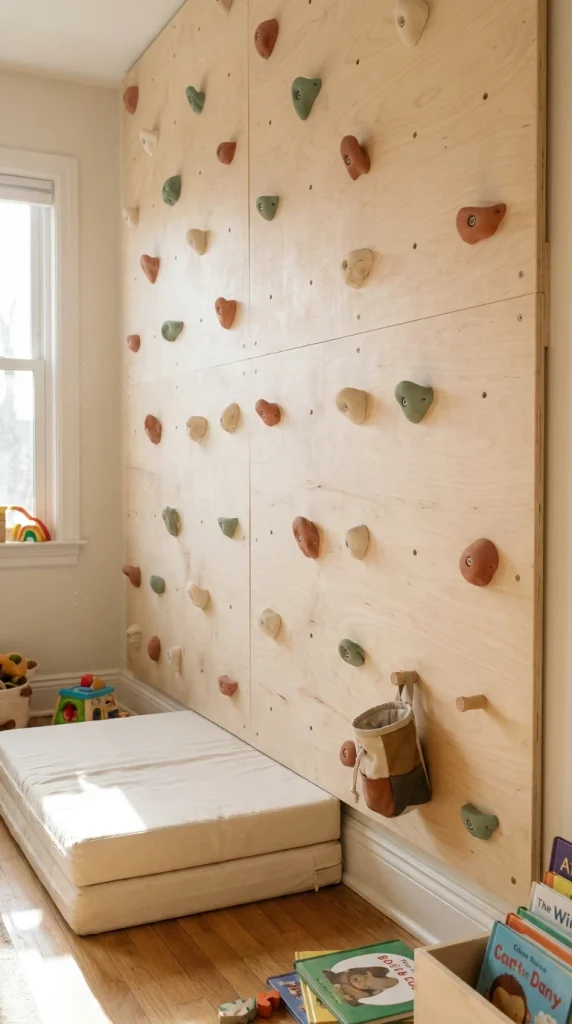
A traverse climbing wall turns dead drywall into an afternoon puzzle without crowding the floor. Instead of bolting plastic holds straight into plaster, screw a sheet of 3/4-inch sanded birch plywood into at least three wall studs first, then install T-nuts from behind so holds never spin loose.
Sets of 10 to 25 textured resin climbing holds with bolts and weld nuts cost $12.99 to $36.99 at Walmart and carry 200-to-230-pound ratings. Keep the highest handholds under 6 feet so kids climb sideways across the wall rather than high off the floor.
7. Interactive Pegboard Activity Wall for Tiny Corners
Pinterest’s 2026 parenting trend data shows searches for interactive walls for kids jumping 265%, and oversized wooden pegboards are the cleanest way to build one in a tight hallway or box room. You can slot wooden dowels, balance planks, and ring toss pegs at waist height for toddlers and raise them as your kids grow.
Standard 48-by-24-inch pegboard panels start around $13.46 at The Home Depot, though heavy climbing dowels require thick 3/4-inch birch pegboard mounted on furring strips so pegs sit deep enough not to pop out under weight. If you are squeezing play zones into an apartment, pair a pegboard wall with these small-space nook ideas for tight rooms so every wall earns its keep.
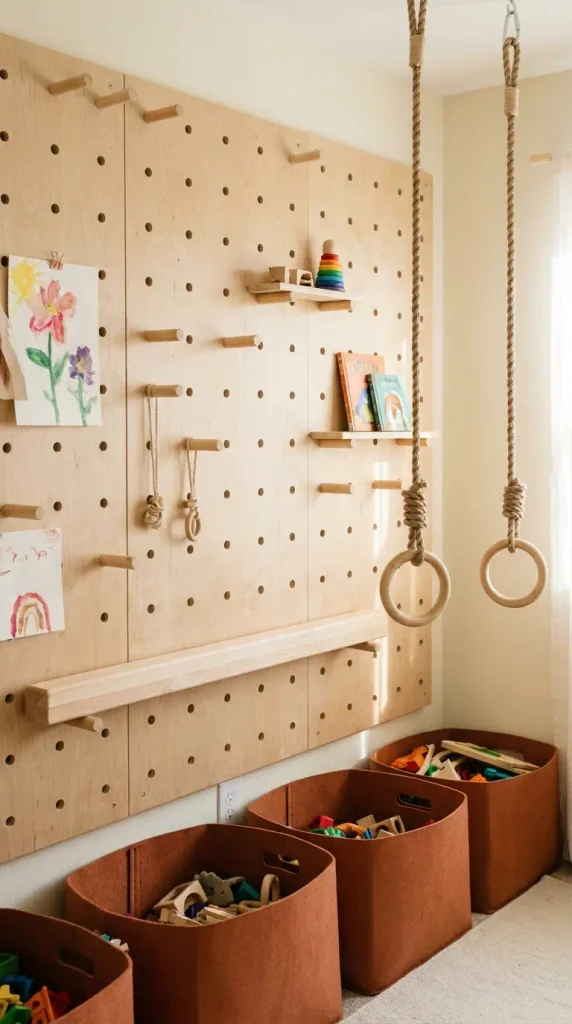
Bring your stud spacing (16 or 24 inches on center), ceiling height, and minimum 2-inch mat thickness before buying mounts or lumber.
8. Freestanding Wooden Dome Climber With a Canopy Tent
Freestanding geometric climbing frames give kids an indoor fort and a multi-angle ladder in one footprint without touching your walls or ceiling. Draping a breathable cotton sheet over one half creates an instant hideout underneath while leaving the other half open for climbing.
Use lightweight, breathable cotton muslin or linen over the frame so air flows freely inside.
Check every hex bolt once a month, since multi-angle joints loosen faster than straight ladders.
Never clip string lights or corded lamps onto a fabric canopy where kids pull and tug on the cloth.
Avoid placing a freestanding dome within 4 feet of a glass window or radiator.
Always verify that any openings between wooden struts measure either under 3.5 inches or over 9 inches so a toddler cannot slip their body through and trap their head.
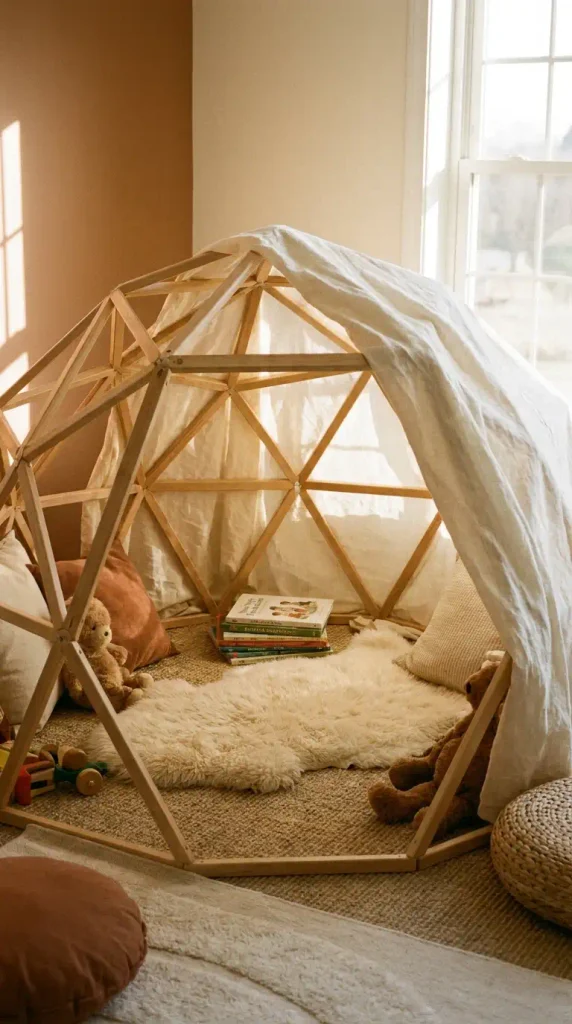
9. Modular Foam Climbing Blocks Over Interlocking EVA Tiles
Kids under 3 need soft edges and low drop heights while they are still mastering balance. Modular high-density foam wedges, steps, and tunnels let toddlers scramble safely and wipe clean in seconds after snack spills.
Foam blocks look effortless in photos, though on slick laminate or hardwood they slide apart the second a toddler pushes off them. Laying 24-by-24-inch interlocking EVA foam tiles ($20.00 for a 4-pack up to $149.99 for 96 square feet at Target) underneath adds grip and cushions tumbles, while 5-to-10-piece foam block sets run $65.88 to $154.99 at Walmart.
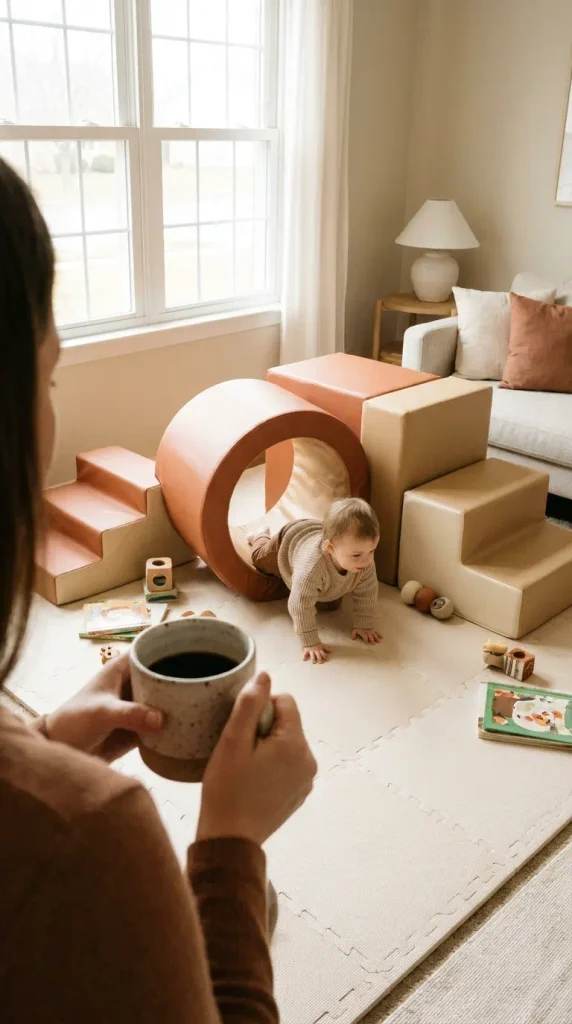
Height limit from CPSC age-to-size guidance; mat specs and price bands from Target and Walmart listings.
10. Lofted Climber Platform With an Under-Deck Reading Hideout
Building a low wooden play platform along one wall doubles your usable square footage in a small playroom. Kids climb the angled rope ladder to reach the top lookout deck, while the shaded space underneath becomes one of those cozy kids reading nook hideaways lined with bolsters and battery-powered LED puck lights.
Keep at least 42 inches of headroom above the top deck so kids can sit upright without bumping their heads on the ceiling, and consult a licensed contractor before building any permanent elevated structure.
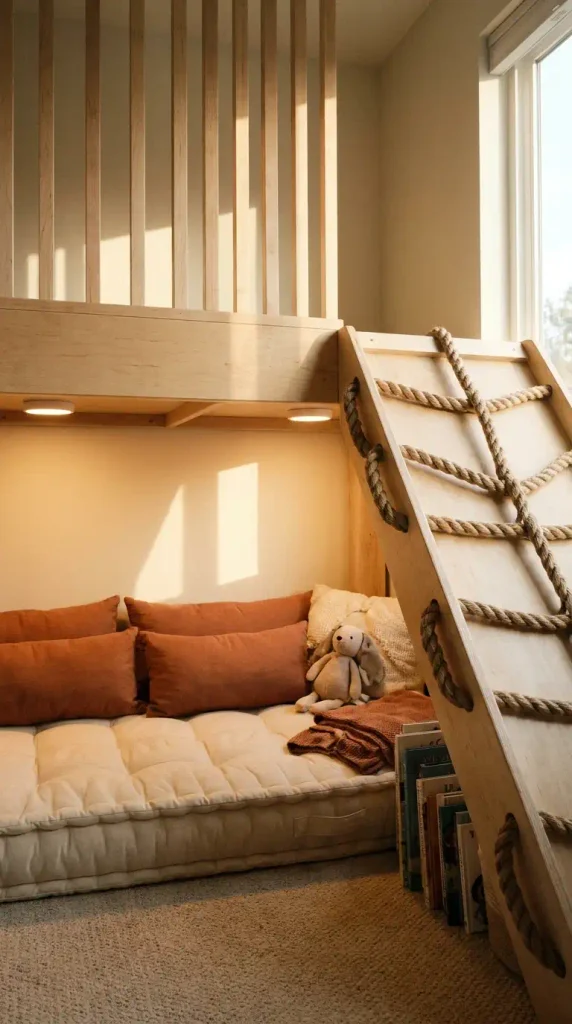
Indoor Jungle Gym Playroom Frequently Asked Questions
How do you make an indoor jungle gym safe for everyday use?
Start by placing at least 2 inches of high-density foam matting under every climbing and drop zone, since standard carpet does not cushion head impacts. Anchor all wall-mounted ladders into solid wood studs rather than drywall, keep at least 3 feet of clear floor space around swing paths, and inspect bolts and tension knobs monthly.
What is the best indoor jungle gym for small spaces?
A wall-mounted Swedish ladder or a foldable Pikler triangle works best in compact rooms. Swedish ladders protrude less than 10 inches from the wall while offering vertical climbing and pull-up bars, whereas a foldable Pikler triangle collapses flat to slide under a bed or behind a sofa when playtime ends.
Can you put a jungle gym in a rented apartment?
Yes, by choosing floor-to-ceiling tension frames, foldable wooden triangles, or modular foam blocks that require zero wall screws. Tension gyms wedge firmly between the floor and ceiling joists with rubberized pads, leaving paint and drywall untouched when you move out.
How much clearance does an indoor play gym need?
Leave a minimum of 3 feet of unobstructed floor space around stationary climbers and 4 to 6 feet around swings, slides, and monkey bar drop zones. Vertically, aim for at least 8-foot ceilings and keep all swings and bars well clear of ceiling fan blades and pendant light fixtures.
Will an indoor jungle gym damage my floors?
Heavy wooden legs and steel tension bases can dent soft pine or scratch hardwood if placed directly on bare boards. Laying interlocking EVA foam tiles or a folding gymnastics mat underneath distributes the frame’s weight, prevents sliding, and protects hardwood and laminate finishes from scuffs.
Which indoor jungle gym is best for toddlers?
Kids ages 1 to 3 do best on low-profile Pikler triangles under 32 inches tall or soft vegan-leather foam climbing blocks. Both options let toddlers practice step climbing and balance close to the floor without risking high falls.
Putting Your Playroom Layout Together
Designing a lasting indoor jungle gym playroom comes down to matching the structure to your ceiling height, wall framing, and floor surface before picking out colors or accessories. Measure your clearance zone first, lay down proper foam protection, and save one quiet corner with cushions and books so your kids have a soft place to land when their energy finally winds down.
Save this checklist to your playroom planning board so you have the mat thicknesses, stud rules, and clearance numbers right on your phone while you shop.
Keep reading
More cozy nook ideas
 Kids Room
Read →
15 Waldorf Playroom Ideas With Natural Materials and Calm Colors
No spare bonus room, no custom carpentry, and no landlord permission required. You can build a calm waldorf playroom in an ordinary…
 Kids Room
Read →
Baby Playroom Ideas: 15 Safe Setups for the First Year
No spare guest room, no renovation budget, and no permission to drill into apartment drywall. You can still build a calm, padded…
 Kids Room
Read →
14 Boys Playroom Ideas, Plus Themes Brothers and Sisters Can Share
No extra basement, no custom built-ins, and no permission to paint the walls. You only need a few low shelves, a soft…