
15 Waldorf Playroom Ideas With Natural Materials and Calm Colors
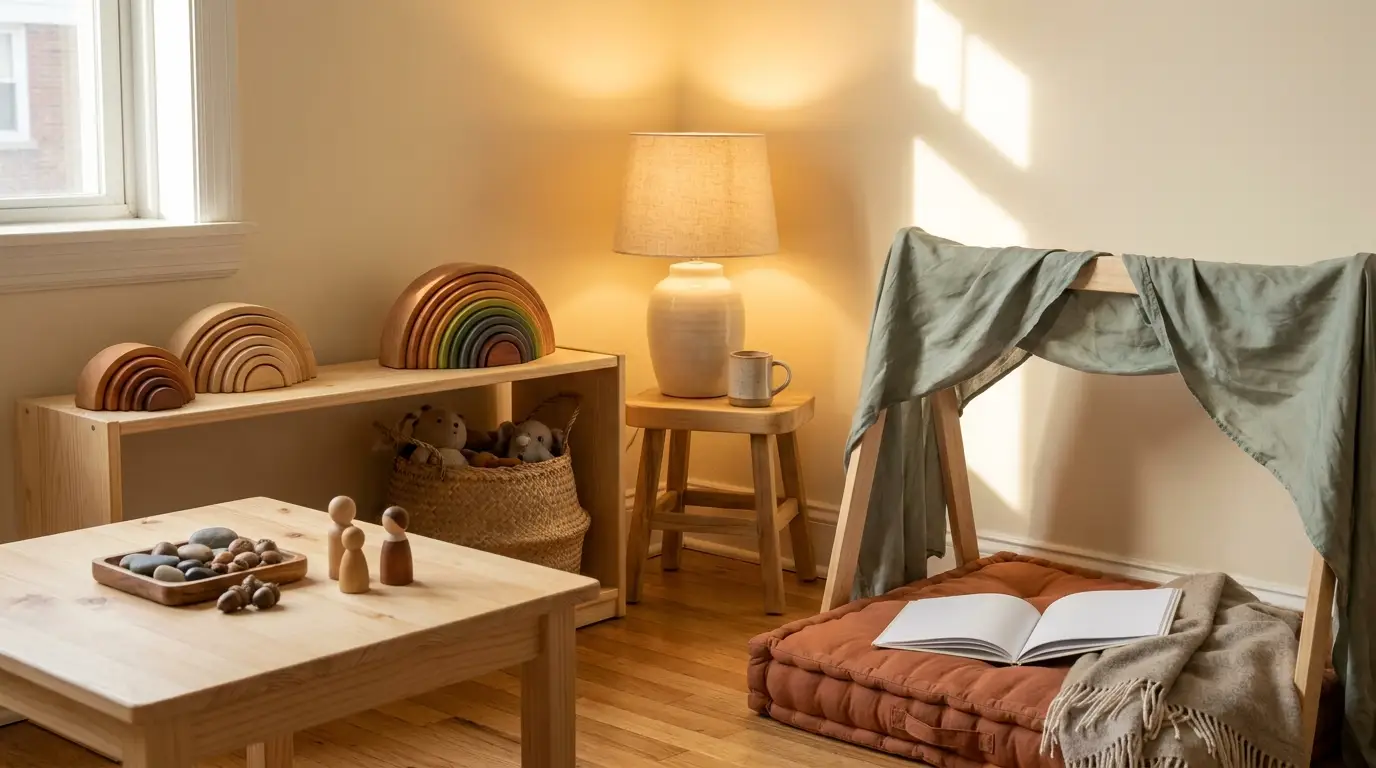
No spare bonus room, no custom carpentry, and no landlord permission required. You can build a calm waldorf playroom in an ordinary 600 to 1,400 sq ft apartment or starter home using natural wood, muted fabrics, and open-ended toys that spark hours of quiet pretend play.
These 15 waldorf playroom ideas strip away flashing plastic clutter and replace it with warm textures, soft 2700K lighting, and low storage your child can reach on their own. Every setup relies on simple pieces you can arrange in a single afternoon without drilling holes in your walls.
1. Low Pine Shelving With Front-Facing Wooden Staples
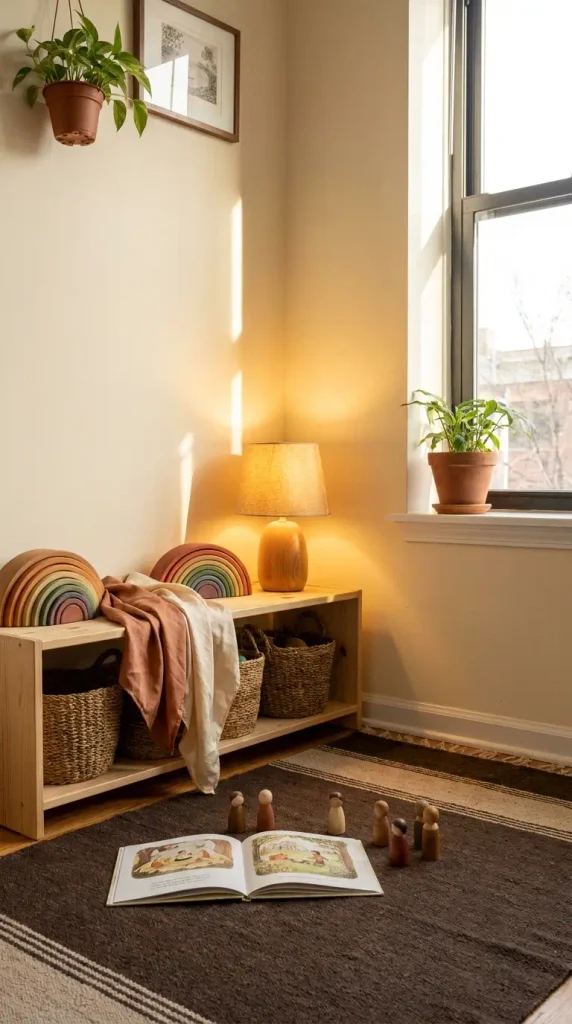
Low pine shelving keeps every wooden block and basket within a toddler’s reach without crowding a small apartment wall. An IKEA TROFAST low horizontal pine frame measures 36 5/8 inches wide by 20 1/2 inches tall and runs about $148.99 to $155.99, while a sideways 4-cube IKEA KALLAX unit sits at 30 1/8 inches tall for $49.99.
Leave generous breathing room between three or four wooden toys on top so toddlers see their choices clearly, and explore smart IKEA toy storage setups for extra bin layouts. Follow CPSC furniture anchoring guidelines by keeping heavy items on bottom shelves and securing taller units with wall straps.
Safety note: anchor tall furniture to the wall, keep candles and cords away from fabric, and use a licensed electrician or contractor for hardwired lighting, ceiling mounts, or anything structural.
2. Open-Ended Wooden Rainbow and Semicircle Building Station
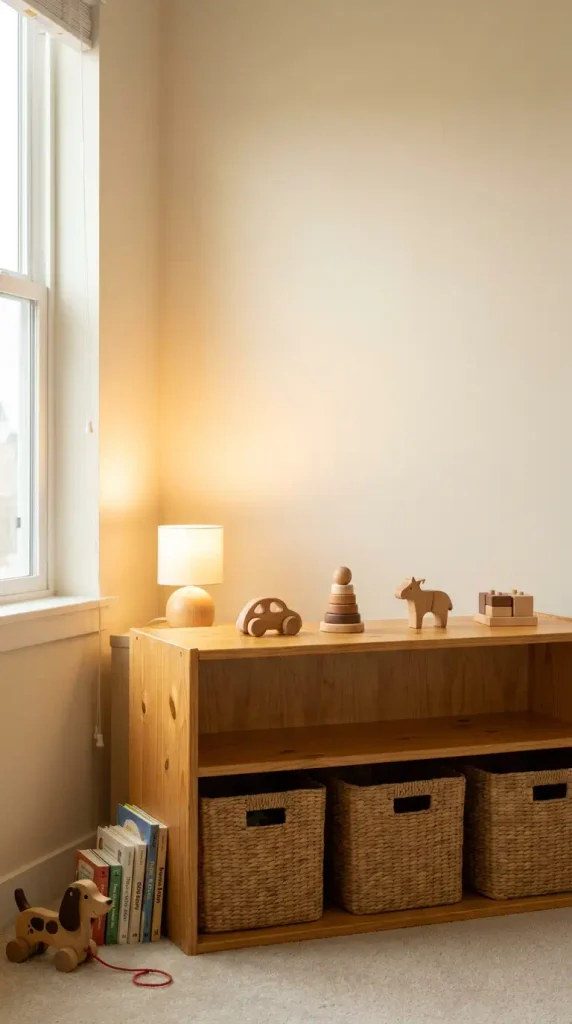
Curved wooden arches invite children to stack bridges, tunnels, and multi-story dollhouses before they ever learn a single game rule. Pairing nested arches with flat wooden semicircles turns a 3-foot patch of floor into an open-ended architecture zone.
- Nested rainbow arches: Twelve curved alder wood pieces stained with non-toxic water-based dyes give toddlers tactile grip without slippery varnish.
- Flat building semicircles: Eleven birch plywood platforms up to 15 inches wide create instant floors and roofs between rainbow arches.
- Simple wooden peg dolls: Faceless maple figures let kids decide whether a character is sleepy, excited, or brave during story play.
Grimm’s 14-inch alder wood arches stained with matte plant-safe dyes for sturdy stacking.
$115 at Bella Luna ToysGrimm’s 15-inch birch ply platforms that turn arches into tiered towers and bridges.
$78 at Bella Luna ToysGrimm’s pastel wooden figures in a round tray for open-ended storytelling.
$53.50 at Bella Luna Toys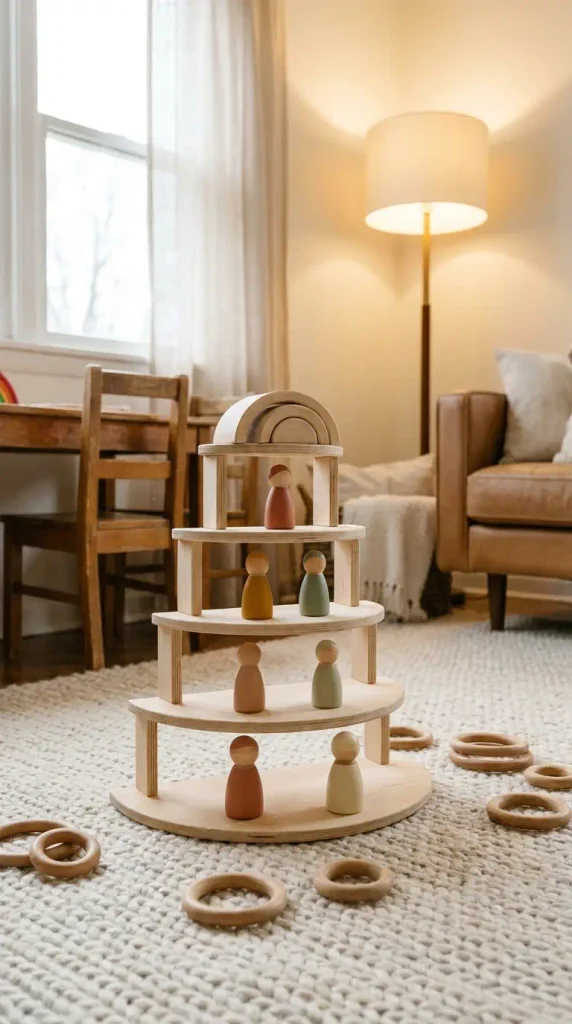
3. Seasonal Nature Table on a Low Windowsill or Tray
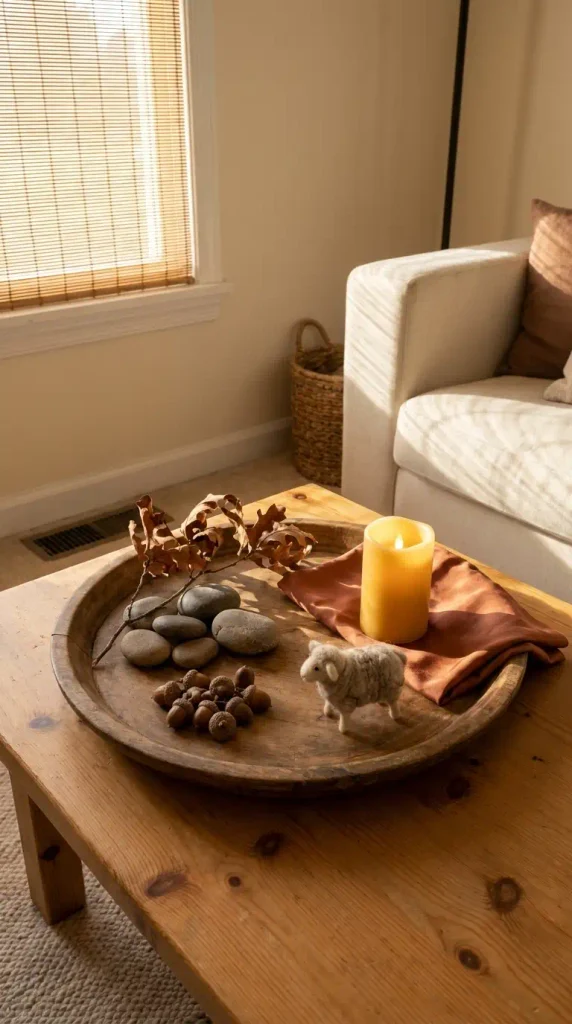
A small tray on a sunny windowsill turns everyday backyard finds into a quiet focal point that changes with the weather. Instead of buying themed plastic holiday bins, you gather smooth river stones, acorns, pinecones, and dried seed pods during neighborhood walks.
Drape a folded square of dyed silk underneath the tray to anchor the season, such as mossy green in spring or rust clay in autumn. Follow NFPA home candle safety tips by using a battery-powered flameless LED beeswax pillar instead of a real flame near silk cloths.
Seasonal Nature Tray Checklist
4. Woven Seagrass Basket Rotation System
Eight open-ended toys in woven baskets beat forty plastic pieces dumped across the rug. When too many items compete for attention, toddlers scatter everything in five minutes and walk away overwhelmed.
Display at most eight open-ended items across low shelves and woven seagrass baskets.
Store overflow wooden sets in a single lidded closet bin out of daily sight.
Swap three baskets every other Sunday night so familiar toys feel brand new.
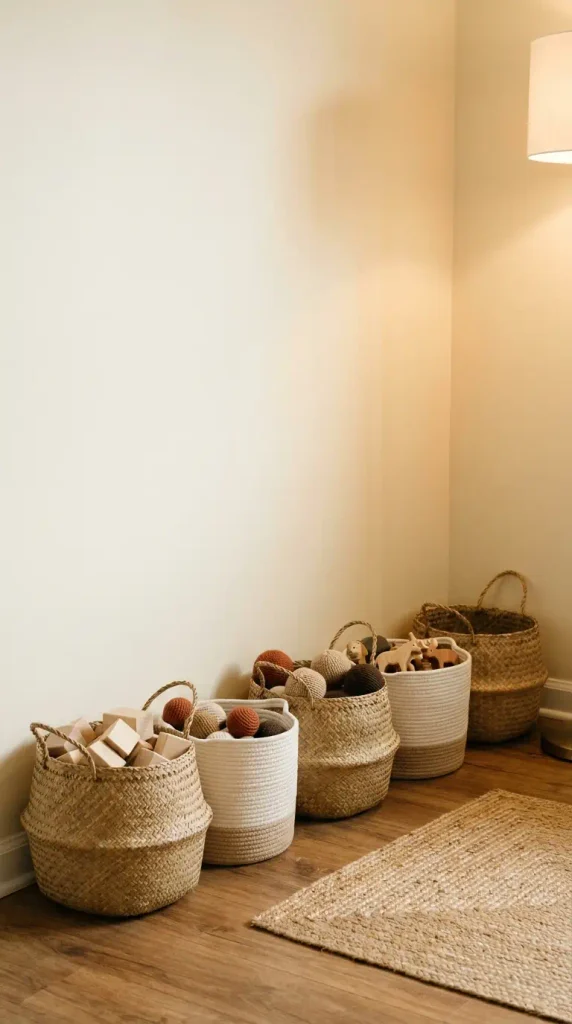
Choose belly baskets made from soft braided seagrass or coiled cotton rope rather than rigid wire crates, since flexible rims prevent pinched fingers and muffled wooden clatter during cleanup.
5. Calm Earthy Wall Palette Instead of Primary Plastic
Muted sage, warm oat, and raw birch let a child’s imagination supply the drama instead of neon walls. High-contrast primary reds and bright blues stimulate the nervous system fast, which often shortens independent play sessions in a waldorf inspired playroom.
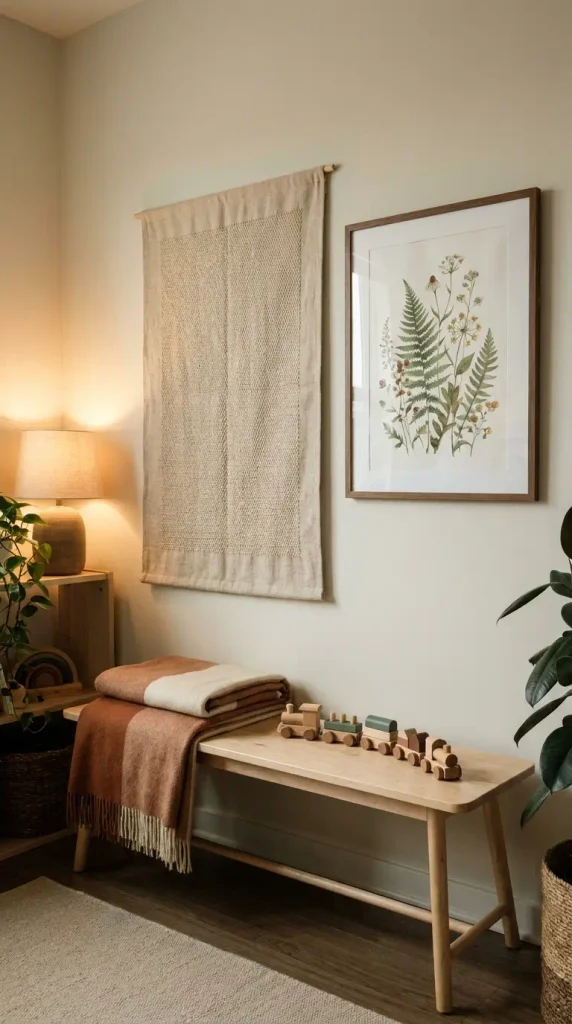
Renters who cannot paint walls can get the exact same grounding backdrop by hanging a large natural linen tapestry or leaning a cork board wrapped in oatmeal cotton behind the main toy shelf.
Keep walls warm off-white, oat, or pale clay so natural wood grain stands out.
Bring color in through movable playsilks, wool felt, and watercolors.
Glossy primary alphabet decals or neon foam floor tiles that visually shout.
Mixing five competing wall posters at adult eye level above the play zone.
6. Warm 2700K Lamp Lighting for Dusk Wind-Down
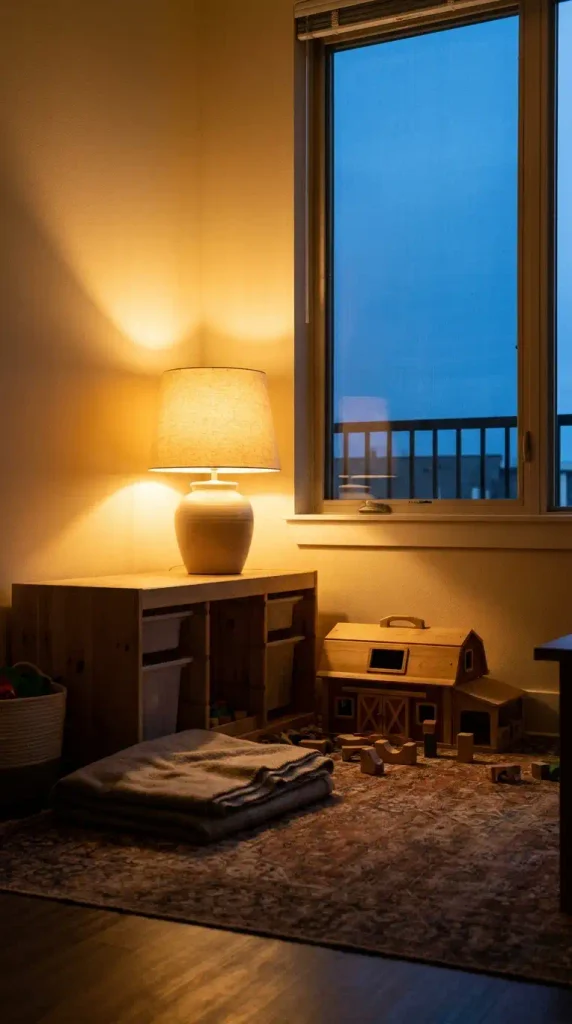
Around five in the evening, overhead ceiling fixtures make a play corner feel harsh and loud. How do you signal bedtime without a battle? Switch off bright overhead bulbs at dusk and turn on a single shaded lamp fitted with a warm 2700K bulb.
Warm amber light softens shadows across wooden toys and helps young kids transition smoothly from active building to quiet story time. Use a plug-in fabric-shade table lamp or a wooden lantern tucked out of reach on an upper shelf with cords secured behind furniture.
Kelvin ranges from Lumens lighting scale; shelf height from IKEA KALLAX 4-cube specs.
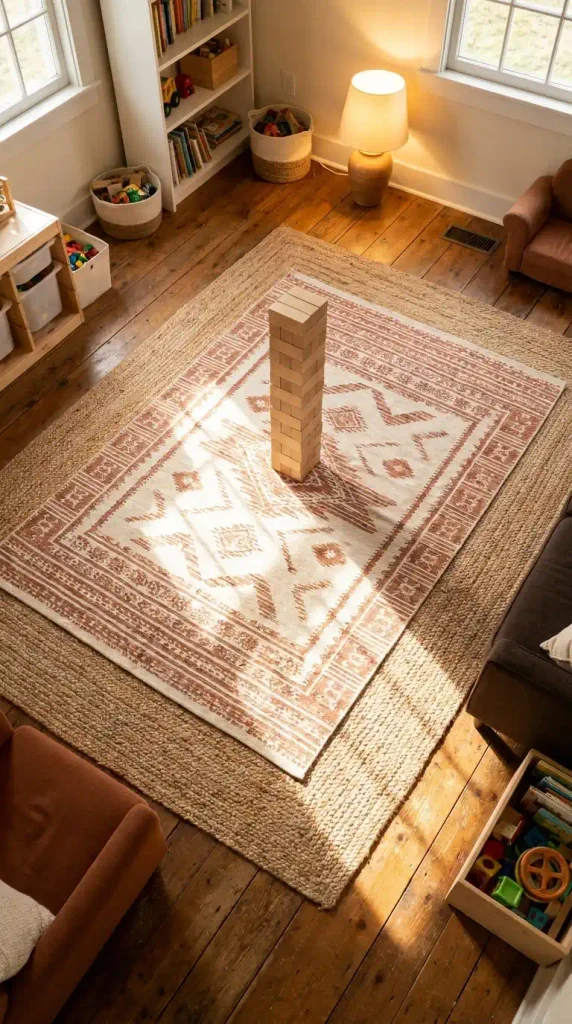
7. Layered Jute and Flatweave Cotton Floor Zone
Braided jute feels grounding underfoot, though knobby weaves tip tall wooden block towers over. Layering a low-pile flatweave cotton or wool rug directly over a larger jute base solves both problems in minutes.
Add a thin non-slip rug pad underneath the jute so active toddlers never slide when kneeling down to build.
8. Indoor Sensory Table With Dry Grains and Wooden Scoops
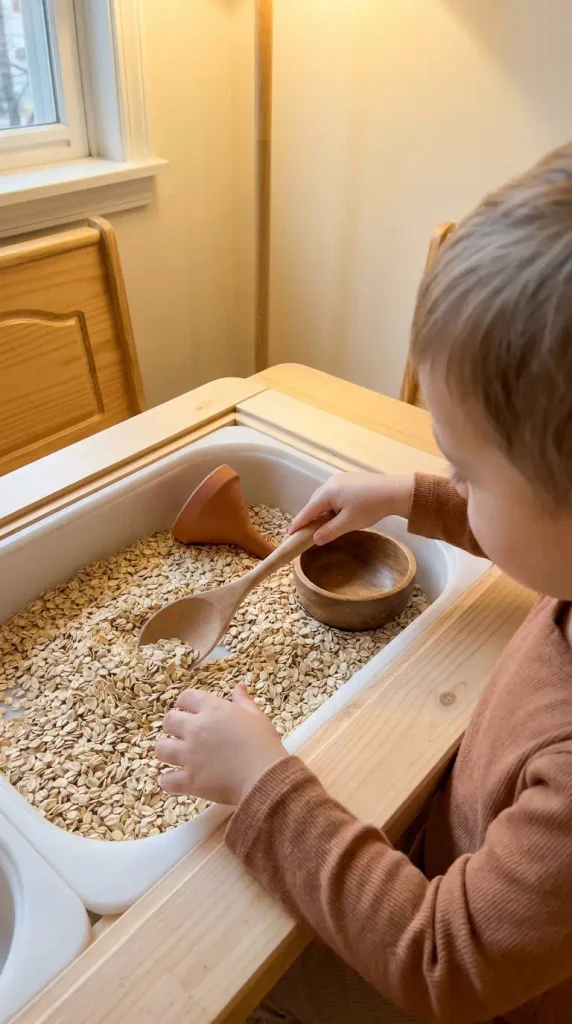
Dried oats and wooden scoops keep toddlers busy at a low pine table longer than almost any battery toy. An IKEA FLISAT solid pine children’s sensory table measures 32 5/8 by 22 7/8 inches, costs $99.99, and holds removable storage tubs flush under wooden lids.
- Whole rolled oats: Soft, quiet when poured, and safe if a curious toddler sneaks a taste.
- Dried red lentils or split peas: Rich earthy color that pours smoothly through wooden funnels.
- Beechwood scoops and bowls: Thrift-store wooden spice spoons and small turned bowls give tiny hands real weight and warmth.
9. Totaled Under-$350 Corner Waldorf Playroom Setup
You do not need a four-figure catalog budget to set up a calm waldorf playroom corner in a rental. Combining four versatile pieces from IKEA US and Bella Luna Toys creates a complete storage, sensory, and imaginative play zone for roughly $236 to $244 total.
| Piece | Archetype | Price band |
|---|---|---|
| 🪵 Low Shelf | IKEA KALLAX 4-cube shelf (30 1/8 x 30 1/8 in) | $49.99 at IKEA US |
| 🧣 Playsilks | Two Sarah’s Silks solid playsilks ($16 to $20 each) | $32.00 to $40.00 at Bella Luna Toys |
| 🧍 Peg Figures | Grimm’s 12 Wooden Peg Dolls in Tray | $53.50 at Bella Luna Toys |
| 🌾 Play Table | IKEA FLISAT solid pine children’s table | $99.99 at IKEA US |
| Total | Complete four-piece starter corner | $235.48 to $243.48 |
Add backyard stones, pinecones, and thrifted wicker baskets to fill out the cubbies without spending another dollar.
10. Floor Cushion and Linen Canopy Reading Corner
Tucking a thick floor cushion under a draped cotton canopy creates a cozy hideaway inside a busy shared room. Look through toddler reading nook ideas for low book ledge heights that keep picture book covers facing forward.
For renters who cannot use ceiling hooks, drape a lightweight cotton sheet over a tall wooden coat rack or corner floor lamp frame instead.

11. No-Drill Tension-Rod Playsilk Puppet Theater and Fort
Landlords rarely allow ceiling hooks, yet a heavy-duty tension rod turns any hallway doorway into a puppet stage in sixty seconds. Sarah’s Silks playsilks run $16.00 to $20.00 each and weigh almost nothing, so a standard spring rod holds two panels without slipping.
Twist a rubber-tipped tension rod into the doorway frame at your child’s chest height for a puppet stage, or overhead for a doorway curtain.
Clip two dyed playsilks onto the rod using wooden spring clothespins so toddlers can part the curtains themselves.
Roll the rod and silks into a basket at bedtime so doorways stay clear overnight.
If you set up a play fort near windows, follow CPSC cordless window covering guidance and keep all cords completely out of reach.
12. Wooden Play Stand Arch Converted Into a Bakery or Post Office
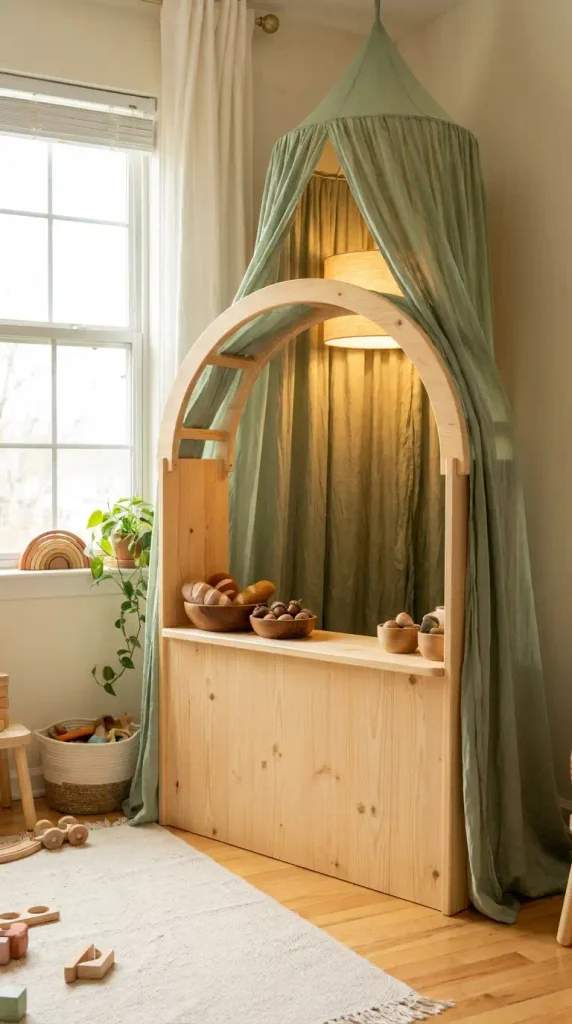
Two wooden play stand arches bridged with a dyed silk cloth become a bakery counter before breakfast and a woodland cave by afternoon. Open wooden frames let kids invent the storefront sign, menu, and props using wooden bowls and wool felt food.
Draping a single rust playsilk over two low wooden arches gave us a full pretend shop without sacrificing three feet of permanent floor space in a small living room.
Look for solid birch or pine frames with rounded corners and wide floor feet so the arch stays steady when kids lean over the counter.
13. Compact Wooden Play Kitchen Without Flashing Lights
Natural birch play kitchens weigh less visually and invite open-ended cooking far better than molded plastic units. Compact wooden models at Bella Luna Toys start around $73.99 for a fold-away tabletop kitchenette and reach $475.00 for a full heirloom wooden stove and sink.
| Natural Wooden Kitchenette | Battery Plastic Play Kitchen |
|---|---|
| Child supplies sizzling sounds and imaginative recipes. | Pre-recorded electronic beeps repeat the same loop. |
| Warm birch and pine blend naturally into shared living rooms. | Bright primary plastic stands out as visual clutter. |
| Real stainless steel bowls and wooden spoons teach gentle handling. | Lightweight hollow accessories crack and scatter fast. |
Stock the lower shelf with two thrifted mini enamel pots, a wooden whisk, and a small stack of cotton dish towels for folding practice.
14. Shared Living Room Alcove With Closed-Base Toy Storage
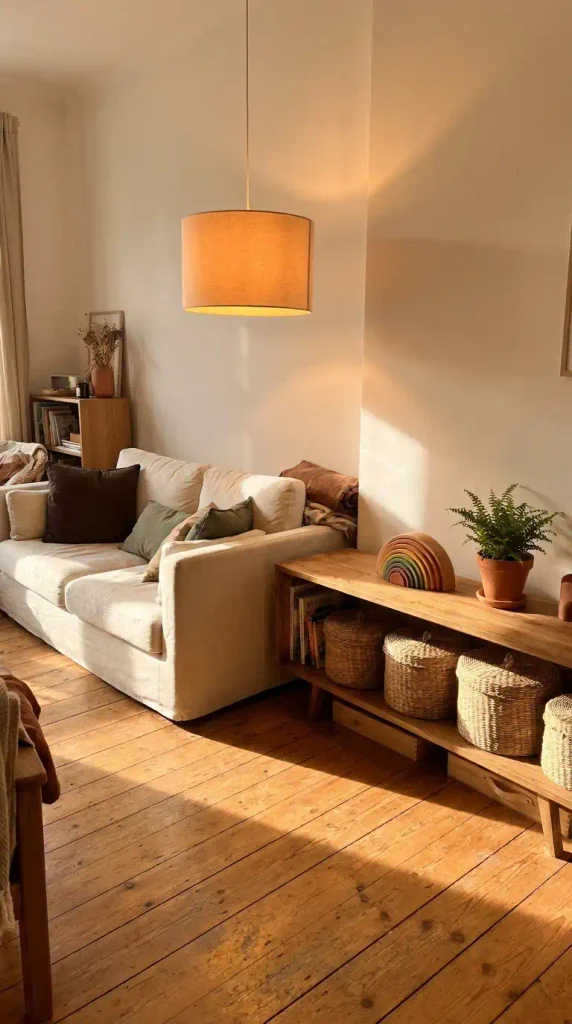
When your living room doubles as a waldorf playroom small space, closed lower cabinets keep evening clutter out of sight. Pair two open top cubbies for wooden display pieces with woven lidded baskets or cabinet doors along the bottom row.
Browse renter-safe shared playroom layouts for furniture placement tricks that define a kid zone behind a sofa or beside a fireplace without blocking walkways.
Keep open wooden display shelves on top and lidded seagrass baskets below so living room cleanup takes two minutes.
15. Wall-Mounted Art Rail and Beeswax Crayon Station
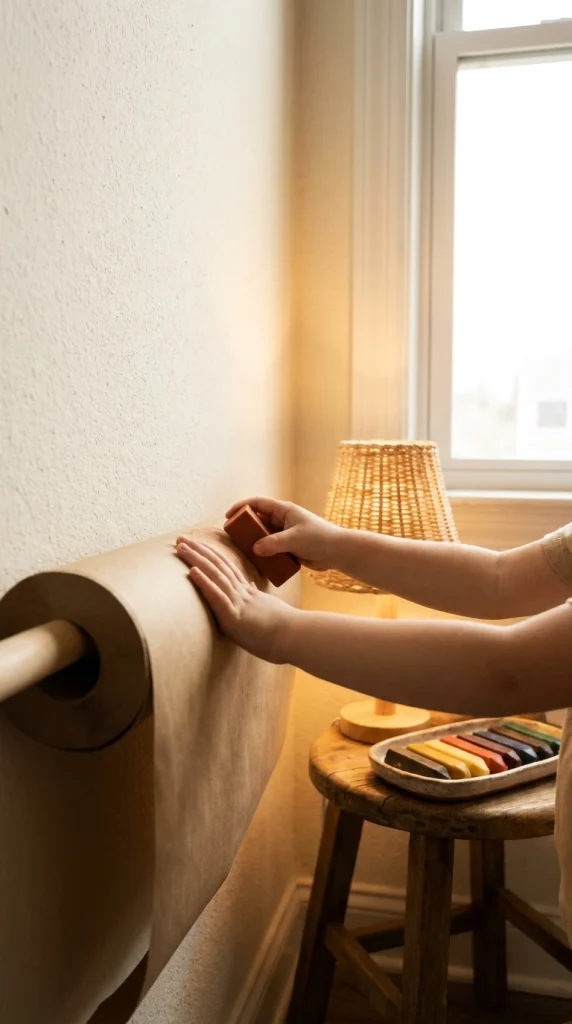
Mounting a kraft paper roll at your child’s shoulder height turns blank drywall into an easy art station without bulky easels. Store chunky beeswax block crayons in a shallow wooden tray on a nearby stool so colors stay visible and never roll under the couch.
- Command-strip or two-screw paper rail: Holds a 12-inch or 18-inch roll of heavyweight kraft paper flat against the wall.
- Beeswax block crayons: Rectangular shapes fit small palms easily and wash off painted walls with warm soapy water.
- Solid pine step stool: Doubles as a perch for drawing and a quick seat for pulling on shoes.
A flat wall paper rail takes up less than 4 inches of depth compared to an A-frame easel.
Beeswax block crayons resist snapping in tight fists and smell faintly of honey.
A tabletop wooden paper dispenser gives the exact same pull-and-tear setup with zero wall holes.
Frequently Asked Questions
What makes a toy a true Waldorf toy?
A true Waldorf toy is made from natural, sensory-rich materials like solid wood, wool felt, cotton, or silk and has no batteries, screens, or fixed rules. Because the design stays open-ended, a single wooden arch or silk cloth can become a bridge, cape, river, or doll blanket depending on your child’s imagination.
How do you set up a Waldorf playroom in a small apartment without drilling?
Start with low, stable freestanding furniture like a 30-inch pine shelf paired with braided seagrass baskets so you never need wall-mounted brackets. Use a rubber-tipped tension rod inside a doorway for playsilk curtains, and lean a linen-wrapped cork board behind shelves to soften bare rental walls without paint or nails.
How many toys should you keep in a Waldorf playroom at once?
Keep six to eight open-ended toys or baskets visible on low shelves at one time and store the rest out of sight in a closet bin. Fewer visible choices prevent sensory overload, help toddlers focus longer on a single activity, and cut evening cleanup down to two or three minutes.
How do I prevent visual overstimulation in a child’s play space?
Choose warm off-white, oat, or muted clay walls, clear away brightly colored plastic packaging, and leave open breathing room between items on every shelf. At dusk, turn off harsh overhead ceiling lights and switch on a shaded lamp fitted with a warm 2700K bulb to signal a calmer pace.
What is the difference between a Waldorf playroom and a Montessori playroom?
Both use low wooden shelves and uncluttered natural materials, though Montessori spaces emphasize real-world practical life tasks and self-correcting puzzles. Waldorf playrooms lean deeply into imaginative pretend play, storytelling, seasonal nature tables, and open-ended materials like playsilks, peg dolls, and beeswax crayons.
How do you set up a Waldorf nature table in a small corner?
Place a 14-inch wooden tray on a sunny windowsill or low side table, fold a seasonal dyed silk cloth underneath, and arrange five or six outdoor treasures like river stones, acorns, and pinecones. Add a flameless LED beeswax pillar candle for a warm glow without any open-flame fire risk near fabrics.
Bringing Your Calm Play Corner Together
Building a calm waldorf playroom does not happen through one big shopping haul. Start by clearing out broken plastic, laying down a flatweave rug, and setting out just six or eight natural wooden and woven pieces your child can reach easily.
Save this guide to your kids’ playroom Pinterest board so you have the 8-Toy Basket Rule and the under-$350 starter checklist handy the next time you reset your corner.
Keep reading
More cozy nook ideas
 Kids Room
Read →
Baby Playroom Ideas: 15 Safe Setups for the First Year
No spare guest room, no renovation budget, and no permission to drill into apartment drywall. You can still build a calm, padded…
 Kids Room
Read →
14 Boys Playroom Ideas, Plus Themes Brothers and Sisters Can Share
No extra basement, no custom built-ins, and no permission to paint the walls. You only need a few low shelves, a soft…
 Kids Room
Read →
10 Indoor Jungle Gym Playroom Ideas With the Safety Checks Each One Needs
Rainy weekends and cramped living rooms turn high-energy kids into couch jumpers fast. If you are planning an indoor jungle gym playroom,…