
Baby Playroom Ideas: 15 Safe Setups for the First Year
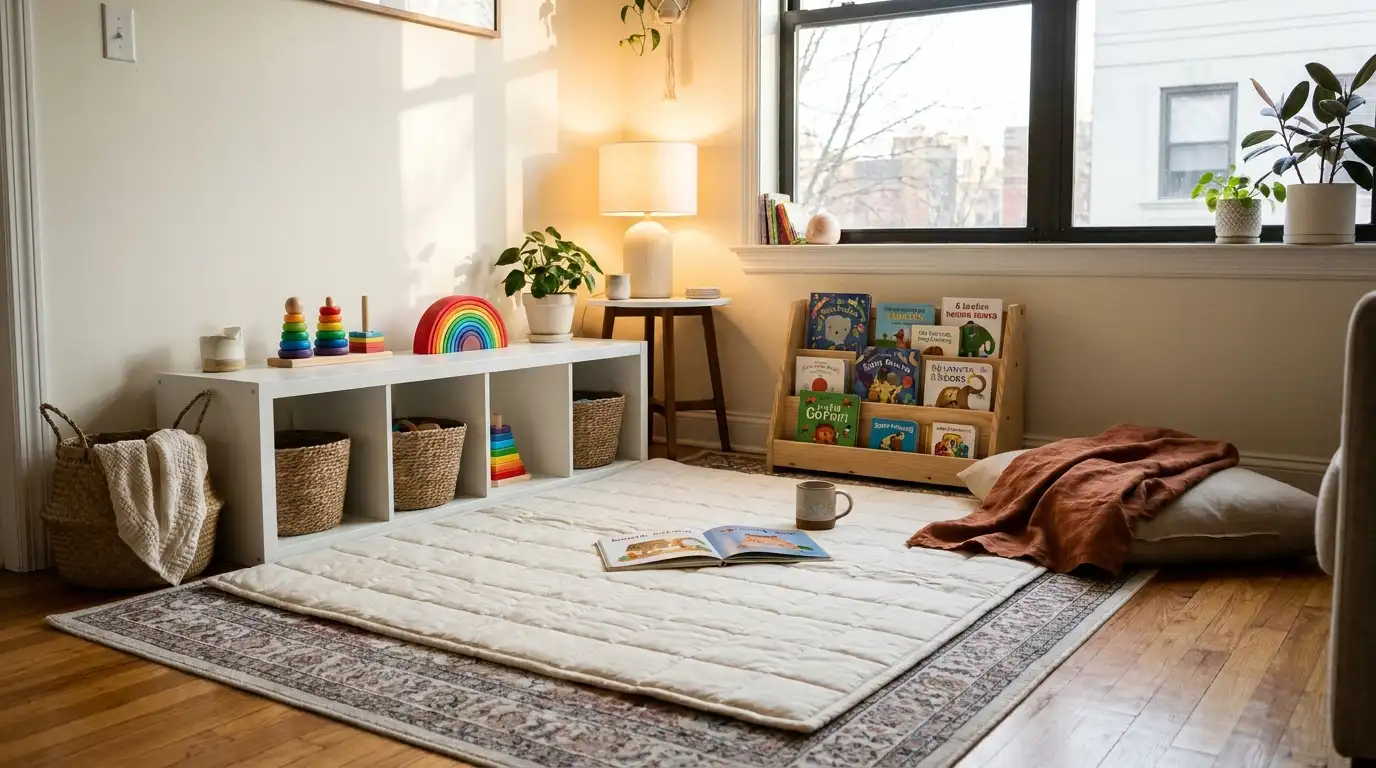
No spare guest room, no renovation budget, and no permission to drill into apartment drywall. You can still build a calm, padded corner for your baby this weekend using three core pieces and under $200.
Setting up a baby playroom during the first twelve months looks very different from decorating a big-kid play space. If you live in a 600 to 1,400 sq ft apartment or starter home and read on your phone during contact naps, you do not need plastic clutter taking over your living room. Every idea below breaks the first year into safe floor layers, low open shelves, and renter-friendly storage that grows right alongside your baby.
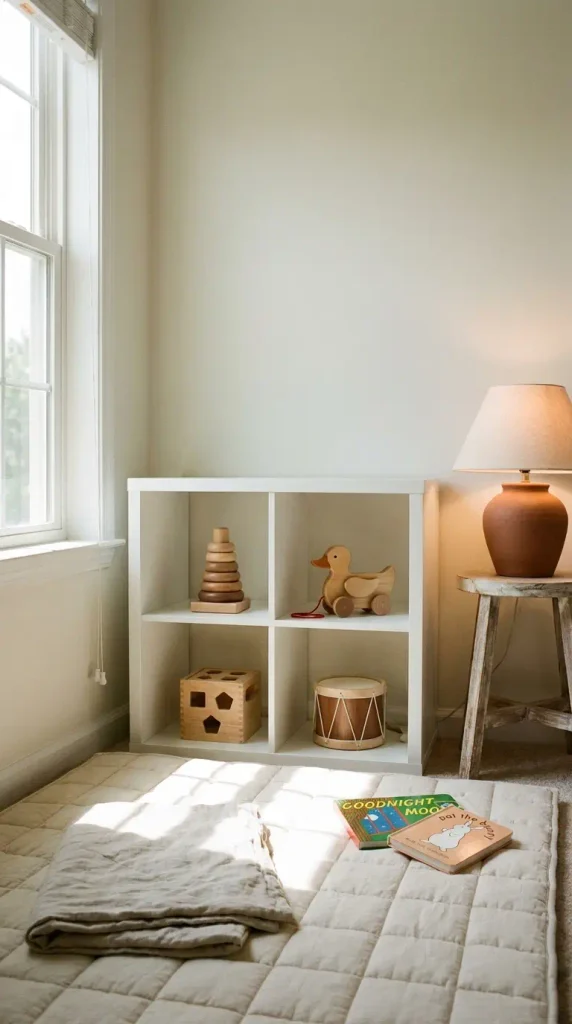
1. The No-Drill Renter Corner That Costs Under $200 Total
Start with one quiet living room corner instead of dedicating an entire room. Pair a low horizontal four-cube shelf with a floor-level pine book ledge and zero-screw anti-tip straps so nothing threatens your security deposit.
Using verified retail prices from IKEA US and Target, the core furniture and anchoring hardware total $92.97, leaving over $100 in your $200 budget for a thick washable cotton floor rug. For more ways to blend infant gear into shared living areas, explore these renter-friendly family room play zones.
| Piece | Archetype | Price band |
|---|---|---|
| 🪵 Low Shelf | IKEA KALLAX 4-Cube Unit (30 1/8 x 30 1/8 in.) | $49.99 |
| 📚 Book Ledge | IKEA FLISAT Solid Pine Display (19 1/4 x 16 1/8 in.) | $29.99 |
| 🔒 Wall Anchor | Qdos Zero-Screw Anti-Tip Kit (2-pack) | $12.99 |
| Core Total | Leaves $107.03 for a washable cotton rug | $92.97 |
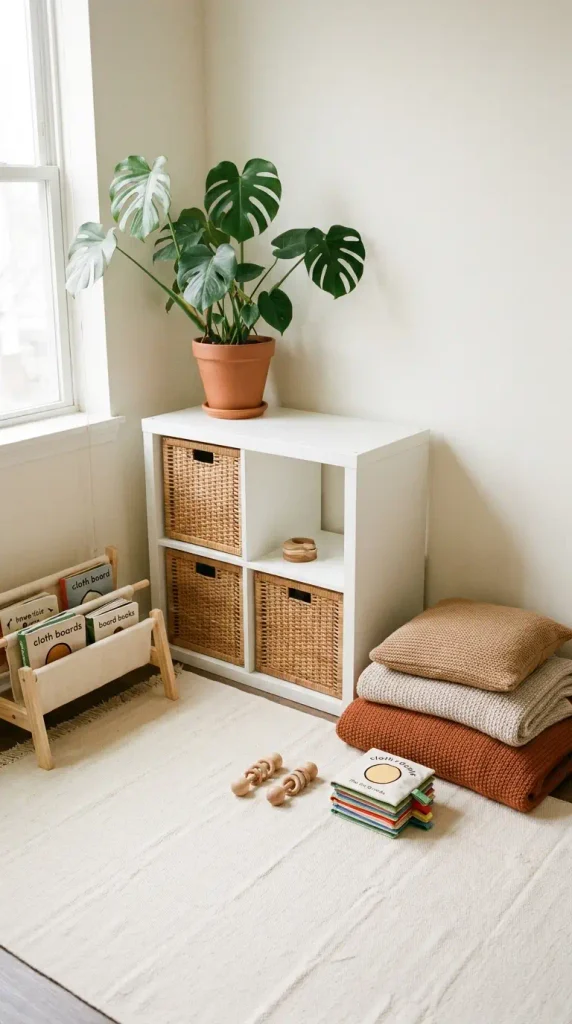
2. Three-Layer Floor Cushioning Over Hardwood
Hardwood and laminate planks feel cold on tiny knees and turn routine tummy-time wobbles into hard bonks. I learned the hard way on oak floorboards that a thin decorative rug slides out the second a seven-month-old pushes backward on hands and knees.
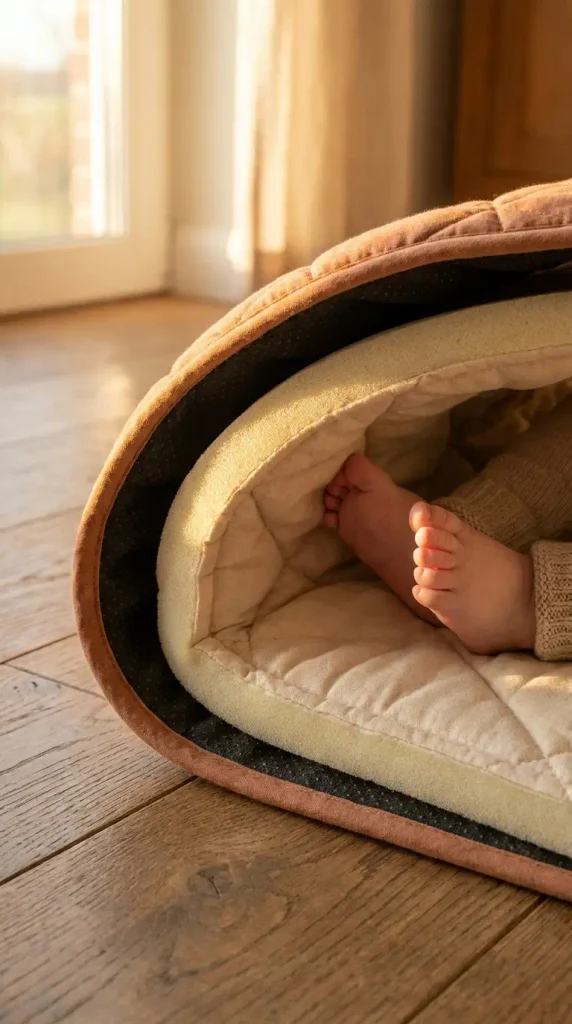
Stack three thin layers instead of buying one oversized gym mat. Start with a natural rubber rug pad that grips the wood, add a wipeable foam mat like the Skip Hop Doubleplay Reversible Playmat (85.5 by 51.8 inches, 0.4 inches thick), and top it with a machine-washable cotton quilt for spit-up days.
3. Horizontal Four-Cube Shelving Set at Crawling Height
Tall bookcases tower over an infant and encourage risky climbing once your baby starts pulling up around eight months. Laying an open cubby unit horizontally keeps every toy within a 30-inch reach while giving new standers a sturdy top surface.
Even low units can tip when a toddler hangs on the front lip, so follow the CPSC furniture anchoring safety guidelines before your baby begins scooting. You can also adapt low IKEA KALLAX kids room setups with fabric bins on the bottom row and single open toys on top.
⚠️ Safety Note
Safety note: anchor tall furniture to the wall, keep candles and cords away from fabric, and use a licensed electrician or contractor for hardwired lighting, ceiling mounts, or anything structural.

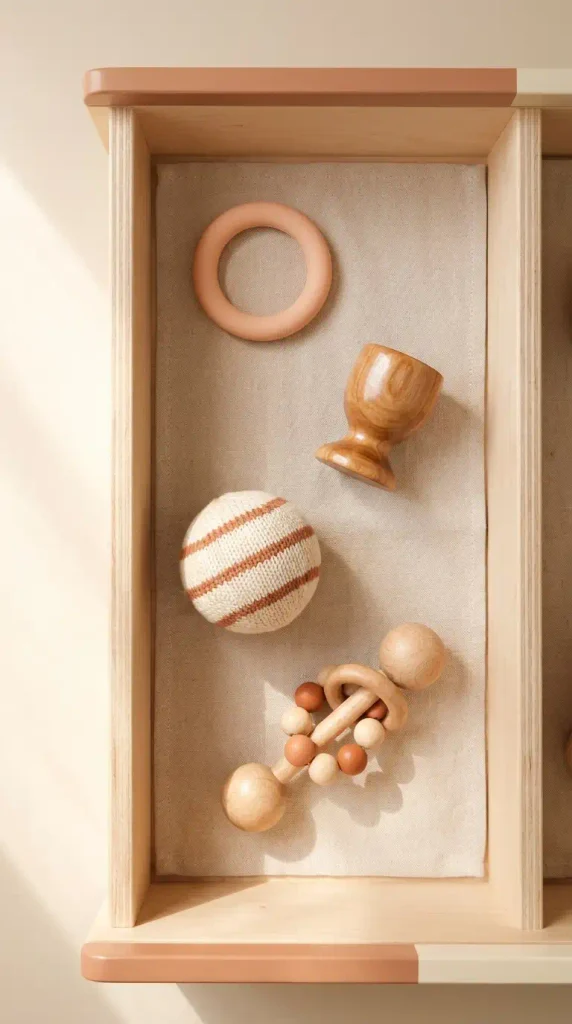
4. Open-Shelf Toy Rotation Instead of Overstuffed Toy Boxes
Deep toy chests hide every rattle at the bottom, which leads babies to dump the entire bin onto the floor in thirty seconds. When I cut our open shelf down from twelve baskets to four single toys, my afternoons stopped ending in a twenty-minute cleanup sweep.
Place four open-ended toys on separate cubby shelves with empty breathing room around each piece.
Tuck eight backup toys inside one lidded canvas bin on a high closet shelf out of sight.
Swap two items every Sunday morning so familiar rattles feel brand new without spending a dime.
Displaying four distinct items on low trays helps babies focus on grasping, transferring hand to hand, and nesting cups without visual overload.
5. High-Contrast Visual Strip for Months 0 to 4
Newborns focus best on bold black-and-white shapes placed 8 to 12 inches from their eyes rather than pastel wall prints hung five feet high. Tape three heavy cardstock contrast cards along the baseboard next to your floor mat so your baby has a crisp focal point during short side-lying and tummy sessions.
Stands upright on the mat without tape and folds flat into a diaper bag.
Under $15 at bookstoresMounts horizontally with removable Command picture strips at floor level.
Renter-safe wall mountHolds high-contrast cards 6 inches above the baseboard with zero paint damage.
Zero-cost weekend setup
6. Convertible Play Gym Zone for Months 4 to 8
Between four and eight months, babies bat at hanging bells, roll onto their bellies, and pivot in full circles. Give a wooden activity gym clear floor radius away from sharp coffee table corners so rolling elbows never clip hard wood.
Models like Lovevery The Play Gym measure 47.0 by 50.0 inches at the base and include a fabric tent cover that converts the wooden frame into a toddler hideaway later on, stretching a $150 purchase well past the first birthday.
Specs from Lovevery and Walmart product listings for The Play Gym.

7. Floor-Level Front-Facing Book Ledge and Parent Cushion
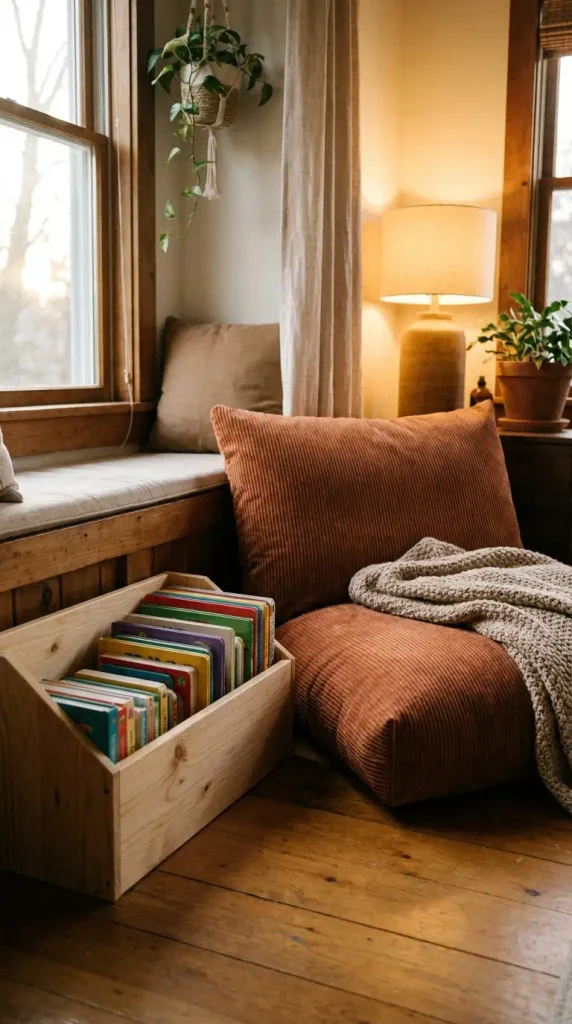
Traditional nursery bookshelves stack books spine-out above a baby’s head, where board books turn into unreachable decor. Setting a low front-facing display like the IKEA FLISAT book rack ($29.99, 19 1/4 inches wide by 16 1/8 inches tall) right on the floor lets a seated baby pull out chunky board books independently.
Tuck a thick corduroy floor pillow beside the rack so you have a comfortable spot for storytime without dragging an armchair into a tight room. Browse more soft kids reading corner setups when your toddler is ready for a canopy or wall ledge.
I placed our low book ledge twelve inches off the floor so a crawling baby could reach the board books without pulling a heavy shelf forward.
8. Weighted Pull-Up Bar and Cruising Rail Zone for Months 8 to 12
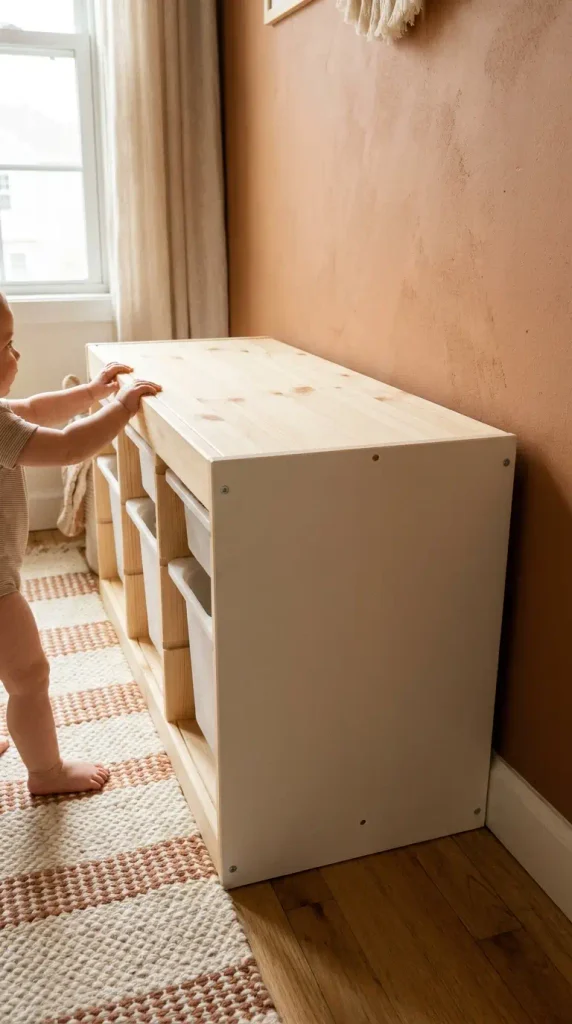
Around eight to ten months, babies grab whatever edge sits at chest height to haul themselves upright. Lightweight plastic activity tables slide across rugs and tip backward the instant a twenty-pound baby leans their full weight on one side.
Anchor a heavy solid-wood frame between 18 and 22 inches tall along one wall so your crawler can practice side-stepping safely while sliding bins underneath hold blocks and soft balls.
9. Cordless Window Shades and 2700K Evening Wind-Down Light
Overhead ceiling glare overstimulates tired infants during late-afternoon play, while dangling blind cords pose a serious strangulation risk once babies reach window sills. Follow CPSC cordless window covering standards by installing tension-mounted cordless cellular shades and switching to a warm 2700K LED bulb after dinner.
Install cordless cellular shades on an inside-mount tension rod for zero-drill light control.
Use a high-mounted plug-in wall sconce with a warm 2700K bulb and enclosed cord channel.
Never leave looped blind cords or beaded pull chains hanging within reach of a play mat.
Skip lightweight floor lamps with tippable poles inside a crawler’s cruising path.
10. Acoustic Wall Panels and Felt Bins for Shared Apartment Walls
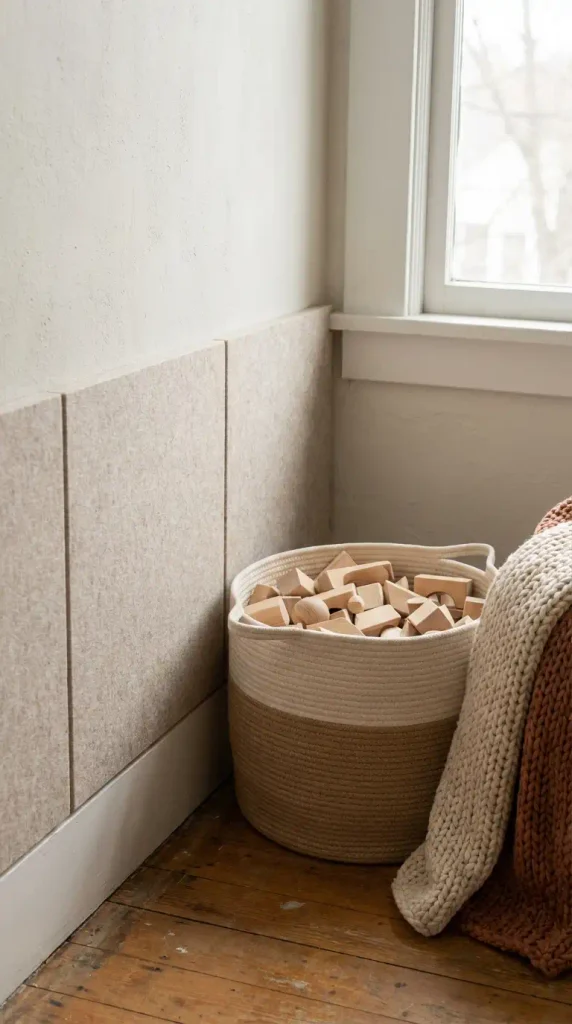
Wooden blocks banging against bare drywall and hardwood floors echo loudly into neighboring apartments during early-morning play sessions. Hang removable felt pinboards at toddler height and trade hard plastic tubs for thick wool or woven cotton rope baskets that absorb clatter.
Adding soft textiles on two perpendicular walls cuts sharp room echo immediately and gives you a safe place to pin high-contrast cards without thumbtacks.
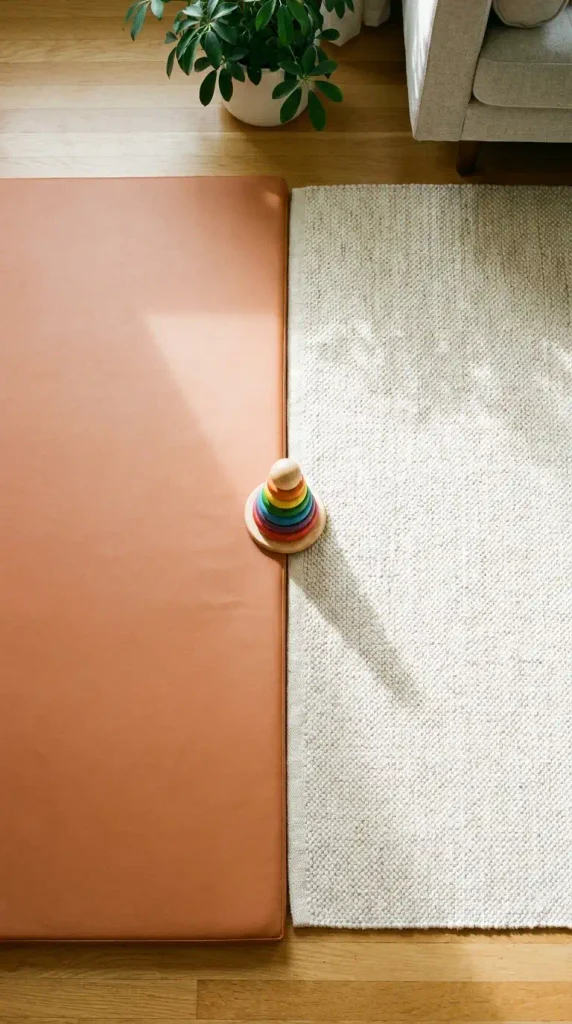
11. Wipeable Padded Foam Mat vs. Machine-Washable Cotton Rug
Every parent hits the same floor dilemma: wipeable foam mats handle messy teething drool in seconds, while woven cotton rugs look warmer in an open living room. Pick based on where the play zone sits and how often you want to run laundry.
| Wipeable Padded Mat | Washable Cotton Rug |
|---|---|
| Wipes clean with a damp cloth in ten seconds after spit-up. | Requires stripping the floor and running a full washing machine cycle. |
| Thick 0.4 to 1.5 inch foam cushion (Gathre Midi+ measures 51 x 75 x 1.5 in.). | Thin flat-weave pile needs a separate rubber pad underneath for impact protection. |
| Best for months 3 to 9 when floor drool and tummy time peak. | Best for open living rooms where the rug stays down after bedtime. |
12. Reach-In Closet Turned Mini Baby Playroom Nook
When your bedroom or hallway has zero spare floor footage, an unused 4-to-6-foot reach-in closet makes a snug baby playroom alcove. Lift the bi-fold doors off their pins, store them under a bed, and slide a low cubby unit across the back wall.
Pulling the closet doors gives you 10 to 12 sq ft of dedicated play space without shrinking your main walkway.
Keep the existing upper closet rod and shelf intact to hold lidded rotation bins high above baby reach.
Stick a rechargeable warm LED puck light under the upper shelf so the nook glows with zero electrical wiring.
13. Modular Floor Seating That Grows Into Toddlerhood
Buying baby-only gear means replacing everything at fourteen months. Choose low foam seating with an 8-to-9-inch seat height so a sitting infant can lean safely against soft bolsters now and climb onto the cushions independently as a toddler.
Oversized washable floor pillow or pouf for supported sitting and parent storytime.
Under $60 at big-box storesPottery Barn Kids Anywhere Chair with removable, machine-washable twill slipcover.
$99 to $189 at Pottery Barn KidsNugget Original Play Couch (66 x 33 x 22.25 in., 8.75 in. seat height) with four modular foam pieces.
$224 sale / $249 regular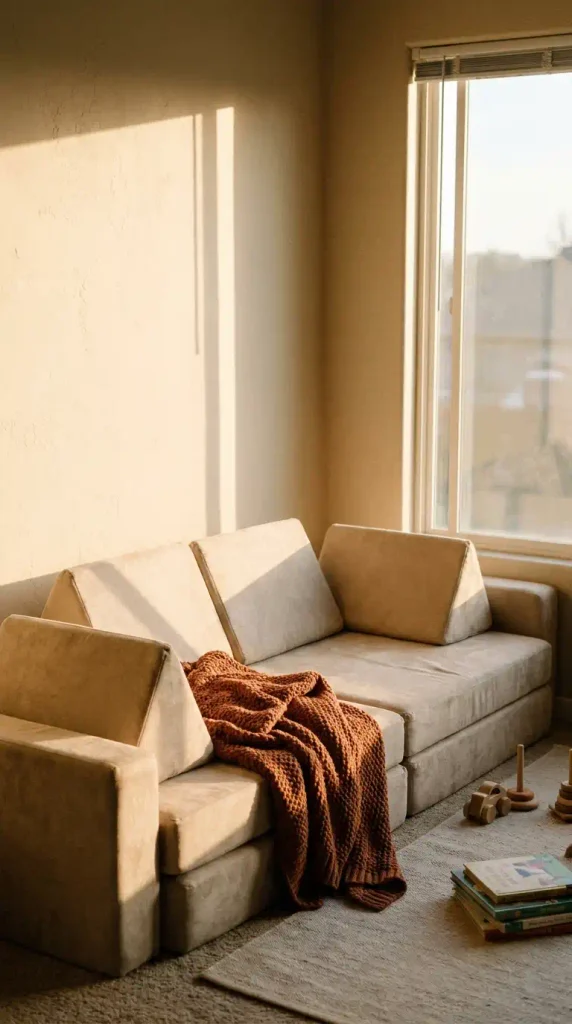
14. Hidden Outlet and Cord Containment Behind Low Bins
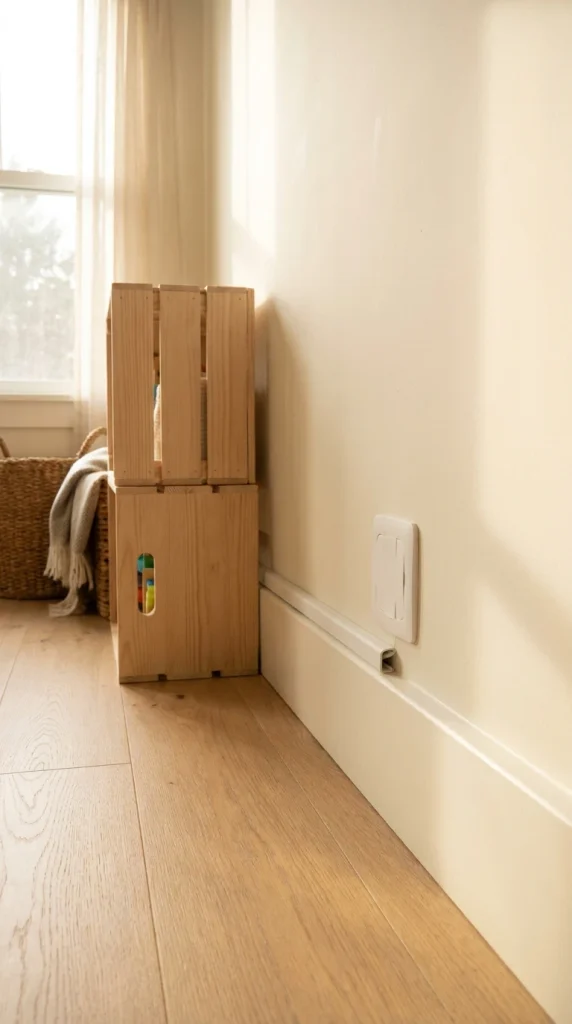
Crawling babies spot an exposed white charger cord from across the room in seconds. Before laying down your mat, map every wall outlet along that baseboard and route baby monitor or lamp wires inside adhesive cord channels tucked behind your anchored shelf.
Install a self-locking outlet cover box with a bottom cord exit and run the wire inside a flat paintable cord channel behind the shelf.
Snap in oversized dual-press safety outlet plugs ($4.99 at Target) or slide a heavy anchored storage frame directly in front.
15. The Five-Minute Nightly Reset Tote for Living Room Corners
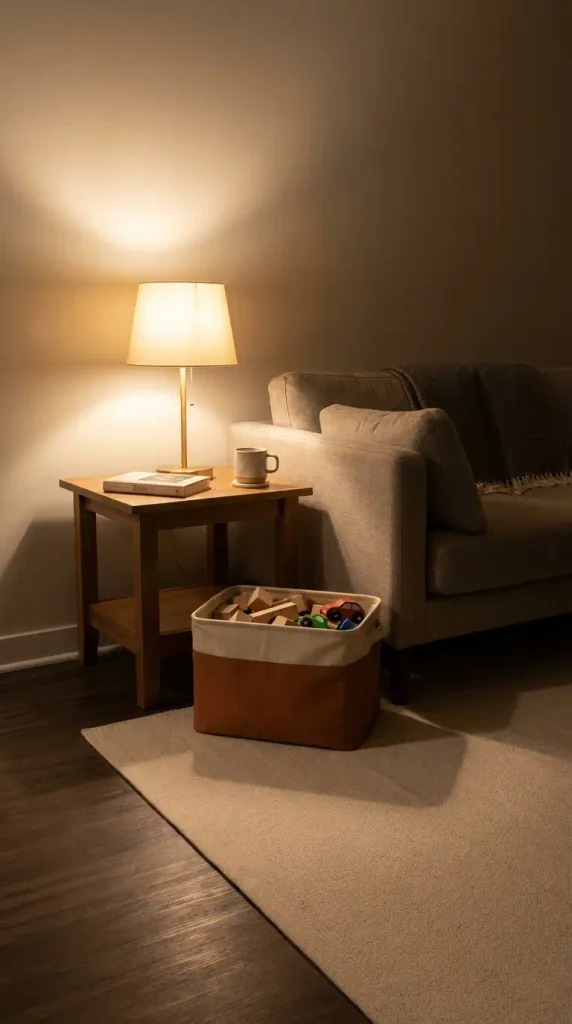
When your play zone shares square footage with your main living room, your adult brain needs a visual off-switch after bedtime. Keeping one handled canvas tote by the living room sofa saved my evenings whenever guests dropped by with ten minutes of notice.
Sweep loose teethers, cloth blocks, and board books into the tote in under five minutes so your living room feels calm again while your coffee table stays clear.
Keep one structured canvas tote beside the play mat so bedtime cleanup takes five minutes flat.
Frequently Asked Questions
What age should you set up a baby playroom?
You can set up a simple floor-based play zone around two to three months old, right when daily tummy time and visual tracking pick up. Start with a padded mat and high-contrast cards at floor level, then add a low anchored shelf around six to eight months once your baby sits up and begins scooting.
Should a baby playroom be separate from the bedroom?
Keeping active toys in a living room corner or separate playroom helps babies associate their crib strictly with sleep. In a one-bedroom apartment or studio, placing the play mat in the main living area also keeps your baby within easy sight while you cook or fold laundry.
How do you set up a baby playroom in a small apartment without drilling?
Choose low, wide furniture under 30 inches tall, secure it with zero-screw adhesive anti-tip kits, and use tension rods for cordless window shades. Stick-on felt wall tiles and floor-standing book caddies give your baby vertical interest and easy book access without leaving nail holes in drywall.
What soft flooring is safest for a baby playroom on hardwood floors?
A three-layer floor setup works best over slippery hardwood or tile. Place a natural rubber non-slip rug pad on the wood first, layer a PVC-free closed-cell foam play mat in the middle for tumble cushioning, and top it with a machine-washable cotton quilt or low-pile rug.
How many toys should you keep in a baby playroom at once?
Keep four to six open-ended toys visible on a low shelf at any one time and store the rest in a lidded closet bin. Rotating two items each week keeps babies engaged longer, prevents visual overstimulation, and cuts daily floor clutter down to a five-minute tidy.
How much does a basic first-year baby playroom setup cost?
You can build a safe starter corner for under $200 by pairing a $49.99 four-cube shelf, a $29.99 pine book ledge, and $12.99 zero-screw wall straps with a washable cotton rug. Adding a modular play couch or stage-based wooden play gym brings a full setup into the $250 to $450 range.
Start With One Safe Corner This Weekend
Building a welcoming baby playroom does not require knocking down walls or filling your home with oversized plastic gear. Pick one bright corner, lay down a non-slip floor cushion, anchor a low shelf at crawling height, and set out four simple toys your baby can reach on their own.
Save this guide to your baby room or small-space Pinterest board so you have the exact shelf measurements and rotation rule handy when you measure your corner this weekend.
Weekend First-Year Play Corner Quick-Check
Keep reading
More cozy nook ideas
 Kids Room
Read →
15 Waldorf Playroom Ideas With Natural Materials and Calm Colors
No spare bonus room, no custom carpentry, and no landlord permission required. You can build a calm waldorf playroom in an ordinary…
 Kids Room
Read →
14 Boys Playroom Ideas, Plus Themes Brothers and Sisters Can Share
No extra basement, no custom built-ins, and no permission to paint the walls. You only need a few low shelves, a soft…
 Kids Room
Read →
10 Indoor Jungle Gym Playroom Ideas With the Safety Checks Each One Needs
Rainy weekends and cramped living rooms turn high-energy kids into couch jumpers fast. If you are planning an indoor jungle gym playroom,…