
Hammock Reading Nook: Indoor + Outdoor Setups That Won’t Wreck Your Wall

You don’t need a drill, a structural engineer, or a landlord who answers texts. A hammock reading nook takes one corner, one hanging chair, and an afternoon. That’s it.
The biggest lie about hammock nooks is that you need to open up your ceiling. You don’t. A freestanding stand costs $80 to $180, holds 330 pounds, and moves whenever you do. Inside or outside. Rented apartment or owned house. Whether you want that boho-draped indoor cocoon or a shaded garden perch for summer marathon reads, the setup is simpler than any Pinterest pin makes it look. Here’s how to build it for your specific situation.
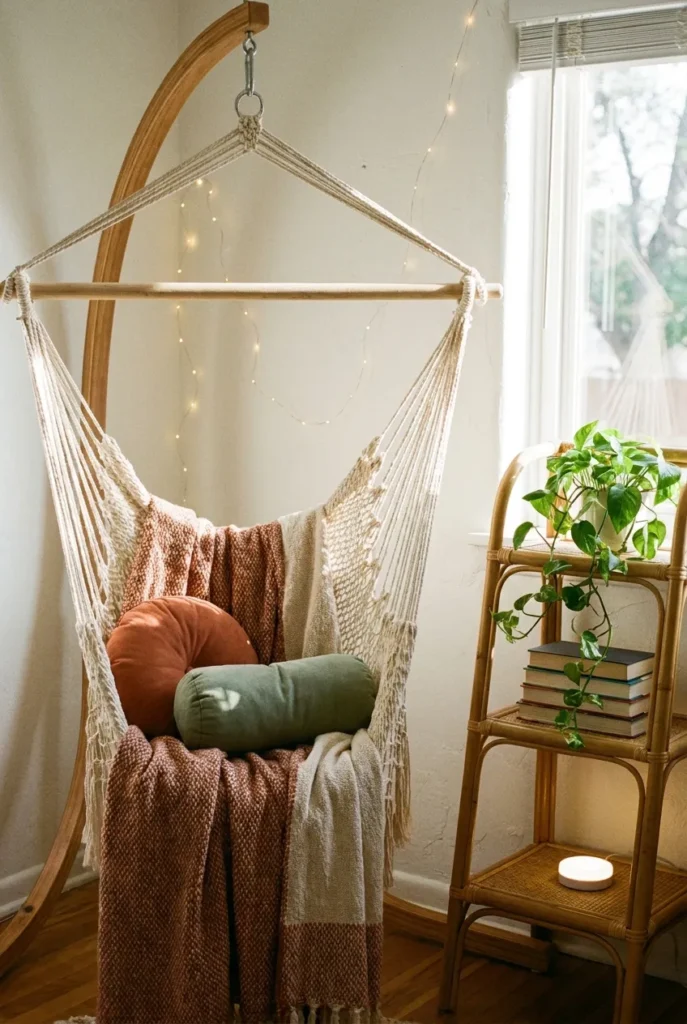
Start Here If You Rent: The Freestanding Stand Setup
This is the section every other article skips. If you rent, you’ve probably already written off the hammock reading nook because of ceiling joists, security deposits, and landlords who go quiet when you mention drilling. Good news: a freestanding hammock stand solves all three problems at once.
Look for a powder-coated steel arc stand rated for at least 265 pounds. Most household-grade options go to 330. The Vivere Double Hammock with Space-Saving Steel Stand is one of the most widely available combinations for a reason: it assembles in about 15 minutes and the chair-only version of the arc stand collapses flat for storage. For indoor use, the single hanging chair arc stand (typically 54 to 64 inches wide) takes up a footprint of about 4 square feet and fits cleanly in a corner of a living room, bedroom, or a large closet conversion.
I set one up in a 750-square-foot apartment a few years back. The ceiling was 8 feet of plaster I was absolutely not drilling into. The freestanding arc stand fit between the bookcase and the window, and the whole thing took one afternoon and zero landlord conversations. The Sorbus compact arc stand clears 54 inches wide and 72 inches tall. Most reading corners have that clearance even when they feel tight.
One thing to watch: the stand feet on cheaper models are narrow and will slide on hardwood or tile. Add four furniture felt pads to each foot contact point. Prevents scratches, prevents drift. That’s the whole trick.
For pairing this setup with a full small-space layout, renter-friendly reading nook setups for small spaces walks through the floor plan in detail.
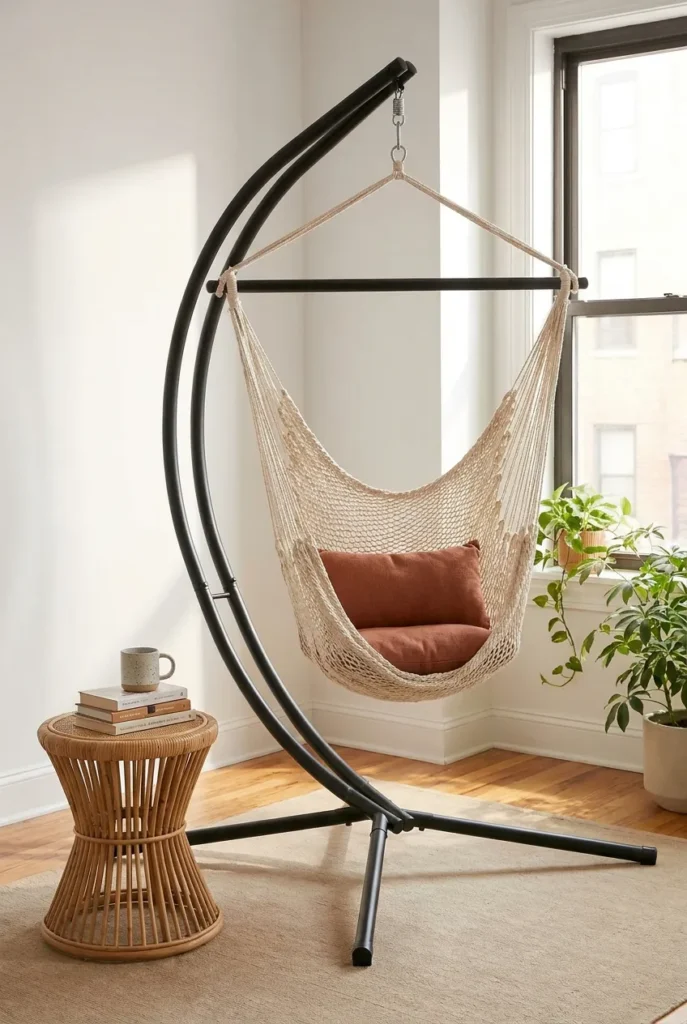
Indoor Ceiling Mount: What You Actually Need Before You Drill
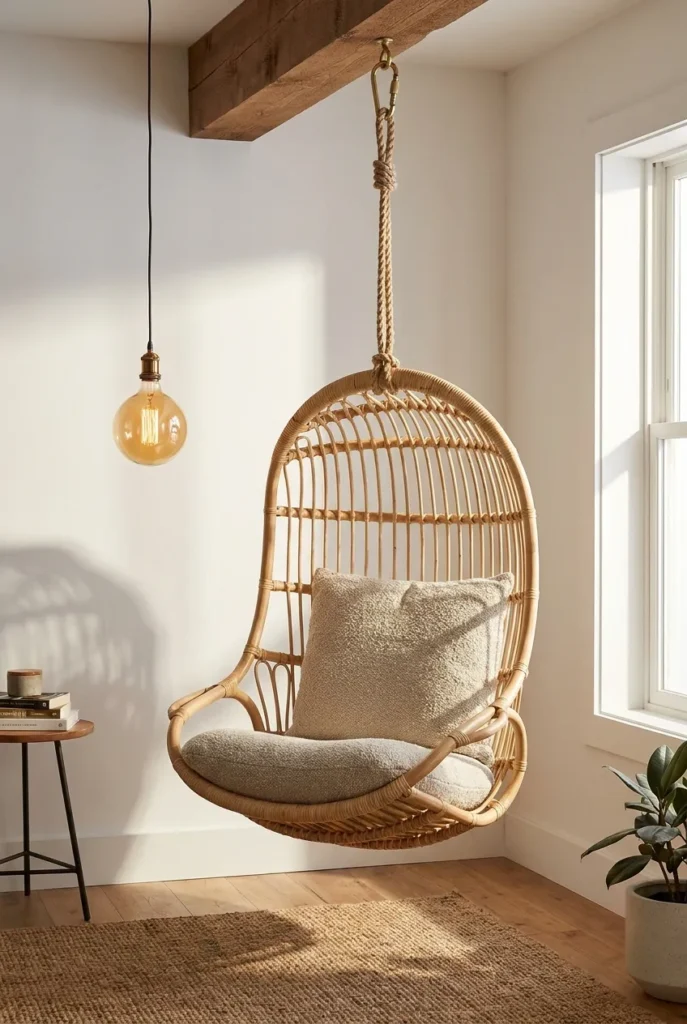
If you own your home, or have a cooperative landlord and a security deposit you’re prepared to spend, ceiling mounting gives a cleaner look and more swing clearance. But get the structure right first, because the load forces here are higher than most people realize.
A hammock chair in motion creates a dynamic load of roughly two to three times the static weight of the person in it. A 150-pound person swinging gently puts a peak load close to 450 pounds on that single anchor point. You need a ceiling joist, not drywall. Use a stud finder, confirm you’re hitting solid framing (ideally 2×6 or 2×8 lumber), and install a forged steel eye bolt rated for a minimum 400-pound working load with a large washer plate on the attic side. The U.S.
Consumer Product Safety Commission publishes load rating guidance and anchor hardware standards for suspended home equipment at CPSC.gov’s home safety resource library. Ten minutes on that page before you buy any hardware is worth it.
Ceiling height is the constraint most guides skip entirely. You need at least 9 feet of clear height for a comfortable hang: roughly 7 feet for the chair’s occupied position plus 2 feet of clearance above the hardware for swing arc. Standard 8-foot ceilings technically work, but the chair sits higher than is comfortable and getting in and out becomes a small event.
One failure mode I’ve watched play out: hanging the chair dead-center in a room because it photographs better. Then forgetting that a swinging chair needs 36 inches of clearance on all sides. Put it in a corner-adjacent position instead. Two walls naturally limit the swing direction, and your effective clearance need drops to about 24 inches on the open side only.
Outdoor Hammock Reading Nook Ideas for Every Space You Have
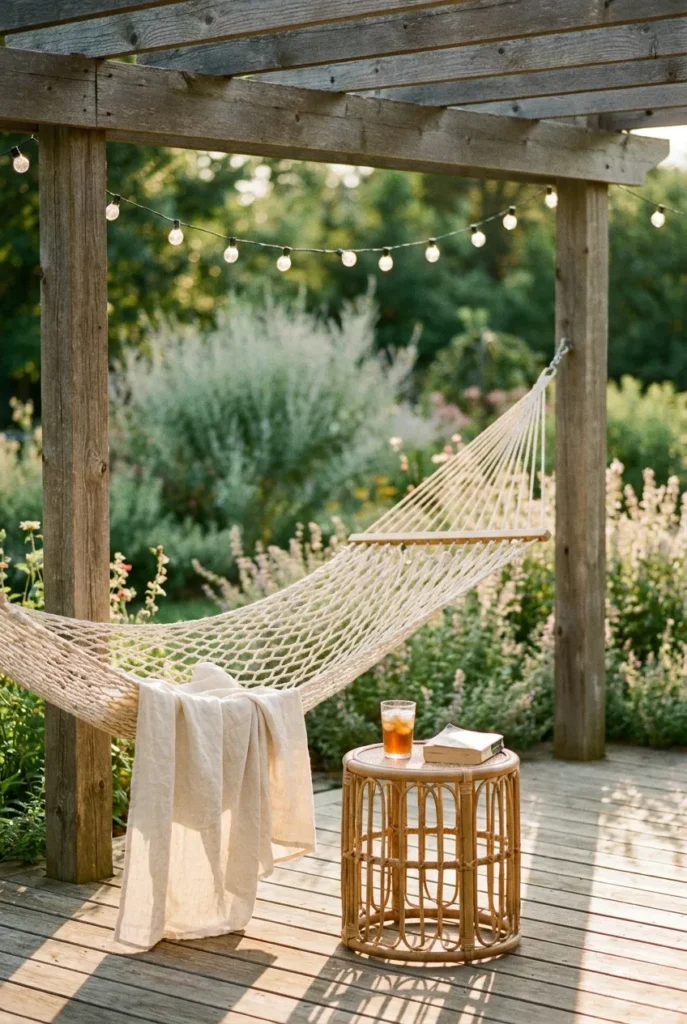
The outdoor hammock reading nook is where this whole idea started, and the sensory case for it is hard to argue with. Dappled light through a pergola slat, the low sound of wind moving through leaves, the slight give of a cotton hammock when you shift your book from one hand to the other. It’s a different reading experience than anything indoors can match.
Three setups depending on what you’re working with:
Patio or Deck
A freestanding hammock stand is again the easiest path. Powder-coated steel weathers reasonably well, but adding a coat of rust-resistant spray each spring extends the life significantly. Set the stand back at least 18 inches from any railing edge so the swing arc doesn’t carry you into a post. A 5×7 outdoor-rated jute or polypropylene rug underneath defines the reading zone and gives bare feet somewhere warm to land.
Balcony
Weight and footprint are the real constraints here. Most apartment balconies have a structural load rating of 40 to 60 pounds per square foot. A compact arc stand (roughly 38 pounds) plus a hammock chair (10 to 12 pounds) sits well inside that. Skip the full-size hammock on a balcony: it needs 12 feet of horizontal space, which very few balconies have. A single hanging chair on a tripod base is the practical pick, and it’s easier to bring inside during rain.
Garden
Two trees with 10 to 15 feet of horizontal distance give you the cleanest option. Use tree straps rated for 400 pounds minimum. Go with wide-strap nylon (at least 1.5 inches), not thin rope or paracord, which cuts into bark over time and eventually damages the tree. No trees? A freestanding A-frame stand in powder-coated steel covers the same ground and doubles as a garden focal point.
For pairing the outdoor hammock nook with seasonal textile changes, the guide on airy reading corner swaps for warmer months covers specific throw and cushion recommendations that hold up in open air.
How to Actually Read in a Hammock (The Posture Problem, Solved)
Honest answer to the People Also Ask question: yes, hammocks are good for reading. With one condition. You have to get the body angle right first.
Most people install a hammock chair, sink straight down into the bowl of it, and end up looking up at the ceiling to read. Twenty minutes later the neck hurts, the book is face-down on the floor, and they decide hammock nooks are “just for photos.” The chair isn’t the problem. The angle is.
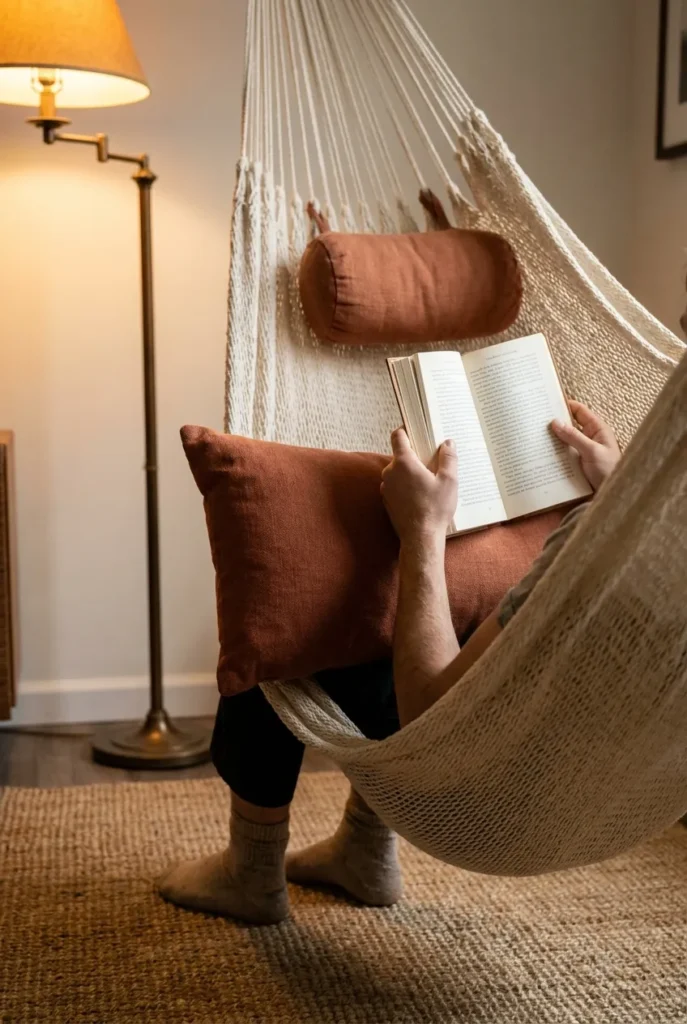
The fix is a two-pillow system. First: a firm 12×20-inch lumbar pillow behind your lower back. This stops the full collapse-into-a-bowl posture that hammocks naturally encourage. Second: a cylindrical bolster pillow, about 12 inches long and 6 inches in diameter, behind your neck. Together, these two pieces tilt your head forward and bring your eye line down to roughly 30 to 45 degrees from horizontal, which is where it would be in a well-fitted armchair. Same neutral spine, same reading angle, much less strain.
I got this badly wrong in my first hammock nook setup. I bought a beautiful macrame chair, added one decorative throw pillow behind my back, and lasted 25 minutes before my neck staged a full protest. Adding the cylindrical bolster behind the neck changed the whole session length from 25 minutes to closer to 90.
Trade-off honesty worth naming: the hammock chair is genuinely better for reading than a floor cushion, but it doesn’t match a good armchair with a headrest for marathon sessions. For 600-page fantasy series that require four-hour blocks, a chaise or daybed serves you better. For a one-hour sit with a short novel, a collection of essays, or your current BookTok find, the hammock is just right.
Hang the chair so the seat sits 17 to 19 inches above the floor. That’s standard seat height. Anything lower and you’ll use your core every single time you stand up, which gets tiring faster than you’d expect.
Building a Boho Hammock Reading Nook: The Styling Layers
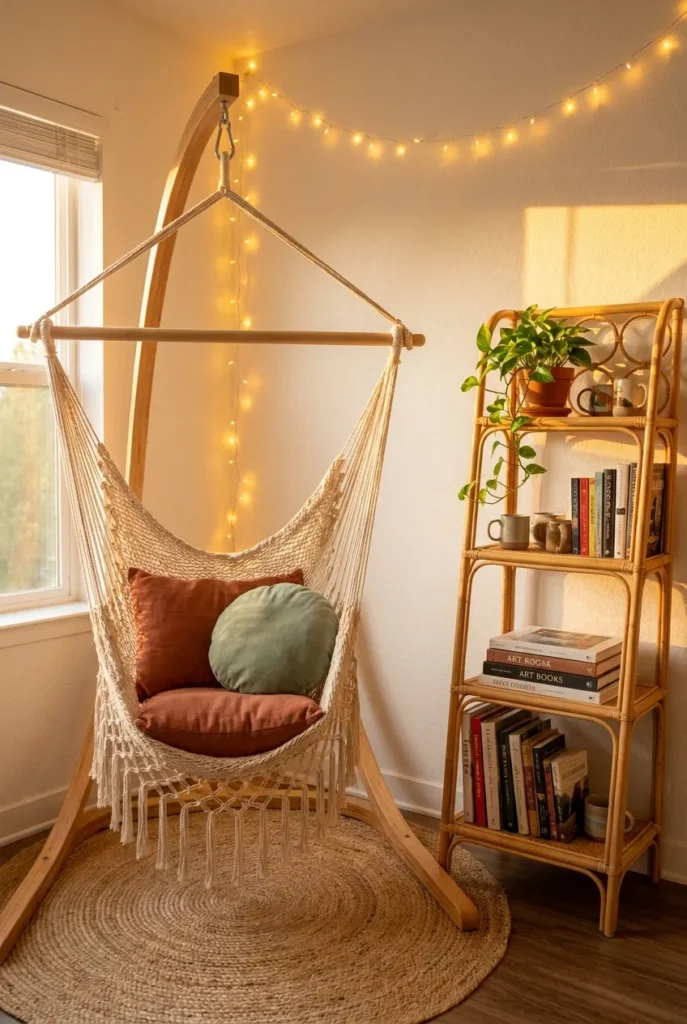
The boho hammock reading nook is the dominant style on Pinterest right now, and the reason is honest: the textures do most of the work. Macrame, rattan, woven cotton, dried pampas, trailing pothos. None of these cost much. All of them photograph well in the warm afternoon light that most reading corners happen to have.
Here’s the layer order I’d follow, working from what costs least and adds most:
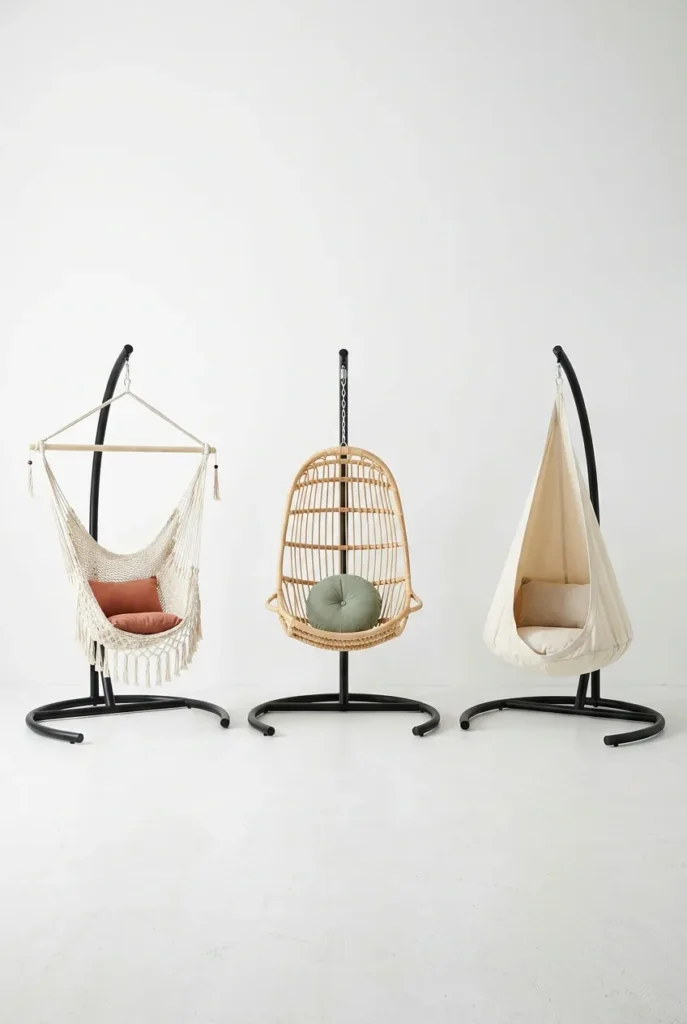
Layer 1: The chair. A macrame hanging chair in natural cotton runs $60 to $130 from most major retailers. A rattan egg chair runs $120 to $220 for a decent version. Both read as boho immediately. Either works; the egg chair gives more back support, the macrame chair has more visual texture.
Layer 2: Textiles. One linen throw in cream or rust draped over the side. Two or three lumbar and round pillows in terracotta, sage, and natural linen. Avoid matching sets: mix two textures (a woven pillow and a boucle or velvet one) and two scales (one large 22-inch square, one small 14-inch round). The mismatch is what makes it look collected rather than bought as a bundle.
Layer 3: The floor anchor. A round jute or seagrass rug, 4 feet in diameter, placed directly under and slightly forward of the chair. This visually grounds a hanging piece that would otherwise appear to be floating. It also protects floors from stand feet.
Layer 4: Vertical interest. A rattan ladder shelf or a Billy bookcase painted in warm white to the side of the setup. Stack books horizontally on some shelves, upright on others. Add a trailing pothos or a small dried eucalyptus bundle. Keep it loose, not arranged within an inch of its life.
Layer 5: Light. Fairy lights wound loosely around the shelf or along the wall behind the chair give the whole corner a warm amber haze after dark. For actual reading light, a plug-in swing-arm lamp or a clip-on book light at elbow height handles the functional side. More on that below.
Kids’ Hammock Reading Nook: Lower, Softer, and Actually Safe
A kids’ hammock reading nook is one of the easiest setups on this entire list. Two safety numbers matter before anything else.
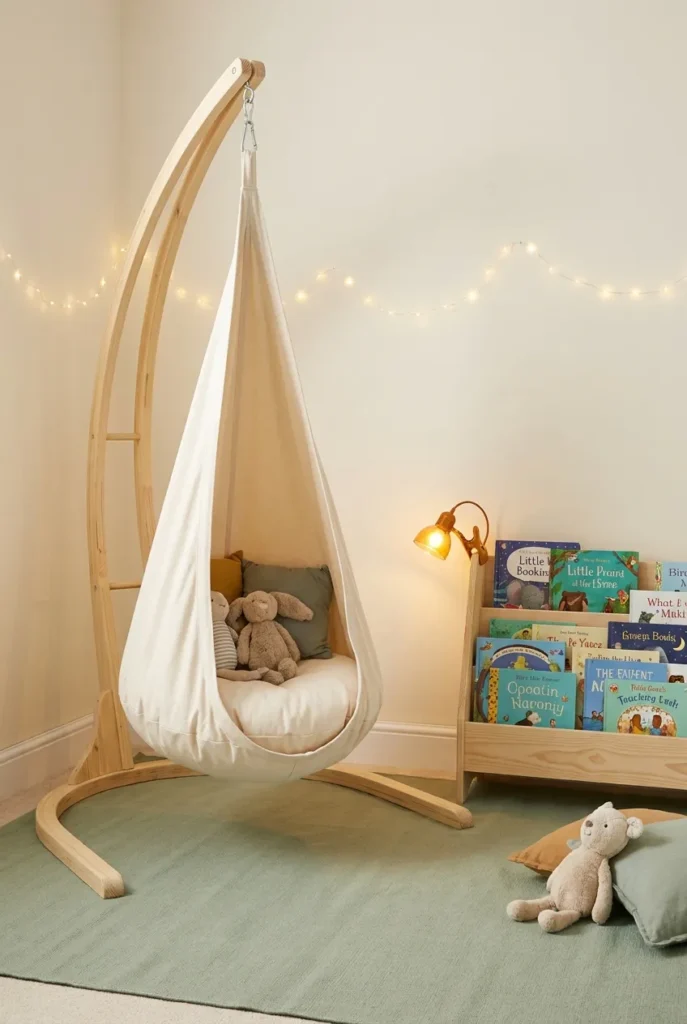
Hanging height: For a kids’ setup, bring the seat to 12 to 15 inches above the floor rather than the standard adult height of 17 to 19 inches. At 12 inches off the ground, a child who slides out lands with almost no drop. A freestanding stand at lower height is still the safest route for kids: no ceiling anchor, no sharp hardware at head height, no risk of a mounting bolt working loose over time.
Chair style: A canvas swing pod or a solid-bottom fabric hammock swing is the better pick for children under 8, rather than open macrame. Open-weave styles are beautiful, but small fingers and toes can catch in the gaps mid-squirm, especially during the inevitable wiggling that happens in the middle of a chapter. A solid-bottom swing pod gives the same enclosed, cozy sensation with less catching risk.
Beyond safety, styling a kids’ hammock reading corner is genuinely fun. A dusty terracotta, sage green, and warm cream palette works well for a Montessori-adjacent feel. Add a small bookshelf at their reach height (about 20 to 24 inches from floor to top shelf), a washable rug in a neutral or soft geometric pattern, and a clip-on reading light they can adjust themselves. That last detail matters more than it sounds. Kids who control their own reading light use it consistently. Kids whose parents set the light tend to just read under a ceiling fixture.
Hammock Nook Lighting: The Rule That Changes Everything After Dark
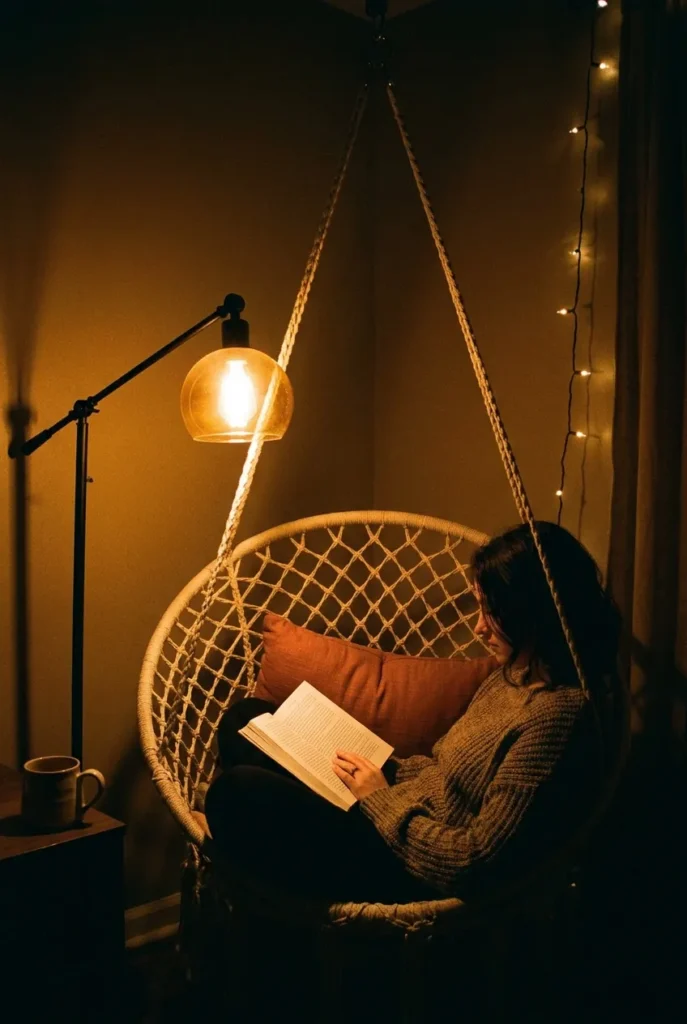
Get the chair right. Get the textiles right. Then ruin it with a ceiling LED blasting 5000K white light into your eyes while you try to read. This is the most common hammock nook mistake. I have made it personally and it took me longer than I’d like to admit to figure out what was wrong.
The rule is simple: your reading light source should sit at elbow height, not overhead. For a hammock chair, that means a floor lamp with a swing arm positioned so the bulb is at roughly shoulder level when you’re seated, around 48 to 54 inches from the floor. Set it 15 inches to the side of the chair, not directly behind you, where it creates a head shadow on the page.
Bulb temperature: 2700K. The American Optometric Association recommends a minimum illuminance of 50 foot-candles (roughly 500 lux) at the reading surface for close-task work. See the AOA’s vision and reading health guidelines for the full reference data. A 60-watt equivalent LED bulb at 2700K in a directional shade, positioned about 18 inches from the page surface, delivers approximately that level.
A dimmer is not optional. Without one, your warm 2700K bulb at full blast still reads like a dental office at night. A smart plug with dimming capability runs $12 to $25 at Home Depot or Amazon, works on most floor lamps without any wiring, and drops the light to the 60 to 70 percent range where the corner actually feels like a retreat and not an overhead inspection.
For a full plug-in lighting reference covering every fixture type that works in a reading corner, including hammock setups, plug-in wall sconces built for reading corners covers product picks and renter installation notes.
Hammock Chair vs. Hanging Egg Chair vs. Reading Swing: Which One to Buy
Not all hanging chairs are the same reading experience. Here’s the honest framework for choosing by body type, room, budget, and how long you actually sit there.
The Hammock Reading Nook Quick-Compare
| Chair Type | Best For | Footprint Needed | Price Range | Renter-Safe? |
|---|---|---|---|---|
| Macrame hammock chair | Boho style, lighter readers under 180 lbs | 36-inch diameter min. | $60 to $130 | Yes, with stand |
| Rattan or wicker egg chair | More back support, longer sessions | 42-inch diameter min. | $120 to $220 | Yes, with stand |
| Canvas swing pod | Kids, shorter sessions, enclosed feel | 30-inch diameter min. | $45 to $90 | Yes, with stand |
| Full hammock, rope or fabric | Outdoor lounging, naps, garden setups | 10 to 15 feet horizontal | $80 to $180 with stand | Yes, freestanding |
| Fabric reading swing, indoor | Small-space adults, minimal look | 28-inch width | $90 to $160 | Yes, stand or beam clamp |
A few notes behind the numbers. The rattan egg chair wins on back support because the curved shell creates a natural lumbar cradle without extra pillows. The macrame chair is the better-looking option in a boho setup, but the open weave means you’ll want a solid seat cushion underneath: after 20 minutes in thin clothing you’ll feel the texture pattern through it.
The full rope hammock deserves its own note: it’s excellent for outdoor afternoon reading but genuinely difficult for sustained sessions because it forces a fully reclined position. To read in one, fold a firm pillow under your head and prop the book at 45 degrees using a fabric clip. It works. It just takes more setup than a chair.
The Five Accessories That Complete Any Hammock Reading Nook
The chair does the visual work. These five pieces do everything else.
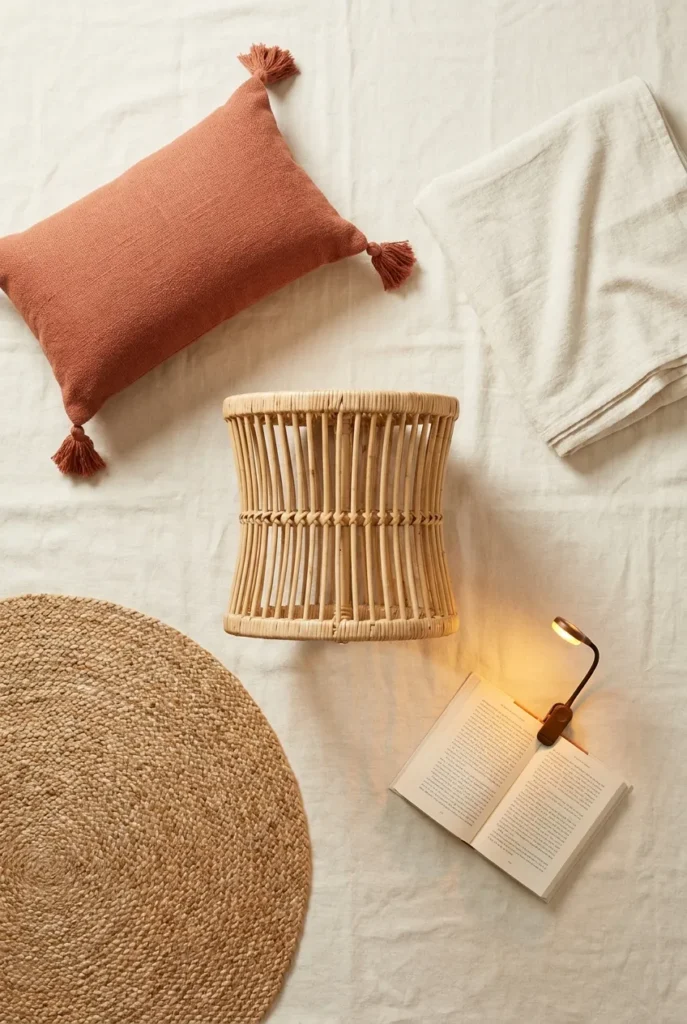
Side table. A round side table at 22 to 24 inches in height sits at the right level for most hammock chairs. Anything lower and your mug is a reach-and-lean. Anything higher and it crowds your swing arc. A 14-inch diameter drum side table or a low rattan stool in that height range is the most versatile option. The 18-inch reach rule applies here: the table surface should land within 18 inches of your seated center so you’re not tilting the chair to grab your drink.
Lumbar pillow. Not optional if you plan to read for more than 30 minutes. A 12×20-inch lumbar in a supportive fill works best, specifically buckwheat or high-density polyester rather than down, which compresses too quickly and stops doing its job about halfway through a chapter.
Jute or washable rug. A round rug, 4 to 5 feet in diameter, placed directly under and slightly forward of the chair. Outdoors, swap to a polypropylene flatweave rug in a similar size. It handles weather, hose-clean is real, and the floor-definition effect is the same.
Bookshelf within reach. A ladder shelf, a small three-tier bookcase, or a wall-mounted cubby at shoulder height alongside the chair gives you somewhere for your current TBR pile and the books you just finished. Stack the top shelf with what you’re actively reading. It removes the get-up-and-find that breaks reading flow every time.
Clip-on reading light. Even with a floor lamp in the room, a clip-on book light ($15 to $30) attached directly to the arc stand arm or a nearby shelf gives you a targeted reading beam you can angle without adjusting the whole lamp. It’s the smallest upgrade on this list with the highest read-session payoff.
FAQ
Are hammocks good for reading?
Yes, with the right support setup. The common mistake is sitting into the hammock bowl without any lumbar or neck support and ending up looking upward at the page, which strains the neck within 20 to 30 minutes. Place a firm 12×20-inch lumbar pillow behind your lower back and a cylindrical bolster behind your neck to bring your spine into a neutral position. At that point, a hammock chair is a comfortable reading seat for sessions up to 90 minutes.
Is it okay to sleep in a hammock every night?
For occasional naps, yes. As a regular sleep surface, it’s a different question. Hammock sleeping compresses the spine laterally and reduces the natural lumbar curve that a mattress and proper sleep position support. For a reading nook, this is a non-issue since you’re seated, not lying flat. For 20 to 45-minute afternoon naps, a hammock is completely fine. Nightly full sleep is a longer-term conversation with a physical therapist.
What are the must-have reading nook items?
The core four: a seat with lumbar support, a light source at eye or shoulder level rather than overhead, a surface for your drink within arm’s reach, and a shelf for your current reads close enough that you don’t have to stand up to swap books. For a hammock-specific setup, add a lumbar pillow and a cylindrical neck bolster to that list.
How do you create a cozy outdoor reading nook?
Start with the seat in partial shade: a freestanding hammock and stand placed where morning shade covers it (important in climates that get above 85 degrees Fahrenheit by afternoon). Add a 5×7 outdoor-rated rug underneath. Bring in a small weather-resistant side table at 22 inches. For after-dark light, battery-powered fairy lights or a solar lantern do the job without extension cords. For textiles that hold up outdoors, solution-dyed acrylic throws (Sunbrella makes them, Target carries similar options seasonally) work well. Or bring your indoor linen throw out and take it in before dew sets in.
Can you hang a hammock chair in an apartment?
Yes. A freestanding arc stand means zero ceiling drilling and zero landlord contact. The compact single-chair arc stand, about 54 inches wide and 72 inches tall, fits in a standard apartment corner. If you have exposed ceiling beams and a cooperative landlord, a beam clamp and eye hook rated for 400 pounds is a clean alternative that leaves no permanent hole.
What is the minimum ceiling height for an indoor hammock nook?
Nine feet for a comfortable setup. You can technically make 8-foot ceilings work, but the chair hangs higher than ideal, the swing arc shortens, and getting in and out becomes slightly awkward every time. At 8 feet, a freestanding stand is the better option because it controls hanging height independently of the ceiling.
What size rug goes under a hammock chair?
A round rug at 4 to 5 feet in diameter works for most single-chair setups. It should extend 12 to 18 inches beyond the stand feet on all sides. This gives your feet a soft landing, visually completes the reading zone, and protects the floor underneath the stand.
The Corner Is Yours
A hammock reading nook doesn’t need a renovation, a drill, or a structural engineer. It needs one decent corner, the right stand or anchor for your situation, and a two-pillow support system most guides never mention. Start with the freestanding stand if you rent. Move to a ceiling mount if you own and have the ceiling height. Build the outdoor version if you have a patio, balcony, or two patient trees.
The one thing worth sorting before you buy a single decorative pillow: get the lighting right. A warm 2700K source at shoulder height, on a dimmer, turns a serviceable reading spot into the corner you actually want at 9 pm with 80 pages left in the chapter.
Which setup fits your situation, the indoor freestanding stand or the outdoor version? Drop your space details in the comments and I’ll point you to the right build.
Keep reading
More cozy nook ideas
 Cottage Garden & Balcony
Read →
Cottage Garden & Balcony
Read →
20 Backyard Oasis Ideas on a Budget, Starting With a $152 Corner
Two folding chairs, a small outdoor rug, 24 battery globe lights, and two planters. At IKEA this October, that adds up to…
 Reading Sheds
Read →
Reading Sheds
Read →
12 She Shed Ideas for Small Yards
No acre, no contractor, no giant budget. You need about 64 square feet, a flat patch of ground, and a plan for…
 Garden Nooks
Read →
Garden Nooks
Read →
Container Gardening Ideas for Small Cottage Gardens That Fit a Rental Patio
One anchor pot, two mid-size pots, three little ones. That’s the whole cottage garden, and it fits on a patio smaller than…
One Comment