
12 Summer Reading Nook Swaps for a Light, Airy Corner

Your summer reading nook has been wearing a heavy sherpa throw since February and nobody has touched it since. The blackout curtains are still pulled. The wool blanket is balled up on the seat. Summer arrived and your favorite corner still feels like a January hibernation den. This fixes all of that. These 12 swaps are mostly under $40 each, nearly all of them take under 20 minutes, and not one of them requires a drill, a landlord’s permission, or a renovation budget. You need one free afternoon and a few smart trades.
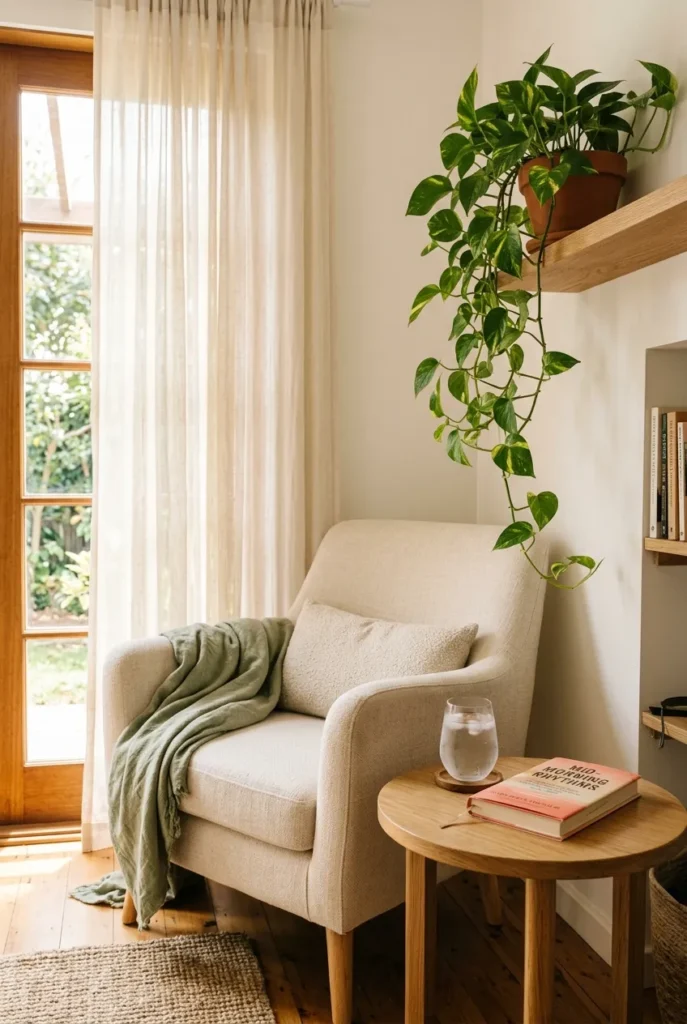
The 12 Swaps at a Glance (Your Quick-Start Reference)
Before running through each swap in detail, here’s the full list in one place. Scan it, check off the swaps that match your specific setup, then skip to the ones that matter most.
| # | Swap | Cost Range | Time |
|---|---|---|---|
| 1 | Trade wool throw for linen or cotton | $18–$45 | 2 min |
| 2 | Switch cushion cover, not the whole cushion | $25–$55 | 10 min |
| 3 | Replace blackout curtains with linen sheers | $20–$60 | 15 min |
| 4 | Fix the heat problem: reposition the chair | $0 | 5 min |
| 5 | Swap high-pile rug for flat-weave | $30–$80 | 10 min |
| 6 | Add a cooler-running reading lamp | $12–$65 | 15 min |
| 7 | Add one plant at eye level | $8–$22 | 5 min |
| 8 | Set up a summer TBR display | $0 | 10 min |
| 9 | Build a mini drink station | $12–$25 | 5 min |
| 10 | Move the nook semi-outdoors | $0–$45 | 20 min |
| 11 | Do a summer color accent pass | $26–$60 | 10 min |
| 12 | Reset the scent | $12–$68 | 2 min |
A north-facing corner with no direct sun needs zero heat management swaps. An east-facing window seat that bakes at 9 am needs swaps 3, 4, and 6 before anything else. Audit your corner’s light direction first, then shop.
Swap 1: Trade Your Throw for One That Breathes
The wool throw looked right in December. In July it feels like a punishment. The fix isn’t to hide it in a closet until October. It’s to swap it out for something with the same visual warmth at a fraction of the weight.
Look for a cotton muslin or washed linen throw in the 50×60 inch range. That’s the standard reading chair size: long enough to drape over your knees without pooling on the floor. GSM matters here. Under 180 GSM and the throw feels like a summer breeze. Over 250 GSM and you’re sweating through chapter three before the good part.
I swapped my boucle throw for a washed linen one in oatmeal last June. Linen smells different too: slightly dry, faintly grassy. That scent is its own seasonal signal.
Rental-safe: Zero tools, zero installation. A throw is the most commitment-free swap on this list.
Failure mode: Avoid cotton terry loops. They catch on hardcover dust jackets and pull threads from paperback spines faster than you’d expect.
Swap 2: Switch Your Cushion Cover, Not the Whole Cushion
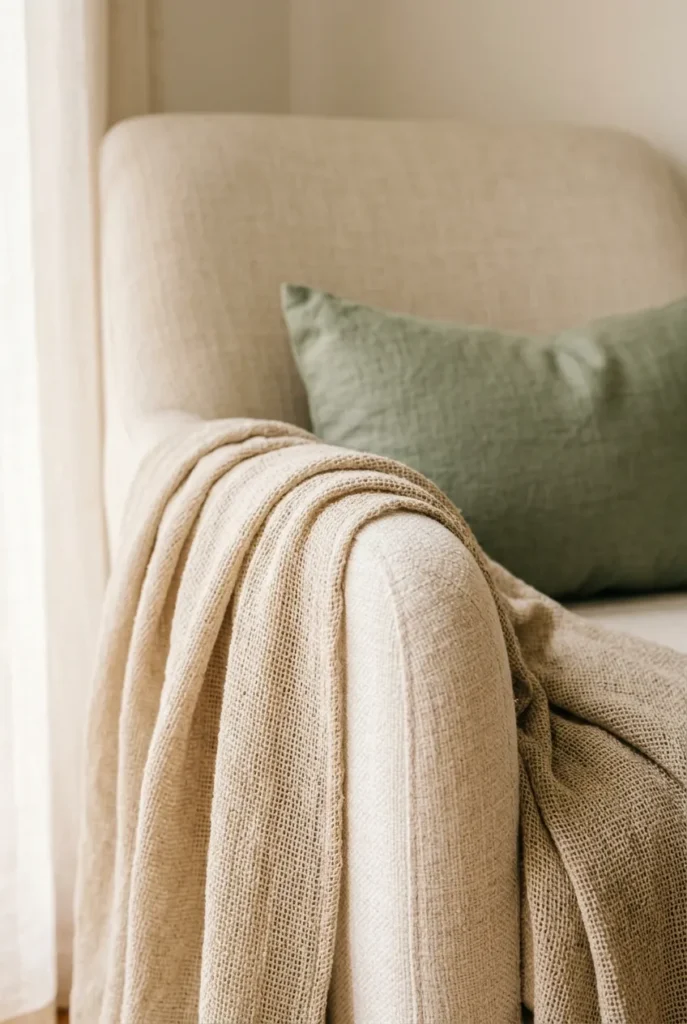
You don’t need a new bench cushion or a new chair seat for summer. You need a summer cover for the one you already have. Most reading bench cushions and daybed cushions ship with removable covers, and replacement covers in cotton canvas run under $35 on Amazon or at HomeGoods.
Washed cotton canvas in sage green, soft white, or warm terracotta reads immediately as summer. Cotton duck cloth is even tougher if you have kids or a pet using the nook. Measure your current cushion to the inch before ordering. A 60x20x4 inch bench seat needs a cover cut to 61×21 to allow for the zipper or tie closure without pulling at the corners.
If your cover isn’t removable, a large piece of washed linen draped and tucked works just as well and costs almost nothing. For getting the cushion spec right before you order a replacement, the right bench cushion thickness and cover options for summer reading covers sizing, foam density, and fabric picks in detail.
Failure mode: A cover that’s even half an inch too tight bunches at all four corners and makes the whole seat look slept-in permanently.
Swap 3: Replace Blackout Curtains With Linen Sheers
This is the highest visual-impact swap on the list. Blackout curtains make a summer reading corner feel like a screening room. Swap them for sheer linen or gauze panels and the entire space lifts in under 15 minutes.
A 52×84 inch sheer panel is the standard drop for a 7-foot ceiling window. For a wider window, hang two panels on a single rod and let them overlap slightly in the center. The layered look lands better than a single wide panel every time.
Café curtains are a strong option if you want privacy without losing light. A bottom-half café curtain in white cotton lets morning light pour in from the top while blocking the street view from a seated position. They’re also the easiest renter install on the market.
Rental-safe: A tension rod requires zero drilling. The IKEA RÄCKA rod fits windows up to 48 inches wide and comes out clean when you move.
Failure mode: Sheer panels near a high-traffic doorway or an open window will gray out from dust within six weeks. Wash them every six to eight weeks in summer to keep them reading as crisp, not dingy.
Swap 4: Fix the Heat Problem Nobody Else Mentions
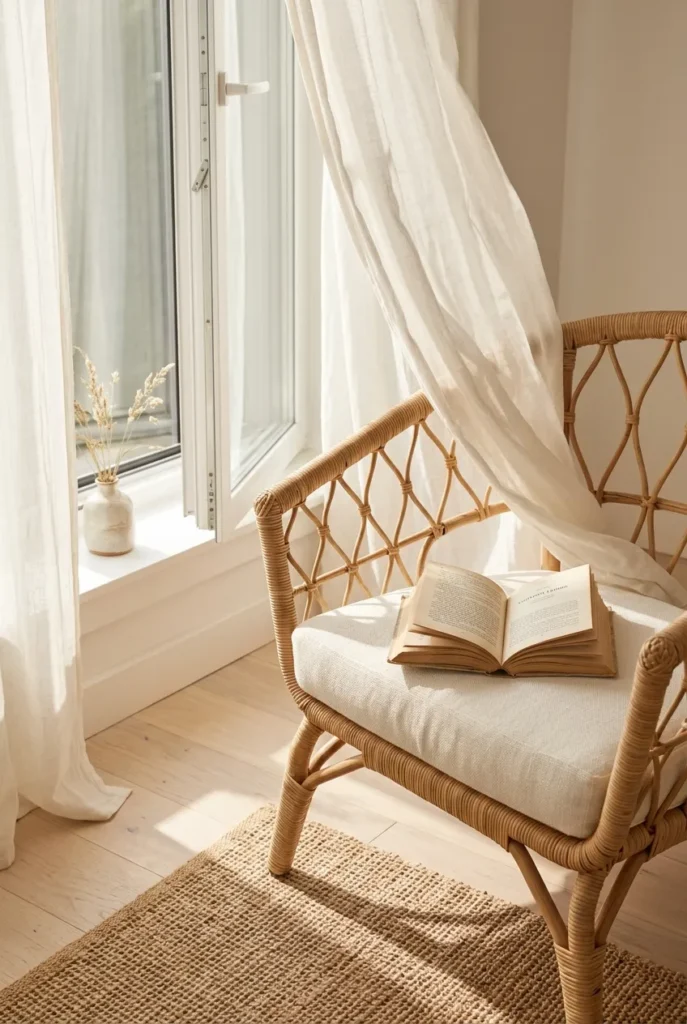
Here’s what every other summer nook article skips entirely: a reading corner placed directly against a south- or west-facing window will bake you out of it by 11 am. Not mildly uncomfortable. Actually too hot to sit in. The fix isn’t a new chair or a new curtain. It’s position.
Pull your chair or bench 8 to 10 inches away from the window glass. That gap disrupts the radiant heat coming off the glass and creates enough air circulation to drop the felt temperature noticeably. It sounds like nothing. After testing this in my own apartment last July, the corner went from a place I’d visit at dusk to somewhere I sat for two hours after breakfast.
For east-facing windows, angle the chair so the window lands slightly to your side rather than directly in front of you. You keep the light. You dodge the direct morning sun on your face and your pages.
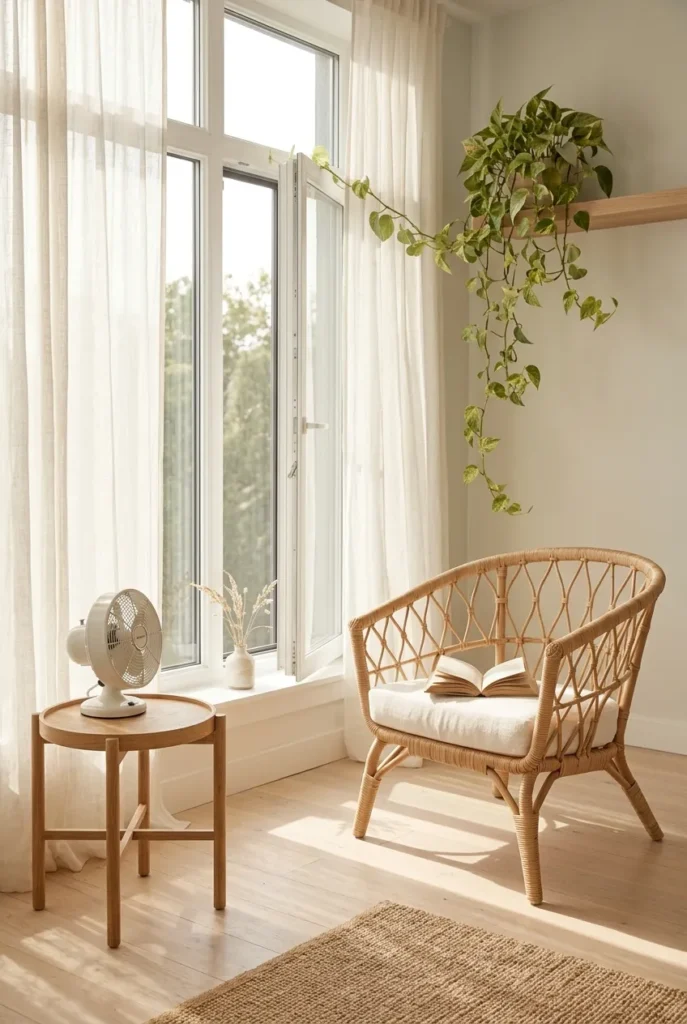
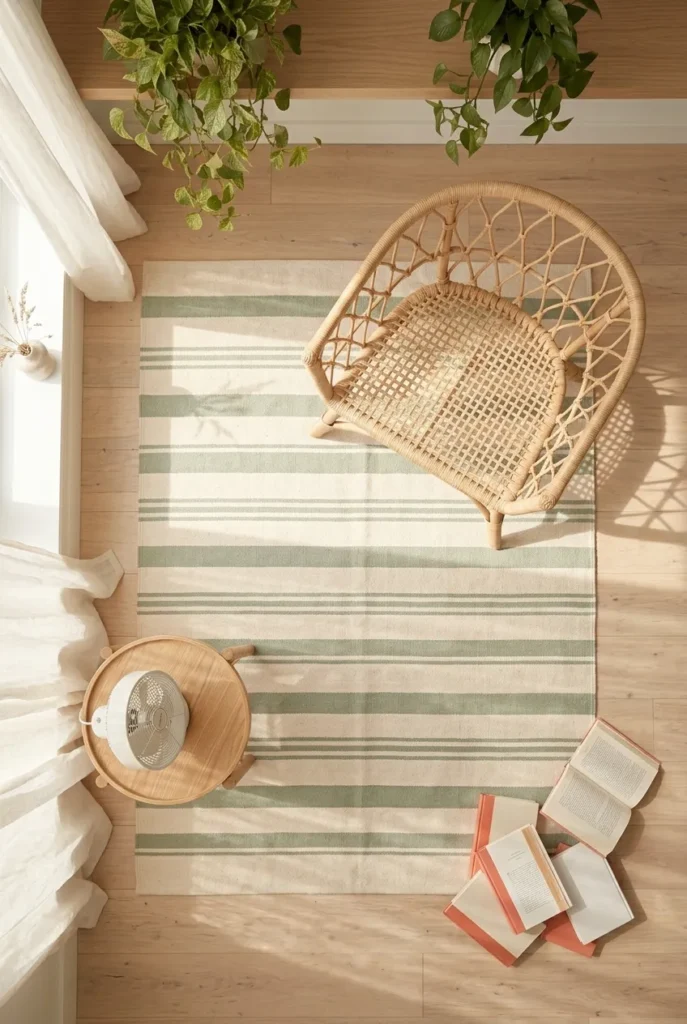
If repositioning isn’t enough (Texas in August, anyone), a small 6-inch desk fan placed on the side table at shoulder height moves enough air to make the corner usable by 9 am. A 6-inch fan on the low setting runs at roughly 25 decibels, about the sound level of quiet rain. It won’t interrupt a single sentence.
Failure mode: Pulling the chair 8 inches out and then pushing a side table flush against the window behind it defeats the whole point. Keep the air gap clear behind and beside the seat.
Swap 5: Swap Your Rug for a Flat-Weave Option
High-pile rugs hold heat and feel heavy underfoot in summer. A flat-weave cotton rug in the same footprint reads lighter visually and physically. It’s also far easier to keep clean: summer means bare feet, garden dirt tracked in from a balcony, and the occasional cold-brew accident.
For a standard reading chair setup, a 4×6 foot rug is the right size. It sits under the front two chair legs and grounds the space without eating the whole room. A bleached or natural-tone jute rug works beautifully as a summer option, but note: bare skin on raw jute for 40-plus minutes gets scratchy. Put a cotton layer underneath or a woven mat on top if the nook is cushion-less floor seating.
Rental-safe: No adhesive, no installation. A rug pad with a non-slip backing holds everything in place on hardwood or tile.
Failure mode: Don’t go smaller than 3×5 feet. A rug that only fits under the chair legs without extending forward looks like a doormat rather than a reading corner anchor.
Swap 6: Add a Reading Light That Doesn’t Overheat the Corner
Here’s something I got wrong for years: I thought a summer reading nook didn’t need a dedicated lamp because of all the natural light. It does. By late afternoon, even a west-facing window drops off fast. Evening summer reading without a proper light is a headache, literally.
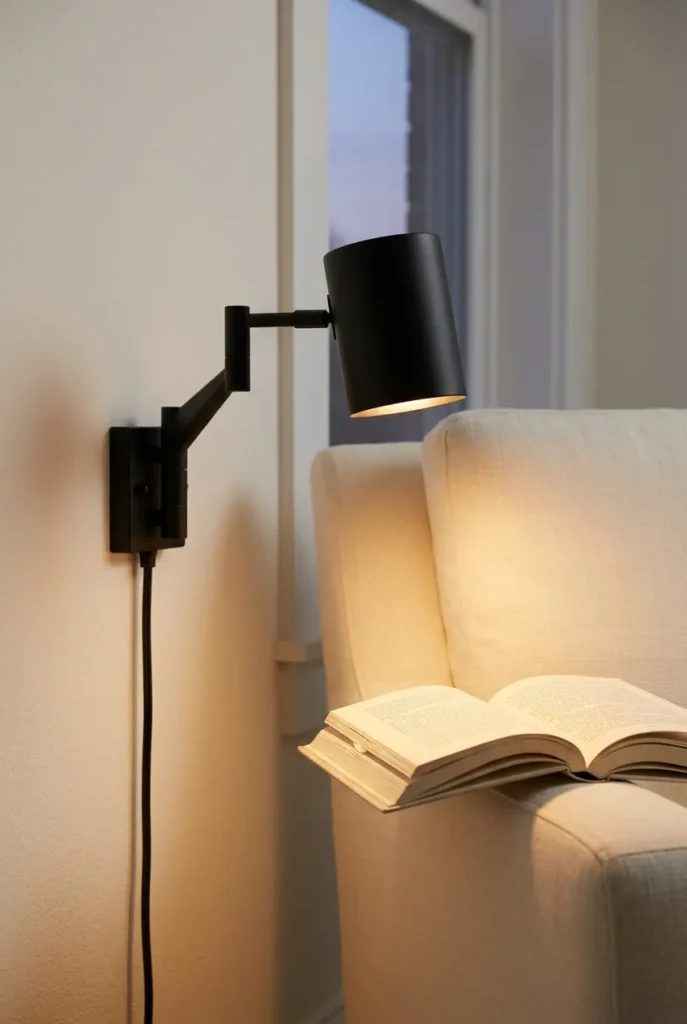
The swap isn’t adding more wattage. It’s switching to an LED that runs cool. A standard 60-watt incandescent reading bulb generates enough heat to warm a tight corner noticeably after an hour. An 800-lumen LED equivalent runs at 8 to 10 watts and barely gets warm to the touch. Same perceived brightness. A fraction of the heat output.
Stay at 2700K for color temperature. Cooler bulbs at 3000K and above turn a summer reading room into something between a dentist’s waiting room and a grocery store aisle. Pair the LED with an inline plug-in dimmer (around $12 at Home Depot) and you have full control over the mood from bright afternoon reading to 9 pm paperback weather.
For wall-mounted options that skip the electrician entirely, plug-in swing-arm sconces sized for a reading nook corner covers every style from minimal black to warm brass, all with cord-and-plug installs that take about 10 minutes.
For help decoding lumens, watts, and color temperature on the box before you buy, the LED Lighting Basics guide from the U.S. Department of Energy is the clearest plain-English resource available.
Failure mode: Skip the dimmer and your 2700K LED still reads like a dentist’s office at full brightness at 10 pm. Dimmer first, then the bulb.
Swap 7: Add One Plant and Let It Do the Heavy Lifting
One plant changes the mood of a summer reading corner faster than almost any other swap. Not because plants are a trend right now (they are, but that’s not the point). It’s because a trailing pothos or a soft fern at eye level cues your brain that it’s summer in a way that a color palette alone can’t.
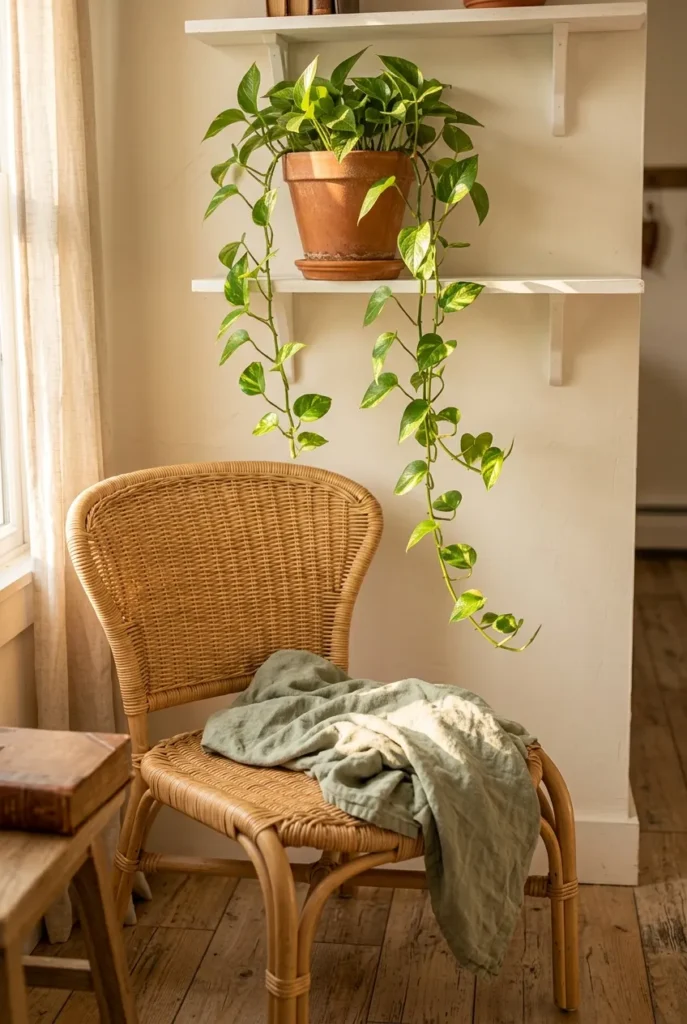
A golden pothos in a 6-inch terracotta pot, placed on a floating shelf above and behind the chair, creates the indoor-jungle canopy effect without blocking light or taking up floor space. Let it trail 12 to 18 inches down the wall beside the seat. It’s the plant equivalent of reading under a tree.
If your nook is in a low-light corner, a heart-leaf philodendron handles near-darkness. A ZZ plant tolerates even a windowless alcove. Keep the pot off the floor if the nook is chair-only. Floor plants near a reading chair get kicked, watered unevenly from bending down, and disappear visually below the sightline where they can actually contribute to the mood.
For complete care guides on low-maintenance indoor plants that work in reading corners, Clemson Cooperative Extension’s Home and Garden Information Center has species-specific sheets that tell you exactly how much light and water each plant needs.
Failure mode: Overwatering in summer is more common than underwatering. The corner is warm, the soil looks dry on top, but push a finger 2 inches in before reaching for the watering can. Dry at 2 inches means water. Moist at 2 inches means wait another two days.
Swap 8: Set Up a Summer TBR Display
A reading nook that looks like summer has books that look like summer. That’s not about content. It’s about how you stage them. Spine-out shelving on a small ladder shelf or cubby creates a visual rhythm: a row of paperbacks in cream, coral, and pale blue reads as warm-weather reading before anyone picks one up.
The nightstand stack method works especially well in compact summer nooks. Pull your top five books for the season and stack them in height order on your side table or on the floor beside the chair. Tallest at the back, smallest in front. It doubles as decor and as a personal commitment. Five books. One summer.
On a 12-inch-deep shelf, you can lay 8 paperbacks flat or stand 14 spines out. Either format. The one rule: the TBR pile should be visible from the doorway. If you can see it when you walk past, you’ll sit down and reach for one. If it’s tucked into a basket, you’ll watch television instead.
Failure mode: An overstuffed shelf with 40 books looks like a used bookstore, not a reading corner. Five to eight titles max for the seasonal display. Rotate the rest.

Swap 9: Build a Mini Drink Station
This sounds like a minor swap. It isn’t. The single biggest reason people abandon their reading corner after 20 minutes in summer is thirst. They get up for a drink and don’t come back. A cold drink already in the corner removes that exit entirely.
A small wooden tray on the side table, holding a 16-ounce insulated tumbler (the Stanley Quencher 16 oz fits on most standard 12-inch-diameter side tables without tipping), a coaster, and your phone face-down makes the corner self-contained. You’re staying for a full hour.
Budget version: A $12 IKEA DRAGAN bamboo tray and a $5 insulated tumbler from Dollar General. The same function with zero aesthetic sacrifice if you keep the tray flush to the back edge of the side table.
Failure mode: Glass tumblers near a fabric chair and an open book. One elbow movement and you’re reading wet pages. An insulated bottle with a lid is the only acceptable call here.
Swap 10: Take the Nook Semi-Outdoors for Summer
If you have a balcony, a screened porch, or a shaded backyard corner, summer is the one season where moving your reading nook partially outdoors is genuinely practical. You don’t need garden furniture to make it work. You need your existing chair and three modifications.
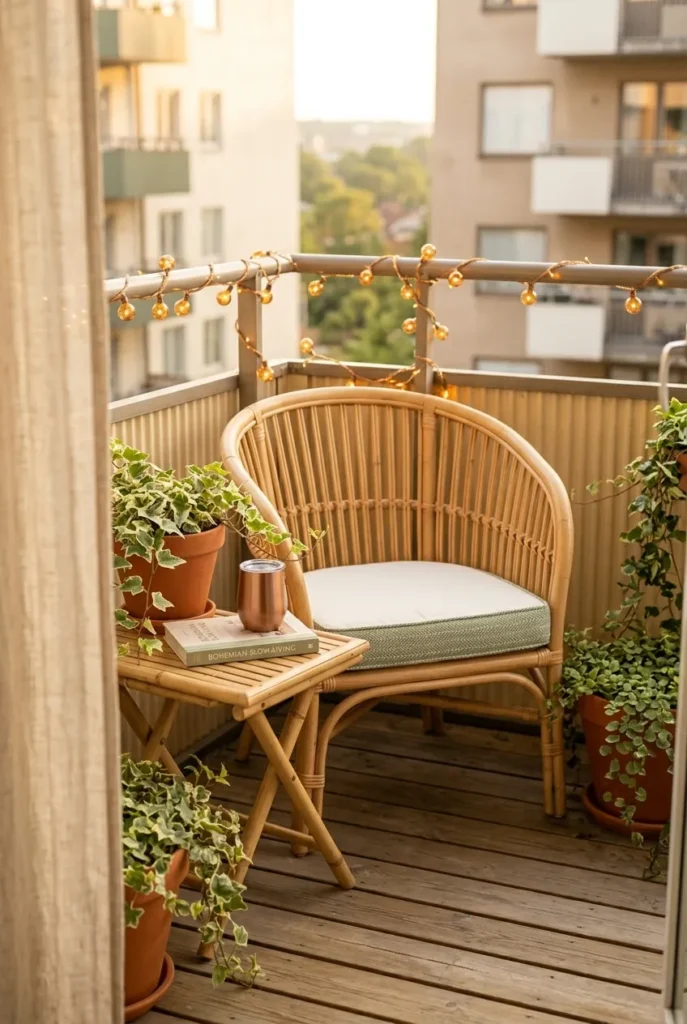
For a balcony reading corner: an outdoor-rated throw pillow in UV-resistant fabric handles direct sun without fading within a season. A clip-on umbrella side table (the kind that clamps to a railing) gives you a drink surface without using any floor space. The chair stays inside when it rains. Nothing is permanent, nothing is drilled.
For a shaded backyard corner, a hammock chair hung from a freestanding A-frame stand (no tree required, no landlord required) is the most effective summer reading setup I’ve personally tested. The gentle swing is its own white noise. It keeps air moving around you constantly, which solves the heat problem without a fan.
For renters who want to build an outdoor or balcony reading setup without any permanent fixtures, renter-safe reading nook ideas that require zero drilling or permanent changes shows exactly how to anchor the whole setup in a small footprint.
Failure mode: Reading outdoors in a bare wood deck chair without cushioning lasts about 15 minutes before your tailbone lodges a formal complaint. A 2-inch outdoor foam cushion is the minimum viable setup.
Swap 11: Run a Summer Color Accent Pass
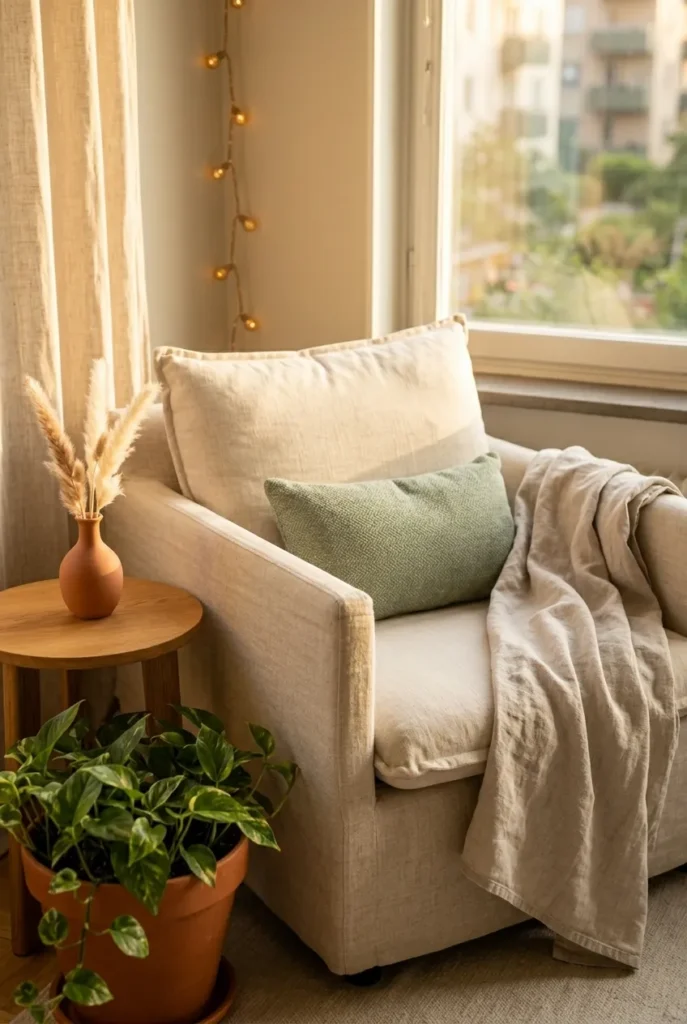
You don’t need to repaint. You need to swap three things: your lumbar pillow, the object on your side table (a bud vase, a small ceramic, a candle), and your throw. If all three read as summer, the whole nook reads as summer. It’s visual math, not magic.
The 2025-2026 reading nook color palette leans into sage green, warm cream, terracotta, and dusty coral. Those four work together on any neutral base: white, oat, natural rattan, light oak. Any combination of two or three of them reads immediately as warm-weather.
Avoid going all-white for a summer nook. It looks stunning in styled photography and washes out completely in afternoon direct light. One warm accent, terracotta being the most forgiving and the most versatile, keeps the corner from reading as a blank page.
One sage linen lumbar pillow ($18 to $28 at Target or HomeGoods), one small terracotta bud vase with dried pampas grass ($8 at TJ Maxx), one oatmeal linen throw (see Swap 1). Total outlay: under $60. Total visual shift: the nook looks like a different room.
Failure mode: Three accent colors is the limit. Add a fourth and the corner looks like it was assembled by committee. Pick three, commit, stop.
Swap 12: Reset the Scent
This one lands last because it’s the easiest and the most overlooked. A summer reading corner smells different from a winter one. Or it should. Scent shifts the sensory register of a space in a way that color and texture can’t fully replicate on their own.
A soy candle in a cedar, cotton, or green tea scent placed on a heat-safe coaster at least 4 inches from any fabric (on the side table, never on the chair arm) changes the mood of the corner within 20 minutes of lighting. The scent creates a kind of Pavlovian pairing: light the candle, open the book, be here now.
If open flame isn’t an option (renter concern, small kids, a cat with an opinion about candles), a reed diffuser in the same scent family works passively and continuously. The Vitruvi Reed Diffuser in “Forest” or “Coast” runs about $68 and lasts three to four months at the standard 6-reed setting.
Budget version: A $6 soy wax votive in a summer cotton scent from HomeGoods works identically for the first 25 hours. Restock seasonally.
Failure mode: Warm-bakery scents in a reading corner. Vanilla, cinnamon, caramel: all perfectly lovely in a kitchen. In a reading nook they read as winter and they’re distracting. Go green, cotton, cedar, or coastal. Let the scent disappear into the background.
FAQ: Summer Reading Nook Questions
How do I make my reading corner feel like summer without buying anything new?
Reposition your chair 8 to 10 inches away from the window glass, swap your curtains to the lightest ones you already own, and move a plant from another room into the nook. Those three zero-cost moves shift the feel more than most purchases.
What is the best throw blanket for a summer reading nook?
A washed linen throw under 180 GSM in oatmeal, sage, or natural white. Linen breathes, softens with every wash, and doesn’t pill the way cotton fleece does after six months. Cotton muslin is the budget alternative and performs nearly as well.
How do I keep my summer reading nook cool?
Three changes address the three main heat sources. Pull your chair 8 to 10 inches from the window glass (radiant glass heat). Swap blackout curtains for sheer linen panels (blocked ventilation). Add a small 6-inch desk fan at shoulder height (still air). All three together, and the corner drops noticeably even on a hot afternoon.
Can I set up a reading nook outside for summer?
Yes. A hammock chair on a freestanding A-frame stand requires no tree and no permanent install. A rattan armchair with UV-resistant cushions on a balcony works with a clip-on railing side table. A floor cushion on a screened porch needs nothing beyond what you already have.
What colors work best for a summer reading room?
Sage green, warm cream, terracotta, and dusty coral. Any neutral base in oat, white, light oak, or natural rattan takes all four. Limit yourself to three accent colors maximum. All-white looks beautiful in photos and washes out in real afternoon light.
What plants work in a low-light summer reading nook?
Heart-leaf philodendron, ZZ plant, and snake plant all thrive with minimal light. Golden pothos is the most flexible option: it handles a range from bright indirect light to near-darkness, and the trailing habit creates that summer-canopy feel at eye level.
How often should I do a seasonal nook refresh?
Two full refreshes per year cover it: one in late May for summer and one in late September for fall-winter. Smaller rotations, like swapping the book display or adding a seasonal candle, take five minutes and can happen anytime you feel the corner going stale.
Pull It Together This Weekend
None of these 12 swaps require a trip to a hardware store. Most require 20 minutes of rearranging and one online order. Start with the three highest-impact swaps for your setup: sheer curtains (Swap 3), the throw trade (Swap 1), and the chair reposition (Swap 4). Those three cost under $60 combined and change the reading corner’s entire feel before lunch.
Add the plant (Swap 7) and the color accent pass (Swap 11) when you’re ready to go further. Your summer reading corner is one afternoon away from being somewhere you actually want to spend time. Your TBR pile is already waiting.
Keep reading
More cozy nook ideas
 Fall Decor
Read →
Fall Decor
Read →
12 Thanksgiving Tablescape Ideas for Small Spaces (That Still Leave Room for the Food)
Twenty-four inches. That’s how much table edge one person needs to eat without bumping elbows, and it’s the number most Thanksgiving tablescape…
 Fall Decor
Read →
Fall Decor
Read →
18 Fall Coffee Bar Ideas for Sweater-Weather Evenings
No counter space to spare, no espresso machine, no landlord permission needed. This fall coffee bar runs on three pieces: a slim…
 Fall Decor
Read →
Fall Decor
Read →
15 DIY Outdoor Halloween Decor Ideas That Stay Cozy, Not Creepy
If your porch every October is one lonely pumpkin and a doormat, and every store aisle is full of bloody hands, this…