
18 Cottagecore Living Room Ideas That Turn One Room Into a Storybook

If your living room is a gray sofa, one big blank wall, and an overhead light you never liked, this list fixes it. These 18 cottagecore living room ideas build the whole look in layers: sage and cream walls, a floral loveseat, lamplight instead of glare, and one tucked-away corner that exists purely for reading. Everything here works in a rental, and nothing assumes a fireplace, a bay window, or a landlord who answers email.
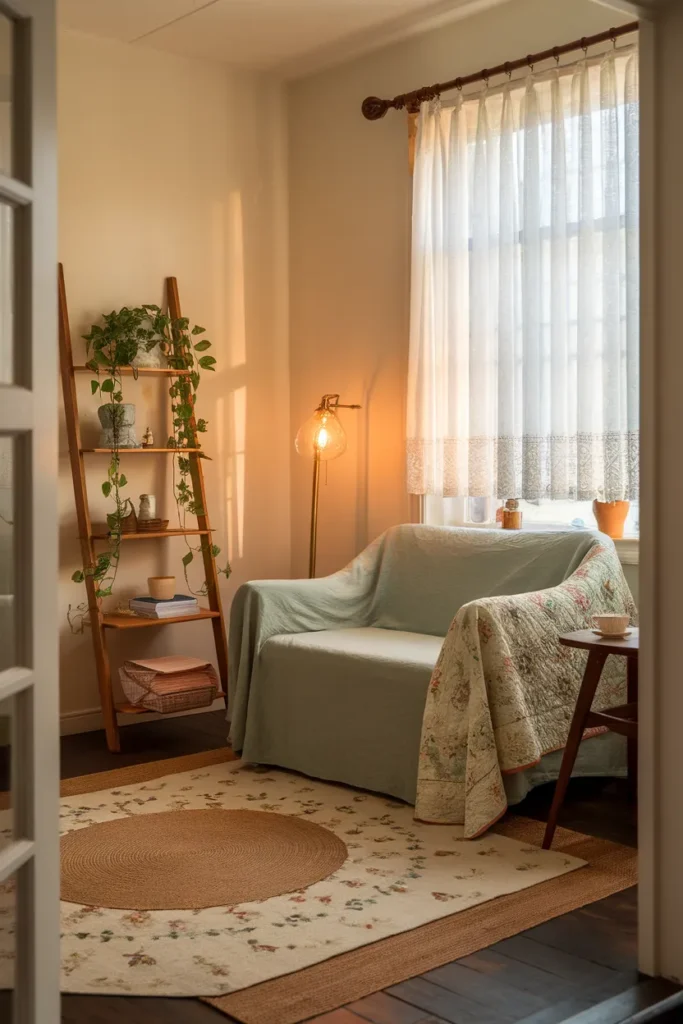
1. Start With a Sage and Cream Base
Paint moves the needle more than any purchase in this room, so it goes first. Pinterest’s spring 2026 trend report clocked “sage green and cream” searches up 410 percent, and the pairing works because it copies a garden: green growth against pale stone. Browse Benjamin Moore’s cottage color palette guide and pull one muted sage plus a warm white like White Dove OC-17, then decide whether you want walls-only or a full color drench across trim and ceiling.
Buy sample pots before committing. The classic mistake is choosing a gray-leaning sage that turns cold and hospital-ish after dark, so tape your swatch up and check it at night under a warm bulb before you buy gallons.
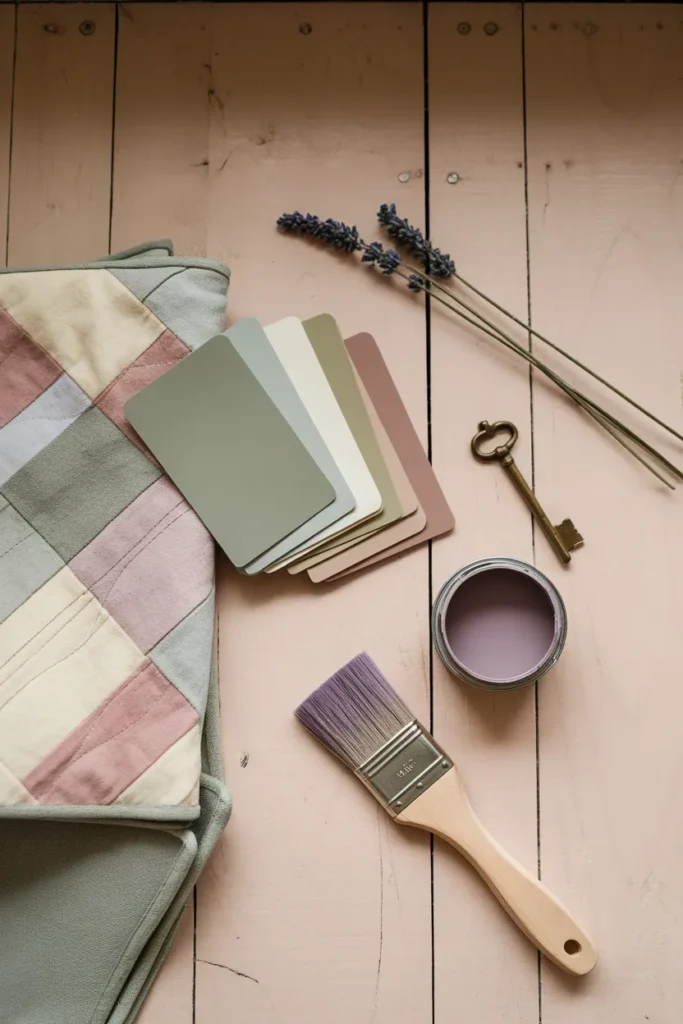
2. Anchor the Room With a Floral or Slipcovered Loveseat
One soft, slightly old-fashioned seat sets the tone for everything around it. In rooms under about 150 square feet, a loveseat (roughly 58 to 64 inches wide) keeps walkways open where a full 84-inch sofa would swallow the floor. A washable slipcovered piece in the IKEA EKTORP mold is the workhorse archetype: cream or sage cover now, a floral or ticking-stripe cover when you want a new room for the price of fabric.
Leave 14 to 18 inches between the seat and the coffee table, close enough to set a mug down, far enough to walk. Skip this clearance and the prettiest room in the world still feels like an obstacle course.
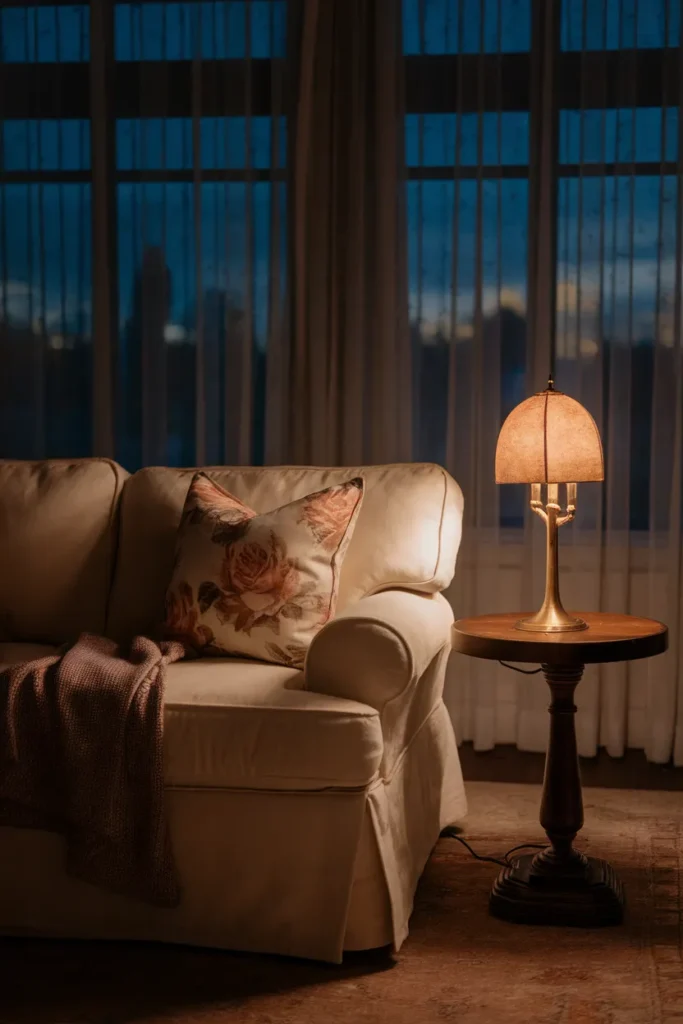
3. Mismatch Your Seating on Purpose
Cottagecore rooms look collected across decades, not delivered on one truck. Pull the armchair from your bedroom, add a thrifted wingback, park a pouf or floor cushion where a second chair won’t fit. Secondhand armchairs commonly run about $40 to $150 at US thrift stores and estate sales, which is where the good bones live anyway.
Tie the mismatch together by repeating one fabric or color at least twice across the seats: a rose pillow here, a rose throw there. A matching three-piece set is the fastest way to make a room read furniture showroom instead of storybook.
4. Layer Quilts, Lace, and Linen Where Hands Land
Texture does the emotional work in this style, so put it where people actually touch: sofa arms, chair backs, the basket by the reading chair. A hand-stitched quilt draped within reach beats the same quilt folded on a high shelf, and lace is climbing Pinterest’s 2026 trend lists again, so a lace runner or curtain panel earns its spot honestly.
Use the 3-2-1 Storybook Rule for every seating zone: 3 textures (say, linen, wool, worn wood), 2 patterns (one floral, one quieter stripe or check), 1 living thing (a plant or fresh stems). Check fiber tags while thrifting, because shiny polyester kills the spell that wrinkly linen and nubby wool cast for the same money.
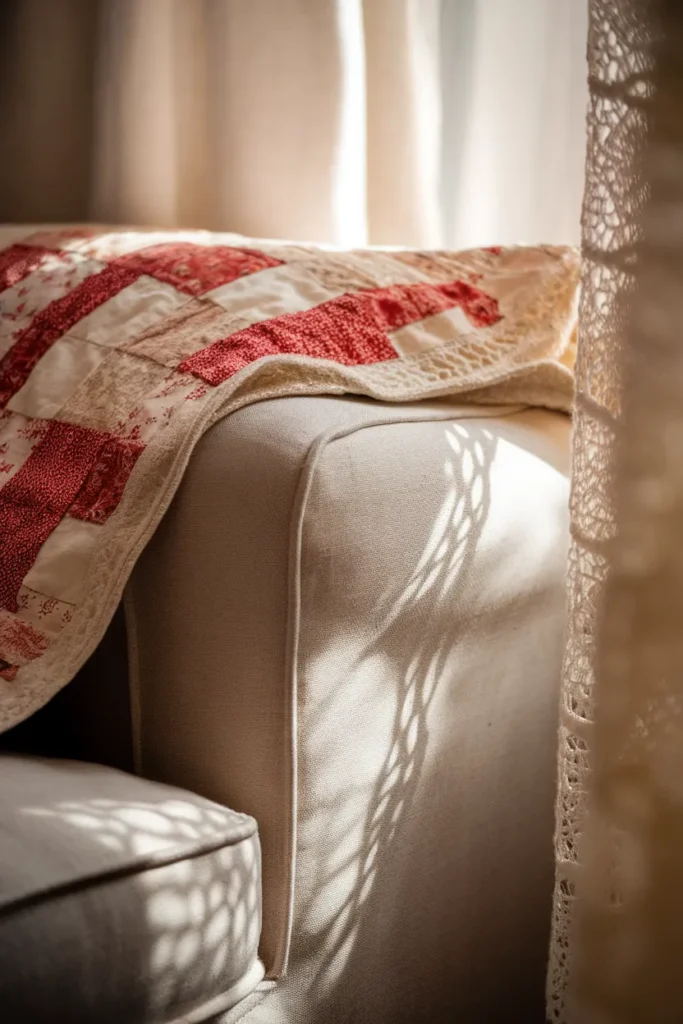
5. Hang Ditsy Floral Wallpaper on One Wall
Small-scale florals (the ditsy prints) deliver instant cottage without shrinking the room the way a giant botanical mural can. One papered wall behind the sofa is plenty, and it leaves your budget intact. On a tighter budget still, order two or three samples and frame them as a set of botanical prints: real wallpaper texture, thrift-frame prices.
Keep the print’s repeat small in a small room. Oversized blooms on all four walls is the version people regret by month two.
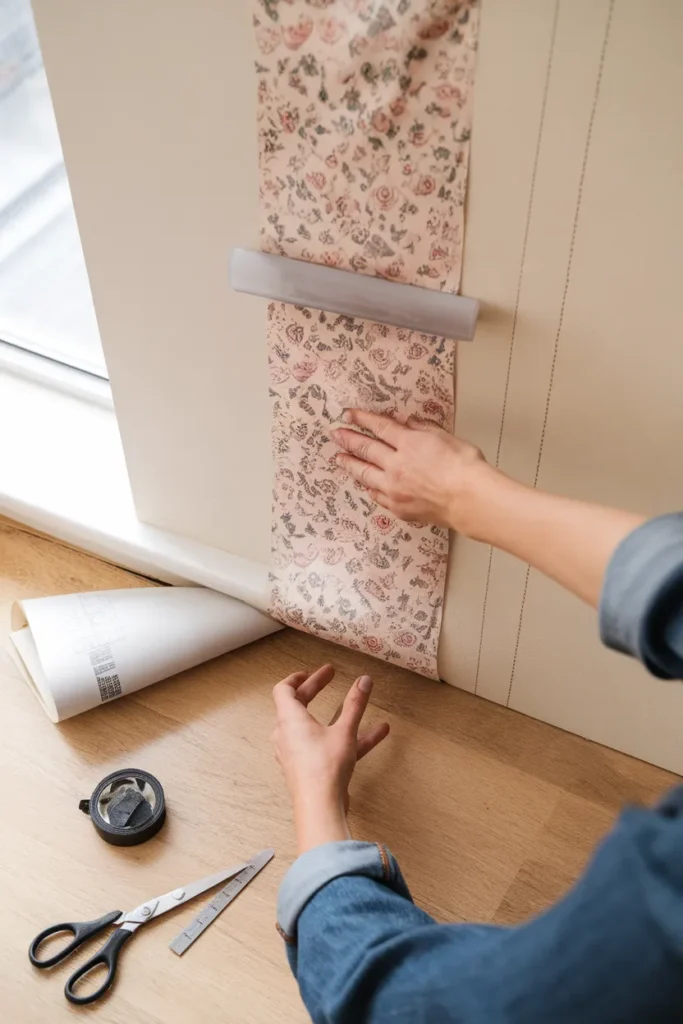
6. Go Renter-Safe: Peel and Stick, Tension Rods, Zero Holes
Nothing in this room needs to cost you a deposit. Peel-and-stick floral wallpaper handles the statement wall (a standard roll covers about 28 square feet and most run roughly $25 to $45), tension rods hang café curtains inside the window frame, and damage-free adhesive hooks carry the lightweight frames and dried-flower bunches (check the weight rating on the pack, and stay under it). Plug-in sconces, coming up next, solve lighting without an electrician.
Test one strip of peel-and-stick in a hidden spot first. Heavy orange-peel wall texture makes edges lift within weeks, and finding that out on strip nine hurts.
7. Light It Like a Cottage: 2700K, Three Sources, One Dimmer
Cottages glow, they don’t glare, and the recipe is specific. Run three light sources at seated height or lower (a plug-in swing-arm sconce, a floor lamp, a small table lamp), fit every one with 2700K warm white bulbs, and put at least one on a dimmer. If you want the firelight effect without a fire, warm-dim LEDs shift down toward the 1800K color of candlelight as you lower them, a behavior the Department of Energy’s warm-dimming LED guide explains well.
The failure mode is one stray 4000K daylight bulb in the mix. A single cool bulb flattens every warm layer you built, so check the box, not the bulb shape.
8. Give the Fireplace a Storybook Job, Even If It’s Faux
A hearth is the natural focal point, and it doesn’t need fire to earn its keep. Paint a dated brick or builder-white surround in a muted heritage tone (Benjamin Moore’s Manchester Tan is a proven cottage pick), then style the mantel with an odd number of objects: one landscape painting, iron candlesticks, a pitcher of dried stems. No fireplace at all? A vintage mantel shelf or a sturdy console styled the same way does the visual job.
Just don’t leave the surround glossy builder-white while the rest of the room goes soft and matte. It reads like a missing tooth in every photo.
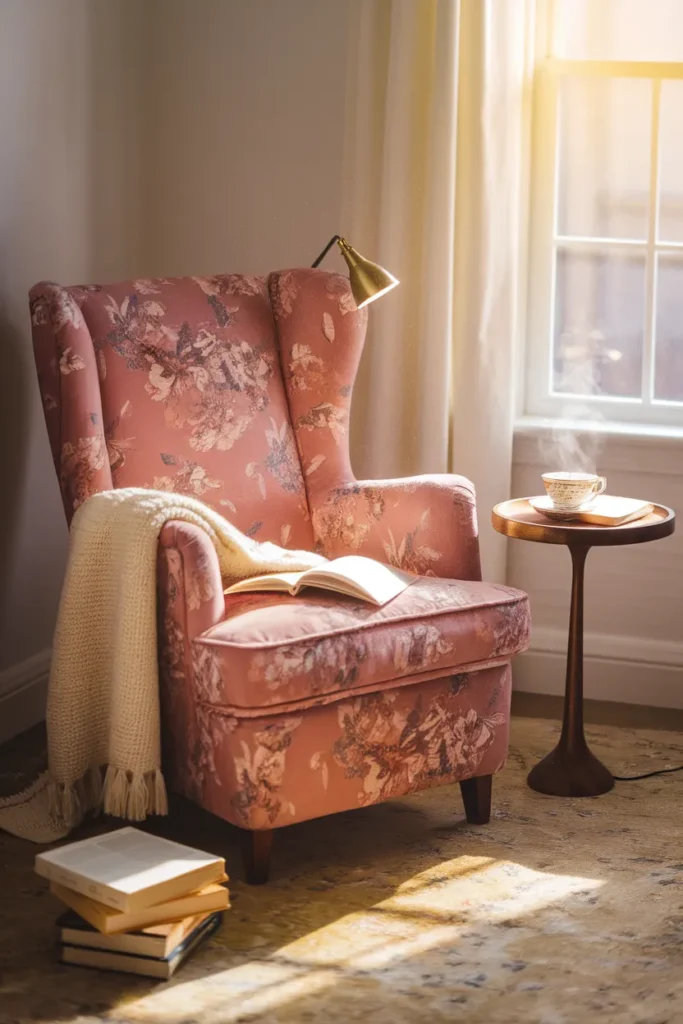
9. Tuck a Reading Corner Into the Quietest Angle
This is the move that turns a decorated room into a lived-in one, and the timing is on your side: Pinterest’s spring 2026 report logged “comfy reading chair small spaces” up 455 percent and “reading nook ideas” up 245 percent. Claim the corner farthest from the TV, angle a 28-to-32-inch armchair toward the window, and apply the 18-inch reach rule: side table top within about 18 inches of your shoulder and level with the armrest, so tea lands without looking. Add a throw, a clip-on reading light, and the stack you’re actually reading. Our cottagecore reading corner with florals walks the full build, renter rules included.
Point the chair at the television and the corner quietly becomes a TV chair by Friday. Face glass or a wall of art instead, and let the room stay cozy on purpose.
10. Build a Window Seat, or Fake One With a Bench
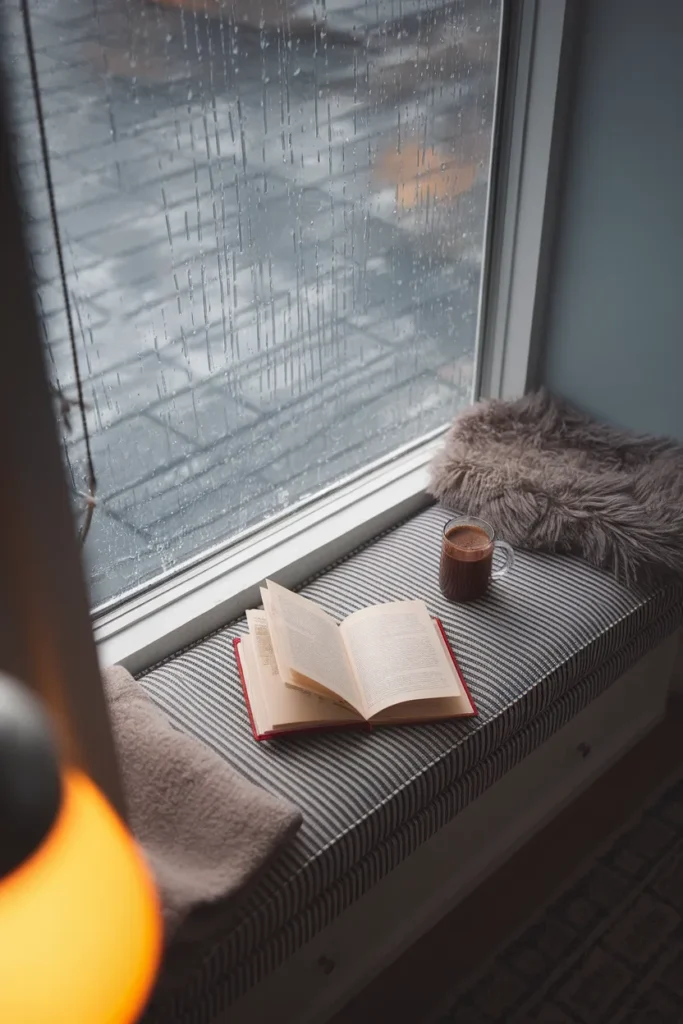
Deep sills and window benches are cottage DNA, but the fake version convinces just as well. Slide a storage bench under the window, top it with a 3-to-4-inch foam cushion in ticking stripe, and pile on a bolster and two pillows. If you’re building, make the seat at least 18 inches deep to sit comfortably and closer to 24 if you want to pull your feet up with a book.
Mind the glass in winter. A bench under a drafty single-pane window goes unused from November to March unless a curtain layer or a wool blanket lives right there to fight the chill coming off the pane.
11. Swap Long Drapes for Café Curtains and a Pelmet
Café curtains, the half-height panels on a rod across the window’s lower third, are having a genuine moment: Pinterest’s 2026 spring report flags them alongside ruffled and gathered details as the season’s nostalgic finishing touch. They give privacy at eye level while daylight pours over the top, and on a tension rod they’re a five-minute, zero-hole install. A simple fabric pelmet across the top hides hardware and adds the sweet, finished edge this style loves.
Choose airy cotton, linen, or a small gingham. Heavy blackout fabric cut to café length just looks like a hotel bathroom window.
12. Put Your Collections to Work on Open Shelves
Cottagecore is the rare style where your ironstone pitchers, mismatched plates, brass candlesticks, and wicker baskets belong on display instead of in cabinets. Group like with like in odd-numbered clusters, vary the heights, and let one shelf hold books stacked horizontally as a pedestal for a small treasure. The same grouping logic that makes shelves feel curated is unpacked in our guide to styling a reading nook bookshelf, and it transfers to every shelf in this room.
Resist spreading pieces thinly across every surface. Ten small objects scattered wide read as dusting chores; ten objects in three tight clusters read as a collection.
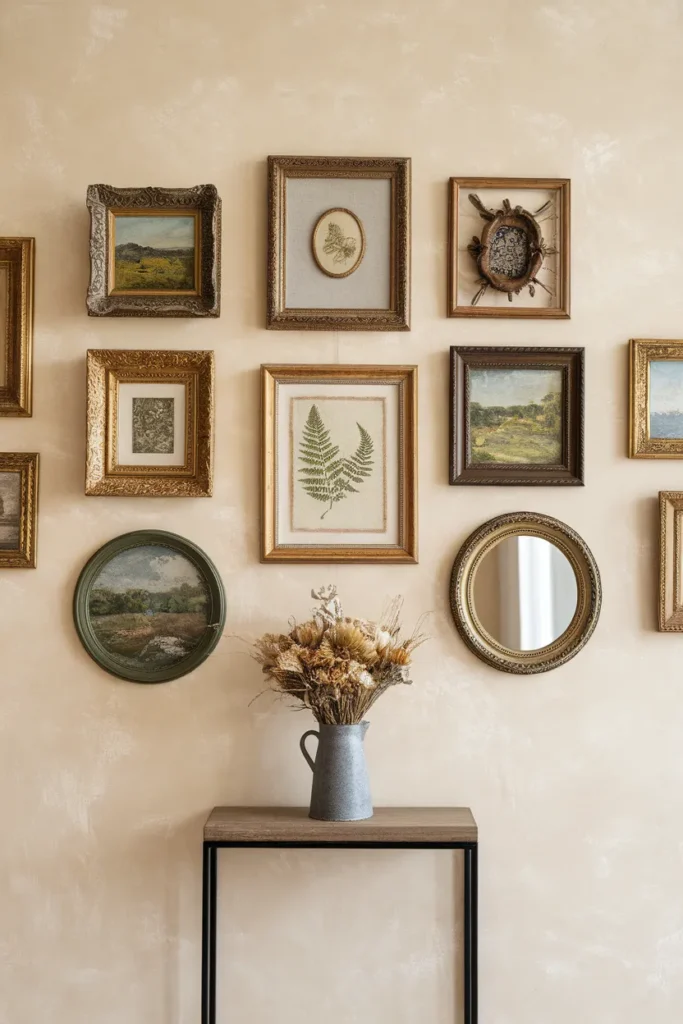
13. Hang a Grandma-Approved Gallery Wall
Thrifted landscape paintings, cross-stitch, pressed botanicals, and small mirrors mix into the classic cottage gallery. Keep the chaos charming with one structural trick: alternate large and small frames and hold a consistent visual center line, roughly 57 to 60 inches from the floor at the arrangement’s middle. Finishes can mismatch freely when the spacing stays steady, about 2 to 3 inches between frames.
The common miss is hanging six tiny frames adrift on one big wall. Fill toward the sightline or the arrangement looks like it’s still waiting for the rest of itself.
14. Let Plants Trail, Climb, and Slightly Misbehave
Cottage greenery looks a little wild on purpose. Trailing species like pothos, ivy, and string of turtles cascade off shelves and mantels, doing the overgrown-garden work indoors, and clustering pots in odd numbers at varied heights keeps the arrangement looking grown rather than placed. Dried bunches tied with twine (lavender, wheat, hydrangea) cover the corners no houseplant would survive.
Match the plant to the light before you buy. A sun-loving plant in a north corner turns into slow, guilt-inducing decor, and there’s no shame in dried stems or a quality faux where the sun won’t reach.
15. Layer Natural-Fiber Rugs: Jute Under, Floral Over
A jute base rug grounds the room in texture, and a smaller washable floral or Persian-style rug on top adds pattern you can throw in the machine. Jute feels pleasantly rough and straw-like underfoot while the topper stays soft where bare feet actually land, which is exactly the contrast this style wants. Size the base generously:
| Room size (approx.) | Base rug | Placement check |
|---|---|---|
| Up to 10 x 12 ft | 6 x 9 | Front legs of the loveseat on the rug |
| Around 12 x 15 ft | 8 x 10 | Front legs of all seating on the rug |
| 14 x 18 ft and up | 9 x 12 | 12 to 18 in of bare floor at the walls |
Buy the rug pad. Skip it and the jute sheds harder, the topper migrates weekly, and the whole stack creeps toward the door like it’s leaving.
16. Choose Wood With a Past, or Give New Wood One
Worn edges, old varnish, visible grain: cottage wood should look like it has held things for decades. Thrifted side tables, a farm stool, a ladder shelf, and flea-market frames deliver that history for less than one new piece, and mixing wood tones (honey pine beside dark walnut) is not just allowed here, it’s the point. New builder-grade pieces take patina from a coat of chalk-style paint rubbed back at the edges and a dark wax.
Matching every wood tone to the same finish is the tell of a showroom order. One room, three wood tones, zero apologies.
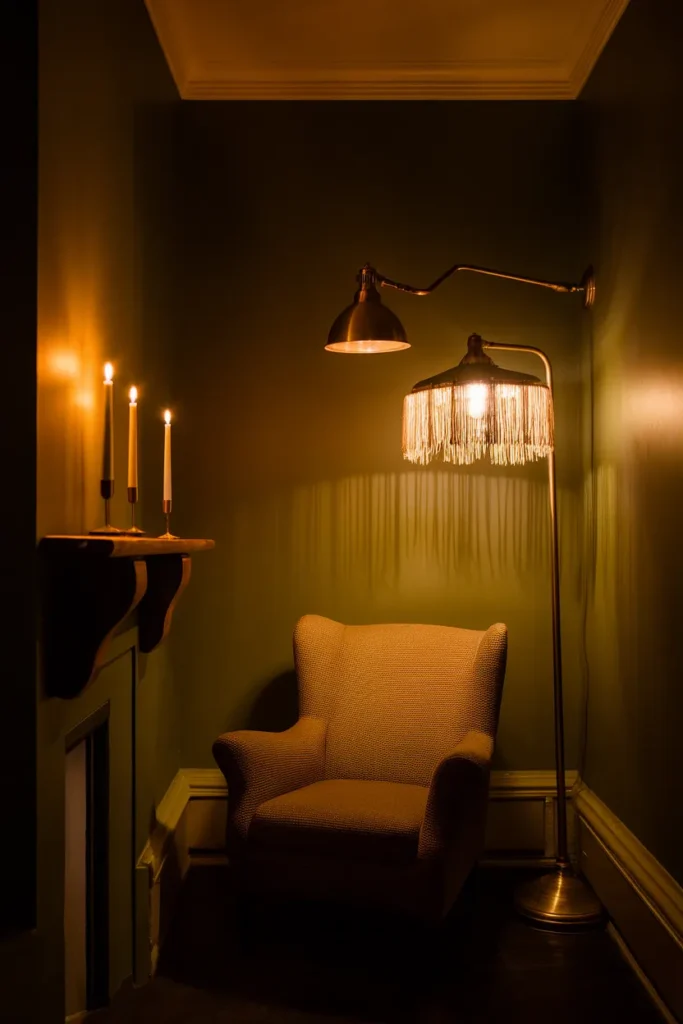
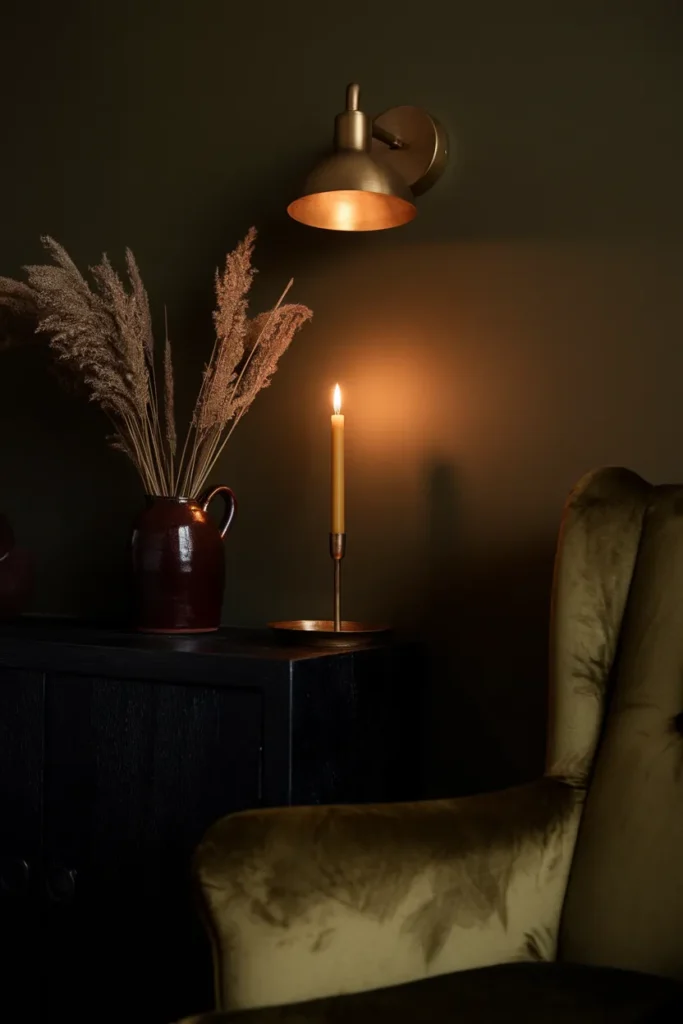
17. Try the Dark Cottagecore Version
The same storybook, after sunset. Deep olive or moss walls, aubergine and oxblood accents, unlacquered brass, and candlelight take the aesthetic moody, and search behavior says the shift is real: Pinterest’s spring 2026 data put “dark cottagecore kitchen” up 915 percent. In the living room that means color-drenching one alcove or the fireplace wall dark while keeping textiles and lampshades warm and pale for contrast. We went full moody in our dark cottagecore kitchen guide if you want to see the palette carried through a whole room.
Dark walls plus cool bulbs equals cave, full stop. This variant only works with 2700K light, a mirror opposite the window, and more lamps than you think you need.
18. Finish With the Senses, Not More Stuff
The last layer costs almost nothing and photographs least, which is exactly why rooms that stop before it feel staged. A beeswax candle adds a faint honey scent no fake floral spray can fake. A kettle within earshot means the room has a soundtrack. A wool throw over the chair back gives cold hands somewhere to go, and the TBR pile on the side table makes the whole thing a promise instead of a set.
Go easy on scent layering. One honest smell (beeswax, lavender, actual tea) beats three plug-ins arguing with each other, and your guests’ sinuses will back this up.
Cottagecore Living Room Ideas FAQs
Is cottagecore still in style in 2026?
Yes, and it’s evolving rather than fading. Pinterest’s spring 2026 trend report showed “dark cottagecore kitchen” searches up 915 percent and “grandma core kitchen” up 545 percent, with lace and nostalgic detail rising in the Predicts 2026 forecasts. The aesthetic is moving moodier and more collected, not out the door.
How do I make my living room look cottagecore without renovating?
Three moves carry most of the look: repaint in a muted sage or cream, swap overhead light for two or three warm 2700K lamps, and layer vintage textiles (a quilt, a floral pillow, a lace panel) over the furniture you already own. Everything else on this list is refinement.
What colors are cottagecore?
Soft, muted, nature-pulled tones: sage and moss greens, cream and warm white, dusty rose and blush, faded blue, butter yellow, and earthy browns. For the darker variant, deep olive, forest, and aubergine work when the lighting stays warm. Skip anything neon-bright or high-contrast black and white.
What’s the difference between cottagecore and farmhouse?
Farmhouse leans rustic, practical, and neutral: shiplap, black hardware, utility. Cottagecore leans romantic and sensory: florals, lace, collected vintage pieces, and a softer, garden-fed palette. Farmhouse says work; cottagecore says curl up.
Can I do a cottagecore living room in a rental?
Completely. Peel-and-stick wallpaper, tension-rod café curtains, plug-in sconces, adhesive hooks, layered rugs, and slipcovered furniture build the entire English cottage style apartment look with zero holes and zero permission slips. Idea 6 in this list is the full no-drill playbook.
What’s a realistic budget for this refresh?
Working with existing furniture, a meaningful refresh commonly lands in the $150 to $400 range: sample-pot or one-wall paint, two thrifted lamps with 2700K bulbs, secondhand textiles, and one peel-and-stick accent wall. Thrift and estate sales stretch every one of those dollars further than new retail.
Bring the Storybook Home
Start with idea one this weekend: a sample pot of sage, an evening test under warm light, and the room’s whole direction is set. Add the loveseat layer next month, the reading corner after that, and let the collections grow the way real cottage rooms always have, slowly and on purpose. Save this list to your decor board so it’s there when each next layer calls, and when this room is done, the style section of the site has the dark academia cousin waiting.
Keep reading
More cozy nook ideas
 Living Room
Read →
Living Room
Read →
Cozy Living Room Ideas: The Three-Layer Rule That Warms Up Any Room
Three layers, one corner, one afternoon. About $150 if you thrift the chair, about $240 if you don’t. If your living room…
 Living Room
Read →
Living Room
Read →
The Vintage Cottagecore Living Room: Floral Sofas, Real Antiques, and Rooms That Feel Inherited
A vintage cottagecore living room comes down to three moves: one floral sofa with a solid frame, a short list of true…
 Living Room
Read →
Living Room
Read →
How to Layer a Cozy Cottage Living Room That Feels Collected, Not Decorated
Your living room probably has good bones and zero warmth. A gray sofa doing its best, one overhead bulb glaring like a…