
How to Layer a Cozy Cottage Living Room That Feels Collected, Not Decorated

Your living room probably has good bones and zero warmth. A gray sofa doing its best, one overhead bulb glaring like a waiting room, a corner you’ve ignored since move-in day. Here’s the good news: a cozy cottage living room isn’t a renovation. It’s a stack of warm layers and honest textures you can build in a rental, on a real budget, mostly in one weekend. Below you’ll find the exact build order, the bulb number that changes your evenings, and a job for that corner. Start with the stack.
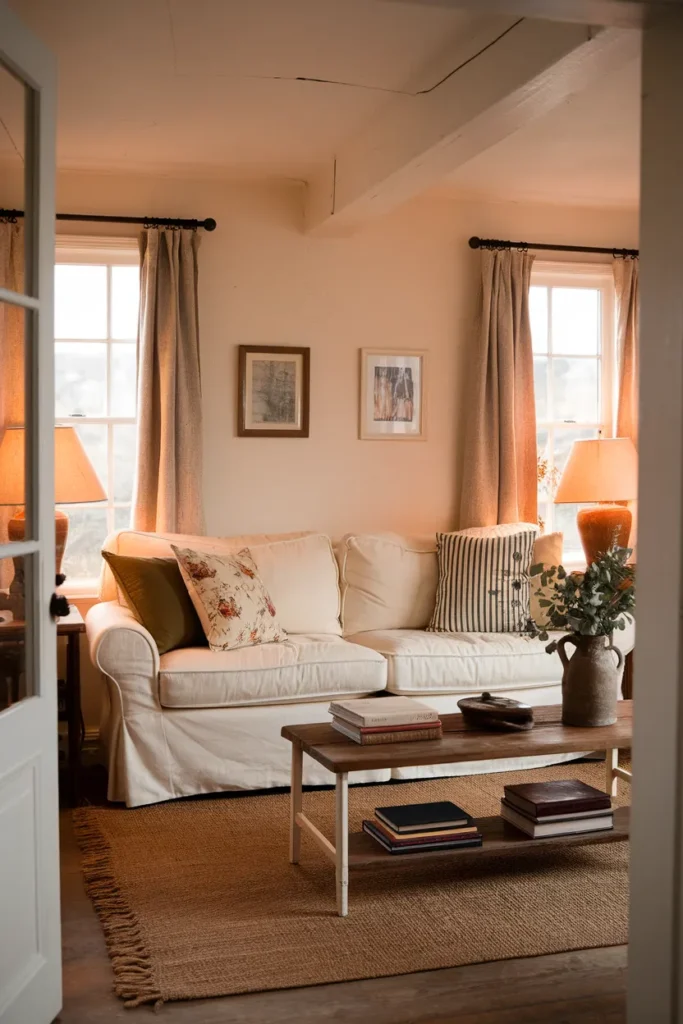
The 5-Layer Cottage Stack: Warm Layers and Texture, in Build Order
Every cottage room that stops you mid-scroll is running the same five layers. I call it the 5-Layer Cottage Stack, and if you only do one layer this week, do layer five first: warm light is the cheapest, fastest mood shift in the whole system.
Here’s the full stack, bottom to top:
- Ground layer. A jute or washable rug sized so the sofa’s front legs sit on it, not hover beside it. An 8×10 works in most living rooms; a 5×8 suits a small one.
- Soft layer. One 50×60 inch throw in linen or wool, draped, never folded into a store display, plus two 20 inch lumbar pillows you’d actually lean on.
- Pattern layer. One floral and one ticking stripe that share a single color. That shared color is what keeps the mix charming instead of chaotic.
- Collected layer. Wood with wear, brass with patina, stoneware, secondhand books. Anything that looks like it existed before this year.
- Glow layer. Two or three lamps running soft white 2700K bulbs, overhead light off after sunset.
The rest of this guide walks each layer in depth, plus the two problems most guides skip: renting and that one weird corner.
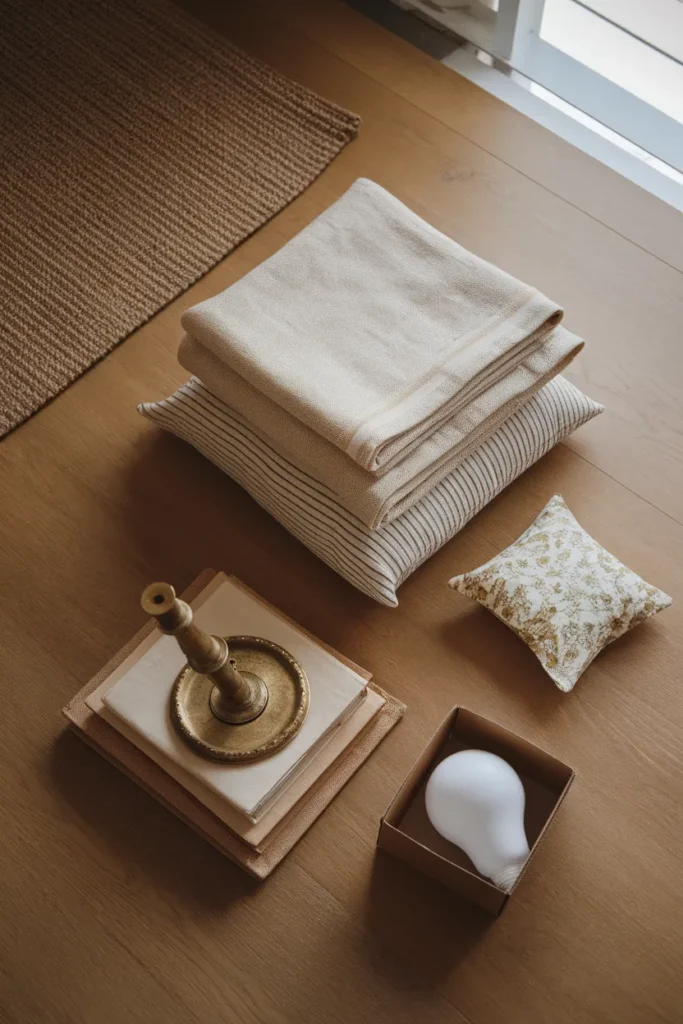
Layer Zero: Set a Warm Cottage Color Palette (Not Builder Beige)
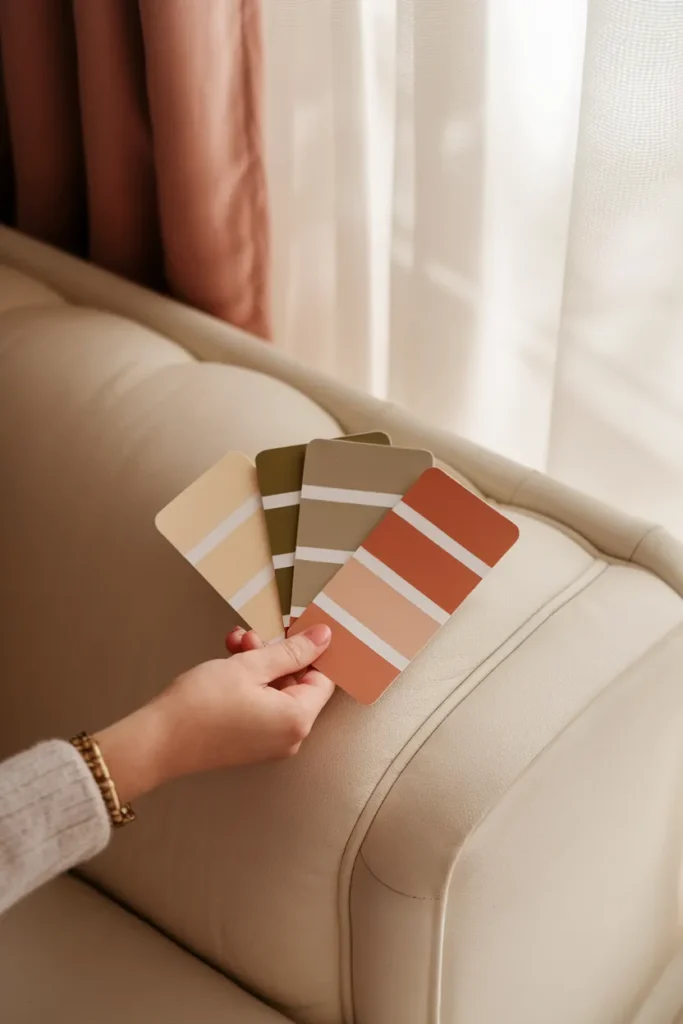
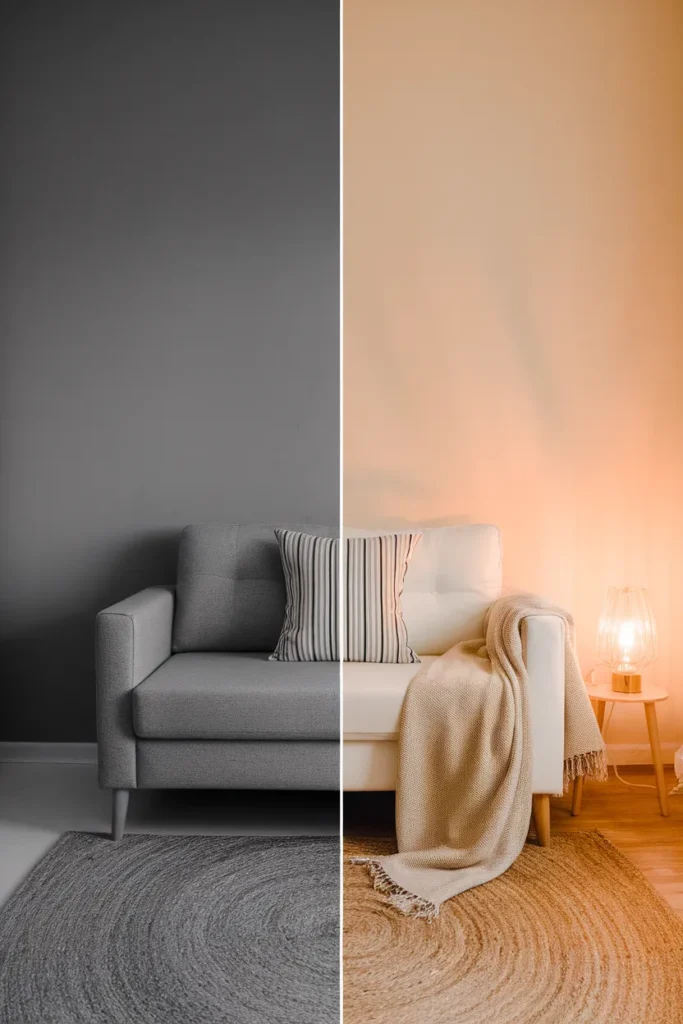
Before the stack goes on, the backdrop has to lean warm. Cold gray walls will fight every layer you add.
Keep it to three colors plus wood. Base: warm white, cream, or oatmeal. Second: one muted natural, olive, sage, or a soft clay brown. Accent: one small dose of something earthier, and terracotta earns its keep here better than almost anything, because it reads warm without shouting. If you want to see that color pushed further, the terracotta reading nook color ideas on this site show how far one clay tone can carry a corner.
A whisper of pastel (blush, butter, faded blue) is welcome in a pillow or a print. The failure mode is picking five colors you love separately; the room ends up reading like a clearance aisle. Three plus wood. Hold the line.
Renters, you don’t need paint for this. A large warm-toned art print, cream slipcovers, and oatmeal curtain panels shift a room’s temperature more than one accent wall ever did.
Mix Textures Like the Room Grew Over Ten Years
Cottage texture is a three-way mix: something rough, something soft, something aged. Rough is jute underfoot, rattan, raw wood. Soft is linen, wool, boucle, a sherpa throw that catches your fingertips. Aged is brass, stoneware, worn leather, book cloth.
Run all three in every zone of the room and it stops looking bought and starts looking accumulated. One armchair with a boucle texture, a wool throw, and a small brass lamp beside it already tells a ten-year story.
Pattern rides on top of texture. Stick to the shared-color rule from the stack: a rose floral and a red ticking stripe get along because red shows up in both. If the storybook end of this look is calling you, florals, ruffles, scallops and all, the cottagecore living room ideas here go eighteen rooms deep on it.
One honest trade-off from my own floor: floor cushions photograph like a dream and cost almost nothing. After forty minutes on one, my lower back files a formal complaint. Keep one for guests and atmosphere, but spend your real money on a chair you can sink into for two chapters.

Light Three Warm Pools, Never One Overhead
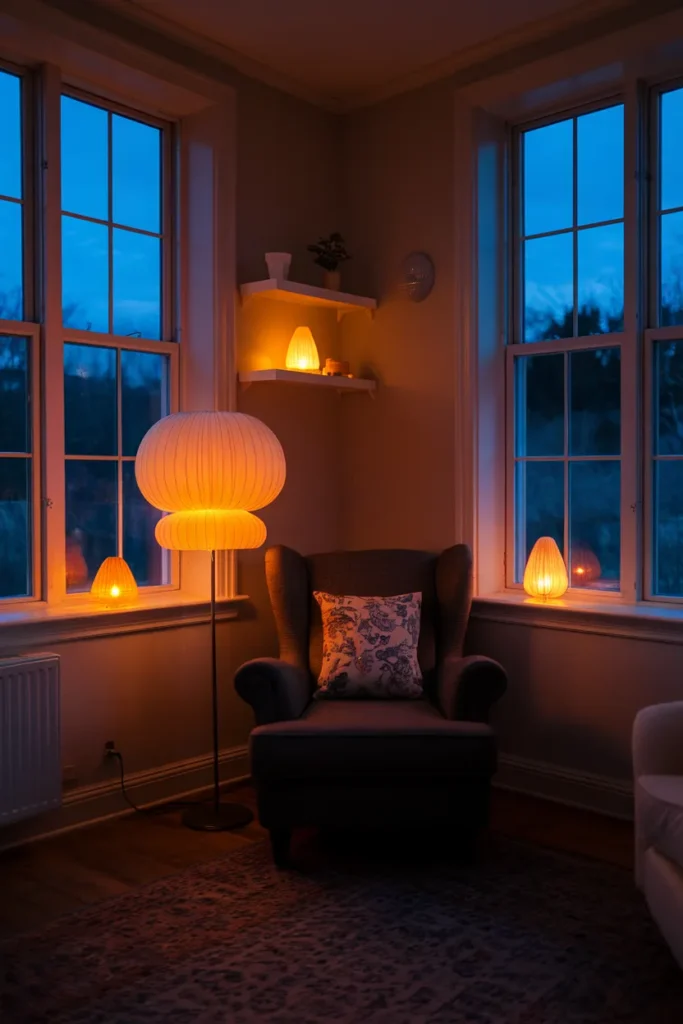
Overhead light flattens a room; lamps carve it into places. Aim for three pools: one by the main seat, one in the far corner, one low on a shelf or mantel. Three glowing pools at night is the whole hygge trick, and it costs less than one throw pillow.
The number that matters is 2700K, printed right on the bulb box as “soft white.” Lower Kelvin means warmer, more amber light, and the Department of Energy bulb color guidance notes that classic incandescents sit around 2,700 K, the tone that flatters wood, fabric, and skin. Copy that number in every lamp.
| Bulb label on the box | Kelvin | Where it belongs |
|---|---|---|
| Amber or “vintage” | 2200 to 2400K | One accent lamp, shelf or mantel |
| Soft white | 2700K | Every main lamp and sconce |
| Warm white | 3000K | A reading task lamp, nothing else |
| Bright white and up | 3500K+ | Kitchens and offices, not here |
Add a $12 plug-in dimmer to the main lamp. Skip it and your 8 pm looks exactly like your 2 pm, which is the fastest way to make a warm room feel like a break room. The first corner I ever put together, I bought decor for a month and did the lamps last, then couldn’t figure out why it still felt like a waiting room. Light order matters: bulbs first.
Renter-Safe Cottage Moves (No Drill, No Paint, No Landlord Chat)
Everything above works in a rental, and a few swaps carry the heavier looks too.
Slipcover the sofa you’re stuck with; a washed cream or oatmeal cover turns a landlord-special couch into layer one of the look. Peel-and-stick wallpaper in a small floral or a beadboard print gives you the paneled-wall effect and comes down clean. Lean instead of mount: an oversized mirror against the wall, a ladder shelf for books and stoneware.
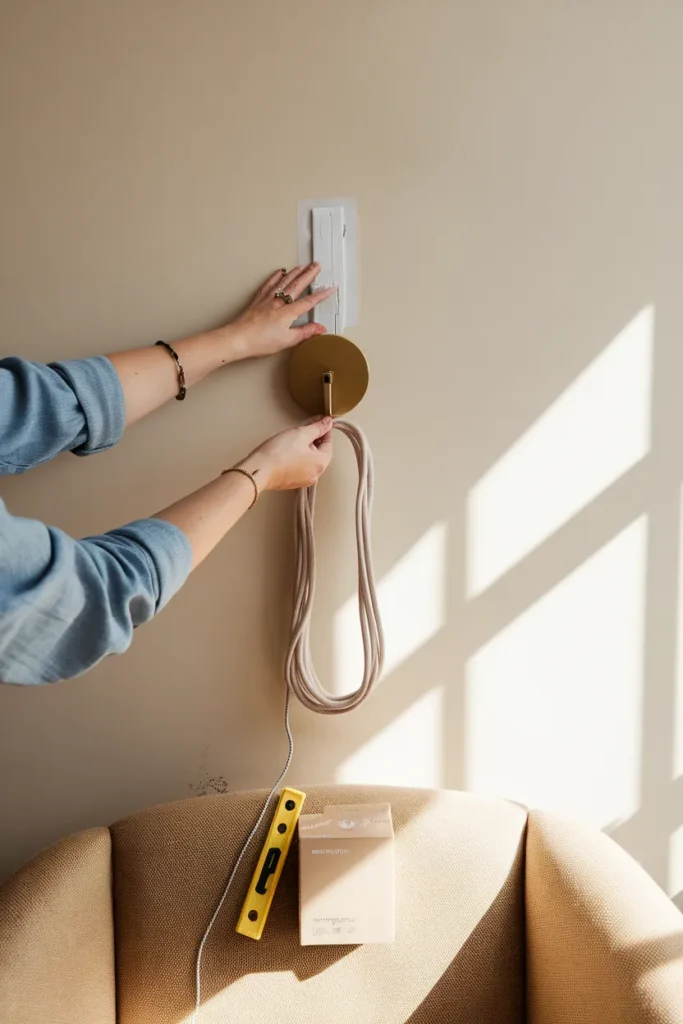
For wall light without wiring, a plug-in sconce with a fabric cord cover reads built-in from four feet away. Hang it on adhesive hooks rated well above the sconce’s weight, and test the hook on a hidden patch first. A cafe curtain on a tension rod softens a bare window in five minutes.
No fireplace comes with most rentals, so fake the hearth’s job, not its shape: cluster three pillar candles on a metal tray, or use flameless ones if you’ve got pets or a cat with opinions. The point of a hearth was always a low warm glow to gather around. A tray of candlelight on a low table does the same work.
Give the Awkward Corner a Job: A Reading Nook
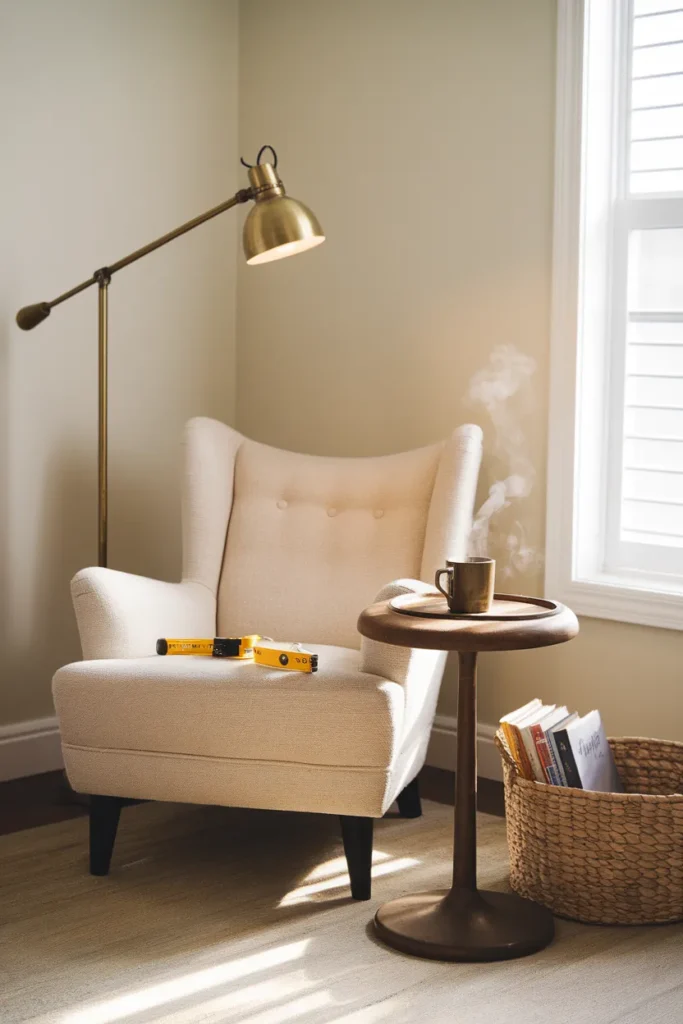
Every small home has one dead corner, too tight for furniture logic, too visible to ignore. Cottage rooms don’t hide that corner. They give it a job, and the best job is a reading nook.
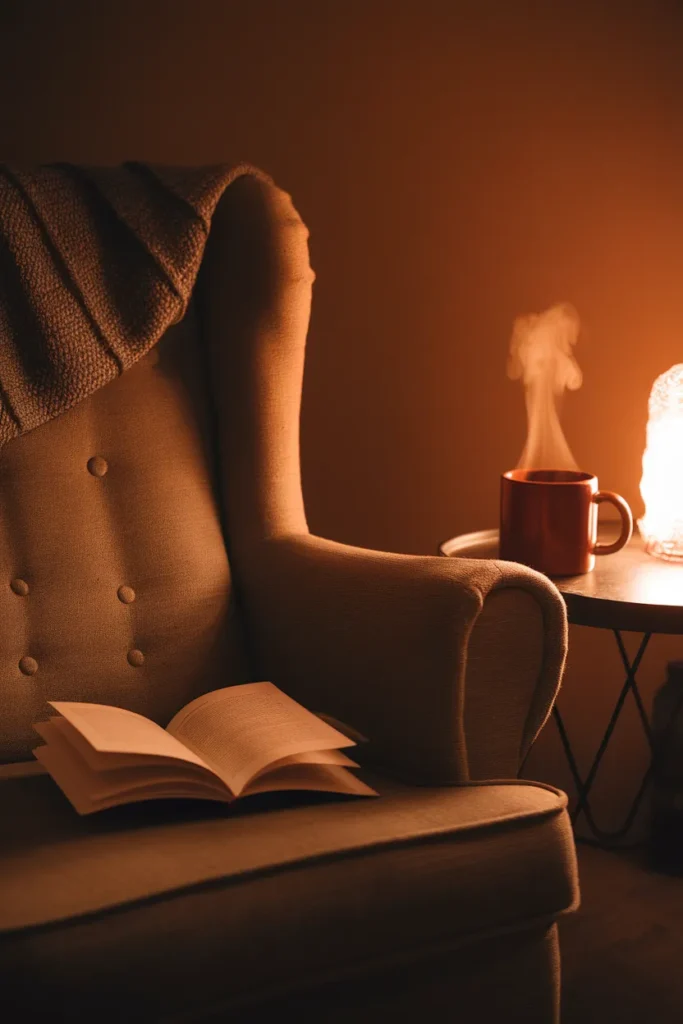
The build is four pieces. An armchair angled 45 degrees into the room, never flat against the wall. A side table passing the 18 inch reach rule: its edge within 18 inches of your reading hand, its top within about 2 inches of the armrest height, so a mug lands without looking. A swing-arm lamp with, yes, a 2700K bulb. A basket or pouf holding the TBR pile so the stack becomes decor instead of clutter.
Total footprint: roughly 4×4 feet. That’s it. The corner that used to collect a gym bag now collects you, some rain against the window, and the small click of a lamp at dusk.
If you want the full soft version of this corner, wallpaper, florals, the works, the renter friendly floral reading corner guide builds one from scratch in a month of small steps.
Collected Pieces and a Little Green
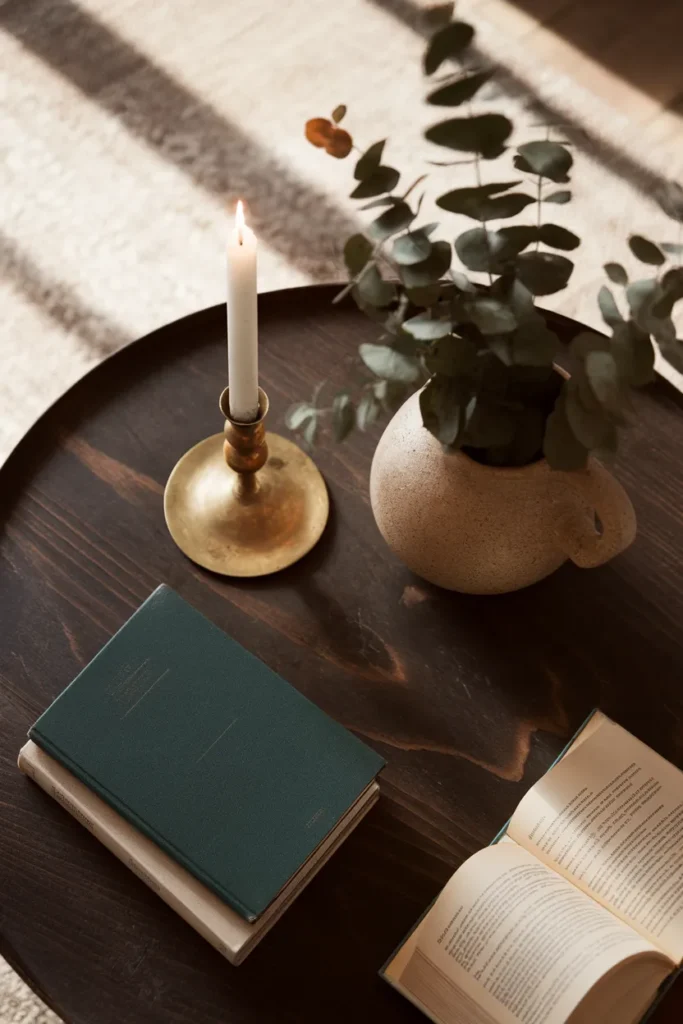
The collected layer is where cottage rooms beat catalogs, because it can’t be ordered in one cart. Thrift stores hand it to you for pocket change: ironstone pitchers, brass candlesticks, small framed botanical prints, clothbound books chosen by feel, not spine color. My best brass candlestick cost $4 and stands slightly bent. Nobody has ever noticed the bend, and I’d argue the bend is doing half the charm.
Style these in odd-number groups of three: one tall thing, one low thing, one alive thing. The alive thing matters. A stoneware jug of eucalyptus or olive branches softens a shelf instantly, and one real plant near the window keeps the room breathing between fresh-stem runs.
Real plants do have terms and conditions: most houseplants want to live within a few feet of a bright window, and harsh direct summer sun is as rough on them as a dark corner. University of Maryland houseplant care basics cover placement, watering, and which plants forgive a low-light room, which in a cottage space usually points to a pothos or a peace lily over anything fussy.
Old books, by the way, bring the one sensory layer no store sells: that dry, faintly sweet paper smell when you open the room’s windows in the morning.
The Under $150 Cottage Warm-Up
You don’t need the whole stack on day one. Here’s the starting build in priority order, with typical US price bands as of mid 2026 (your store will vary, so treat these as honest estimates, not gospel):
- Three soft white 2700K LED bulbs: $12 to $18
- One 50×60 inch cotton or wool-blend throw: $20 to $35
- Two 20 inch pillow covers plus inserts: $25 to $40
- Plug-in dimmer for the main lamp: $10 to $15
- Thrift run, brass candlestick plus a stack of old books: $10 to $20
- Grocery store eucalyptus bunch: $6 to $10
That lands the whole warm-up between roughly $85 and $140. Add a plug-in sconce later ($30 to $50) when the corner nook goes in. Notice what’s first on the list: the bulbs. Buying decor before light is the classic backwards move, and it’s why so many “finished” rooms still feel cold at night.
Cozy Cottage Living Room FAQ
What makes a living room feel like a cottage? Warm layered textiles, natural materials with visible age, soft pattern (florals, stripes, checks), and low warm lighting instead of overheads. If the room looks accumulated rather than purchased in one trip, you’re there.
How do I make my living room cozier without renovating? Swap every bulb to 2700K, add lamps until you have three pools of light, drape a throw, and layer a rug. Those four moves change more than any construction project under five figures.
What colors work in a cottage living room? A warm white or cream base, one muted natural like olive or sage, and one earthy accent such as terracotta, plus plenty of mid-tone wood. Three colors and wood is the working ceiling.
What’s the difference between cottage style and cottagecore? Cottage style is the broad, lived-in country tradition: comfort first, pattern welcome, nothing precious. Cottagecore is its internet-born storybook cousin that turns the dial up on florals, ruffles, and nostalgia. This guide is the base recipe; cottagecore is the extra frosting.
Can renters get the cottage look? Yes, fully. Slipcovers, peel-and-stick paper, leaning mirrors and shelves, plug-in sconces on rated adhesive hooks, tension-rod cafe curtains, and lamp light do the entire job without one hole in the wall.
What’s the cheapest way to start? Three 2700K bulbs and a throw blanket, under $50 total. Light and softness are the two layers your eye reads first, so they buy the most warmth per dollar.
Start With One Lamp Tonight
A cozy cottage living room is a stack, not a purchase. Tonight, swap one bulb and drape one throw; next weekend, pick a layer and go one deeper. When the main room feels right, that corner nook is the natural next build, and the cottagecore living room guide on this site is the storybook sequel when you’re ready to turn the charm all the way up.
Keep reading
More cozy nook ideas
 Living Room
Read →
Living Room
Read →
Vintage Living Room Decor That Reads Thrifted Cottage, Not Thrift Store
No estate sale connections. No reno budget. No landlord who says yes to paint. Vintage living room decor still works in a…
 Living Room
Read →
Living Room
Read →
Floral Sofa Living Room Ideas That Read Cottage, Not Dated
Your floral sofa isn’t the problem. The three beige things sitting around it are. That’s the whole diagnosis. A floral sofa living…
 Living Room
Read →
Living Room
Read →
Turn the Dead Corner of Your Living Room Into a Reading Nook
Your living room has one corner that never works. A lamp you don’t love. A plant shedding leaves onto the baseboard. Maybe…