
14 Basement Playroom Ideas to Warm Up a Cold, Dark Space
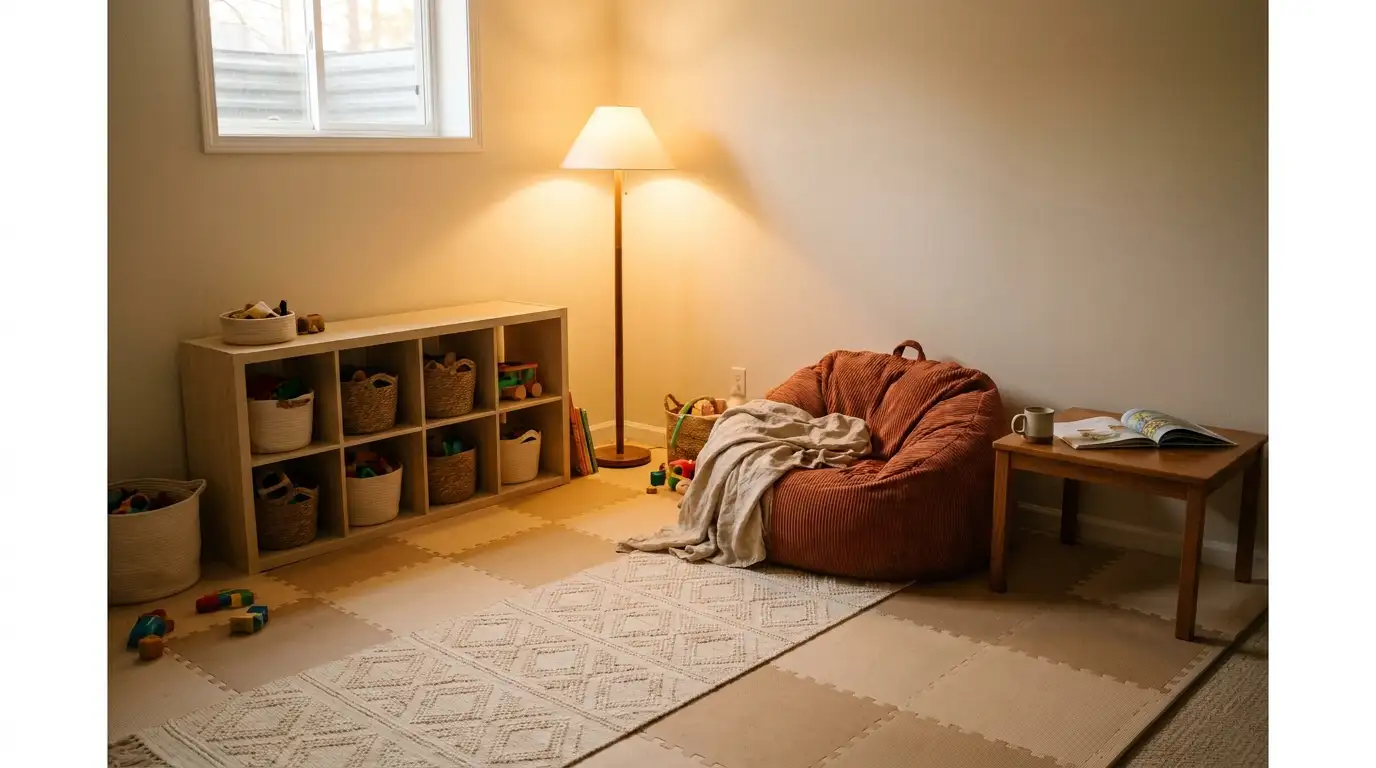
If your basement feels like a chilly storage dungeon with bare concrete floors and one flickering overhead bulb, turning it into a place kids actually want to hang out can feel out of reach. You do not need drywall contractors, recessed ceiling cans, or a massive renovation budget to fix it.
Warming up a cold, dark basement playroom comes down to three practical shifts: insulating the concrete slab underfoot, swapping harsh blue-toned bulbs for warm 2700K light, and carving out a quiet book corner beside active play zones. Whether you rent a 900 sq ft townhouse or own an older split-level, these 14 setups turn an underground room into a bright, clutter-controlled space your kids will use every single day.
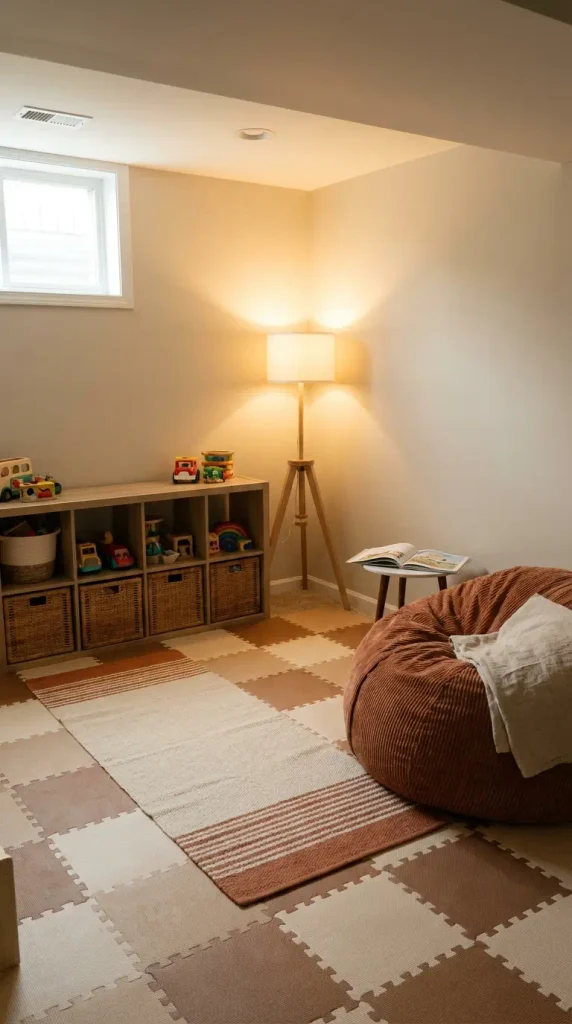
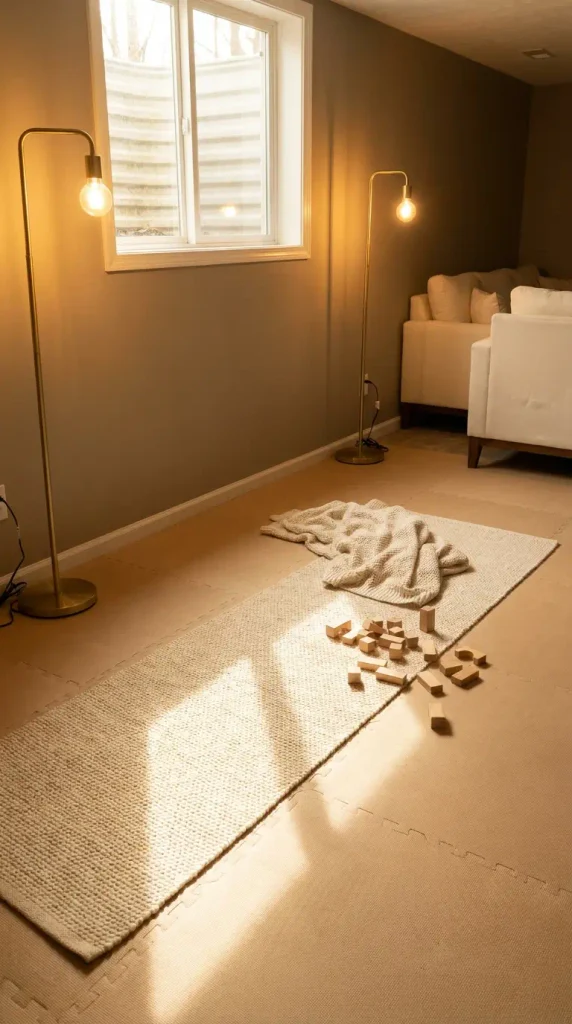
1. Thermal Foam Floor Tiles With Layered 2700K Floor Lamps
Cold concrete pulls heat straight out of bare feet within minutes, which is why kids abandon basement floors fast. Start by laying interlocking EVA foam puzzle tiles ($24.99 to $99.99 at Target) across the main play zone, then top the center with a washable low-pile runner so toy cars still roll smoothly.
Next, turn off the overhead fluorescent fixture and place two floor lamps at opposite corners fitted with 2700K soft white LED bulbs ($5.99 to $15.99 per multipack at Target). When I tested interlocking foam tiles over an uninsulated basement slab, the floor stopped feeling icy immediately, and pairing them with layered reading nook lighting ideas turned a gray cellar corner into an inviting evening hangout.
2. Low Cube Storage Wall With Zero-Screw Anti-Tip Straps
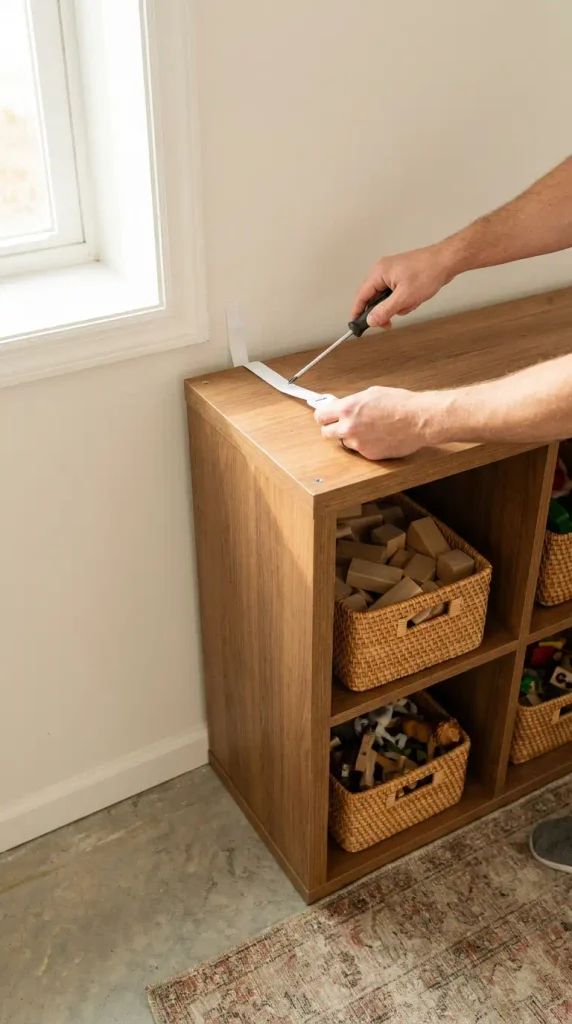
Tall bookcases block scarce basement light and pose a serious tipping hazard when toddlers climb shelves. Turn a modular 11-inch cube organizer ($26 to $70 at Target) horizontally along a perimeter wall instead so every bin sits within easy reach of small hands.
Follow the CPSC furniture anchoring guidelines even on waist-high units: renters can use zero-screw adhesive anti-tip straps ($7.90 to $15.99 at Target and Walmart) that bond cleanly to painted drywall without leaving drill holes behind. Safety note: anchor tall furniture to the wall, keep candles and cords away from fabric, and use a licensed electrician or contractor for hardwired lighting, ceiling mounts, or anything structural.
⚠️ Safety Check Before Loading Bins
Place heavy wooden blocks and board games in the bottom row of cubbies, keep soft plush toys on top, and attach two anti-tip straps before kids use the shelf.
3. Curtained Reading Hideaway Under the Basement Stairs
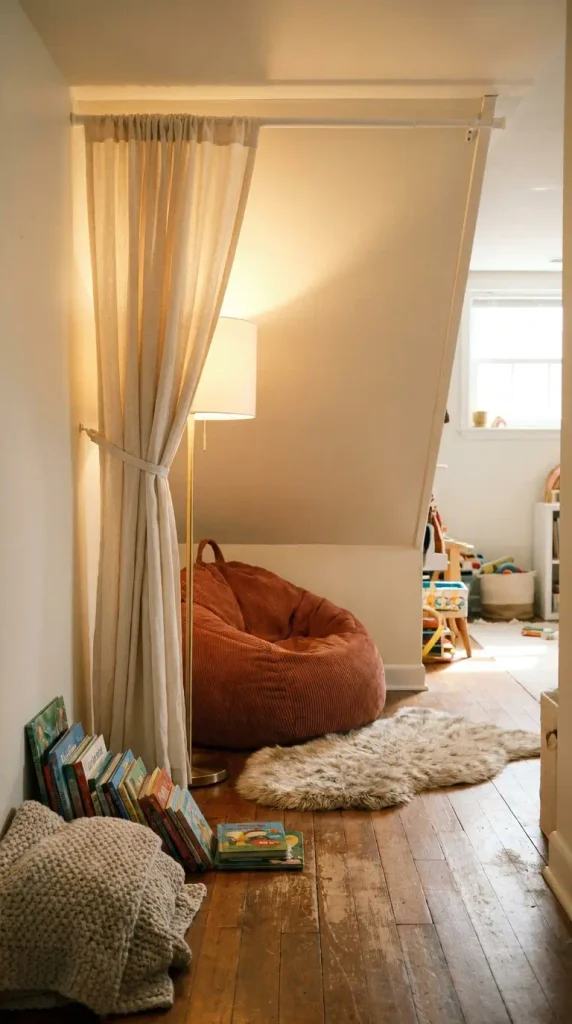
Open space beneath basement stairs usually collects dusty holiday bins, yet its low sloped ceiling feels naturally sheltered to kids. Hang a heavy linen curtain on an adjustable tension rod across the opening, then tuck a tufted corduroy bean bag chair ($44.99 to $85 at Target) and a sheepskin rug inside.
You can adapt a classic under-stairs reading nook setup in under an hour without touching a saw. Add a rechargeable LED puck light overhead so young readers have a quiet hideaway to work through their TBR pile while siblings play loudly across the room.
Insulate the concrete slab first with foam tiles or a thick rug pad.
Swap harsh overhead bulbs for warm 2700K lamps at eye level.
Hang soft curtains or throws to dampen concrete echo and drafts.
4. Plug-In Swing-Arm Sconce Over a Kid Craft Table
Shadows fall right across coloring pages when a craft table sits under a single center ceiling bulb. Mount a plug-in swing-arm wall sconce ($33.60 to $127.99 at Target) 18 inches above the tabletop and route the cord neatly inside adhesive cord channels along the baseboard.
Swinging the arm directly over the paper gives kids clear task lighting without hiring an electrician to open basement drywall.
I left a leftover 5000K workshop bulb over our craft table for a week and wondered why nobody wanted to sit there. Swapping to a 2700K bulb inside a fabric-shaded plug-in sconce changed the mood of the whole corner overnight.

5. Low-Ceiling Wooden Climbing Gym for Rainy-Day Energy
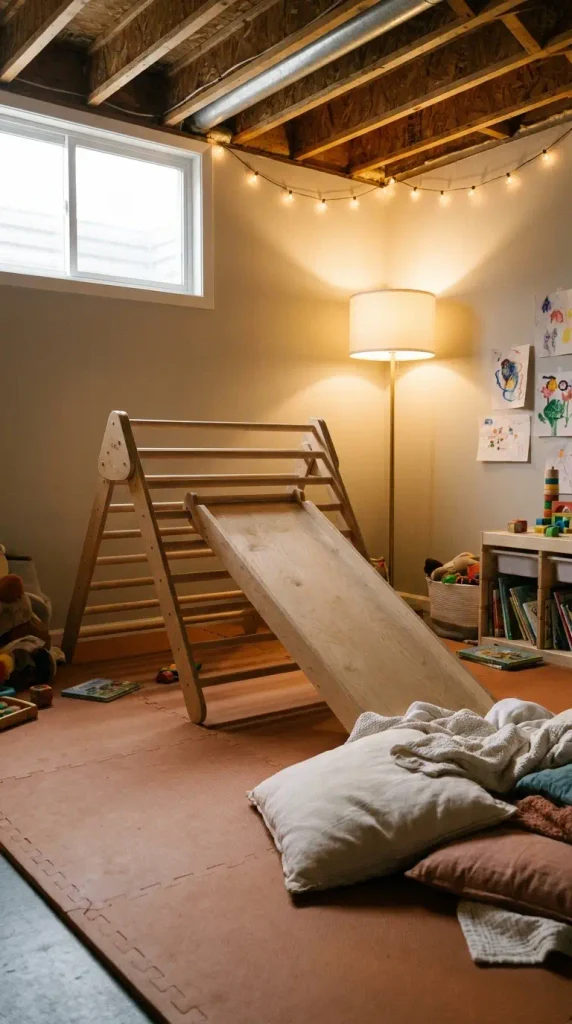
Low basement bulkheads and ductwork rule out tall swing sets, yet indoor climbing frames remain one of the smartest ways to burn energy during winter freezes. Look for compact wooden models built specifically under 48 inches tall, such as the Avenlur Cherry frame at 43 inches high or the Magnolia Medium at 47.2 inches high.
Set the frame over interlocking foam tiles with at least 18 inches of clear floor space around every side so kids never bump into concrete walls or support posts.
Frame heights from Avenlur low-ceiling specifications; bulb Kelvin from Lumens lighting scale.
6. Rolling Under-Bench Toy Crates for Five-Minute Cleanup
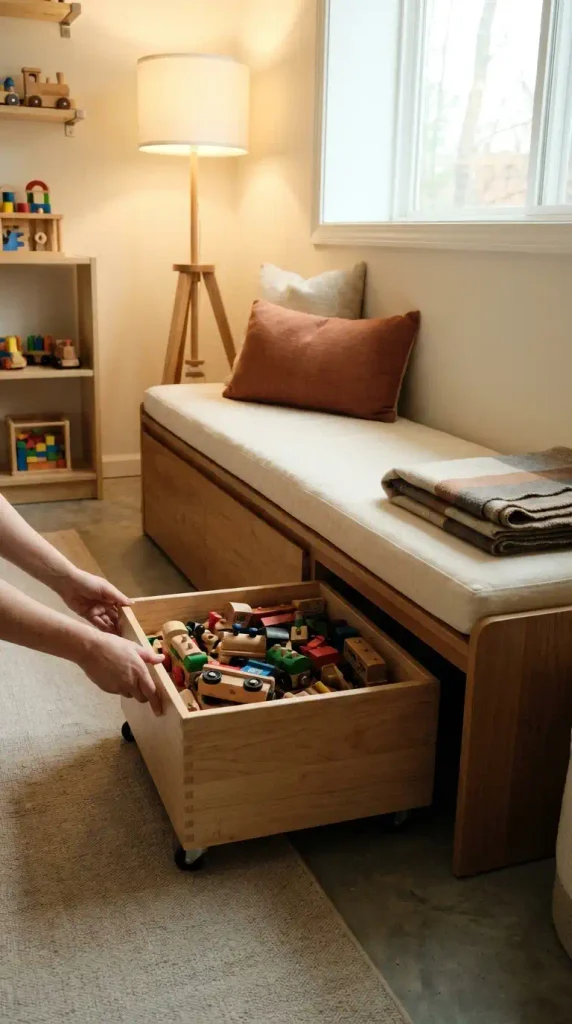
Open toy bins scattered across the floor make a small basement feel chaotic before bedtime. Slide three caster-mounted wooden crates underneath a sturdy storage bench, then top the bench with a thick tufted cushion, two lumbar pillows, and a folded wool throw.
Parents get a warm, supportive seat away from the cold wall while kids can wheel out train tracks or building bricks and roll them straight back under cover when dinner is ready.
5-Minute Evening Reset Checklist
7. Unfinished Joist Fabric Canopy With Flameless Lanterns
Exposed floor joists, copper pipes, and fiberglass insulation can make an unfinished basement feel noisy and chilly. Clip lightweight unbleached cotton muslin panels across the underside of the joists over a single corner bay to create a soft tent ceiling that absorbs sound.
Skip real wax candles anywhere near draped cloth: following NFPA candle safety recommendations, keep open flames out of kids’ spaces altogether and hang battery-operated LED lanterns at least 12 inches clear of any fabric.
Bare wooden joists, harsh overhead bulb glare, and loud footsteps echoing off concrete walls.
Draped muslin fabric panels softening the ceiling bay with diffused 2700K lantern light and muted echo.
8. Peel-and-Stick Chalkboard and Magnetic Play Wall
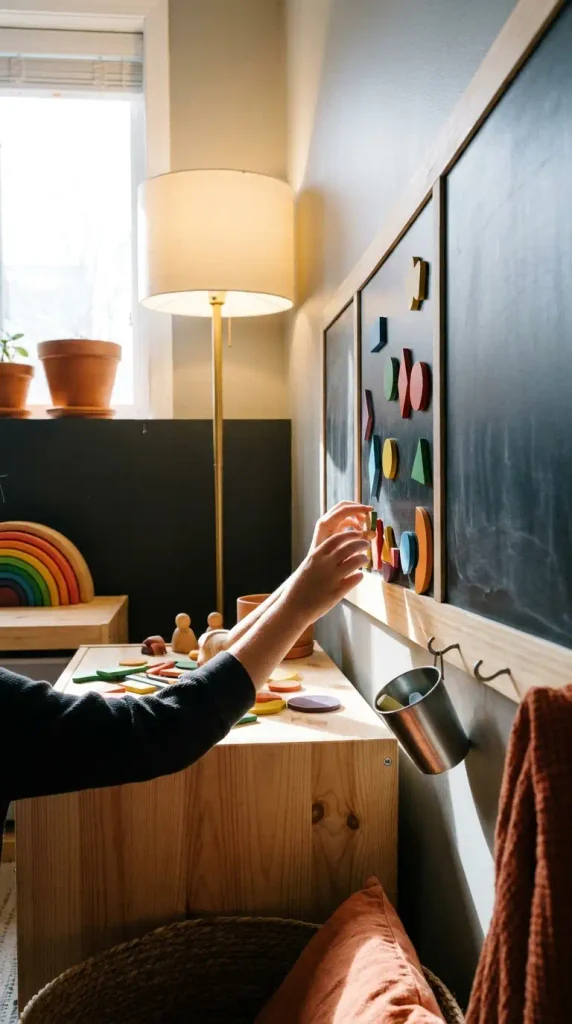
Narrow basements run out of floor space fast, so moving creative play onto the walls keeps walkways open. Apply removable peel-and-stick chalkboard vinyl or lightweight magnetic boards at child shoulder height for drawing, letter tiles, and felt story pieces.
Choose dustless chalk and keep a damp microfiber cloth in a hook basket beside the board so chalk dust never settles onto nearby cushions.
Wipe painted drywall clean and let it dry completely before pressing decals on.
Mount boards between 20 and 42 inches off the floor for easy toddler reach.
Sticking adhesive vinyl directly onto damp, unpainted cinderblock walls.
Using loose dry chalk next to dark boucle or corduroy seating.
9. Vapor-Barrier Rug Layering With a Quiet Dehumidifier
Basements hold higher summer humidity than upstairs rooms, which leaves natural rugs feeling clammy. Tuck a quiet 25-to-30-pint ENERGY STAR dehumidifier ($185.99 to $269.99 at Target) into a ventilated corner behind a slatted wood divider, and lay a moisture-barrier rubber rug pad underneath a flatweave polypropylene base rug topped with a washable cotton rug.
I learned this the hard way after laying a braided rug straight onto basement concrete and finding damp backing two weeks later; adding a sealed rubber pad and running a 25-pint dehumidifier kept the floor dry all summer.
10. Front-Facing Picture Book Ledges at Toddler Height
Traditional deep bookshelves hide picture book covers behind spines, so young kids dump the whole shelf looking for one favorite story. Shallow 4-inch wall ledges display covers facing outward like art while taking up almost zero floor space in a narrow basement.
Pair three staggered ledges above a thick floor pillow using these narrow reading nook shelving ideas so toddlers can pick out bedtime books on their own.
Set the bottom ledge 18 inches above the floor cushion so seated kids do not bump their heads.
Space the upper ledges 14 inches apart to fit tall hardcover picture books without tipping.
Rotate six to eight seasonal titles each month to keep the display clutter-free.

11. Sheer Cafe Curtains and Light-Bouncing Wall Mirror
Most basement hopper windows sit high near the ceiling, leaving the lower half of the room in shadow. Hang lightweight sheer cafe curtains on a tension rod to soften the deep concrete window well without blocking daylight, then lean or anchor a shatter-resistant acrylic mirror on the opposite wall.
That simple reflection carries afternoon sunbeams deeper into your basement playroom while keeping glass safely out of reach of stray foam balls.
Pairing sheer window-well curtains with an opposite acrylic mirror bounces natural daylight twice as far across a dim room without adding a single watt.
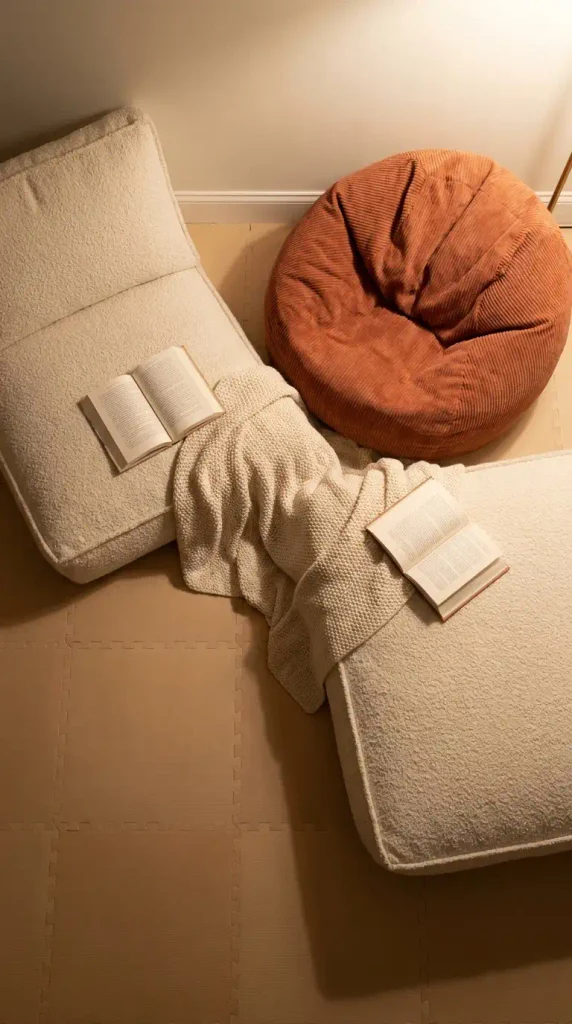
12. Modular Floor Cushion and Bean Bag Fort Lounge
Full-size sofas eat up half the floor in a 600 to 1,400 sq ft home and rarely fit down narrow basement stairs. Group two oversized boucle floor pillows with a kids’ corduroy bean bag chair ($44.99 to $85 at Target) directly on top of foam tiles instead.
Kids can drag the pieces together into a blanket-fort base on Saturday afternoon and stack them neatly into a corner when friends come over.
Soft floor seating fits down any narrow basement stairwell and clears out in seconds when you need open floor space.
13. Tween Board Game and Homework Booth in a Wall Alcove
Playrooms go unused once kids hit middle school unless one corner grows up with them. Tuck a compact wood table and two upholstered chairs into a basement alcove with a 2700K clip-on task lamp and a dedicated shelf for board games and graphic novels.
Having a screen-free booth downstairs gives tweens a spot to spread out 1,000-piece puzzles or study with friends without cluttering the kitchen island.
Stick to padded floor cushions and rounded corners until climbing stabilizes.
Use a wipeable tabletop for LEGO builds, card games, and science kits.
Add a power strip and warm desk lamp for quiet evening homework.
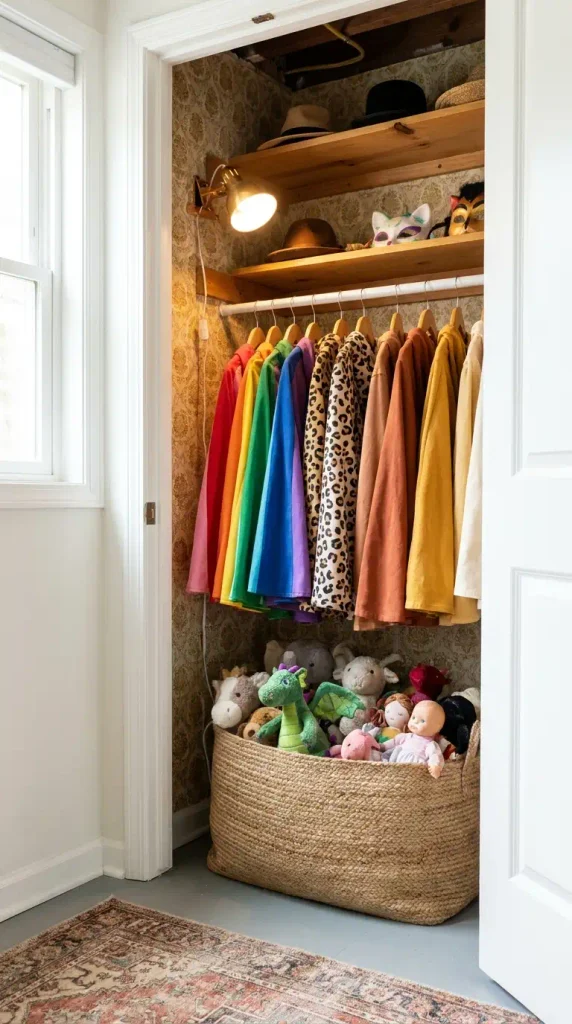
14. Closet Dress-Up Wardrobe and Soft Toy Bin
Costume capes, puppet theaters, and stuffed animals swallow floor space when left in open baskets. Convert an underused basement closet into a self-contained pretend-play station by hanging a second tension rod 36 inches off the floor and sliding a canvas bin underneath for soft props.
Closing the door at night hides the bright colors instantly while keeping every cape wrinkle-free and off the floor.
Dots are the writer’s judgment, not test data.
Frequently Asked Questions
Is a basement a good place for a playroom?
Yes, a basement keeps noisy toys, climbing frames, and art supplies out of your main living room while giving kids room to spread out. The key is addressing concrete chill and dim lighting first with interlocking foam tiles, layered washable rugs, and warm 2700K floor lamps so the space feels welcoming instead of damp.
What is the best indoor jungle gym for a basement with a low ceiling?
Choose a compact wooden climbing triangle or low-profile indoor gym under 48 inches tall, such as a 43-inch or 47.2-inch Avenlur frame. That height leaves plenty of headroom beneath 7-foot ceilings and low ductwork while still giving toddlers and grade-schoolers safe climbing and sliding practice over foam floor mats.
What are renter-friendly ways to warm up a basement playroom?
Stick to freestanding, zero-drill upgrades you can take when you move: interlocking EVA foam floor tiles, plug-in swing-arm wall sconces with adhesive cord channels, tension-rod curtains under stairs or across windows, and horizontal cube organizers secured with zero-screw adhesive anti-tip straps.
How do you keep a basement playroom warm and dry over concrete floors?
Always place a thermal barrier between bare concrete and soft seating. Lay interlocking foam tiles or a moisture-barrier rubber rug pad underneath washable rugs, and run a quiet 25-to-30-pint ENERGY STAR dehumidifier in a ventilated corner so textiles never absorb ground dampness.
What if my basement is unfinished with exposed ceiling joists?
You can soften an unfinished ceiling without hanging drywall by clipping lightweight unbleached cotton muslin panels across one corner bay to form a fabric canopy. Pair the canopy with warm 2700K floor lamps and battery-operated LED lanterns kept well clear of the cloth to dampen echo and hide pipes.
How do you fit a quiet reading nook inside a small basement playroom?
Use vertical wall space and dead corners so active floor space stays open. Tuck a corduroy bean bag chair under open basement stairs behind a linen tension curtain, or mount narrow 4-inch front-facing picture ledges above a single floor cushion beside a plug-in reading lamp.
Bringing Warmth to Your Basement Playroom
You do not need a full remodel to make a basement playroom feel like the warmest hangout in the house. Start from the floor up with insulated foam tiles and a moisture-barrier rug pad, swap harsh overhead glare for 2700K lamps, and carve out one tucked-away book corner where kids can slow down after active play.
Save this guide to your kids’ playroom or small-space reading nook board on Pinterest so you have the measurements, lighting specs, and renter-safe storage checklist handy before your next weekend setup.
Keep reading
More cozy nook ideas
 Kids
Read →
Toddler Playroom Ideas: 14 Safe, Simple Setups for Ages 1 to 3
No spare bonus room, no drywall drilling, and no giant renovation budget required. You can build a safe, clutter-free toddler playroom for…
 Nursery & Teen Rooms
Read →
8 Montessori Playroom Mistakes to Avoid (and What to Do Instead)
If your Montessori playroom looks calm for about an hour after you set it up, and then every basket ends up dumped…
 Kids
Read →
14 Under-the-Stairs Playroom Ideas That Make the Room Feel Magical
A $3.50 tension rod. A string of 2700K lights on a six-hour timer. One curtain panel. That’s the first idea on this…