
Reading Nook Shelving Ideas: 21 Cozy Bookshelf Picks That Make a Corner Feel Like a Library

You walk past the same dead corner of your living room every single day. A lonely lamp, a stack of books wobbling on the floor, maybe a chair you keep meaning to reupholster. It looks unfinished because it is unfinished, and the right shelving is the one piece you’ve been missing.
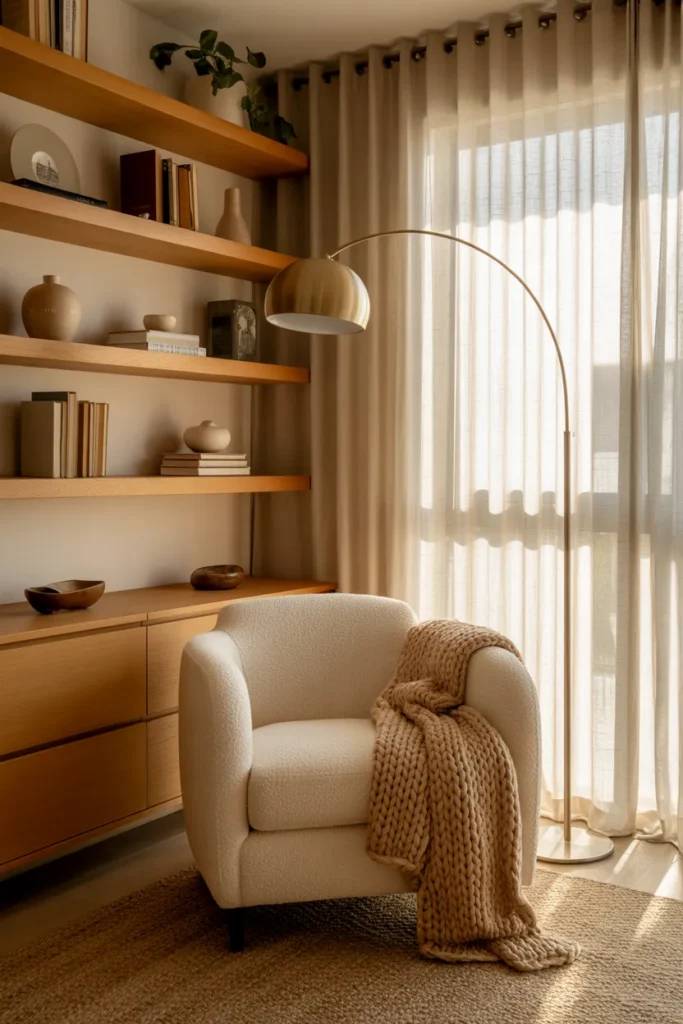
Reading nook shelving is what turns a forgotten corner into the spot you actually want to sit in. Not just storage, not just decor, but the framework that makes a chair feel intentional. We’ve spent the last few years testing everything from $18 picture ledges to custom floor-to-ceiling built-ins, and we’re going to walk you through what’s worth the money, what’s worth the weekend, and what to skip entirely.
Here’s the promise: by the end of this post, you’ll know exactly which shelving style fits your space, your skill level, and your budget. We organized this guide by shelving style, from the lowest-effort rental-friendly picks to the show-stopping built-ins, so you can scroll straight to your situation.
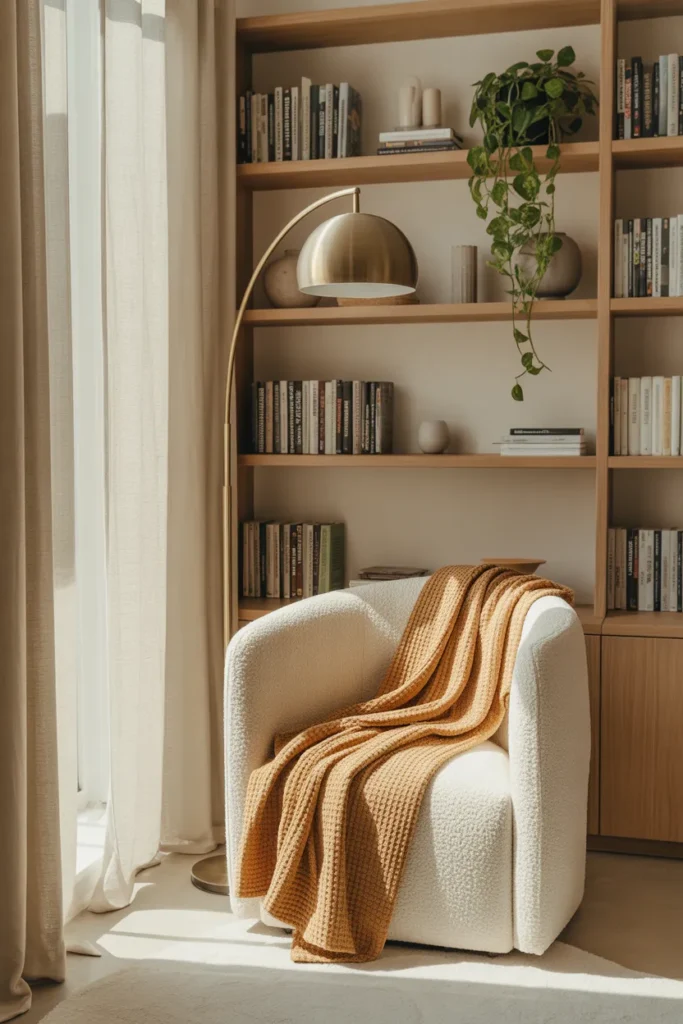
Who This Is For
This guide is built for:
- Renters who can’t drill into walls and need command-strip-rated or leaning solutions
- Homeowners ready to commit to floating shelves or built-ins
- Small-space dwellers working with corners under 4 feet wide
- Budget-conscious readers with a $25 ceiling per item
- Maximalists who want a full library wall wrapping the chair
- Minimalists drawn to Japandi or Organic Modern with two clean shelves and breathing room
If any of those sound like you, keep reading. We’ll call out the right pick for each profile in every section.
What Reading Nook Shelving Actually Has to Do
Before we get into the 21 ideas, here’s the framework we use when we’re styling a nook for ourselves or a client. Every shelving choice has to do three jobs:
- Hold your current reads within arm’s reach (the active zone)
- Display books and decor at eye level (the styled zone)
- Store the rest without crowding the chair (the archive zone)
If your shelving only does one of those, you’ve got a chair next to a bookshelf, not a reading nook. The difference matters because the second one feels finished and the first one feels like a furniture store. We’ll come back to this zoning idea in the styling section, where we built you a mini-cheat-sheet you can screenshot.
Quick Vertical Zoning Cheat Sheet
| Zone | Height from floor | What goes here | Best shelf type |
|---|---|---|---|
| Active zone | 24 to 48 inches | Current reads, reading glasses, mug coaster | Picture ledge, side-table top, low cube |
| Styled zone | 48 to 72 inches | Hardcovers, framed art, ceramics, candles | Floating shelf, open cubby |
| Archive zone | 72 inches and up | Reference books, seasonal swaps, baskets | Tall bookcase, top of built-in |
Save this. It’s the single tip that separates a Pinterest-worthy nook from a chair next to a stack of books.
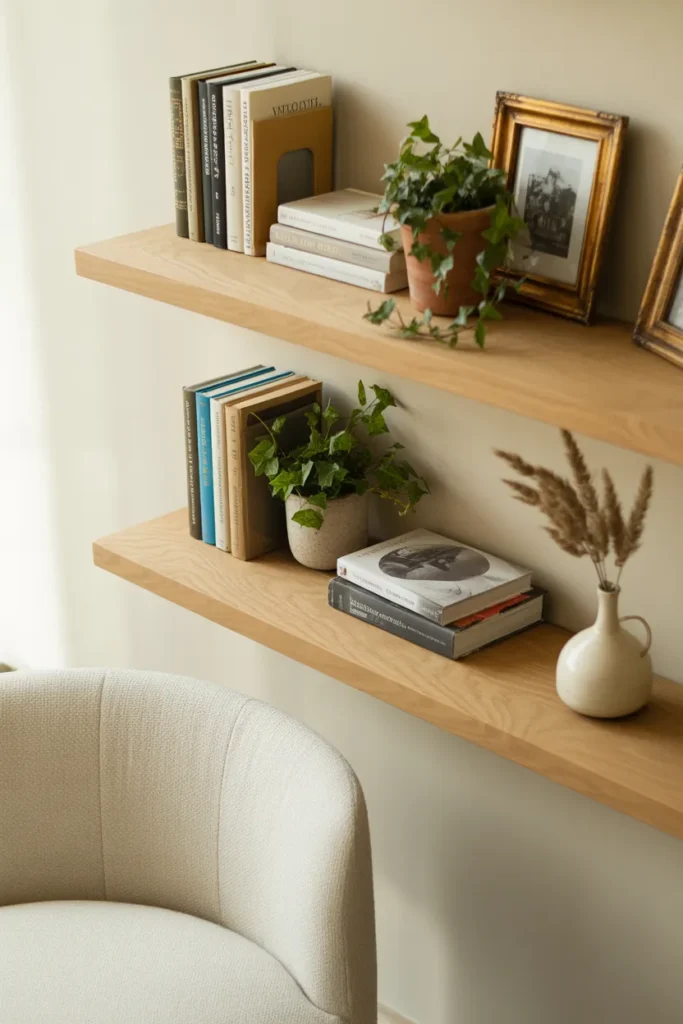
1. Floating Shelves Above the Chair (The Universal Starting Point)
What it is: Two or three slim wood shelves mounted on the wall directly above your reading chair. Usually 24 to 48 inches wide, 6 to 10 inches deep.
Why it works: Floating shelves draw the eye up, which makes a small corner feel taller. They give you the styled zone from our cheat sheet without eating any floor space, and they let you swap decor seasonally without rearranging furniture.
How to execute: Center the lowest shelf about 18 to 24 inches above your chair’s headrest so a tall person won’t bump it. Stack shelves 12 to 14 inches apart. Anchor into studs (16 inches on center for most US homes) or use heavy-duty drywall anchors rated for at least 25 pounds per shelf if you’re loading books. Light oak, walnut, or matte black brackets all read Organic Modern. White-painted shelves push it toward Modern Farmhouse.
2. Corner Reading Nook Shelving with an L-Shaped Unit
What it is: A bookshelf that wraps two perpendicular walls, hugging the corner where your chair sits.
Why it works: Corners are usually wasted square footage. An L-shaped shelf claims that dead space and frames your chair from two sides, which makes the nook feel architecturally intentional even if you rented the apartment yesterday.
How to execute: Use two narrow bookshelves (10 to 12 inches deep) butted at 90 degrees. The IKEA Billy in the 11-inch-wide narrow version works in spaces as tight as 24 inches. For a more custom look, install two sets of floating shelves on adjoining walls at the same heights so they read as one continuous L. This is one of the strongest corner reading nook shelving moves you can make.
3. Picture Ledges as a Library Wall
What it is: Slim shelves (3 to 4 inches deep) with a front lip, designed to display books face-out like a bookstore.
Why it works: Face-out books act like art. You see covers, not spines, which adds color and texture to the wall. Picture ledges are also the cheapest entry point into a “library wall” look without committing to deep bookshelves.
How to execute: IKEA’s Mosslanda ledges run about $15 each in the 45-inch length and hold roughly 11 pounds when properly anchored. Stack three or four of them above your chair, 12 inches apart, and rotate the books seasonally. We’ve used this setup in a 9-by-10 bedroom and it made the whole wall feel like the chair was sitting in a small bookshop.
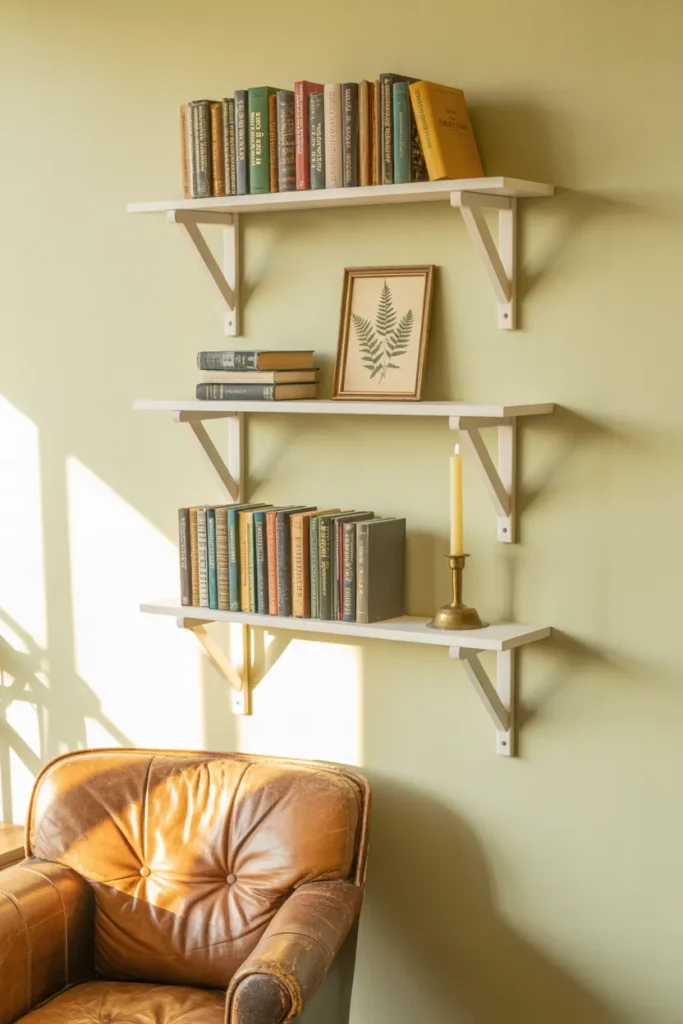
4. Built-In Bookshelves Flanking the Chair (The Splurge Move)
What it is: Custom or semi-custom bookcases built into the wall on either side of a chair or window seat, often floor to ceiling.
Why it works: Built-ins read as architecture, not furniture. They permanently raise your home’s resale appeal and create the deepest, most enveloping reading nook possible. This is the built-in reading nook idea that competitors love to feature but rarely explain how to actually build.
How to execute: If you’re handy, IKEA Billy bookcases plus crown molding and baseboard trim is the classic hack. Total cost lands around $400 to $700 for a pair, depending on width. For a true custom job, expect $2,000 to $6,000 from a local carpenter. Paint the back panel a moody color (deep green, terracotta, or charcoal) to push it toward Dark Academia or Traditional.
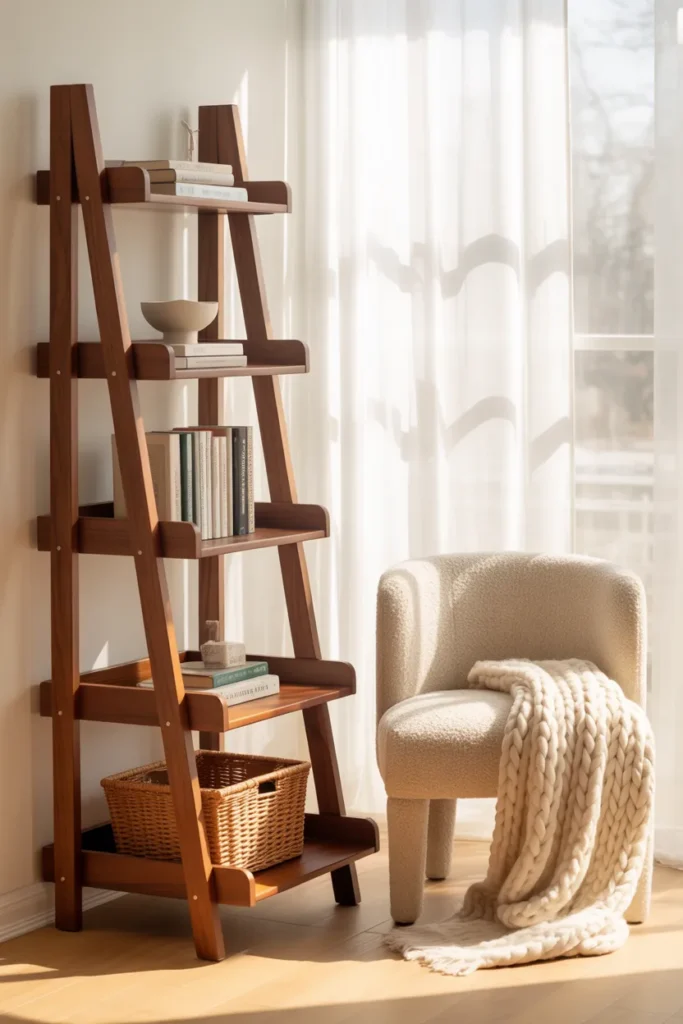
5. Leaning Ladder Bookshelf (The Renter’s Best Friend)
What it is: A freestanding shelf that leans against the wall, typically 5 tiers, narrower at the top.
Why it works: Zero drilling. The ladder shape draws the eye upward, which is what you want in a small nook. It’s the single easiest reading nook shelving option for renters who lose their security deposit if they so much as look at a wall.
How to execute: Target’s Threshold leaning bookshelf runs around $90, the West Elm Mid-Century leaning bookshelf in walnut is around $399 if you want the splurge version. Lean it at the standard angle the manufacturer recommends, and use the included wall anchor strap (most come with one) for safety. Style with the heaviest books on the bottom shelf for stability.
6. Open Shelving Reading Nook with a Bench Seat
What it is: A built-in or freestanding bench under a window with open shelves underneath the seat.
Why it works: Window seats are already the most photographed reading nook setup on Pinterest, but the under-seat shelving is what makes them functional instead of just pretty. You get a reading spot AND book storage in the same square footage.
How to execute: A standard bench seat is 18 inches off the floor. That gives you 12 to 14 inches of usable shelf height underneath. IKEA Kallax cubes turned on their sides with a cushioned plywood top is the classic hack, total cost around $150 to $250. For a real built-in look, hire a carpenter to add face-frame trim. Add a 4-inch foam cushion in linen or boucle.
7. Cube Shelving as a Room Divider
What it is: A 4-cube or 8-cube unit (think IKEA Kallax) used to define a reading nook within a larger open space.
Why it works: If your apartment doesn’t have a built-in corner, you can create one. The cubes face outward toward the chair (acting as bookshelves) and the back of the unit defines the nook from the rest of the room.
How to execute: A 4-cube Kallax is about 30 inches tall and runs around $80. Anchor it to the floor or wall (it’s tall and tippy when loaded with books). Style each cube with a mix of books, one decorative object, and one woven basket so it doesn’t feel uniform.
8. Tension Rod Shelving (The No-Drill Hero)
What it is: Adjustable tension-rod shelving systems that pressure-fit between the floor and ceiling, no anchors needed.
Why it works: Truly rental-friendly. No holes, no spackle, no security deposit drama. The vertical pole takes almost no floor space, which is perfect for nooks under 30 inches wide.
How to execute: The Umbra Anywhere shelf and similar tension-rod systems run $80 to $200 depending on shelf count. They typically support 15 to 30 pounds per shelf, so use them for paperbacks, decor, and lighter hardcovers, not your full coffee-table-book collection. Position next to a chair so the shelves are within arm’s reach at seated height.
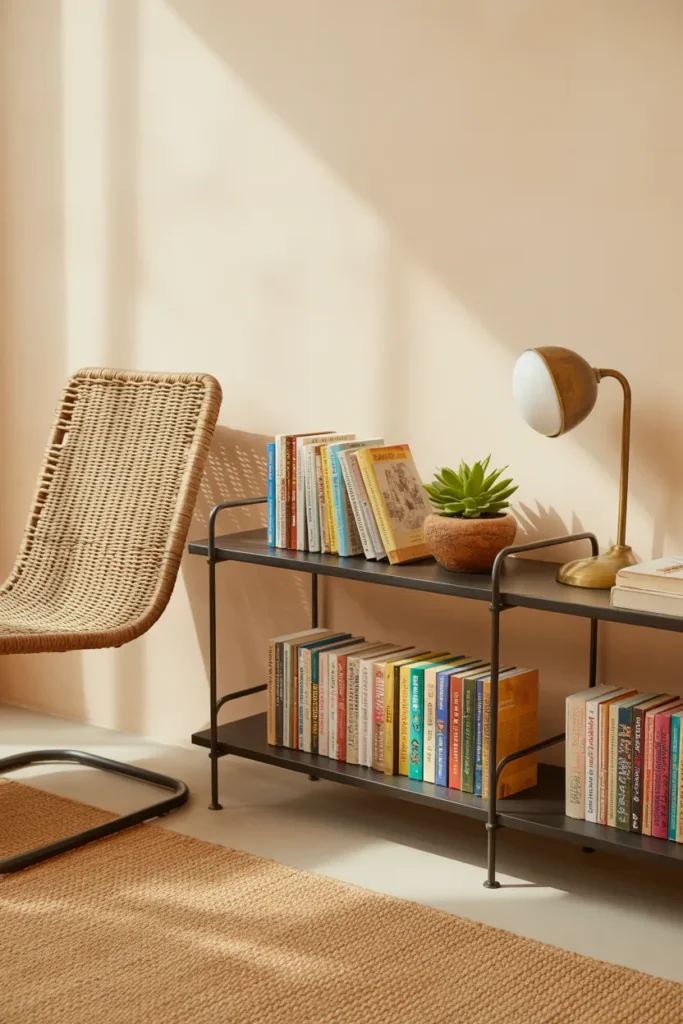
9. Recessed Wall Niches (The Architectural Splurge)
What it is: Shelves carved directly into the wall cavity between studs, flush with the surrounding drywall.
Why it works: Recessed niches read as luxury architecture. They take up zero room volume because the storage lives inside the wall. This is the move that makes a tiny nook feel custom-designed.
How to execute: Standard US wall cavities are 14.5 inches between studs and about 3.5 inches deep, which is enough for paperbacks and small decor but not standard hardcovers. Cut the drywall, frame the opening with 1×4 trim, and either paint the back or wallpaper it for contrast. This is a weekend DIY for someone with basic carpentry skills, or about $300 to $600 from a handyman.
10. A Single Long Picture Ledge Above the Chair
What it is: One uninterrupted shelf, 60 to 96 inches long, mounted at eye level above your reading chair.
Why it works: A single horizontal line is calming. It anchors the chair without competing with it. This is the Japandi or Minimalist answer to a full bookshelf, and it’s the move we recommend most for readers who already feel their home has too much going on.
How to execute: A 72-inch white oak shelf from CB2 runs around $129. Mount it 60 inches off the floor (centered on a standard 36-inch chair backrest). Style with five to seven objects max: a few hardcover books leaning, one ceramic, one piece of art, one trailing plant. Negative space is the point.
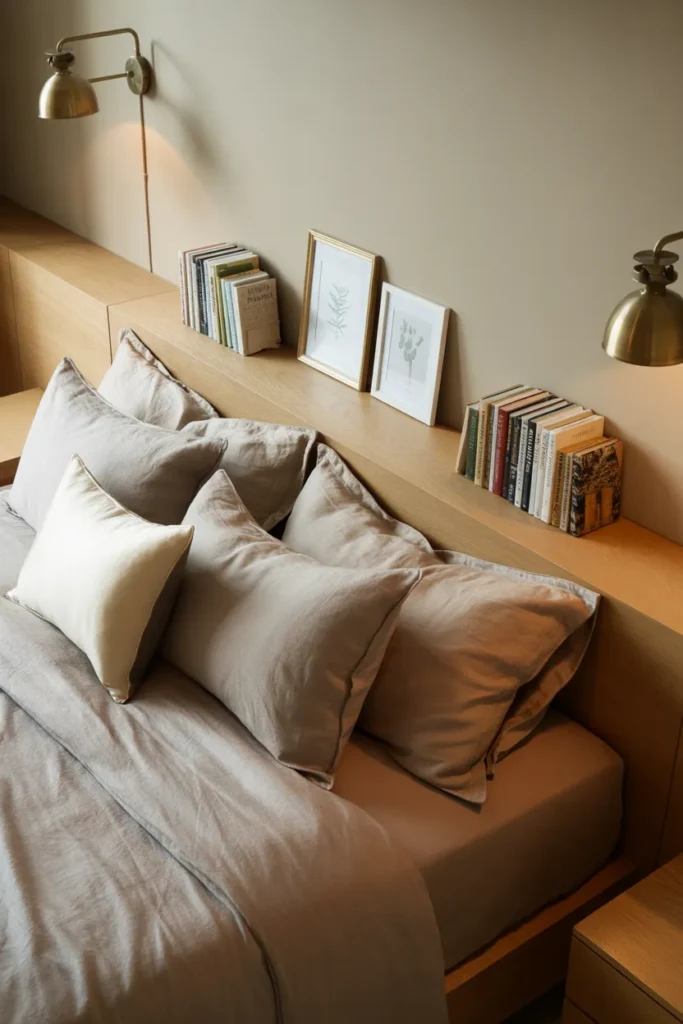
11. Bookshelf Headboard Reading Nook (For Bedrooms)
What it is: A bookshelf mounted horizontally behind a bed or daybed, doubling as a headboard and reading shelf.
Why it works: If your reading nook is actually your bed (we see you), a shelf headboard turns the wall into functional storage. Your current read sits within arm’s reach without needing a nightstand.
How to execute: A 72-inch wide, 10-inch deep shelf mounted at the standard headboard height of 48 to 54 inches off the floor works for most queen beds. Add LED puck lights underneath for nighttime reading.
12. Closet-Turned-Nook with Custom Shelving
What it is: Removing the closet doors of a small unused closet and converting the interior into a built-in reading nook with shelving on the side walls.
Why it works: A closet is already three walls. You only need to add a bench, light, and side shelving. The result feels like a reading “room” inside a room, which is the holy grail of cozy.
How to execute: Remove the doors and the closet rod. Build a 16-inch deep bench across the back wall at 18 inches high. Install 8-inch deep floating shelves on both side walls every 12 to 14 inches. Add a sconce, paint the interior a moody color, and you have a custom reading retreat in 12 square feet.
13. A Vintage Etagere Beside the Chair
What it is: A freestanding open-frame shelving unit, usually metal or wood with glass or open shelves.
Why it works: Etageres read as styled furniture, not storage. They give you the elegance of a bookshelf without the visual weight, which keeps a small nook feeling airy.
How to execute: Crate & Barrel’s Tate etagere in walnut runs around $499. Antique stores and Facebook Marketplace are full of brass-and-glass etageres in the $80 to $200 range, which is the more Grandmillennial route. Style with five to eight pieces total, mixing books, ceramics, and one tall plant.
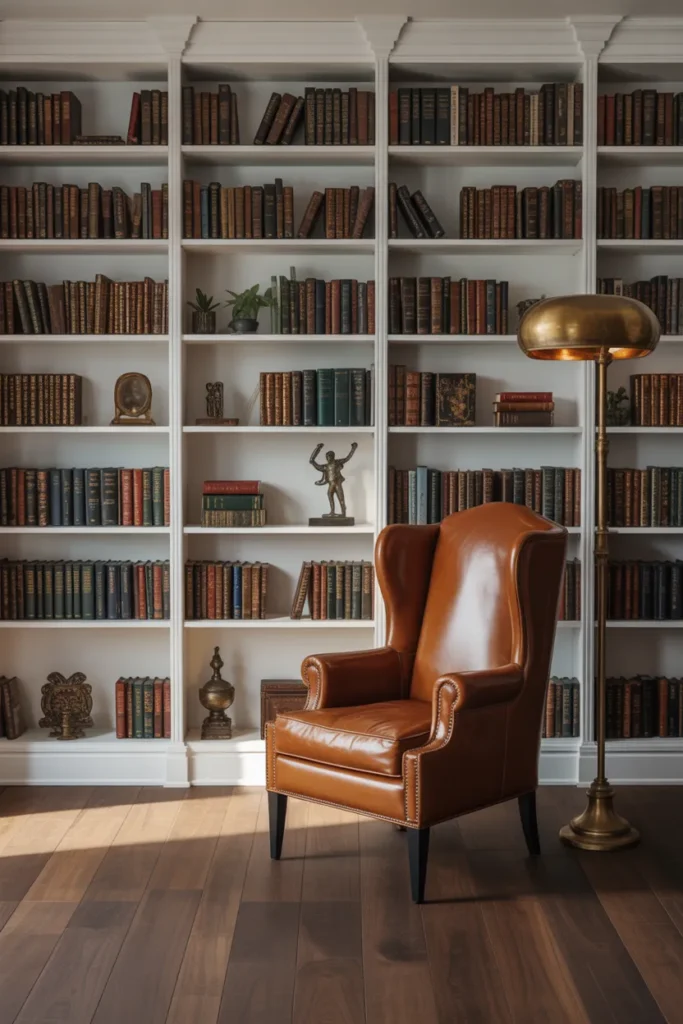
14. Floor-to-Ceiling Library Wall
What it is: A continuous bookshelf covering an entire wall, typically 8 feet tall and 8 to 12 feet wide.
Why it works: This is the maximalist dream nook. The chair sits inside a wall of books, which feels like reading inside a small library. It’s the most enveloping shelving option you can build.
How to execute: Five IKEA Billy bookcases (the 31-inch wide version) lined up across a 13-foot wall and trimmed out with crown molding will run about $750 to $1,000. Add a sliding library ladder if you want to go full Beauty and the Beast (around $250 from Rockler).
Budget vs Splurge: Where to Put Your Money
Here’s our honest take after testing dozens of setups in our own homes and helping friends style theirs.
Budget-friendly (under $25):
- IKEA Mosslanda picture ledges, around $15 each
- Dollar Tree wood crates as wall-mounted cubbies, around $5 each, painted and stacked
- Target Brightroom small wood shelves, around $15 to $20
Mid-range ($25 to $100):
- IKEA Billy bookcase (narrow), around $79
- Target Threshold leaning bookshelf, around $90
- Amazon Basics 5-tier bookshelf, around $65
- HomeGoods finds (varies, but usually $40 to $90 for solid wood pieces)
Splurge ($100+):
- CB2 white oak floating shelves, around $129 each
- West Elm Mid-Century leaning bookshelf, around $399
- Crate & Barrel Tate etagere, around $499
- Pottery Barn custom built-in service, $2,000+
The honest verdict: spend on the piece you’ll see every day. If your nook is in your living room where guests notice it, splurge on a real wood etagere or built-ins. If it’s in a guest room, the IKEA Billy with custom trim looks identical to a $3,000 built-in for a fraction of the cost.
Styling Your Reading Nook Shelving (The Part Most Posts Skip)
You can buy the most beautiful shelves on the planet and still end up with a nook that looks off. Styling is what separates the inspirational pin from the messy chair corner.
Here’s the rule we use: two-thirds books, one-third everything else. That ratio keeps a reading nook feeling like a reading nook, not a tchotchke shelf. Within the “everything else” third, mix textures: ceramic, brass, wood, glass, woven. Add one living thing (a real plant beats a fake plant every time). And leave at least 20% of each shelf empty. Negative space is what makes a styled shelf look styled instead of stuffed.
For color, pull one accent shade from the room and repeat it three times across your shelves. If your chair is sage green, find three small sage objects (a book spine, a small vase, a candle) and space them across different shelves. Three is the magic number for the eye.

Reading Nook Shelving Ideas for Small Spaces
If your nook is under 4 feet wide (most apartments and bedroom corners), skip the freestanding bookshelves and go vertical. Tall and narrow is your formula. Specifically:
- Picture ledges stacked four high above the chair
- Tension-rod shelving that stands between floor and ceiling
- Floating shelves in 24-inch widths, three rows
- Wall-mounted cube shelves (one or two cubes, not eight)
Avoid leaning bookshelves in spaces under 30 inches wide. They look proportionally wrong and steal too much floor real estate. The reading nook shelving ideas for small spaces that actually work all share one trait: they use the wall, not the floor.
DIY Reading Nook Shelving Ideas
For the weekend warriors, here are the three DIYs we’ve personally built and recommend:
Pipe and wood shelves: Black iron pipes with stained pine boards. Industrial look, costs about $40 per shelf, takes 2 hours. Great for Industrial or Modern Farmhouse nooks.
Crate cubbies: Six unfinished wood crates from a craft store, stained or painted, mounted in a 2×3 grid. About $50 total, takes an afternoon.
Stained pine floating shelves: 1×10 pine boards cut to length, sanded, stained, and mounted on hidden brackets. About $25 per shelf, takes 3 hours including dry time.
Style Pairings: Match Your Shelving to Your Nook Aesthetic
Different shelving reads as different design styles. Match deliberately.
- Japandi: Single long light oak floating shelf, minimal styling, one ceramic vessel, three books. Pair with a low linen chair and a paper lantern. (For more on this look, see our full guide to Japandi reading nook ideas.)
- Coastal: White-painted picture ledges, blue and cream books, woven baskets, a piece of driftwood. Pair with a slipcovered chair and rattan accents. (We break this style down in detail in our coastal reading nook ideas guide.)
- Boho: Black metal etagere, mix of paperbacks and pottery, trailing plants, a macramé wall hanging beside it.
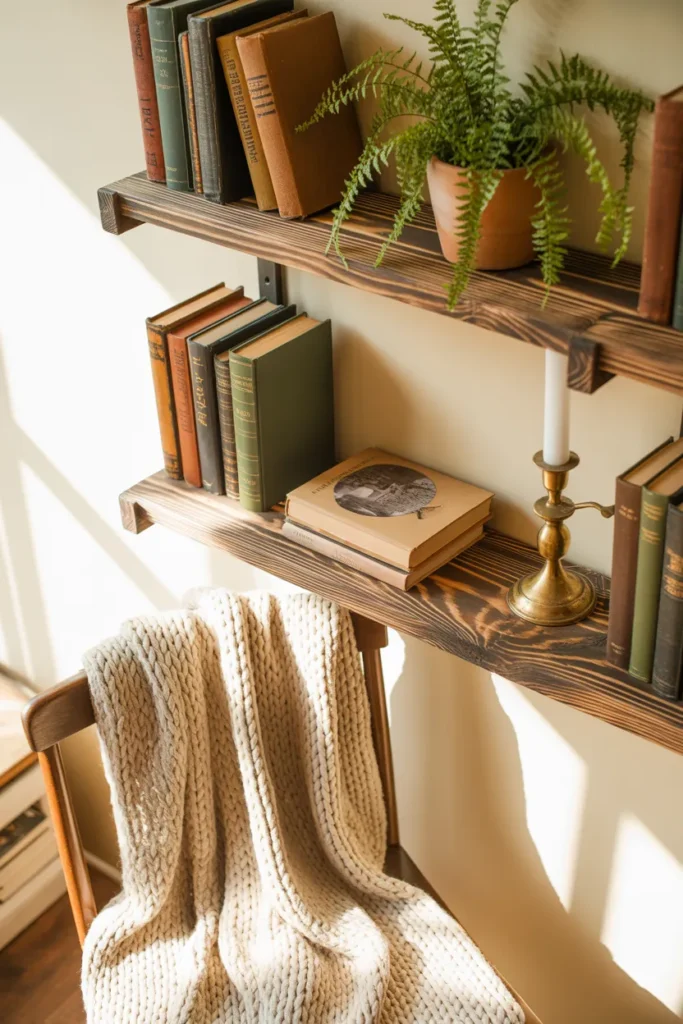
- Cottagecore: White picture ledges, vintage hardcovers with linen-wrapped spines, dried flowers, a small framed botanical print.
- Mid-Century Modern: Walnut leaning bookshelf, geometric ceramics, a tapered candle, one piece of abstract art.
- Cozy fort vibe: If you’re styling a kid’s nook or want a more enveloping setup, shelves can frame a tented reading corner beautifully. Our reading tent and teepee ideas post covers that whole approach.
Common Mistakes to Avoid
After helping a lot of readers troubleshoot their reading nook shelving, we see the same five mistakes over and over:
- Mounting shelves too high. If you can’t reach a book without standing on the chair, the shelf is too tall. Center the lowest shelf 18 to 24 inches above the chair’s headrest.
- Choosing shelves too deep. A 12-inch deep shelf next to a 30-inch chair makes the corner feel cramped. Go 6 to 8 inches deep for nooks.
- Overstyling. Cramming every inch with books and decor kills the cozy feeling. Leave 20% negative space minimum.
- Skipping the anchor. A 5-tier bookshelf loaded with hardcovers can weigh 200 pounds. Always use the wall anchor strap. Always.
- Mismatched wood tones with no intention. Two wood tones can look layered and warm, but four or five wood tones look chaotic. Pick a primary and one accent, then commit.
According to the American Library Association’s reading research, readers who carve out a dedicated reading space report reading 30+ more minutes per day than readers without one. Setting up your shelving correctly is the part that turns “I should read more” into actually reading more.
For weight ratings on drywall anchors and proper installation guidance, the Family Handyman’s anchor guide is the resource we trust. Worth bookmarking before you start drilling.
Frequently Asked Questions
How do I add reading nook shelving in a small space or rental?
Go vertical and skip the drilling. Tension-rod shelving systems like Umbra Anywhere need zero anchors and pressure-fit between floor and ceiling. Picture ledges with command-strip-rated mounting can hold 5 to 10 pounds of paperbacks. Leaning bookshelves are the easiest no-drill freestanding option for spaces over 30 inches wide.
What is the budget version of a built-in reading nook?
Five IKEA Billy bookcases (around $79 each in the narrow width) lined up against a wall, trimmed out with $40 of crown molding and baseboard from Home Depot, then painted to match the wall. Total cost lands around $450 to $550 versus $3,000+ for true custom built-ins. The finished look is nearly identical.
What if I don’t have a corner or alcove for a reading nook?
Create one with a cube shelf room divider. A freestanding 4-cube or 8-cube IKEA Kallax (around $80 to $160) anchored to the floor defines a nook within an open room. Place your chair on one side, face the cubes outward as bookshelves, and you’ve manufactured a corner where there wasn’t one.
How long does a DIY reading nook shelving project take?
Floating shelves: 2 to 3 hours including stud-finding, leveling, and anchor installation. Picture ledges: 1 to 2 hours for three shelves. IKEA Billy bookcase with trim: a full Saturday (6 to 8 hours). Closet-conversion nook with custom shelving: a long weekend.
How deep should reading nook shelves be?
For paperbacks, 6 inches is enough. For standard hardcovers, go 8 to 10 inches. For coffee-table books and large art books, 12 inches. We recommend 8-inch deep shelves as the universal answer because they fit 95% of books without making the wall feel chunky.
How much weight can floating shelves hold?
Properly anchored into wall studs, most floating shelves hold 25 to 50 pounds depending on bracket quality. Using only drywall anchors (no studs), expect 10 to 15 pounds max. A row of 10 hardcover books weighs roughly 15 to 20 pounds, so always anchor into a stud if you’re loading shelves with books.
What’s the best shelving for a reading nook in a bedroom?
A long shelf headboard (72 inches wide, 10 inches deep, mounted at 48 to 54 inches off the floor) doubles as bookshelf and bed frame element. It eliminates the need for a nightstand and keeps your current read within arm’s reach. Pair with two small wall sconces flanking the bed for nighttime reading.
Pin This for Your Next Project
If you found a shelving idea you want to try, save this post to your home decor or reading nook Pinterest board so you have it ready when you’re at Target or scrolling IKEA. Pin the image that matches your style most (we made sure each one represents a different aesthetic), and let us know in the comments which idea you’re starting with. We always love seeing how readers adapt these for their actual rooms.
Keep reading
More cozy nook ideas
 Fall Decor
Read →
Fall Decor
Read →
Fall Door Decor on a Budget: Where to Spend and Where to Save
If your fall door every year is a wreath that sheds on the mat, two mums that are crispy by Halloween, and…
 Fall Decor
Read →
Fall Decor
Read →
12 Thanksgiving Tablescape Ideas for Small Spaces (That Still Leave Room for the Food)
Twenty-four inches. That’s how much table edge one person needs to eat without bumping elbows, and it’s the number most Thanksgiving tablescape…
 Fall Decor
Read →
Fall Decor
Read →
18 Fall Coffee Bar Ideas for Sweater-Weather Evenings
No counter space to spare, no espresso machine, no landlord permission needed. This fall coffee bar runs on three pieces: a slim…