
Toddler Playroom Ideas: 14 Safe, Simple Setups for Ages 1 to 3
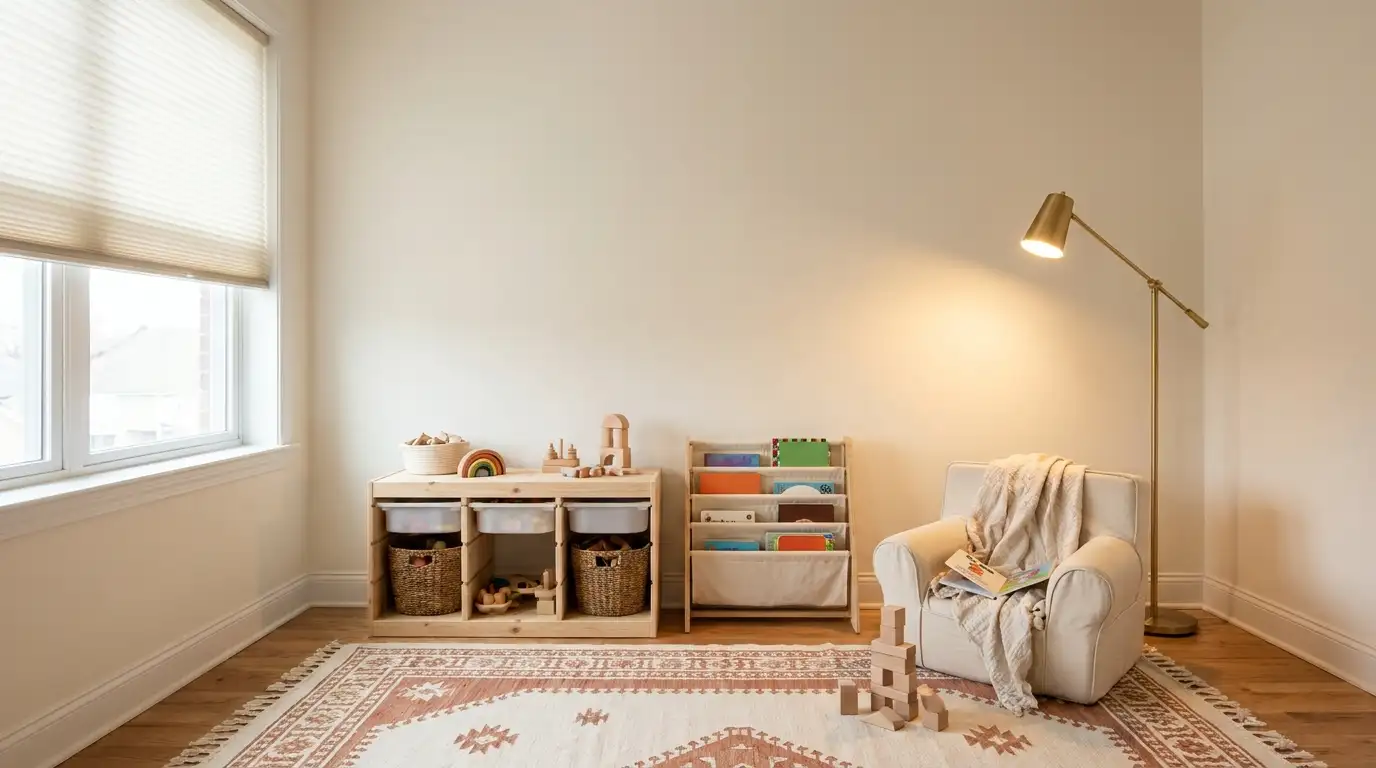
No spare bonus room, no drywall drilling, and no giant renovation budget required. You can build a safe, clutter-free toddler playroom for ages 1 to 3 in a single weekend using low furniture, soft floor layers, and smart bin storage that works even in a rental apartment.
Most play spaces fail because adult-height shelves tower over toddlers and deep toy chests hide everything at the bottom. When a two-year-old cannot see or reach their blocks, every toy ends up dumped across your living room rug within ten minutes.
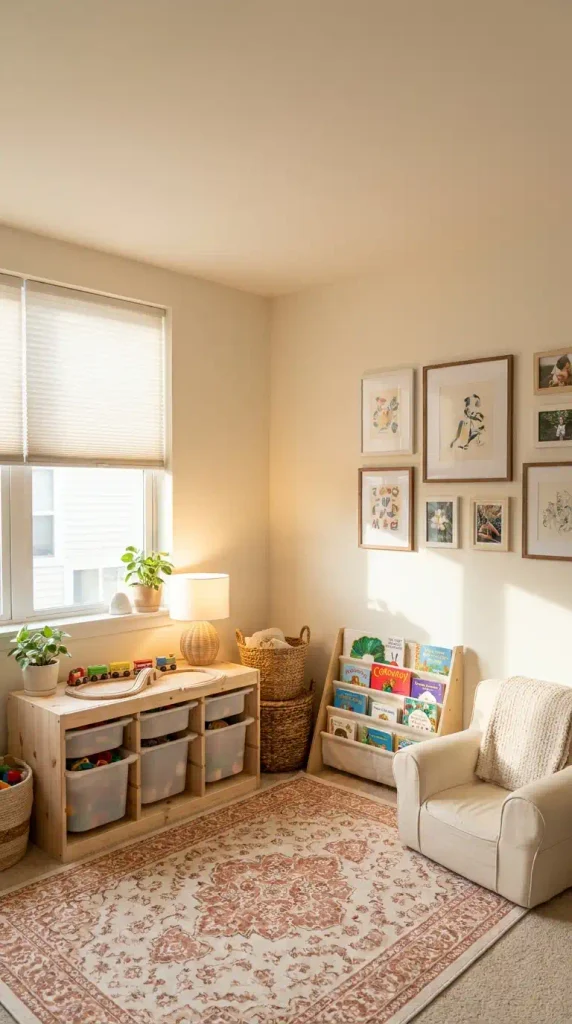
These 14 setups solve real space constraints in 600 to 1,400 sq ft homes. Every idea keeps items at toddler eye level, respects landlord rules, and creates a cozy corner where your child can actually focus.
1. Low Pine Bin Storage With Tool-Free Wall Anchors
Standing 20.5 inches high, a low horizontal frame like the IKEA TROFAST storage combination ($149.99 in light white stained pine, or $97.99 to $103.99 in white) lets toddlers pull out lightweight plastic bins without climbing. Slide-out tubs sort wooden blocks, vehicles, and chunky puzzle pieces by category so cleanup takes two minutes instead of twenty.
Safety note: anchor tall furniture to the wall, keep candles and cords away from fabric, and use a licensed electrician or contractor for hardwired lighting, ceiling mounts, or anything structural. Even low frames need securing if a toddler tries to pull up on the edge, so follow CPSC tip-over prevention guidelines and use CPSC-tested tool-free drywall anchors or baseboard tethers rated for 50-lb pull loads when you rent.

Keep heavier wooden blocks in the bottom row so the center of gravity stays low.
2. Front-Facing Sling Book Rack at Floor Level
Set board books cover-out in a low fabric sling rack so a one-year-old can pick a story without yanking twenty spines onto their toes.
- A compact frame like the Humble Crew kids book rack ($26.00) sits low enough for crawling babies and new walkers to browse independently.
- Forward-facing fabric pockets turn picture book covers into rotating wall color without nails or frames.
- Pair the rack with a folded floor blanket to build reading corners for young readers right inside the play zone.
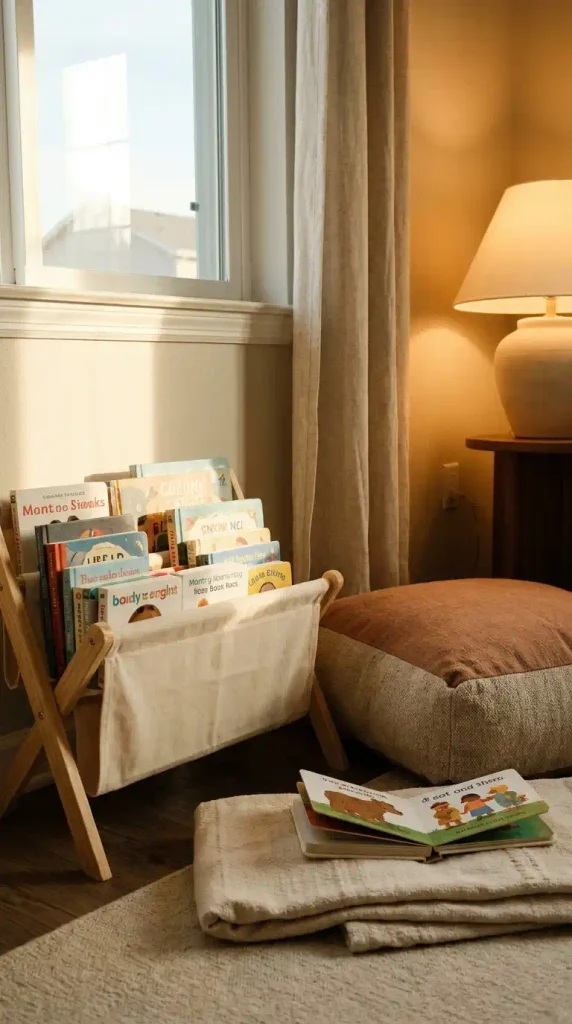
Display six to eight board books face-out per shelf pocket so covers stay visible.
Store overflow paperbacks in a closet basket so pages do not get torn during solo play.
Swap three titles every Sunday night to keep morning reading fresh.
Overstuffing the pockets makes books wedge tight, which frustrates toddlers and leads to ripped bindings.
3. Horizontal Eight-Cube Shelf as a Living Room Toddler Playroom Divider
Need a dedicated play zone inside a shared apartment living room? Lay an IKEA KALLAX 8-cube shelf unit ($79.99) horizontally on its long side so it sits 30 1/8 inches tall and 57 5/8 inches wide, creating a waist-high boundary behind your sofa that keeps toys contained without blocking natural light.
Four woven fabric bins in the bottom row hide loose train tracks and mega blocks, while the top four cubbies hold single wooden puzzles on display. You can borrow more layouts from these smart IKEA playroom storage ideas if you want to add casters or soft felt bins.

Toys spill across the main walkway and tall bookcases block apartment window light.
A 30 1/8-inch horizontal cube unit defines a tidy play perimeter while keeping sightlines open.
Never stand an eight-cube unit upright at 57 5/8 inches without anchoring it to a wall stud, and keep each shelf under its 29-lb load rating.
4. Washable Low-Pile Rug to Anchor the Play Zone
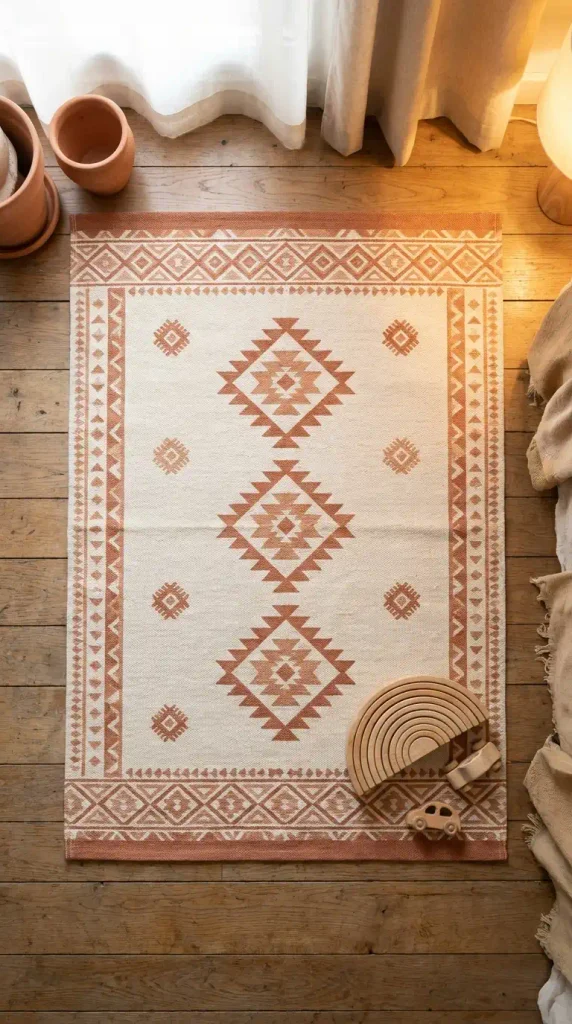
Hardwood and vinyl plank floors turn every wooden block drop into a sharp clatter that echoes through small apartments. Laying down a washable 5×7 kids playroom rug ($35.49 to $95.00 at Target) softens acoustic bounce, warms cold floors, and draws a clear visual boundary for where toys stay.
Choose a low-pile weave with a built-in non-slip backing so new walkers do not trip on curled corners and wheeled cars roll smoothly across the surface.
Pick a machine-washable 5×7 low-pile rug with a rubberized non-slip back.
Use muted geometric patterns that hide snack crumbs between washes.
High-pile shag rugs that swallow tiny puzzle pegs and trap spilled milk.
Unanchored cotton flatweaves that slide out under running toddler feet.
5. Modular Foam Play Couch for Climbing and Reading
At 8.75 inches off the floor, a modular foam lounger like The Original Play Couch by Nugget ($249, measuring 66 inches long by 33 inches deep) gives toddlers a safe climbing ramp by morning and a cushioned reading sofa by afternoon. Four removable foam pieces zip into washable microsuede covers, eliminating sharp wooden corners in tight rooms.
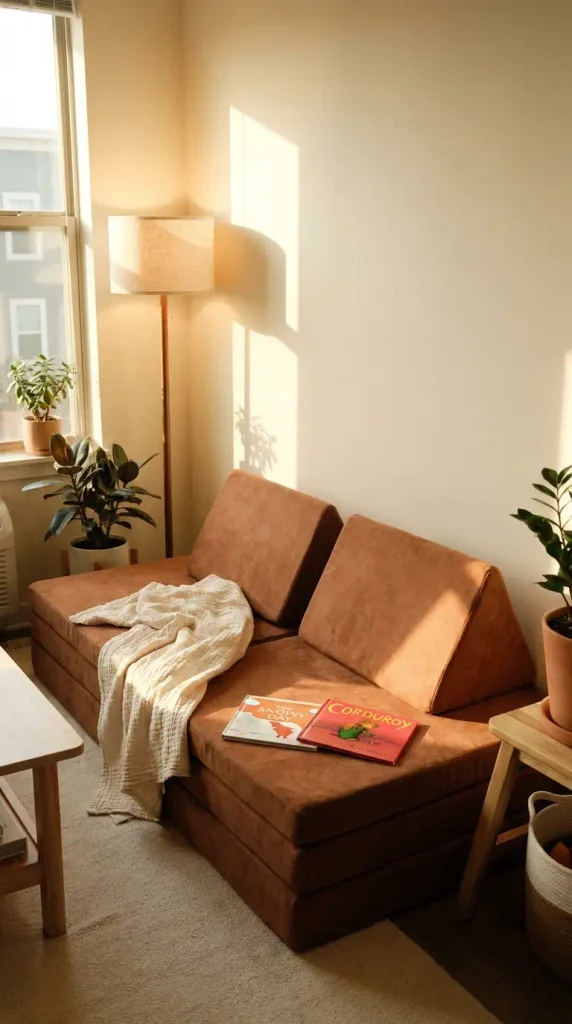
Stacks into a 66-inch low sofa or unfolds flat for somersaults.
$249 full setActs as sturdy back support for storytime or gentle crawling ramps.
Included in setMachine-washable cold and line-dried to prevent zipper shrinkage.
Cold wash onlyKeep foam forts away from open windows and hard radiator edges, and never put covers in a hot dryer or the zippers will warp.
6. Scaled Toddler Armchair With a Removable Slipcover
I learned the hard way that placing a standard adult accent chair in a toddler corner just creates a tipping hazard when a two-year-old tries to climb onto the seat. Switching to a toddler-scaled foam armchair like the Pottery Barn Kids Anywhere Chair ($119 to $189) solves both scale and safety.
Once I swapped a tall rattan chair for a low foam armchair with a 6.5-inch seat height, my toddler stopped asking to be lifted up and started sitting down with a board book on her own.
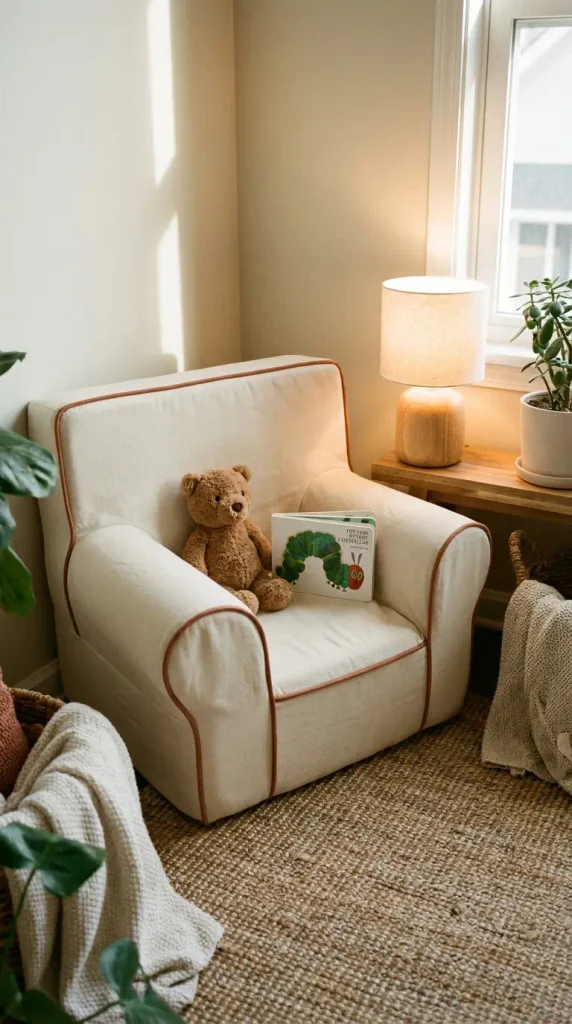
Pick the My First size (6.5-inch seat height) for ages 1 to 2, or step up to the Kids size (8.5-inch seat height) if your toddler is already two and a half.
7. Foldable Wooden Pikler Triangle for Rainy-Day Gross Motor Play
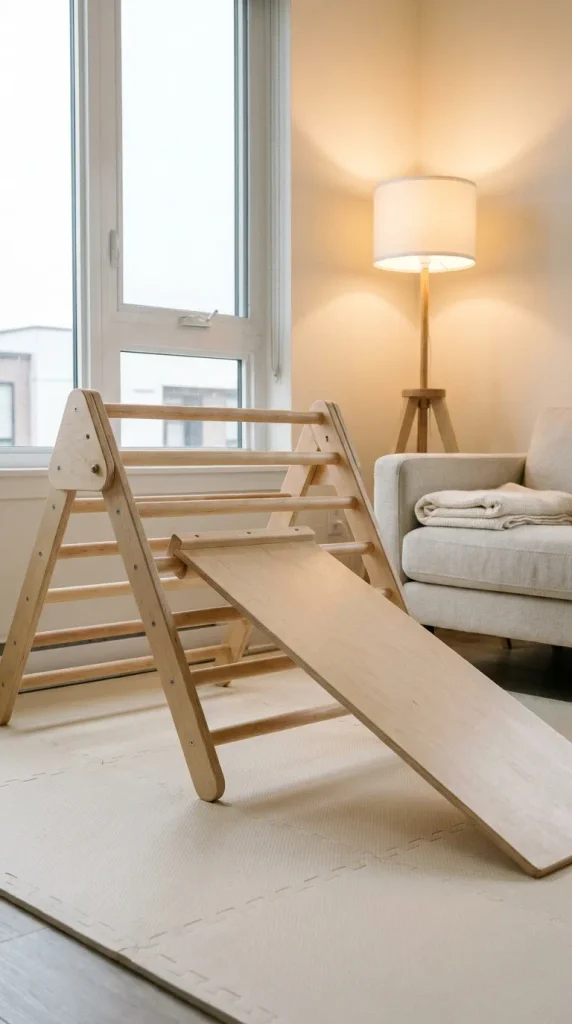
Rainy weekdays trap toddler energy inside, which quickly turns sofa cushions into launchpads. A foldable wooden Pikler triangle climbing set with a reversible ramp ($109.99 to $169.99 at Target) lets toddlers practice balance indoors and folds flat to slide behind a closet door when guests arrive.
Open the triangle over a cushioned play mat or rug, never bare tile or hardwood.
Hand-tighten both side locking knobs until the hinge stops click firmly into place.
Hook the slide ramp onto the second or third rung from the bottom for one-year-olds.
8. Three-Tier Rolling Art Cart That Parks in a Closet
Washable dot markers, chunky beeswax crayons, and sticker pads belong within reach during supervised craft time and behind a closed door afterward. Loading supplies onto a three-tier metal rolling cart like the IKEA Raskog utility cart ($30.00) keeps art clutter mobile without eating permanent wall space.

Lock the front casters once you roll the cart up to a toddler table so it stays steady when little hands lean on the rim.
9. Under-the-Stairs Book and Quiet-Play Hideaway
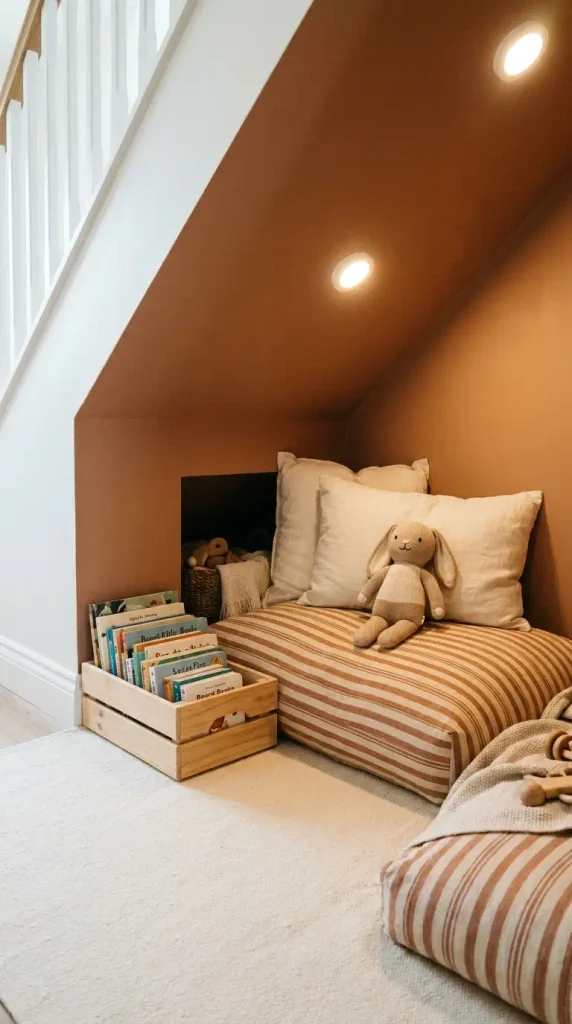
Dead space beneath a staircase makes a natural toddler hideaway because the sloped ceiling matches a child’s scale while keeping floor clutter tucked out of the hallway. Line the floor with two overlapping cotton floor cushions and a narrow wooden book crate so your toddler has a calm spot to decompress.
Skip hardwired wall fixtures inside tight alcoves and stick a battery-powered warm 2700K LED puck light under the stair stringer instead. Browse more renter-safe under the stairs playroom ideas for no-drill curtain dividers and floor cushion layouts.
10. Cordless Window Bench Corner With Sunlit Toy Baskets
Natural daylight near a living room window makes a compact play corner feel open without adding bright overhead glare. Tuck a low bench under the sill with two lidded seagrass baskets underneath for stuffed animals and wooden train sets.
⚠️ Watch Out: Window Cord Check
Never place a low bench or climbable toy box beneath a window with dangling blind cords. Follow CPSC cordless window covering standards and swap looped cords for cordless cellular shades before setting up furniture below a sill.
Choose soft woven baskets rather than heavy hinged wooden chests so little fingers never get pinched when closing the lid.
11. Two-Week Toy Rotation Bin System
Twenty toys dumped across the rug at once overwhelm a toddler’s attention span and leave you stepping on plastic pieces every evening. Keep only six to eight open-ended toys on the shelf at a time and pack the rest into clear lidded totes on an upper closet shelf.
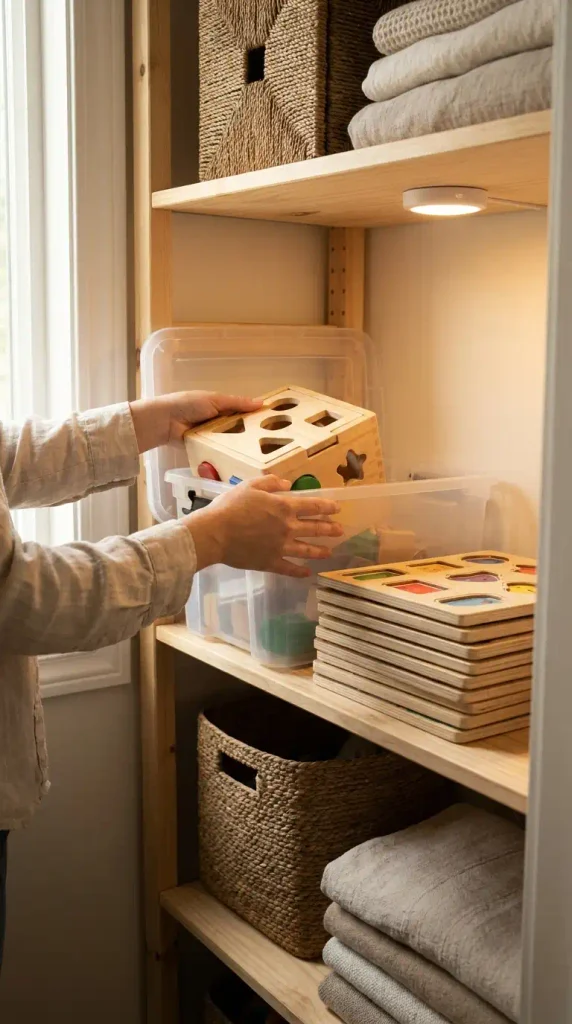
After bedtime, pack away four untouched shelf toys into the closet tote and bring out four rested ones.
Toddlers treat rotated toys like brand-new gifts, giving you a quiet cup of coffee while they explore.
With only six items out, every piece returns to its shelf spot before dinner without a battle.
12. Toddler Playroom vs. Bedroom Split for Better Naptime
Keeping noisy musical toys and bright stacking blocks beside a crib trains a toddler’s brain to treat bedtime like playtime. Even inside a one-bedroom apartment or shared kids’ room, separating sleep furniture from active play gear helps naps settle faster.
| Sleep Zone (Crib or Floor Bed) | Active Play Zone (Living Room or Corner) |
|---|---|
| Holds only quiet board books, a sound machine, and one comfort lovey. | Holds wooden blocks, climbing triangles, pretend food, and art supplies. |
| Uses warm 2700K dimmable lamp light and blackout curtains for rest. | Uses bright daylight and a washable rug for active floor building. |

If toys must live in the bedroom, drape a cotton sheet over the open shelf before naps so visual clutter disappears.
13. Woven Sensory Calm-Down Basket for Overstimulated Afternoons
Overstimulated toddlers rarely need another battery-operated toy with flashing lights. A soft-sided woven belly basket parked beside your sofa holds quiet, tactile items that help a cranky two-year-old wind down before dinner.
Fill it with three textured touch-and-feel board books, a wooden rainmaker, a knotted muslin lovey, and chunky silicone stacking cups.
14. Compact Wooden Play Kitchenette Against a Narrow Wall
Narrow wall stretches between two doorways often sit empty because standard sofas and bookcases jut out too far into the walkway. A slim wooden toddler play kitchen around 12 to 14 inches deep turns that dead wall into an imaginative pretend-play station.
Three checks before setting up a wall kitchenette
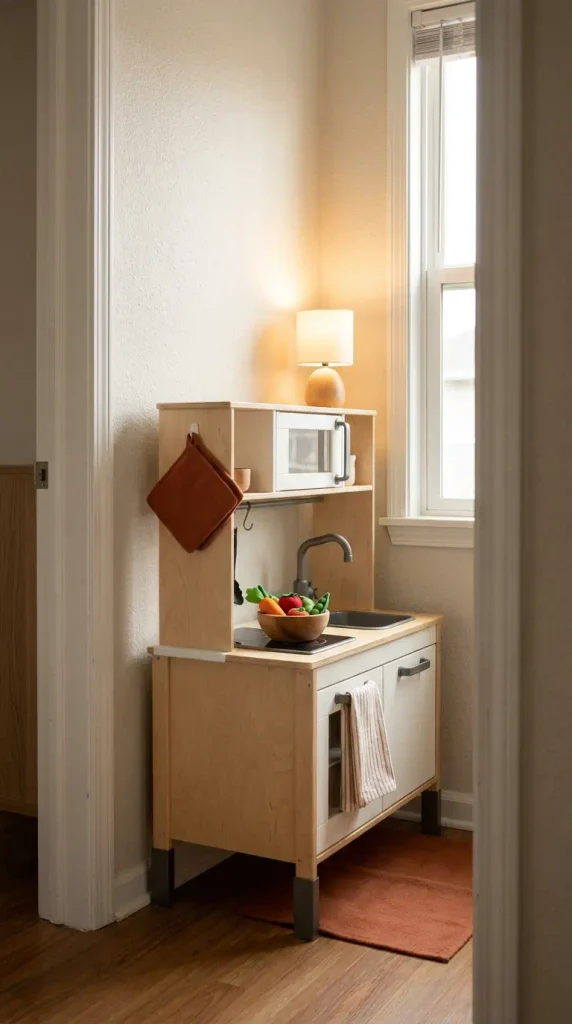
Keep play food to one small basket inside the oven cabinet so cleanup stays effortless at the end of the day.
Toddler Playroom Questions Parents Ask
How do you create a calming toddler playroom space?
Start by cutting visual noise: limit open shelf displays to six or eight toys, swap primary-colored plastic tubs for neutral woven or white bins, and layer a washable 5×7 rug to absorb floor echo. Warm 2700K lamp bulbs also feel much calmer than harsh overhead ceiling lights.
Will toddlers eventually get bored of a simple playroom setup?
Simple setups actually hold toddler attention longer than packed rooms because kids can see every choice clearly. When you rotate four toys out of a closet bin every week or two, familiar blocks and puzzles feel brand new without buying extra clutter.
How do I organize a small toddler playroom without clutter?
Use low horizontal shelving under 31 inches high, sort small pieces into slide-out bins, and store overflow toys in clear lidded totes inside a hall closet. Giving every toy category one clear home makes two-minute evening cleanups realistic.
Should a toddler playroom be separate from the bedroom?
Whenever your floor plan allows, keep active toys in a living room corner and keep the bedroom quiet for sleep. If toys must stay in a shared bedroom, use a low bookcase divider and cover shelves with a light cotton throw before naptime.
What furniture is best for a toddler playroom in a rental apartment?
Stick to low, freestanding pieces that do not require permanent built-in cabinetry, such as a 20.5-inch pine bin organizer, a lightweight foam armchair, a foldable wooden climbing triangle, and a rolling utility cart. Always secure shelving with CPSC-tested tool-free wall anchors.
How many toys should be out in a toddler playroom at one time?
Aim for six to eight active toys or activities on open shelves for ages 1 to 3, paired with six to eight forward-facing board books. Fewer visible options reduce dumping behavior and encourage longer stretches of independent play.
Start With One Corner This Weekend
You do not need an empty spare room or a custom millwork budget to build a toddler playroom that works. Pick one wall, roll out a washable 5×7 rug, anchor one low shelf at toddler height, and let your child explore at their own pace.
Pin this post now so you have the shelf measurements, anchor tips, and toy rotation rules handy while you shop.
Keep reading
More cozy nook ideas
 Kids
Read →
14 Basement Playroom Ideas to Warm Up a Cold, Dark Space
If your basement feels like a chilly storage dungeon with bare concrete floors and one flickering overhead bulb, turning it into a…
 Nursery & Teen Rooms
Read →
8 Montessori Playroom Mistakes to Avoid (and What to Do Instead)
If your Montessori playroom looks calm for about an hour after you set it up, and then every basket ends up dumped…
 Kids
Read →
14 Under-the-Stairs Playroom Ideas That Make the Room Feel Magical
A $3.50 tension rod. A string of 2700K lights on a six-hour timer. One curtain panel. That’s the first idea on this…