
Reading Nook Plants and Greenery: How to Add Life to Your Corner
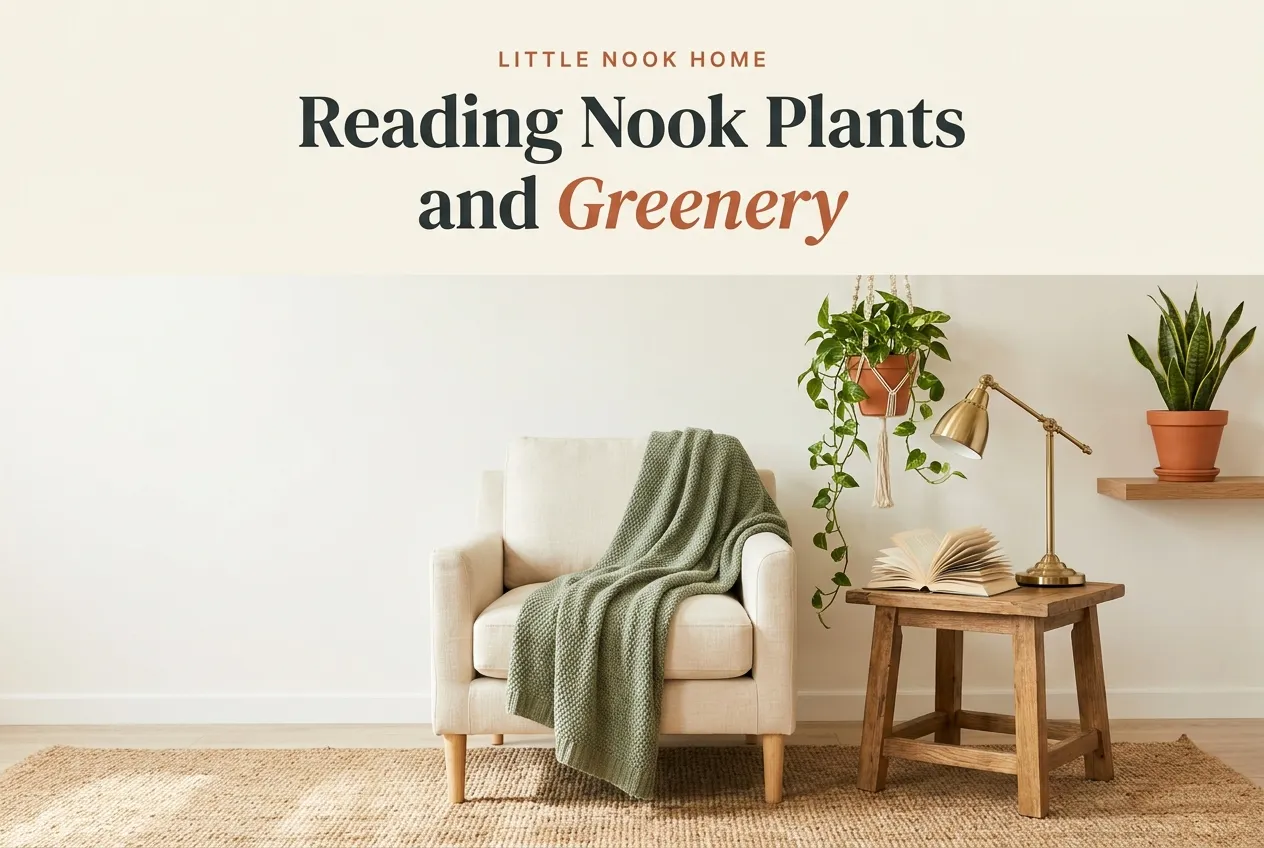
Your reading corner looks fine in photos. A chair, a lamp, a small stack of paperbacks you keep meaning to finish. But when you actually sit there, something feels flat. The air is still. The light is dull. The whole spot feels like a furniture island instead of a place you want to disappear into for two hours on a Saturday.
That missing ingredient is almost always green. Plants soften hard edges, filter the light, and give your eyes a soft place to land between chapters. Done right, reading nook plants and greenery can turn a forgettable corner into the coziest spot in your home.
We’re organizing this guide by plant role in the nook (overhead trailing, eye-level shelf, floor anchor, tabletop, and scent layer) so you can mix and match based on your space, your light, and how much you actually want to water things on a Tuesday.
Who This Reading Nook Plants Guide Is For
This guide is built for a few specific readers:
- Renters who can’t drill into ceilings or walls and need command-strip or freestanding plant ideas.
- Small-space dwellers working with corners as narrow as 24 inches.
- Budget-conscious book lovers who want the urban jungle look without a $400 Anthropologie haul.
- Plant beginners who have killed a fiddle leaf or two and need low-light, low-fuss picks.
- Pet owners who need ASPCA-safe plant lists (we have those here).
If you fall into any of those buckets, keep scrolling.
Why Plants Belong in a Reading Nook
A reading nook is supposed to slow you down. Plants make that easier in a way no candle or throw blanket can match. Living greenery adds three things at once: visual softness, a subtle scent of soil and leaves, and the quiet psychological cue that this corner is alive.
There’s real science behind it too. Studies on indoor greenery have linked plant-filled spaces to lower cortisol levels and slower heart rates, which is the exact opposite of what your phone does. We’ll get into the cortisol question in the FAQ, but the short version: yes, plants help.
Overhead Trailing Plants for a Hanging Garden Effect
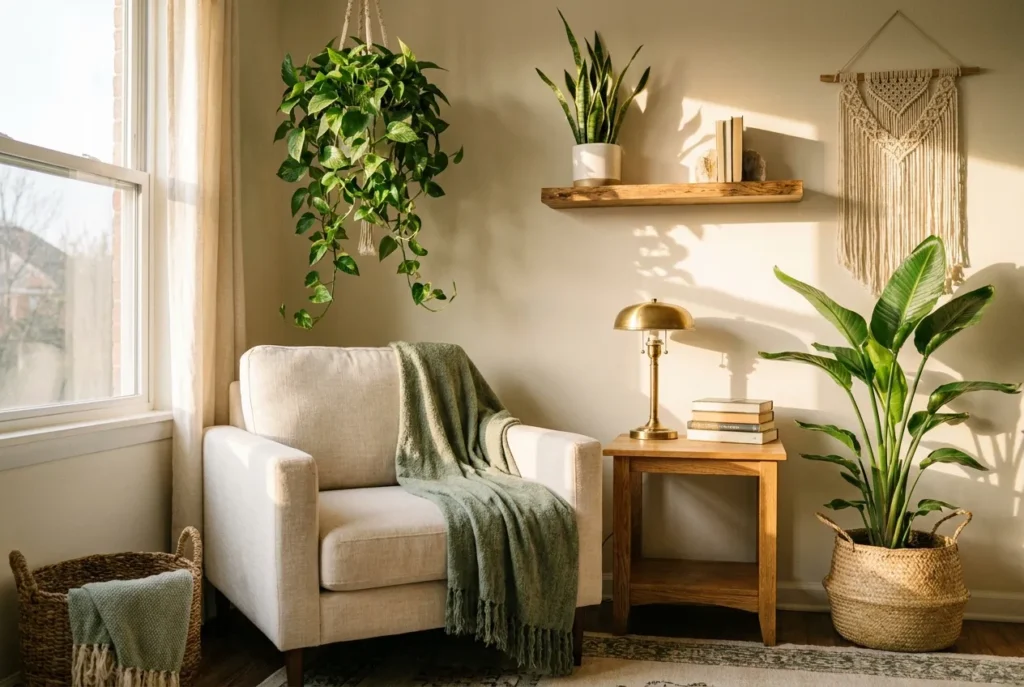
The fastest way to make a reading nook feel like a secret hideaway is to bring the green down from above. Trailing plants hung above eye level create a soft ceiling that frames the chair like a canopy.
Pothos (Golden, Marble Queen, or Neon)
What it is: A vining plant with heart-shaped leaves that can trail 6 to 10 feet over time. The neon variety glows almost chartreuse in low light.
Why it works in a reading nook: Pothos tolerates indirect light beautifully, which means it thrives in the kind of dim corner most reading nooks actually live in. The trailing vines also blur the boundary between wall and ceiling, making a small corner feel taller.
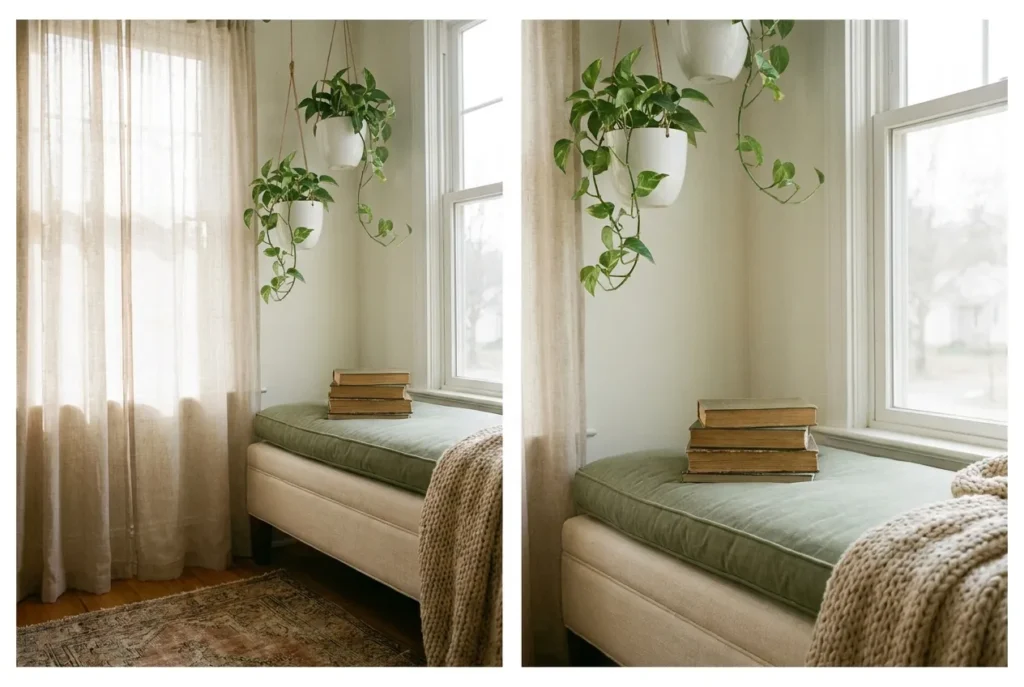
How to execute: Hang in a 6-inch macrame holder from a command-strip ceiling hook (yes, these hold up to 5 pounds and are rental-friendly). Place 12 to 18 inches above your seated head height so the vines frame your face when you look up from a book.
English Ivy
What it is: A classic trailing vine with small, lobed leaves in deep green or variegated cream.
Why it works: Ivy reads more cottagecore than tropical, so it pairs perfectly with vintage books, brass lamps, and linen cushions. It also tolerates cooler rooms, which matters for window-side nooks in winter.
How to execute: Drape from a high bookshelf rather than a hook. Let one strand cascade down past your books for that lived-in library feel. Trim back every 8 weeks.
Eye-Level Shelf Plants That Anchor Your Bookcase
The bookshelf next to your reading chair is the second-best plant real estate in the room. Eye-level greenery breaks up rows of book spines and gives your gaze a green pause point.
Snake Plant (Sansevieria)
What it is: An upright sword-leafed plant in mottled green, white, or gold-edged varieties. Grows 12 to 36 inches tall.
Why it works: Snake plants are nearly impossible to kill. They tolerate weeks without water and dim corners that would starve a fiddle leaf in a month. The vertical leaf shape also balances horizontal bookshelves nicely.
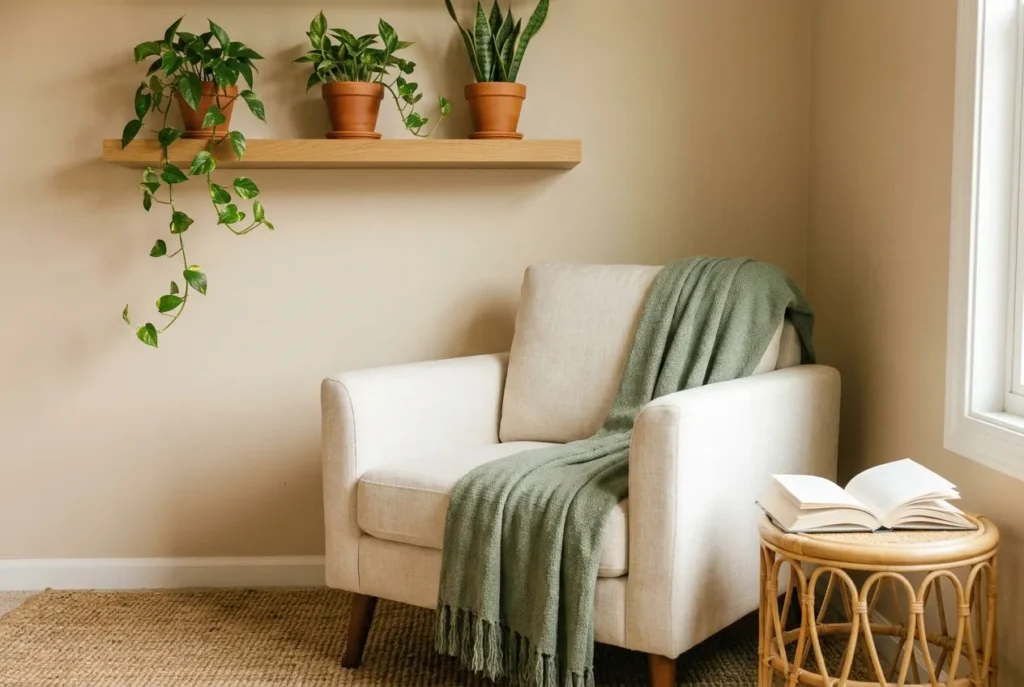
How to execute: Choose a 6 to 8 inch snake plant in a textured ceramic pot and place it at the end of a shelf where it can soften the corner. One snake plant per three shelves keeps the rhythm without crowding the books.
ZZ Plant
What it is: A glossy, waxy-leafed plant with arching stems that look almost artificial in the best way.
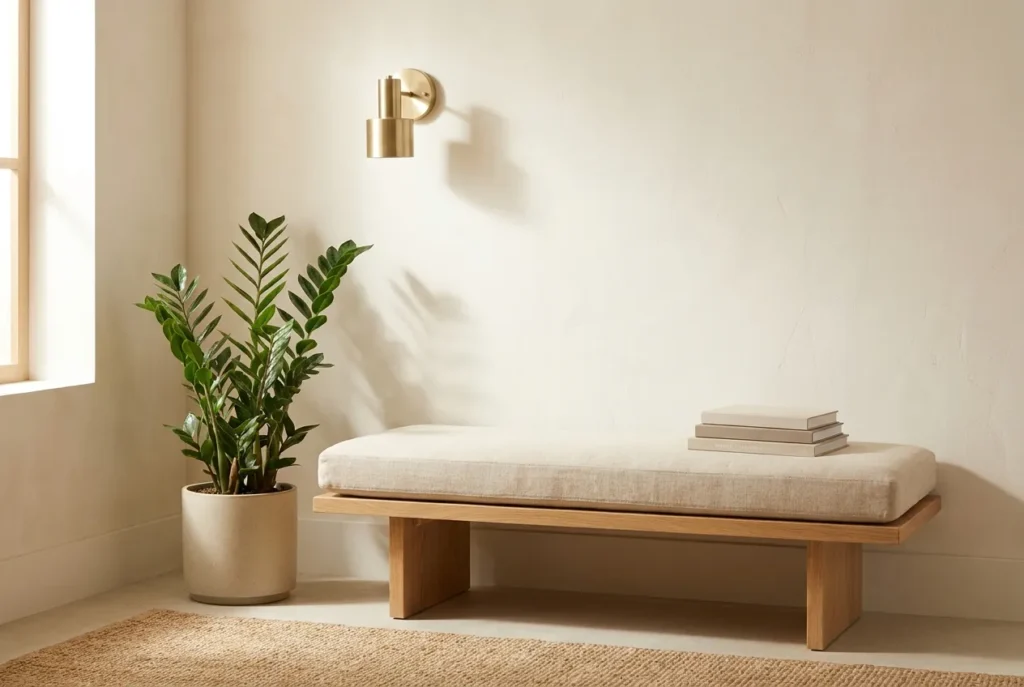
Why it works: ZZ plants thrive on neglect and look polished enough for Japandi and minimalist styling. Glossy leaves also bounce light back into dark corners.
How to execute: Single 10-inch ZZ in a matte white or oatmeal stoneware pot, placed on a low shelf so the arching leaves spill outward toward your chair.
Floor Anchor Plants for Bigger Nooks
If your reading nook has at least 4 feet of floor space, one larger plant near the chair grounds the whole setup. Think of it as the punctuation mark of the room.
Bird of Paradise
What it is: A statement plant with broad, paddle-shaped leaves that grows 4 to 6 feet tall indoors.
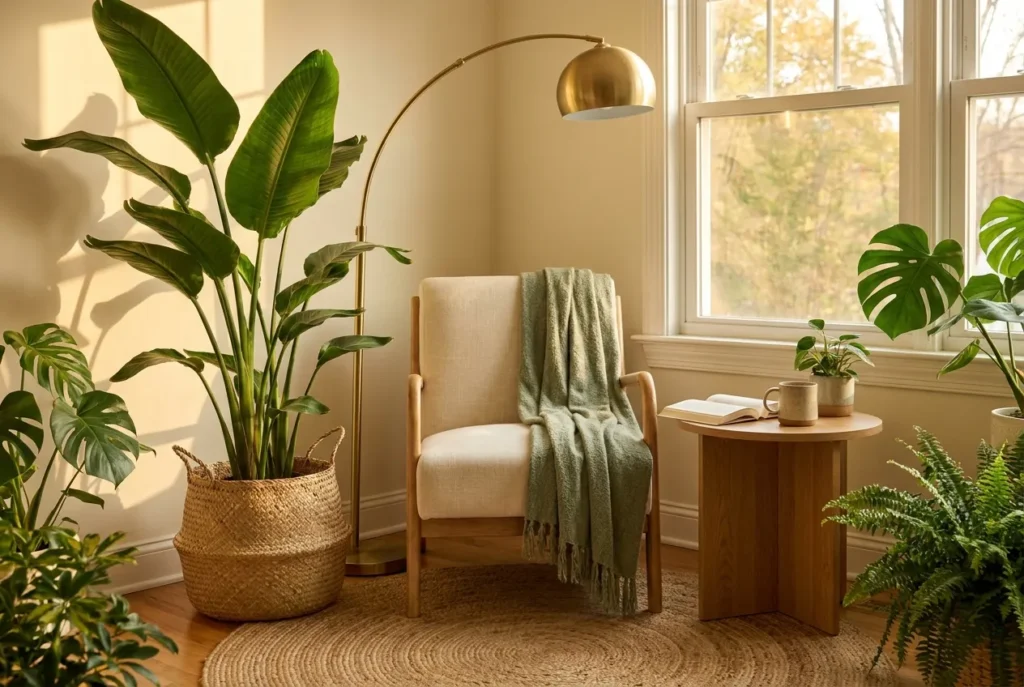
Why it works: A bird of paradise next to a reading chair instantly turns the corner into a jungle nook. The wide leaves also act as a soft visual screen if your nook is in an open-plan living room.
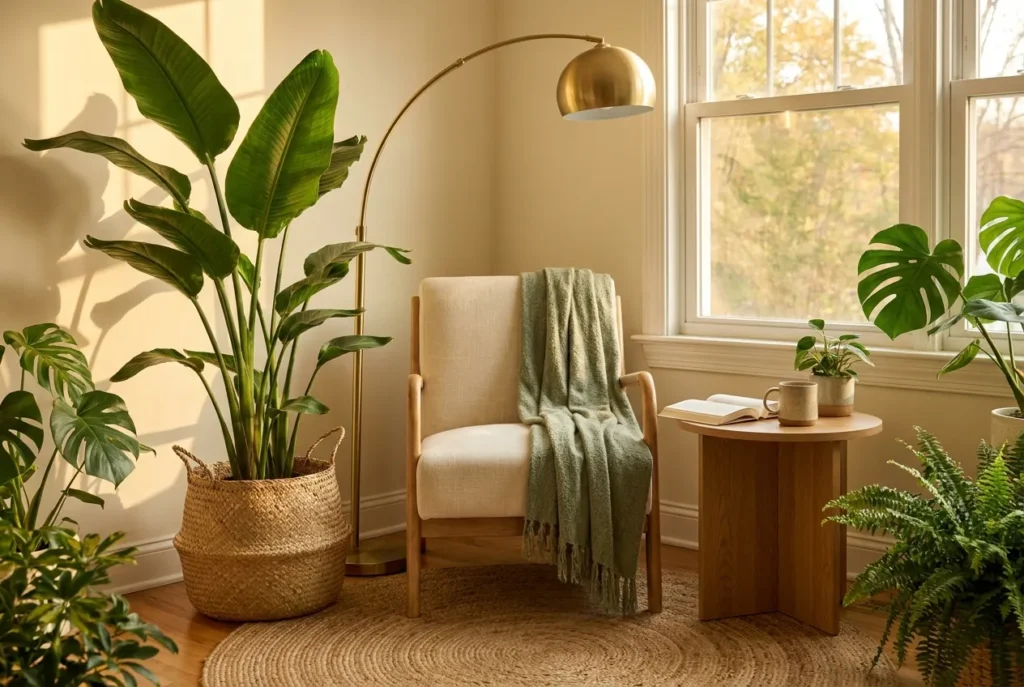
How to execute: Place in a 12-inch woven seagrass basket planter to the left of your chair, angled so a leaf arches over the chair back. Needs bright indirect light, so this one is for window-adjacent nooks.
Parlor Palm
What it is: A delicate, feathery palm that tops out around 3 to 4 feet indoors.
Why it works: Parlor palms handle low light, fit narrow spaces (footprint as small as 14 inches), and bring a vintage cottagecore feel that pairs beautifully with reading nook color palette ideas in cream, sage, and terracotta. See our full cozy reading nook color palette guide for matching the planter to the room.
How to execute: Single parlor palm in a 10-inch terracotta pot tucked into the corner behind your chair where it fills vertical space without blocking light.
Low-Light Plants for Dim Reading Corners
Most reading nooks are tucked into corners that don’t get great light. This is the section the top-ranking articles forgot to write, and it’s where most readers actually live.
These five plants thrive in low to medium indirect light:
- Pothos (any variety, but neon and marble queen are brightest in dim corners)
- Snake plant (will survive in a 6-foot-from-window setup)
- ZZ plant (the true champion of dark corners)
- Cast iron plant (literally named for being unkillable)
- Chinese evergreen (Aglaonema, especially the pink-veined varieties)
If your reading nook is more than 8 feet from any window, skip ferns, fiddle leaf figs, and most palms. They will sulk and drop leaves within a month.
Tabletop and Mini Plants for Side Tables
Small plants beside your reading chair add a finishing touch without crowding the surface. Keep these to a single side-table footprint of roughly 6 inches square.
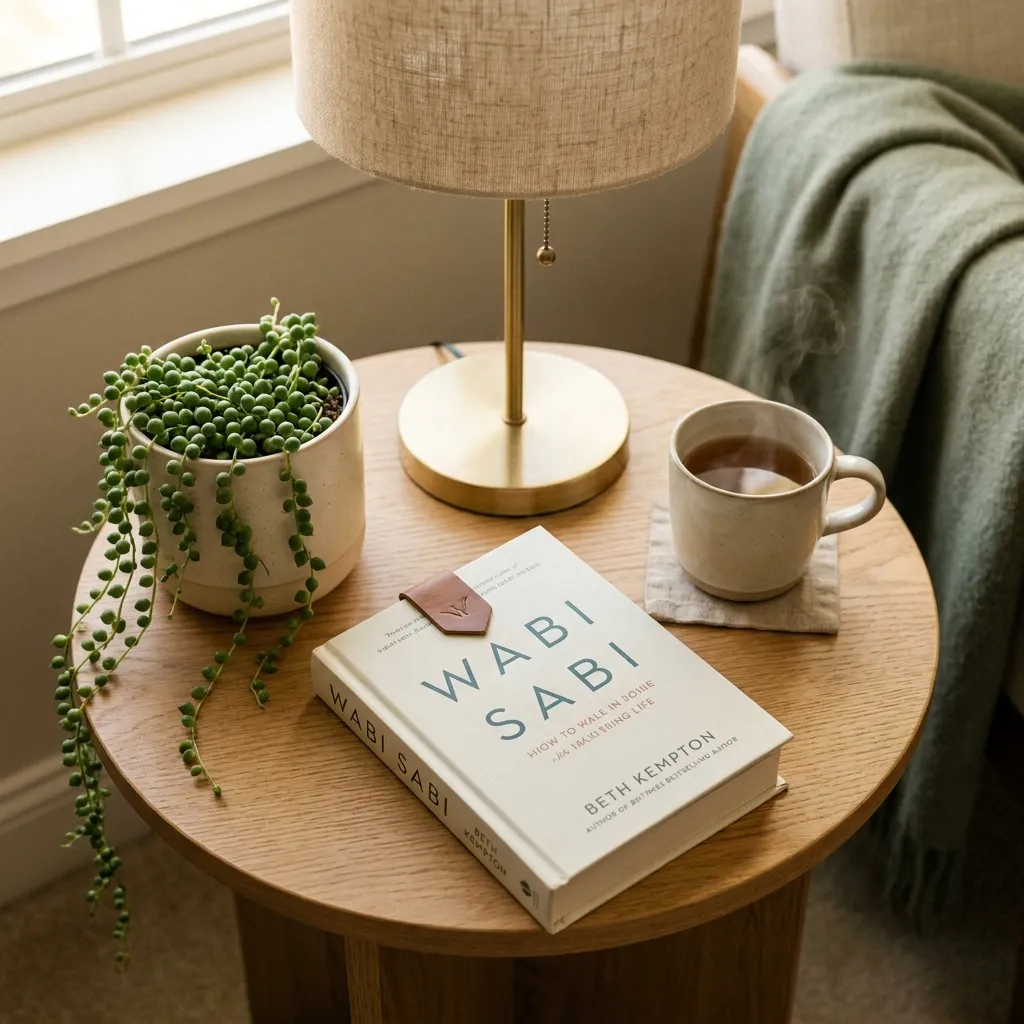
String of Pearls or String of Hearts
What it is: Trailing succulents with bead-like or heart-shaped leaves.
Why it works: They drape over the edge of a side table like soft jewelry and add a sculptural element to the surface.
How to execute: 4-inch nursery pot tucked into a stoneware cachepot. Pair with a brass lamp and one ceramic mug for a styled tableau.
Air Plants in a Glass Cloche
What it is: Soil-free tillandsia plants displayed in a glass dome or open vessel.
Why it works: No mess, no soil, no watering can needed. Perfect for renters and small spaces. Pairs beautifully with the soft, monochromatic styling of a cozy reading nook setup. For corner-specific styling tips that complement these tiny plants, our awkward corner reading nook ideas post pairs perfectly with this section.
How to execute: One air plant in a 4-inch glass cloche, misted twice a week. That’s it.
Scent Layer Plants (the Aromatic Bonus)
Reading is a sensory experience. The right scent layer makes a nook feel even more like an escape.
- Lavender (small potted variety for sunny window nooks, calming and faintly herbal)
- Eucalyptus (a single dried stem in a vase is enough, scent lingers for months)
- Jasmine (climbing plant for the bookworm willing to fuss a little, blooms at night)
- Rosemary (Mediterranean nook vibe, works on a sunny windowsill)
A note on what works: dried eucalyptus is the lowest-effort, highest-payoff scent option for a reading nook. One bundle in a stoneware vase, replaced every 3 to 4 months, and you’re done.
Budget vs Splurge: Plants and Planters Compared
| Item | Budget (Under $25) | Mid-Range ($25 to $100) | Splurge ($100+) |
|---|---|---|---|
| Pothos | 4-inch from Home Depot, $6 | 6-inch from The Sill in cachepot, $48 | 10-inch mature trailing pothos, $120 |
| Snake plant | 4-inch from Walmart, $8 | 10-inch from Costa Farms at Lowe’s, $35 | 24-inch sculptural Sansevieria, $145 |
| Planter (8-inch) | Dollar Tree ceramic, $1.25 | Target Hearth & Hand stoneware, $20 | West Elm hand-thrown ceramic, $89 |
| Macrame hanger | Amazon basics, $9 | IKEA woven hanger, $19 | Anthropologie tassel hanger, $58 |
| Floor planter (12-inch) | HomeGoods seagrass basket, $20 | CB2 textured ceramic, $79 | Crate & Barrel handmade stoneware, $179 |
The honest take: a $6 pothos in a $1.25 Dollar Tree pot photographs nearly identical to a $48 setup if you wrap the cheap pot in a linen drawstring bag from Target. Save your splurge budget for the one floor-anchor plant that does the heaviest visual lifting.

Pet-Safe Plant Picks for Cat and Dog Owners
If you have a cat that chews leaves or a curious puppy, skip the pothos and snake plants (both mildly toxic). These five are confirmed non-toxic by the ASPCA’s plant database:
- Spider plant (trailing, low-light tolerant, cat-safe)
- Parlor palm (the cat-safe alternative to bird of paradise)
- Boston fern (humidity lover, great near a humidifier)
- African violet (small tabletop, blooms in low light)
- Calathea (orbifolia or rattlesnake varieties, striking leaves)
The spider plant is the unbeatable pet-safe choice. It trails like a pothos, tolerates dim corners, and even helps filter indoor air (NASA’s Clean Air Study flagged it as one of the better air-purifying houseplants). For a research-backed deep dive, the University of Vermont Extension horticulture archive has solid plant-care guides for low-light indoor species.
Rental-Friendly Plant Styling (No Drilling Required)
Renters need plant placement that leaves zero damage. Here’s the full system:
- Command strip ceiling hooks (clear, hold 5 pounds, peel cleanly)
- Tension-rod plant shelves in window frames (no drilling, supports 3 small pots)
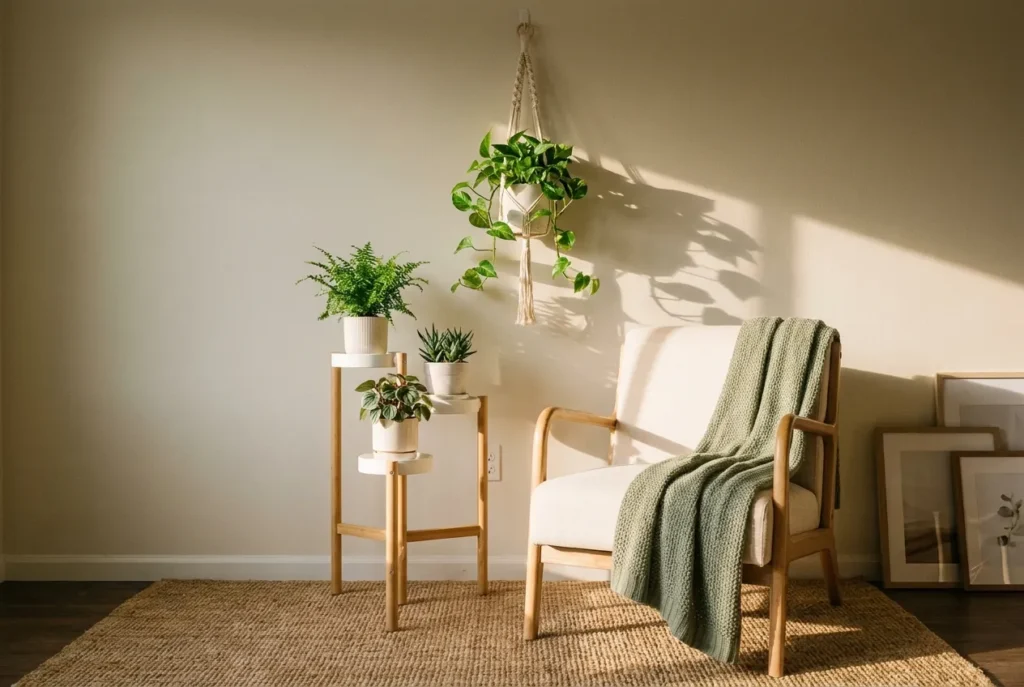
- Floor-standing plant stands in 3-tier wood or metal ($35 to $80 at Target)
- Over-the-door hanging planters (look for fabric pocket versions on Amazon)
- Self-watering planters for the bookworm who forgets to water (Lechuza or Costa Farms versions, $25 to $60)
For renters with balcony or outdoor reading spots, our balcony reading nook setups post covers outdoor plant styling for spaces under 50 square feet.
Seasonal Plant Rotation for Year-Round Coziness
A reading nook should shift slightly with the seasons. Here’s a simple rotation calendar:
- Spring (March to May): Add flowering plants. Potted hyacinth, primrose, or African violet for color.
- Summer (June to August): Lean into tropicals. Bring in a fern or calathea for that humid garden feel.
- Fall (September to November): Switch in dried elements. Eucalyptus bundles, dried wheat stems, and a single mum in a terracotta pot.
- Winter (December to February): Evergreens take over. Norfolk pine, rosemary in a terracotta pot, and a small potted cypress for the holiday weeks.
Keep your two or three anchor plants (snake plant, pothos, ZZ) year-round. Rotate one or two seasonal accents to keep the corner feeling fresh.
Styling Your Plants by Aesthetic
Match your plants to your nook’s style category for a pulled-together look:
- Boho: macrame hangers, terracotta pots, trailing pothos and ivy, layered woven baskets.
- Japandi: matte stoneware pots, single sculptural plants (ZZ, snake plant), zero clutter.
- Cottagecore: small flowering plants, vintage tin watering cans, ivy in chipped enamel pots.
- Modern Farmhouse: galvanized metal planters, eucalyptus stems, simple greens like pothos.
- Dark Academia: brass cachepots, English ivy, ferns in shadowy corners with brass lamps.
Common Plant Mistakes in Reading Nooks (Avoid These)
A few traps I’ve watched friends fall into:
- Choosing plants that need more light than the corner gets. Fiddle leaf figs in a dim corner will be dead by spring.
- Overcrowding the shelf. Three small plants on a 36-inch shelf reads cozy. Seven reads cluttered.
- Skipping the drainage saucer. One leak and your hardwood is ruined. Always use a saucer or a glazed cachepot.
- Forgetting pet safety. Cats will chew pothos vines that dangle near a chair. Check the ASPCA list before you hang.
- Matching every pot. Mix terracotta, stoneware, and one woven basket for visual texture. All-white pots look catalog-flat.
- Watering on a fixed schedule. Most plants want water when the top inch of soil is dry, not every Sunday at 10 a.m.
FAQ: Reading Nook Plants and Greenery
How do I create a cozy reading corner with plants in a small space or rental?
Stick to three plants total in a small nook: one trailing plant hung from a command-strip ceiling hook, one eye-level shelf plant (snake or ZZ), and one floor anchor in a 10-inch pot. Use freestanding plant stands and tension rods instead of drilling. The whole setup fits a corner as narrow as 24 inches.
Which direction is bad for plants in a reading nook?
Direct south-facing windows can scorch most indoor plants in summer, especially ferns, calatheas, and pothos. North-facing windows are too dim for fiddle leaf figs and most flowering plants but perfect for snake plants, ZZ plants, and cast iron plants. East and west-facing windows offer the best mix of bright indirect light for almost any reading nook plant.
What should I put in a reading corner besides plants?
A reading corner needs five things: a comfortable chair or cushion, a warm light source (avoid cool LED), a small side table at chair-arm height, a soft throw, and a book stack or low shelf. Plants are the sixth layer that ties the rest together.
Do plants really lower cortisol?
Several studies, including research from the Journal of Physiological Anthropology, have linked indoor plant interaction to measurable drops in cortisol and sympathetic nervous system activity. The effect is small but real, especially when combined with a slow activity like reading. So yes, plants help your reading nook actually feel calming, not just look calming.
What is the budget version of a plant-filled reading nook?
Three plants from Home Depot or Walmart at $6 to $10 each, three Dollar Tree ceramic pots wrapped in linen drawstring bags from Target, and one $9 macrame hanger from Amazon. Total under $50 for a setup that photographs identical to a $300 splurge version.
What if I don’t have any natural light in my reading nook?
Use a full-spectrum grow bulb in your existing reading lamp (looks like a normal warm bulb but provides plant-usable light) and stick to ZZ plants, cast iron plants, and pothos. Skip everything else. A grow bulb plus three low-light plants will keep your nook green even in a windowless basement.
How long does setting up a plant-filled reading nook take?
Plan for a Saturday afternoon. Roughly 30 minutes to source plants, 1 hour to repot and water, 30 minutes to install command hooks and arrange. The trickier part is letting plants settle for a week before fussing with their placement again.
Final Thoughts
A reading nook with plants and greenery isn’t about turning your corner into a botanical garden. It’s about layering in just enough living texture that the space feels alive when you sit down with a book on a slow afternoon. Start with one trailing plant, one shelf plant, and one floor anchor. Watch how the corner shifts.
Save this post to your reading nook Pinterest board so you have the plant list handy when you’re at the garden center next weekend. And if you’re still styling the rest of the corner, our cozy reading nook color palette guide pairs perfectly with the greenery picks above.
Keep reading
More cozy nook ideas
 Decor and Styling
Read →
Decor and Styling
Read →
Cottagecore Spring Decor: Fresh, Floral Ideas for a Small Rental
No garden. No bay window. No landlord who says yes to paint. Cottagecore spring decor still works in a 700 square foot…
 Decor and Styling
Read →
Decor and Styling
Read →
Cozy Entryway Decor Ideas That Work When You Don’t Have an Entryway
No foyer. No coat closet. No drill, and no conversation with your landlord about drilling. That is the honest starting point for…
 Color Palettes
Read →
Color Palettes
Read →
Warm Neutral Home Decor That Reads Soft, Not Flat
Your room is beige. It is also, somehow, a little sad. That gap between “warm neutral home decor” on Pinterest and the…