
Reading Nook for Shared Bedrooms: 10 Ideas for Kids Who Share a Room

The shared bedroom looks fine at first glance. Two twin beds, a shared dresser, a basket of stuffed animals that has tipped over again. Then bedtime hits and you realize one kid wants to read for an hour while the other wants the lights off, books are scattered under both beds, and nobody has a single quiet spot that feels like their own. Sound about right? A well-planned reading nook for shared bedrooms fixes that exact bottleneck, and you do not need a bigger house to make it happen.
This guide is organized by where the nook goes in the room (between beds, above the bed, in a closet, on a wall) so you can match an idea to the actual square footage you have. Every idea answers three things: what it is, why it works for kids sharing a room, and how to pull it off this weekend.
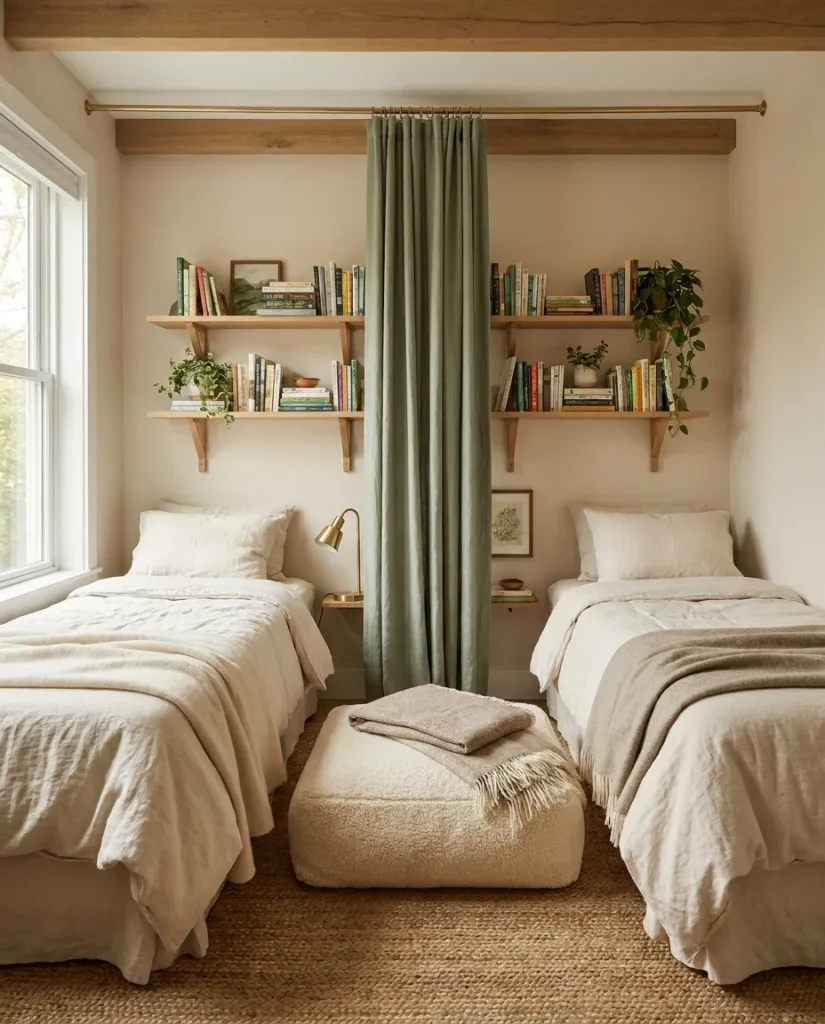
Who This Is For
This article is for you if:
- Your two (or three) kids share one bedroom and bedtime is a negotiation
- The room is under 150 square feet and you cannot give up floor space to a giant chair
- You are renting and need ideas that do not involve drilling into walls or ceilings
- Your kids are ages 3 to 11, with mixed reading levels and mixed bedtime needs
- You want a Pinterest-worthy look without spending $800 at West Elm
If you own your home and have a spare room to dedicate to reading, the regular reading nook playbook works fine. This guide solves the harder problem: two kids, one room, and not enough corners.
Why Reading Nooks Matter More in Shared Rooms
Kids who share a bedroom rarely have a private spot. The bed is the only zone that is theirs, and the bed is also where they sleep, fight pillows, and stash candy wrappers. Adding even a 2-foot-wide reading nook gives each child a sensory cue that says this is your spot, this is your time, this is for books. According to the American Academy of Pediatrics, reading aloud and quiet reading time from infancy through elementary years supports language development, focus, and emotional regulation. A defined nook is the easiest way to make daily reading a habit instead of a chore.
You also win on the parenting side. One kid can wind down with books while the other finishes homework or plays quietly. The room stops being a single-zone box and becomes two or three small zones, which is exactly what siblings need to coexist peacefully.
The 4 Layout Decisions to Make First
Before you buy a single throw pillow, decide these:
- One nook or two? Younger siblings under age 5 can share one floor cushion. Kids ages 6+ usually want their own spot, even if it is only 24 inches wide.
- Soft seating or built-in bench? Soft seating is rental-friendly and movable. Built-in benches are cozier but permanent.
- Shared bookshelf or personal ledges? Shared shelves work if the kids have similar reading levels. Personal ledges above each bed prevent the constant “that’s MY book” loop.
- Lighting that does not wake the other kid? Clip-on book lights and small wall sconces with warm bulbs beat overhead lights every time.
Write your answers on a sticky note before you start shopping. It saves you a return trip to Target.
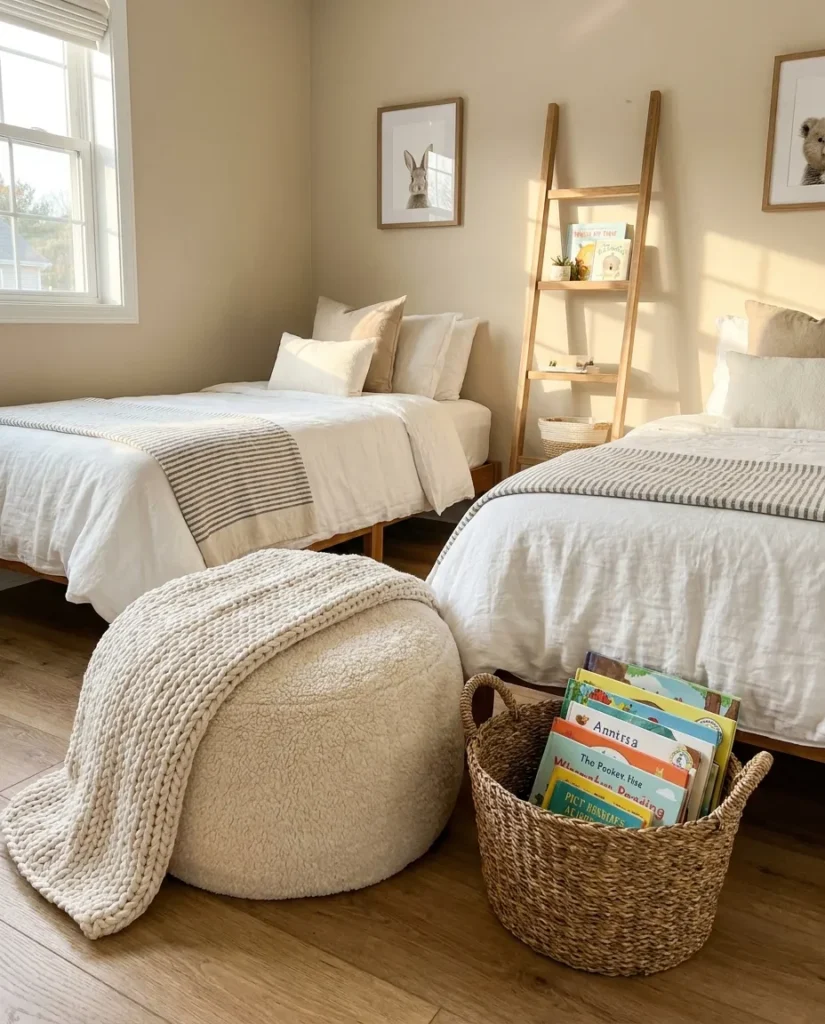
1. The Between-Beds Floor Cushion Nook
What it is: A 36-inch round floor cushion or oversized sherpa pouf placed between two twin beds, with a low book basket beside it.
Why it works: The space between two twin beds is usually 24 to 36 inches of dead floor. Putting a cushion there turns that strip into a shared reading island that belongs to both kids. Neither has to leave their side of the room.
How to execute:
- Measure the floor gap (most run 28 to 36 inches in standard kids rooms)
- Pick a round sherpa floor cushion in cream or oat (Target’s Pillowfort line runs $35-50, the West Elm splurge version runs $149)
- Add a woven storage basket on one side for board books, picture books, and a soft toy
- Throw a chunky knit throw across the top for cozy texture
This setup is fully rental-friendly. No drilling, no commitment. If the kids outgrow it, the cushion moves to the living room.
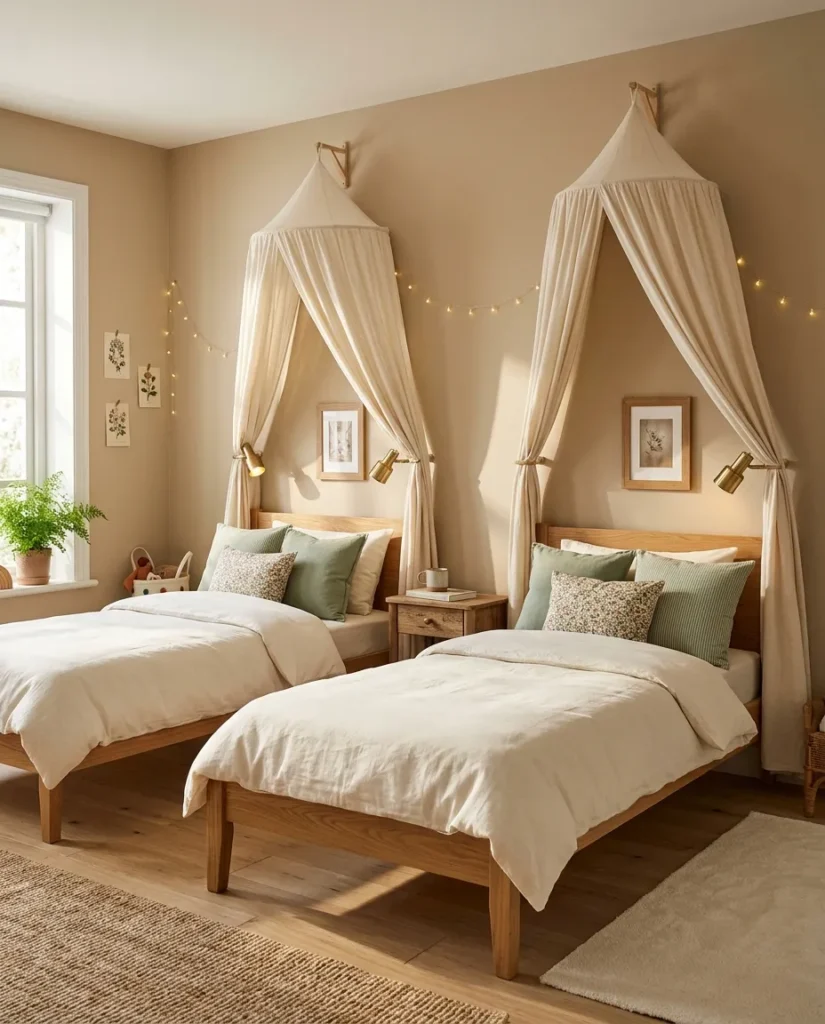
2. Twin Bed Headboard Canopies
What it is: A lightweight fabric canopy or half-circle bed crown hung above each twin bed headboard, framing each child’s personal reading zone.
Why it works: Canopies create a visual ceiling. Even if the kids are 4 feet apart, a canopy says this is your room within the room. It is the easiest visual trick to give each kid privacy without building anything.
How to execute:
- Buy two matching IKEA LÖVA leaf canopies ($16.99 each) or two pastel bed canopies from Amazon ($25-40 each)
- Hang each from a single 3M Command ceiling hook above the head of each bed (no drilling required, holds up to 2 pounds)
- Add a clip-on warm LED book light to each canopy frame
- Tuck a small linen pouch on the inside of each canopy for a current book and bookmark
The matching twin canopies look intentional in photos and pins, which is why this idea performs so well on Pinterest searches for kids reading nook ideas girl bedrooms.
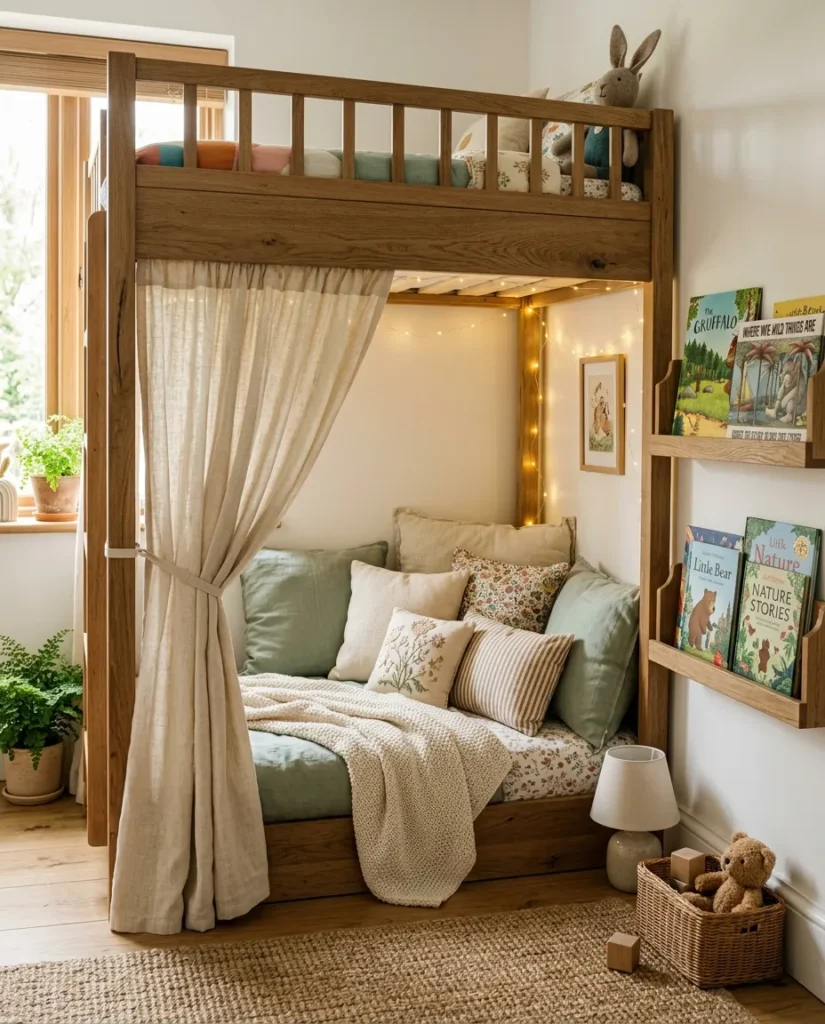
3. The Bunk Bed Lower Bunk Nook
What it is: The bottom bunk converted into a daytime reading cave with a curtain across the front and string lights inside.
Why it works: Bunk beds eat floor space but waste vertical zones. The lower bunk during daylight hours is just a flat mattress doing nothing. Hang a curtain on a tension rod across the front and it becomes the coziest reading fort in the house.
How to execute:
- Install a 48-inch spring-loaded tension rod between the bunk posts ($12 at Target)
- Hang two lightweight cream linen curtain panels on clip rings
- String 10 feet of warm white battery-operated fairy lights across the underside of the upper bunk
- Pile three different cushions: a long lumbar, a square throw pillow, and a small velvet bolster
- Add a slim wall-mounted book ledge on the wall beside the bunk for picture books displayed cover-out
This one consistently lands in the small reading nook cozy corner bedrooms kids Pinterest cluster because it solves space and aesthetic in one move.
4. The Shared Closet Reading Hideaway
What it is: One half of a shared bedroom closet (or the whole closet if the kids use a freestanding wardrobe) emptied out and converted into a tiny enclosed reading room.
Why it works: Shared bedrooms often have one decent-sized closet. Trading 30 inches of hanging space for a reading hideout pays off bigger than another tote of folded sweaters. Kids universally love enclosed spaces.
How to execute:
- Remove the closet rod from one half (or all) of the closet
- Paint the back wall sage green or warm clay for instant cozy depth
- Lay a 2×3 foot machine-washable rug on the floor
- Add a 24-inch deep floor cushion or twin-size daybed mattress if depth allows
- Mount three IKEA MOSSLANDA picture ledges on the back wall ($11.99 each) for cover-out book display
- Install a battery-operated wall sconce above (no electrician needed, the Lumiman puck lights run about $25 for two)
Works in closets as narrow as 30 inches wide. Rental note: most landlords are fine with removing the closet rod if you save it and reinstall before move-out.
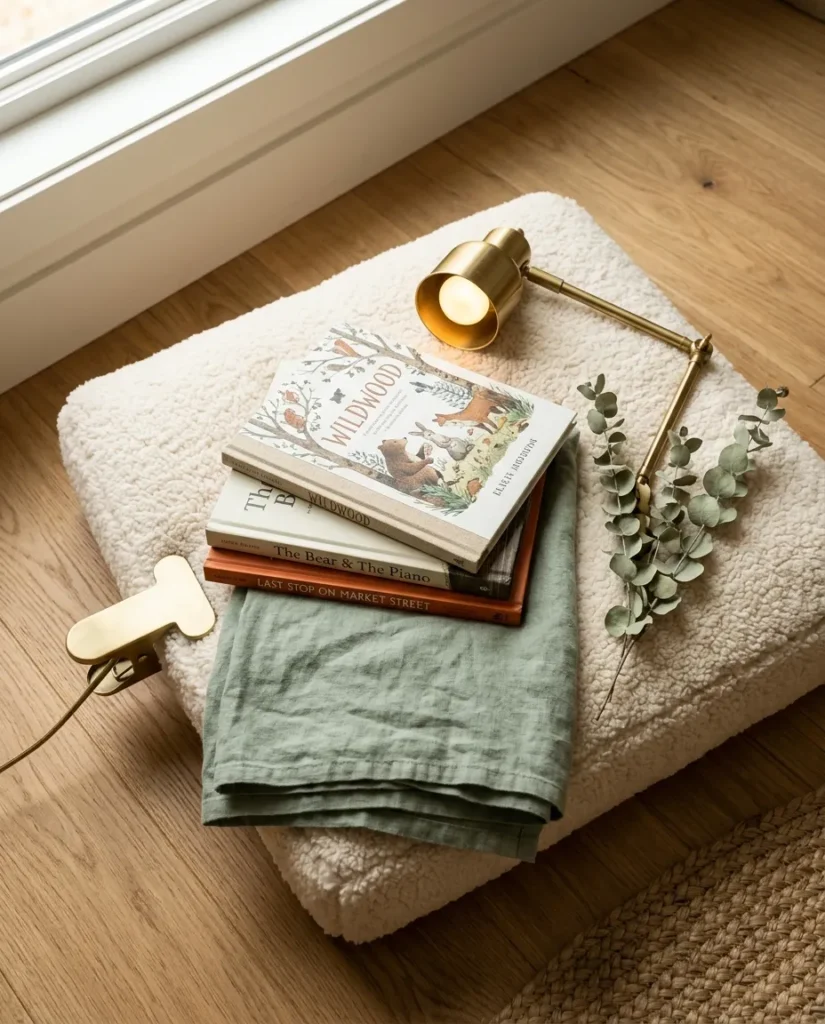
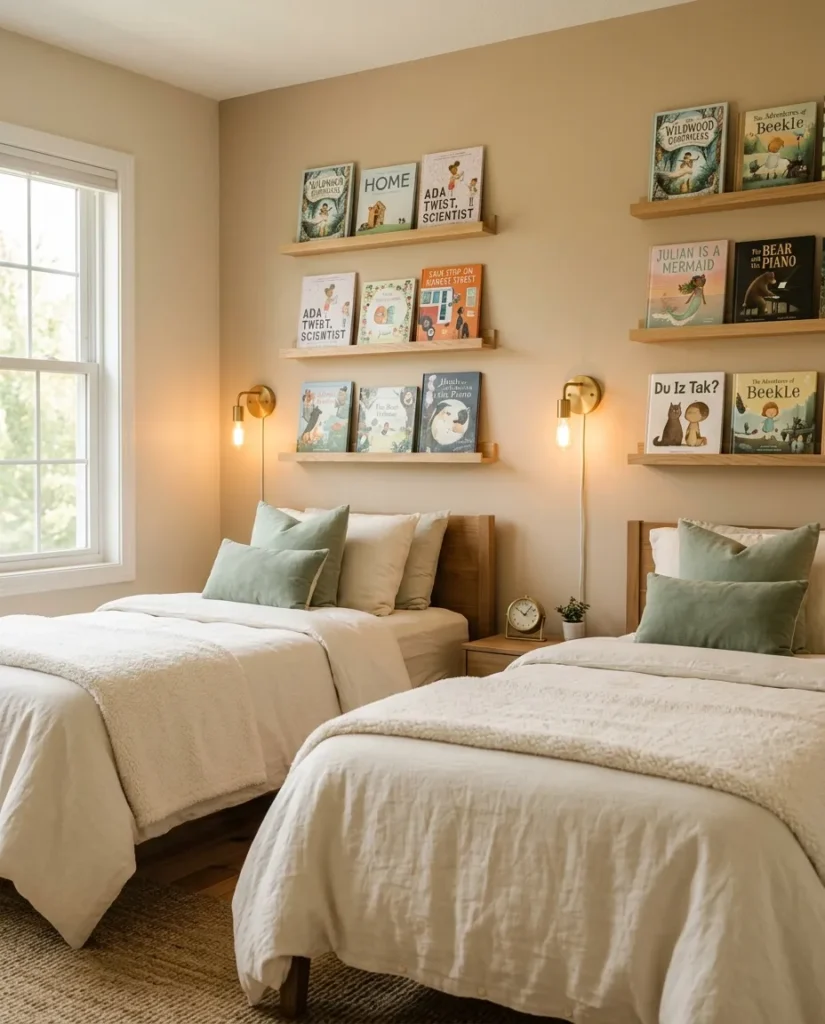
5. Wall-Mounted Book Ledges Above Each Bed
What it is: Two or three slim picture ledges mounted above each child’s headboard for cover-out book display.
Why it works: Books displayed cover-out get picked up 4 times more often than books on a shared spine-out shelf. This is the single highest-leverage move you can make in a shared kids room. Each kid sees their own books, picks their own books, and stops fighting over which book lives where.
How to execute:
- Buy six IKEA MOSSLANDA picture ledges at 22 inches each ($11.99) or six rustic oak ledges from Amazon ($20-30 each)
- Mount three above each bed at staggered heights (top ledge at kid’s standing eye level)
- Use a drywall anchor rated for 15 pounds minimum
- Curate 8 to 12 books per kid, swap monthly to keep the rotation fresh
Renter alternative: Command Strip picture ledges hold up to 7 pounds and require no drilling. Use them for paperback rotation only, not heavy hardcovers.
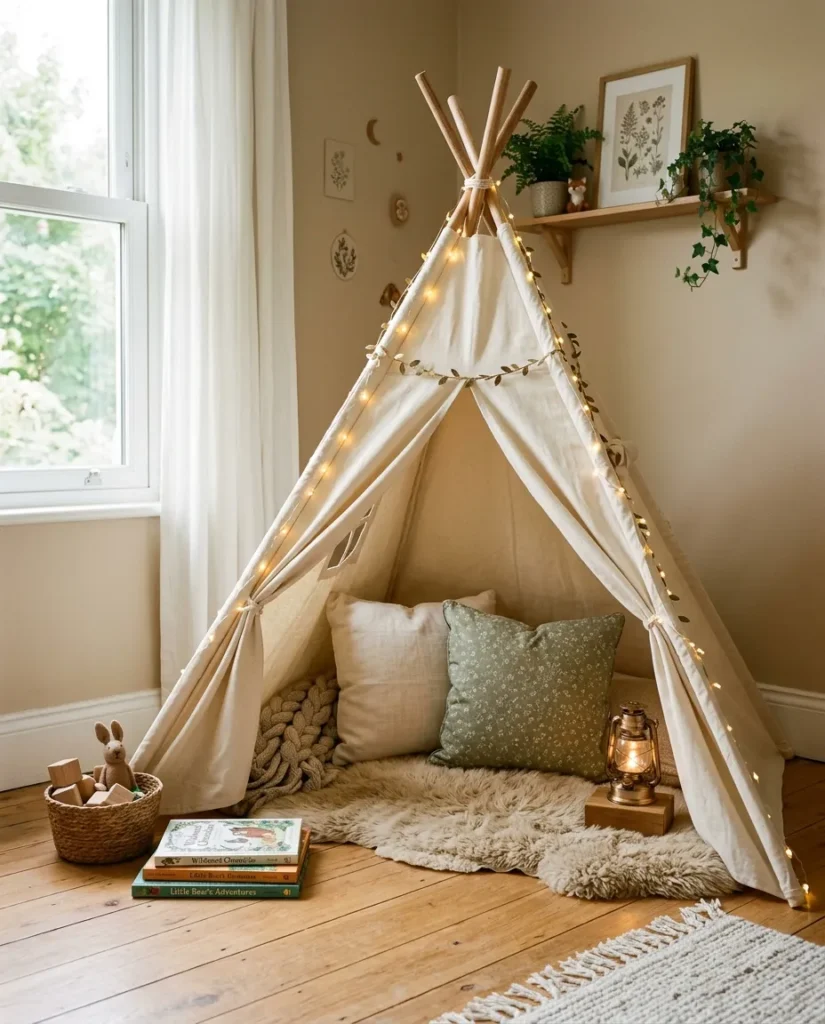
6. The Corner Teepee for Two
What it is: A 5-foot-tall fabric teepee tucked in the empty corner of the shared bedroom with two floor cushions inside.
Why it works: Corners are the most wasted real estate in any kids room. A teepee uses 3 feet by 3 feet of corner floor space and turns it into a full-height reading room that holds two kids comfortably.
How to execute:
- Pick a cream or natural canvas teepee (Wayfair, Target, and Amazon all carry them in the $50-90 range)
- Layer two 18-inch square floor cushions inside in coordinating cream and sage
- Add a small battery-operated lantern or warm puck light for evening reading
- Toss a sheepskin or faux fur rug on the floor inside for sensory coziness
Teepees are 100% rental-friendly. They fold flat for storage and leave no marks. Works in any room with a corner that has at least 42 inches of clearance in both directions.
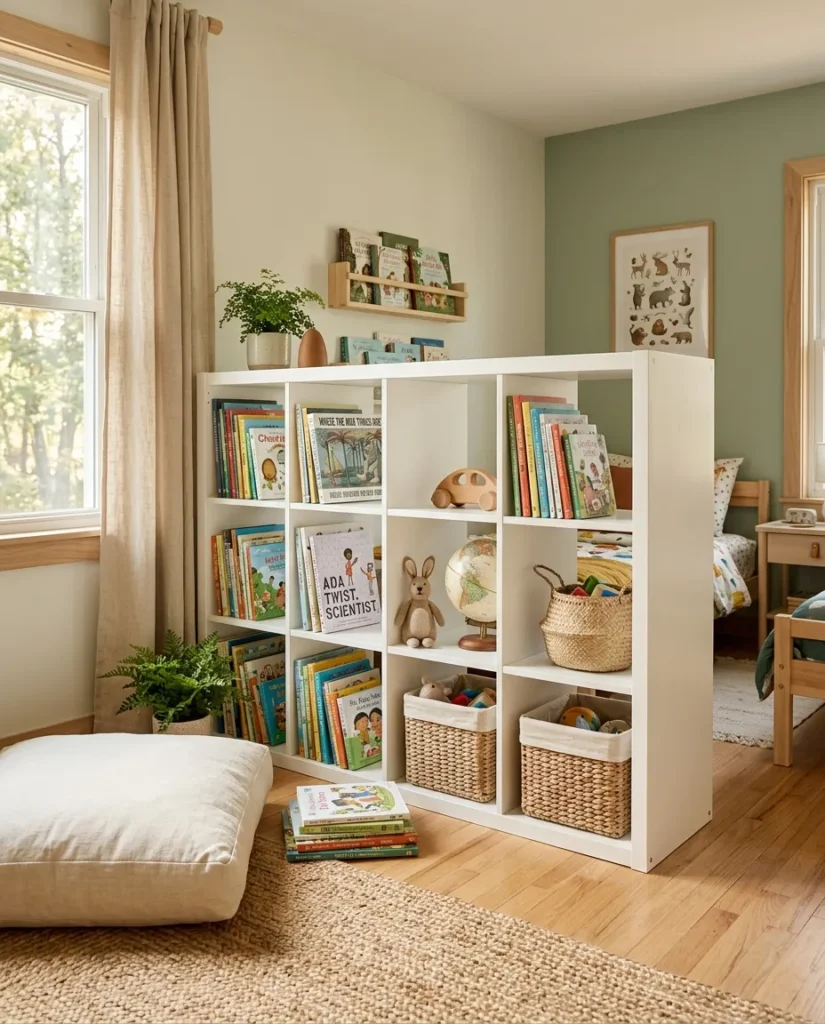
7. The Bookshelf Room Divider Nook
What it is: A short bookshelf (think IKEA KALLAX 2×4) placed perpendicular to the wall to visually divide the shared room AND act as the spine of a reading zone.
Why it works: Two birds, one bookshelf. The KALLAX or similar open bookshelf creates two distinct zones in a single room without blocking light or making the space feel smaller. One side of the shelf becomes the back of a reading nook, the other side faces the second kid’s bed.
How to execute:
- Use an IKEA KALLAX 4×2 horizontal ($79.99) anchored to the wall with the included safety strap (this is non-negotiable with kids in the home)
- Style one side with books, baskets of toys, and a small lamp
- Place a 36-inch wide floor cushion or pouf on the other side facing the kid’s bed
- Add a single floor lamp or wall sconce above the nook side for evening light
Best for shared rooms that are at least 11 feet wide. Anything narrower and the divider feels cramped.
8. Window Seat for Two
What it is: A built-in or freestanding bench under the bedroom window, sized for two kids to share or one kid to sprawl.
Why it works: Window seats use the wall space under a window that otherwise sits empty. Natural daylight is the best reading light, and two kids can sit side by side with their own cushion and pillow setup.
How to execute:
- For renters: use a low IKEA BESTÅ bench or two HEMNES storage benches under the window (no installation, just push against the wall)
- Add a 4-inch foam cushion cut to size, covered in washable cream linen ($60-120 on Etsy)
- Layer two coordinating throw pillows per kid (one square, one lumbar)
- Hang sheer cream curtains on a tension rod for filtered light
- Install a swing-arm wall sconce on each side if the budget allows
For owners willing to build, a full window seat with under-bench storage runs $300-600 in materials and turns the room into a magazine-worthy shared space.
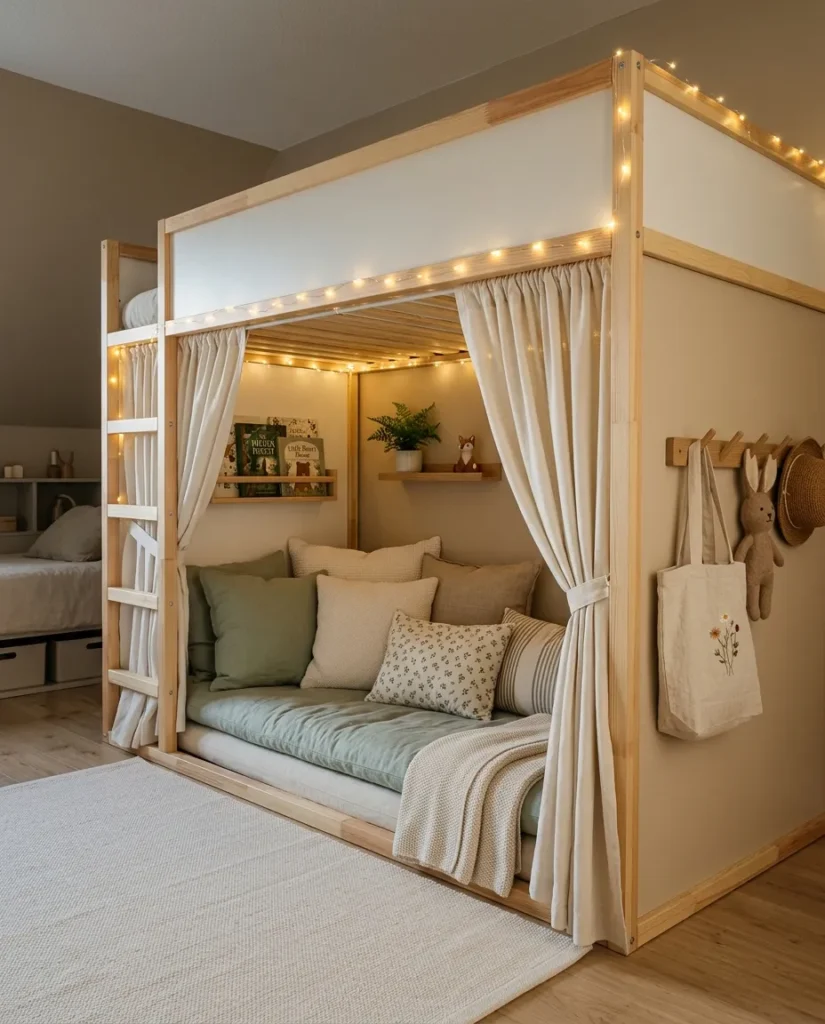
9. The Reading Loft Above a Daybed
What it is: A bed loft or high sleeper bed where one kid sleeps up top and the underside becomes a curtained reading nook for both kids during the day.
Why it works: This is the bunk bed idea in reverse, designed for one twin bed plus one loft bed instead of two stacked bunks. The loft’s underside (usually 36-42 inches of clearance) becomes a permanent reading cave with way more privacy than a bunk-bottom curtain.
How to execute:
- Install an IKEA STORÅ loft bed or similar high sleeper (about $399)
- Hang full-length cream linen curtains on a tension rod across the underside
- Lay a 4×6 foot washable rug on the floor underneath
- Add a low floor mattress or twin daybed for the second child during reading time
- Mount two wall hooks at kid height for tote bags and book pouches
- String warm fairy lights along the loft frame for ambient evening light
Works best when one kid is at least age 6 (loft bed safety guidelines) and the other can be any age. Ceiling clearance needed: at least 7 feet 6 inches.
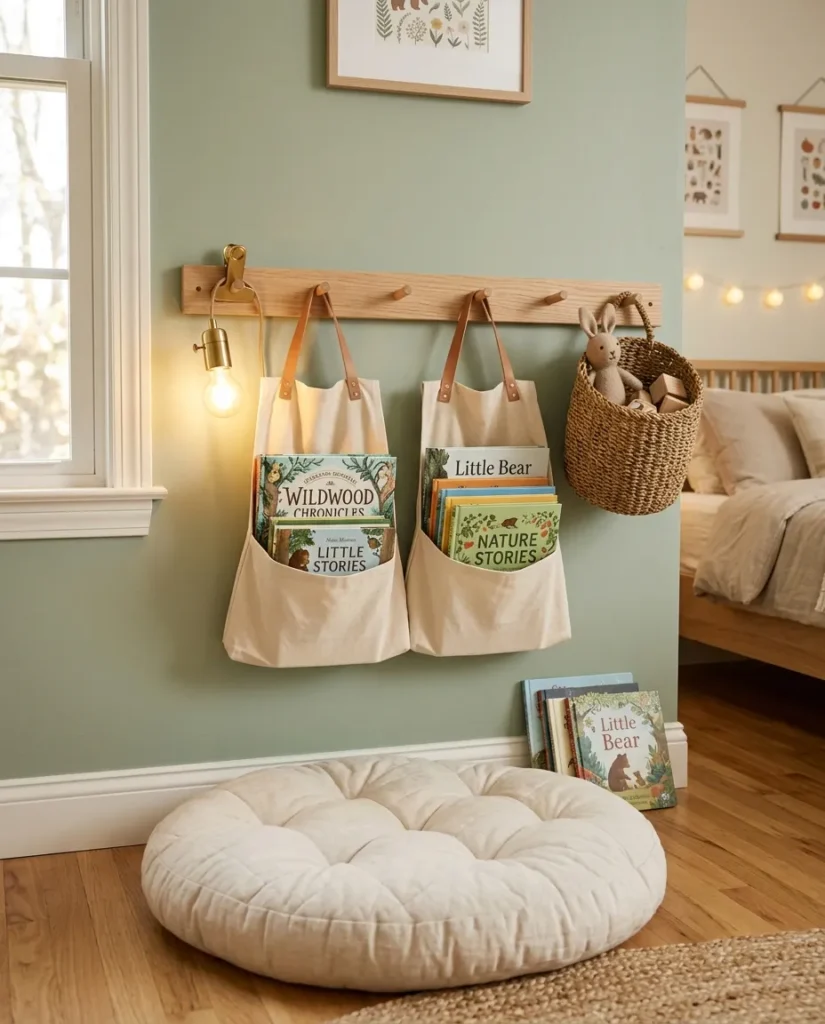
10. The Peg Rail Reading Wall
What it is: A 4-foot Shaker peg rail mounted at kid height with hanging fabric book slings, a small clip lamp, and a hanging fabric pouch for two stuffed reading buddies.
Why it works: Walls are the most underused storage in shared kids rooms. A peg rail does three jobs at once: it stores books in hanging slings, it doubles the available wall surface, and it creates a visual anchor that signals “this is the reading wall.” Kids who share love having their own peg.
How to execute:
- Install a 48-inch oak Shaker peg rail mounted at 36 inches from the floor (Etsy sellers carry them for $40-70)
- Hang two canvas book slings (one per kid) at $15-25 each from Amazon
- Add a clip-on warm LED lamp to one peg
- Hang a small woven basket from another peg for a journal and pencil pouch
- Place a 24-inch round floor cushion below for the actual sitting spot
Works in shared rooms as narrow as 9 feet wide. Best paired with one of the floor cushion ideas above for the seating component.
Budget vs Splurge: How to Spend Smart
Here is the breakdown most posts skip. You can build a beautiful reading nook for shared bedrooms at three very different price points.
| Element | Budget (under $25/item) | Mid-range ($25-100) | Splurge ($100+) |
|---|---|---|---|
| Floor cushion | Dollar Tree throw pillows piled, $15 total | Target Pillowfort sherpa pouf, $45 | West Elm round floor cushion, $149 |
| Book ledges (set of 3) | IKEA MOSSLANDA, $36 total | Etsy handmade oak ledges, $75 set | Pottery Barn Kids ledges, $150 set |
| Lighting | Battery puck lights from Amazon, $20 | IKEA wall sconce, $40 | Anthropologie kids sconce, $128 |
| Canopy / curtain | Dollar Tree fabric on tension rod, $10 | IKEA LÖVA canopy, $17 each | Pottery Barn Kids canopy, $179 |
| Books on display | Library rotation, free | Used bookstore haul, $30 | Curated splurge from indie shop, $200+ |
| Total | About $85 | About $235 | About $850 |
The honest truth from someone who has tested both ends: kids do not notice the price difference. They notice the dedicated zone, the soft seating, and the cover-out books. Start budget, upgrade pieces over six months as you see what gets used.
Lighting Twin Reading Nooks (Without Waking the Other Kid)
This is the single most-asked question I get from parents of kids who share. The answer is layered, dim, and warm:
- Clip-on book lights at 2700K warm white, USB rechargeable, $15-25 each (one per kid)
- Wall sconces with dimmer switches on the kid-side of each bed (IKEA, Target, Wayfair all sell plug-in versions that need no electrician)
- Battery-operated puck lights velcroed inside closet nooks or under bunk beds
- Warm fairy lights on a timer set to switch off automatically at lights-out
Skip overhead lights entirely after 7 p.m. They wake both kids and they kill the cozy. Skip blue-tinted LED bulbs always.
Common Mistakes to Avoid
After designing reading nooks in three different shared rooms across two houses, here are the missteps I see parents make every single time:
- Buying matching everything. Resist the catalog impulse. Two identical canopies are fine, but two identical book selections will start a fight by Tuesday. Let each kid pick a few of their own pieces.
- Going too big. A reading nook does not need a chair, a side table, AND a bookshelf. In a shared room, a single 36-inch zone with a cushion and a book ledge is plenty.
- Ignoring sound. Reading time fails if the other kid is playing loudly 5 feet away. Add a soft rug, a few floor cushions, and one heavy curtain panel to absorb sound. Even a 6×9 jute rug cuts noise noticeably.
- Skipping the book rotation. Static book displays go invisible after a week. Swap 4 to 6 books per kid every Monday. Library hauls do the heavy lifting here.
- Forgetting the snack rule. Decide before you build whether snacks are allowed in the nook. Then stick to it. Granola crumbs in a fabric teepee are forever.
- Choosing style over comfort. A beautiful wooden bench with no cushion is a beautiful wooden bench nobody sits on. Always layer with something soft.
Seasonal Refresh Ideas
The reading nook for shared bedrooms gets used year-round, but small seasonal swaps keep it feeling new without redecorating:
- Spring (March to May): Swap to a pastel sage or buttery yellow throw, add a small vase of dried wildflowers on the book ledge
- Summer (June to August): Switch to a lightweight linen cushion cover, add a small portable fan clipped to the bunk frame
- Fall (September to November): Bring in a chunky cream knit blanket, swap books to spooky and harvest themes
- Winter (December to February): Add a faux sheepskin layer on the floor cushion, switch to a flannel pillowcase, light a battery flameless candle for evening reading
These swaps cost under $25 per season if you shop at Target, HomeGoods, or HomeSense.
FAQ
How do I create a reading nook in a small or rental shared bedroom?
Use only freestanding or no-drill solutions: a floor cushion between the beds, a teepee in the corner, Command Strip ledges for books, and battery-operated lighting. A complete rental-friendly setup fits in rooms as small as 10 feet by 11 feet and costs $85-150 total.
What is the budget version of a shared bedroom reading nook?
Two large floor cushions from Target or Walmart ($25-40 each), three IKEA MOSSLANDA picture ledges ($11.99 each), one battery-operated string of warm fairy lights ($10), and library books rotated weekly. Total around $85-110.
What if there is no closet, corner, or window to spare?
Go vertical. Mount book ledges above each bed at kid eye level, add clip-on book lights to each headboard, and put a single shared floor cushion between the beds. This works in rooms as narrow as 9 feet because it uses only wall space and the existing dead floor gap.
How long does it take to set up a reading nook for shared bedrooms?
A no-drill rental setup takes about 90 minutes including a Target run. A drilled version with mounted ledges and a sconce takes 3 to 4 hours, mostly because of measuring and anchor installation. A full built-in window seat takes a weekend.
Should each kid have their own nook or share one?
Kids under age 5 are usually happy sharing a single nook. From age 6 and up, two small dedicated zones work better than one big shared one. Even 24 inches of personal space per kid prevents most reading-time disputes.
What is the best Pinterest-friendly style for a shared kids reading nook?
Warm Scandi or Modern Farmhouse with a cream and sage base, layered with linen, oak, and one or two ceramic or brass accents. This palette photographs beautifully in natural daylight and matches the kids reading nook ideas girl bedrooms and corner reading nook bedrooms kids Pinterest aesthetic.
How do I keep two kids from fighting over books in a shared room?
Personal book ledges above each bed solve 90% of book disputes. Each kid sees their own books, picks their own books, and never has to ask permission to read. Pair with a small shared bin of family read-aloud books at the foot of the room. According to the National Education Association, giving kids ownership of their reading choices is one of the strongest predictors of whether they actually read for fun.
Save This for Later
Building a reading nook for shared bedrooms is one of those small projects that pays off every single bedtime for years. Start with the floor cushion between the beds, add personal book ledges over each headboard, and layer in a canopy or curtain when you are ready. Tag-team it with your kids and let them pick the throw pillow color. They will use it more if they helped build it.
Save the pin for the bunk bed lower bunk nook if you want the highest-impact idea on this list. It is the one that consistently turns a wasted lower bunk into the most-used spot in the house.
Want more cozy kids room inspiration? Read our 10 Montessori Reading Nook Ideas Your Child Will Actually Use for the toddler-and-up version, or browse our Kids Room category for room-by-room makeovers.
Keep reading
More cozy nook ideas
 Living Room
Read →
Living Room
Read →
Cabin Living Room Checklist: Everything to Decide Before You Start
No log walls, no stone hearth, no lake outside the window. You can still build a cabin living room in a regular…
 Bedroom
Read →
Bedroom
Read →
English Cottage Bedroom Checklist: Everything to Decide Before You Start
You saved forty pins of floral quilts and sloped ceilings, then looked up at your own bedroom: beige walls, one window, a…
 Nursery & Teen Rooms
Read →
Nursery & Teen Rooms
Read →
25 Teen Boy Bedroom Ideas That Feel Grown-Up, Not Childish
If his room still has the race car lamp and the glow-in-the-dark stars, and the door has started staying shut, he’s telling…