
Cozy Apartment Decor Ideas for Renters on a Budget

If your living room is one overhead light, a couch pushed against the longest wall, and a blanket that keeps sliding onto the floor, you already know the problem. It photographs fine. It just never feels like anywhere you want to sit.
Cozy apartment decor is not a shopping problem. It’s a light-height problem, a texture-count problem, and a floor problem, and all three are fixable in a rental without a drill, a landlord email, or a paint deposit.
Here is the order to do it in, with what things actually cost right now.
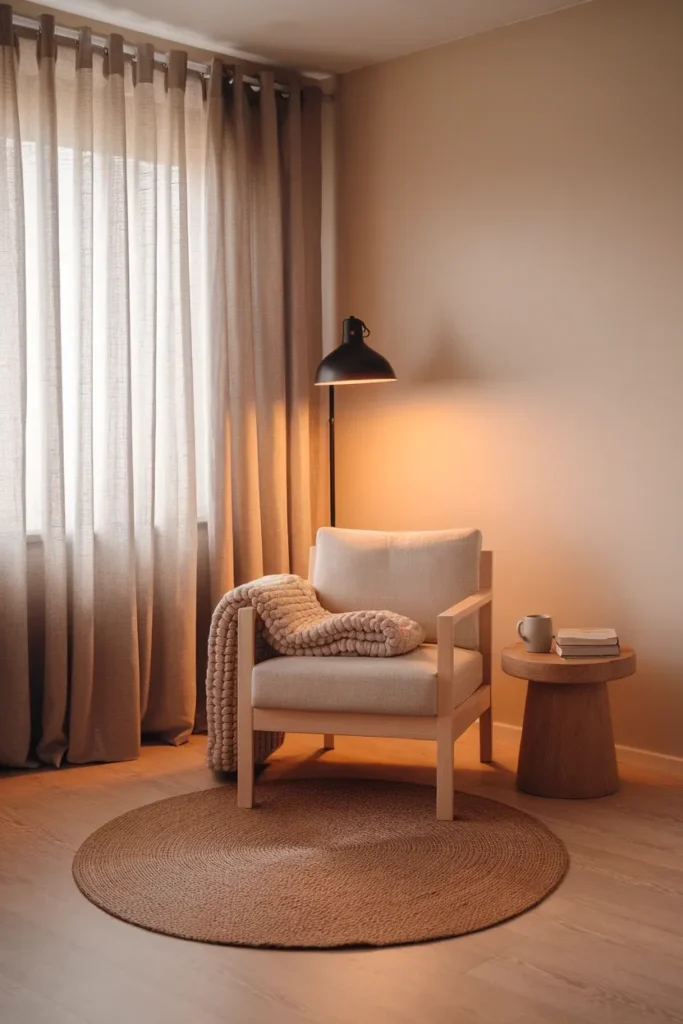
The Five Zero-Drill Changes That Do Most of the Work
Do these five in this order. Not one requires a hole, a nail, or permission.
- Swap the three bulbs you look at most to 2700K. Cheapest change, biggest single shift, and you can do it tonight for under $15.
- Add one light source below 48 inches. A floor lamp beside the chair, a plug-in sconce, a table lamp on a stack of books. Anything that pulls the glow down off the ceiling.
- Put something soft under your feet. A washable rug or a runner, big enough that your feet land on it when you sit.
- Get to three textures in the seating zone. Not three colors. Three surfaces your hand can tell apart with your eyes closed.
- Hang curtains higher and wider than the window. Tension rods count. No hardware in the wall required.
That’s the whole framework. The rest of this is how to do each one properly, and what happens when you skip a step.
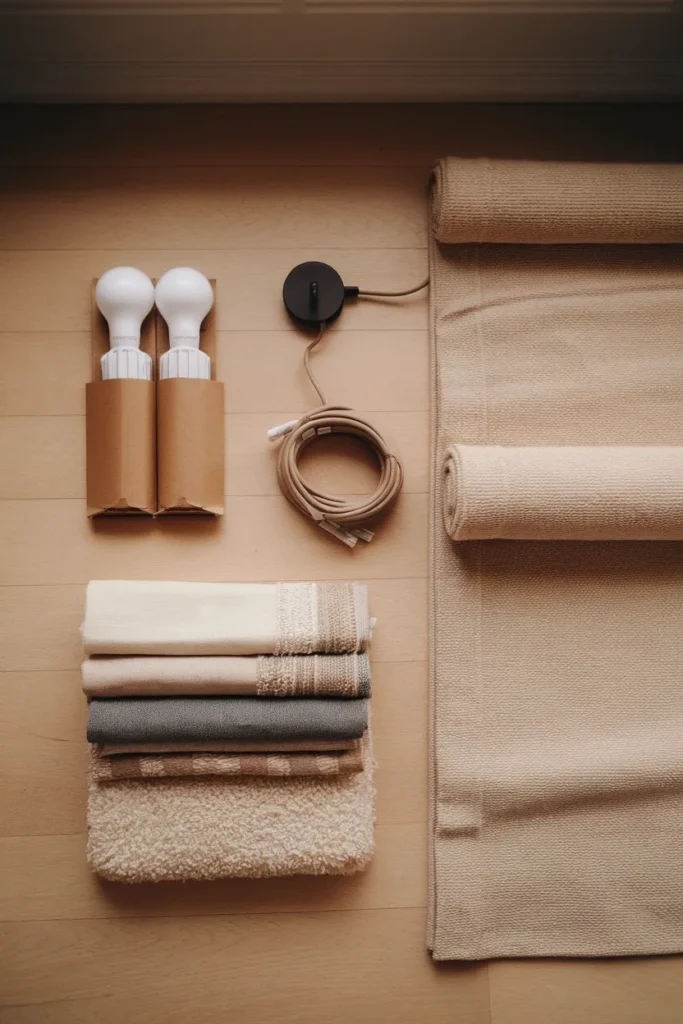
Swap Three Bulbs Before You Spend a Dollar on Furniture
Most rentals ship with builder-grade bulbs somewhere in the 4000K to 5000K range. That’s daylight-neutral light. It’s correct for a parking garage and wrong for a room you want to sink into at 9 p.m.
You want 2700K. Warm white. The color of a lamp in a hotel bar, not the color of an office ceiling.
Buy three and change the three fixtures you actually look at: the overhead in the main room, the bedside lamp, and whatever lights your entry. Leave the kitchen and bathroom alone for now, because task areas genuinely want cooler light.
Get dimmable ones even if you don’t own a dimmer yet. A smart bulb with a phone slider does the same job for around $10 to $15 apiece and moves with you when the lease ends. According to Department of Energy guidance on LED lighting, ENERGY STAR rated LEDs use at least 75% less energy than incandescent bulbs and last up to 25 times longer, and incandescents dump about 90% of their energy as heat. In an apartment with one window and a summer AC bill, that heat difference is not abstract.
One warning. Mixing color temperatures in a single sightline is the fastest way to make a room feel like a waiting area. If you can see two bulbs at once, they should match.
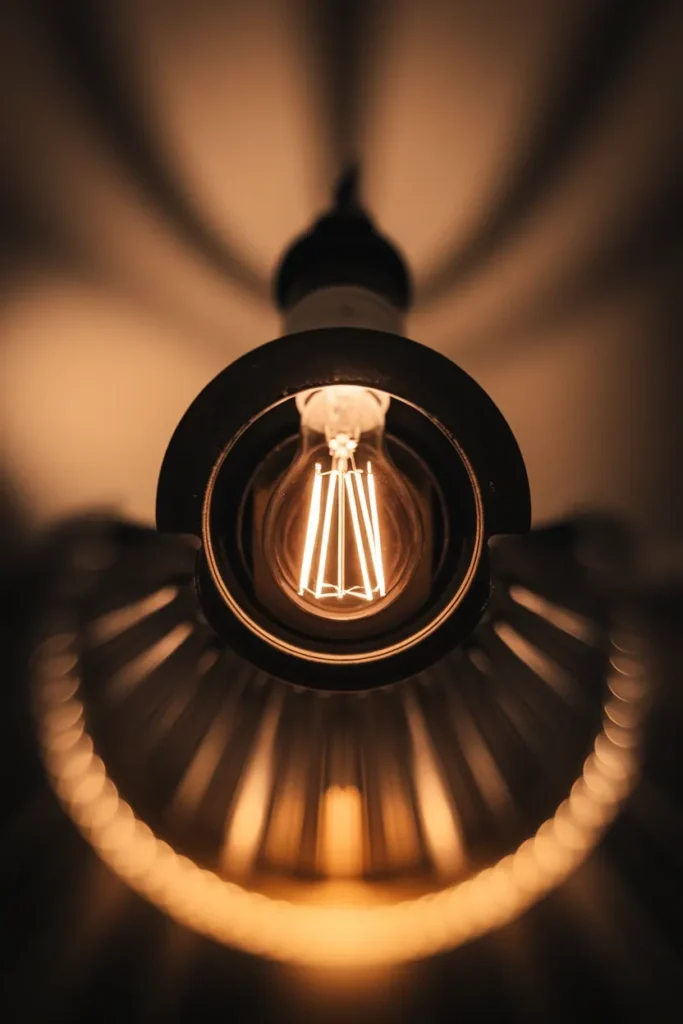
Drop the Light Below Eye Level: The 48-Inch Glow Line
Here’s the rule that changes rooms, and it costs nothing to apply.
The 48-Inch Glow Line: every room needs at least two light sources with their bulbs sitting below 48 inches from the floor. Ceiling light alone flattens a space and throws shadows straight down onto faces. Light that sits low bounces off walls, wraps around furniture, and reads as warmth instead of illumination.
Sitting eye level for most adults on a standard sofa lands between 40 and 46 inches. Keep your glow at or just under that line and the room stops feeling like a hallway.
| Light source | Target bulb height from floor | Where it goes |
|---|---|---|
| Table lamp on a side table | 40 to 46 in | Beside the seat you actually use |
| Floor lamp, reading | 55 to 60 in shade top, bulb angled down | Over your shoulder, not in your eyeline |
| Plug-in sconce | 52 to 58 in | Flanking a bed or a chair |
| Under-shelf LED puck | 12 to 30 in | Bookcase, console, kitchen counter |
| Candle or flameless taper cluster | 24 to 34 in | Coffee table, dining table |
A 60-inch reading lamp like the IKEA RANARP runs $69.99 as of August 2026, with a 6 foot 1 inch cord, which matters more than people expect in a rental where the one usable outlet is never where you want the chair. Measure your cord run before you buy, not after.
If you want the full evening sequence, the cozy living room lighting setups guide walks through a 6 p.m. to 11 p.m. dimming schedule and the zone-by-zone breakdown.
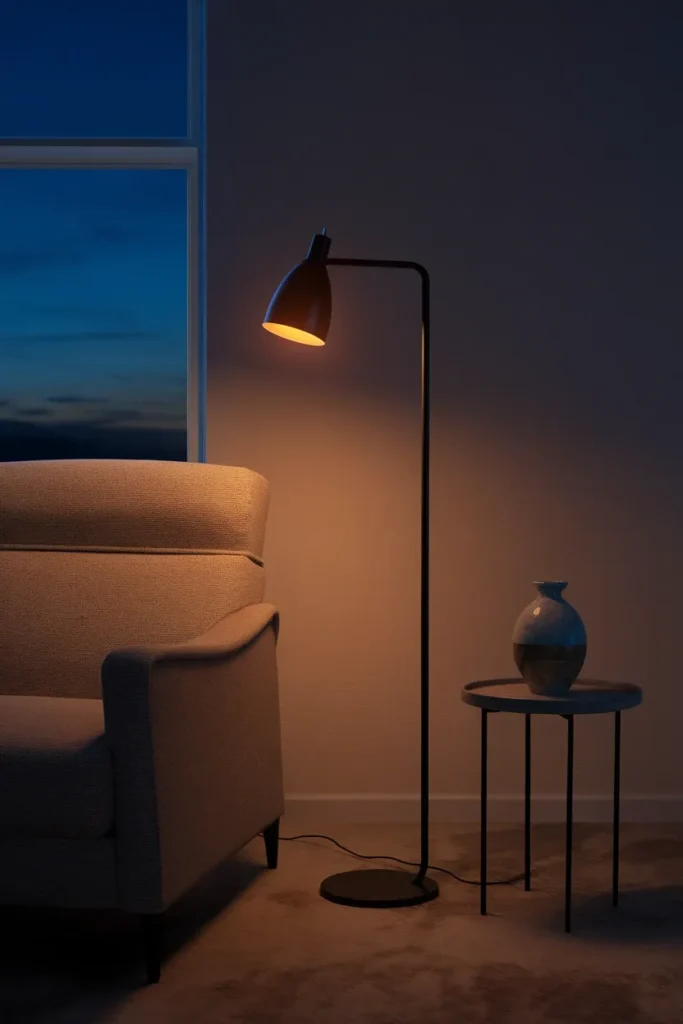
Claim One Corner Instead of Redecorating the Whole Apartment
The single biggest budget mistake renters make is spreading $300 evenly across 900 square feet. Everything gets slightly better. Nothing gets good.
Pick one corner. Make it undeniably finished. Live with the rest for a month.
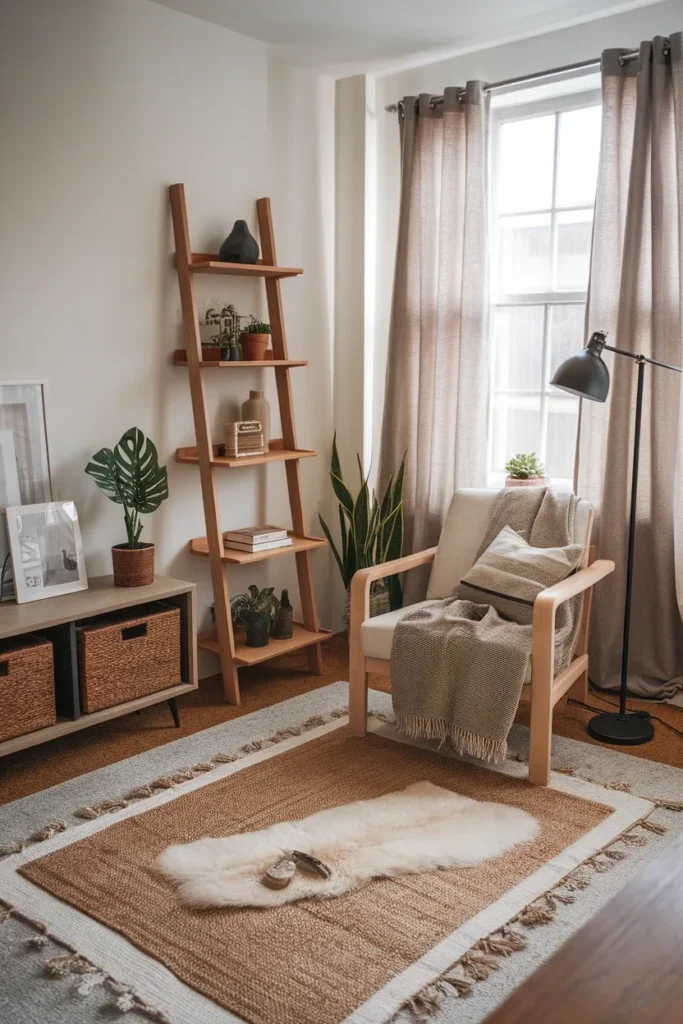
A chair, a light, a surface, and something soft is the entire recipe. An IKEA POÄNG armchair sits at $149.00 right now, with a 16 1/2 inch seat height and a 19 5/8 inch seat depth, which is the part worth checking against your own body. If you’re under about 5 foot 4, a deep-seated chair means your feet dangle or you perch forward, and you will quietly stop using it. Sit in the chair before you commit, or check the seat depth against a chair you already like.
Add a small side table within arm’s reach. The 18-inch reach rule: if your mug lands more than 18 inches from your resting hand, you’ll set it on the floor, and eventually you’ll knock it over.
Then stop. One finished corner teaches you what the rest of the apartment needs. Guessing at all of it at once teaches you nothing except which return policies are generous. The dead corner reading nook build walks through the 42-inch corner test if you’re not sure your space qualifies.

The Three-Texture Rule (And Why Two Never Reads Cozy)
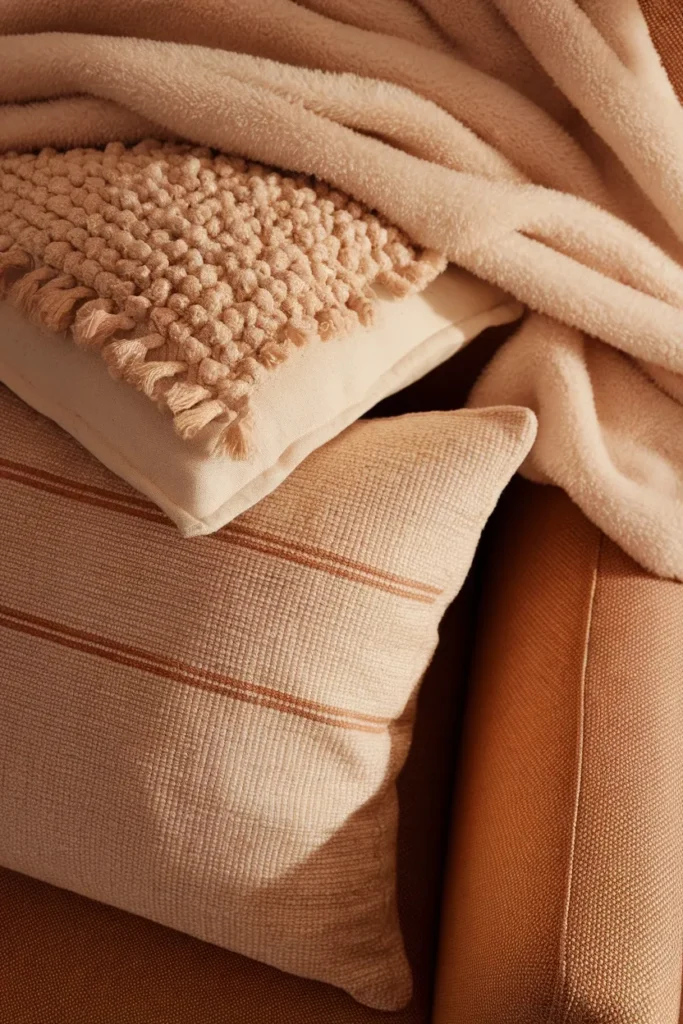
Two textures reads as tidy. Three reads as warm. This is the cheapest upgrade in decorating and almost nobody does it on purpose.
In your main seating zone, aim for three distinctly different surfaces:
- Something woven and slightly rough. Jute rug, linen throw pillow cover, a basket.
- Something with pile or fluff. Sherpa throw, boucle cushion, a sheepskin over the chair arm.
- Something smooth and cool. Ceramic lamp base, a wooden tray, a glazed pot.
The trick is that they have to be within touching distance of each other. Three textures scattered across three rooms do nothing. Three textures stacked on one chair change the whole corner.
Practical version: a $20 chunky knit throw folded over the chair back, a $15 linen lumbar pillow, and whatever ceramic thing you already own on the side table. Under $40, done in an afternoon.
Trade-off worth naming: floor cushions and poufs photograph beautifully and they are a genuinely bad primary seat. Twenty minutes in, your lower back starts negotiating. Use them as secondary seating or a footrest, and put the real chair in first.
The Floor Does More Than the Walls, And Costs Less
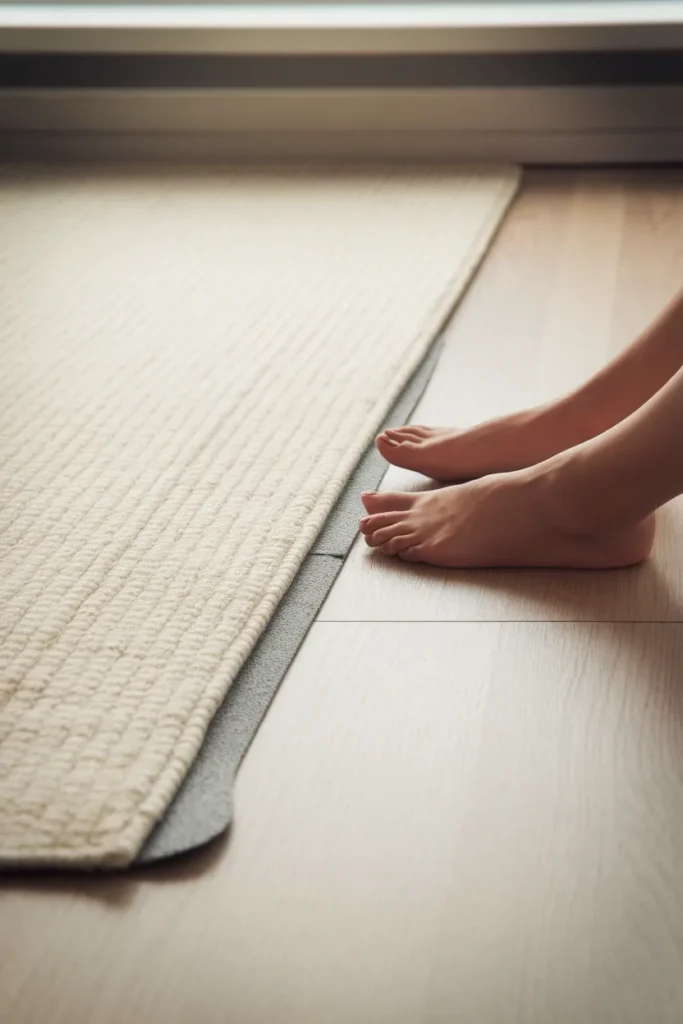
Rentals are floored for turnover, not for comfort. Laminate, luxury vinyl plank, or beige carpet that has met several strangers. Either way, the floor is the largest surface in the room and it’s doing nothing for you.
Size matters more than pattern. The most common rental rug error is buying a 5×7 for a room that needs an 8×10, which leaves the rug floating in the middle like a placemat. Minimum viable rule: the front legs of every seating piece should sit on the rug. If your budget won’t reach that size, a runner along the path you actually walk beats an undersized square in the center.
Washable rugs earn their keep in a rental, because a spill on a rug you can’t wash becomes a deposit conversation. Layering a smaller wool or faux-sheepskin piece over a large flat-weave gives you the depth of an expensive rug for about a third of the cost.
Use a rug pad. It stops the rug from creeping, and it stops the rug backing from marking vinyl plank, which is a real and commonly deducted charge. The damage-free rental decor ideas guide covers floor protection and the rest of the move-out reversal in detail.
Bare feet on a good rug at 7 a.m. in February is the entire argument. That’s the sensation you’re buying.
Walls Without a Single Hole
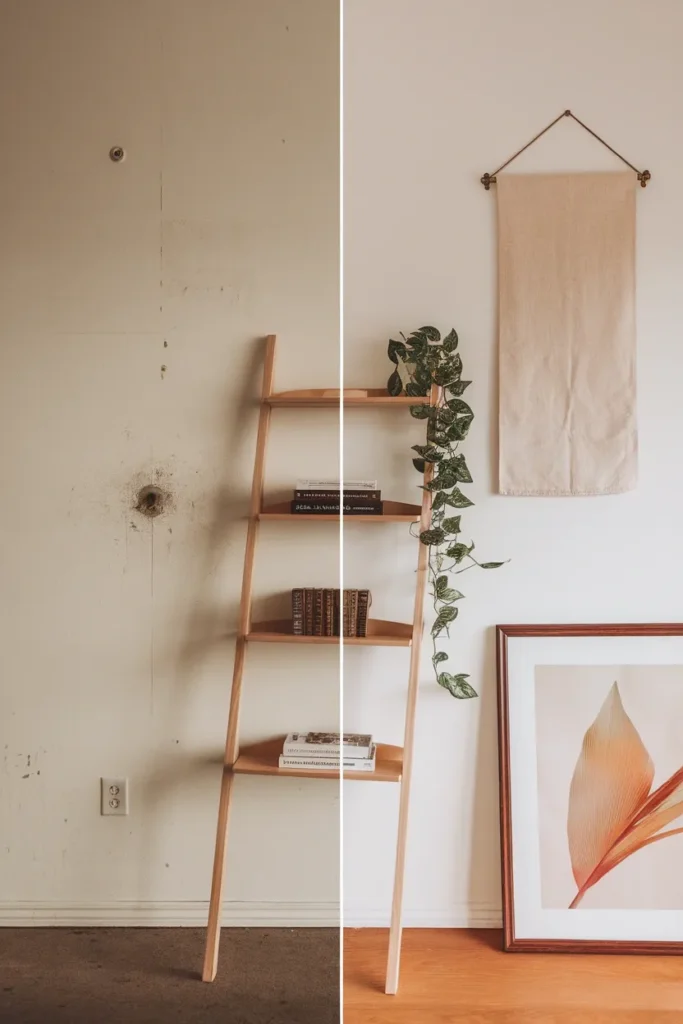
Empty walls are the loudest thing in a rental, visually and literally. You don’t need to drill to fix it, but you do need to respect the weight limits, because adhesive failure at 3 a.m. takes paint with it.
Real numbers straight from the manufacturer’s own chart: Command Picture Hanging Strips are rated at 1 pound per set for Small, 3 pounds per set for Narrow and Medium, and 4 pounds per set for Large. Their Sticky Nail hangers go higher, at 5 pounds for the sawtooth version and 8 pounds for the wire-back. The full Command brand weight limit chart lists every product, and it is worth two minutes before you hang anything with glass in it.
Weigh the frame on a kitchen scale first. Then add sets until you’re comfortably over the frame’s weight, not exactly at it.
What goes up:
- A leaning ladder shelf or a wide floating-look console. Zero wall contact, holds art, plants, and books.
- Large art propped on a bookcase top instead of hung.
- A fabric hanging or a quilt on a tension rod inside a doorway or alcove.
- Peel-and-stick in one small zone only, and test a corner in a closet first, because rental paint quality varies wildly and some of it comes off in sheets.
Failure mode if you skip the weighing step: the strip holds for six weeks, then releases on the first humid day, and you’re patching drywall paper instead of paint.
Cozy Is Also a Sound, Not Just a Look
Here’s what none of the decorating guides tell you. A room can look perfect and still feel cold, and the reason is usually acoustic.
Hard floors, bare walls, and a boxy layout produce a slight echo on every footstep and every word. Your brain reads that echo as empty. No amount of throw pillows fixes it if the reverberation stays.
Soft goods are the fix, and you almost certainly own some already:
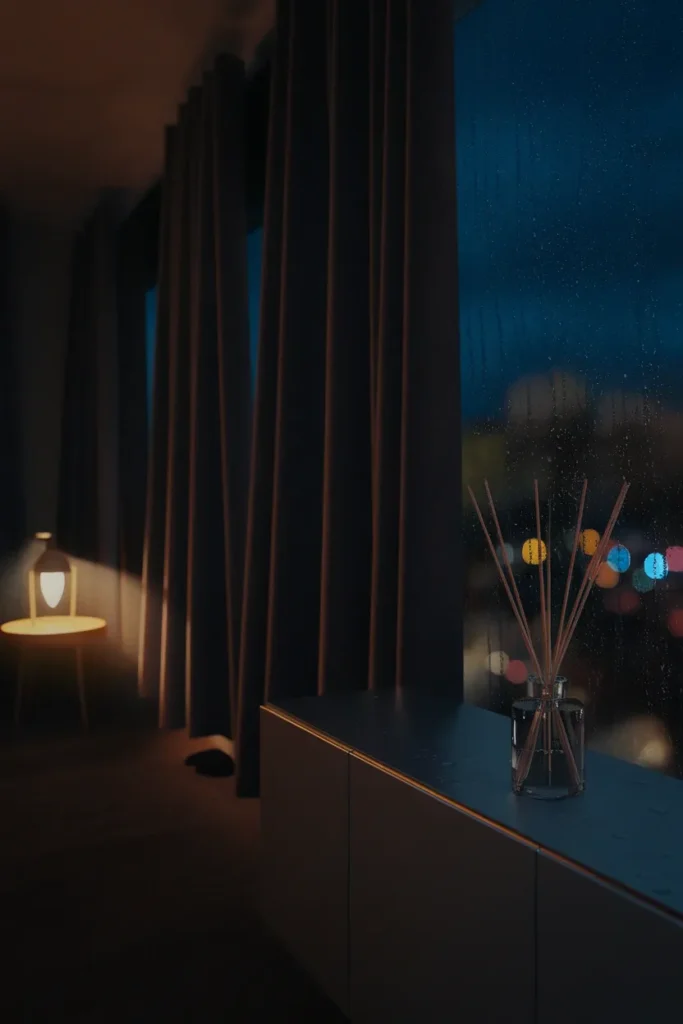
- Curtains, floor to ceiling, wider than the window. The single most effective sound absorber in a rental. Hang the rod 4 to 6 inches below the ceiling and extend it 8 to 12 inches past each side of the window frame. The room reads taller and quieter at the same time.
- A rug with a pad. The pad does more acoustic work than the rug.
- Books on open shelves. Irregular depths scatter sound instead of bouncing it.
- A fabric-front basket or two. Sounds trivial. Isn’t.
Then add one deliberate sound. A small speaker playing something at low volume, or a window cracked two inches on a rainy evening. The quiet you’re chasing isn’t silence, it’s the absence of echo.
Same logic applies to smell. One unlit reed diffuser in the entry does more for how a place feels on arrival than a $200 accent chair, and it costs about $18.
What It Actually Costs: Three Real Budget Tiers
Nobody else on page one of Google will give you a number, so here are three, built from live August 2026 US pricing and the buy order above.
| Tier | What you get | Realistic spend |
|---|---|---|
| The $80 reset | Three 2700K dimmable bulbs, one thrifted or clearance table lamp, one 2×6 runner, one throw, one lumbar pillow | $75 to $95 |
| The $250 corner | Everything above, plus a 5×7 washable rug with pad and a floor lamp in the RANARP price range ($69.99) | $230 to $280 |
| The $450 finished room | Everything above, plus a POÄNG-class armchair at $149.00, a small side table, and curtains with a tension or ceiling-mount rod | $420 to $500 |
Buy in that order. Bulbs first, seating last. The reason is that lighting changes how everything else in the room looks, so if you buy the chair first you’re choosing its color under the wrong light.
Prices reflect what these specific items list for as of August 16, 2026 and will drift. Treat the tiers as ratios, not receipts.
Keep It Warm in July, Not Just January
A scheme built entirely out of sherpa and wool dies in the first heat wave, and then the apartment feels stale for four months.
Build the permanent layer out of things that work year round: the lamp positions, the rug, the curtains, the ceramic and wood objects. Those never come off.
Then keep a seasonal swap box. Heavy knit throws and faux fur go in it around May. Out come the washed linen throw, a lighter cotton quilt folded on the chair arm, and a green plant or two where the wool used to be. Same lamps, same rug, completely different temperature.
Total cost of the swap after year one: nothing. You already own both halves.
Cozy Apartment Decor FAQs
How can I make my small apartment look cozy without it feeling cramped? Go low and warm, not full. Keep light sources under 48 inches, choose furniture with visible legs so the floor reads continuous, and limit yourself to one large object per wall. Cramped comes from too many mid-size items at eye level, not from warmth.
What are the best colors for cozy small apartment decor? Warm neutrals with one grounded deeper tone. Oatmeal, clay, mushroom, warm white, with something like olive, rust, or a deep brown as the anchor. Cool grays and stark blue-whites fight warm bulbs and make the room read colder than it is. Renters who can’t paint can carry the color entirely in textiles.
How do I make my small apartment cozy on a budget? Bulbs, then floor, then texture, then seating. That order gets the most visible change per dollar. Around $80 gets you a genuine shift if you spend it on three warm bulbs, one low light source, and one soft thing underfoot.
How can I add storage that is both functional and stylish? Lidded woven baskets under a console, a ladder shelf against a wall with no hardware, and an ottoman that opens. Storage that reads as decor is storage with texture: seagrass, canvas, or a wood crate rather than plastic bins.
Can I decorate a rental without losing my security deposit? Yes, if you stay under the adhesive weight ratings, use a rug pad on vinyl or laminate, and photograph every wall before you start. Test peel-and-stick in a closet corner before committing to a visible wall.
What color temperature bulb makes a room feel cozy? 2700K. It’s the warm white end of the residential range. Anything at 4000K or above reads as task or daylight lighting, which is useful in a kitchen and works against you in a living room.
What should I buy first when decorating a first apartment on a budget? Light bulbs. They’re the cheapest item on the list and they change how every other purchase looks, so buying them first stops you from choosing a rug or a chair under lighting you’re about to replace.
Start With the Three Bulbs
You do not need a bigger apartment, a friendlier landlord, or a bigger budget. You need the light lower, the floor softer, and three textures within arm’s reach of wherever you sit.
Do the bulbs this week. Do one corner next. Then decide what the rest of the place actually needs, because a finished corner is a much better teacher than a Pinterest board.
Keep reading
More cozy nook ideas
 Small Spaces
Read →
Small Spaces
Read →
10 Small Reading Nook Ideas for Adults
One high-back chair, one clamp-on lamp, one $19.99 tray table. At IKEA US prices this month, that’s a full reading corner for…
 Small Spaces
Read →
Small Spaces
Read →
18 Twin Bed Ideas for a Small Room
A twin bed in a small room can look like a leftover dorm setup or like the best seat in the house.…
 Small Spaces
Read →
Small Spaces
Read →
14 Modern Apartment Decor Ideas That Make a Small Room Feel Bigger
Four hundred and sixty square feet. That is the average size of a new US studio apartment, according to RentCafe’s 2025 numbers,…
2 Comments