
Reading Nook With View: Designing Around Your Best Window

You don’t need a beach house, a mountain cabin, or a landlord who lets you knock down walls. You need one decent window, a seat you actually want to sit in, and about an afternoon. That’s the whole trick behind a reading nook with view. Most of us are renting somewhere around 700 square feet with exactly one window worth parking next to, and honestly, that single window is plenty. I’ve built three of these in three different rentals.
The best one cost me under $150. Below you’ll find how to pick the right window, frame whatever view you’ve got (even a mediocre one), and solve the glare problem nobody warns you about.
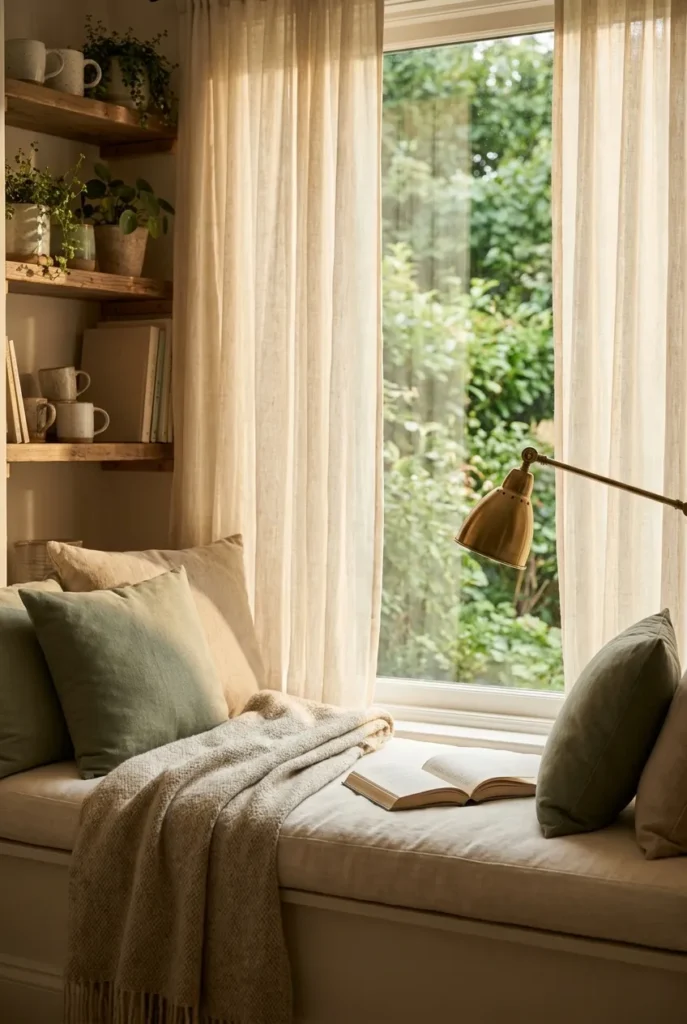
Pick Your View Before You Buy a Single Cushion
Here’s the mistake I made first: I bought the chair, then went looking for somewhere to put it. Backwards. Your view picks the spot, and the spot picks everything else.
Walk your home at 4 p.m. with a mug of tea. Sit on the floor under each window for sixty seconds. You’re auditioning sightlines, not square footage. The window that makes you exhale is the one.
Most readers land in one of these view types:
- Window view (the workhorse): any clean, low-clutter outlook. A tree, a rooftop, a quiet street.
- Ocean or sea view: the dream, and the rarest. Lean into salt-light and pale color.
- Mountain or forest view: big, moody, best framed low and wide.
- Garden or courtyard view: green, close-up, soft. The easiest to fake if you don’t have one.
- City or skyline view: sharp lines, great after dark, needs glare control.
- Borrowed view: no real view at all, so you build the focal point yourself (more on that later).
Pick one. Write it down. Everything from your cushion color to your lamp angle flows from that single choice. If your only good window happens to be a wide three-sided pocket, you’ve got more to work with than you think, and these ideas for a bay window seat reading nook show how to use the full footprint instead of just the middle.

The Best Window for Reading Light (North Usually Wins)
Not all windows read the same. The direction yours faces changes your light all day, and that changes how comfortable an hour with a book actually feels.
North-facing windows give you even, soft, glare-free light from morning to dusk. That’s the gold standard for reading. South-facing floods you with warmth and brightness, which is lovely in January and brutal in July. East gets you gentle morning light, then quits by lunch. West hands you gorgeous sunsets and a face full of glare around 5 p.m.
The Department of Energy’s guide to daylighting backs this up: north light comes in steady with almost no glare, while east and west windows throw both heat and harsh angles you’ll fight all afternoon.
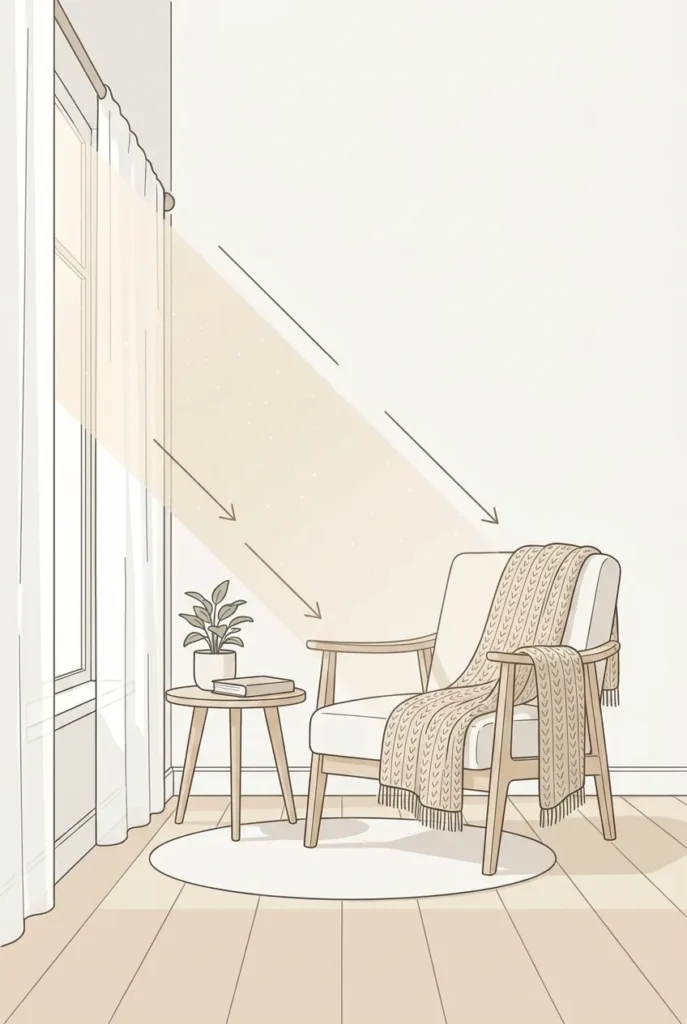
So what do you do if your only good window faces dead west? You don’t move. You adapt. A sheer curtain panel knocks the glare down to a soft wash without killing the view, and a seat angled 30 degrees off the glass keeps the sun out of your eyes while you still catch the scenery. I read in a west-facing alcove for two years. The trick was a single linen sheer and a chair I turned slightly toward the bookcase.
Truth is, the “wrong” window is rarely a dealbreaker. It just means you plan for the light instead of pretending it isn’t there.
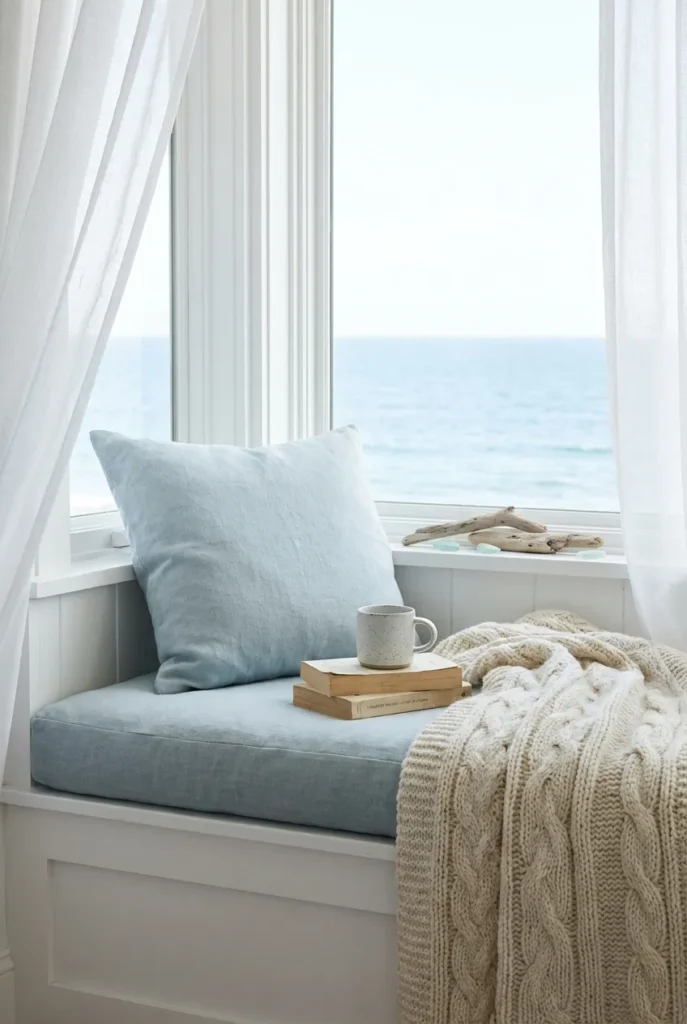
Ocean and Sea View Reading Nooks, Minus the Theme-Park Coastal
If you’re lucky enough to have water out the window, the goal is to stay out of the view’s way. The ocean is the decor. You’re just building a quiet frame around it.
Skip the rope, the anchors, and the “Gone to the Beach” sign. Real coastal reading corners lean pale and textural: a white-washed window seat, a soft blue linen cushion, a chunky cream knit throw, maybe a single piece of driftwood as a doorstop. Keep your palette to three colors. Sand, fog, and one deep navy or sea-glass green.
Texture does the heavy lifting here. A jute rug underfoot, a boucle lumbar pillow, a worn paperback gone soft from salt air. You want the corner to feel like the inside of a shell, not a gift shop.
A small confession: my first coastal nook had eleven decorative items on a four-foot sill. Eleven. It looked like clutter, not calm. I cut it to three and the whole thing finally breathed. The view needs negative space around it to actually land.
If you want the seaside feeling without an actual ocean (most of us, including me), our coastal window seat reading nook ideas walk through getting beach-house light in a city apartment, no shoreline required.
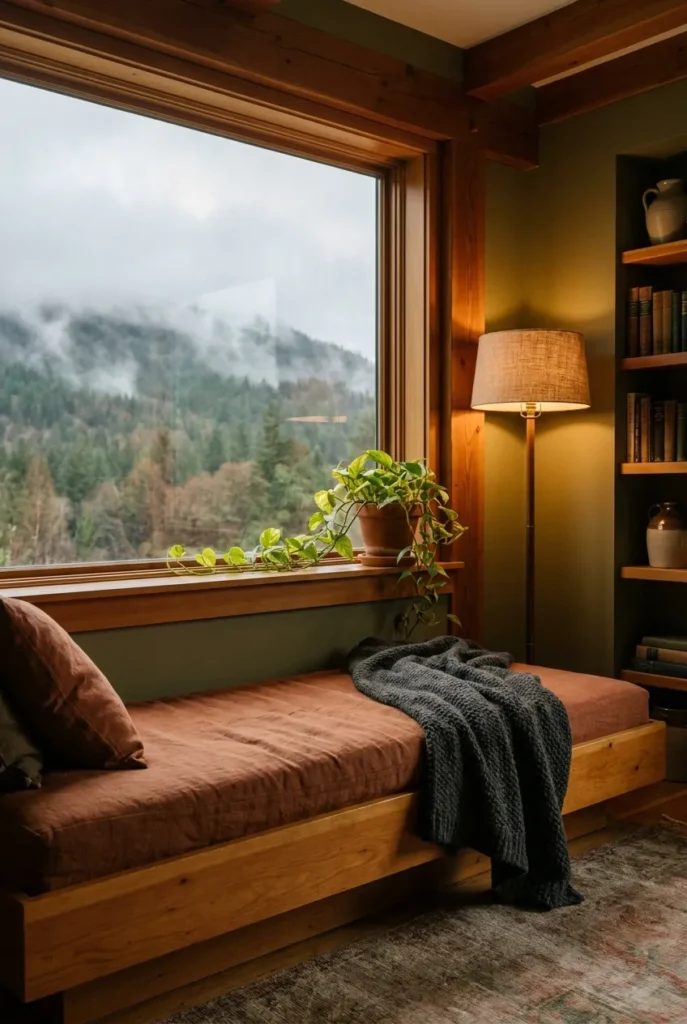
Mountain and Forest Views: Reading Nook With View
A mountain or forest view wants the opposite of coastal. Where the sea asks for pale and light, the woods ask for warm and grounded. Think honey-toned timber, a rust or olive cushion, a heavy wool throw you can pull over your knees when the glass gets cold.
Frame this view low and wide. A floor cushion setup or a low daybed keeps your sightline at tree-trunk level, which feels far more immersive than perching high above it. Set the seat back about 12 inches from the glass so the cold radiating off the window in winter doesn’t reach your shoulders.
Lighting matters more than you’d guess with a big outdoor view. A 2700K bulb in a floor lamp keeps the inside warm and golden so the evening blue outside reads dramatic instead of gloomy. Get this wrong and your gorgeous mountain dusk just looks like a power outage.
Bring one living thing inside to echo the view. A trailing pothos on the sill, a single fern, a branch in a stoneware jug. It stitches the indoor corner to the outdoor scene. The smell of a real cut cedar branch in autumn does more for the mood than any candle I’ve tried.
Garden, Courtyard, and Green Window Nooks
You don’t need acreage for a garden view. A courtyard, a fire escape with three potted herbs, a neighbor’s leafy tree, even a window box you plant yourself, all count. This is the most achievable “view” on the list, which is why it’s a Pinterest favorite (the “garden view” searches prove it).
Set your seat so the green fills the lower two-thirds of the glass. That’s the sweet spot where you glance up from your page and catch leaves, not sky and rooflines. A banquette or a built-in bench works beautifully here because it sits low and pushes you right up to the sill.
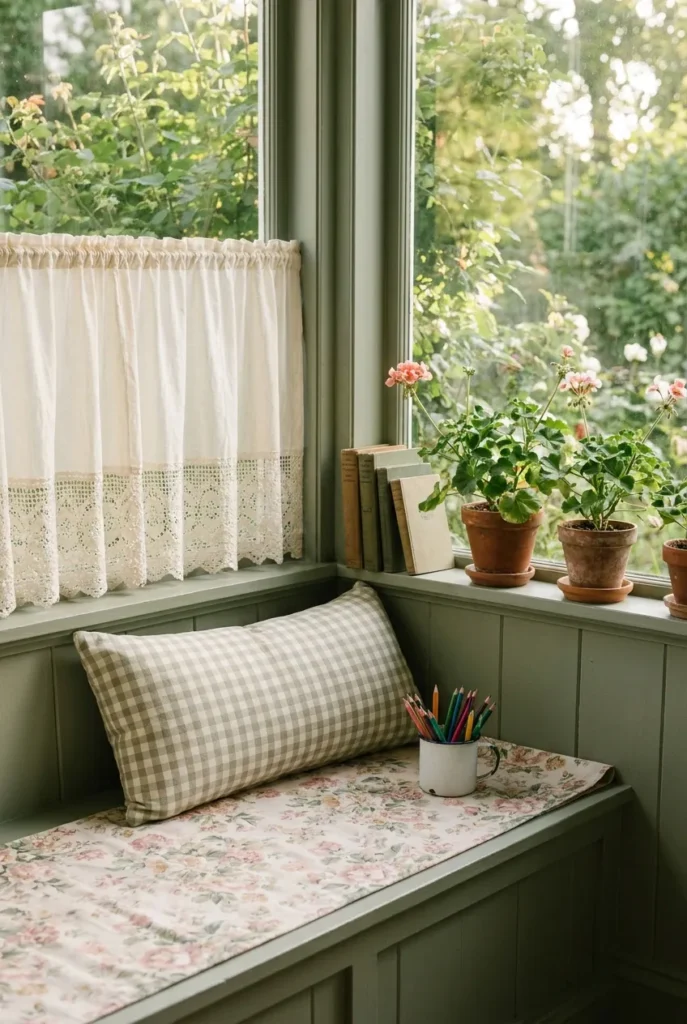
Lean cottagecore if it suits you: a gingham lumbar pillow, a washable floral runner, a chipped enamel mug holding your pencils. Keep one café curtain on the lower half of the window for privacy while the top stays open to light. And honestly, the sound of rain on the glass with a book in your lap beats almost any “real” view on a gray afternoon.
No garden yet? Three terracotta pots of trailing ivy on the sill, planted in March, will green up your whole window by June. Renter-safe, landlord-proof, and about $25 at any garden center.
No View? Here’s How to Borrow or Fake a Good One
Now the part nobody else writes about. Plenty of us have exactly zero good views. A brick wall four feet away. A parking lot. A window onto an air shaft. So we make our own focal point.
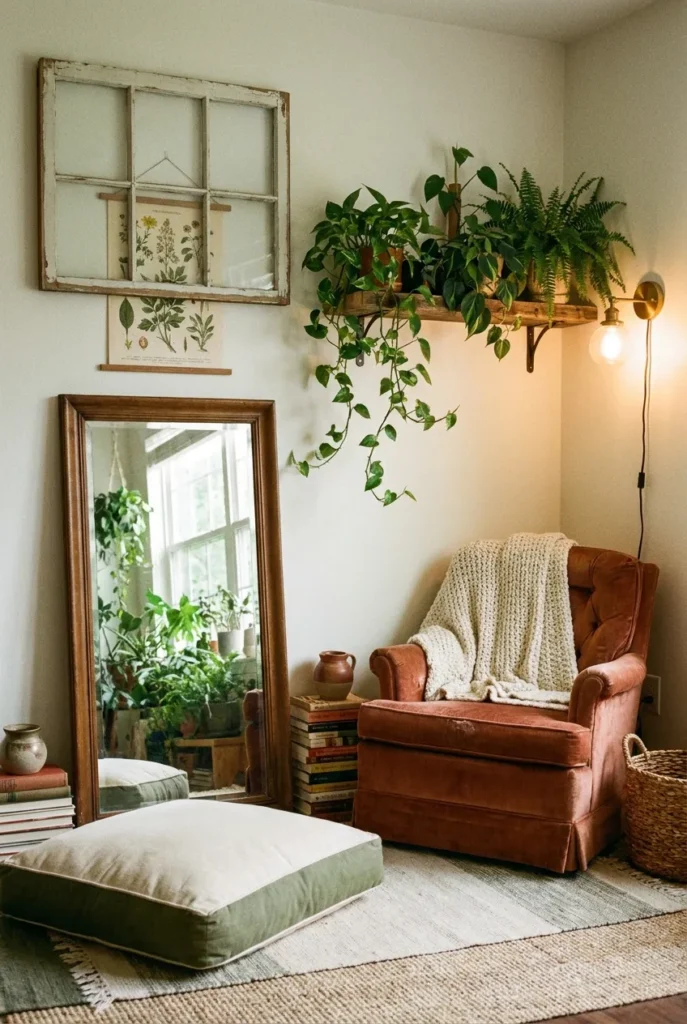
Borrow a view. Hang a large mirror (24 by 36 inches or bigger) on the wall opposite your one decent window. It bounces the light and the outdoor scene back into the corner, doubling whatever sliver of green or sky you’ve got. Renters: use a leaning floor mirror or 3M Command strips rated for the weight. Zero holes, zero deposit drama.
Build a faux window. An old multi-pane window frame (thrift stores, $10 to $30) hung over a botanical print or a soft-glow LED panel reads like a real outlook from across the room. I built one over my desk in a basement studio with no real windows at all. Guests asked what was outside it.
Frame a wall view. Three framed landscape prints in a vertical stack become the thing you look up at. Pick one horizon line and keep all three at it. The eye reads it as depth.
Let plants be the view. A shelf of trailing greenery beside the seat gives you something living to rest your eyes on between chapters. A swing-arm wall sconce above it, mounted with adhesive (no drilling), makes it glow at night.
The point of a reading nook with a view was never the view itself. It was having somewhere to rest your eyes when you look up. You can build that anywhere.
Glare, Curtains, and Reading by a Bright Window
A bright window is gorgeous in photos and miserable to read in at the wrong hour. Glare washes out your page, bounces off glossy book covers, and has you tilting the book at weird angles within minutes. Here’s how to keep the view and lose the squint.
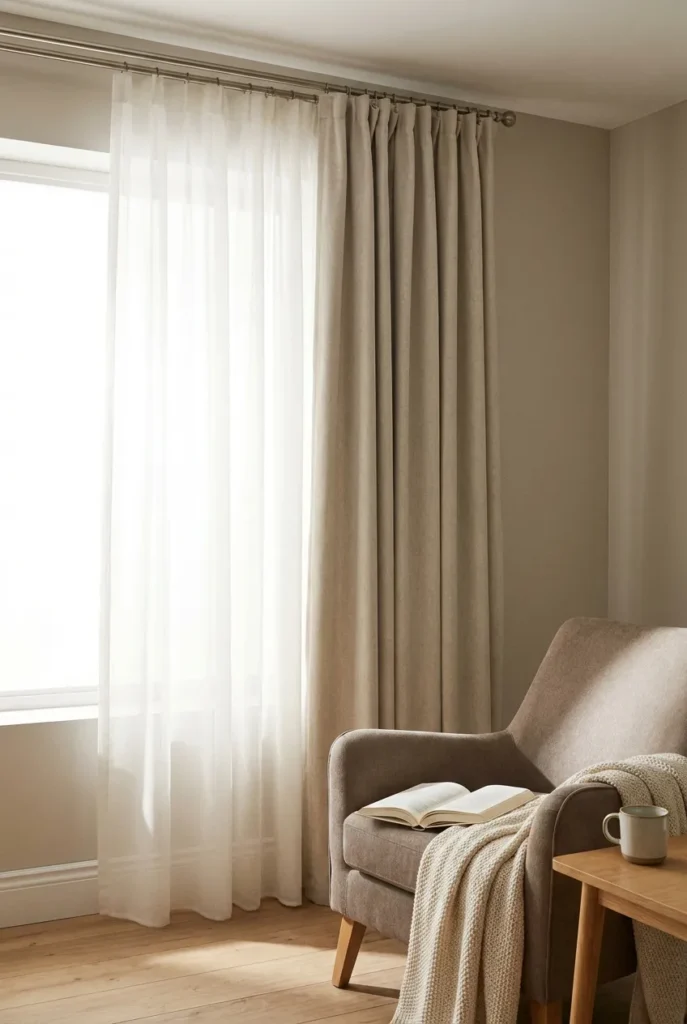
Layer two curtain weights on one rod. A sheer panel filters harsh midday sun into a soft glow you can still read by. A heavier blackout or room-darkening panel slides over for low-angle evening glare or screen reading. You pull whichever you need for the hour. This single move fixes 90 percent of glare complaints.
Position matters as much as fabric. Sit so the window light comes from the side, over your shoulder, rather than straight into your face or directly behind your page. Side light lands on the page without bouncing back into your eyes.
For the right weight, opacity, and rod height (curtains hung too low are the most common reading-nook miss I see), here’s how to choose reading nook curtains that block harsh light without making the corner feel dark.
One honest trade-off: blackout panels kill glare beautifully, but they also kill the daytime view when drawn. That’s why you layer. Sheer for view-plus-comfort, blackout for naps and bright-screen evenings. You rarely want only one.
After Dark: Lighting So Your Window Isn’t a Black Mirror
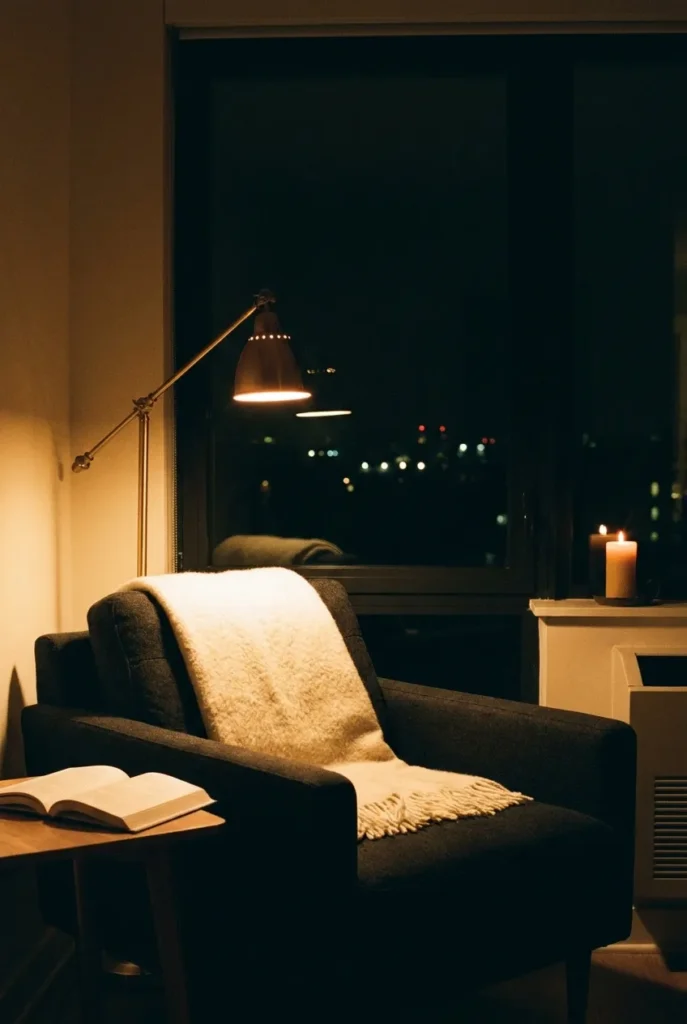
Daytime, the window is the star. After sunset, that same glass turns into a black mirror that reflects your lamp and your own face back at you. The view vanishes and the corner can feel cold. A little planning fixes it.
Use warm light, low and close. A 2700K bulb in a swing-arm lamp or a plug-in sconce, set beside or just behind your shoulder, lights the page without bouncing a hard reflection across the glass. Skip the bright overhead. Add a dimmer (plug-in versions cost about $15 and need no wiring) so you can drop the room low enough that any remaining streetlights or city lights outside still register.
Good light isn’t only about mood. The American Academy of Ophthalmology’s lighting advice notes that reading in dim light won’t damage your eyes, but proper light keeps them from tiring out, and they recommend resting your eyes every 20 minutes by looking up and across the room. A window view gives your eyes the perfect far-focus break, which is a quiet bonus of building near the glass in the first place.
Failure mode worth flagging: pair a cool 4000K “daylight” bulb with a dark window and your warm little corner suddenly reads like a dentist’s office at 9 p.m. Warm bulb, low dimmer, lamp close. That’s the whole formula.
The Frame, Filter, Finish Cheat Sheet (Screenshot This)
Everything above boils down to three moves I call the Frame, Filter, Finish method. Frame the view, filter the light, finish with the seat and lamp. Get those three right and the corner works, whatever your window faces.
Here’s the quick-spec version. Save it to your phone before you shop.
| Element | The number to hit | Why it matters |
|---|---|---|
| Seat distance from glass | 12 in (cold-climate windows) | Keeps winter chill off your shoulders |
| Side-table reach | 18 in (the 18-inch reach rule) | Mug and book land without leaning |
| Bulb color temperature | 2700K | Warm glow, no dentist-office cast |
| Sightline through window | Lower 2/3 of the glass | You catch the view, not the rooftops |
| Curtain rod height | 4 to 6 in above the frame | Makes the window (and view) look taller |
| Lamp position | Beside or behind shoulder | Lights the page, kills glass reflection |
Front-load the highest-value move: get your light direction and your 2700K bulb right first. A great view with bad light still reads badly. Mediocre view with great light reads wonderfully. I’d take the second corner every time.
Frequently Asked Questions
What exactly is a reading nook with a view?
It’s a dedicated reading spot built next to your best window or outlook, designed so the view is part of the comfort. Usually a window seat, banquette, or armchair angled toward the glass, with light and seating planned around what’s outside.
How do I make a reading nook with a view if I don’t have a good view?
Borrow or build one. A large mirror opposite your best window doubles the light and scenery. A thrifted multi-pane frame over a botanical print or LED panel reads as a faux window. A shelf of trailing plants beside the seat gives your eyes something living to rest on.
What’s the best window direction for a reading nook?
North-facing windows give the most even, glare-free light all day, which is ideal for long reading sessions. West and east windows are still workable; you just plan for low-angle glare with a sheer curtain and a seat angled slightly off the glass.
What are good reading nook with a view ideas for adults?
Keep the palette to three grown-up colors, choose one real seat (an armchair or daybed, not a floor pillow you’ll abandon in 40 minutes), add a swing-arm lamp at 2700K, and let the view stay the focal point. Less theme, more texture.
How do I stop glare when reading by a window?
Layer a sheer panel and a blackout panel on one rod so you can dial the light to the hour. Sit so light comes over your shoulder from the side rather than straight at your face or directly behind the page.
What furniture works best for a window reading nook in a small space?
A built-in bench or banquette gives you seating plus hidden storage without eating floor space, and it sits low enough to push you right up to the sill. In a rental, a slim armchair or a daybed pulled to the window works with zero construction.
A Last Word Before You Start
Go sit under your windows tonight, mug in hand, and pick the one that makes you exhale. That’s your spot. Everything else (the cushion, the curtain, the warm little lamp) is just dressing the frame around a view you already own. Which window did you land on, and what’s waiting outside it?
Keep reading
More cozy nook ideas
 Small Spaces
Read →
Small Spaces
Read →
10 Small Reading Nook Ideas for Adults
One high-back chair, one clamp-on lamp, one $19.99 tray table. At IKEA US prices this month, that’s a full reading corner for…
 Home Library & Bookshelves
Read →
Home Library & Bookshelves
Read →
14 Ideas for a Fireplace with Bookshelves on Each Side on a Budget
Two bookcases, two plug-in lamps, two wall straps. At IKEA US list prices this month, that adds up to $237.98 before tax,…
 Study & Craft Nooks
Read →
Study & Craft Nooks
Read →
16 Kids Homework Station Ideas Little Ones Will Love
Two IKEA pieces, one empty corner, $109.98 before tax. That’s the first kids homework station on this list, and it fits in…