
Reading Nook Ideas for Small Spaces — 15 Clever Setups That Actually Work
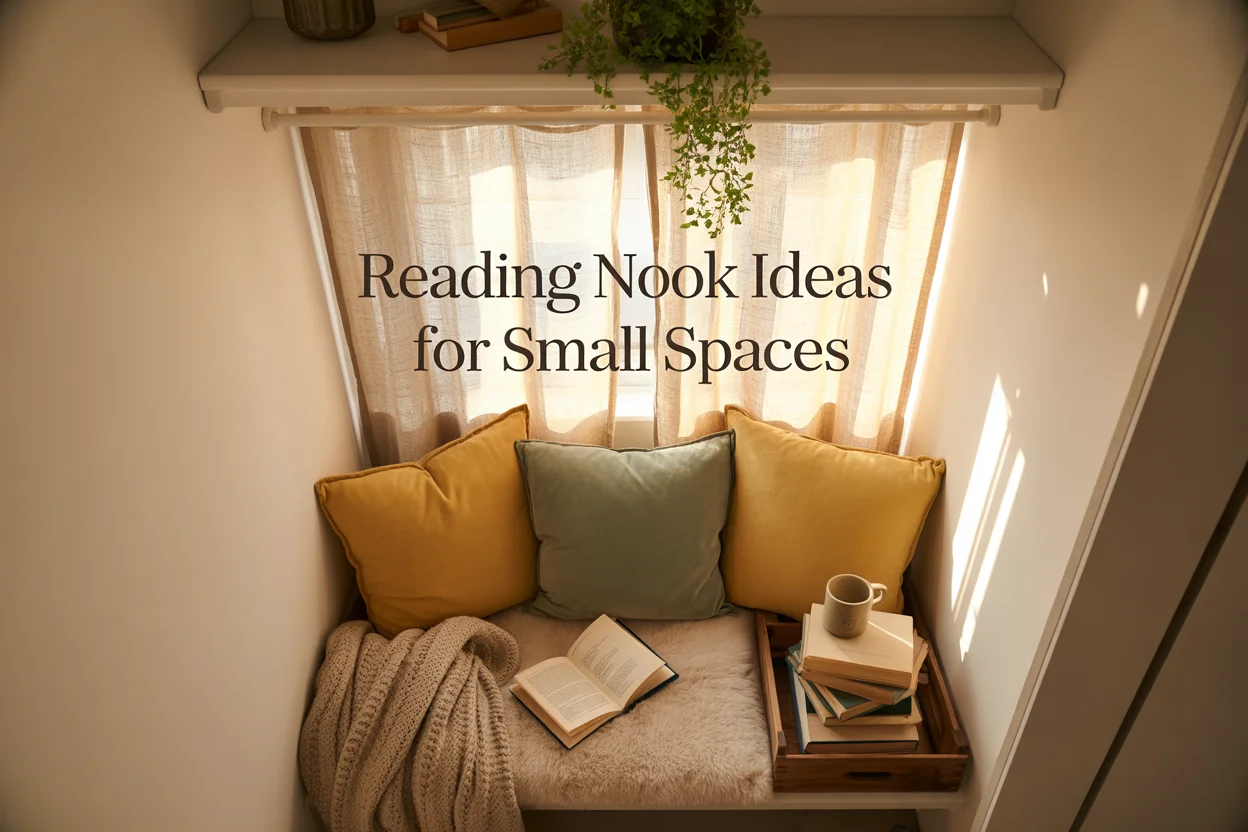
You know that fantasy where you have a quiet little corner for books, tea, and zero notifications? Yeah. Most of us are trying to pull that off in a bedroom that barely fits a bed frame and one decent lamp.
That’s why most Reading Nook Ideas for Small Spaces online annoy me a little. They look pretty, sure, but half of them assume you’ve got a spare room, custom built-ins, or the kind of budget that casually includes upholstered millwork. This list is different. These reading nook ideas for small spaces are for real apartments, shared bedrooms, awkward corners, and those weird little dead zones you walk past every day without using. Some cost basically nothing. Some are easy weekend projects. All of them are practical enough that you could actually set one up this week and start reading there by Sunday.
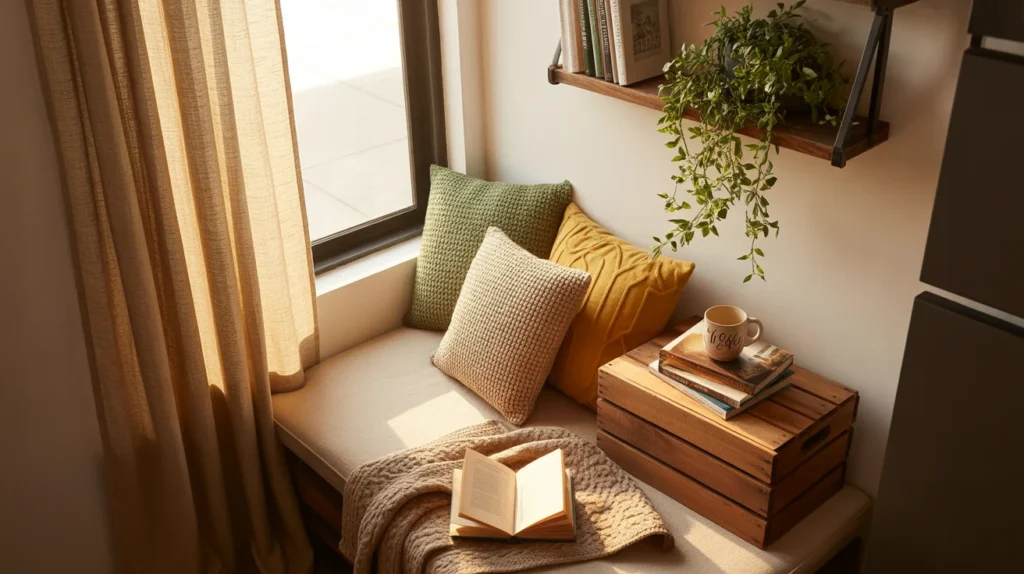
Window Seat Reading Nook: Fake the Built-In Look
You do not need a custom carpenter to get the window seat reading nook look. A simple storage bench or even a narrow ottoman under a window gets you surprisingly close, especially once you add a thick seat cushion and two pillows that don’t feel like afterthoughts.
And please don’t cheap out on cushion thickness here. Go for at least 3 inches, because a thin pad looks fine for photos and feels terrible after twenty minutes. I’ve sat on the sad version of this setup before — your tailbone absolutely keeps score. If you can, use a bench with hidden storage for blankets, current reads, and all the little stuff that usually ends up cluttering the floor. Sheer curtains help too. They soften harsh daylight without turning the whole corner gloomy. IKEA hacks work well here, and a KALLAX bench-style setup or insert pieces usually land in the roughly $20 to $40 range before you add the cushion.
Small Apartment Reading Corner: Claim One End of the Sofa
This one is so simple it almost feels silly, but it works. Pick one end of your couch and make that your small apartment reading corner. Not the whole sofa. One end.
Put a small side table there. Drape one throw blanket over that arm and leave your current book on the table instead of shelving it every night. That visual cue matters more than people think. When a spot looks ready, you use it. Add a slim floor lamp behind that side or a compact table lamp if the layout is tight. Suddenly the couch isn’t just “the place where the TV happens.” It becomes a reading spot too — and you didn’t buy a single new chair or rearrange the room into chaos.
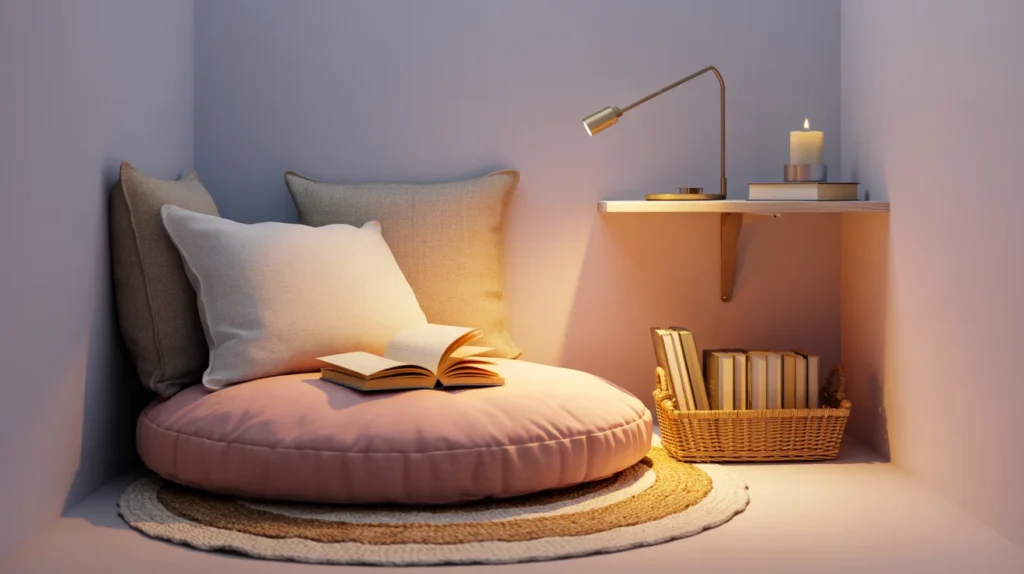
Floor Cushion Reading Nook: Cheap, Easy, and Kind of Great
If you’re working with a studio, a tiny bedroom, or a corner that can’t handle another piece of furniture, a floor cushion reading nook is one of the easiest wins. Lay down a thick rug first, then add a large cushion and a couple of firm back-support pillows against the wall. It feels warmer, softer, and more intentional than just plopping a pillow on bare floorboards.
A low basket or wooden crate next to you works as a side table for your mug, glasses, and book stack. You can do the whole thing for under $50 if you shop Target, Amazon basics, IKEA, or thrift stores. I’ll be honest, though: this setup is great when your body is in the mood for it. I used a floor cushion reading corner in a small apartment for a while, and it looked fantastic, but after a long workday my back had opinions. If that sounds familiar, skip ahead to the chair setups.
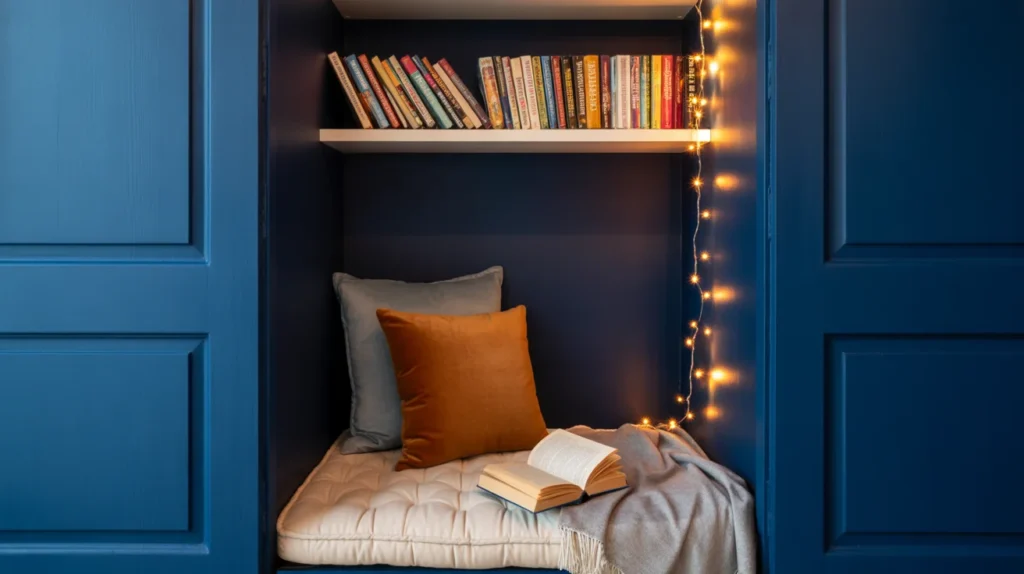
Closet Reading Nook Conversion: The Alcove Trick
A closet reading nook conversion sounds more dramatic than it really is. If you’ve got an underused closet, especially one full of random stuff you forgot you owned, taking the doors off can turn it into an instant alcove.
Most standard closets are around 24 to 28 inches deep and 36 to 48 inches wide, which is enough for a thick cushion, a couple of pillows, and a clip-on reading light. Paint the inside a darker or warmer shade than the room around it — deep blue, olive, terracotta, even a muddy taupe — and it instantly feels like a tucked-away little world instead of “former storage space.” Add one or two floating shelves for books, then finish it with fairy lights or a battery-powered wall sconce. This setup gets mentioned a lot for kids, but honestly, adults may love it even more. It feels private in the best way.
Reading Nook Under the Stairs: Stop Wasting That Space
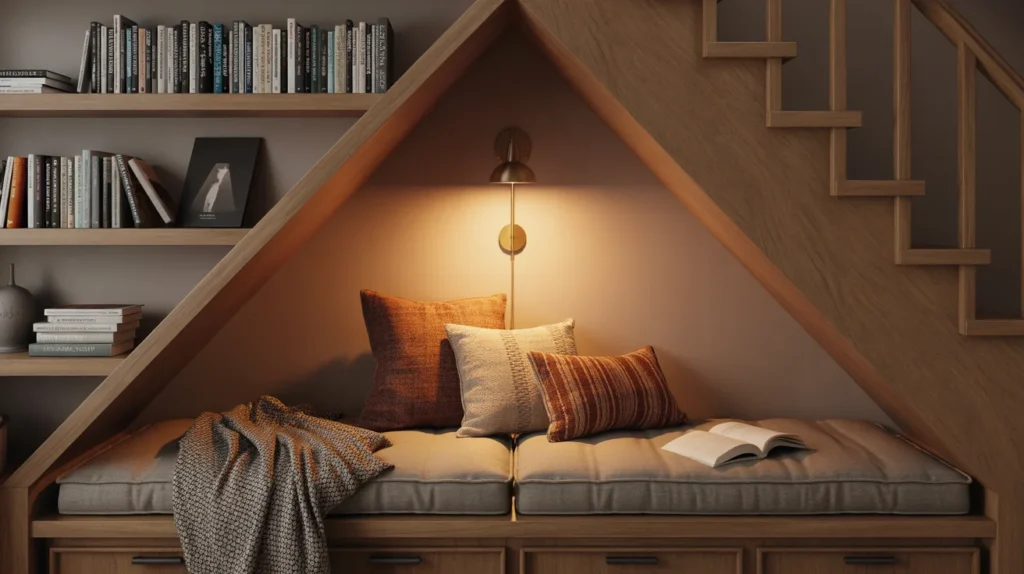
If you’ve got stairs, you’ve probably got awkward dead space underneath them. That’s prime real estate for a reading nook under the stairs.
The polished version is a built-in bench with storage drawers and a cushioned top. The normal-person version is much easier: put a large floor cushion, bean bag chair, or slim upholstered bench in there and mount a couple of picture ledges on the wall for books. Done. Lighting matters a lot here because under-stair spaces are usually darker than you think. A warm plug-in sconce or a clip-on reading light works better than relying on spill light from another room. And yes, warm bulbs around 2700K make a big difference. Cold white light kills the whole mood fast.
Bedroom Reading Corner Ideas: A Chair That’s Actually Worth Sitting In
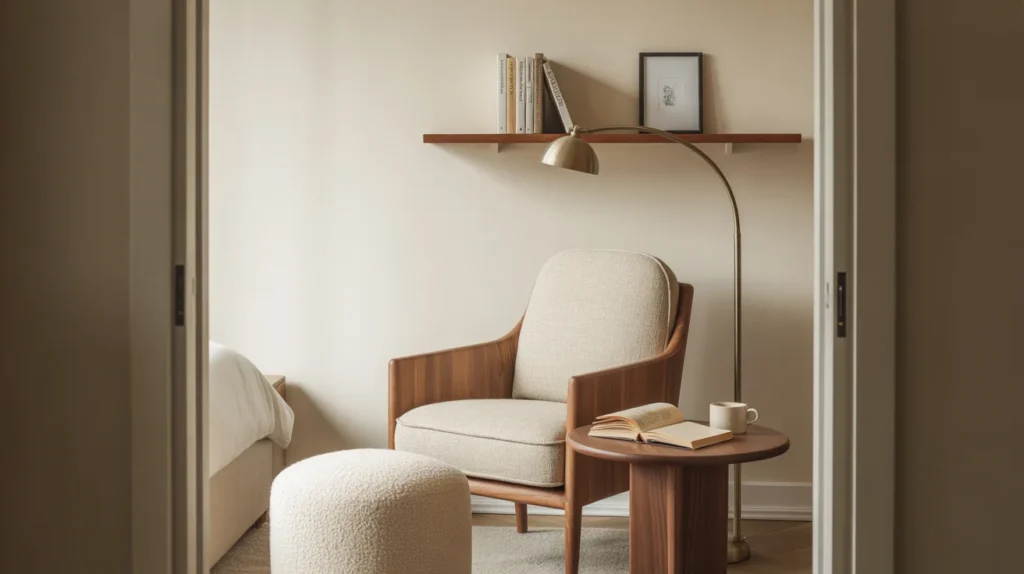
A proper chair setup still wins for a lot of people. The best bedroom reading corner ideas usually come down to three things: a comfortable chair, a place to set your drink, and light that doesn’t make you squint.
The important word there is comfortable. Not “cute.” Not “sculptural.” Not “looks expensive in a catalog.” Get something you’d genuinely sit in for an hour. A compact IKEA STRANDMON, a slipper chair, or a small upholstered swivel chair all work well in tight bedrooms. Add a small ottoman or pouf if you can swing it, because that’s the part that makes it feel like a reading zone instead of a lonely accent chair shoved into a corner. One floating shelf above the chair is enough for a few books and keeps the whole thing clean.
Reading Nook with Book Storage: Use a Bookshelf as a Divider
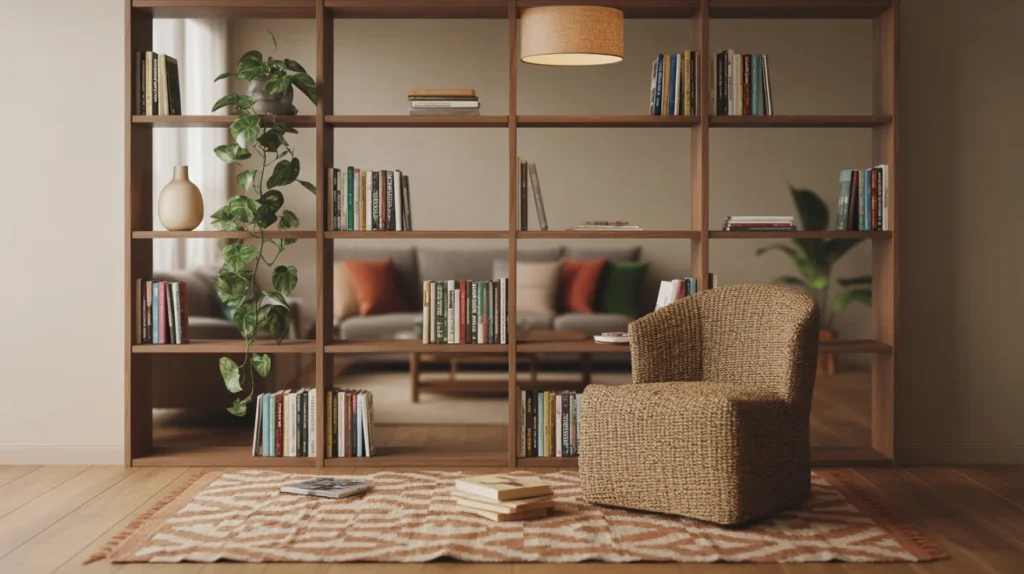
If you live in a studio or open-plan room, a reading nook with book storage can double as a way to carve out the space visually. Turn a bookshelf sideways and use it as a divider. That one move creates separation without building a wall or making the room feel boxed in.
An open-back shelf works best because it still lets light move through the space. On one side, you’ve got your chair, lamp, and little rug. On the other side, the rest of the room stays out of your line of sight just enough to make the nook feel distinct. I really like this trick for apartment reading corner ideas because it solves two problems at once: you get book storage and a sense of privacy. And in a small home, any furniture that does double duty deserves respect.
Bay Window Reading Nook: The Fancy One That’s Still Realistic
If you have a bay window, I’m a little jealous. That said, you don’t need to overcomplicate it. A narrow daybed, a bench seat, or even a twin mattress cut to fit can turn that spot into a bay window reading nook that feels pulled from a magazine without becoming a major renovation.
Pile on pillows so it works as daytime seating too. If you rent, use freestanding cube shelves on either side instead of built-ins. If you own the place, this is one of the few areas where custom shelving actually makes sense because the nook already earns its footprint. The key is restraint. You don’t need twelve pillows and a dramatic canopy. One comfortable surface, good light, and a place for books will do most of the work.
Small Space Reading Nook Ideas for Weird Hallways
You know that awkward stretch at the end of a hallway where nothing useful ever happens? That can work beautifully as a small space reading nook. Not a lounge. More like a pause point.
A narrow bench or stool, one wall-mounted shelf, and a plug-in sconce are usually enough. This works best for short reading sessions — morning coffee, ten pages before bed, a Sunday lull. I like this option because it uses space that’s usually ignored, and in a tiny apartment that matters more than people admit. Not every nook needs to be nap-worthy. Some just need to make you sit down and open the book.
Reading Nook for Renters: Let Your Desk Pull Double Duty
A good reading nook for renters sometimes means not adding anything new at all. If your home office setup already eats up your extra square footage, let the desk area shift roles after work.
Close the laptop. Turn the task light so it lands over your shoulder instead of directly in your face. Throw a blanket over the chair, put a paperback where the keyboard was, and swap your water bottle for tea or coffee. Same furniture, different signal. I’ve done this before during a stretch when I really did not have another square foot to spare, and it worked better than I expected. The trick is making the transition obvious enough that your brain stops reading the desk as “work mode.”
Cozy Reading Nook in Bedroom: Use the Bed Better
A lot of people already have the most comfortable seat in the room — they just haven’t made it function like a nook. If you want a cozy reading nook in bedroom spaces, start by separating reading from scrolling.
A wedge pillow or a firm backrest pillow against the headboard changes everything. Add a swing-arm wall lamp or a clip-on reading light on one side so you’re not relying on the overhead light that makes every room feel like a dentist’s office. Then give yourself a tiny tray, shelf, or bedside ledge for your book and tea. The dedicated pillow and dedicated light matter. That small distinction keeps the space from feeling like “I’m lying in bed with my phone again,” which — let’s be honest — is a totally different activity.
Outdoor Reading Nook Small Apartment Edition
If you have a balcony, use it. Seriously. Even a tiny one. A folding chair, a small side table, and one weather-friendly cushion are enough to create an outdoor reading nook small apartment dwellers will actually enjoy in spring and fall.
This setup wins because the atmosphere is built in. Natural light. Fresh air. Fewer distractions. If evenings get cool, keep a lightweight throw in a basket by the door so the whole thing takes about thirty seconds to set up. And if you don’t have a balcony, a wide window area with a cushion nearby can scratch the same itch. Not identical, but close enough to count.
Minimalist Reading Nook: Less Stuff, Better Mood
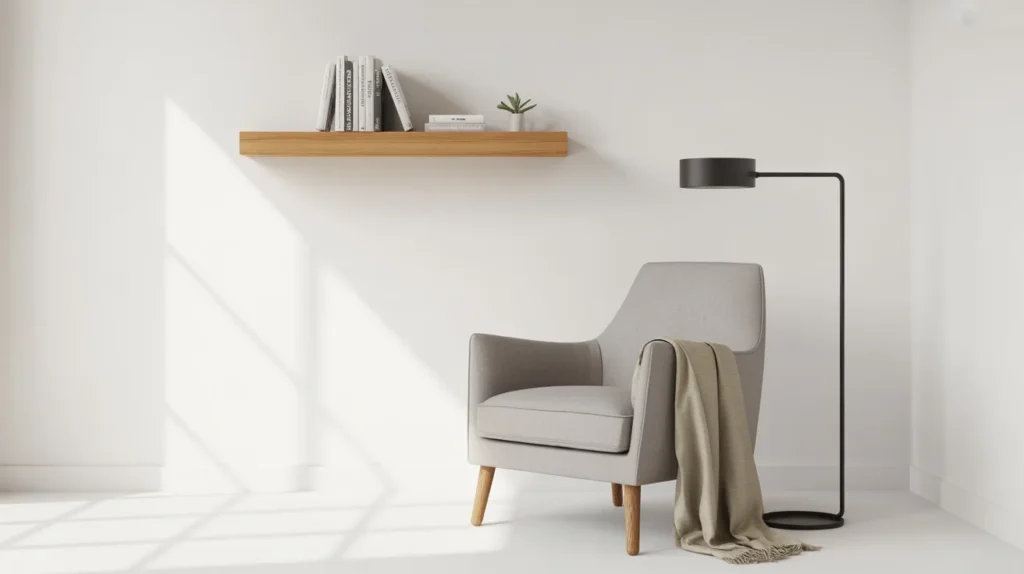
A minimalist reading nook setup is perfect if clutter makes you twitch. The formula is almost boringly simple: one chair, one lamp, one shelf. That’s it.
The reason it works is that every item earns its place. A wood shelf, a linen or boucle chair, and a wool throw keep the corner from feeling cold or sterile. And because there isn’t much there, the nook stays easy to maintain. I think people often overdecorate these spots and accidentally make them less inviting. Sometimes the cleanest corner is the one you sit in most.
Reading Nook Ideas for Kids Small Room Problems
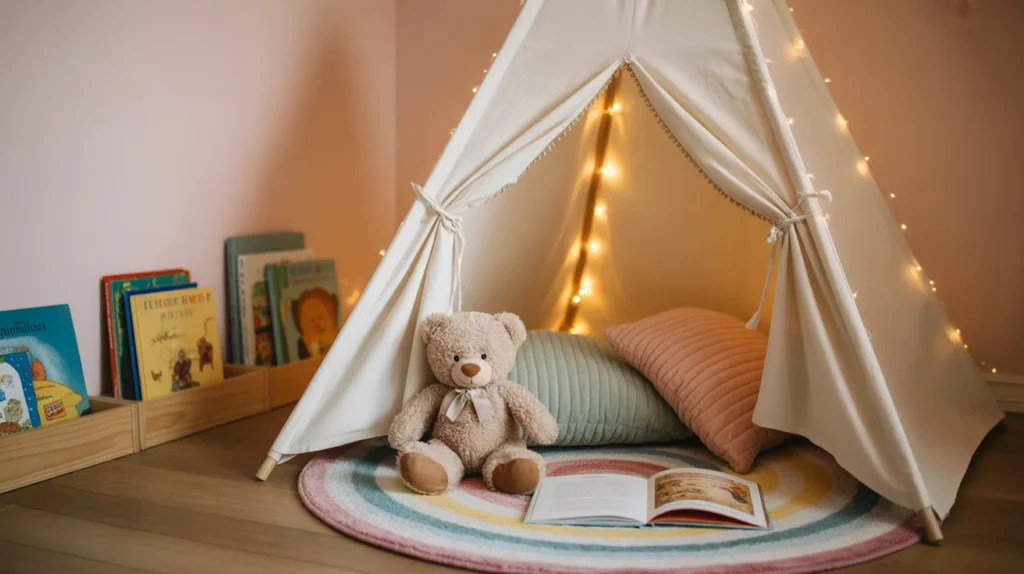
A teepee or pop-up tent is still one of the best reading nook ideas for kids small room layouts can handle. It takes up less space than a full play setup, and it gives kids that little sense of enclosure they love.
Put floor cushions inside, add a low shelf or forward-facing book ledges at kid height, and use fairy lights or a battery lantern for that secret-fort feeling. It’s easy to move and easy to clean, which matters more than the cute photos ever mention. And honestly? This also works weirdly well for adults who want a cocooned little spot. I’m not saying every grown-up needs a tent nook — but I am saying I get the appeal.
Small Room Reading Nook Creative Ideas: Hanging Chair or Hammock
If floor space is the problem, go vertical. A hanging chair or indoor hammock gives you one of the more creative small room reading nook ideas because the seat doesn’t permanently occupy the floor in the same way a standard chair does.
A rattan hanging chair looks great, but a hammock chair with a stand is often the smarter renter-friendly option because it skips the ceiling hardware issue. Expect around $50 to $80 on Amazon for budget versions. Keep a small side table or wall shelf nearby so your book and drink aren’t stranded across the room. One note, though: if you rent, check your lease before installing anything overhead. Landlords can be weirdly passionate about ceilings.
How to Create a Reading Nook in a Small Room That You’ll Actually Use
Lighting matters more than almost anything else. You can get away with a basic chair or a cheap cushion, but bad lighting ruins the whole setup. Go for warm bulbs around 2700K and angle the light over your shoulder, not straight into your eyes. A $15 clip-on reading light often beats a fancy floor lamp placed in the wrong spot.
Keep your current book visible. Not stacked away. Not shelved across the room. Visible. If you have to hunt for it, the friction goes up and the reading habit gets weaker. Leave it face-down on the bench, chair, or side table like it belongs there.
Texture is what makes a nook feel intentional instead of accidental. A soft rug, a throw pillow with some weight to it, layered textiles, even a small knit blanket — those details tell your brain this is a place to settle in. Without them, it just feels like leftover furniture in a corner.
You also need storage within arm’s reach, but not too much. This is where people overdo it. You do not need your entire personal library in the nook. A basket, crate, floating shelf, or small side table with room for three to five books, glasses, and a bookmark is plenty. Think “currently reading,” not “public library branch.”
And try to separate the nook from screens if you can. No TV in direct view is ideal. Phone in another room is even better. The whole point is that this corner should feel different from the rest of the house — quieter, slower, less buzzy. That’s what makes you come back to it.
The Best Nook Is the One You’ll Use
You really don’t need a big house, custom carpentry, or a huge budget to pull this off. Some of the best reading spots are the simplest ones — a pillow by a lamp, one end of the couch, a chair in the corner that finally has a purpose.
Pick the setup that fits your actual home, not your fantasy future home. Start this weekend. Rearrange one corner, steal one lamp, add one cushion, and see what happens. That’s usually enough to get the habit going.
And now I’m curious — what does your reading spot look like right now? Even if it’s kind of improvised, those are usually the ones that end up being the best.
Keep reading
More cozy nook ideas
 Nook Ideas
Read →
Nook Ideas
Read →
21 Window Sill Reading Nook Ideas for Adults
Most apartment window sills are deep enough for a candle and not much else. By October the glass breathes cold on your…
 Home Library & Bookshelves
Read →
Home Library & Bookshelves
Read →
12 Ideas for Built-In Bookshelves Around the Fireplace for Book Lovers
Thirty-two inches between uprights. Six inches of bare masonry around the firebox. Twelve inches of shelf depth. Get those three numbers right…
 Study & Craft Nooks
Read →
Study & Craft Nooks
Read →
How to Set Up a Study Room Without Drilling a Single Hole
Your lease says no holes. Your laptop lives on the couch. And the only free space is a 4-foot stretch of wall…