
Reading Nook Bench Cushion: Sizing, Foam, and 8 Ready-Made Picks

If your reading bench is a flat plank with a folded blanket pretending to be a cushion, this fixes it. A reading nook bench cushion is the single piece that decides whether you sit there for 8 minutes or 80. Sizing, foam height, and cover fabric are the three things that matter, and most blog posts skip two of them. Below: the exact math, the foam rules, and 8 ready-made cushions you can shop this weekend (no sewing machine, no drill, no DIY guilt).

The Pin Promise at a Glance: Sizing, Foam, and the 8 Picks
Quick recap so your first scroll pays off on mobile:
- Sizing: Your cushion should be 1 inch shorter and 1 inch shallower than your bench top. A 43-inch bench takes a 42-inch cushion.
- Foam: 3 inches minimum, 4 inches if you read longer than 40 minutes at a stretch.
- Picks: 8 ready-made bench cushions ranked by price, fabric, and reading-bench fit, listed further down with real price bands.
That’s the whole article in 60 words. Everything below is the why and the how.

How to Size a Reading Nook Bench Cushion (Inches Actually Matter)
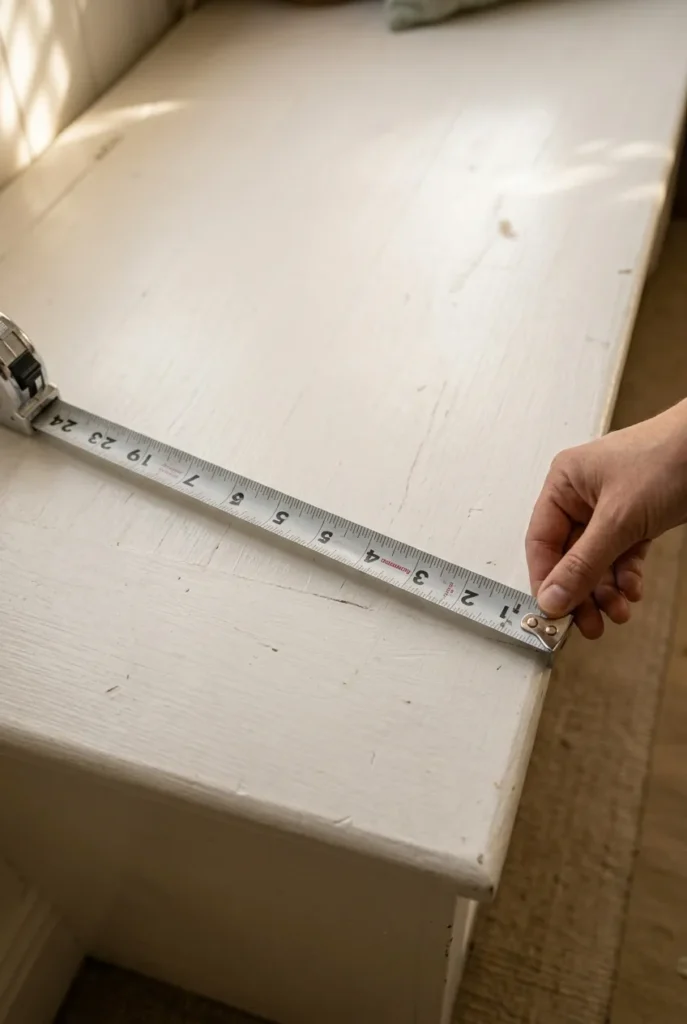
The rule most people miss is what I call the 1-Inch Shy Rule. Your cushion is 1 inch shorter and 1 inch shallower than the bench top. Not “about the same.” Not “a little smaller.” Exactly 1 inch on each axis.
Why 1 inch? A new cover stretches roughly half an inch over the first month of sitting. Foam compresses about another quarter inch at the edges. Add those up and a same-size cushion ends up sliding off the back lip every time you stand up. (I tested this on a 36-inch banquette in my own studio. The cushion ate the front lip within two weeks.)
Measure the bench top, not the bench frame. Tape goes flat across the sitting surface, corner to corner, then front edge to back wall (if the bench sits against a wall) or front to back lip (if it’s freestanding). Write both numbers down. Subtract 1 inch from each.
For a built-in reading bench with hidden storage, measure with the lid closed. Hinges and gaps eat a fraction of an inch that should not count against your cushion size.
A few real-world cases:
- 43-inch wide bench, 18-inch deep: order 42 by 17.
- 60-inch window seat, 22-inch deep: order 59 by 21.
- 30-inch tween nook bench, 16-inch deep: order 29 by 15.
Yes, that’s exactly why most stock sizes (24, 30, 36, 42, 48) work without custom orders. Builders aim for those bench dimensions on purpose, so the math meets you halfway.
Foam Thickness: The Reading Bench Sweet Spot
Breakfast nook cushions ride at 2 inches because you sit there 15 minutes with toast. A reading bench is a different sport. Here’s the math.
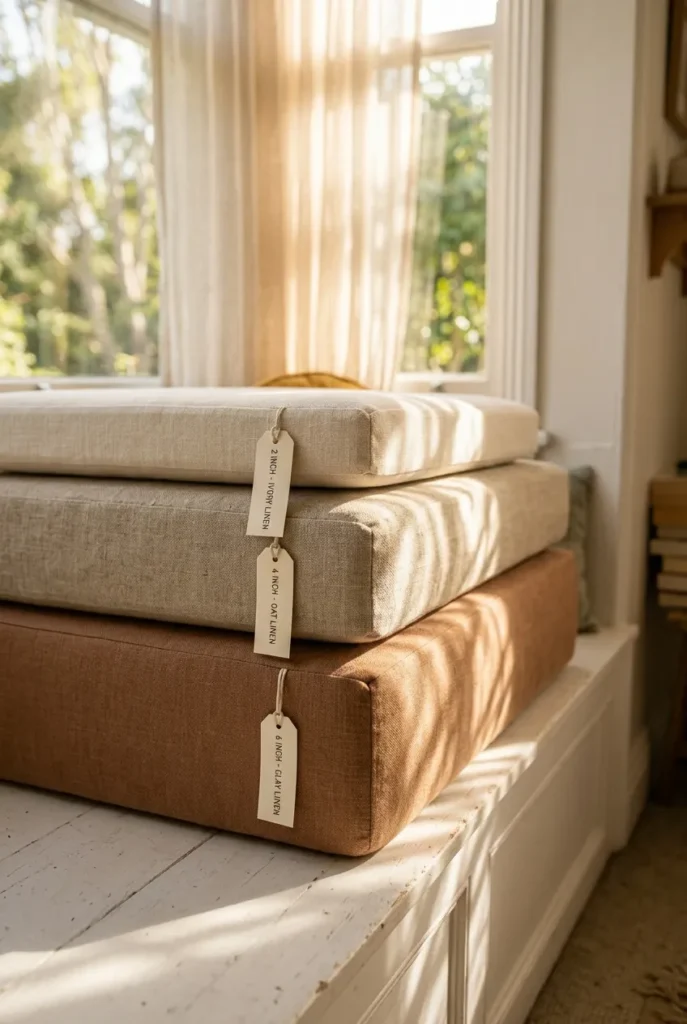
3 inches is the floor. Below 3, you feel the bench through the foam after about 20 minutes. Your tailbone votes against you, loudly.
4 inches is the sweet spot for most adult readers. It cushions the sit bones without lifting you so high that your knees outrank your hips. According to the Polyurethane Foam Association, foam density (pounds per cubic foot) matters as much as thickness, and 1.8 lb HD36 at 4 inches handles daily reading for years before it sags.
5 to 6 inches is daybed territory. Save it for a banquette you also nap on. Budget extra for cover yardage when you go this thick.
Here’s a quick spec table you can screenshot:
| Reading session length | Foam height | Foam type |
|---|---|---|
| Under 20 minutes (kids’ nook) | 3 inches | HD36 standard |
| 20 to 40 minutes (most adults) | 3 to 4 inches | HD36 or HR |
| 40+ minutes (marathon reader) | 4 inches plus 1-inch batting wrap | HR foam, 2.0 lb density |
| Nap-capable banquette | 5 to 6 inches | HR or latex hybrid |
Failure mode worth flagging: order 2-inch foam to save money and within six weeks the foam packs down to roughly 1.5 inches of crush. You’ll feel the plywood under your right thigh first, then the left, then the back of your knees. Not worth the $30 you saved at checkout.
Foam Type Cheat Sheet (HD36, HR, Memory, Latex)
Cushion product pages list foam by acronym and quietly assume you know what each one means. Most of us don’t. Quick translation.
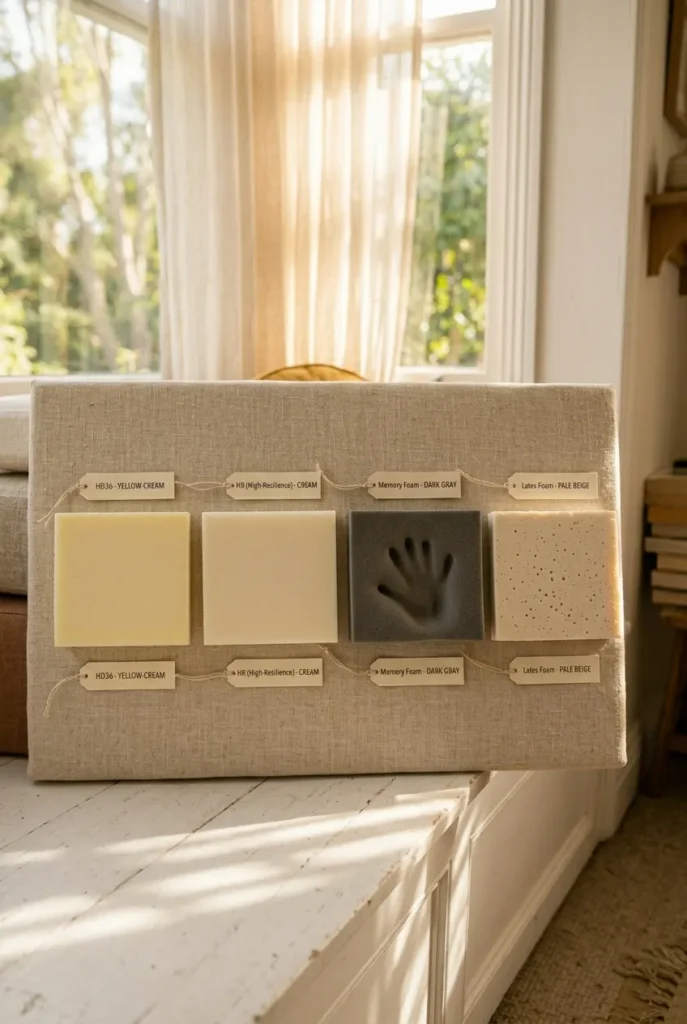
HD36 is the standard upholstery foam most stock cushions use. Affordable, supportive, decent lifespan if you pair it with a 1-inch dacron batting wrap. A reasonable choice for any sub-$120 reading bench.
HR (high-resilience) foam costs about 30% more and outlasts HD36 by years. It’s springier and recovers shape faster after you stand. This is the cushion that still looks plump in Year 3.
Memory foam is wrong for a reading bench. It sleeps cold-then-warm and slows recovery, so when you shift positions every 6 minutes (and you will), the foam stays compressed under one hip. Save it for mattresses.
Latex is the luxury pick. Bouncy, breathable, naturally hypoallergenic. Costs 2 to 3 times HD36. Worth it for a sunroom or window seat you’ll keep for 10+ years.
A short honest aside: I bought a memory foam bench cushion for my first nook because the listing called it “extra cozy.” Within an hour I was lopsided and overheated. The cushion is now my desk chair backrest. Skip my mistake.
Renter-Safe, No-Sew, No-Drill Setup (The Cushion Without the Commitment)
Most cushion tutorials assume you have a sewing machine and a free Saturday. You may not have either. (You may also have a security deposit on the line.) Here’s the rental-safe path.
Buy a stock-size foam cushion with a removable zippered cover. Most major retailers carry 36, 42, 48, and 60-inch widths in 17 or 18-inch depths. Match the closest size that’s 1 inch shy of your bench.
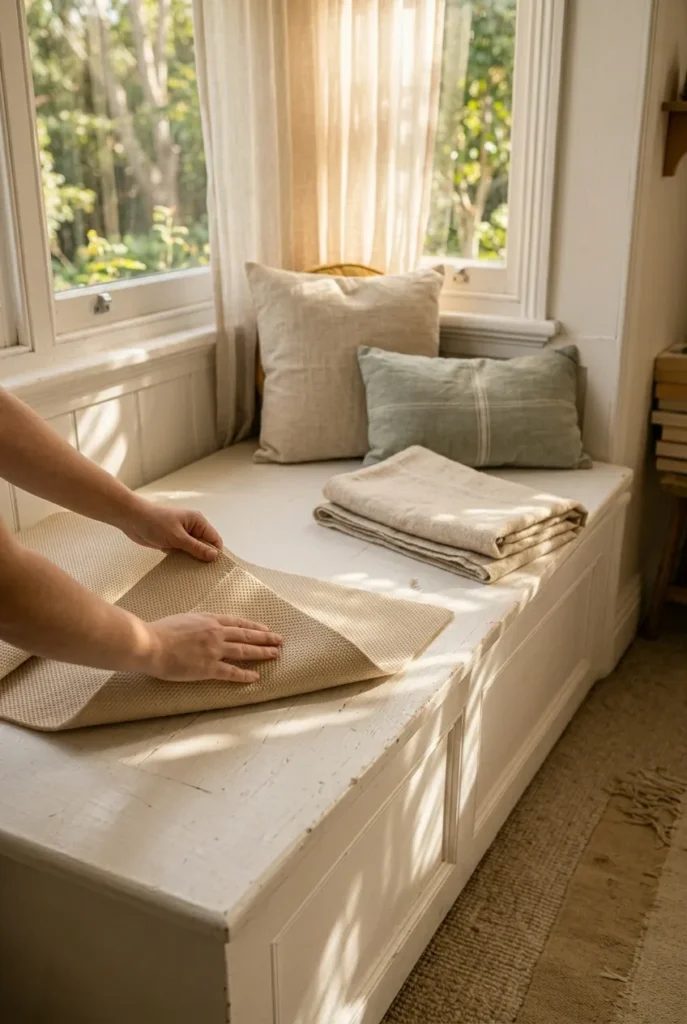
Skip the bench attachment hardware. Cut a non-slip rug pad to size and lay it between the bench top and the cushion. Costs about $8 at Target. Zero damage to wood, paint, or finish.
For the back, layer two 24-inch bolster pillows or a single long French-style lumbar (about 14 by 36 inches). If your bench is against a wall, no further hardware needed. The wall does the work for you.
If the bench sits in the middle of a room, here’s the rental hack: anchor a 20-inch lumbar pillow to the back of the cushion using two upholstery pins (the small curved kind, about $5 a pack) angled into the foam from underneath. The pins disappear into the cover. No drilling, no glue, no marks.
Honestly, this is the same setup behind most of the tiny nook builds we share on the blog. Renter-tested, deposit-safe, swap-out in under ten minutes.
Reading Posture Math: Why Breakfast Nook Cushions Fail Long Reads
Here’s the angle no other article on this keyword covers. A breakfast nook cushion is built for upright eating posture. A reading nook bench cushion is built for slouchy book posture. Same word, different sport.
Three reading postures most adults default to:
- Upright with feet on the floor. Needs a 16 to 18-inch seat depth, 4-inch foam, and a lumbar pillow at the small of the back. Standard chair geometry.
- Legs tucked, side-leaning. Needs at least 22-inch seat depth and a soft front-edge roll so the back of your knees aren’t cut by hard foam.
- Legs out, back fully reclined. Needs daybed-depth seating (24 to 30 inches) and a softer foam grade (HR at 2.0 to 2.5 lb, never 1.8 lb HD36).
The Mayo Clinic’s guidance on lumbar support holds for reading too: support the natural inward curve of the lower back. A lumbar pillow around 5 to 6 inches thick at its center, placed at the L4-L5 region, prevents the slow forward slump that ends a reading session 20 minutes earlier than it should.
The 1-Inch Shy Rule plus the 3-4-1 Reading Cushion Math handles most readers without overthinking:
- 3-inch foam minimum
- 4-inch foam for 40+ minute sessions
- 1 inch shy of bench dimensions for cover fit
Screenshot that. Use it next time you’re staring at a checkout page wondering if 2 inches will do. It won’t.

8 Ready-Made Reading Nook Bench Cushions Worth the Click
Eight picks, ranked by use case rather than pure price. Every option below comes ready-to-ship with a zippered, removable cover and foam already inserted. No sewing, no foam-cutting, no batting purchase.
1. The Budget Workhorse: Stock Cotton-Duck Bench Cushion (24 to 60 inches)
Available at Target, Walmart, and Wayfair under generic brand names, usually $50 to $90 for a 42-inch length. HD36 foam at 3 inches, cotton-duck cover, basic single-side zipper. Best for: kids’ nooks, second-home builds, or rental setups where you plan to swap fabrics in a year. Trade-off: thin foam compresses noticeably after a year of daily reading.
2. The Reading-Marathon Pick: 4-Inch HR Foam Linen Cushion (Custom on Etsy)
Etsy shops offering 4-inch HR foam wrapped in heavy linen run $130 to $220 for 42 to 48-inch lengths. Linen breathes in summer, holds heat in winter, and takes a wash without complaining. Best fit for the primary reader (the 24 to 44-year-old renter who reads every night and wants the cushion to last past Year 2).
3. The Window Seat Specialist: Daybed-Depth Cushion (24 to 30-Inch Depth)
If your window seat is unusually deep (deep bay windows, especially), search “daybed cushion” rather than “bench cushion.” Brands like Coral Coast and Sunbrella sell 75 by 30-inch options with 5 to 6-inch foam. Indoor-outdoor fabric resists fade from direct sun. Pair this with our breakdown of reading nook curtains for window seat setups to get the cocoon effect right.
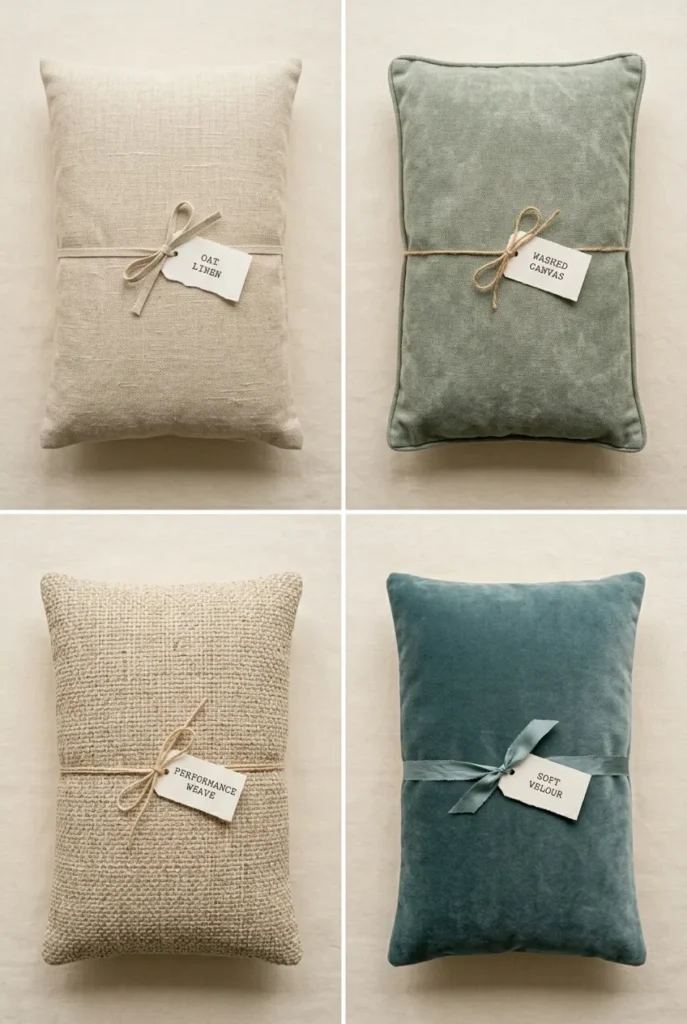
4. The Kids’ Nook Pick: Washable Cover, 3-Inch Foam, 30 to 36 Inches
Pottery Barn Kids and Crate & Kids carry zippered, machine-washable cushion covers in canvas or velour over foam-fiber blends, $80 to $140. Critical feature: cover comes off entirely with one zip pull (juice, snacks, the dog, you know the drill). Tweens prefer matte solids over patterns; ten-year-olds love micro-checks.
5. The Banquette Bench Cushion (L-Shape Corner Bench)
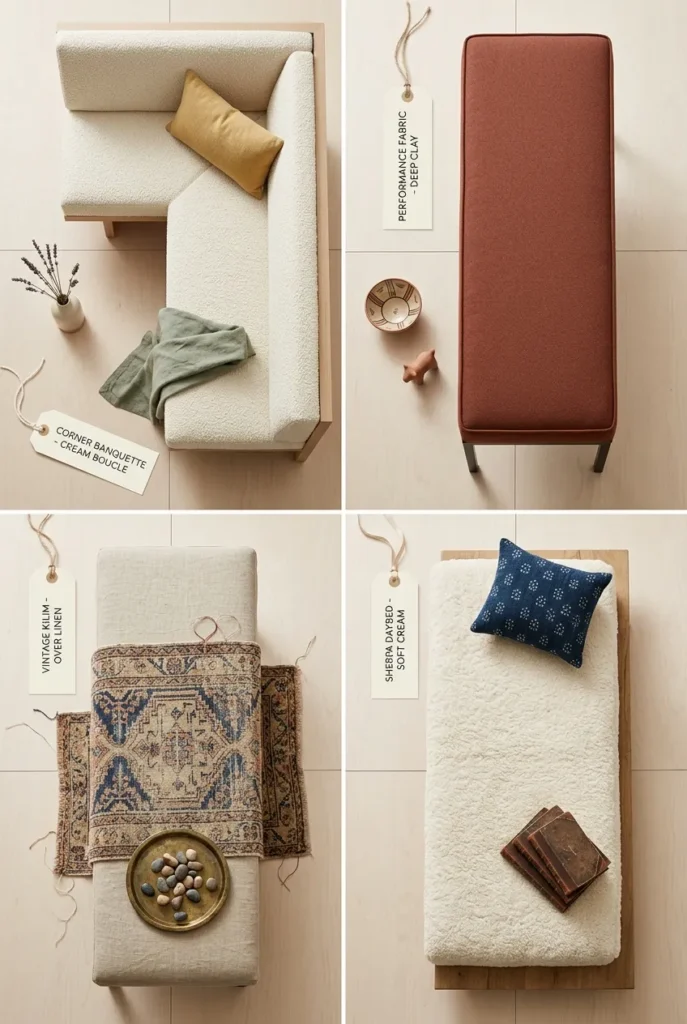
For an L-shape nook against two walls, order two cushions, not one. A 60-inch length plus a 30-inch length lets you replace either if one wears faster than the other. (The corner gets sat on more, every time.) Search “banquette cushion set” on Wayfair or Birch Lane, $180 to $320 for the pair.
6. The Boucle Splurge: Premium Bench Cushion (42 to 60 Inches)
If your aesthetic leans warm minimalist or japandi, retailers like West Elm and Anthropologie carry cream and oat boucle bench cushions in the $200 to $260 range. The texture catches afternoon light beautifully and reads soft and tactile in Pinterest pin photography. Trade-off: boucle pills around year two. Worth it if you re-cover or rotate annually.
7. The Performance-Fabric Pet Owner Pick
If you have a cat with opinions or a dog who reads alongside you, get a performance-fabric cushion. Brands like Sunbrella, Crypton, and Inside Out Performance sell upholstered cushions that resist spills and shed hair cleanly. $150 to $250 for a 48-inch length. Bonus: the cover usually wipes down with a damp cloth and skips the full wash cycle entirely.
8. The Mediterranean Kilim Look (Affordable Version)
Inspired by the Pinterest trend (the ethnic kilim window seat pin we all save), you can get the look without paying $400 for a vintage rug. Find a stock cushion in a flat plain color, then layer a 20 by 60-inch kilim runner over the top. Throw two bolsters in matching tones. Total spend lands around $120 and the result photographs pin-ready.
Covers, Washability, and the Pet-and-Spill Reality
Most cushion listings bury this section. The cover is where your money lives long-term.
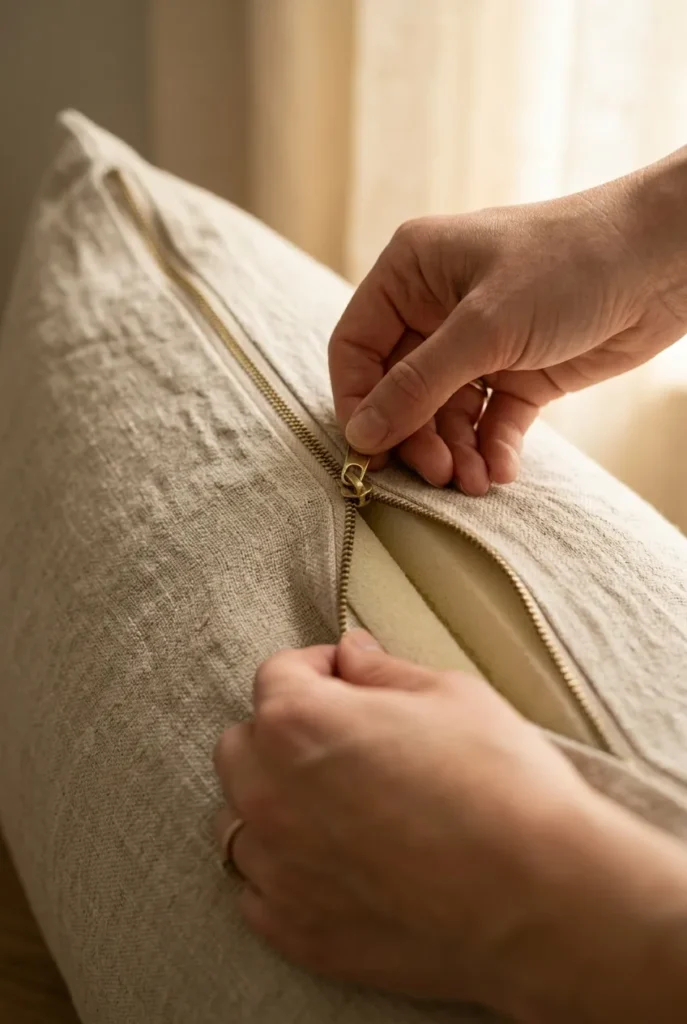
A removable zippered cover is non-negotiable. If you can’t get the cover off in 30 seconds, you can’t clean it, can’t rotate it, and can’t refresh the look in season two. Skip any cushion with a sewn-on cover.
Fabric weight matters. Look for 7 oz per square yard or heavier for linen, 10 oz for cotton duck, and any rated “performance” or “indoor-outdoor” for spill resistance. Sheers and decorative linens under 5 oz pill within months and tear at the seams within a year.
Zipper placement matters too. A three-sided zipper (running along one short edge and continuing partway down both long edges) is the easiest to slip foam back into after washing. A single-side zipper turns laundry day into a wrestling match with foam.
For pet hair specifically: avoid boucle and any high-loft weave. Stick with flat-weave linen, denim duck, or microsuede. A lint roller plus a soft brush attachment on the vacuum handles weekly cleanup in about 90 seconds.
One sensory note worth mentioning: a freshly washed cotton cover smells faintly of sun and starch the first day it goes back on the bench. Pair it with a wool throw and a 2700K bulb on a reading nook wall sconce that needs no wiring, and you’ve built the cocoon the other articles only promise on the pin.
Frequently Asked Questions
Should a reading nook bench cushion be smaller than the bench?
Yes. About 1 inch shorter and 1 inch shallower than the bench top, on each axis. This is the 1-Inch Shy Rule. The cover stretches and the foam compresses at the edges over the first month of use, so an exact-fit cushion ends up hanging off the back or front lip within a few weeks. A 1-inch buffer keeps the cushion seated cleanly and lets you reach the bench lid easily on any storage build.
Is a 46-inch cushion too big for a 43-inch cover?
Yes, and forcing it will distort the foam at the corners. You’ll see four obvious bulges and the cover will pull tight at the zipper seam. For a 43-inch cover, you want a 42-inch insert (one inch shy). If you already own the 46-inch foam, the cleanest fix is to trim it down with a long bread knife or an electric carving knife (mark the cut line with a yardstick first), then re-wrap with 1-inch dacron batting before re-inserting.
How thick should foam be for a reading bench seat?
3 inches is the absolute floor, 4 inches is the sweet spot for adults, and 5 to 6 inches is daybed territory. Pair 1.8 lb HD36 with a 1-inch batting wrap for budget builds, or 2.0 lb HR foam for cushions you want to last 5+ years. Anything thinner than 3 inches lets you feel the bench under you within 20 minutes of reading.
What size bench cushion do I need?
Measure your bench top: width across, then depth front to back. Subtract 1 inch from each measurement. That’s your cushion size. Most builders aim for stock dimensions (24, 30, 36, 42, 48, 60 inches wide; 16, 17, 18 inches deep) on purpose, so a stock cushion fits more often than you’d guess. If your bench has hinges (storage lid), measure with the lid closed, never open.
Can I use a breakfast nook cushion for a reading nook?
You can, but you’ll regret it after about 30 minutes. Breakfast cushions usually run 2 inches thick, sized for upright dining posture. Reading posture (slouchy, tucked-leg, side-leaning) needs 4 inches and a softer foam grade. If you’ve already got a breakfast cushion, add a 1.5-inch foam topper plus a wool throw on top, and you’ll get acceptable comfort without a full re-buy.
How do I keep the cushion from sliding on a wood bench?
Cut a non-slip rug pad to the bench dimensions and lay it between the bench top and the cushion. Costs around $8 at Target. No drilling, no glue, no damage to the bench finish. For very heavy use (kids climbing on and off all day), add two small dots of upholstery-grade hook-and-loop on the underside of the cushion. Removable in seconds, invisible from above.
Are machine-washable bench cushion covers worth it?
Yes, especially if you have kids, pets, or a snacking habit while you read. Look for covers labeled “machine wash cold, line dry.” Avoid anything that says “spot clean only” if your nook sits in a high-traffic spot. A washable cover roughly doubles the practical lifespan of the cushion because the foam stays fresh while the fabric cycles through laundry every few weeks.
Final Read
A reading nook bench cushion sounds like a small decision until you sit on the wrong one for the third weekend in a row. Sizing math, foam thickness, fabric weight. Get those three right and you’ve built a reading spot that pulls you back tomorrow night, and the night after that. What’s your bench dimension and your usual session length? Drop a comment with both, and I’ll tell you which of the 8 picks above I’d actually buy in your shoes.
Keep reading
More cozy nook ideas
 Fall Decor
Read →
Fall Decor
Read →
How to Decorate Your Entryway for Fall (Even If You’re Not Handy)
No drill, no ladder, no awkward email to your landlord. This fall entryway decor goes up with an over-the-door hanger, a tape…
 Fall Decor
Read →
Fall Decor
Read →
Fall Coffee Table Decor: The Complete Guide for Small Apartments
No mantel, no entry console, no spare shelf. In a small apartment, the coffee table is the one surface everyone sees, and…
 Fall Decor
Read →
Fall Decor
Read →
The Fall Kitchen Checklist: Everything to Decide Before You Start
Most fall kitchen regret starts the same way. You buy the pumpkins first, carry them in, and discover the counters were never…