
Minimalist Reading Nook Ideas — 12 Clean and Calm Corners for a Clear Mind

Introduction
There is something quietly rebellious about carving out a small, simple corner in your home where nothing is asking anything of you. No notifications. No laundry pile staring back. Just a chair, a lamp, and a book that does not need swiping.
I started building my first minimalist reading nook after a particularly noisy week, the kind where every room in the house felt like it had a to do list written across the walls. I kept telling myself I needed a whole library. A built in. A renovation. What I actually needed was about three square feet of calm.
That is the real secret of these spaces. A minimalist reading nook is not about owning less for the sake of it. It is about removing everything that pulls your eyes away from the page so your mind can finally settle. Soft light, one good chair, a neutral palette, and almost nothing else.
Below are twelve of my favorite minimalist reading nook ideas, drawn from real homes, Pinterest boards I have spent too many evenings scrolling, and a few tiny corners I have styled myself. Each one is designed to feel cozy without feeling cluttered, which is honestly the hardest balance in home decor.
Why a Minimalist Reading Nook Actually Helps You Read More
Before we get to the visuals, a quick word on why simple corners win. When researchers at Princeton studied how visual clutter affects focus, they found that the more stuff competes for your attention, the harder it is for your brain to settle on any one task. Reading is a task. A long one. And a busy corner, even a beautiful one, is essentially sending tiny interruptions to your nervous system the whole time you are trying to disappear into a novel.
A minimalist nook removes those interruptions. Fewer colors, fewer objects, fewer textures fighting each other. The result is a space where your eyes rest and your attention follows.
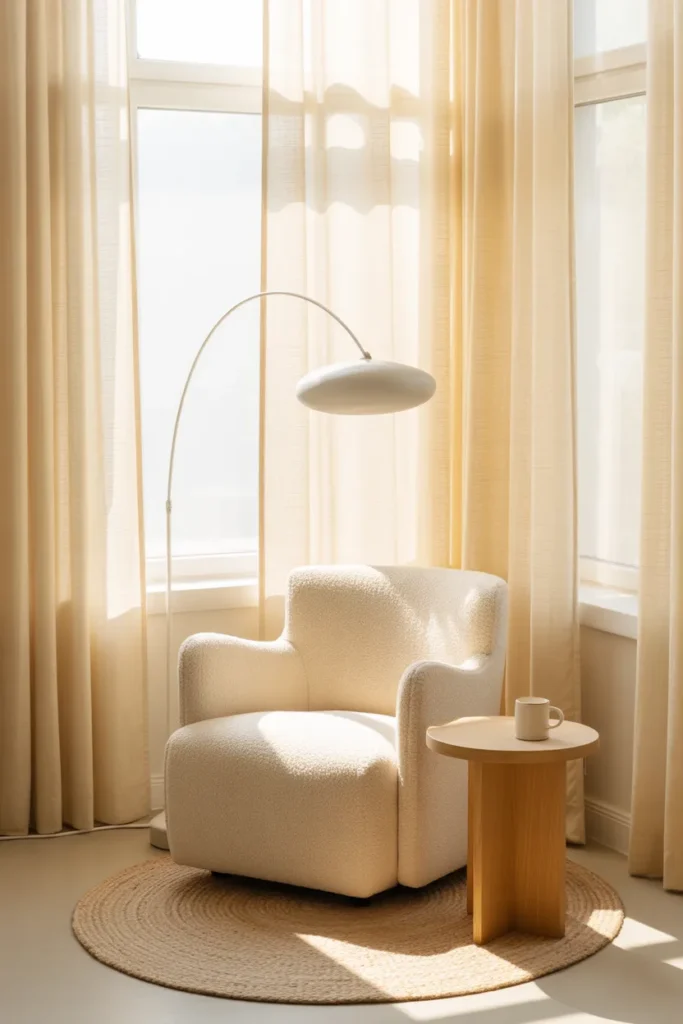
1. The Single Chair Corner
Sometimes the answer is just one chair. A cream boucle armchair, or a linen wingback, placed in the quietest corner of a room. No shelves, no styling tray, no extra pillows piled up. Just a chair, a soft throw folded over the arm, and a small matte floor lamp.
This is the purest form of a minimalist reading nook idea, and it works especially well in rooms that already feel busy. If your living room is doing a lot, your reading corner should not.
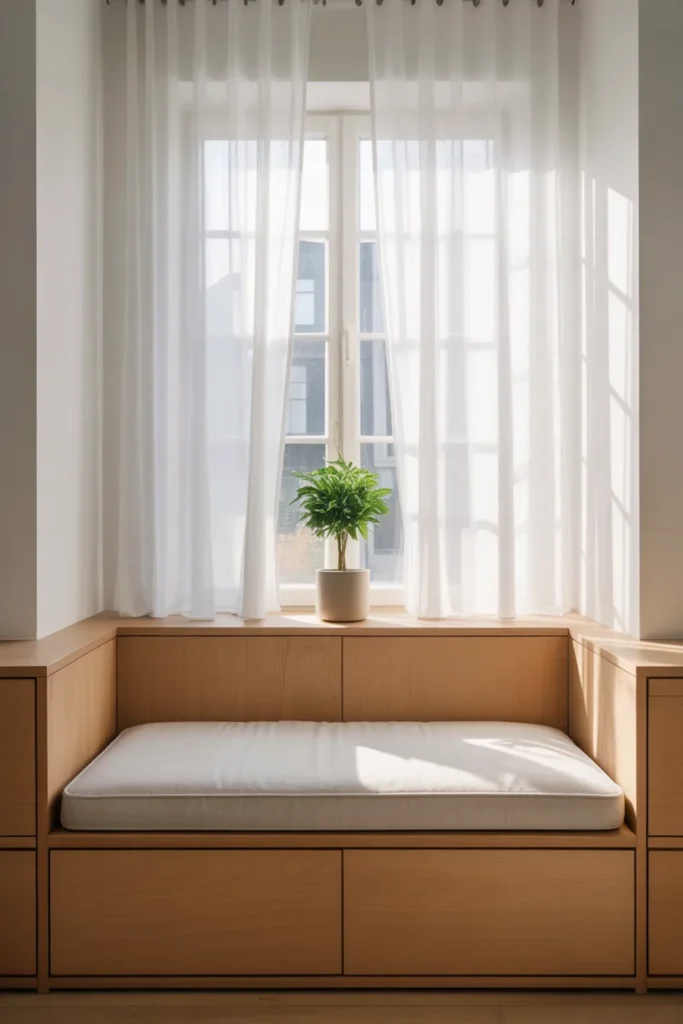
2. The Scandinavian Window Seat
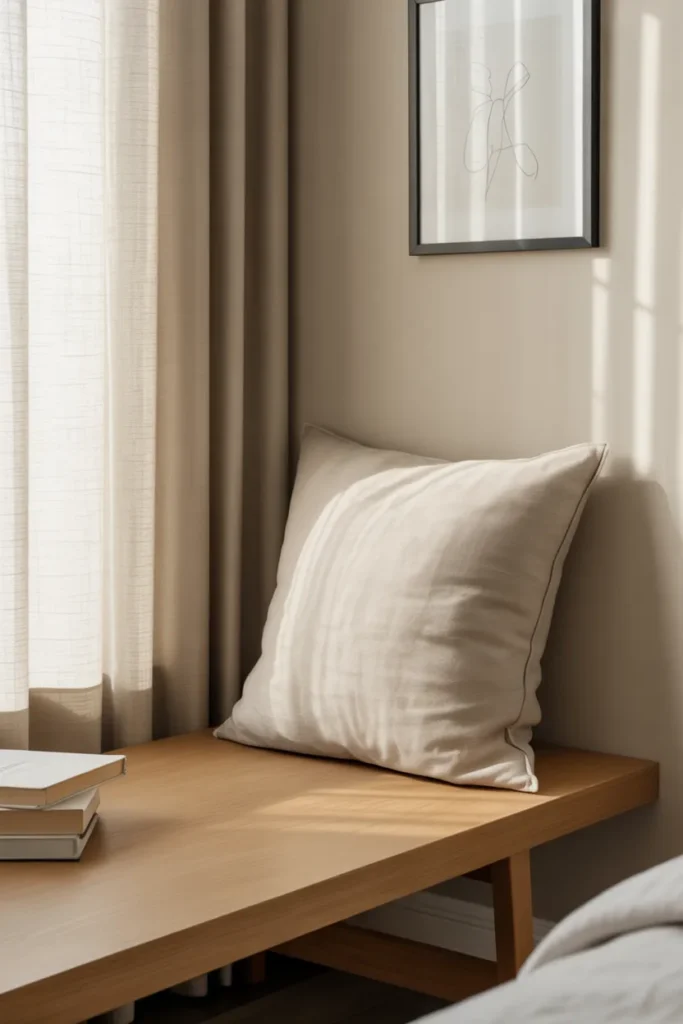
Scandinavian design has been quietly running the minimalist nook world for about a decade now, and there is a reason. Pale wood, white walls, a flat linen cushion on a simple window bench, and maybe one small plant. That is the entire recipe.
I love this style because it uses natural light as its main decoration. When the sun moves across a white bench through the afternoon, the space keeps changing without you having to add a single object.
3. The Japandi Floor Nook
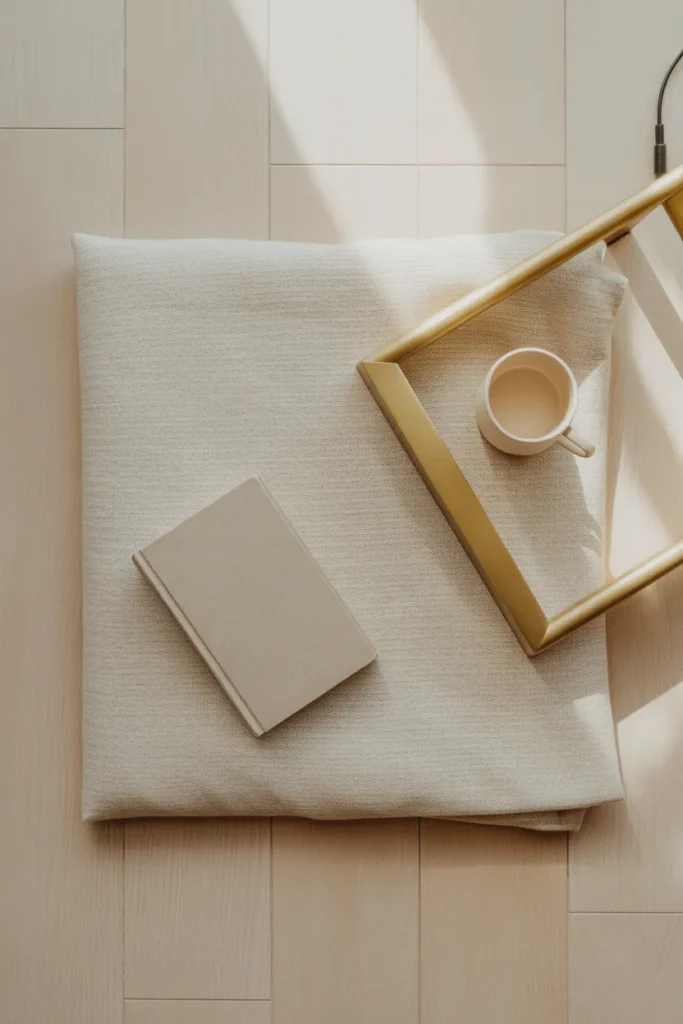
If you are drawn to the floor seating look but want to keep it quiet, Japandi is your answer. Think a single floor cushion in natural linen, a low wooden stool serving as a side table, and one piece of simple line art on the wall. Colors stay in the beige, stone, and warm brown family.
What makes this work is restraint. One cushion, not six. One stool. One lamp. The Japandi aesthetic leans on the idea that every object in a space should earn its place, which is a quietly freeing way to design any corner.
If you want to build this look on a budget, the 12 IKEA reading nook hacks guide has a few Japandi inspired setups using simple flatpack furniture.
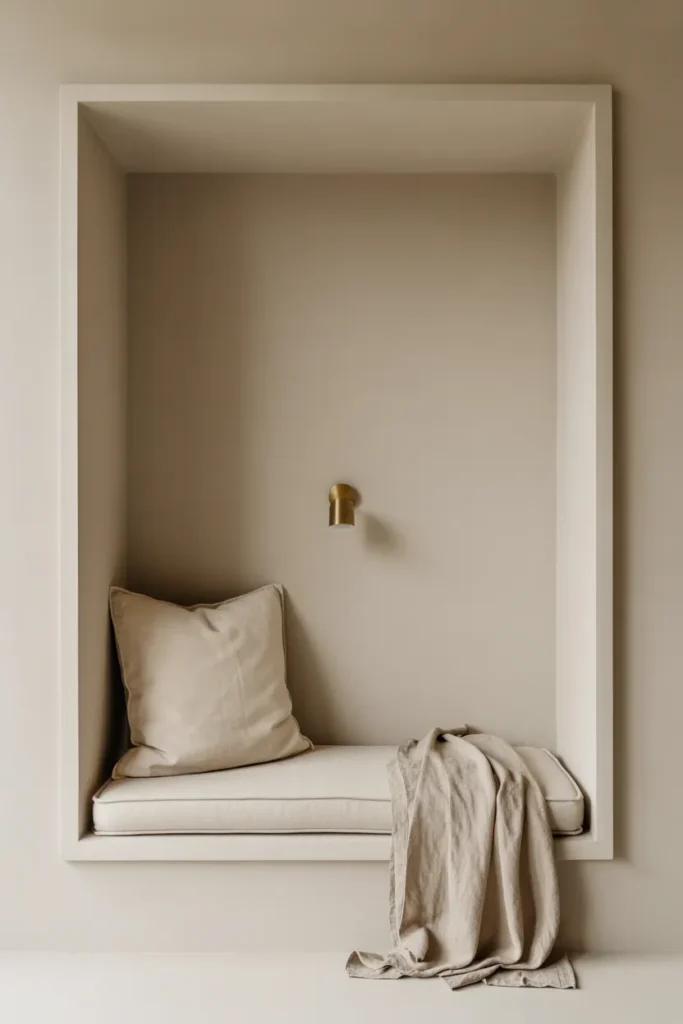
4. The Built In Alcove, Stripped Back
Built ins do not have to mean floor to ceiling shelves crammed with decor. A single padded bench inside a shallow wall alcove, with a neutral cushion and one small reading light, can feel like the most luxurious nook in the house precisely because it is not trying too hard.
Keep the paint color the same as the surrounding wall. No contrast trim, no wallpaper inside the nook. Let the shape of the alcove do the visual work.
5. The Floor Cushion and Low Shelf Setup
For small apartments or rented homes where you cannot drill into walls, a single oversized floor cushion paired with a low profile wooden shelf becomes an instant minimalist reading corner. The shelf holds maybe six books at most. Not your whole collection. Just the ones you are currently reading and the two waiting next.
This restraint is the real move here. A minimalist nook is not storage, it is a station for one activity at a time.
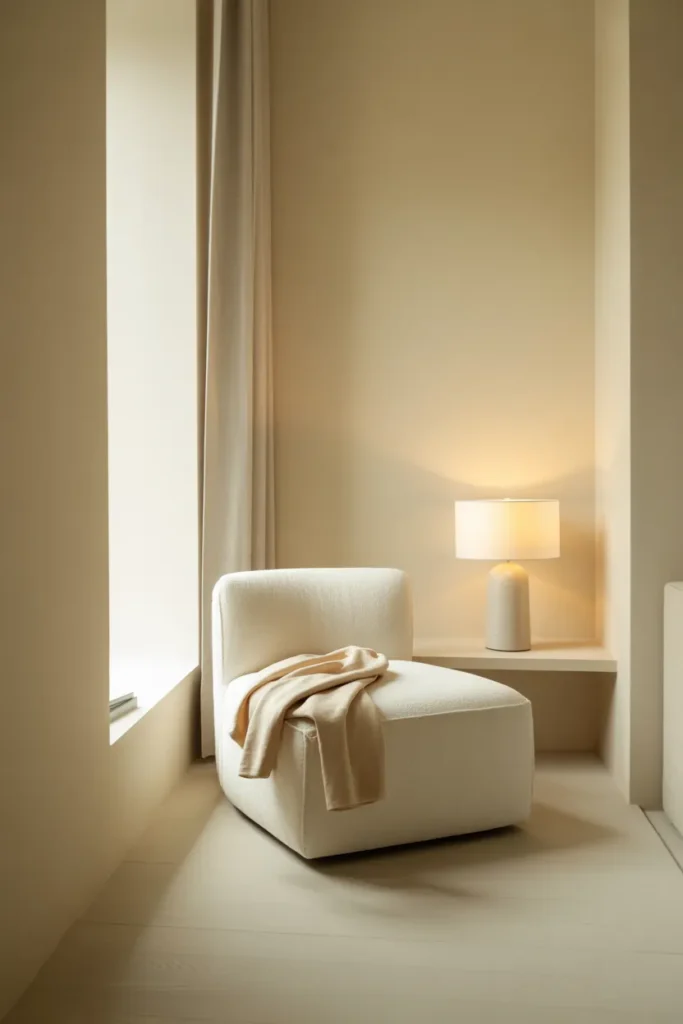
6. The White on White Bedroom Corner
There is a specific kind of peace that comes from an all white reading corner in a bedroom. White walls, a cream chair, a white ceramic lamp, a pale wool throw. It sounds stark on paper, but in person it reads as soft and gentle, like being inside a cloud.
If pure white feels too cool for you, shift the palette half a step warmer. Oatmeal, ivory, and bone instead of bright white. You will get all the calm of a monochrome nook with more warmth under artificial light.
7. The Under Stair Micro Nook
Under stair spaces get used for shoes, boxes, and random cleaning supplies in most homes. Stripped back and reclaimed, they become one of the most architecturally interesting reading nooks you can build. A simple bench, one cushion, a small sconce wired into the sloping wall, and done.
Resist the urge to add wallpaper, bookshelves, fairy lights, and ten pillows. The slanted ceiling is already doing all the visual work. Your job is not to compete with it.
8. The Sunroom Chair and Rug Combo
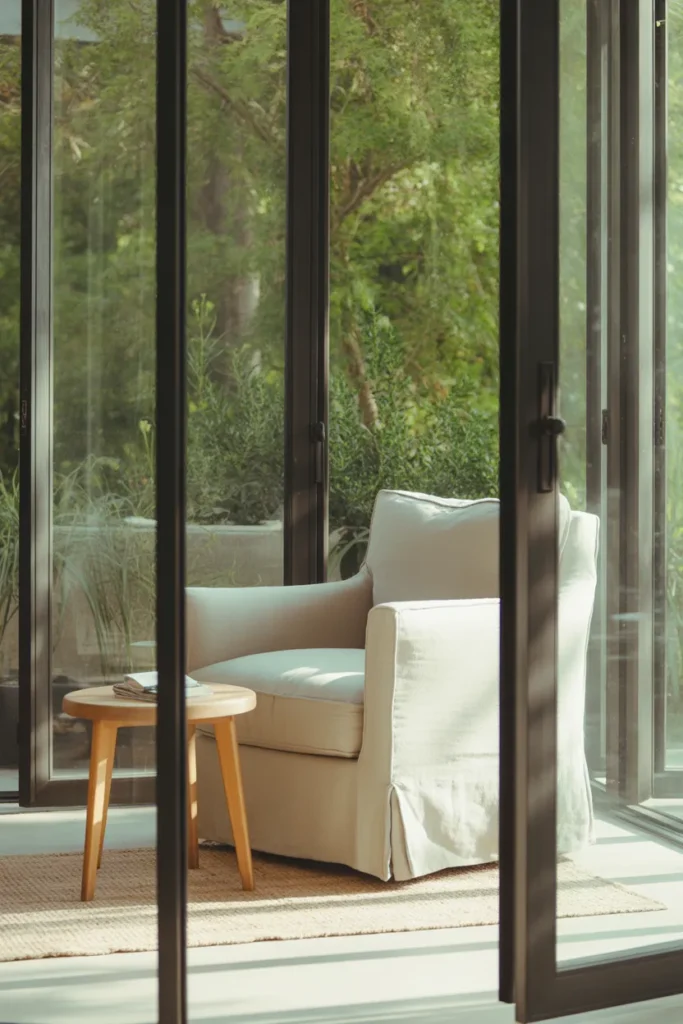
Sunrooms are made for minimalist reading nooks because the view outside is already the decoration. All you really need is one comfortable chair angled toward the best light, a soft neutral rug to warm the floor, and a side table small enough to hold a mug and a book. Nothing more.
Speaking of rugs, they matter more than people think in a minimalist setup. When there are fewer objects, the texture under your feet becomes one of the main things your body registers. A good reading nook rug in the right size changes how the whole corner feels, even if nothing else changes.
9. The Corner With Just a Lamp and a Chair
I keep coming back to this one because it is almost aggressively simple. Push a chair into a corner where two walls meet. Place an arc floor lamp behind it so the light falls over your shoulder. That is it. No shelves. No plants. No art.
Pinterest wants to convince you that a good reading corner needs twelve layered elements. It does not. It needs a chair that supports your back for two hours and light that does not strain your eyes. Everything else is styling, not function.
10. The Small Bedroom Workspace Nook
If you are already short on square footage, your reading corner might have to share space with something else. A thin wooden bench under a window, styled minimally enough that it doubles as a spot to drop a laptop during the day and read in the evening, is one of the smartest dual use setups.
I wrote a whole guide to adding a reading nook to a home office if you want to go deeper on the dual purpose approach. The trick, basically, is keeping the palette identical across both functions so your eye does not register two different zones.
11. The Paper Lantern and Floor Cushion Set
For readers who love floor seating but find the Japandi look too austere, try softening it with one paper lantern overhead. A round rice paper pendant throws the kind of diffused, shadow less light that feels like evening even in the middle of the afternoon. Add a single buckwheat floor cushion, a low wooden stool, and call it done.
This nook looks especially good in rooms with warm wood floors. The paper lantern glow and the wood grain do all the decorating for you.
12. The Reading Chair in the Hallway
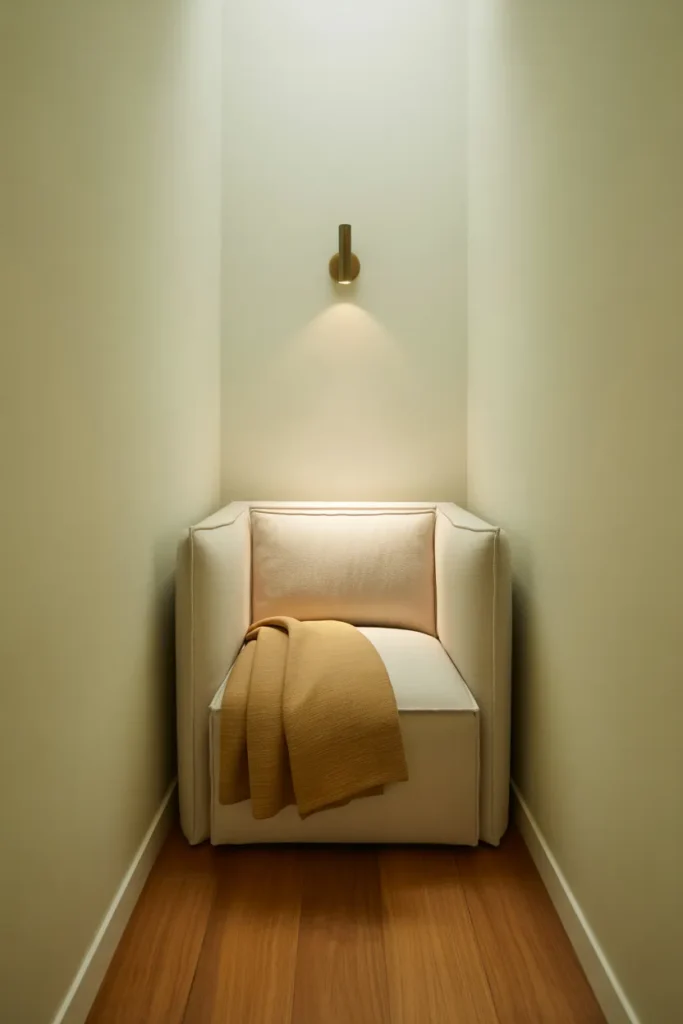
Hallways are usually dead space. A narrow armchair pushed against a wall at the end of a hallway, under a simple wall sconce, turns that dead space into one of the most peaceful reading corners in the house. There is almost always better light and less foot traffic than you expect.
This works because a hallway already has a built in minimalist quality. The walls are close, there is no room to overstyle, and the lack of other furniture forces the corner to stay clean.
How to Style Any Minimalist Reading Nook (Without Ruining It)
Most minimalist nooks fail for the same reason. People build the clean version, love it for a week, and then slowly start adding stuff. One throw. A small tray. A candle. Another throw. Three books they are not reading. Suddenly the corner looks like every other busy Pinterest image.
A few rules that have kept my own corners from sliding that way:
Limit your palette to three tones maximum. Cream, oatmeal, and soft wood. Or white, charcoal, and pale oak. Three is enough. Four starts to look cluttered even if each item is beautiful on its own.
Pick one texture to lead. If your chair is boucle, do not also add a shearling throw, a nubby wool pillow, and a chunky knit blanket. Let one tactile element dominate.
Keep the book count low. One to three books, maximum, visible in the nook at any time. The rest belong on a shelf elsewhere in the house. This single rule will do more for your minimalist reading nook than any decor purchase.
Leave negative space. The empty wall above the chair is doing work. That bare patch of floor is doing work. Do not fill every surface just because you can.
For more deep thinking on the Scandinavian minimalist approach specifically, Livingetc published a beautiful piece on minimalist reading nook buys that walks through exactly what to buy and what to skip.
Lighting for a Minimalist Nook
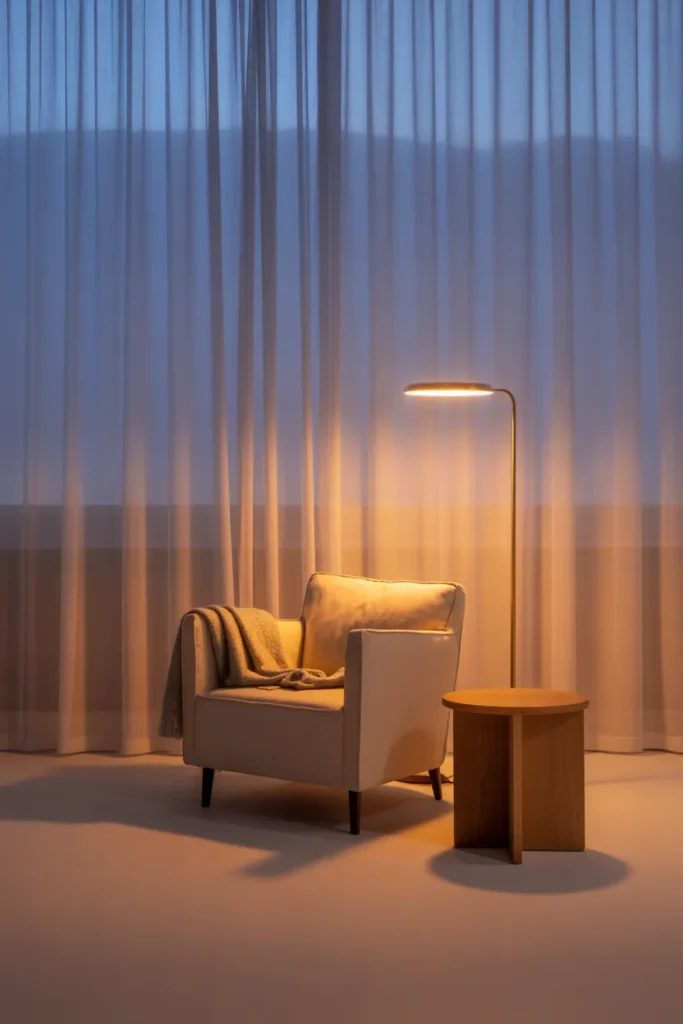
Lighting is the single most underrated element in any reading corner, minimalist or not. Get it wrong and you will find yourself squinting at pages, abandoning the chair, and wondering why you do not use the nook. Get it right and you will sit there for hours without noticing time pass.
A few things I have learned the hard way. Overhead lighting alone is almost never enough, and it casts shadows onto the page. A dedicated floor lamp or wall sconce placed above and slightly behind your reading shoulder is the gold standard. Warm bulbs in the 2700K range feel softer and more inviting than cool white, which can make even the most beautifully styled corner feel like a doctor’s office.
If you can add a dimmer, add one. Being able to drop the light level as the evening goes on is one of those small details that makes a nook feel genuinely restful instead of just photogenic.
Color Palettes That Work Every Time
If you are not sure where to start with color, these three palettes are essentially foolproof for a minimalist nook.
Warm neutrals: cream, oatmeal, pale oak, soft brass accents. This is the cozy minimalist look most people picture. Calm, warm, Pinterest friendly.
Cool Scandinavian: white, pale grey, birch wood, one soft sage green plant. Feels airy and slightly brighter than warm neutrals. Great for rooms that already get good natural light.
Japandi earth tones: stone, clay, warm brown, black line accents. A little moodier and more grounding. Best for evening reading corners and spaces where you want the nook to feel like a small retreat.
Pick one palette and commit. Switching halfway is what turns a calm corner into a scattered one.
Frequently Asked Questions
What makes a reading nook minimalist? A minimalist reading nook keeps only what is needed for reading, which is usually a comfortable chair or cushion, good warm light, and a small surface for a drink or book. Everything else gets removed. The goal is to reduce visual noise so your mind can settle into the page faster and stay there longer.
How do I make a small minimalist reading nook in a tiny apartment? Start with one chair or floor cushion in the quietest corner of any room. Add a wall mounted sconce instead of a floor lamp to save space, and use a small stool as your side table. Keep the palette to two or three neutral tones and resist decorating the walls around the nook.
What colors are best for a minimalist reading nook? Warm neutrals like cream, oatmeal, and pale oak are the most versatile. Cool whites and pale greys work well in sunny rooms, while Japandi inspired earth tones like clay and stone feel cozier in darker rooms. Stick to three colors maximum across the whole nook.
How much does it cost to build a minimalist reading nook? A minimalist reading nook can cost anywhere from around fifty dollars, if you already own a chair and only need a small lamp and cushion, up to a few hundred dollars for a new armchair and lighting setup. Built ins cost more but are rarely necessary for the minimalist look.
Do I need a bookshelf in a minimalist reading nook? No. In fact, leaving the shelves out is often what makes a minimalist nook feel truly calm. Keep one to three books nearby, and store the rest elsewhere in your home.
Final Thoughts
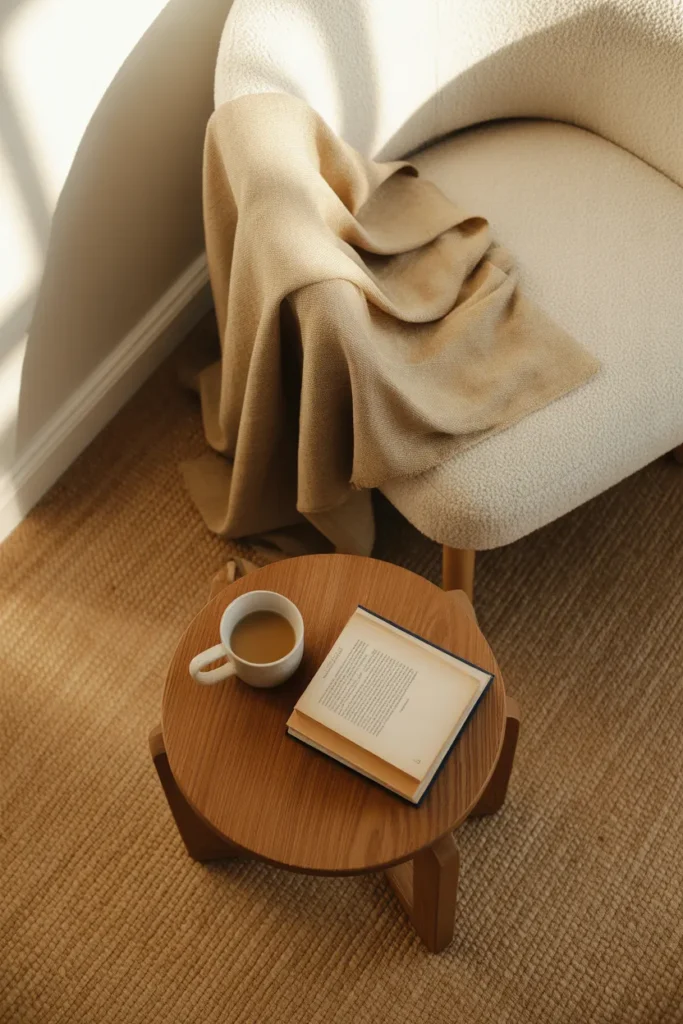
A minimalist reading nook is not a trend you have to chase or a Pinterest aesthetic you have to match. It is just a small, quiet corner in your own home where your eyes and your mind get to stop working for a while. Strip it back to the essentials. A chair that supports you, a light that is kind to your eyes, a color palette that does not shout, and a single book.
Start with one corner. Build it with only what you actually need. Then resist, gently but firmly, every urge to add one more thing to it. That is the whole practice.
If you find yourself wanting to go deeper into the softer, cozier end of minimalism, spend a few evenings wandering through the other nook ideas on Little Nook Home. There is a whole quiet corner of the internet dedicated to exactly this kind of slow, intentional home design, and honestly, it is one of my favorite places to get lost.
Keep reading
More cozy nook ideas
 Boho
Read →
Boho
Read →
Boho Bathroom Checklist: Everything to Decide Before You Start
No gut job, no new tile, no landlord permission slip. A boho bathroom mostly comes down to eight decisions made in the…
 Cozy Home
Read →
Cozy Home
Read →
25 Cozy Bedding Ideas for a Cozier Home
If your bed right now is one flat comforter, two pillows that fold in half, and a throw that ends up on…
 Farmhouse & Country
Read →
Farmhouse & Country
Read →
Modern Farmhouse Bedroom Checklist: Everything to Decide Before You Start
Ten decisions, made in the right order, and a modern farmhouse bedroom stops being a pile of saved pins and starts being…