
Vintage Reading Nook Ideas That Feel Lived-In, Not Staged

You want a vintage reading nook, not a furniture showroom. You want the worn leather, the lamp that glows amber at 4 pm, the chair that swallows you whole after a long day. Here’s the honest part most posts skip: you can build one in a 700 square foot rental, on a thrift-store budget, without drilling a single hole.
I’ve put together ten real setups below. Each one gives you a specific piece to hunt for, a rough size so it actually fits your corner, and the one mistake that wrecks the whole look if you rush it.
You read on your phone, in bed, at night. So here’s the fast promise, cashed in the very first idea: three secondhand pieces, one afternoon, a corner that finally feels like yours.
Start With One Vintage Chair (The 3-Piece Rule)
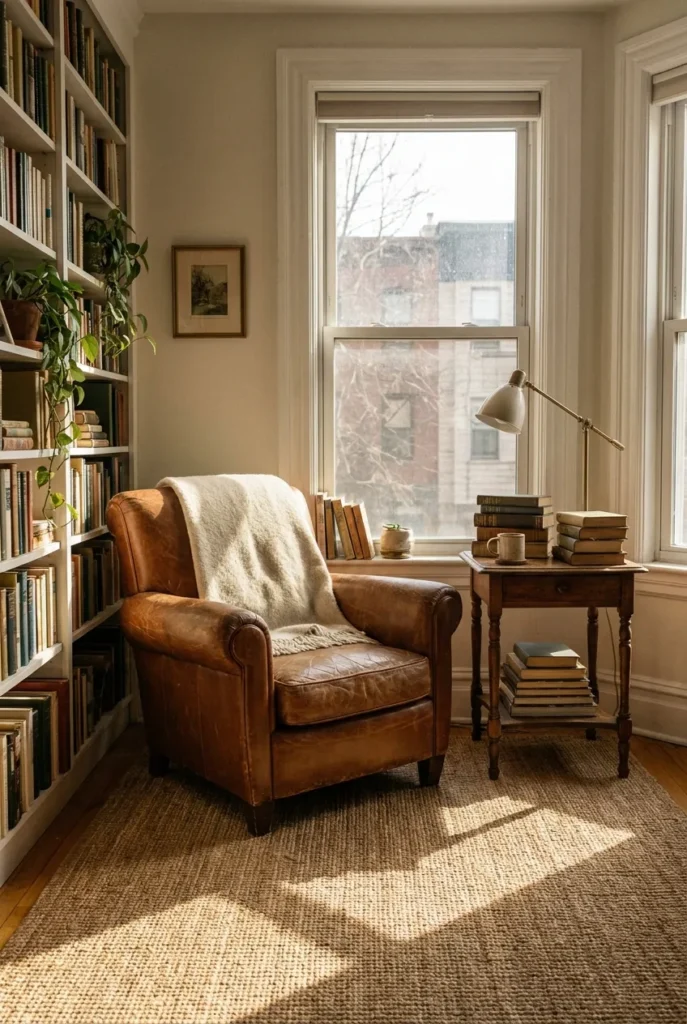
Every vintage reading nook starts with a single anchor: the chair. Get this right and the rest is styling. Get it wrong and no amount of throws will save it.
The three-piece rule keeps you from overbuying. You need a chair, a light, and a surface for your tea and your current read. That’s the whole spine of the nook.
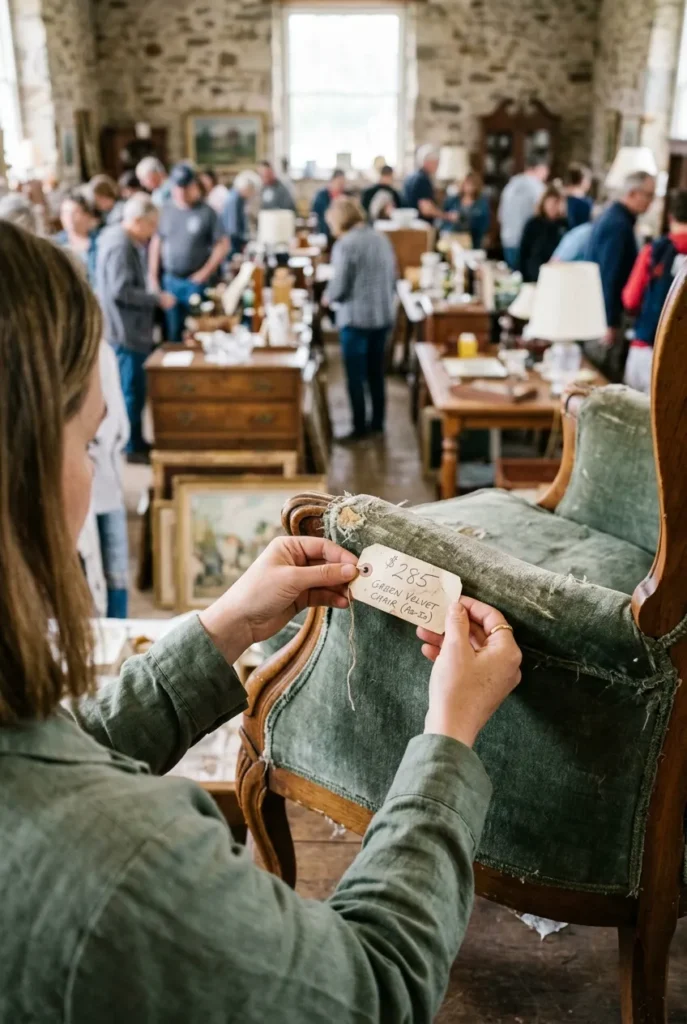
For the chair, hunt a worn leather club chair or a curvy 1970s lounge with good bones. Product archetype: a vintage wingback or any secondhand accent chair with a seat depth around 14 so you can actually tuck your legs up.
Failure mode: buying a stiff, shallow chair because it looks pretty in the listing. If your back aches after twenty minutes, you won’t sit there, and a nook you avoid is just clutter with ambition.
If you rent and can’t reupholster or drill, this next-level roundup of no-damage setups is worth a read before you buy anything: our no-drill guide for renters.
Get the Light Right (Warm 2700K, Not Blue)
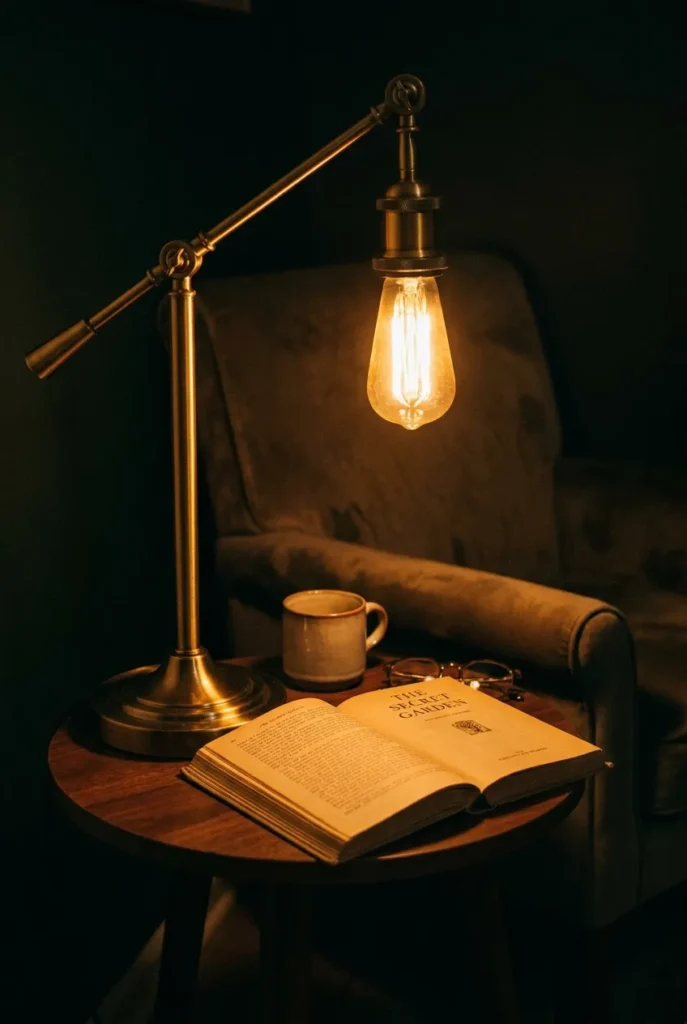
Lighting is the difference between “vintage” and “waiting room.” Skip the overhead. You want a low, warm pool of light beside the chair, nothing hitting you from the ceiling.
Aim for a bulb in the warm range. According to the federal ENERGY STAR guidance on light color temperature, warmer bulbs sit lower on the Kelvin scale and read as the familiar yellowish glow, while higher numbers look cool and blue. For a nook, a 2700K “soft white” bulb is your friend.
Product archetype: a brass swing-arm floor lamp or a thrifted table lamp with a linen shade. Set it so the bulb sits just above your shoulder when seated, off the floor.
Non-visual sensory beat: a warm bulb makes the room feel a few degrees cozier even when the thermostat hasn’t moved. Cool light does the opposite. Your body reads it as morning.
Failure mode: one harsh 5000K bulb flattens all your lovely patina into something clinical. Swap it first. It costs a few dollars and fixes more than a new chair would.
Want layered options like sconces and picture lights? Here’s a deeper set of cozy reading nook lighting ideas to steal from.
Layer Soft Textiles With Real Texture
Vintage reading nooks live or die on texture. Smooth and new looks like a catalog. You want a little wear, a little weight, a little history in the fibers.
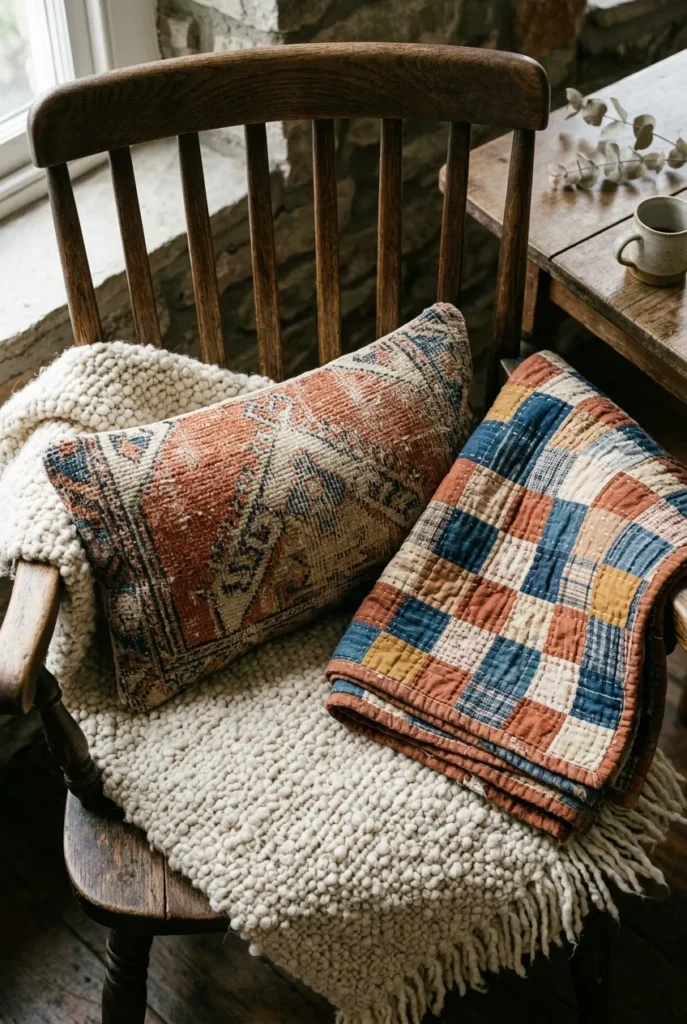
Start with one wool throw and one lumbar pillow. That’s enough. Choose nubby weaves, a bit of boucle, maybe a needlepoint cushion you found for a couple dollars.
Product archetype: a vintage kilim lumbar pillow plus a heavy wool throw around 5. Drape, don’t fold. Folded looks staged.
Non-visual sensory beat: the scratch-soft weight of wool across your knees on a rainy afternoon is half the reason to build a nook at all.
Failure mode: matching everything. A perfectly coordinated set kills the collected-over-time feeling that makes vintage work. Mix one pattern that doesn’t quite match on purpose.
Mix Eras On Purpose (The 80/20 Vintage Mix)
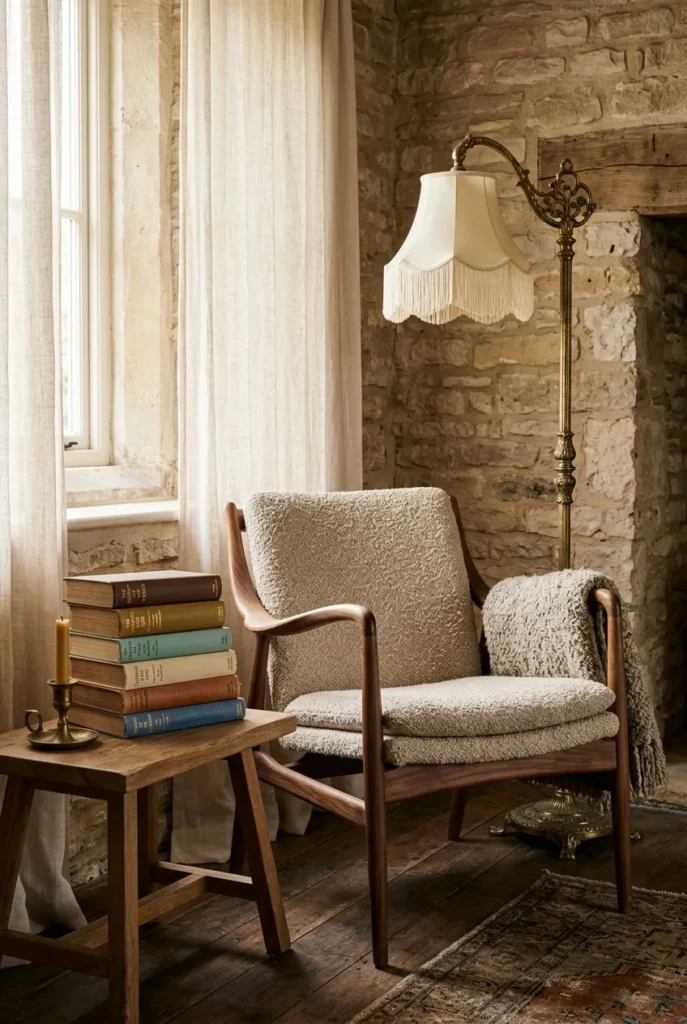
Here’s a named trick I lean on: the 80/20 vintage mix. Keep about 80 percent of the corner genuinely old or old-looking, and let 20 percent be modern for comfort and function.
That 20 percent is usually the stuff your body touches: a supportive cushion, a good bulb, a phone charger tucked out of sight. The 80 percent is the character: the chair, the frames, the books, the lamp base.
Product archetype: pair a genuine mid-century side table with a brand-new memory-foam seat cushion nobody can see. If you love that clean-lined look, the whole mid-century modern reading nook approach pairs beautifully with vintage finds.
Failure mode: going 100 percent antique. Pure vintage often means pure uncomfortable, and you end up admiring the nook instead of using it.
Build a Vintage Nook on a Real Budget
Let’s talk actual money, because “affordable” means nothing. Here’s a real target: a full vintage nook for under “$200”, sourced secondhand.
The move is estate sales and thrift stores on the right days. Chairs and lamps show up constantly. Books, you likely already own. The trick is patience, not cash.
A rough build order and price reality (fill these with numbers you actually paid):
Failure mode: buying everything in one weekend at full price because you got impatient. The whole vintage look is built on waiting for the right chair, not grabbing the first one.
More thrifty tactics live in our [reading nook on a budget playbook], which the publisher can link internally if that post is chosen. For now, the renter guide above covers the money-saving, no-damage overlap.
Renter-Safe, No-Drill Vintage Corners
Renting shouldn’t stop you, and this is the angle most vintage nook posts ignore completely. You can get the full look with zero holes in the wall.
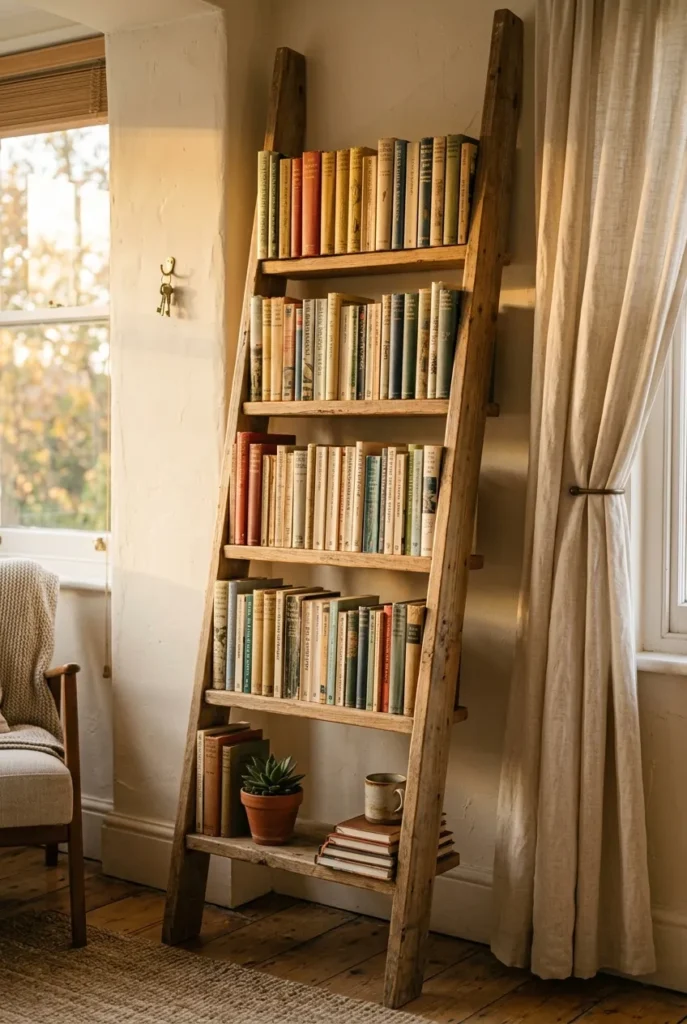
Lean a vintage ladder shelf instead of mounting bookcases. Use a freestanding floor lamp instead of a hardwired sconce. Hang art with removable strips rated for your frame weight.
Product archetype: a leaning ladder bookshelf around 8 wide, which holds real weight without a single anchor. Renter-safe option: a tension rod with a vintage-look linen curtain to “wall off” the corner, no drilling required.
Failure mode: overloading removable hanging strips past their weight rating, then losing a heavy antique frame at 2 am. Check the rating and stay under it.
Non-visual sensory beat: pulling that curtain closed makes a small sound and a big feeling. Suddenly the corner is a separate little room.
Style the Shelves Like a Well-Read Person
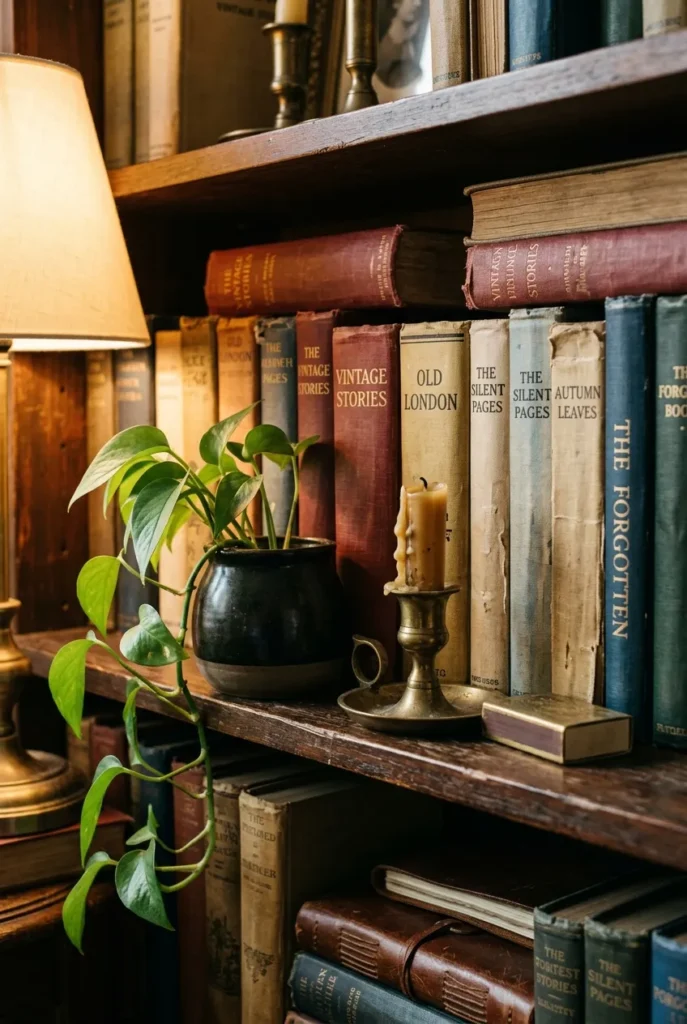
Bookshelves make or break the vintage reading nook aesthetic. The goal is a shelf that looks read, not decorated. Real spines, some horizontal stacks, a small object or two.
Pull the books forward to the shelf edge so they line up cleanly. Add one aged brass object, one small plant, and stop. Empty space is doing work too.
Product archetype: clothbound or leather-spine vintage books, plus one. A row of thrifted hardcovers with the dust jackets removed reads instantly older.
Failure mode: color-sorting a rainbow. It’s pretty on Pinterest and wrong for vintage, where books earned their mismatched, faded spines honestly.
For a softer, heirloom-leaning version of this look, the grandmacore reading nook ideas roundup leans right into that inherited-books charm.
Add a Vintage Rug to Ground the Corner
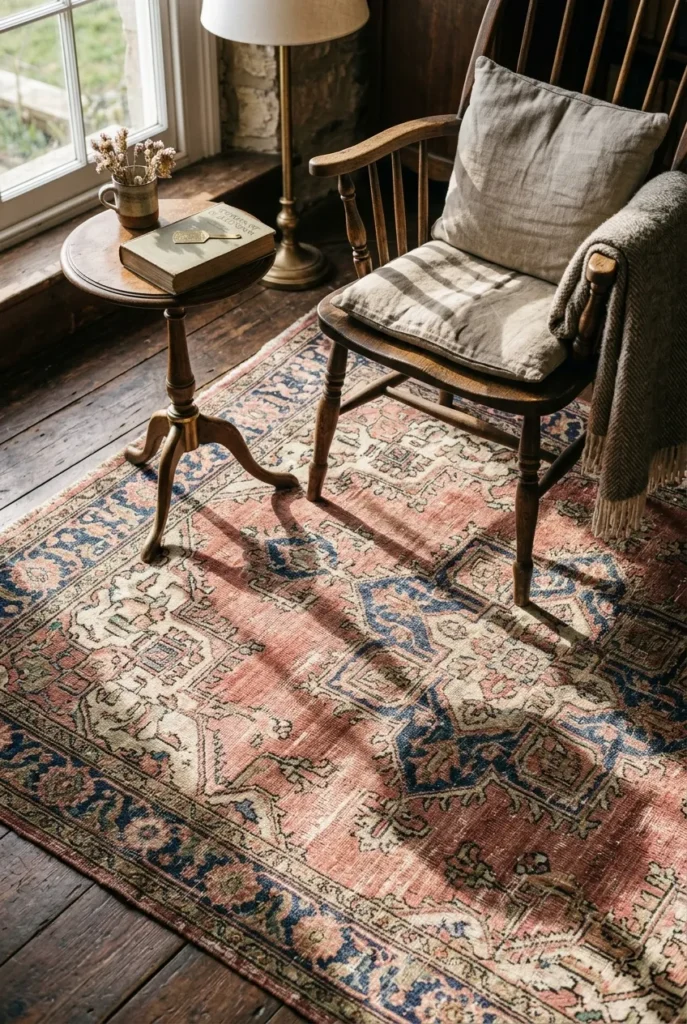
A rug is what turns a chair-in-a-corner into an actual nook. It draws the boundary. It warms the floor. It tells your eye “this is a room within a room.”
Hunt a faded wool Persian or a worn kilim. The more sun-mellowed the colors, the better it plays with vintage furniture. Size it so the front chair legs sit on the rug,
Product archetype: a secondhand wool area rug, low pile so the chair doesn’t wobble.
Non-visual sensory beat: warm wool underfoot on a cold morning beats bare floor every time, and it muffles sound so the corner feels hushed.
Failure mode: a rug that’s too small, floating like a bathmat. It shrinks the whole nook instead of anchoring it.
Handle Antique Paint and Wood Safely
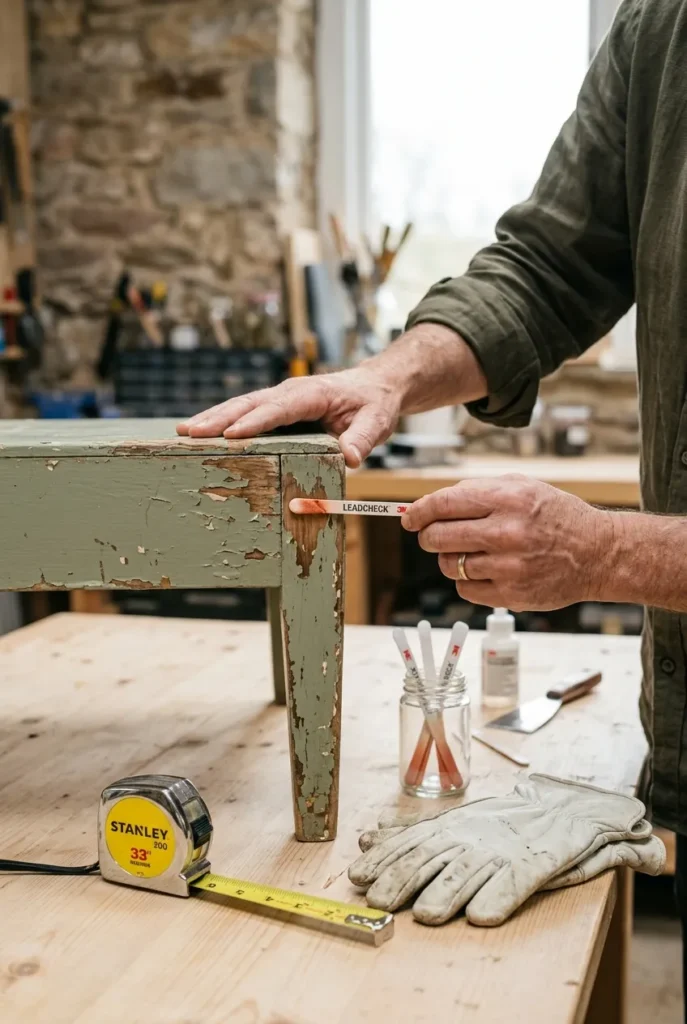
Here’s the angle no design post mentions, and it matters if you buy genuinely old painted furniture. Older painted pieces can carry lead paint, which is a real health concern, especially with kids or pets around.
This is a health note, so treat it seriously and check a qualified US professional or a lead test kit before sanding or stripping anything old. The US EPA’s guidance on protecting your family from sources of lead is the plain-language place to start.
Product archetype: if a piece might predate 1978 and has chipping paint, a hardware-store lead test swab is a few dollars of cheap insurance. When in doubt, leave the finish sealed and intact rather than sanding.
Failure mode: sanding a charming old dresser indoors on a whim and spreading dust through your reading corner. Test first, then decide.
Finish With One Personal, Sensory Touch
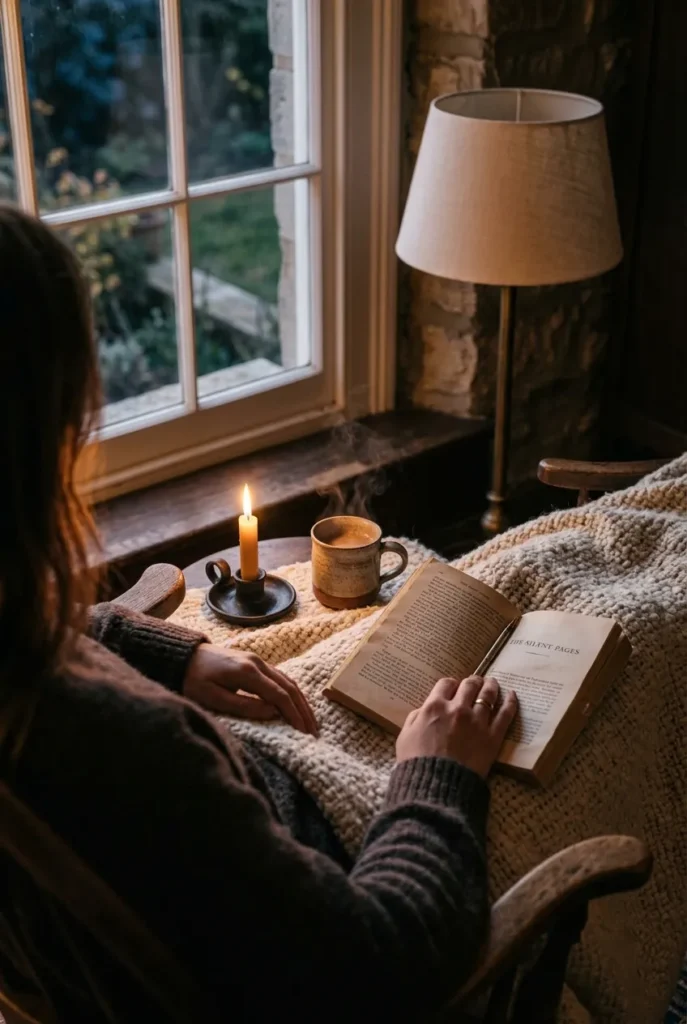
The last five percent is what makes people ask where you got it all. It’s personal, and it’s sensory, and it costs almost nothing.
Add the thing that’s actually yours: a candle you love, a small radio, a framed photo, a mug that only lives in the nook.
Non-visual sensory beat: the smell of an old paperback plus a warm drink is the whole mood in two ingredients. Add a scent you associate with slowing down.
Product archetype: any 32-inch-or-smaller round side table just big enough for a mug and a candle, nothing more.
Failure mode: over-decorating this final layer until the corner reads like a store display. One or two personal objects. Then stop and go read something.
Frequently Asked Questions
What is the purpose of a reading nook?
It gives you one dedicated, comfortable spot to read without distractions, which makes you far more likely to actually pick up a book. A vintage reading nook adds character and a slower, cozier mood on top of that function.
What is a reading nook called?
People also call it a reading corner, a book nook, a cozy corner, or a reading alcove. If it’s a larger dedicated space, it edges toward a home library or reading room.
What are the must-have reading nook items?
At minimum, a comfortable chair or window seat, a warm light source around 2700K, a small side table, and soft textiles like a throw and a pillow. A rug and a shelf for books round it out.
What makes a cozy reading nook cozy?
Warm low light, layered textures, a supportive seat, and a sense of enclosure, like a corner, alcove, or curtain that wraps the space. Vintage pieces add warmth because worn materials read as comfortable and familiar.
Can I make a vintage reading nook in a rental?
Yes. Use freestanding and leaning furniture, removable hanging strips, a tension-rod curtain, and secondhand pieces so nothing needs drilling or permanent changes.
Where do I find affordable vintage furniture for a nook?
Estate sales, thrift stores, Facebook Marketplace, and secondhand shops are the reliable sources. Patience beats budget here, since the right chair or lamp shows up if you keep looking.
Your Next Cozy Step
Start with the chair this weekend, add the warm bulb the same day, and let the rest come together as you find pieces you love. A vintage reading nook is never really “done,” and that’s the fun of it.
If you’re working around a landlord or a tight lease, read the no-drill setups next so you can build the whole thing without losing your deposit. Then go pour something warm and get lost in a book.
Keep reading
More cozy nook ideas
 Boho
Read →
Boho
Read →
Boho Bathroom Checklist: Everything to Decide Before You Start
No gut job, no new tile, no landlord permission slip. A boho bathroom mostly comes down to eight decisions made in the…
 Cozy Home
Read →
Cozy Home
Read →
25 Cozy Bedding Ideas for a Cozier Home
If your bed right now is one flat comforter, two pillows that fold in half, and a throw that ends up on…
 Farmhouse & Country
Read →
Farmhouse & Country
Read →
Modern Farmhouse Bedroom Checklist: Everything to Decide Before You Start
Ten decisions, made in the right order, and a modern farmhouse bedroom stops being a pile of saved pins and starts being…