
Harry Potter Cupboard-Under-the-Stairs Reading Nook (Done Tastefully)

Here is the truth nobody publishes in the top results. A Harry Potter reading nook can look stunning, or it can look like a kid’s birthday party that nobody took down. The line between those two outcomes is shorter than you think. This guide walks you through a tasteful cupboard-under-the-stairs version that an adult can actually live with, plus a full renter-safe alternative if you don’t have a staircase at all. Real measurements. A 4-rule taste test. One weekend build. Under $400 if you shop smart.
I built my first one in 2023 and made every single mistake on the cringe spectrum. Painted crest on the door. Sorting hat on the shelf. A Gryffindor scarf draped over a chair like a costume rack. It looked exactly as you’d expect: like a 9-year-old’s room with a 35-year-old’s mortgage. The second version, which I’ll walk you through here, kept the magic and dropped the merch. Friends thought it was just a moody library corner until they spotted the small details. That is the goal.
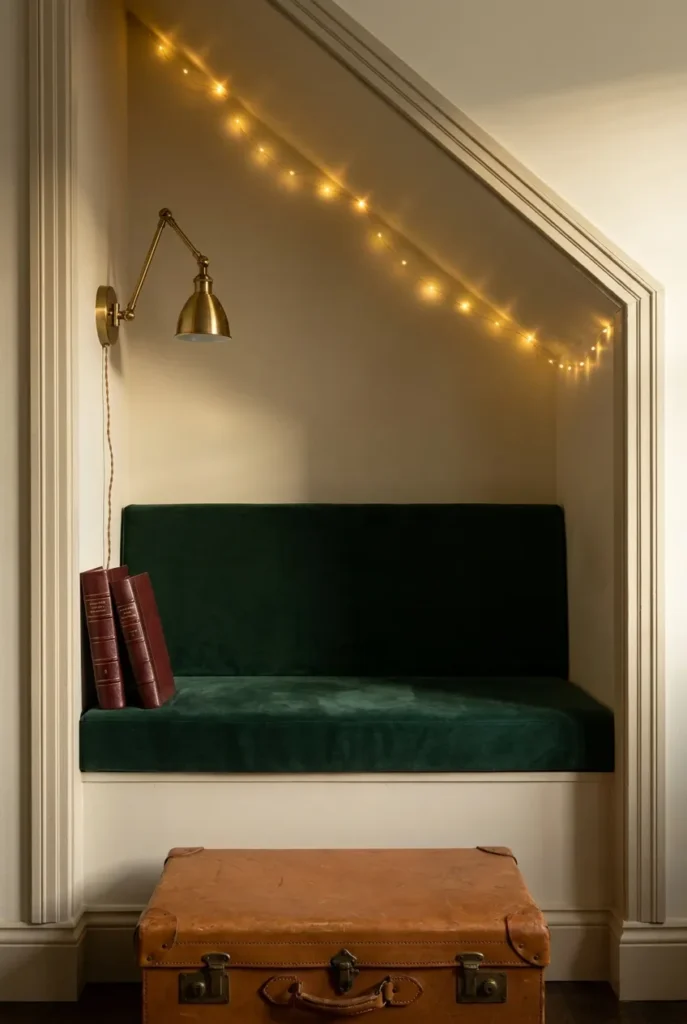
The 4-Rule Taste Test (Use This Before You Buy Anything)
This is the original framework I wish someone had given me before I bought that first sorting hat. Screenshot it. Run every Harry Potter purchase through these four rules before it enters your home.
Rule 1: Suggest, never declare. A worn leather-bound book reads as wizarding library. A book stamped with a Hogwarts crest reads as theme park gift shop. Choose the suggest version every time.
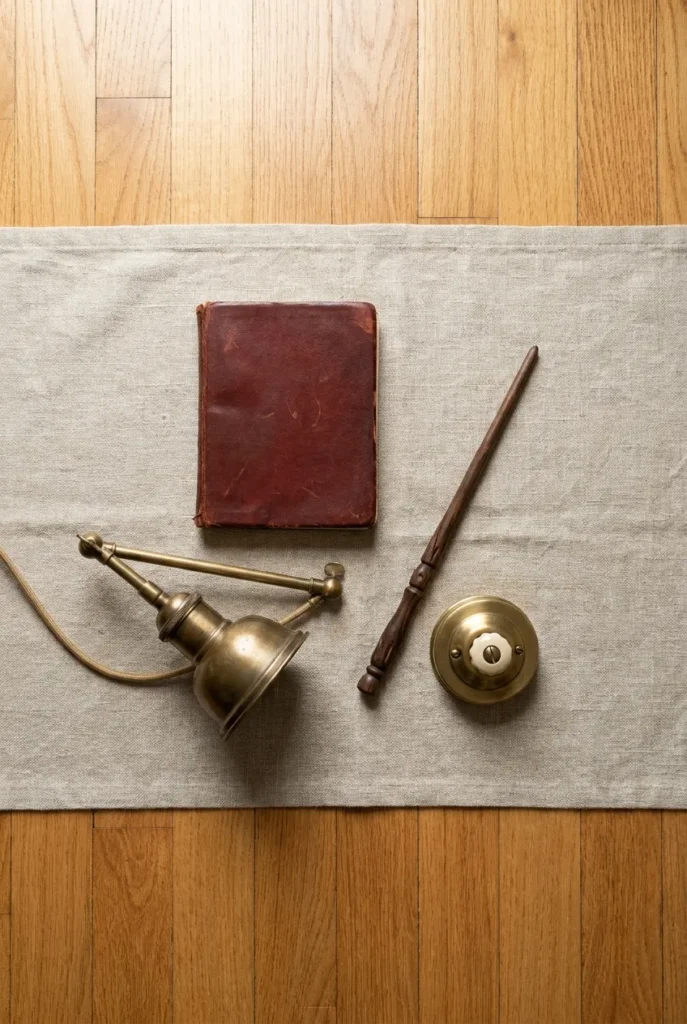
Rule 2: One nod, not five. Pick one direct Harry Potter element per nook. A vintage trunk. A single wand on a shelf. A platform 9 ¾ ticket framed small. More than one and you’ve crossed into themed-room territory.
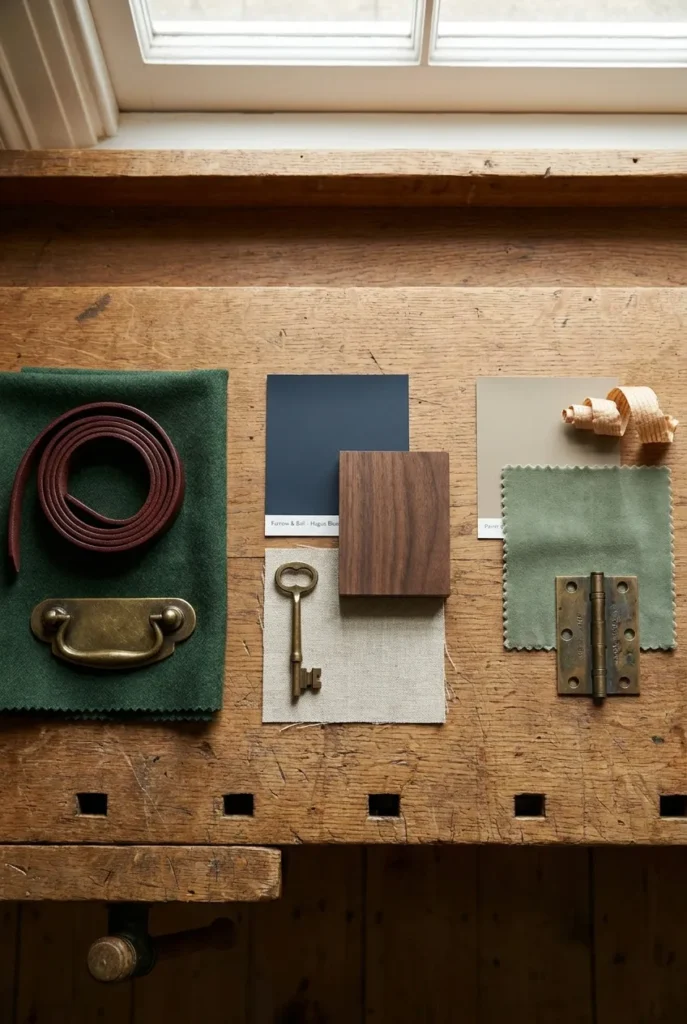
Rule 3: Materials carry the magic. Velvet, aged brass, oxblood leather, oak, beeswax candles, parchment-colored linen. These say wizarding world without you saying a word. Plastic and printed graphics break the spell.
Rule 4: Light it like a library, not a party. No purple bulbs. No flickering fake torches. One warm 2700K source, on a dimmer. That single choice does more taste work than any other element.
What Is Harry Potter’s Cupboard Actually Like? (And What to Steal From It)
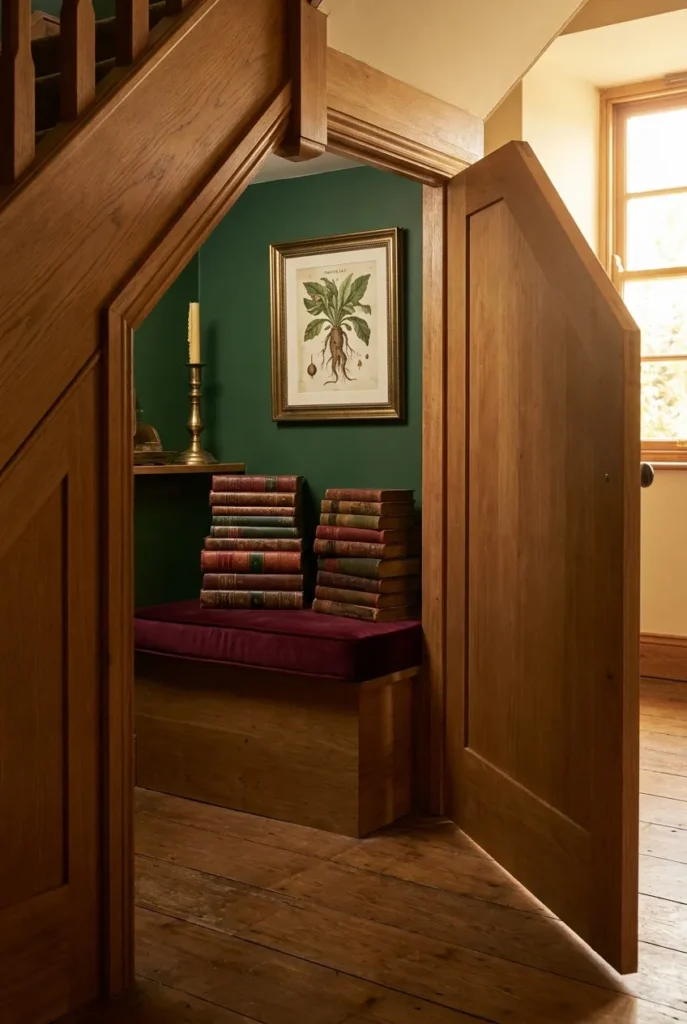
Worth a quick honesty check before we design anything. In the books and films, Harry’s cupboard under the stairs is grim. A bare bulb. A mattress on the floor. Spiders. A locking door from the outside. We are not recreating that. What we are stealing is the architectural appeal of a small enclosed space tucked under a staircase, plus the wizarding world’s wider visual vocabulary: candlelight, old books, brass, worn wood.
The actual design references you want come from the Hogwarts library, the Gryffindor common room, and Dumbledore’s office. Deep jewel tones. Layered textiles. Pools of warm light rather than overhead glare. Furniture that looks like it has a story. That’s the brief.
Measure Twice: Cupboard Under the Stairs Dimensions That Actually Work
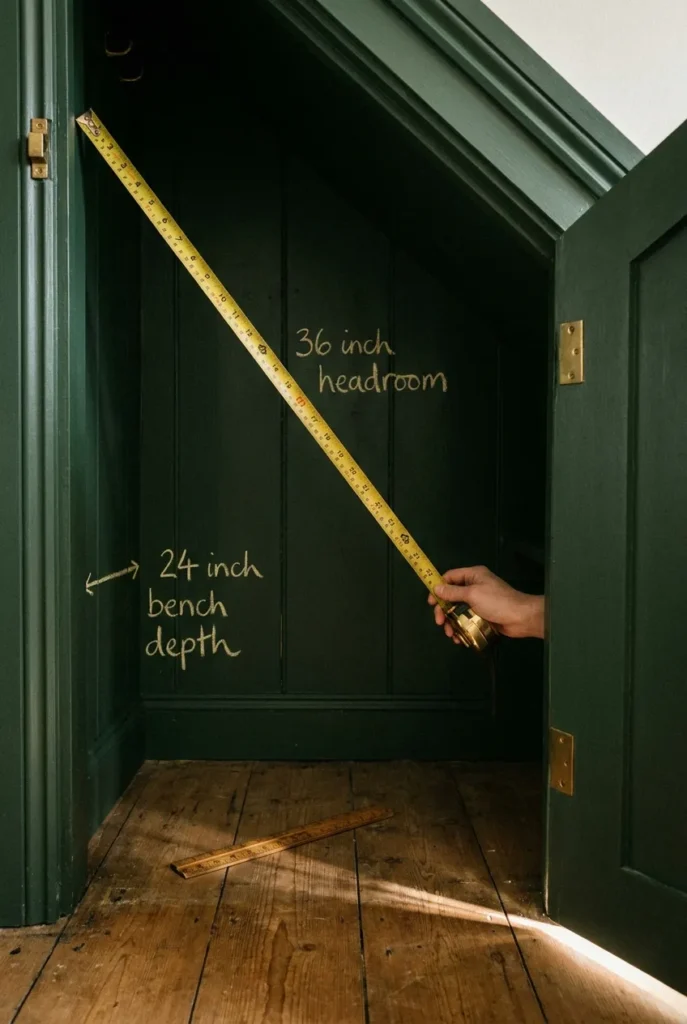
Most staircase cupboards in US homes range from 5 to 7 feet deep and 3 to 5 feet wide at the tall end. Useable ceiling height drops fast under the slope. Before you fall in love with a Pinterest photo, do this:
- Sit-up clearance: You need at least 36 inches of headroom where your shoulders will land when you sit cross-legged or lean against the back wall. Measure 18 inches up from the floor (rough cushion height) and stretch a tape from there to the ceiling.
- Bench depth: A reading bench needs 22 to 24 inches of depth to sit on comfortably with legs tucked. Less than 20 and your knees fall off the edge.
- Door width: Any door narrower than 24 inches will make getting in with a throw and a mug genuinely awkward. Ask me how I know.
- Outlet placement: Mark where the existing outlet sits (if any). You will want one within 36 inches of the sconce location.
Real talk: about one in three staircase cupboards in older US homes (Cape Cods, Craftsman bungalows, mid-century split levels) are too low to sit upright at the deep end. If yours is one of them, design the seat at the tall end and use the low end for storage instead. This is exactly the scenario a no-drill renter setup using a corner instead solves cleanly, because not every home plays nice with the cupboard concept and there’s no shame in pivoting.
The Color Palette That Does the Heavy Lifting
Skip the obvious Gryffindor red and gold combination. It reads as merch instantly. Here are three palettes that say wizarding world without saying Harry Potter out loud:
- Forest and oxblood. Deep forest green walls, oxblood leather accents, brass hardware, cream linen. This is the Hogwarts library palette and it is the most flexible. Works in almost any home style.
- Ink and candlelight. Near-black navy walls (think Farrow & Ball Hague Blue or Sherwin-Williams Naval), warm walnut wood, brass, parchment-colored textiles. This is darker academia and best for a fully enclosed cupboard with good lighting.
- Stone and moss. Warm putty walls, sage green cushions, aged brass, worn oak. This is the Burrow palette, more cottagey and softer, ideal if you find the others too heavy.
Pick one. Don’t blend two. Mixed palettes are how you accidentally end up with a costume room.
The Five Pieces That Build the Nook (Under $400)
Here’s the actual shopping order if you’re starting from an empty cupboard. Total runs $280 to $380 depending on what you already own and where you shop.
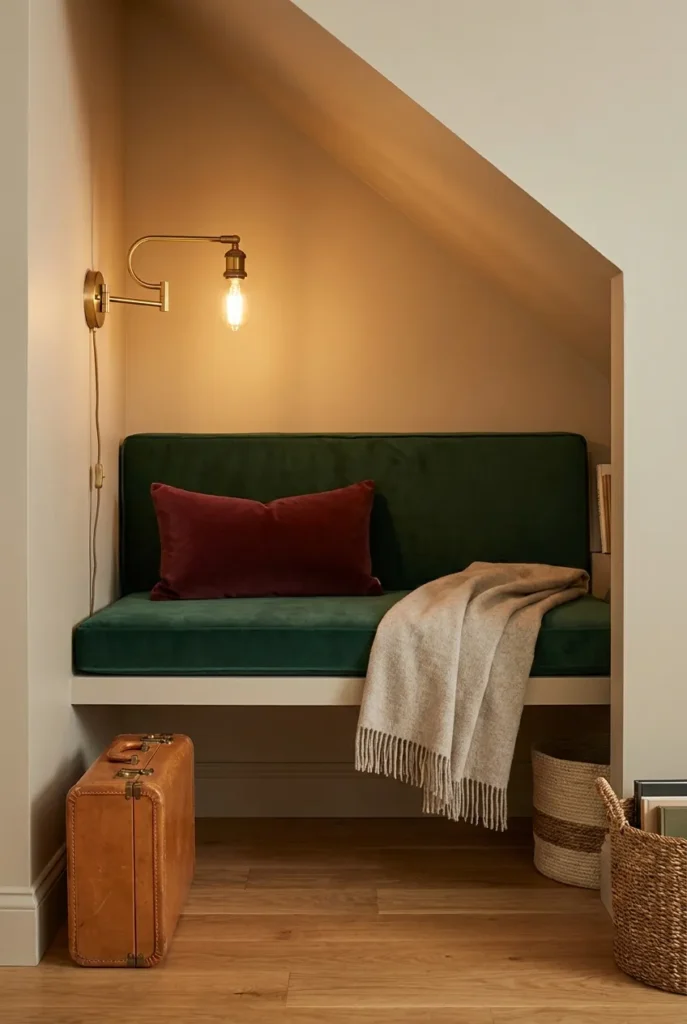
- Bench cushion or daybed pad: $60 to $120. Look at IKEA’s Hemmahos or any 24 by 60 inch foam pad with a washable cover. Velvet or linen, not synthetic shine.
- Two to three throw pillows: $40 to $60 total. Mix one lumbar in oxblood velvet, one square in sage or forest linen, one optional bolster in a small subtle plaid.
- Wool throw: $40 to $90. Target, Pendleton’s outlet, or Marshalls. Heavy wool, not fleece. Oat, charcoal, or forest.
- Plug-in brass swing-arm sconce: $50 to $90. Amazon and Wayfair both carry decent ones in the $70 range. Critical: must be plug-in, not hardwired, if you’re a renter.
- One vintage element: $20 to $80. A small leather suitcase from Goodwill. A wooden footstool. A trunk. This is your “one nod” from Rule 2 of the Taste Test above.
Add a 2700K warm bulb (under $10) and a small smart-plug dimmer (around $20) and you’re done. The exact same logic and pricing applies if you’d rather build the whole thing into a hygge-style reading corner instead, which leans even softer on color and texture while keeping the cozy mathematics identical.
Lighting: The Single Most Important Decision You’ll Make
If you do nothing else right, get the lighting right. Skip the dimmer and your 2700K bulb still reads like a dentist’s office at night. Here is the exact lighting recipe:
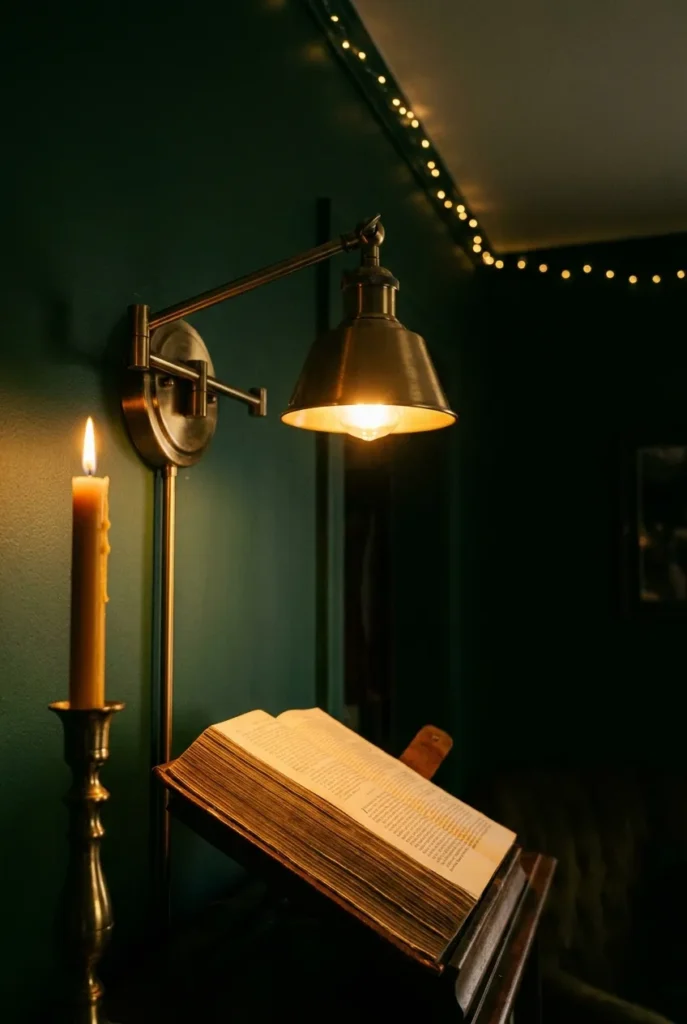
- One warm key light. A plug-in brass swing-arm sconce mounted 12 to 14 inches above where the reader’s head will rest. Bulb: 2700K, 6 to 8 watts LED. Arm length minimum 14 inches so it clears your shoulder.
- One ambient layer. A single strand of warm white 2700K fairy lights, micro-LED, tucked along the inside ceiling line. Use removable adhesive clips if you rent. Buy the version with a remote dimmer.
- One candle, real or LED. A real beeswax taper in a brass candlestick is unbeatable for atmosphere and smell. If open flame is a no (rentals, kids, pets), use a flameless candle with a warm flicker setting. The flicker speed matters: slow, not strobe.
Three layers, one warm temperature throughout. That’s it. Mixed temperatures (a cool overhead with a warm sconce) are the single fastest way to break the mood.
For more depth on bulb temperatures and how 2700K compares to other warm white options, the US Department of Energy’s lighting guide breaks down Kelvin ratings clearly and explains why the warm end of the spectrum reads as cozy to the human eye.
The Renter Version: When You Can’t Touch the Cupboard
This is the angle every other article misses. You rent. The cupboard belongs to your landlord. You’re not painting it forest green and you’re definitely not mounting a sconce.
Here is the playbook:
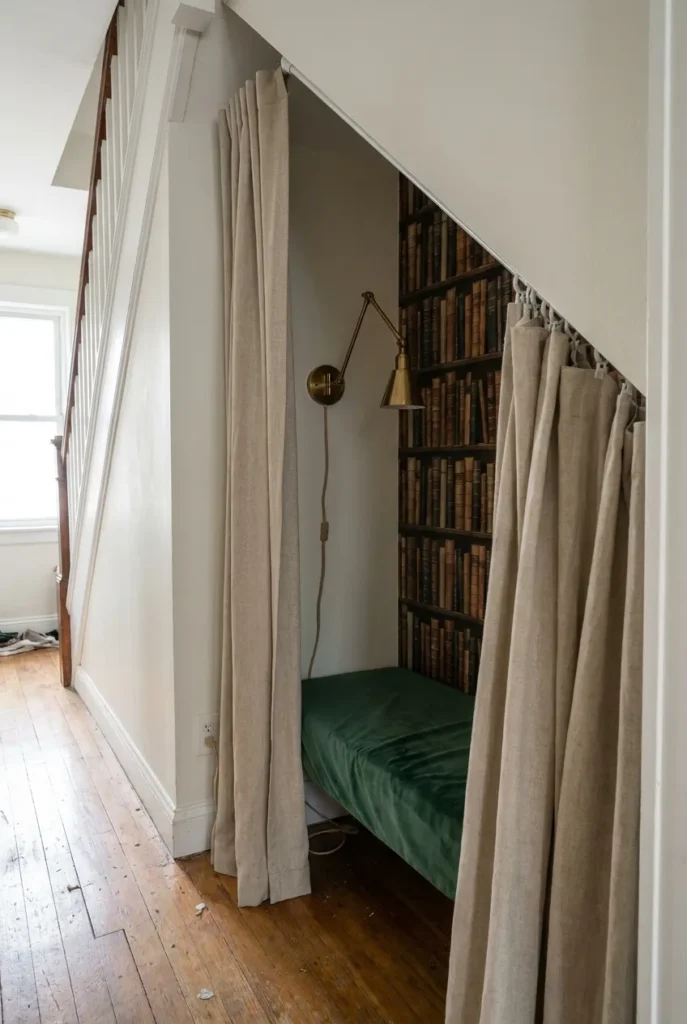
- No-drill cushion fit. Buy a single foam bench pad cut to the cupboard’s interior depth. No screws, no brackets, just gravity. A 24 by 60 inch pad sits in most US cupboards untouched and lifts out the day you move.
- Tension rod curtain instead of a door. If your cupboard has no door, a tension rod plus a heavy linen panel in oat or forest gives instant atmosphere and zero damage. Total cost: under $40.
- Plug-in everything. Plug-in sconce with adhesive cord clips, plug-in fairy lights, smart plug for dimming via your phone. Zero hardwiring.
- Removable wallpaper if you must. A peel-and-stick wallpaper in a subtle book-spine pattern or solid forest green covers the interior back wall for under $50 and peels off cleanly when you leave.
If your apartment has no staircase cupboard at all, the move is to recreate the feeling in a corner. A corner reading nook with a screen or curtain panel gives you the same enclosed-cocoon effect using nothing but a tension rod, a heavy curtain, and one well-lit chair. That setup costs less than the cupboard version and travels with you when your lease ends.
For Kids: The Harry Potter Reading Cupboard They’ll Actually Use
If you’re building this for a kid (the secondary reader for this article), the rules shift slightly. You can lean a little more literal here because the room is theirs and the costume-y energy reads as enchanting at age 8 instead of awkward at 35.
What still applies: warm 2700K lighting, soft layered textiles, one wool throw, real books on real shelves. What changes:
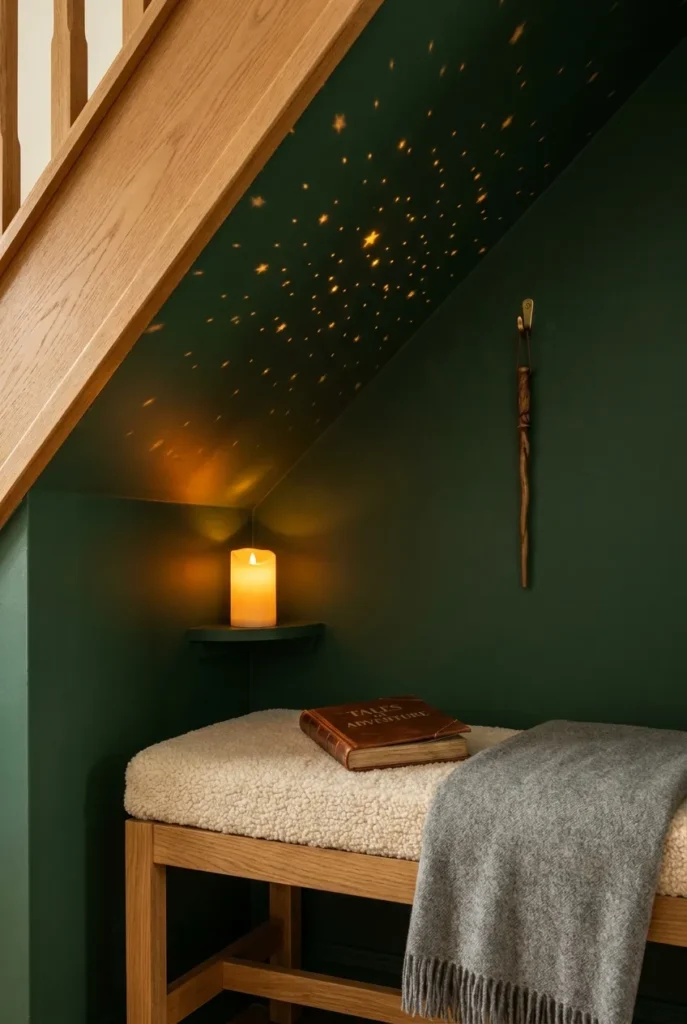
- Add one wand on a wall mount. A small wood wand displayed on an angled brass hook reads as a real artifact, not a costume prop.
- Star ceiling. A few peel-and-stick star decals or a small constellation projector on a 30-minute timer.
- Floor cushion plus low bench. Kids switch positions every six minutes. Give them two options.
- Battery LED candle in a real brass holder. All the atmosphere, none of the fire risk.
Skip the Hogwarts house banners until they ask for them. Most kids actually love a more atmospheric, slightly mysterious version over a branded one once they’ve sat in it.
What to Avoid (The Cringe List)
The shortcut to a tasteful nook is knowing what to leave on the shelf at the store. Avoid:
- Anything stamped with a Hogwarts crest or house emblem.
- Sorting hats. Yes, all of them. Especially the singing one.
- Purple, neon, or color-changing bulbs.
- Flickering plastic “torch” wall lights.
- Bedding or curtains printed with movie stills.
- Wizard-themed wall decals in a font that screams “logo”.
- More than one wand.
- A robe hung on the wall as decor.
If a friend who has never read the books would walk in and instantly think “Harry Potter room,” you’ve gone too far. The goal is for them to walk in and think “this is a beautiful library corner,” then notice a single quiet detail and smile.

FAQ
What is Harry Potter’s room under the stairs called?
It’s called the cupboard under the stairs. In the books and films it’s where the Dursleys make Harry sleep before he discovers he’s a wizard. It’s referenced by that exact name throughout the first novel.
Are there any real Harry Potter book nooks I can buy?
Yes, but be careful what you’re buying. There are two completely different products both called “Harry Potter book nooks.” One is a miniature shadowbox shelf insert (3 to 6 inches wide) that fits between books on your shelf. The other is a real-life reading nook built into a cupboard under the stairs. This article is about the second kind. If you wanted the miniature, search for “Harry Potter book nook shelf insert” instead.
Why did Harry move out of the cupboard under the stairs?
Once the Hogwarts acceptance letters started arriving en masse and the Dursleys realized the wizarding world knew exactly where Harry was sleeping, they moved him to Dudley’s second bedroom upstairs to soften the optics. It’s also a small piece of character growth for the Dursleys, however reluctantly.
What decor style is Harry Potter?
The wider Harry Potter visual world is best described as dark academia with cottagecore undertones. Think aged wood, brass hardware, jewel-toned textiles, candlelight, mullioned windows, leather-bound books, and worn rugs. The Hogwarts library, Gryffindor common room, and Dumbledore’s office are the strongest reference points.
Can I build a Harry Potter reading nook if I don’t have a staircase?
Absolutely. The cupboard is one option, not the only option. You can recreate the same mood in a corner with a tension rod and a heavy curtain, a closet with the door removed and a cushion added, an alcove, or a deep bay window seat. The four-rule taste test in the first H2 applies regardless of location.
How much does a Harry Potter reading nook cost to build?
A renter-safe version with no construction runs $200 to $300. A painted-and-cushioned version (still no carpentry) runs $300 to $400. A full carpentered built-in bench with custom door runs $800 to $1,500 depending on your area and whether you DIY the carpentry.
Is a Harry Potter reading nook only for kids?
No, and the most beautiful versions I’ve seen belong to adults. The taste test framework in this article is specifically built to give adult fans a way to honor the books without their living room reading like a themed bedroom. Lean into materials and lighting, away from merchandise, and the result reads as moody library, not costume party.
Bring the Magic Home (Without the Merch)
Here’s what I want you to take from all this. A Harry Potter reading nook done tastefully is not about restraint, it’s about choosing the right vocabulary. Forest green over Gryffindor red. A single wand over a wall of branded posters. One warm brass sconce on a dimmer over five purple bulbs blinking like a haunted house. The wizarding world was always built on materials and light, not on logos.
Start with the four-rule taste test before you buy anything. Measure your cupboard before you fall in love with a photo. Pick one palette and stay loyal to it. And if you don’t have a cupboard under the stairs at all, build the same mood in the corner that’s currently holding three Amazon boxes and a sad lamp. That corner is waiting for you. Which version are you starting with this weekend?
Keep reading
More cozy nook ideas
 Small Spaces
Read →
Small Spaces
Read →
10 Small Reading Nook Ideas for Adults
One high-back chair, one clamp-on lamp, one $19.99 tray table. At IKEA US prices this month, that’s a full reading corner for…
 Home Library & Bookshelves
Read →
Home Library & Bookshelves
Read →
14 Ideas for a Fireplace with Bookshelves on Each Side on a Budget
Two bookcases, two plug-in lamps, two wall straps. At IKEA US list prices this month, that adds up to $237.98 before tax,…
 Study & Craft Nooks
Read →
Study & Craft Nooks
Read →
16 Kids Homework Station Ideas Little Ones Will Love
Two IKEA pieces, one empty corner, $109.98 before tax. That’s the first kids homework station on this list, and it fits in…