
Patio Decor Ideas: Cozy Outdoor Cottagecore Styling

Three pieces, one Saturday, right around $110. That is what cottagecore patio decor actually costs once you stop scrolling and start staging.
If your patio is a plastic chair, a dead basil plant, and a bag of potting soil you keep meaning to open, this was written for you. Renters especially. One small slab or one balcony, a landlord who counts holes, and maybe $200 before it stops being fun.
So here is the build order, real prices from US retailers checked this month, and the parts the pretty photos quietly skip.
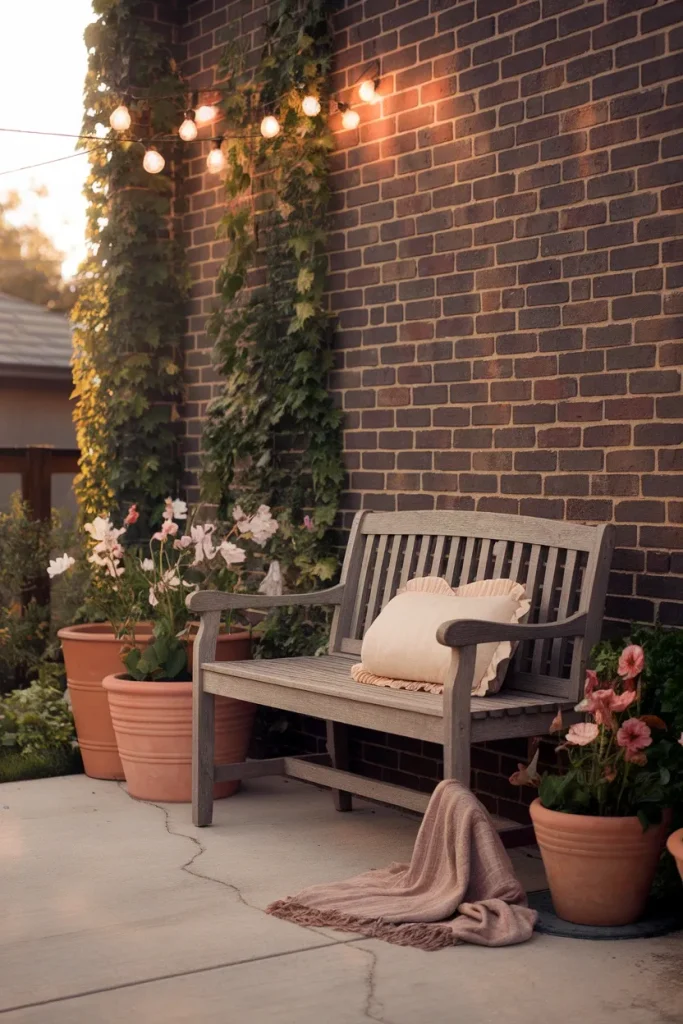
Start With Three Pieces, Not Twelve
Every cottagecore patio that works has the same three things doing the heavy lifting. One soft place to sit. One warm light source. One living thing with height.
Buy those first, in that order, and stop. The bunting and the vintage watering can can wait a month.
Here is what those three cost right now at big box US retailers, checked August 2026:
| Piece | Real listing | Price |
|---|---|---|
| Seat cushions, 24 x 24, set of 2 | Mainstays Sand Dollar, Walmart | $34.98 |
| String lights, 48 ft, 24 S14 bulbs | Hampton Bay, Home Depot | $29.97 |
| Terracotta pot, 12 in | Vigoro, Home Depot | $19.97 |
| Terracotta pot, 10 in | Vigoro, Home Depot | $16.97 |
| Terracotta pot, 8 in | Vigoro, Home Depot | $7.97 |
| Three-piece starter total | $109.86 |
That is a real total, not a vibe. Add plants and you are still under $140.
The failure mode here is buying decor before you buy comfort. A patio with six ceramic mushrooms and nowhere soft to sit gets photographed once and then ignored.
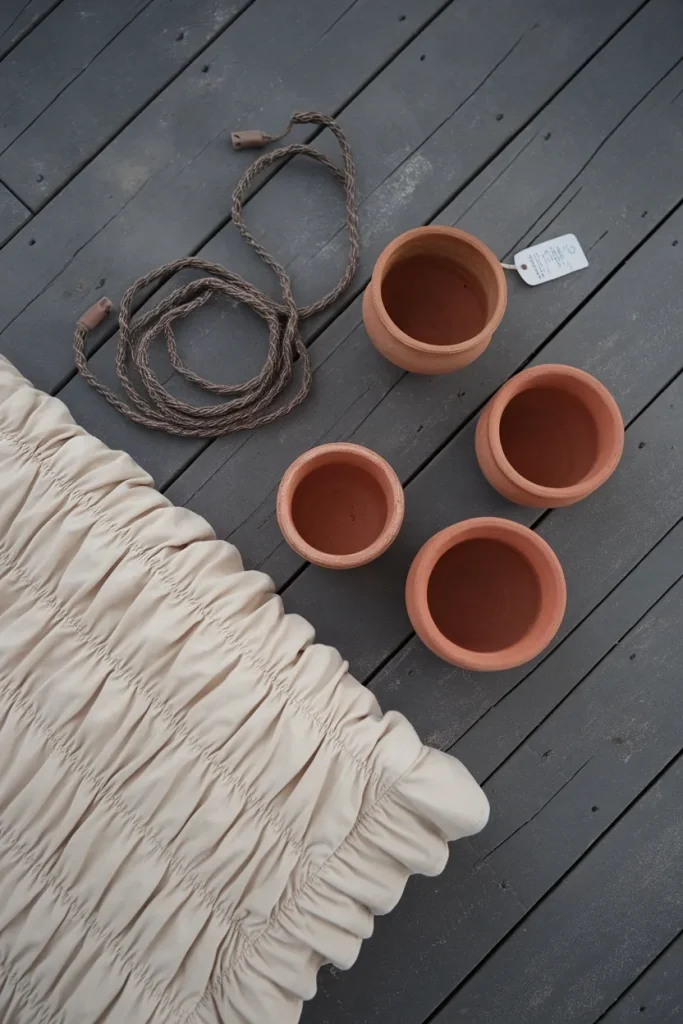
Anchor the Corner With Something That Looks Older Than You
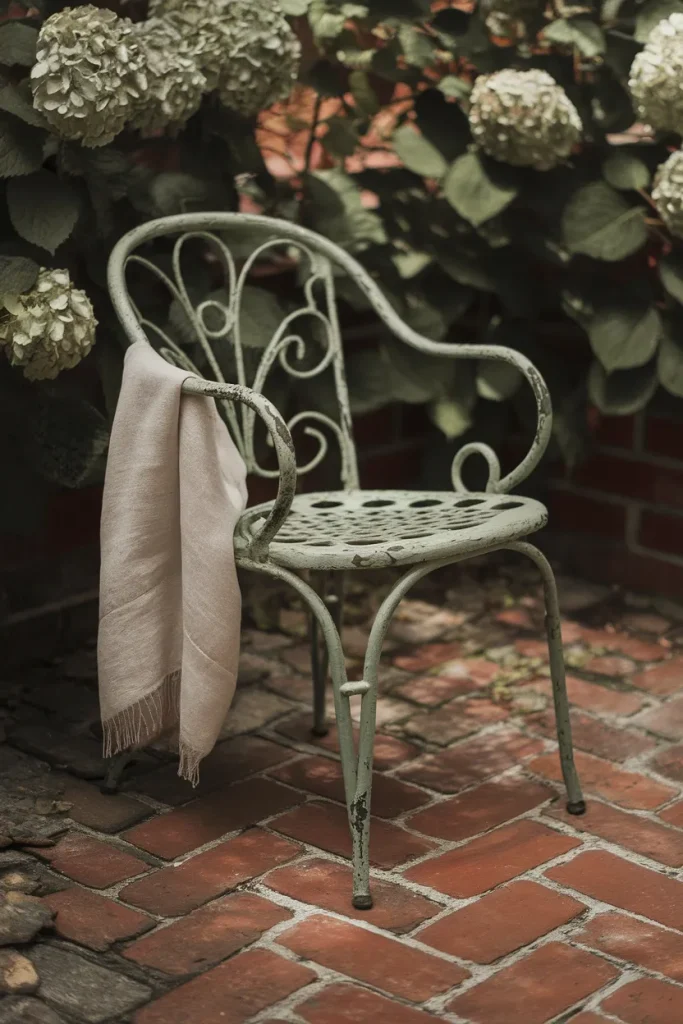
Cottagecore reads as inherited, not purchased. One piece with visible age does more work than four new ones.
A wooden slat bench, a cast iron bistro chair, a painted stool with a chipped edge. Thrift stores and Facebook Marketplace price these between $20 and $60 in most US metros, well under retail.
Aim for a seat height of 17 to 19 inches. That is standard dining chair range, and it is the height most adults can sit at for an hour without their legs going numb. Anything under 15 inches turns into a lounging position, which is fine for a nap and bad for a book.
One honest trade-off: cast iron looks the part and holds up forever, but it gets genuinely hot in direct August sun. If your patio faces west, put the cushion on before you sit down.
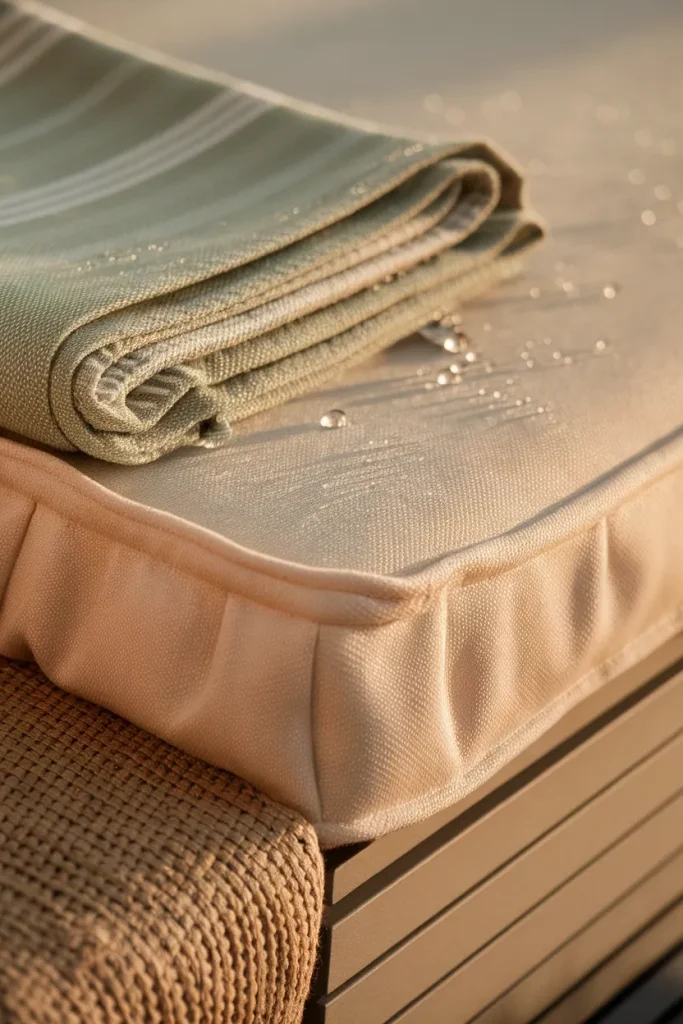
Layer Textiles, But Only the Ones That Survive Rain
This is where most cottagecore patios fall apart around week six.
Cotton throws and untreated linen look correct in photos and mildew fast outdoors. A damp cotton blanket left folded on a bench in July will smell sour in four days. Ask anyone who has done it once.
What actually holds: solution dyed acrylic (Sunbrella and its cheaper equivalents), olefin, and polypropylene outdoor rugs. They feel slightly less lovely to the hand and they will still look good next spring.
Real price band for outdoor deep seat cushions at Walmart right now: $13.99 at the bottom, $34.98 for a Mainstays two piece set, $70.70 for Greendale, and $146.98 for genuine Sunbrella. The $35 tier is the honest sweet spot for a first season.
Keep one pretty indoor throw for actual use, and bring it in with you. That is not a compromise, that is just how outdoor textiles work.
Light It at 2700K, and Never From Directly Above
Warm light is the entire difference between a patio and a parking lot.
Look for bulbs rated 2700K. That is the warm white end of the scale, the color of an old filament bulb. Anything at 4000K or higher goes blue and clinical the second the sun drops, and no amount of floral bunting recovers it.
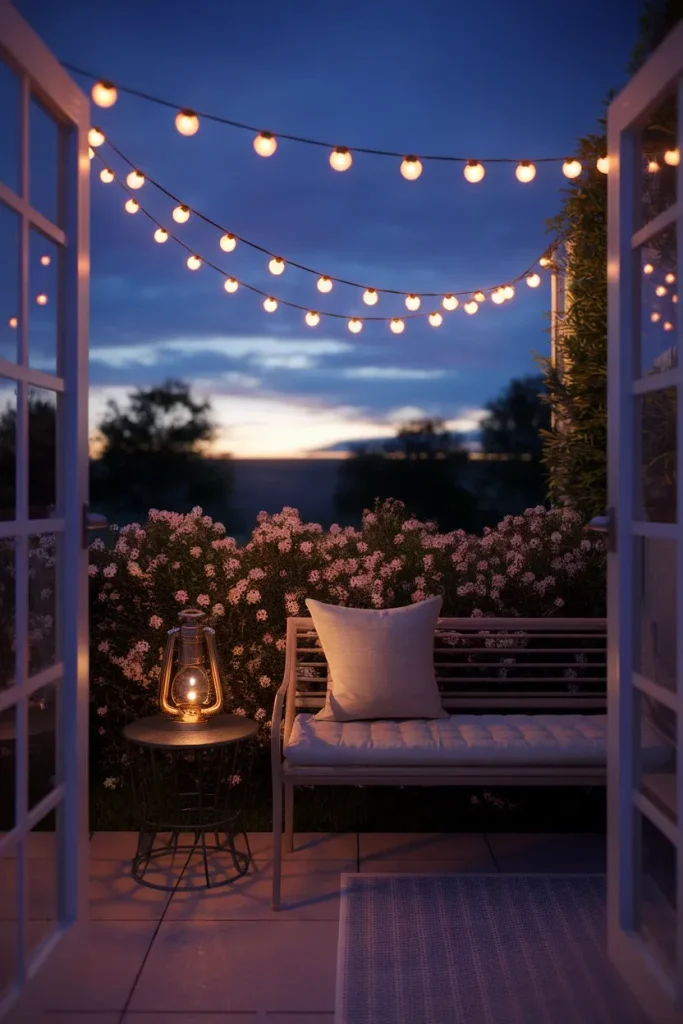
Hang string lights 7 to 9 feet above the floor so the bulbs sit above your sightline when seated. Bulbs at eye level create glare that makes reading genuinely uncomfortable.
Two sources beat one. A strand overhead plus a lantern or a battery sconce at seated height gives you depth instead of a flat wash. The same layering logic that governs warm reading nook lighting setups indoors applies out here, just with weather rated hardware.
Real prices for 48 ft outdoor strands at Home Depot right now run $29.97 for the Hampton Bay 24 bulb S14 set up to $192.50 for color changing smart strands. The $30 to $45 band covers what you need.
One safety note worth the sentence: use lights rated for outdoor or wet locations, and plug them into a GFCI protected outlet. Solar strands skip the cord entirely but noticeably dim after about four hours, so they fade right when you want them.
Build the Green in Three Heights
Here is the original rule, and it is the one thing worth screenshotting:
The 3-2-1 Cottagecore Patio Rule: three heights of green, two light sources, one thing that was already old.
Three heights means something trailing (ivy, string of pearls, sweet potato vine spilling over a pot lip), something at mid level (lavender, cosmos, a small hydrangea), and something tall or climbing (a trellised clematis, a potted bay, sweet peas on a bamboo teepee). Flat single height planting is what makes a patio read as a garden center display instead of a cottage garden.
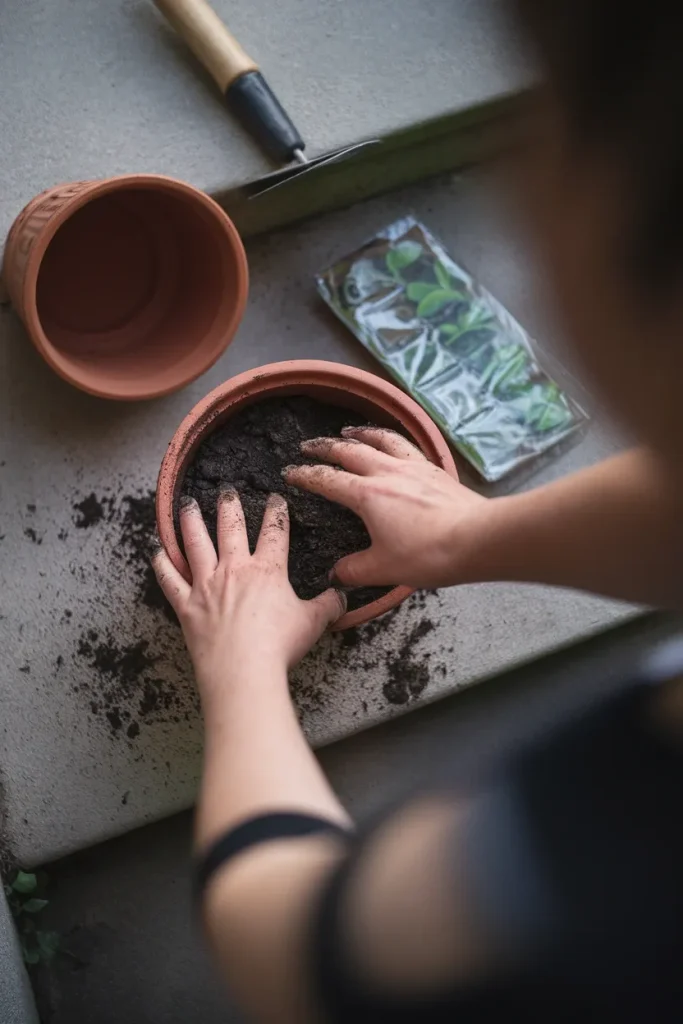
Terracotta is the correct material and it comes with a real catch. Clay is porous, so it wicks moisture out of the soil and your pots dry faster than plastic. In summer that means watering roughly every other day. In freezing climates, unglazed terracotta left full of wet soil cracks over winter, so it comes inside or gets emptied.
Terracotta pricing at Home Depot right now: $7.97 for an 8 inch, $16.97 for a 10 inch, $19.97 for a 12 inch, $29.97 for a 14 inch. Three sizes and you have your heights.
Before you buy anything perennial, check your zone against the USDA plant hardiness zone map, which the Agricultural Research Service updated to its 2023 edition and which now shows half zones in 5 degree increments. Buying a zone 8 lavender for a zone 5 patio is how a $30 plant becomes a one summer plant.
Add One Pollinator Patch and the Patio Starts Moving
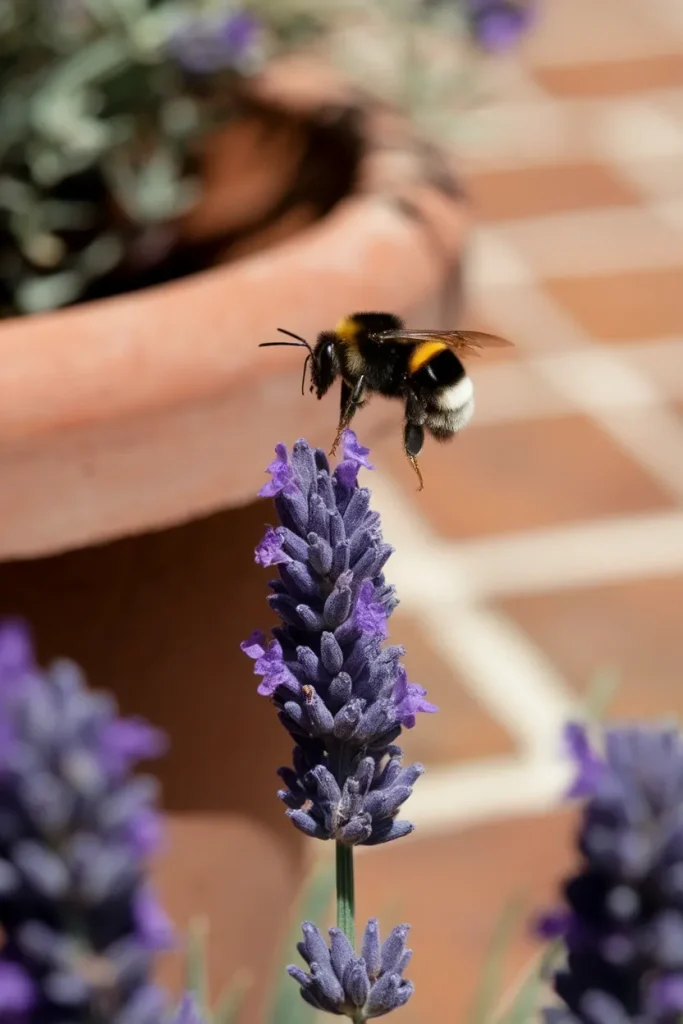
A cottagecore patio with no insects on it is a stage set. The moment bees are working the lavender, the corner reads alive.
Pick one pot and dedicate it to natives. The Xerces Society for Invertebrate Conservation publishes regional pollinator friendly plant lists broken out by geography, covering nectar and pollen plants, caterpillar host plants, and species that support specialist bees. Filter to your region and pick three.
The sensory payoff is the part that does not photograph: a lavender pot in full bloom hums. You hear it before you see it, a low fuzzy buzz at about waist height, and it is the single best argument for skipping the fake florals.
Failure mode: planting one lonely native in a sea of sterile double flowered hybrids. Doubles look lush and often carry almost no accessible nectar. Group your natives so there is something worth landing on.
The Renter’s No-Drill Cottagecore Patio
Nobody else writing about this keyword addresses the thing most of you are dealing with: you cannot put holes in anything.
Everything above still works. You just change how it attaches.
- String lights: use a tension rod between two walls of a balcony, or gutter hooks that clip over an existing edge, or two freestanding poles weighted in buckets of sand. No anchors.
- Vertical height: a leaning wooden ladder or an A frame plant stand gives you climbing height with zero fasteners. Sweet peas will climb a bamboo teepee stuck straight into a 14 inch pot.
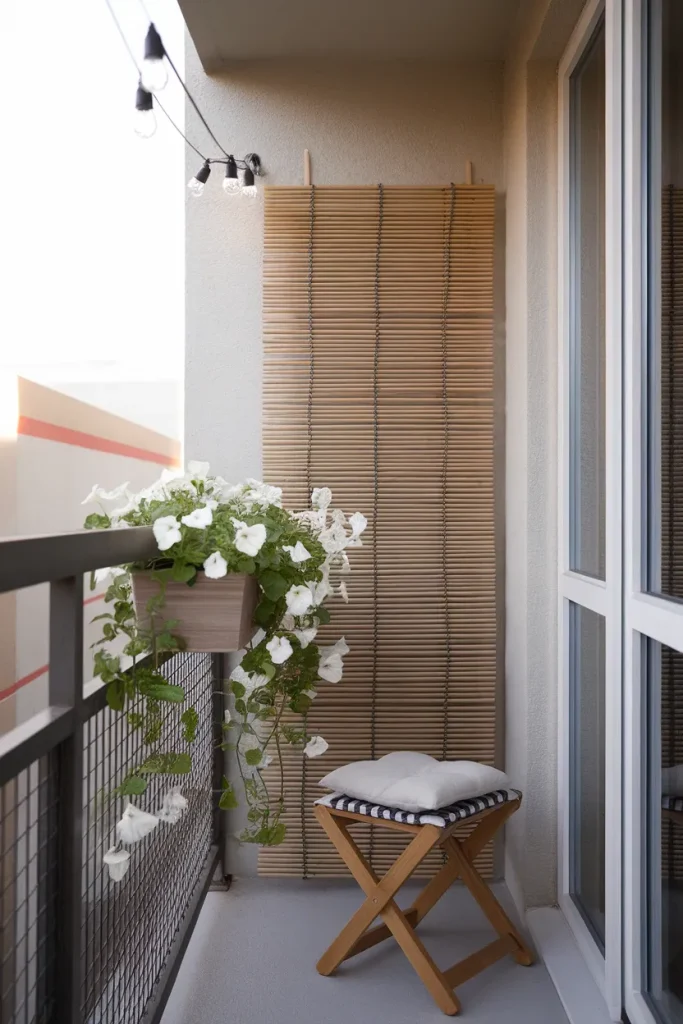
- Privacy: railing mounted planter boxes that hook over the top rail, or a rolled bamboo screen zip tied to existing railing. Both come off clean.
- Walls: outdoor rated adhesive hooks hold a small lantern or a hanging basket under about 5 pounds. Test one for 24 hours empty before you trust it with a plant.
- Floor: interlocking deck tiles float over ugly concrete and lift out on move out day.
Check your lease and any HOA rules before you hang anything over a railing edge, because a lot of buildings ban exterior facing attachments outright.
If your outdoor space is a balcony rather than a slab, the zero drill build order gets more specific, and there is a full cottagecore balcony garden for renters walkthrough that covers wind tolerant plants and weight limits.
What Actually Survives Out There (The Part Pinterest Skips)
Every top ranking article on this topic shows the styled photo and stops. Here is season two.
| Material | Outdoors year round? | What goes wrong |
|---|---|---|
| Solution dyed acrylic cushions | Yes | Fades slowly, 3 to 5 seasons |
| Cotton or untreated linen | No | Mildews within days when damp |
| Unglazed terracotta | Only above freezing | Cracks in freeze-thaw if left full |
| Powder coated steel | Yes | Chips at the feet, then rusts |
| Raw softwood (pine, fir) | No | Grays and softens in one wet season |
| Teak or cedar | Yes | Silvers on purpose, that is the look |
| Polypropylene rug | Yes | Traps grit, hose it monthly |
| Paper or rattan lanterns | No | One rainstorm |
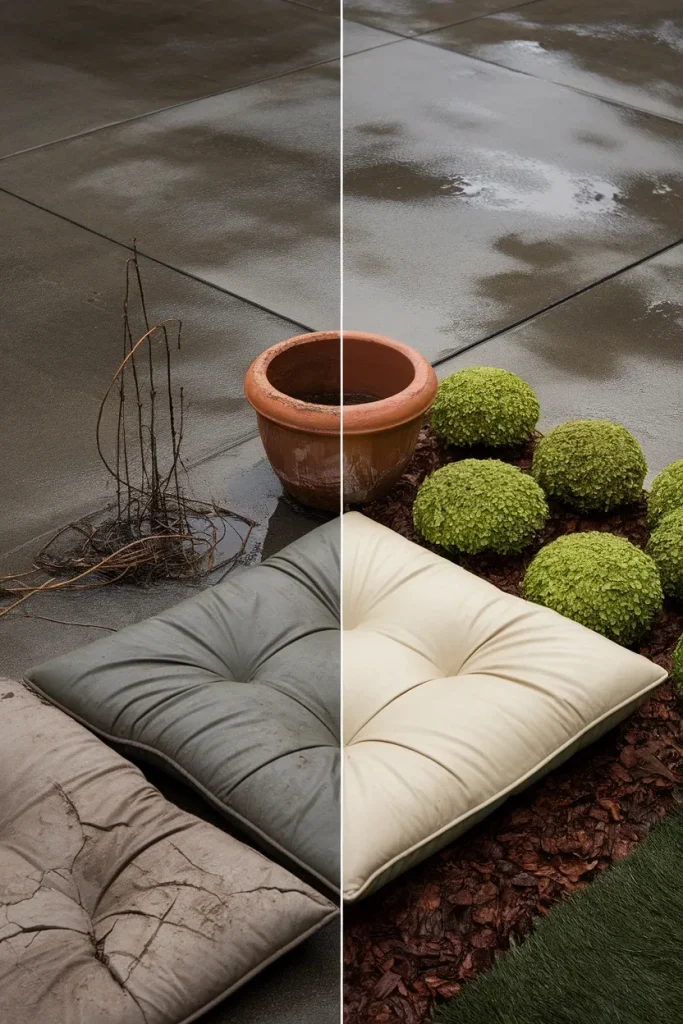
The single most common failure is leaving cushions out through a rainy week. Wet foam holds water for days and grows mold from the inside where you cannot see it. A $25 deck box solves it permanently.
Second most common: forgetting terracotta over winter. Empty the pots, stack them dry, and store them off the ground. They will outlive the patio.
Style the Small Stuff With Restraint
One vintage find, not eight. A single enamel pitcher holding cosmos beats a shelf of trinkets every time.
Things that earn their spot: a galvanized tray to corral a mug and a book so nothing tips, a lidded glass jar of matches for the lantern, one enamel or stoneware pitcher, a wire basket for garden clippers.
Things that clutter: decorative watering cans that hold nothing, resin figurines, anything with a printed word on it.
The named rule for the tray, which is the fix for the eternal problem of the mug on the uneven slab: keep it within 18 inches of your seated shoulder. That is roughly the distance you can reach without leaning forward and losing your place in a book. Call it the 18 inch reach rule. A 16 to 20 inch round side table hits it exactly.
Make It a Reading Corner, Not Just a Photo
This is the part Trex names as a trend and then says nothing about.
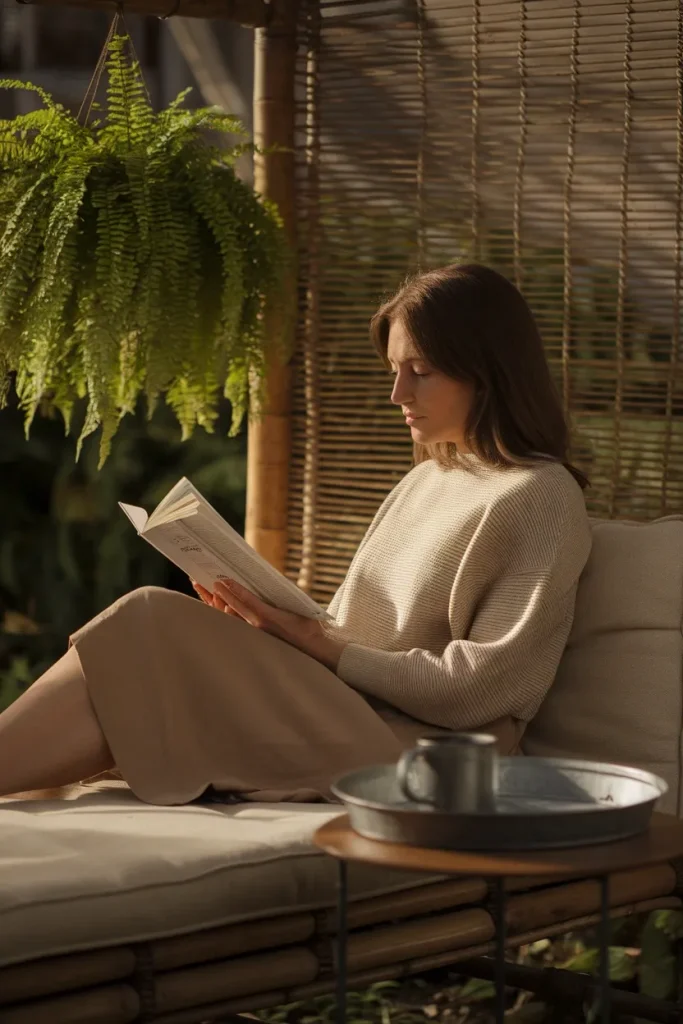
Reading outdoors has two enemies: glare and neck angle. Face your seat so the low afternoon sun is behind you or to your side, never in front. A page in direct low sun is genuinely hard to read, and you will squint your way inside within ten minutes.
Give yourself a back. A bench with no backrest is fine for twenty minutes and rough at forty. If your bench is backless, prop a firm 20 inch bolster or a folded outdoor cushion against the wall behind you.
Then add one thing that closes the space: a hanging plant to one side, a screen behind, a rug underfoot. Enclosure on two or three sides is what turns a chair on a slab into a corner you want to stay in.
For more variations on that idea, from a bench under a tree to a full garden reading shed, there is a whole set of outdoor reading nook and garden escape ideas worth stealing from.
A Cottagecore Patio Under $200, Itemized
Real listings, real prices, checked August 2026 at US retailers.
| Item | Where | Price |
|---|---|---|
| Outdoor seat cushions, 24 x 24, set of 2 | Walmart (Mainstays) | $34.98 |
| String lights, 48 ft, 24 S14 bulbs | Home Depot (Hampton Bay) | $29.97 |
| Terracotta pot, 14 in | Home Depot (Vigoro) | $29.97 |
| Terracotta pot, 12 in | Home Depot (Vigoro) | $19.97 |
| Terracotta pot, 10 in | Home Depot (Vigoro) | $16.97 |
| Terracotta pot, 8 in | Home Depot (Vigoro) | $7.97 |
| Plant starts, 5 to 6 in 4 in pots | Garden center | $18 to $30 |
| Running total | $158 to $170 |
That leaves $30 to $40 for the thrifted bench or chair, which is exactly where the Marketplace price band sits in most US metros.
Two ways to cut it further: skip the 14 inch pot and use a five gallon bucket painted with terracotta colored masonry paint, or borrow height from a thrifted wooden ladder instead of buying a trellis.
Season It Without Rebuying It
The same bones carry from March to November if you swap three small things.
Spring: sweet peas on a teepee, a jar of tulips, pale cushions. Summer: lavender and cosmos at peak, the rug down, lights on a timer. Early fall: swap the throw for something heavier, add a pumpkin or two and dried hydrangea heads, move the seat to catch the lower sun.
That is the whole seasonal plan. Three swaps, no rebuild. Fake freshness is buying a whole new set every May.
Cottagecore Patio Decor FAQs
How do I get a cottagecore patio on a budget? Buy in this order: soft seating, warm light, plants with height. Three pieces run about $110 at big box prices. Everything decorative comes from thrift stores and Marketplace, where bistro chairs and wooden benches sit in the $20 to $60 range in most US metros.
What plants are best for a cottagecore patio? Lavender, cosmos, sweet peas, foxglove, hydrangea, clematis, and trailing ivy hit the look. Match them to your zone using the USDA map first, and give one pot over to regional natives so pollinators show up.
Can you do cottagecore on a small patio or balcony? Yes, and small actually helps. Cottagecore reads as abundant, which is easier to achieve in a 6 by 8 foot corner than across a big open deck. Build vertically with a ladder or trellis instead of spreading out.
How do I keep it rustic without it looking cluttered? One vintage find per surface. Group plants in odd numbers at three heights. If an object does not hold something, light something, or grow something, it is probably clutter.
Is a cottagecore patio practical for daily use? It is, with two changes: use outdoor rated textiles rather than cotton, and give yourself a real side table within 18 inches of your seated shoulder. Those two fixes convert it from a photo set into somewhere you sit four nights a week.
What color temperature should the lights be? 2700K. That is warm white, the old filament color. At 4000K and above the light turns blue and clinical after dark.
Does terracotta survive winter outside? Not in freezing climates. Unglazed clay absorbs water and cracks through freeze-thaw cycles. Empty the pots, dry them, and stack them somewhere sheltered and off the ground.
Start This Weekend, Not Next Spring
Pick the corner. Buy the cushion, the strand, and one pot. Put them out on Saturday and sit in it Saturday night with the lights on.
Everything else on this page is a second trip. The corner only gets used once there is somewhere soft to sit and something warm to sit under.
If your patio project is really a reading corner in disguise, the outdoor nook guide above is the next thing to read.
Keep reading
More cozy nook ideas
 Cottage Garden & Balcony
Read →
Cottage Garden & Balcony
Read →
20 Backyard Oasis Ideas on a Budget, Starting With a $152 Corner
Two folding chairs, a small outdoor rug, 24 battery globe lights, and two planters. At IKEA this October, that adds up to…
 Reading Sheds
Read →
Reading Sheds
Read →
12 She Shed Ideas for Small Yards
No acre, no contractor, no giant budget. You need about 64 square feet, a flat patch of ground, and a plan for…
 Garden Nooks
Read →
Garden Nooks
Read →
Container Gardening Ideas for Small Cottage Gardens That Fit a Rental Patio
One anchor pot, two mid-size pots, three little ones. That’s the whole cottage garden, and it fits on a patio smaller than…