
Cottagecore Balcony Ideas That Survive a Real Rental

No garden, no drilling, no landlord conversation required.
Most cottagecore balcony ideas you have saved were shot on a private terrace somewhere with old stone and better weather. Yours is a 5 by 8 concrete slab, a metal rail, and a view of the parking lot. Here is the part that took me a while to believe: the slab is not the problem. The layering is.
Below is the three-layer rule that fixes it, the weight limit nobody mentions before you buy nine pots, and the plants that will still be alive in September.
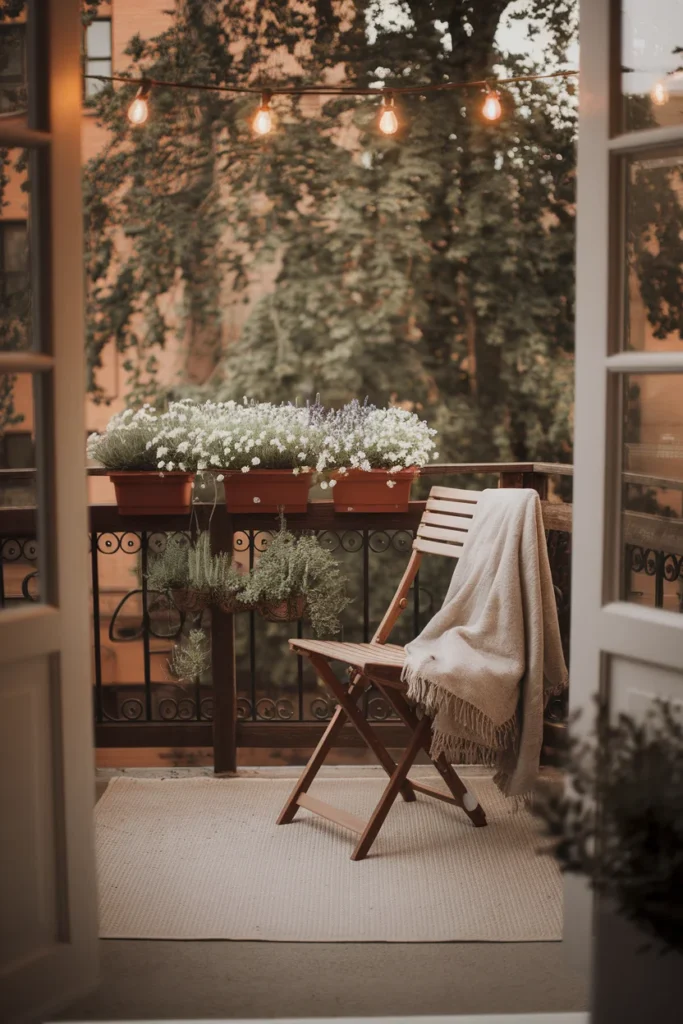
Start With the Three-Layer Rule (Ground, Rail, Overhead)
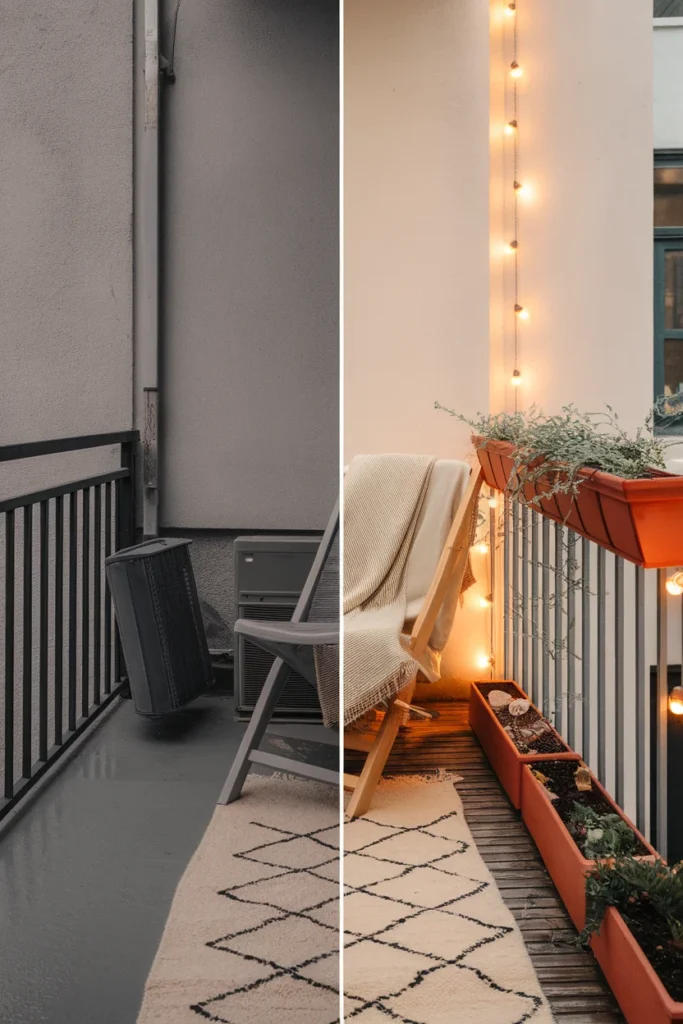
Every balcony that reads cottagecore in a photo has three layers working at once. Every balcony that reads sad has one.
Ground kills the concrete. Rail kills the metal. Overhead kills the flatness. Miss any one of them and your eye lands on the thing you were trying to hide.
| Layer | What it does | The number to hit |
|---|---|---|
| Ground | Covers the concrete and tells your feet this is a room | Rug covers 60 to 70 percent of the floor. Not wall to wall. Leave a border of slab showing so the space still breathes |
| Rail | Breaks up the metal line that screams “apartment” | Greenery at three heights, with the tallest stem about 24 inches above the rail cap |
| Overhead | Stops the flat, unfinished look after dark | One soft element, 7 to 8 feet off the floor |
Build in that order. Ground, then rail, then overhead. If you buy the string lights first (everyone buys the string lights first), you will end up with a lit concrete box.
Know What Your Balcony Can Actually Hold
Wet potting mix is heavy in a way that surprises people. A rail lined with nine full pots is not a decoration, it is a load.
The model building code is public and specific. Under Chicago’s building code live load table, which follows the standard model table used across the US, porches and exterior balconies accessible from a single dwelling unit are designed for 60 pounds per square foot, and balconies serving more than one unit are designed for 100.
Run the math on your own slab. A 5 by 8 balcony is 40 square feet, so 40 times 60 gives you a 2,400 pound design load. That sounds like a lot, and it is. Your rail garden is nowhere near it.
Two things still matter. Concentrated weight is different from spread weight, so put your heaviest pots close to the building wall rather than out at the rail edge where the cantilever is longest. And design load assumes the structure is sound, which is an assumption nobody should make about a 1970s balcony with rust bleeding through the paint.
Safety note: this is general information, not an engineering assessment. If your balcony shows spalling concrete, exposed rebar, soft wood, or a rail that moves when you lean on it, stop and contact your building management or a licensed structural engineer in your state before you add anything at all.
Kill the Concrete First
The rug changes the most for the least money, and it is the one people skip.
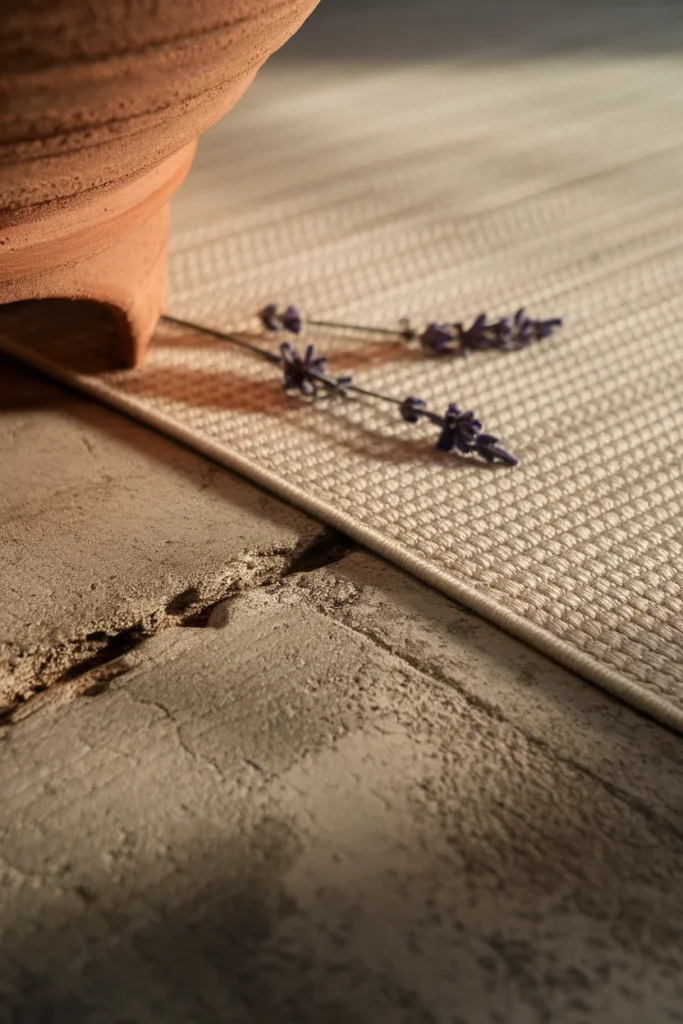
Go with a flatweave polypropylene outdoor rug in cream, oatmeal, or a faded sage. Around 3 by 5 feet suits most balconies under 40 square feet. Skip jute outdoors even though it looks right in every pin: real jute holds water, and after the first hard rain it will smell like a wet basement and grow a fringe of mildew where it meets the slab.
The failure mode here is water. Your rug needs to drain, not sit in a puddle, so lift it off the slab now and then and let the concrete dry. On a covered balcony this is a non-issue. On an open one, plan to hang it over the rail after storms.
Barefoot is the test. If you would not walk on it barefoot at 7 am, it is not doing its job.
One Real Seat Beats Two Half-Seats
The instinct on a small balcony is to squeeze in a two-chair set so it feels social. Then nobody sits out there, because two upright chairs facing each other is a negotiation, not a retreat.
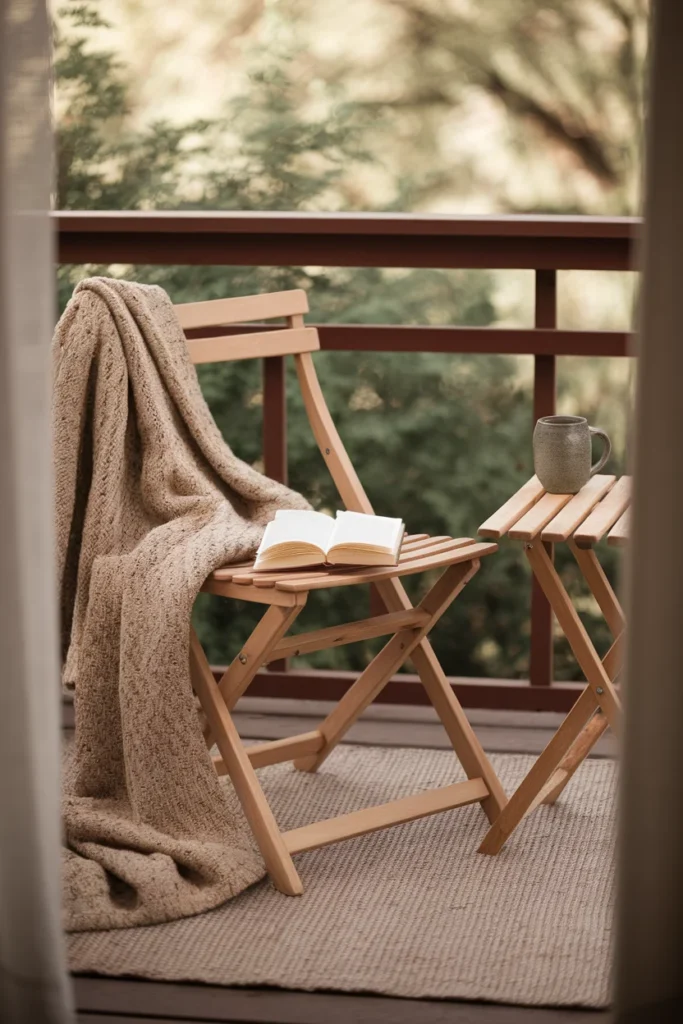
Pick one seat you would actually sink into for 40 minutes. A folding acacia bistro chair works. So does a small rattan armchair, or a floor cushion and a pouf if you are under 25 square feet.
For a real reference point: IKEA’s TÄRNÖ set (table plus two folding chairs, solid acacia with powder-coated steel) runs $99.99 in the US as of August 2026, and the table is 21 5/8 inches long by 21 inches wide by 27 1/2 inches tall. Buy the set, use one chair, fold the second and store it against the wall for when someone visits. Folding matters more than you think, because a chair that folds is a chair you can move out of the rain in four seconds.
Then add the soft layer: one outdoor lumbar pillow and one throw you do not mind losing to weather. Wool is the honest pick for cool evenings. Acrylic outdoor throws dry faster and feel like nothing.
Here is the trade-off nobody puts in the pin caption. Floor cushions photograph better than any chair on earth. After half an hour your lower back will file a complaint.
Build the Rail Garden at Three Heights
One row of identical pots along a rail looks like a garden center display. Three heights looks like a garden.
The formula that works in a small footprint: something trailing that spills down the outside of the rail, something mounded at rail height, and something upright that breaks the horizontal line by roughly 24 inches. Trailing bacopa or creeping jenny, mounded lavender or dwarf marigold, upright sweet peas or nasturtium climbing a small freestanding trellis.
Terracotta over plastic wherever your weight budget allows. Terracotta breathes, it ages into that chalky white bloom in a single season, and on a windy balcony the extra weight is doing real work.
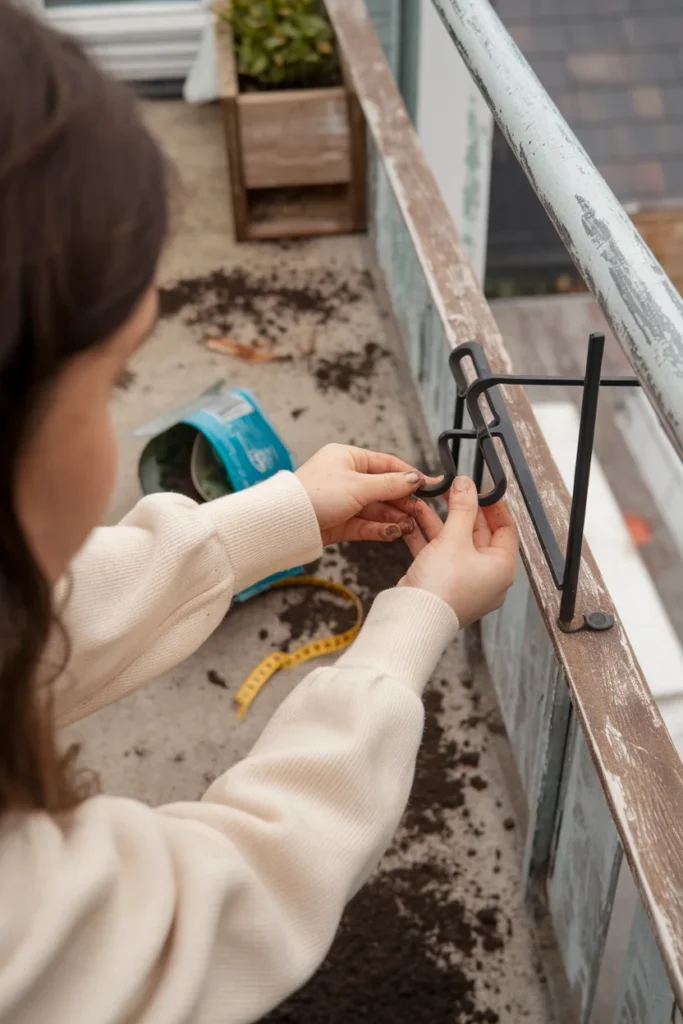
Mount everything with adjustable over-rail brackets that hang the box on the inside of the rail. They cost a few dollars each, they need no drilling, and they keep you clear of the lease problem covered further down.
If you want the full version of this layering logic across a whole yard, the cottagecore garden layering ideas guide breaks it into nine layers, and the container section applies directly to a balcony.
Pick Plants That Live Through Your Actual Winter
Cottagecore leans hard on perennials: lavender, roses, hydrangea, climbing jasmine. On a balcony those are a different question than in the ground, because a pot has no soil mass to buffer a cold snap. Roots in a container sit several zones colder than roots in the earth.
Look yourself up on the USDA plant hardiness zone map before you buy anything you intend to keep. It was rebuilt in 2023, replacing the 2012 edition, and it maps average annual extreme minimum winter temperature in 10 degree zones and 5 degree half zones. Plenty of people moved half a zone without moving house.
Working rule for containers: buy perennials rated at least two zones colder than the zone you land in, or accept that you are growing them as annuals. There is no shame in the second option. Annuals are cheap, they bloom harder, and a $4 nasturtium that goes wild all summer beats a $40 lavender you kill in February.
Sun exposure decides more than the zone does. A south or west facing balcony with a concrete slab underneath is hotter than the ground-level garden it borrows its reputation from, because the slab stores heat and radiates it back up into the pots all afternoon. Ferns will not forgive you for this. Lavender, rosemary, and nasturtium will thank you.

Wind Is the Part Nobody Warns You About
Get above the third floor and your balcony stops behaving like a garden. It behaves like a wind tunnel with a rail on it.
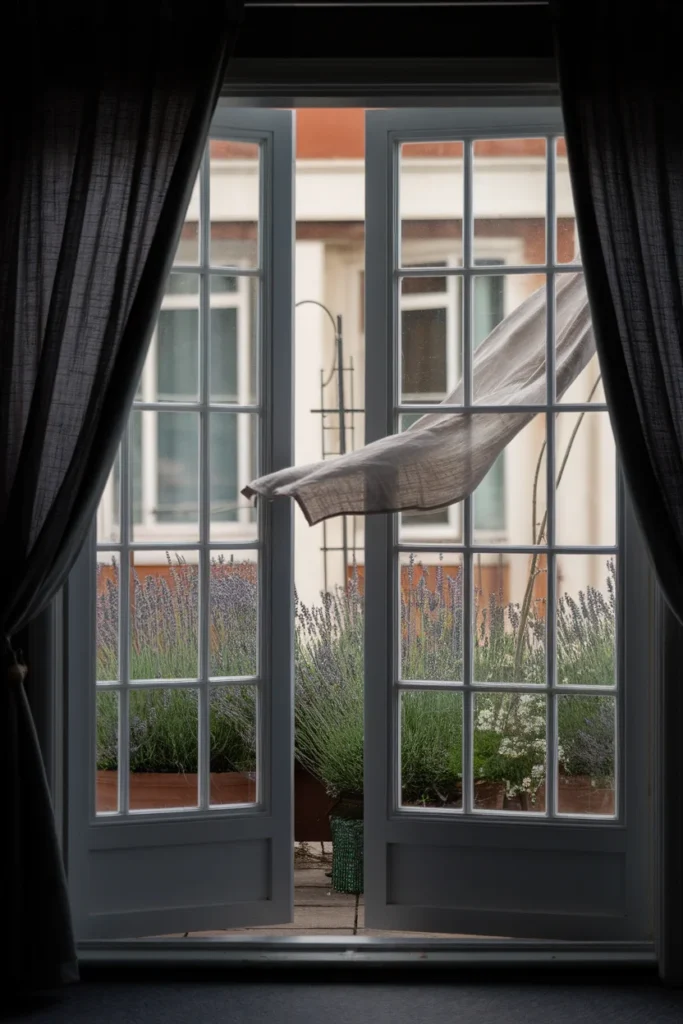
This matters because the exact items that make a balcony read cottagecore are the ones wind destroys first. Sheer curtains wrap themselves around the rail. Dried stems shed everywhere. Paper lanterns last one storm. Lightweight plastic pots go over the edge, which is how a decorating project becomes an incident report.
What holds up:
- Terracotta and concrete pots, wider at the base than the top, sitting on the floor rather than perched on a ledge
- Curtain panels with a weighted hem, tied down at the bottom to the rail or a floor hook, never left loose
- String lights zip-tied at every third bulb, not draped and hoped for
- Flexible-stemmed plants (nasturtium, cosmos, grasses) over stiff top-heavy ones that snap
- Nothing at all with an open flame. Candles and small fire bowls belong on a ground-level patio, not a windy slab under a soffit
Test before you commit. Tape a light ribbon to your rail and watch it for one full afternoon. If it is horizontal by 4 pm, buy heavy.
Water Like a Container Gardener, Not a Yard Gardener
The fastest way to lose a balcony garden is to water it on a schedule.
Containers hold a tiny volume of soil, which means they swing from soaked to bone dry far faster than a garden bed. Illinois Extension’s container watering guidance is blunt about it: daily watering is often necessary, there are no hard and fast rules, and the reliable test is your finger. If the first inch or so of soil is dry, water. They also point out that watching the plant beats trusting a meter.
Practical version for a hot slab in July: check at the same time every morning, water until it runs out the drainage hole, and check again at 6 pm on anything under 10 inches wide. Small pots on a west-facing balcony can genuinely need two waterings on a 95 degree day.
One more thing that saves plants and neighbors. Put a saucer under every pot, but empty it after an hour. Standing water rots roots and drips onto the balcony below yours, and that is the fastest way to meet the people downstairs.
Light It for 8 PM, Not for Noon
The balcony you photograph is a daylight balcony. The balcony you use is an evening one.
Two rules. Keep every bulb at 2700K or warmer, because anything cooler turns your cream and terracotta palette gray and slightly clinical. And keep the light low and multiple: three small sources at different heights beat one bright fixture every time.
What works on a rental balcony, no wiring involved:
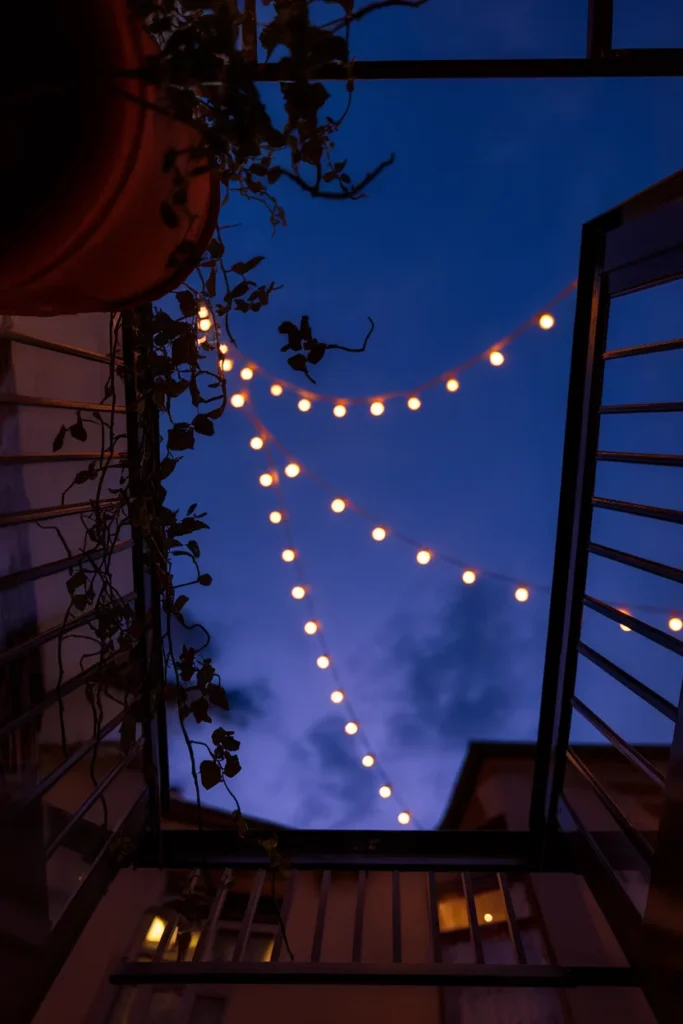
- Warm white string lights, 2700K, zip-tied along the rail cap or run overhead if you have a soffit hook already in place
- Solar rail-cap lanterns that charge all day and glow low after dark
- A rechargeable table lamp on the bistro table, the small cordless kind, for actually reading by
- Battery LED candles inside real glass hurricanes so you get the flicker without the fire risk in wind
Skip anything that plugs into an indoor outlet through a cracked door. It defeats the door seal, it is a trip hazard, and in most leases it is exactly the kind of thing that gets noticed.
Give the Balcony an Overhead Layer
Overhead is the layer people forget, and it is the one that makes a balcony feel like a room instead of a ledge.
You do not need a pergola. You need one thing living or hanging between 7 and 8 feet up. A single trailing pothos or string of hearts in a macrame hanger, a small fabric shade sail tied corner to corner, a wind chime you can hear from inside, or the string lights doing double duty.
If your ceiling is a concrete soffit you cannot touch, work sideways instead of up. A tension rod between two side walls carries a curtain panel or a lightweight hanging plant with zero hardware. A tall freestanding trellis leaned against the wall and weighted at the base gives you height without a single hole.
The non-visual test for this layer is sound. A balcony with something moving overhead has a soft, shifting noise in a breeze. A bare one is silent, and silent reads unfinished even when you cannot say why.
Make It a Reading Corner, Not a Photo Set
A balcony you style is a balcony you look at. A balcony you can read on is one you use, and dwell time on a real chair is the whole point.
The setup that gets used, every time: one seat you can lean back in, a surface within arm’s reach for a mug, and light you can read by after sunset. That is it. Three things.
Everything else is decoration, which is fine, but decoration is what you add after the corner works. Get the reading part right and the rest follows, because you will be out there often enough to notice what is missing.
If your balcony turns out to be a three-season proposition where you live, the same styling logic transfers indoors. The indoor cottagecore reading nook ideas walk through fourteen versions of this corner, including a porch and balcony variation you can run in reverse.
And be honest about your TBR pile. If you build a corner for the reader you wish you were, you will use it twice.

The Under 30 Square Feet Version
Some balconies are 4 feet deep and hold a chair or a plant, not both. Here is the honest build for that.
Drop the rug to a 2 by 3 foot mat placed under your feet only, not under the furniture. Drop the seat to a single floor cushion plus a firm pouf as a back rest, or one narrow folding chair you bring out and put back. Move the entire garden vertically: over-rail boxes, a two-tier plant stand no wider than 12 inches, one hanging planter.
The rule that saves you: nothing on the floor except your feet and the seat. Every square inch of floor you fill makes the balcony feel smaller than the number on the lease.
Same problem shows up inside constantly, and the fixes rhyme. The reading nook ideas for small spaces roundup covers fifteen versions of building a real corner in a footprint that seemed too small, several of which translate straight onto a slab.
Read Your Lease Before You Mount Anything
This is the boring H2 that saves you a violation notice, so it earns its place.
Three rules turn up in most US leases and HOA documents. Nothing may be mounted on the exterior face of a balcony rail, because a pot falling six floors is a liability nobody will insure. Nothing may be drilled into the building envelope, the ceiling, the soffit, or the rail itself. And many jurisdictions restrict open-flame grills on multifamily balconies entirely, with propane storage banned outright.
The renter-safe workarounds, all zero-hole:
- Over-rail brackets that hang the box inside the rail
- Freestanding trellis panels weighted at the base with pavers hidden in the pot
- Tension rods between side walls for curtains and light hangers
- Outdoor-rated adhesive hooks on the interior wall face, not the rail
- Everything removable in under 20 minutes on the day you move out
Take a photo of the balcony the day you move in. It costs nothing and it settles the deposit conversation without a discussion.
What a Cottagecore Balcony Actually Costs
One verified number and a set of honest estimates. Only the IKEA figure was price-checked, everything else is a typical US retail range as of August 2026 and will move.
| Piece | Archetype | Cost |
|---|---|---|
| Seating | IKEA TÄRNÖ table plus 2 folding chairs, acacia and powder-coated steel | $99.99, verified Aug 2026 |
| Outdoor rug | 3 by 5 flatweave polypropylene | $30 to $60 (estimate) |
| Rail planters plus brackets | 3 window boxes, adjustable over-rail brackets | $45 to $90 (estimate) |
| Plants and mix | 6 to 9 starts, 2 cubic feet potting mix | $40 to $70 (estimate) |
| Lighting | 48 ft warm white 2700K string lights plus 2 solar lanterns | $25 to $50 (estimate) |
| Soft layer | Outdoor lumbar pillow plus a throw | $35 to $70 (estimate) |
Full build lands somewhere around $275 to $440. The starter version, which is the one I would actually do first, is a rug, one chair you already own, three pots, and one strand of lights, and that comes in near $120.
Buy in that order over three paychecks. Living with each layer for a week tells you what the next one should be, and it stops you from buying a hanging chair for a balcony that turns out to be too windy for one.
Cottagecore Balcony Ideas Frequently Asked Questions
What is a cottagecore balcony? A balcony styled around the cottagecore aesthetic: soft natural materials, dense and slightly untidy greenery, muted cream and sage and terracotta tones, vintage or thrifted pieces, and warm low light. On a balcony it is less about square footage and more about layering, because you are working with a rail and a slab instead of soil and a fence.
How do you make a small balcony look cottagecore? Cover the concrete with a light flatweave rug, break the rail line with plants at three staggered heights, and add one soft element overhead. Ground, rail, overhead, in that order. Skipping the ground layer is the single most common reason a heavily planted balcony still reads like a fire escape.
Can you do cottagecore on a rental balcony without drilling? Yes, and most of it is easier without. Over-rail planter brackets, freestanding trellises weighted at the base, tension rods between side walls, and outdoor adhesive hooks cover almost every mounting need. Check your lease specifically for a ban on anything mounted to the outside face of the rail, which is the most commonly enforced rule.
What plants are best for a cottagecore balcony? Trailing, mounded, and upright, one of each. Bacopa or creeping jenny to spill, lavender or dwarf marigold to mound, sweet peas or nasturtium to climb. On a hot south or west facing slab, favor Mediterranean plants like lavender and rosemary and skip ferns entirely, because a concrete floor radiates stored heat back into the pots all afternoon.
What colors are cottagecore? Warm cream, oatmeal, sage and soft moss green, terracotta and clay, dusty rose, faded butter yellow, and weathered natural wood. The palette reads sun-faded rather than saturated. If a piece looks new and bright, age it or lose it.
How much weight can an apartment balcony hold? The model building code designs exterior balconies accessible from a single dwelling unit for 60 pounds per square foot, and balconies serving multiple units for 100. A 40 square foot balcony therefore has a 2,400 pound design load, which no container garden approaches. Keep heavy pots near the building wall rather than at the rail edge, and have any visibly deteriorated balcony inspected by a licensed professional before adding load.
How do you keep balcony plants alive in a heat wave? Water by finger test rather than by schedule: if the top inch of soil is dry, water until it drains from the bottom. Anything in a pot under 10 inches wide may need a second check in the evening on a very hot day. Group pots together so they shade each other’s soil, and move the smallest ones into afternoon shade if you have any.
Your Next 20 Minutes
Do not buy anything yet.
Go stand on your balcony and answer three questions. Which direction does it face, and when does the sun actually hit it? Is anything moving in the wind right now? And where would you put one chair so you are facing out, not facing the wall?
Those three answers decide your rug size, your plant list, and whether the hanging chair you have been eyeing is a good idea or a $180 mistake. Take a photo from the doorway while you are out there. In six weeks it will be the before shot you are glad you took.
Keep reading
More cozy nook ideas
 Cottage Garden & Balcony
Read →
Cottage Garden & Balcony
Read →
20 Backyard Oasis Ideas on a Budget, Starting With a $152 Corner
Two folding chairs, a small outdoor rug, 24 battery globe lights, and two planters. At IKEA this October, that adds up to…
 Reading Sheds
Read →
Reading Sheds
Read →
12 She Shed Ideas for Small Yards
No acre, no contractor, no giant budget. You need about 64 square feet, a flat patch of ground, and a plan for…
 Garden Nooks
Read →
Garden Nooks
Read →
Container Gardening Ideas for Small Cottage Gardens That Fit a Rental Patio
One anchor pot, two mid-size pots, three little ones. That’s the whole cottage garden, and it fits on a patio smaller than…