
How to Build an Antique Reading Corner on a Budget

No dusty estate sale, no four-figure library cabinet, no landlord permission slip required. You need one secondhand chair, a warm bulb, and a free Saturday. That is the whole antique reading corner, minus the antique price tag.
Here is the honest problem. You saw the pin: a tufted wingback, a brass lamp pooling gold light, leather-spined books stacked on a little round table. Then you priced a real Victorian armchair and closed the tab. I did the same thing.
So we fake the age, not the coziness. Everything below leans on thrifted and faux-antique pieces a renter can use and return to normal. First-scroll promise, cashed right now: nine budget moves, real prices you can check, and a corner you finish this weekend.
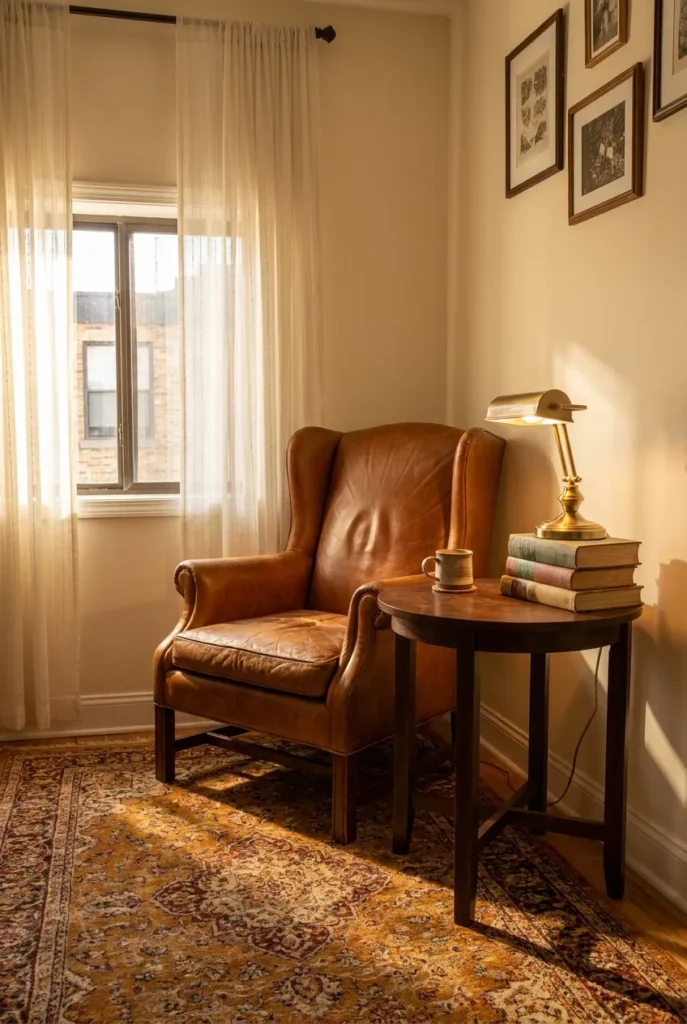
Start With One Antique-Style Chair (Not the Whole Room)
The chair does 80 percent of the work, so spend your attention here first. You want a shape that reads “old”: a rolled-arm wingback, a button-tufted back, or a carved wooden frame with a worn seat.
Skip the real Victorian piece for now. A used wingback in decent shape runs. versus the four-figure antiques you saw on the search results. Look for solid wood legs and a frame that does not wobble when you rock it.
Sink test before you buy. Sit for a full two minutes, not two seconds. If your lower back complains already, it will stage a full revolt during a Sunday marathon read.
Here is the failure mode nobody mentions: a gorgeous chair that is too deep. If the seat depth is more than about 22 inches (56 cm) and you are on the shorter side, your feet dangle and your knees ache. Measure before you fall in love.
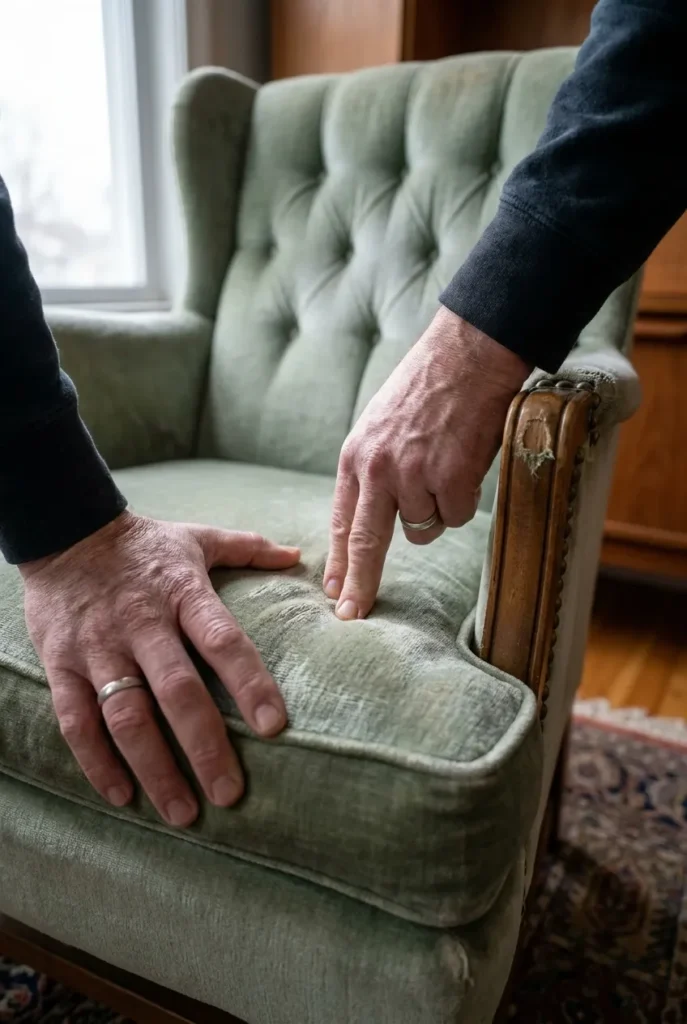
Fake the Patina for Almost Nothing
Real antiques earn their scuffs over a century. You can suggest that same age in an afternoon, for pocket change. This is where a small budget actually beats a big one, because worn beats shiny here.
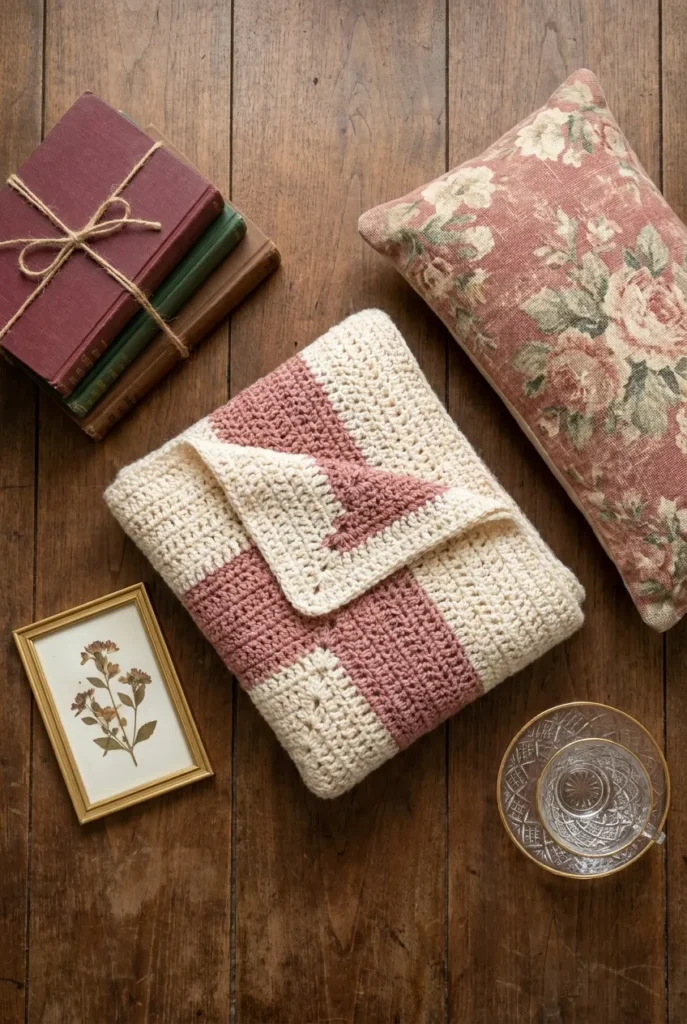
Drape a thrifted wool or crochet throw over one arm so it puddles slightly. Add a lumbar pillow in a faded floral or a tapestry print. These soft layers cost and hide a multitude of modern sins on a newer chair.
Stack cloth-bound or leather-look books on the side table, spines facing out, tallest at the back. Tie three of them with jute twine. It is a five-minute trick that photographs like a curated library.
For that lived-in look done well, this piece on a nostalgic grandmacore reading corner walks through the layered, collected style in more depth. The goal is character, not clutter.
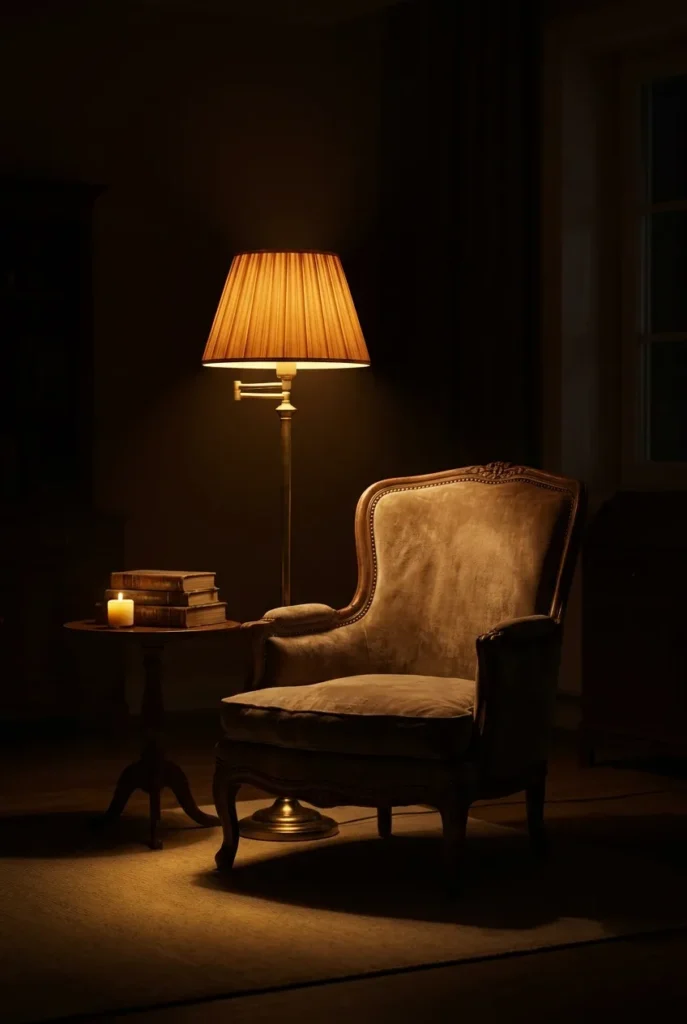
Get the Lighting Right (This Is the Whole Mood)
Overhead ceiling light will flatten your antique corner into a waiting room. The magic is a low, warm pool of light beside the chair, nothing more. Get this wrong and no amount of velvet saves you.
Chase the color temperature, not just the fixture. Aim for a 2700K bulb, the warm amber end of the scale that flatters wood and fabric. The Department of Energy guidance on warm bulb color temperature notes that light around 2,700 K complements the wood finishes and furniture in homes, which is exactly the glow you want here.
A thrifted brass floor lamp or a vintage-style banker’s lamp does the job for$15 to $35 secondhand. Position it slightly behind and to the side of your shoulder so the page lights up without glare on the text.
Add a dimmer plug if you can. Bright enough to read at 8 p.m., dim enough to feel candlelit by 10. For more layered options, these warm reading nook lighting setups cover sconces, clip lights, and swing-arm lamps.
Anchor It With Old-Looking Book Storage
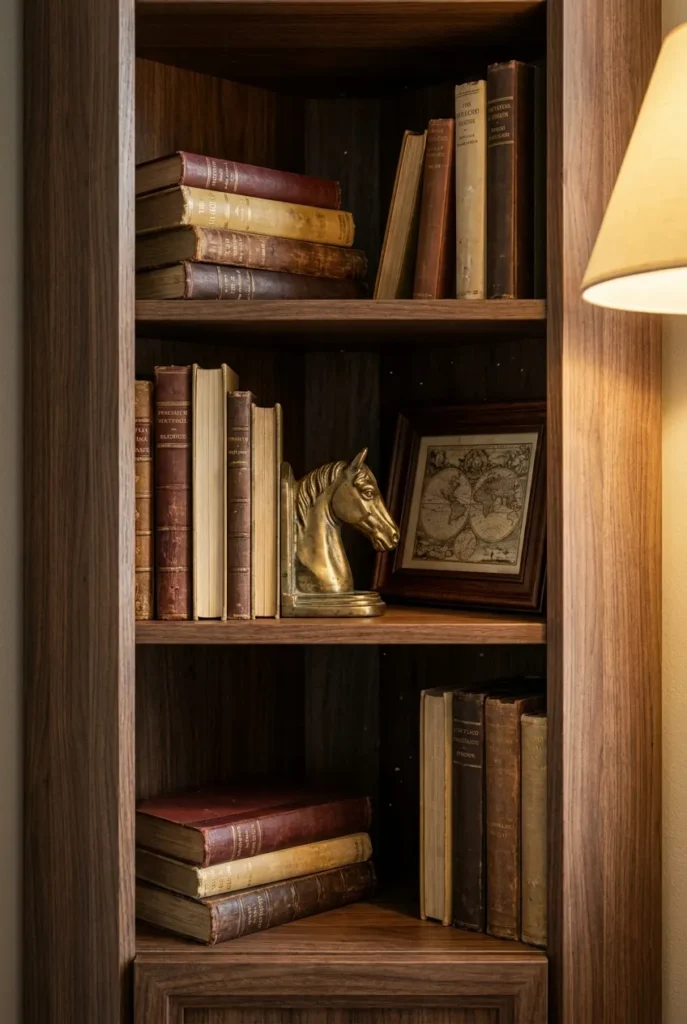
A reading corner needs somewhere for the books to live, and nothing says “old library” like dark wood shelving. You do not need a barrister’s bookcase with glass doors, though those are stunning if one crosses your path cheaply.
A thrifted wooden ladder shelf, a small corner bookcase, or even a wooden crate stack works. Stain a pale IKEA shelf with a walnut gel stain for under $12 for the stain and it instantly loses its flat-pack newness. Arrange some books vertically, some in short horizontal stacks, and tuck one small object between them.
Renting and can’t drill? Keep it freestanding and low. A two-shelf unit under 36 inches (91 cm) tall leans nothing on the wall and leaves zero holes behind.
Mix in a couple of genuinely old finds if you spot them, a single leather-bound volume or a brass bookend. One real antique among the fakes sells the whole story.
Define the Floor With a Faded Rug
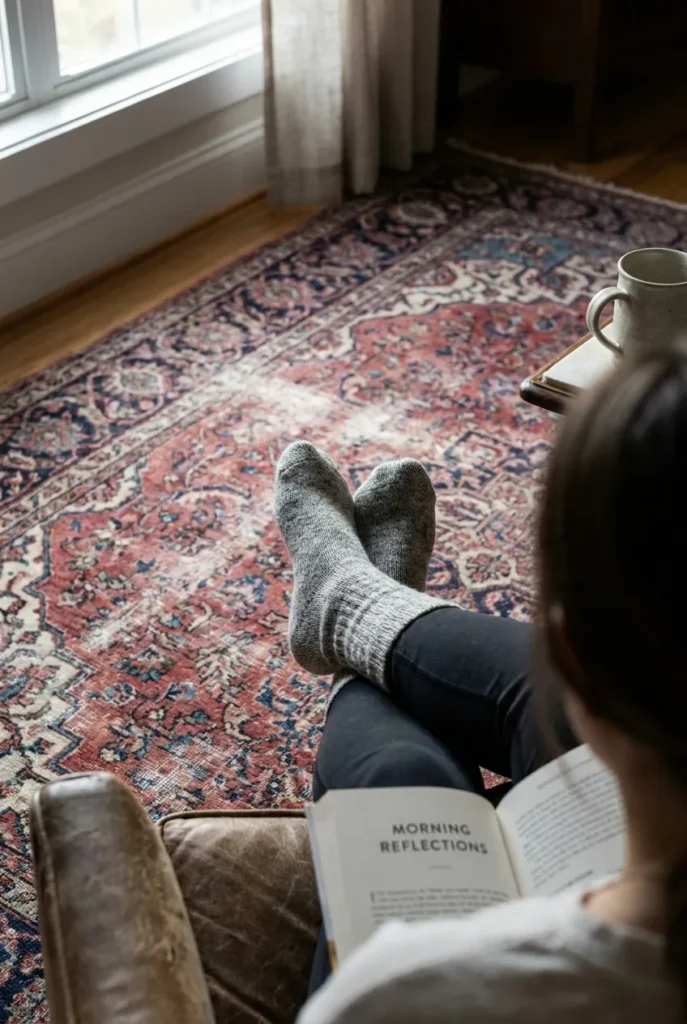
A rug pulls the chair, lamp, and shelf into one intentional “corner” instead of three lonely objects. Underfoot, it also fixes the one sense most people forget: texture. Bare feet on a soft wool pile in the morning is half the reason to build this thing.
Go for a faded Persian or an oriental-pattern washable rug. The worn, muted look is the point, so a real price band, e.g., $40 to $90 machine-washable version beats a pristine new one. A 3 by 5 foot (91 by 152 cm) size sits nicely under a single chair and side table.
Renter tip: a washable rug over ugly landlord carpet is a legal, reversible upgrade. When you move, it rolls up and comes with you.
The 18-inch reach rule helps you place everything: keep your side table within about 18 inches (46 cm) of the chair arm so your tea and book land without a stretch. Set the rug so the front chair legs sit on it and the back legs just off, which visually enlarges a small corner.
Add Wall Character Without Damaging the Wall
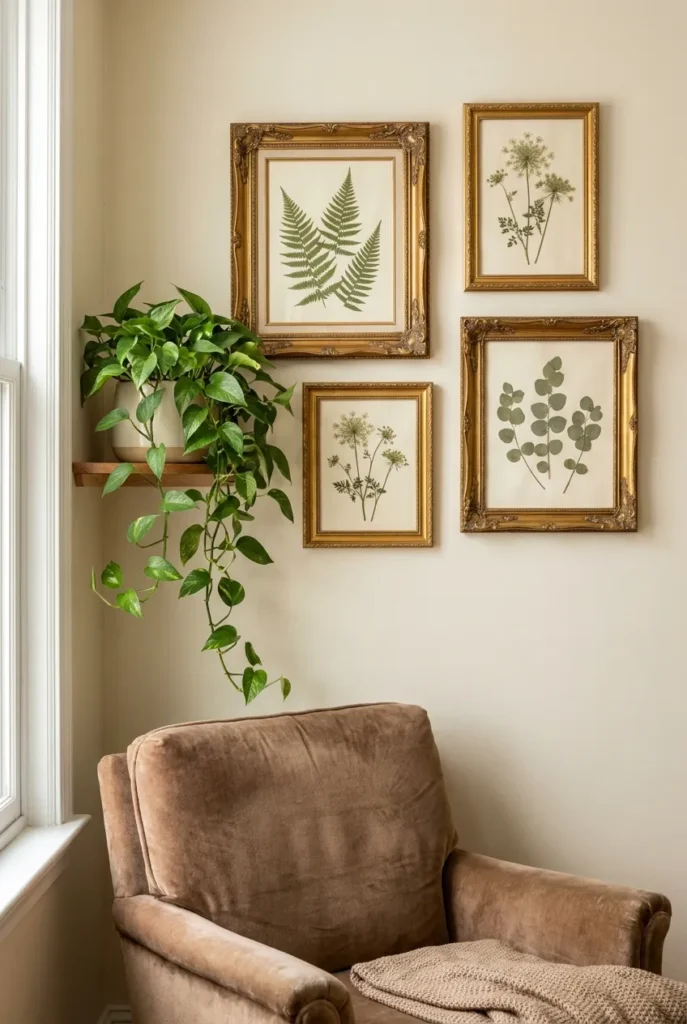
Blank wall behind the chair is a missed opportunity, and the fix is cheap and renter-safe. You are aiming for the “someone has read here for decades” look. Framed botanical prints, an old map, or a small oval mirror all read antique.
Thrift stores overflow with gilded frames for $2 to $6 eac]. Pop in free printable botanical illustrations or a page from a damaged old book. Cluster three at slightly different heights for a collected feel.
No nail holes allowed? Use removable adhesive strips rated for the frame weight, or lean a larger framed print on the bookshelf and let it overlap the wall. Both leave the paint intact.
Keep a plant in the mix, a trailing pothos or a small fern, so the corner breathes and does not tip into museum-stuffy. Living green against aged wood is the quiet contrast that makes the whole thing feel real.
Engage the Senses (Sound, Smell, Warmth)
An antique corner that only looks good is a stage set. The ones you actually return to hit more than your eyes. This is the angle most idea lists skip entirely.
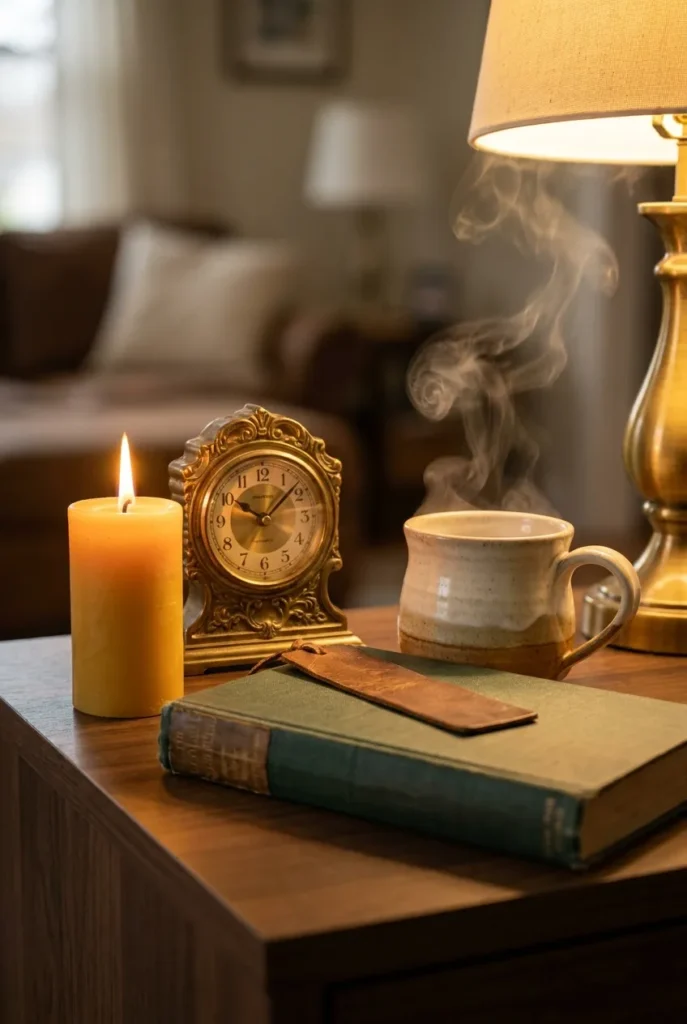
Sound: a small vintage-style clock ticking, or a record player humming low, gives the space a heartbeat. Even a soft playlist of rain does it.
Smell: an unlit beeswax candle or a worn leather bookmark carries that old-library scent. Light the candle only when you are sitting there, never unattended.
Warmth and touch: a chunky knit throw and a hot mug complete the loop. The whole point is a corner that feels like stepping back a hundred years the second you sink in.
The Real Downside of True Antiques (Read This First)
Real antiques are wonderful, and they are also more work than the pins admit. If you do buy genuine old pieces, a little honesty saves you money and heartache.
Old wood hates swings in humidity and direct sun. Joints loosen, veneer lifts, finishes fade. The National Park Service care guide for wooden objects recommends stable humidity and keeping wooden objects out of direct sunlight, which is smart even for a thrifted chair by a bright window.
Cost reality: genuine antique corner cabinets on the search results ran from around $395 to nearly $9,500. That is exactly why the budget, faux-antique route wins for most of us.
Trade-off honesty: a real Victorian chair looks incredible and can be firm as a church pew after 40 minutes. Sometimes the reproduction with modern foam is the smarter read.
Quick Antique Corner Dimensions Cheat Sheet
| Element | Target spec | Why it matters |
|---|---|---|
| Chair seat depth | 20 to 22 in (51 to 56 cm) | Feet reach the floor, back stays supported |
| Side table height | Within 2 in of chair arm | Tea and book land without a stretch |
| Table distance from chair | About 18 in (46 cm) | The 18-inch reach rule, no leaning |
| Bulb color temp | 2700K, warm | Flatters wood, fabric, and pages |
| Rug size (single chair) | 3 x 5 ft (91 x 152 cm) | Anchors the corner, softens the floor |
Put It Together for Under a Set Budget
Here is the build order and a sample total so the corner does not creep past your limit. Buy in this order and stop when the corner feels done, not when the money runs out.
Sample antique-style corner: chair , floor lamp, side table , washable rug, throw and pillow, frames and books.
If you want more corner-by-corner numbers, this guide to a cozy reading nook on a budget breaks down builds under $100. Steal the swaps that fit your space.
The highest-value move, do this first: nail the chair and the 2700K lamp. Get those two right and even a bare corner feels like a hundred-year-old library. Everything else is decoration.
Frequently Asked Questions
What are the must-have items for an antique reading corner?
Four things carry it: a comfortable old-looking chair, a warm 2700K light source, a small side table within arm’s reach, and soft textiles like a throw and a pillow. Books and wall art come after.
How do I decorate an awkward or weird corner for reading?
Work with the angle instead of fighting it. A corner bookcase or a triangular shelf fills the wedge, a rug squares off the floor visually, and a floor lamp fills vertical dead space. Odd corners are actually ideal because two walls already cocoon you.
What are some popular themes for a book nook?
Right now the strong ones are dark academia (moody, leather, brass), cottagecore and grandmacore (florals, worn wood, nostalgia), and vintage library (dark shelves, globes, maps). Antique-style overlaps with all three.
Can I make a vintage reading corner in a small space or apartment?
Yes. Keep pieces low and freestanding, use a 3 by 5 foot rug to define the zone, and lean art instead of drilling. A single wingback plus a lamp fits in about 4 by 4 feet (122 by 122 cm) of floor.
How do I get the antique look on a budget?
Buy secondhand and fake the patina. Thrift the chair, stain a cheap shelf walnut, layer worn textiles, and mix in one or two genuinely old accents. The worn look is the goal, so imperfect and cheap works in your favor.
What vintage decor trends work for reading corners?
Faded Persian rugs, brass lighting, pressed botanical prints, cloth and leather-bound books, and warm moody paint colors. Muted, aged, and collected beats new and matchy.
Your Next Cozy Step
You now have the chair-first order, the 2700K rule, the reach rule, and real swaps to keep it cheap. Pick your chair this weekend, add the warm lamp, and let the rest gather slowly the way a real old corner would.
Want to go deeper on one piece? Start with the lighting, since it changes the mood more than anything else, then build outward from there.
Keep reading
More cozy nook ideas
 Fall Decor
Read →
Fall Decor
Read →
Fall Door Decor on a Budget: Where to Spend and Where to Save
If your fall door every year is a wreath that sheds on the mat, two mums that are crispy by Halloween, and…
 Fall Decor
Read →
Fall Decor
Read →
12 Thanksgiving Tablescape Ideas for Small Spaces (That Still Leave Room for the Food)
Twenty-four inches. That’s how much table edge one person needs to eat without bumping elbows, and it’s the number most Thanksgiving tablescape…
 Fall Decor
Read →
Fall Decor
Read →
18 Fall Coffee Bar Ideas for Sweater-Weather Evenings
No counter space to spare, no espresso machine, no landlord permission needed. This fall coffee bar runs on three pieces: a slim…