
Turn the Dead Corner of Your Living Room Into a Reading Nook

Your living room has one corner that never works. A lamp you don’t love. A plant shedding leaves onto the baseboard. Maybe a stack of books on the floor, because there’s nowhere else to put them.
A cozy corner living room setup fixes that corner in an afternoon, and it doesn’t need a bay window, a landlord conversation, or a renovation budget. You need 42 inches of clear floor, one chair that fits your body, and a bulb most people buy wrong.
Here’s the build order, with the measurements and the actual prices.
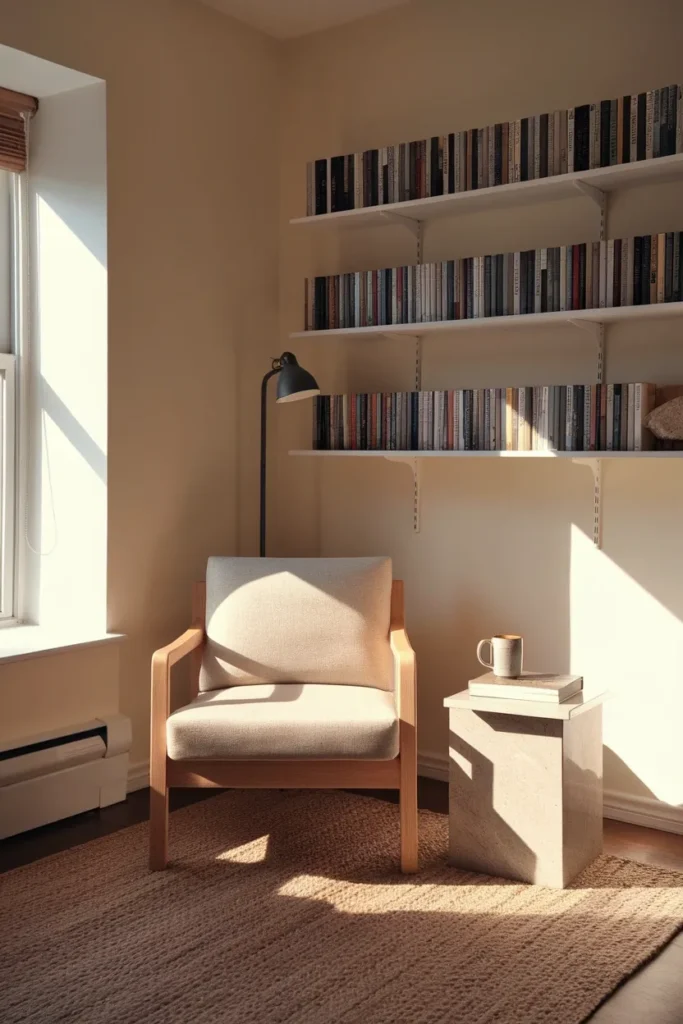
Start With the 42-Inch Corner Test
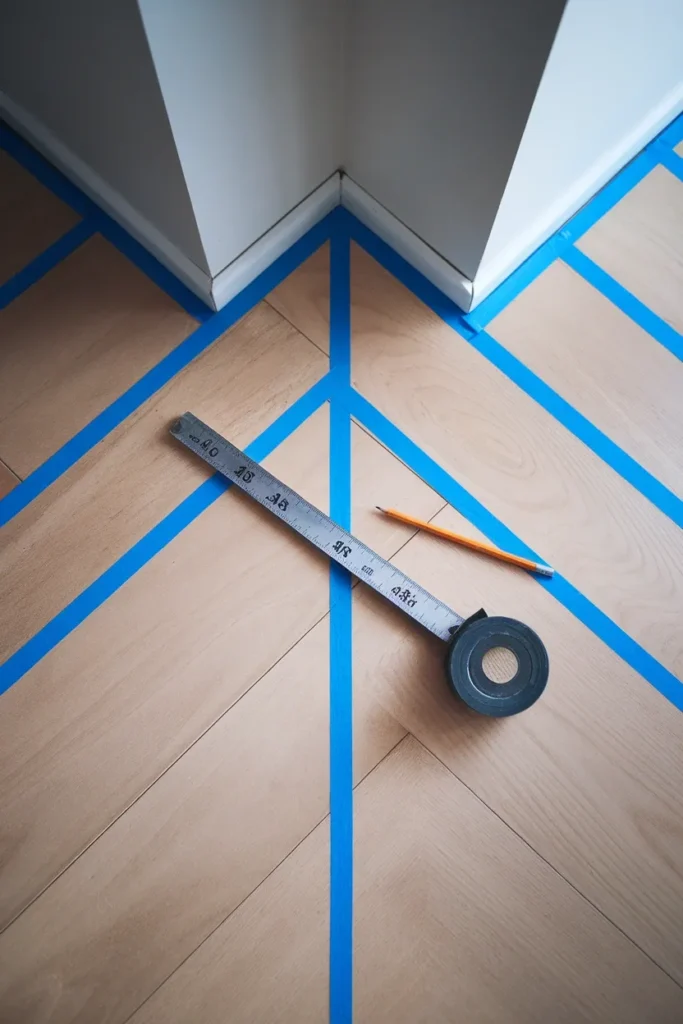
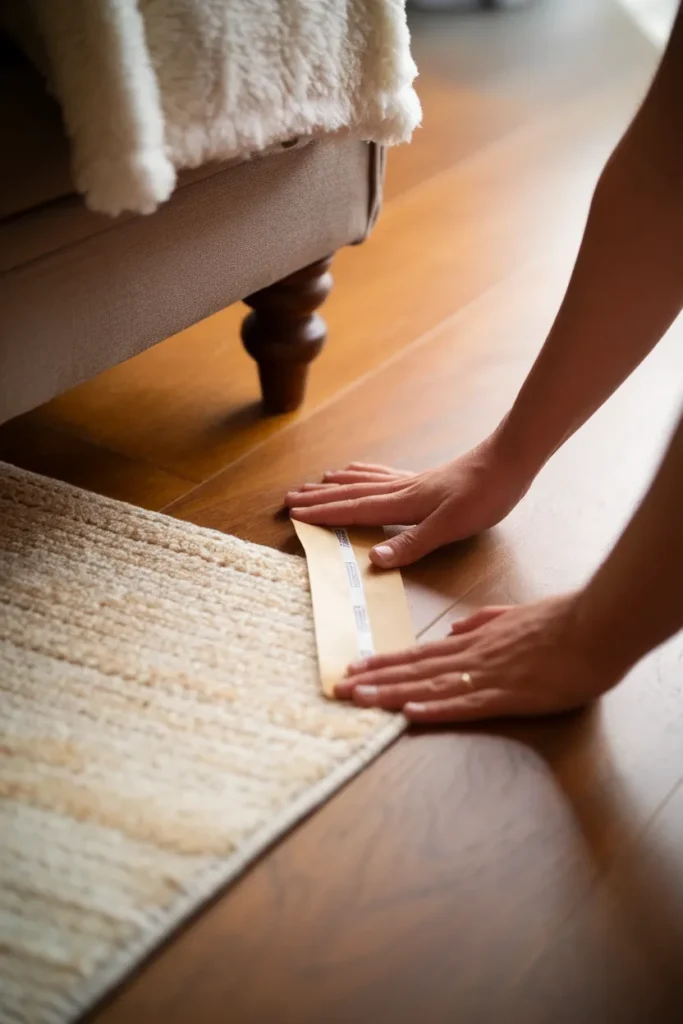
Before you buy anything, put painter’s tape on the floor.
Measure 42 inches out from the corner along one wall. Mark it. Do the same along the other wall. Connect the two marks with a diagonal strip of tape. If that triangle of floor is clear, a full armchair reading nook fits, and you can stop worrying about whether the room is big enough.
Where the number comes from: a standard compact armchair like the IKEA POÄNG measures 26 3/4 inches wide by 32 1/4 inches deep. Turn it 45 degrees so it faces into the room instead of sitting flat against a wall, and its footprint spreads along each wall to about 41.7 inches. Round up. Forty-two.
That 45-degree turn is the whole trick. A chair squared against the wall reads as leftover furniture. A chair turned into the room reads as a destination.
What fits in what footprint
| Clear corner square | What actually fits |
|---|---|
| 24 in | Floor cushion or pouf, plus a leaning ladder shelf |
| 30 in | Small slipper chair squared to the wall, no side table |
| 36 in | Slim accent chair, table on the arm side only |
| 42 in | Full armchair at 45 degrees, plus a 13 3/4 in side table |
| 48 in and up | Armchair, side table, floor lamp base, and a rug wide enough to read as a zone |
Skip the tape and you’ll do what most people do: buy the chair, discover the door swing clips the armrest by three inches, and live with a corner that annoys you every single day. Ten minutes of tape saves that.
Anchor the Corner With One Chair That Fits Your Body
One substantial piece beats three small ones. Every time.
A pouf, a plant stand, and a basket in the same corner read as clutter. A single armchair reads as intent. So put your money in the seat and let everything else be cheap.
Then check the two numbers nobody checks. Seat depth and seat height. The POÄNG runs 19 5/8 inches deep with a 16 1/2 inch seat height, which happens to be a good benchmark for reading rather than lounging. Sit all the way back. Your lower back should meet the chair, your feet should sit flat on the floor, and the front edge of the seat should stop just behind your knee. If the seat is deeper than that, you’ll slide forward within twenty minutes and your neck will do the work your spine should be doing.
Floor cushions photograph beautifully. Forty minutes in, your lower back files a complaint. If you want the sunken floor-level look and you also want to actually finish a chapter, put the cushion against the wall so you get back support, or plan on it being a twenty-minute chair.
Renting and worried about committing? A secondhand armchair costs less than a new pouf and holds its resale value better. Check local listings before retail. For more ways to fit a nook into a room that’s already doing another job, these living room reading nook layouts work through the same problem at different room sizes.
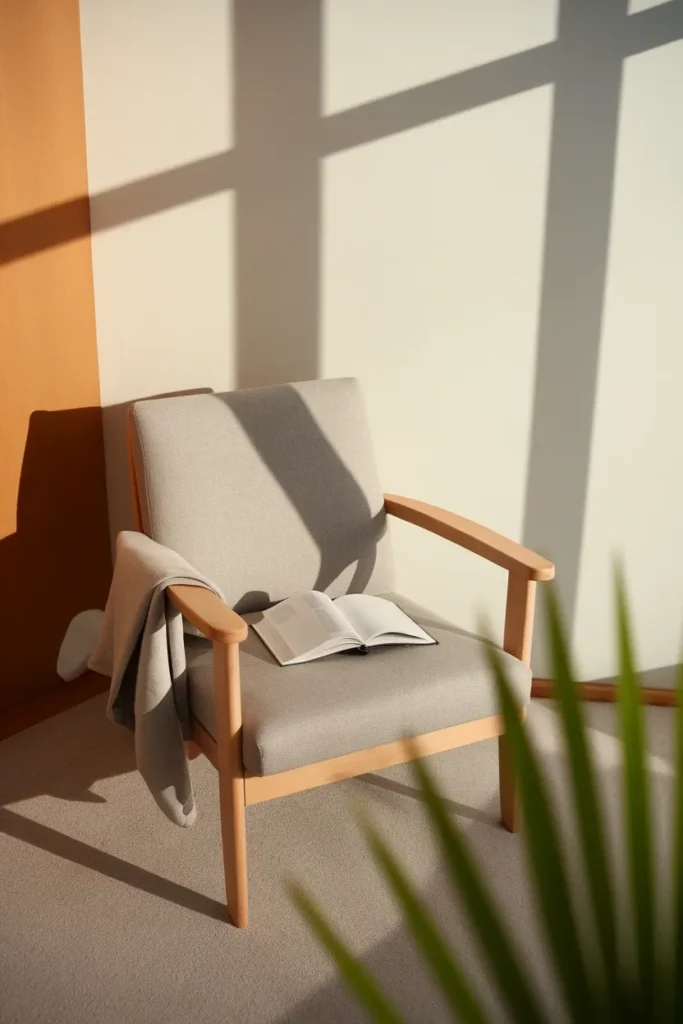
Light It for Reading, Not for Ambience
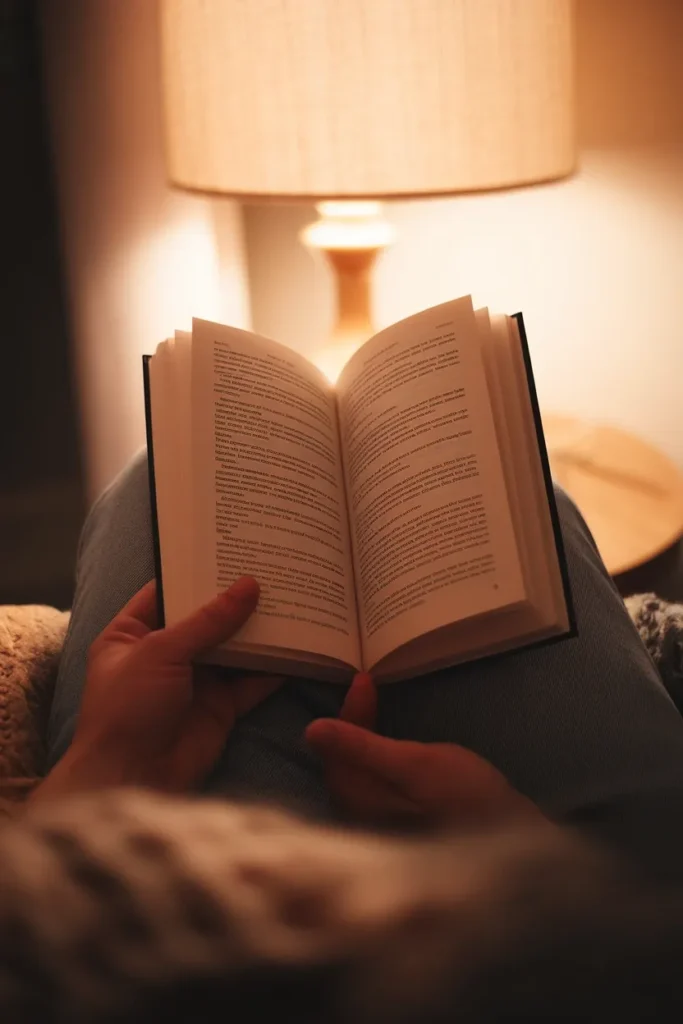
Here is the mistake almost everyone makes. Mood lighting and reading lighting are two different jobs, and one bulb cannot do both.
Ambience wants low, diffuse, and warm. Reading wants a defined pool of light landing on the page without spilling into your eyes. You need the second one, dimmed down to feel like the first.
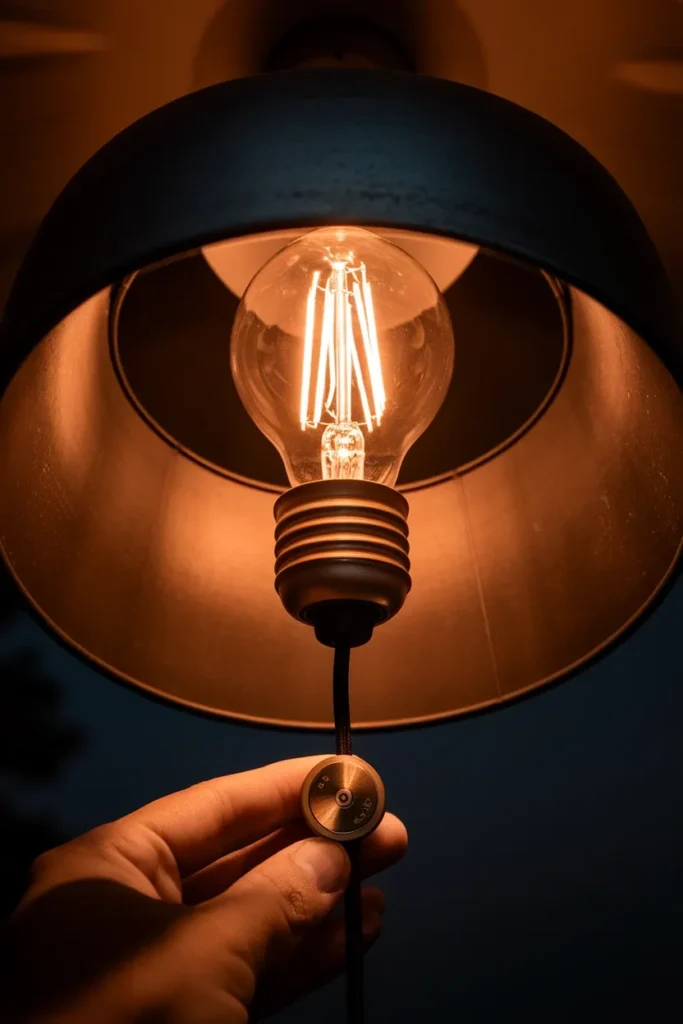
The spec that works: a warm white bulb at 2700K, somewhere between 450 and 800 lumens, on a dimmer. That’s roughly the output of an old 40 to 60 watt incandescent. Go cooler than 3000K and the corner turns blue and clinical. Go dimmer than 450 lumens and you’ll squint at anything smaller than large print. Choose bulbs carrying the ENERGY STAR certification for light bulbs, which by the program’s own figures use up to 90 percent less energy than standard bulbs and save around $55 in electricity over the life of a single bulb. In a nook where the lamp burns three hours a night, that adds up faster than you’d expect.
One more thing: kill the overhead. A ceiling fixture behind your head throws your own shadow onto the page and bounces glare off glossy paper. Turn it off, keep the lamp, add the dimmer.
The Over-the-Shoulder Rule for Lamp Placement
Getting the bulb right is half of it. Where you stand the lamp is the other half.
Put the light behind and slightly to the side of your dominant reading shoulder, never directly in front of you. The bottom edge of the shade should land somewhere around 40 to 50 inches from the floor when you’re seated, which for most people is at or just below eye level. Higher and the bulb glares into your sightline. Lower and the shade shadows the top of the page.
An adjustable multi-spotlight floor lamp solves this without measuring. The IKEA HEKTAR three-spotlight floor lamp stands 69 inches tall with a 12 inch base and costs $109.99, and because each head aims independently you can point one at the page and leave the other two washing the wall for atmosphere. A swing-arm floor lamp does the same job with more control and usually more money.
No outlet in that corner? That’s the quiet reason a lot of nooks never get built. A flat under-rug extension cord run along the baseboard and taped down solves it for under $20, and a rechargeable cordless table lamp solves it with zero cable at all. Test your run before you commit to furniture placement. If you want to compare sconces, clip-on lights, and lamp heights in more detail, our full breakdown of reading nook lighting setups goes fixture by fixture.
Renter Rules: Build the Whole Corner Without One Hole
Every competitor guide on this topic eventually says “add built-in shelving.” If you rent, that advice is useless. Here’s the reversible version of the same corner.
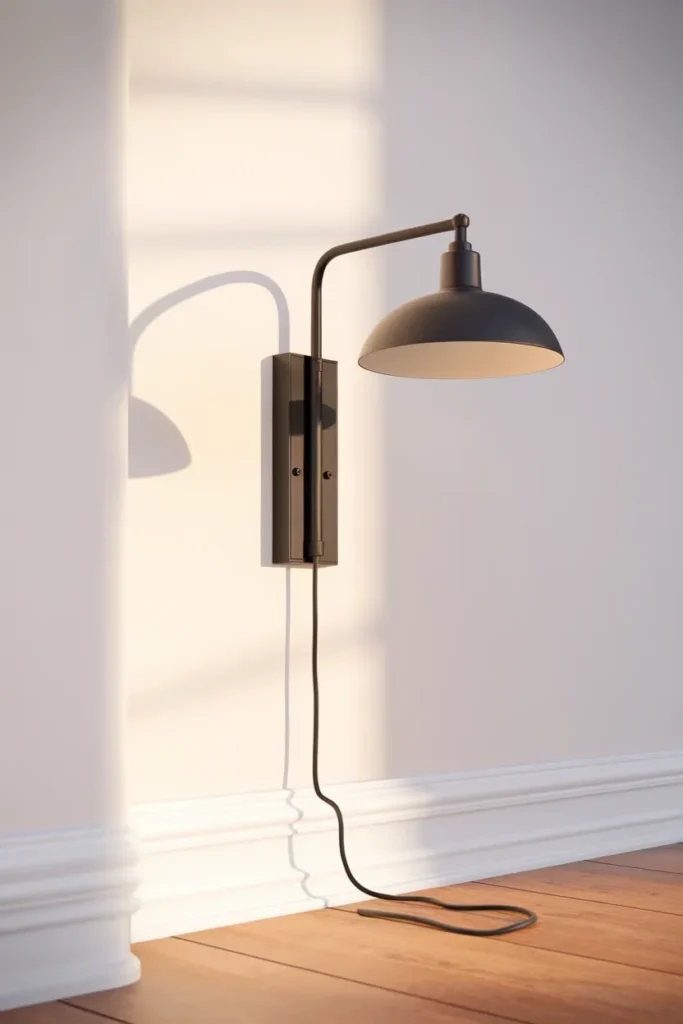
Light without wiring. A plug-in wall sconce gives you the tucked-away, hardwired look with a cord. Run the cord down the wall inside a paintable cord channel, paint the channel your wall color, and from six feet away nobody sees it. Adhesive-mounted sconces exist, though most cap out around five pounds, so check the fixture weight first.
Storage without anchors. A leaning ladder shelf holds a respectable stack of books, needs no wall fixing, and comes with you when you move. If you go with a freestanding bookcase instead, use the anti-tip strap in the box. That one is not a style note. Tall furniture tips, and a single screw into a stud is worth the spackle at move-out.
Enclosure without construction. A tension rod wedged across the corner with a linen curtain gives you the alcove feeling for the price of the fabric. A tall plant or a folding screen does the same by blocking sightlines instead of building walls.
A caution worth reading twice: adhesive hooks fail on textured or freshly painted walls, and they fail suddenly. If your paint is less than 30 days old or your wall has orange-peel texture, use freestanding solutions instead of trusting the strip.
What the Corner Actually Costs
Nobody ranking for this keyword will tell you a number, so here are three, priced at IKEA US on August 11, 2026. Prices move, so treat these as a shape rather than a quote.
| Tier | Build | Real cost |
|---|---|---|
| Under $150 | Large floor cushion against the wall, clip-on reading light, secondhand stool as a side table, thrifted wool throw | roughly $80 to $150 |
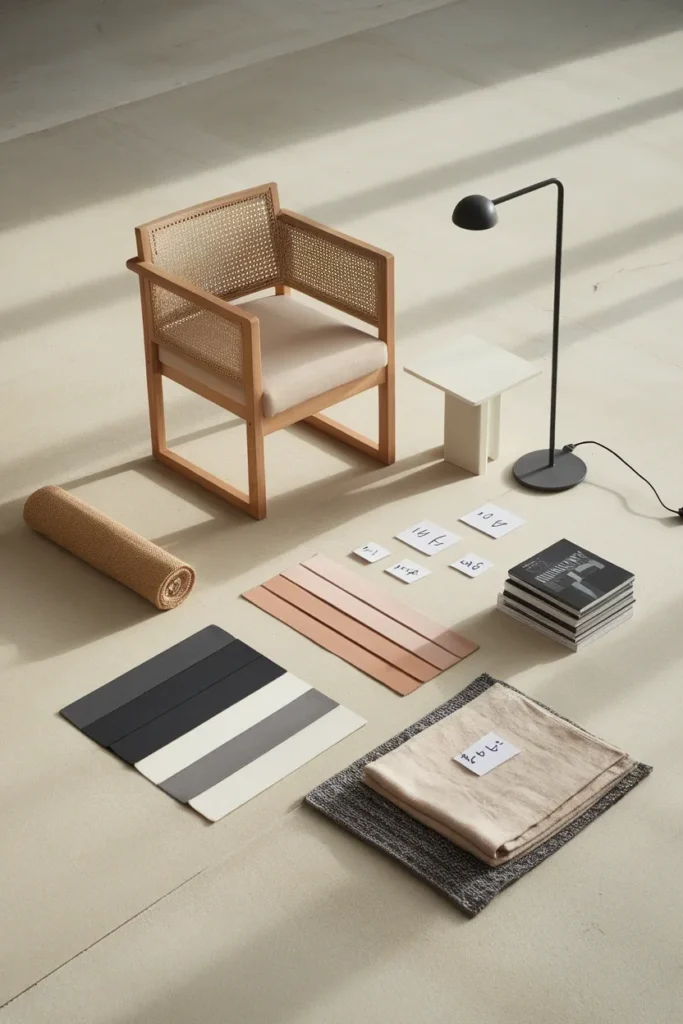
| The $370 build | POÄNG armchair $249.00 + LACK side table 13 3/4 in $9.99 + HEKTAR 3-spotlight floor lamp $109.99 | $368.98 before tax |
| $600 to $900 | Upholstered accent chair, washable 4×6 rug, plug-in sconce, ladder shelf, linen curtain on a tension rod | roughly $600 to $900 |
Three pieces. One afternoon. Under $370 for a corner that works every night for years.
The middle tier is the one to copy. It hits every function a reading nook needs (a seat sized for a spine, a surface within arm’s reach, and a directed light) and nothing it doesn’t. Add the rug and the throw later, once you know you actually sit there.
Worth saying plainly: the rug is the piece to buy last. A rug makes the corner photograph well, but it does not make you read. The lamp does.
Small Corner? Borrow Height Instead of Floor
If your tape test came back at 30 inches, you don’t have a smaller nook problem. You have a floor problem, and the fix is to stop using the floor.
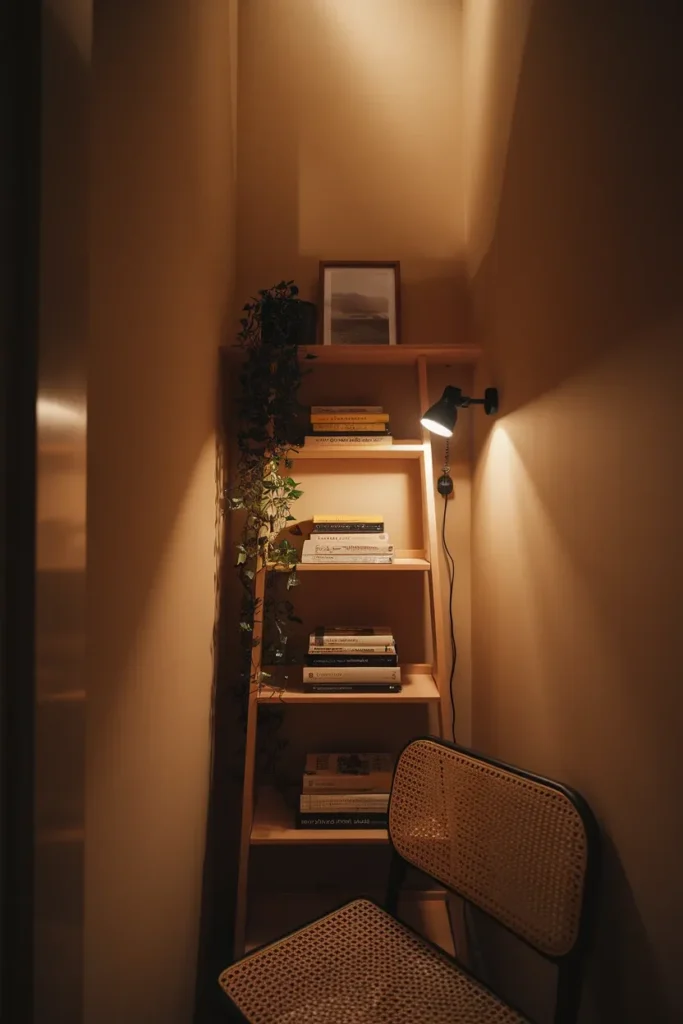
Go vertical. A picture ledge at 60 inches holds your current TBR pile without eating a single square inch of standing room. A narrow ladder shelf occupies about 18 inches of floor and gives you four levels of storage. Hang the curtain rod at ceiling height rather than window height and the whole corner stretches upward.
Then take the light off the ground entirely. A wall sconce or a clip-on reading light frees the floor space a lamp base would have claimed, which in a 30 inch corner is the difference between fitting a chair and not.
One honest trade-off: a mirror on the adjacent wall really does make a tight corner feel larger, and it will also bounce your lamp glare back at you if you place it directly opposite the light. Hang it perpendicular to the lamp, not facing it.
For a genuinely tight footprint, a studio, or a corner that has to keep doing another job, our small space reading nook setups run through builds that fit in under 10 square feet.
Read Longer Without the Eye Ache
A nook you leave after fifteen minutes isn’t a nook. It’s a chair.
Most of the reason people stop reading early is physical, not literary. Glare, a bad neck angle, and unbroken focus do more damage to a reading habit than a slow chapter does. The American Academy of Ophthalmology notes that eye strain comes partly from environments that are too bright or not bright enough, and recommends the 20-20-20 rule: every 20 minutes, shift your eyes to something at least 20 feet away for at least 20 seconds.
That’s the practical case for putting your nook where it has a long sightline across the room, ideally toward a window. A corner facing a blank wall three feet away gives your eyes nowhere to rest. You can read more in the Academy’s guidance on eye strain.
Two more adjustments that cost nothing. Hold the book at roughly a 45-degree angle rather than flat in your lap, so your neck isn’t folded forward for an hour. And match your armrest height to the chair so your elbows rest at about 90 degrees, because arms holding a hardcover unsupported will quit long before your attention does.
This is general comfort guidance, not medical advice. Ongoing eye strain, headaches, or blurred vision are worth raising with a licensed US optometrist or ophthalmologist rather than solving with a lamp.
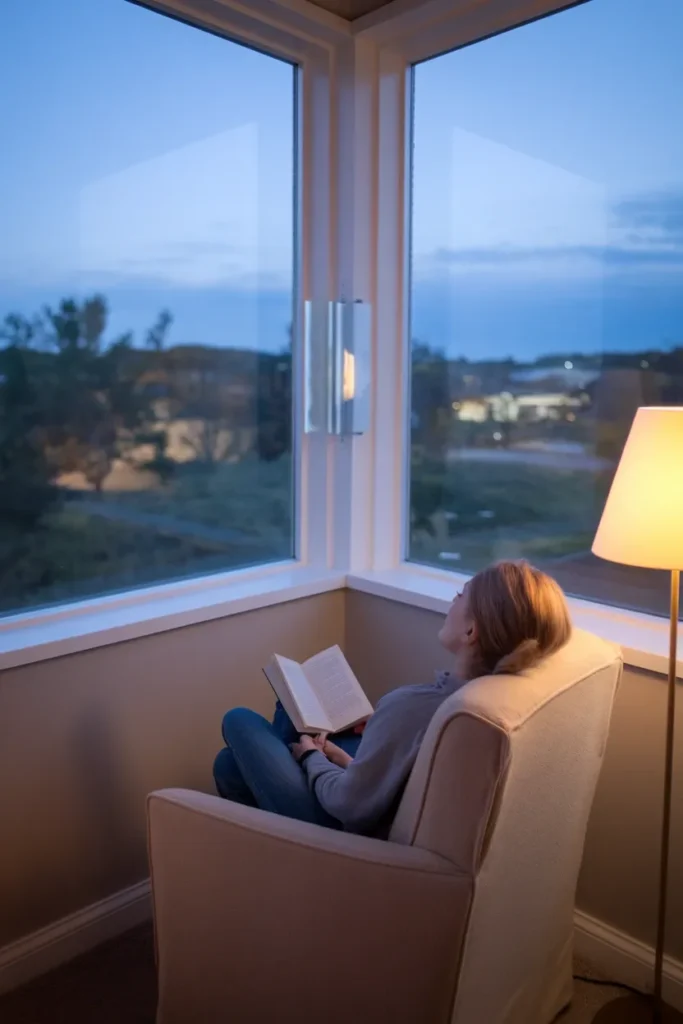
Make It Sound Cozy, Not Just Look It
Hard corners are loud. Bare walls and bare floors bounce every footstep and every voice from the kitchen straight into the one place you’re trying to concentrate.
A rug under the chair’s front legs is the cheapest acoustic fix in the house. Add a heavy curtain, even on a wall without a window, and the corner goes noticeably quieter. You’ll hear the difference before you see it, and quiet is most of what “cozy” actually means.
Then layer texture you can feel with your eyes closed. A wool or sherpa throw over the arm. A lumbar pillow that supports your lower back rather than decorating it. A sheepskin over the seat for winter, pulled off in July. Warm the corner up by a couple of degrees in the winter and you’ll use it twice as often, because nobody curls up in a cold corner no matter how good it looks.
One small thing that changes the whole ritual: give the corner a smell. An unlit cedar or beeswax candle, a small bowl of dried lavender, a wooden box that still smells like the wood. Your brain will start associating that scent with sitting down and switching off, and after two weeks the corner starts pulling you toward it.
Cozy Corner Living Room FAQs
What do you put in a cozy corner? Four things, in this order: a chair sized for your body, a light aimed at the page, a surface within arm’s reach, and something soft you actually want to touch. Everything past that is decoration. If you can only buy two, buy the chair and the lamp.
What should I put in the corner of a living room? If the corner is dead space, a reading nook is the highest-use option, because it converts square footage you’re currently ignoring into somewhere you’ll sit most nights. Runners-up: a tall plant with a floor lamp, a slim console with art above it, or a corner bookcase. Avoid anything you have to walk around to reach.
How much space do you need for a reading nook? Forty-two inches out from the corner along both walls is enough for a full armchair turned at 45 degrees plus a small side table. Thirty inches still gets you a slipper chair or a floor cushion with wall support. Under 24 inches, go vertical with a ladder shelf and skip the seat.
How do you make a corner in a living room look cozy? Turn the seating into the room instead of flat against the wall, drop the light source to seated eye level, and add one absorbent surface (a rug or a curtain) to kill the echo. Those three moves do more than any amount of extra decor.
How do I decorate an empty living room corner on a budget? The under-$150 route: a large floor cushion against the wall for back support, a clip-on reading light, a secondhand stool as a side table, and a thrifted wool throw. Shop the seat secondhand and buy the light new.
Can I build a reading nook if I rent? Yes, and without a single hole. Use a plug-in sconce with a paintable cord channel, a leaning ladder shelf instead of floating shelves, and a tension rod with a curtain to enclose the corner. If you use a tall freestanding bookcase, fit the anti-tip strap that came with it.
What color light is best for reading? Warm white at 2700K, roughly 450 to 800 lumens, on a dimmer. Cooler than 3000K reads clinical in a home corner. The dimmer matters more than the bulb, because it lets one fixture handle both reading and winding down.
Your Next 42 Inches
Grab the painter’s tape tonight. Mark the square, sit on the floor inside it for a minute, and you’ll know within about ten minutes whether the corner works or whether you should try the one by the window instead.
That’s the whole first step. The chair can wait for payday.
Once you’ve picked your corner, the next thing to sort out is the light, because it’s the single piece that decides whether you actually sit there after dark. Start with our guide to reading nook lighting and choose your fixture before you choose your chair.
Keep reading
More cozy nook ideas
 Living Room
Read →
Living Room
Read →
Cabin Living Room Checklist: Everything to Decide Before You Start
No log walls, no stone hearth, no lake outside the window. You can still build a cabin living room in a regular…
 Living Room
Read →
Living Room
Read →
How to Make a DIY Coffee Table That Feels Cozy, Not Cluttered
Most DIY coffee table plans hand you a cut list on line one. That is why so many finished tables end up…
 Living Room
Read →
Living Room
Read →
20 Coffee Table Ideas That Make a Small Living Room Feel Warmer
Your coffee table is probably holding two remotes, a charging cable, yesterday’s mug, and a candle nobody has lit since spring. That…