
Cabin Living Room Checklist: Everything to Decide Before You Start

No log walls, no stone hearth, no lake outside the window. You can still build a cabin living room in a regular apartment or starter home, and it starts with ten decisions made in the right order, before a single throw pillow lands in your cart.
Most people shop first. They grab the plaid blanket, the antler lamp, and the faux fur pouf, then wonder why the room looks like a gift shop instead of a cabin. The pieces were fine. The decisions behind them were missing.
Each decision below is one you’ll face anyway: which kind of cabin you actually want, how much wood the room can handle, where the eye lands when there’s no fireplace, how warm your bulbs should be, and what to do when you rent and can’t nail up a single plank.
Every decision comes with a quick visual you can screenshot. Save the full checklist first, then work through it one evening at a time.
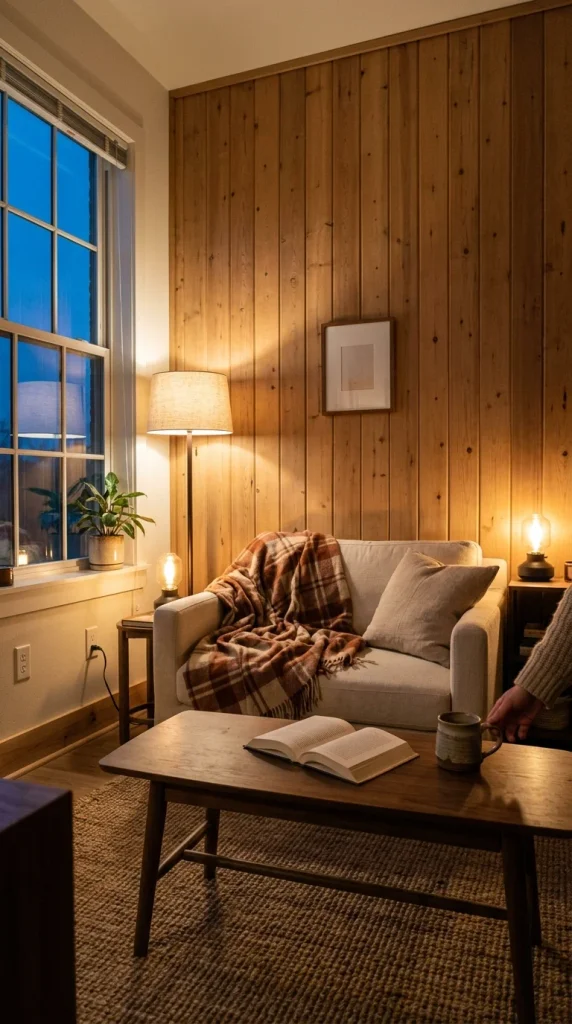
The Cabin Living Room Checklist at a Glance
Ten decisions, in the order that saves you money. Each one narrows the next, so you never buy a rug that fights the paint or a lamp that fights the mood.
Most cabin decor ideas online start with accessories: antlers, pinecones, a sign about the lake. Those come last here, if they come at all. A room reads as a cabin because of wood, warm light, texture, and where the furniture faces.
THE 10-DECISION CABIN CHECKLIST
Screenshot the grid, then work down it in order. Skipping ahead is how rooms end up with three plaids.
Decision 1: Choose Lodge, Modern Rustic, Scandi, or Moody
Search the word cabin on Pinterest and you get four very different rooms sharing one label. A dark lodge with a stone hearth. A bright modern rustic cabin living room with one wood wall. A pale Scandinavian cabin full of linen. A deep green room lit by two lamps.
All four are real. Mixing all four is how a room starts to look like a furniture catalog.
| Classic Lodge | Modern Rustic | Light Scandi | Dark and Moody | |
|---|---|---|---|---|
| Walls | wood paneling or warm beige | warm white plus one wood wall | soft white | deep green or charcoal |
| Wood | medium or dark, knotty | one mid tone, clean grain | pale oak or birch look | dark walnut tones |
| Sofa | worn leather | oatmeal linen or boucle | light slipcovered | velvet or dark leather |
| Fabrics | plaid, quilts, faux fur | wool, chunky knit, one plaid | linen, sheepskin | wool, velvet, heavy curtains |
| Light mood | amber and low | bright by day, warm at night | airy, lots of daylight | dim, pooled lamplight |
| Best for | big rooms, real beams | most apartments | small or dim rooms | rooms used mostly at night |
Pick one column as your base. You can borrow a single detail from a neighbor, like one leather chair in a modern rustic room. Borrow more than that and the style stops reading.
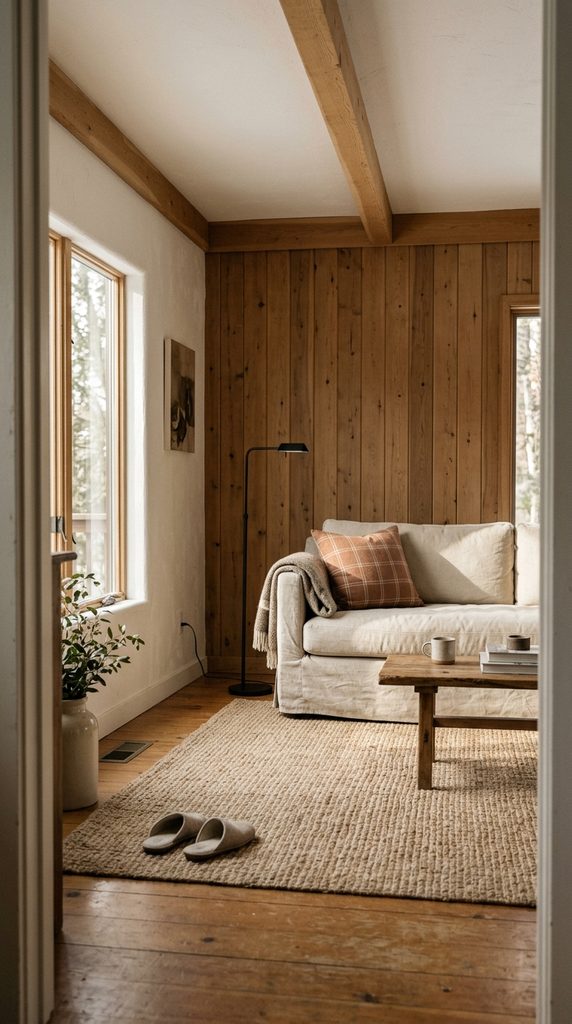
Decision 2: Decide How Much Wood the Room Can Take
Wood is the whole point, until it isn’t. Lay a wood floor under wood walls under a wood ceiling, add a wood coffee table, and nothing stands out anymore. The eye has nowhere to rest.
Original knotty pine has its own catch. In older log cabin living rooms, the paneling often turns a deep amber or orange over the years, mostly because the original oil-based finish oxidizes and darkens the wood’s natural resins. Plan your paint and fabrics around that color instead of fighting it.
The fix fits on a sticky note:
One wood tone leads the room. Two others can support it. Every sightline gets at least one surface that isn’t wood: a painted wall, a linen sofa, stone, or black metal.
Renting with white walls? Then wood arrives through furniture: a coffee table with visible grain, a bench, a picture frame, a turned bowl. Three pieces in matching or near-matching tones carry the whole look.
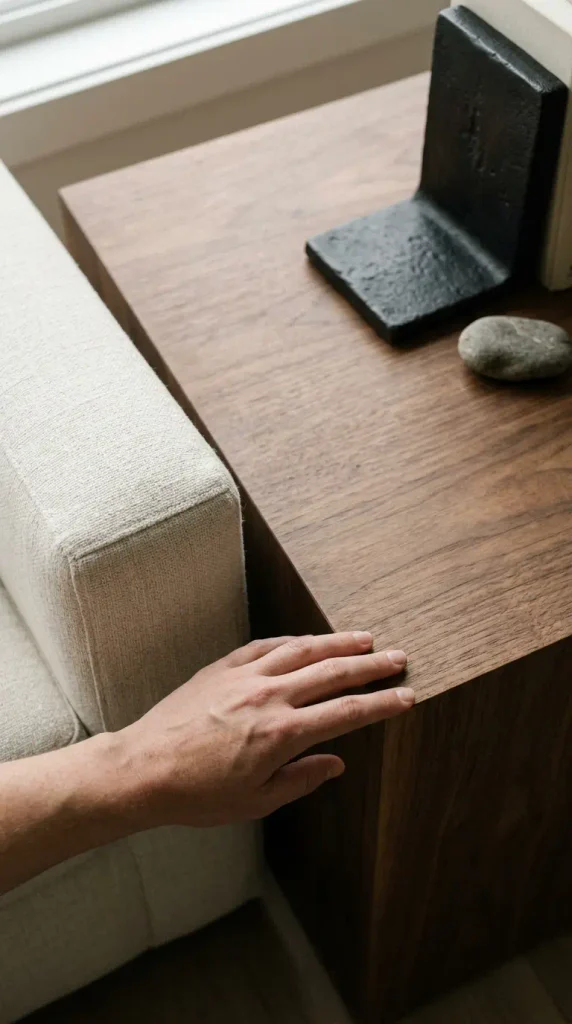
Decision 3: Pick Colors That Make Your Wood Look Good
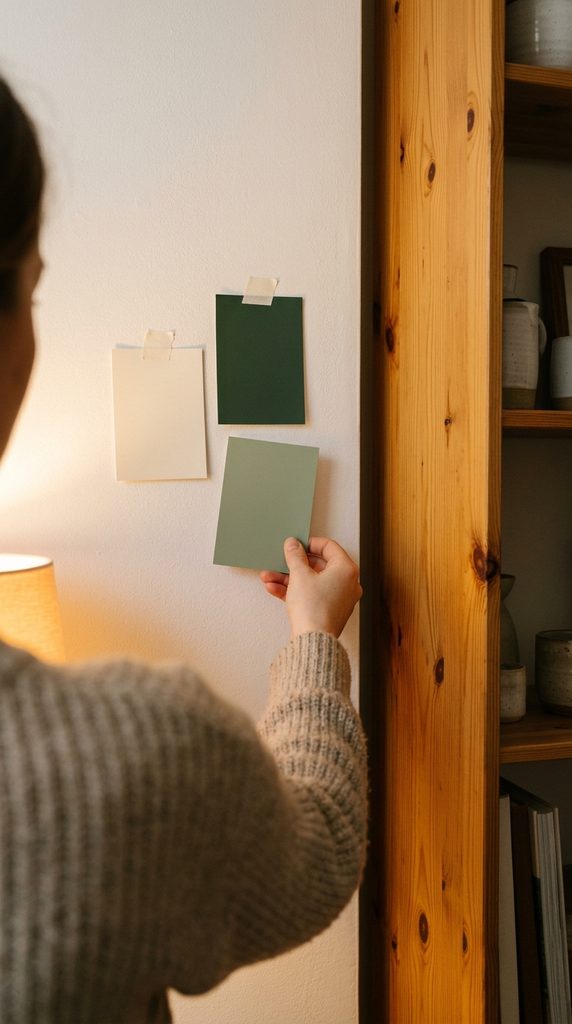
Paint plays backup to the wood, so choose it after Decision 2, not before. Here’s how the main cabin colors usually behave:
- Warm white: the safe wall color for small or dim rooms. Look for a white with a creamy, slightly yellow base.
- Sage: soft enough for all four walls, and it calms down orange pine.
- Deep forest green: strong on one wall or on built-in cabinets.
- Clay or rust: better in pillows and throws than on walls.
- Charcoal: for frames, lamp bases, and metal, or all four walls in a moody room.
One warning. Stark blue-white walls make honey and pine wood look more orange, not less.
Cabin color guide: where each one goes
Test swatches next to your actual wood at night, under your actual lamps. Daylight lies about warm colors.
Decision 4: Name the Focal Point, With or Without a Fireplace
Most cabin photos center on a stone fireplace. If you have one, that’s your focal point and the seating faces it. If you don’t, pick a stand-in and commit to it:
- A wall of books, floor to ceiling if the room allows.
- A big window with a bench or two chairs turned toward it.
- One oversized mountain, lake, or forest print.
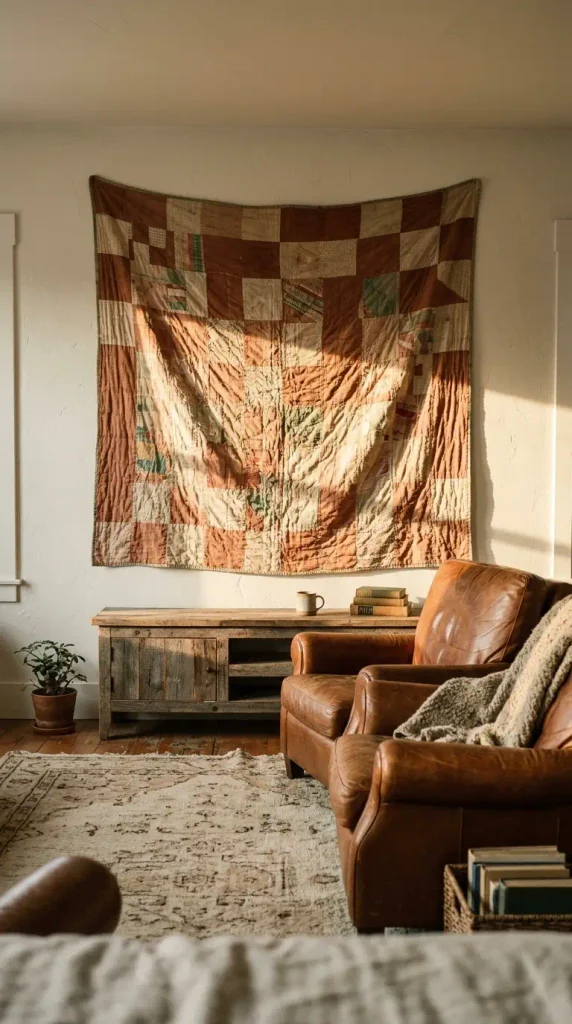
- A vintage quilt hung on the wall above a low wood console.
One focal point per room. Two compete, and the seating ends up facing nowhere in particular.
If you do have a fireplace or wood stove, keep stacked decor logs, baskets, throws, and pillows back from it. The U.S. Fire Administration heating safety tips say to keep anything that can burn at least 3 feet from heat sources, including fireplaces, wood stoves, space heaters, and candles. Plenty of styled photos ignore that line, so measure yours.
⚠️ Watch Out
Safety note: anchor tall furniture to the wall, keep candles and cords away from fabric, and use a licensed electrician or contractor for hardwired lighting, ceiling mounts, or anything structural.
Decision 5: Lay Out a Small Cabin Living Room Before You Shop
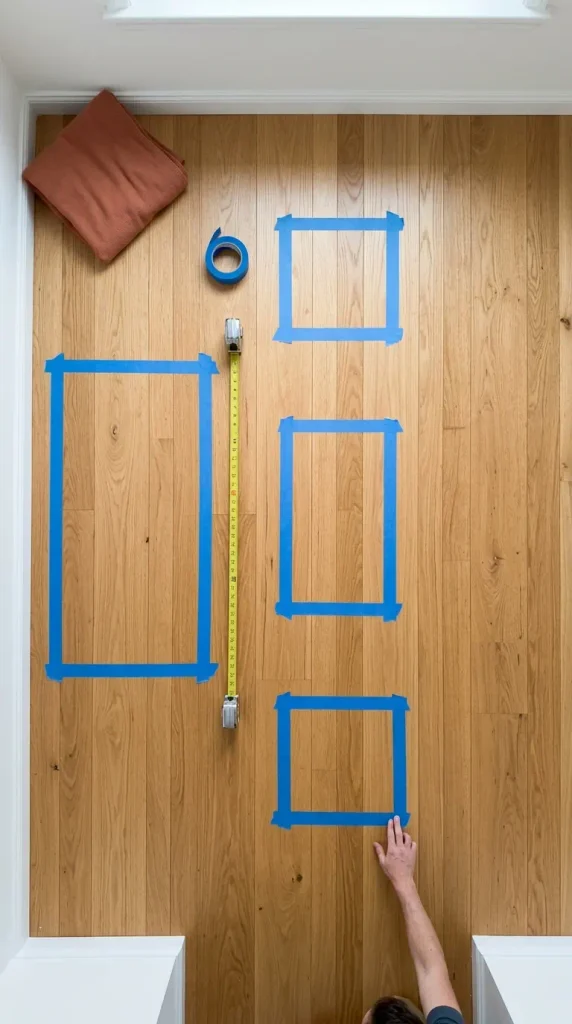
Before anything goes in the cart, grab a roll of painter’s tape.
- Mark your focal point from Decision 4.
- Tape the footprint of the sofa, chairs, and coffee table on the floor, facing that point in a U or an L.
- Live with the tape for a day. If you keep stepping over a shape, that piece is too big.
- Check every gap against the rules below before you order.
In a small cabin living room, a loveseat plus two chairs often fits better than one long sofa. Pick a sofa on visible legs, too, since seeing floor underneath makes the room read larger. Rolled-arm leather sofas look great in lodge photos, but their chunky arms take floor space you may not have.
| Measure | Rule of thumb | Why it matters |
|---|---|---|
| 📏 Sofa to coffee table | 14 to 18 inches | reach a mug, keep your knees free |
| 🚶 Main walkway | 30 to 36 inches | people pass without turning sideways |
| 🪑 Side table height | about level with the seat arm | your hand drops right onto it |
| 🟫 Rug size | front legs of every seat on the rug | the group reads as one room |
| 💡 Reading lamp shade | bottom edge near shoulder height when seated | light lands on the page, not in your eyes |
Common designer rules of thumb. Measure your own room before you buy.
Decision 6: Layer Textiles by Feel, Not by Theme
Cabin rooms feel warm because of touch. Plaid gets the credit, but the real trick is mixing weights.
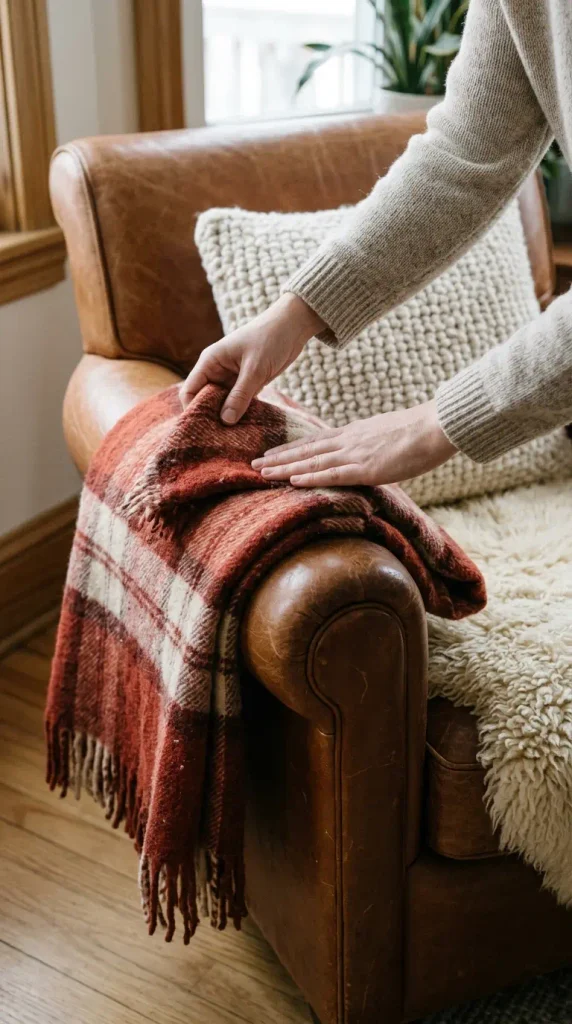
Aim for three textures at every seat: one smooth (leather or linen), one nubby (boucle, chunky knit, or a wool blanket), and one soft (sheepskin or faux fur). Then add a wool or jute rug underfoot.
Now the honest part. Faux fur sheds a bit at first and grabs pet hair. Leather scratches under claws, though plenty of people like the worn look it picks up. Plaid is easy to overdo, so keep it to one pattern and repeat its main color twice somewhere else in the room.
For throws, the fabric matters more than the print. This side-by-side look at throw fabrics by weight and warmth compares chunky knit, waffle weave, sherpa, and alpaca.
Mix one smooth, one nubby, and one soft texture at every seat.
Keep one plaid and repeat its main color twice.
Choose washable covers for anything the pets sleep on.
Three plaids in three different scales.
Faux fur on the dog’s favorite chair.
Shiny polyester throws that look flat in photos.
Decision 7: Set the Lighting Warm, Low, and Layered
Overhead light flattens everything. Wood loses its grain, stone goes gray, and the whole room starts to feel like an office.
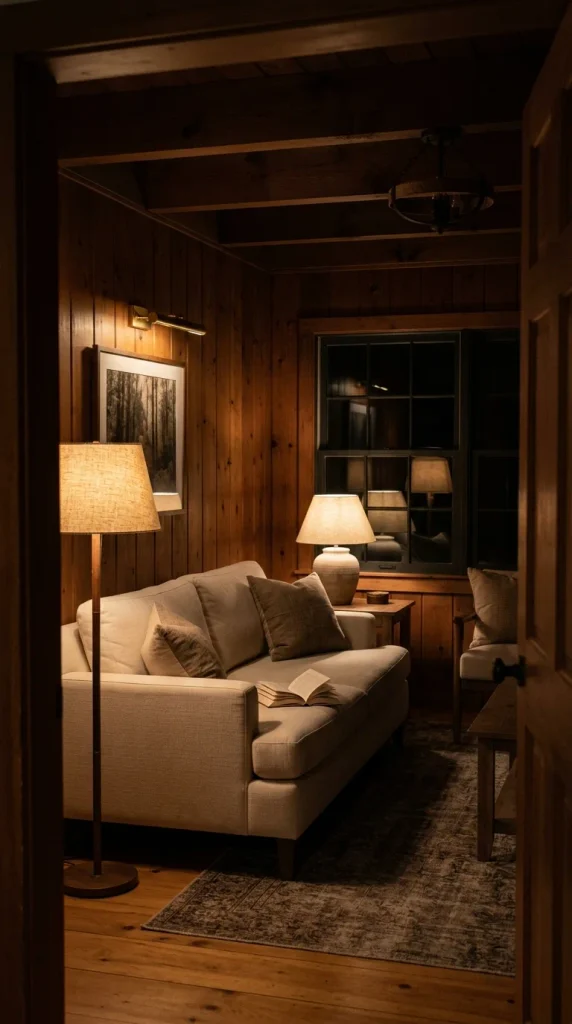
Cabin light comes from lamps at different heights, and the bulb matters as much as the lamp. The Department of Energy consumer lighting guide explains that light color is measured in Kelvin, and lower numbers give the warm, yellow light that looks most like old incandescent bulbs. For a cabin room, that means warm white bulbs, usually labeled around 2700K.
Brightness sits on the same box, listed in lumens on the Lighting Facts label. The same DOE guide notes that a 1,100 lumen LED replaces a 75 watt incandescent, so you can match the glow you remember without guessing.
Build the light in this order:
Turn off the overhead light at night and look at what’s left. Every dark corner is where a lamp goes.
Add a floor lamp or shaded table lamp for general glow in those corners.
Give every seat a reading light you can reach without standing up.
Add one accent glow: a picture light, a bookshelf lamp, or a small lamp on the console.
Switch every bulb to warm white and put the main lamps on dimmers or smart plugs.
Decision 8: Plan for Sound, Scent, and Warmth
Close your eyes in a real cabin and it still feels like one. That’s the part a styled room often misses.
Sound. Bare floors and empty walls echo. A wool rug, lined curtains, upholstered seats, and a full bookshelf soak up that echo, so voices sound closer and calmer.
Scent. Cedar, pine, and woodsmoke notes do much of the work. A few cedar blocks in a basket give you the smell with no flame at all.
Warmth. Keep a throw within arm’s reach of every seat and a footstool near the main chair. Nobody settles in if they have to get up for a blanket.
Decision 9: Save One Corner for Reading
Nearly every cabin daydream includes a chair by a window and a book. Most room guides give that idea one line. Give it a real spot instead, because it’s the corner you’ll use most once the weather turns.
Pick a corner with daylight, an outlet, or ideally both. Then build it from this kit:
Cabin reading corner kit
If the room is shared or tight, these living room reading nook ideas for shared rooms show 15 ways to fit one in without letting it take over.
One chair, one lamp, one throw. That’s the corner.

Decision 10: Sort Owner Projects From Renter Swaps
Renting changes the toolkit, not the result. Start with the moves that leave with you, and save the permanent ones for a home you own.
Renter swaps (no drilling, no paint):
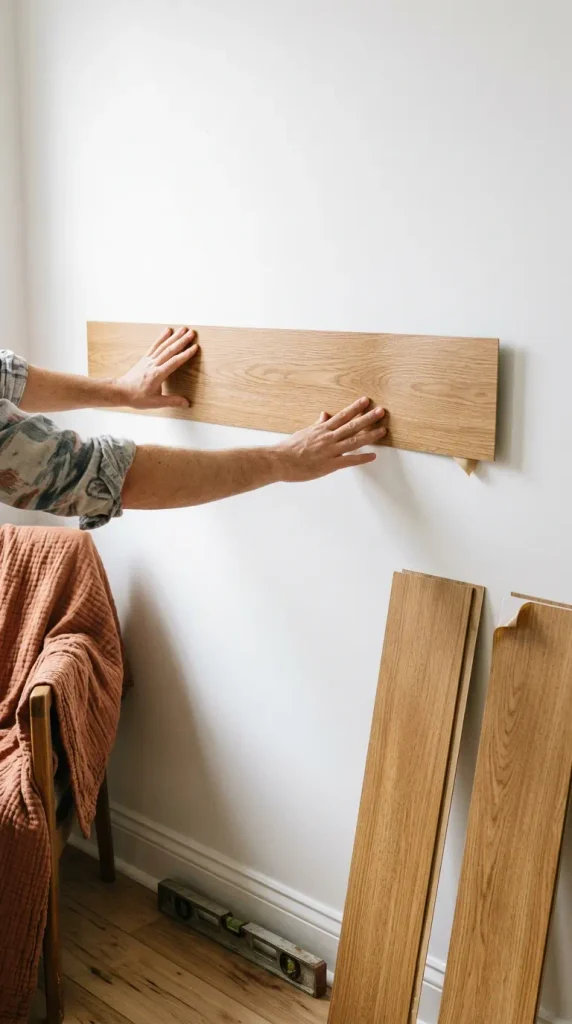
- Peel-and-stick wood-look planks on one wall, if your lease allows it. Test one piece inside a closet first, since some adhesives pull paint when they come off.
- Plug-in sconces with cord covers instead of hardwired fixtures. This roundup of swing-arm sconce and arc lamp setups covers lamp heights and bulb color.
- Curtains on tension rods inside the window frame.
- A large wool or jute rug laid right over the carpet.
Owner projects:
- Tongue-and-groove or shiplap on one wall or the ceiling.
- Faux or real ceiling beams. Ask a contractor about anything mounted overhead.
- A wood stove or fireplace insert, installed by a licensed pro after a local permit check.
White walls, one overhead light, a sofa pushed flat against the longest wall, and a bare floor.
One wood-look plank wall, two plug-in sconces, a loveseat floated on a wool rug, and lined curtains on tension rods. All of it moves out with you.
Frequently Asked Questions
What are some simple ways to style a cabin living room?
Start with light, then texture. Swap the overhead light for two or three lamps with warm white bulbs, lay down a wool or jute rug, and drape a plaid or knit throw over the sofa. Bring in one solid wood piece, like a coffee table or bench, and hang a mountain, lake, or forest print. Those moves get you most of the cabin look before you touch paint.
How do I make a small cabin living room feel bigger?
Keep the walls a light warm white, choose a sofa on visible legs so floor shows underneath, and float seating a few inches off the walls. Use one large rug instead of several small ones. Limit the room to one or two wood tones, and hang curtains high and wide so the windows read larger. Fewer, bigger pieces work better than many small ones.
What does rustic decor actually mean?
Rustic decor leans on natural, lightly finished materials that show their age: wood with visible grain and knots, stone, iron, leather, wool, and linen. Colors stay earthy and warm. Modern rustic keeps those same materials but pairs them with cleaner furniture lines and lighter walls, which is why it fits apartments and newer homes better than a full lodge look.
How can my living room feel like a cabin without a fireplace?
Give the room a different focal point and turn the seating toward it. A wall of books, a big window with a bench, an oversized nature print, or a vintage quilt hung on the wall all work. Then copy the fireplace’s job with warm lamps placed low around the room and a heavy throw within reach of every seat.
What colors make a living room feel like a cabin?
Warm white, sage, deep forest green, charcoal, and earthy clay or rust. Use the softest one on the walls and save the stronger shades for a single wall, cabinets, or textiles. Skip stark blue-white paint if your room has honey or pine wood, because cool walls push warm wood toward orange.
Can I get a cabin living room look in a rental?
Yes. Bring wood in through furniture and frames, use peel-and-stick wood-look planks on one wall if your lease allows it, and choose plug-in sconces over hardwired ones. Lined curtains on tension rods, a wool rug over the carpet, and warm bulbs in every lamp finish the job, and everything leaves with you when you move.
Your Cabin Room, One Decision at a Time
Ten decisions sounds like a lot until you see how fast they stack. Once you know which cabin you mean and how much wood the room can take, the paint nearly picks itself. The layout tells you which furniture stays. The bulbs decide how the room feels after dark.
Work through one decision a night and you’ll have a full cabin living room plan before you spend anything. Start with the corner you’ll actually sit in, and let the rest of the room grow out from there.
Save the 10-decision checklist to your living room board so it’s with you in the paint aisle.
Keep reading
More cozy nook ideas
 Living Room
Read →
Living Room
Read →
How to Make a DIY Coffee Table That Feels Cozy, Not Cluttered
Most DIY coffee table plans hand you a cut list on line one. That is why so many finished tables end up…
 Living Room
Read →
Living Room
Read →
20 Coffee Table Ideas That Make a Small Living Room Feel Warmer
Your coffee table is probably holding two remotes, a charging cable, yesterday’s mug, and a candle nobody has lit since spring. That…
 Living Room
Read →
Living Room
Read →
Vintage Living Room Decor That Reads Thrifted Cottage, Not Thrift Store
No estate sale connections. No reno budget. No landlord who says yes to paint. Vintage living room decor still works in a…