
Cottagecore Garden Ideas: The 9 Layers That Make a Yard Feel Like a Storybook

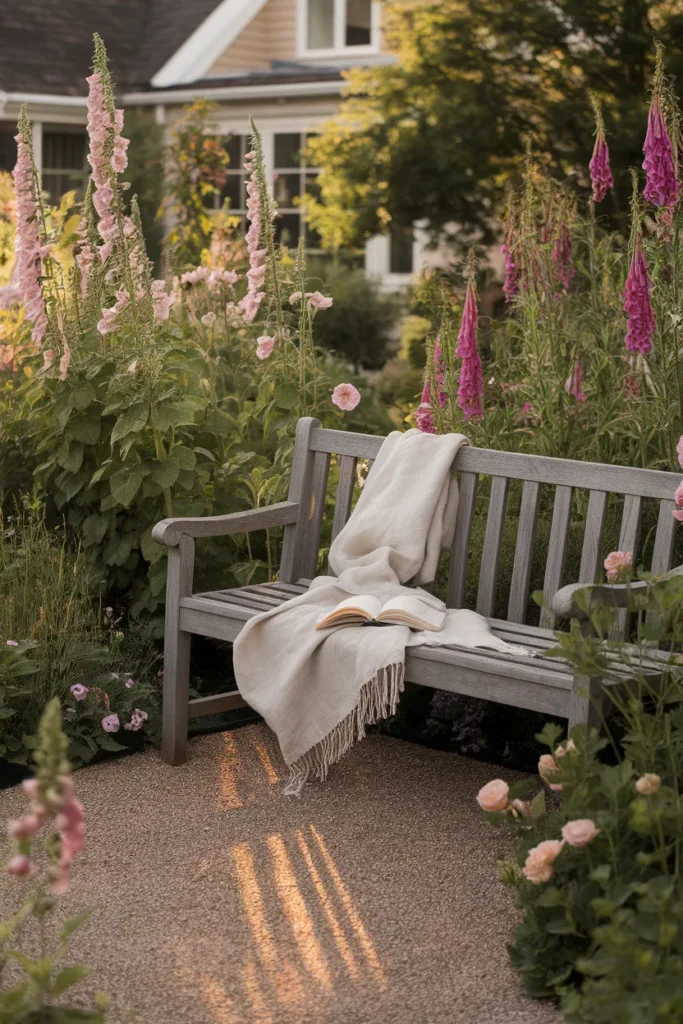
Picture 6 pm light coming in sideways through hollyhocks, a gravel path that crunches under your shoes, and a bench with a linen throw folded over one arm. That is a cottagecore garden. No acreage, no greenhouse, no landlord permission required.
Most guides hand you a plant list and call it done. That is the easy half.
The hard half is the part almost nobody writes down: how wide to make the path so you actually walk it, how many plants it takes before the beds stop looking thin and patchy, and where to put the seat so the whole thing has a point. You rent, or you own something small, and you have one awkward strip of yard or a balcony with a railing. Nine layers below, in build order. The first three carry most of the effect, so if all you have is one weekend, do those and stop.
Start With These Three Layers (Everything Else Is Decoration)
If you do nothing else, do these three. They are what your eye reads as “cottagecore” before it registers a single plant name.
- A path that curves. Even six feet of it. A straight line reads as a walkway. A curve reads as a garden.
- One flower, repeated at least five times. Repetition is what separates a garden from a plant collection.
- A seat that faces the flowers. Not the house. Not the fence. The flowers.
That is the whole trick. Everything after this is refinement.
Here is why the third one matters more than it sounds. A cottagecore garden is not a display, it is a place you are supposed to sit in and lose an hour. Skip the seat and you have built a very pretty thing you look at through a window, which is exactly what you already had.
Let the Path Wander, But Make It Wide Enough to Actually Use
Curved paths are the one piece of advice every cottagecore garden article gives, and none of them tell you the number that makes or breaks it.
Here it is. Standard walkway guidance puts 18 inches at absolute minimum, 24 inches as functional, 30 inches for one person, 36 inches as standard, and 48 inches for two people side by side.
The 36-Inch Wander Rule: make your main garden path 36 inches wide, then let the planting narrow it to about 24 inches by midsummer. You get the overgrown, brushing-past-the-lavender feeling without the actual problem of not being able to carry a watering can through.
Build a 24-inch path and by July you will be walking sideways through wet catmint. Ask anyone who has done it.
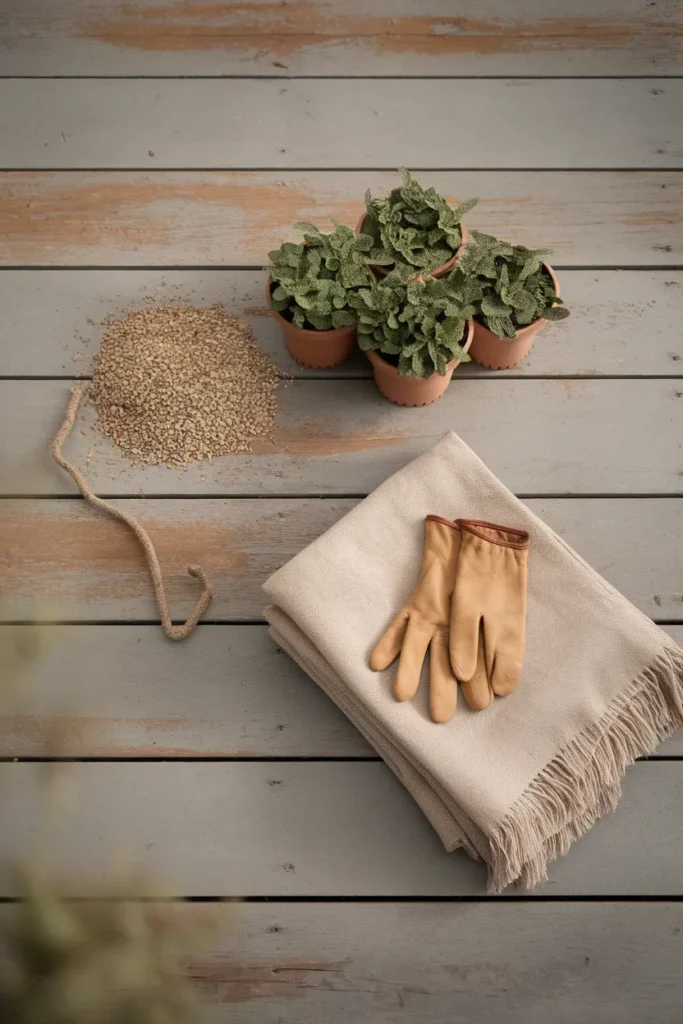
Materials that read cottagecore, cheapest first: pea gravel, reclaimed brick laid in a loose running bond, irregular flagstone with creeping thyme in the joints, or plain stepping stones set into clover. Gravel is the renter’s answer, because it goes down over landscape fabric and comes back up in an afternoon.

Choose Flowers That Bloom in Relay, Not All at Once
This is where most first-year cottagecore gardens fail. You buy everything blooming at the nursery in May, it all peaks in June, and by August you have a bed of green sticks.
Cornell Cooperative Extension’s pollinator garden guidance gives the cleanest fix I have seen written down: at least 3 plants from at least 3 perennial species for each season, spring, summer and fall. That is a minimum of 27 plants. They also recommend planting in groups of at least three, never singly.
I call this the 3-3-3 Bloom Relay, and it is the single highest-value thing on this page.
| Season | 3 species that carry it | Plant in groups of |
|---|---|---|
| Spring | Hellebore, columbine, bleeding heart | 3 or 5 |
| Summer | Foxglove, hollyhock, catmint | 3 or 5 |
| Fall | Echinacea, sedum, aster | 3 or 5 |
Plant in odd numbers. University of Maryland Extension recommends grouping “an uneven number of small plants or a single large plant,” which is the same instinct working gardeners have followed forever, just written down.
One thing to settle before you buy any of it: know your zone. Check the USDA plant hardiness zone map, which was last updated in 2023 and maps average annual extreme minimum winter temperature in 10-degree zones and 5-degree half zones. A foxglove that is a reliable perennial in one zone is a one-summer annual two states north, and the plant tag will not always tell you.

Build the Reading Nook the Whole Garden Is For
Here is the section every other cottagecore garden guide skips, and it is the reason half of these gardens never get used.
Pick your seat first, then plant around it. Not the other way around.
What actually works outside, ranked by how long you will stay:
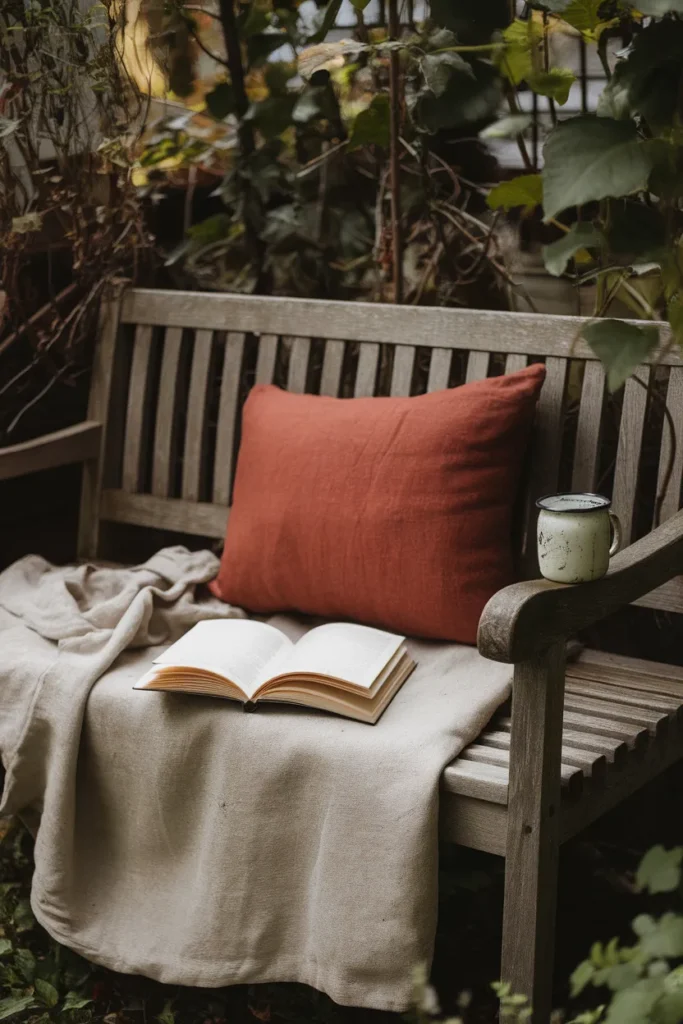
- A 48-inch wooden bench with a back. Backless benches look better in photos and are miserable after twenty minutes. A back is non-negotiable if you want to finish a chapter.
- A hanging egg chair or reading swing on a freestanding A-frame stand. No drilling, no ceiling joists, moves with you when the lease ends.
- A weatherproof daybed or banquette against a fence, layered with an outdoor lumbar pillow and a bolster.
- Floor cushions on a jute-look outdoor rug. They photograph wonderfully. After forty minutes your lower back will file a complaint. Use them for a glass of wine, not for a marathon read.
Leave at least 30 inches of clear space in front of the seat so you can stretch your legs out without kicking a peony. And put the seat where it gets afternoon shade, because nobody reads in direct 2 pm sun in July.
If your outdoor space is a slab of concrete with a roof over it rather than a lawn, the shade and bug problems are different enough to need their own playbook, and these covered patio reading nook setups solve for exactly that.
The Renter’s Version: All Containers, Zero Digging
You do not need ground. You need pots and a plan.
Pinterest’s own Spring 2026 data backs this up, by the way: “balcony makeover ideas” is up 165% and the platform is explicitly framing the season around micro escapes rather than big builds. Small is not the compromise version anymore.
The container cottagecore formula:
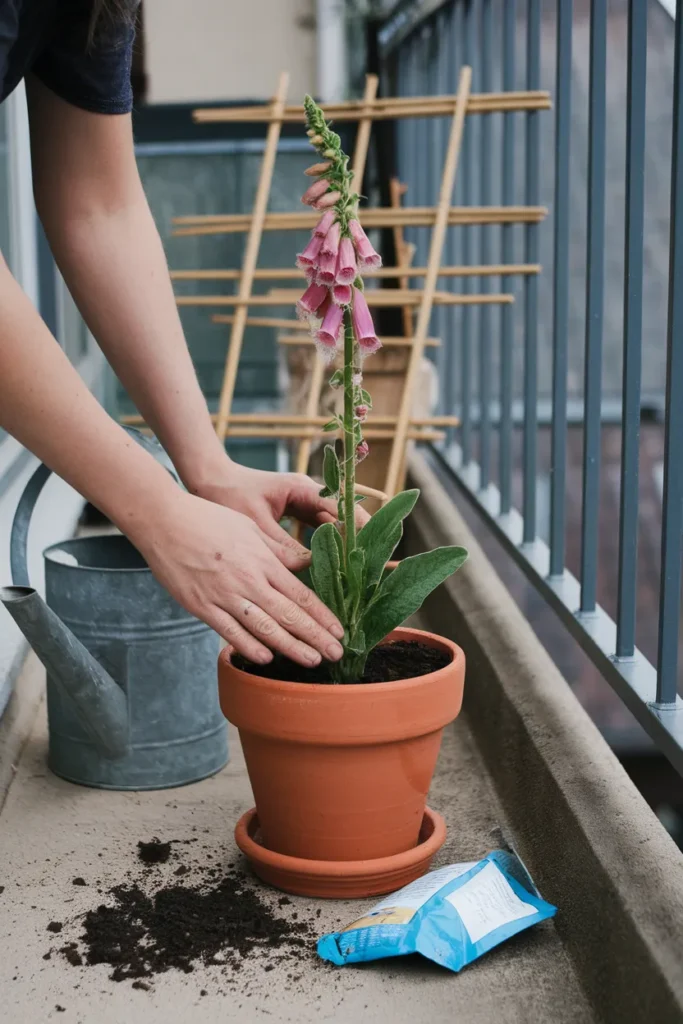
- Three sizes, one material family. Mixed terracotta in 8-inch, 12-inch and 16-inch reads as collected. Ten matching plastic pots read as a garden center display.
- Go vertical. A railing planter, a two-tier plant stand, and one hanging basket give you three planting heights in about four square feet.
- Thriller, filler, spiller, but cottagecore. A foxglove or salvia spire in the center, catmint or hardy geranium around it, and something trailing over the rim like lobelia, creeping jenny or nasturtium.
- One climber on a lightweight trellis leaned against the wall, not screwed into it. Sweet peas will cover a 5-foot trellis in a season and smell like the whole point of gardening.
Renter-safe rule: nothing that requires a hole. Freestanding trellis, tension rods for hanging planters, gravel over a tarp on a balcony floor, and pots on a rolling plant caddy so you can move the entire garden on moving day.
The failure mode here is water. A 12-inch terracotta pot in full sun in August can dry out in a single day, and terracotta wicks moisture through its walls faster than glazed or plastic. Group your pots so they shade each other’s soil, and put the thirstiest ones where you will walk past them daily.
Plant It So the Pollinators Move In
A cottagecore garden that hums is a different experience from one that just sits there. This costs you nothing extra, it is purely a matter of what you buy.
Start with natives. The Xerces Society’s regional pollinator-friendly native plant lists are organized by geography and flag which species feed adult pollinators, which serve as caterpillar host plants, and which support specialist bees. It is a free, non-commercial starting point and far better than guessing from a nursery tag.
Three things the pretty guides leave out:
- Leave a patch of bare soil. Most native bees nest in the ground, and heavy mulch blocks their access. Xerces is explicit about this. A square foot of undisturbed dirt in a sunny spot is enough.
- Skip the insecticide entirely, especially on anything in bloom. That includes flowering weeds. This is the fastest way to undo everything else on this list.
- Add water. A shallow dish with a few pebbles for landing pads. Not a birdbath, a saucer.
A log, a small rock pile or a stack of twigs in a back corner does more for habitat than any decorative bee hotel you can buy, and it costs nothing.
This is general gardening guidance, not pest management advice. If you are dealing with an actual infestation, contact your state’s cooperative extension service before treating anything.

Age Every Hard Surface You Own
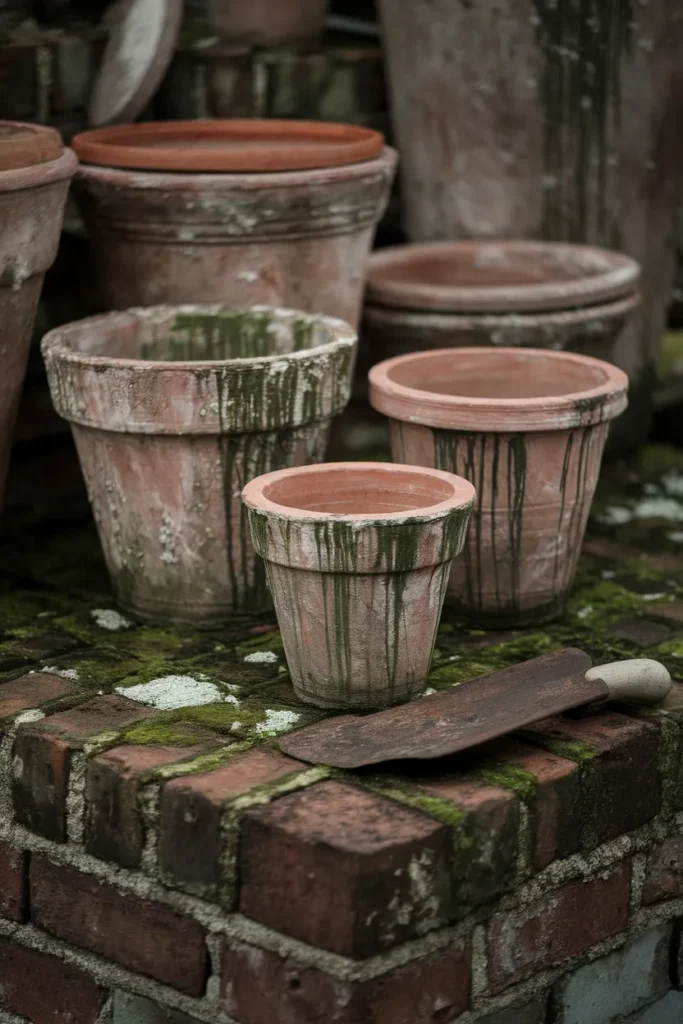
Cottagecore is not a color palette, it is a texture story. Everything should look like it has been rained on.
What to buy, and what to skip:
| Reads cottagecore | Reads suburban |
|---|---|
| Unfinished cedar, teak left to silver | Pressure-treated green lumber |
| Terracotta, galvanized steel, zinc | Glossy glazed ceramic |
| Reclaimed brick, irregular flagstone | Uniform concrete pavers |
| Woven willow, hazel hurdles, picket | Vinyl fence panels |
| Wrought iron, patinated copper | Powder-coated black aluminum |
You can speed patina up. Terracotta greens over with a slurry of plain yogurt or buttermilk brushed on and left in the shade, which sounds like folklore and works because it feeds the mosses and algae already in the air. New wood weathers faster if you leave it unsealed and let it get properly wet.
Secondhand is the shortcut. A wooden chair from a yard sale already has the thing you are trying to fake.
Light It for 8 PM, Not for Noon
Zero of the top-ranking cottagecore garden guides mention lighting, which is a strange gap given Pinterest’s own numbers show “evening garden parties” up 210% this spring.
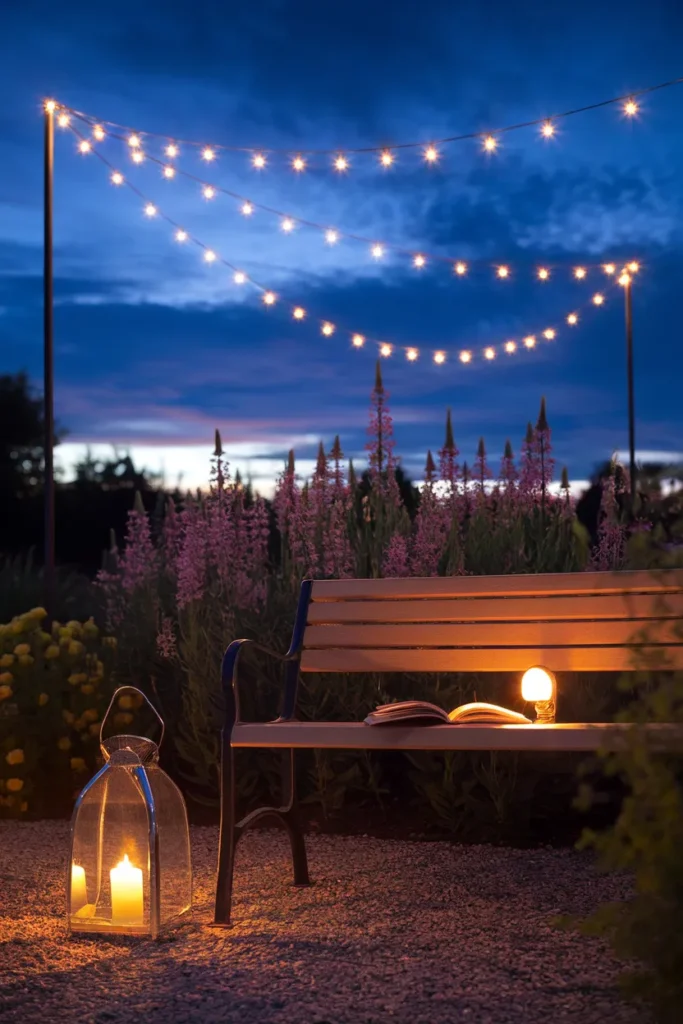
Warm light is the entire effect. Stay at 2700K and do not go above 3000K. Anything cooler turns your garden blue-white and clinical, and it is the single most common mistake people make outdoors.
Three layers, in the order they matter:
- String lights overhead, warm white, zigzagged across the seating area rather than run along the fence. Overhead light creates a ceiling, and a ceiling is what makes a corner feel enclosed.
- A lantern or two at ground level. Real candles if you are sitting there, LED pillars if you are not.
- One clip-on reading light on the bench arm if you actually want to read past dusk. Solar path lights are atmosphere, not illumination, and you will squint.
Solar is fine for the string lights and the path. For the reading light, use something you charge, because solar output collapses on exactly the overcast evenings when you most want to sit outside.
The same warmth logic applies indoors, and if the bulb temperature thing is new to you these warm lighting ideas for every room go deeper on why 2700K keeps coming up.
The Layer Nobody Photographs
Everything above is visual. What actually makes you stay outside for two hours is not.
Scent, on a schedule. Night-scented stock and nicotiana release after dark, which is exactly when you are sitting there. Lavender and rosemary give you nothing until you brush past them, so plant them at path edges where your leg will hit them. Sweet peas near the seat. Old garden roses over modern hybrids, because most modern roses were bred for shipping and shelf life rather than smell.
Sound. Gravel underfoot is the most underrated sound in a garden. Grasses rustle. A shallow water dish brings birds, and birds bring the soundtrack. Skip wind chimes unless you love them, because you cannot turn them off and neither can your neighbors.
Temperature and texture. Brick and stone hold heat for a while after sundown, which is why a brick path stays comfortable underfoot at 8 pm when the grass has gone cold and damp. Lamb’s ear next to a bench exists to be touched. Lady’s mantle holds rainwater in perfect silver beads on its leaves after a shower, and it is the closest thing to a magic trick in a hardware-store plant.

What a Starter Cottagecore Garden Actually Costs
Real talk on money, because “affordable” is not a number.
All figures below are mid-2026 US estimates and vary by region, season and retailer. Verify locally before budgeting.
| Item | Typical US range (estimate) |
|---|---|
| Pea gravel, per 0.5 cu ft bag | $5 to $9 |
| Perennial, 1-gallon nursery pot | $12 to $20 |
| Seed packet | $3 to $5 |
| Terracotta pot, 12 inch | $15 to $35 |
| Solar string lights, 30 to 50 ft | $20 to $40 |
| Secondhand wooden bench | $40 to $120 |
The 27-plant Bloom Relay at nursery prices is the expensive part, and it is also the part you can cut in half. Buy the summer and fall species as 1-gallon plants so the bed looks planted this year, and start the spring species from seed or bare root over winter. Perennials also divide. One clump of catmint becomes three in two years, for free.
Where the money is actually wasted: garden ornaments. Skip the resin gnome tier entirely and spend it on one good bench.
If you want the same look indoors for the eight months a year the weather does not cooperate, a floral cottagecore reading corner uses the same palette logic in a rental living room.
Frequently Asked Questions
What is a cottagecore garden, exactly? It is an informal, densely planted garden built around the aesthetic of an old English cottage garden: curved lines, self-seeding flowers packed edge to edge, natural materials, and no visible order. The difference between “cottage garden” and “cottagecore garden” is mostly that cottagecore is a modern internet aesthetic, so it leans harder on mood, and it is often built in a small suburban yard or on a balcony rather than around an actual cottage.
What colors work in a cottagecore garden? Soft and slightly faded: dusty pink, cream, pale lavender, butter yellow, sage and silver foliage. Keep saturated primary reds and oranges to a minimum, or confine them to one corner. Silver foliage plants like lamb’s ear and artemisia are what make the whole scheme hang together, and most beginners skip them.
Can you make a cottagecore garden in a small or urban space? Yes, and it is arguably easier. Density is the aesthetic, and density is cheap to achieve in a small footprint. A 6-foot balcony with nine pots at three heights will read more cottagecore than a half-acre lawn with a flower border around the edge.
What plants are best for a cottagecore garden? Foxglove, hollyhock, delphinium and larkspur for vertical spires. Old garden roses, peony and hydrangea for mass. Catmint, hardy geranium and lady’s mantle to soften edges. Echinacea, sedum and aster to carry fall. Sweet pea and clematis to climb. Add herbs anywhere you have a gap.
Is a cottagecore garden good for pollinators? It can be excellent, if you pick natives and single-petal flower forms. Heavily doubled ornamental blooms often have little accessible nectar or pollen, so a garden full of them looks abundant and feeds almost nothing. Check a regional native plant list before you buy.
Can I replace my lawn with flowers instead of grass? Partly, and it is a great cottagecore move. Low flowering ground covers like clover, creeping thyme and self-heal can replace turf in low-traffic areas and stay walkable. Do it in sections rather than all at once, and check for any HOA or municipal turf ordinance first, because rules vary by city.
How long before a cottagecore garden looks full? Year one looks sparse, and that is normal, not a mistake you made. Perennials follow the old nursery saying: sleep the first year, creep the second, leap the third. To buy patience, fill the gaps in year one with fast annuals like cosmos, nigella and nasturtium, which self-seed and will come back on their own.
Your Next Weekend
Do not try to build all nine layers at once. Put in the curved path, plant one flower five times along it, and drag a chair out there. That is a real cottagecore garden by Sunday evening, and everything else is something you add over the next three years while sitting in it.
If your reading spot ends up being a covered patio or a balcony rather than a proper garden bed, start with the container formula above and work outward.
Keep reading
More cozy nook ideas
 Garden Nooks
Read →
Garden Nooks
Read →
Container Gardening Ideas for Small Cottage Gardens That Fit a Rental Patio
One anchor pot, two mid-size pots, three little ones. That’s the whole cottage garden, and it fits on a patio smaller than…
 Garden Nooks
Read →
Garden Nooks
Read →
Raised Garden Bed Ideas for a Cottage Garden (Without the Tidy Box Look)
No English manor, no in ground borders, no landlord who’ll let you dig up the yard. You can still get the raised…
 Garden Nooks
Read →
Garden Nooks
Read →
Cottage Garden Path Ideas That Wander, Bloom, and Hold Up to Real Feet
Most cottage garden path ideas fall apart in the same place: the moment you actually have to move dirt. So this one…