
Warm Lighting Ideas to Make Your Home Feel Cozy

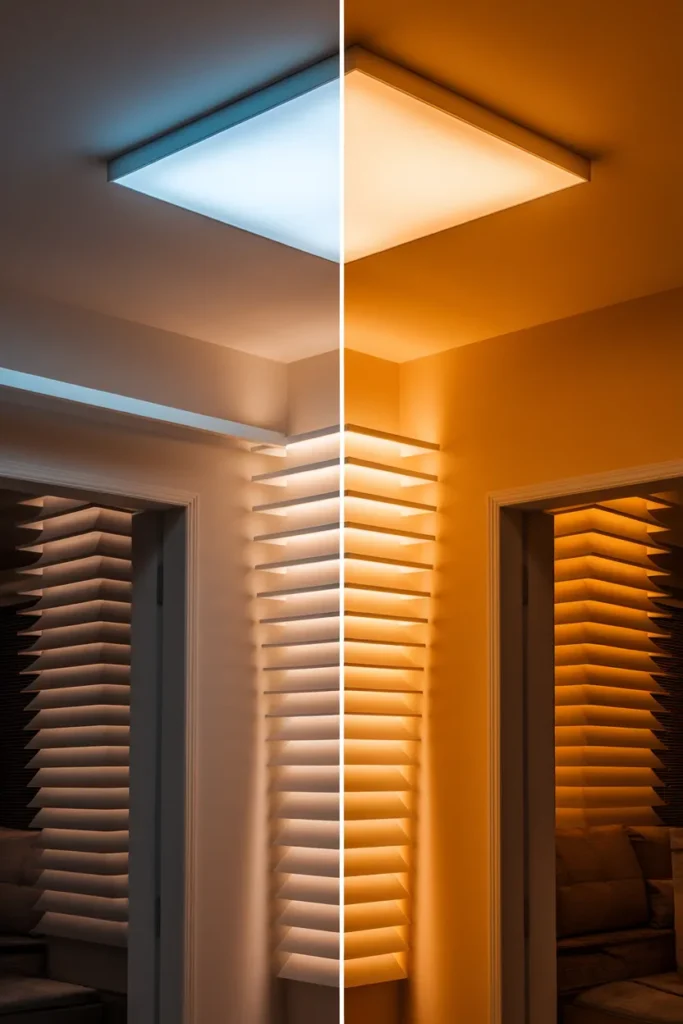
Your ceiling light is the problem. That single bright disc overhead, the one every landlord installs, floods a room with flat blue-white light and calls it done. It makes 7 p.m. feel like a dentist’s office.
Warm lighting is the home decor fix, and it costs less than a throw pillow. When people talk about warm lighting home decor, they usually mean one room feeling: golden and calm instead of flat and cold. You can get most of the way there tonight with a bulb, a lamp, and one switch you stop flipping.
Here is the whole recipe, starting with the swap that does the most work.
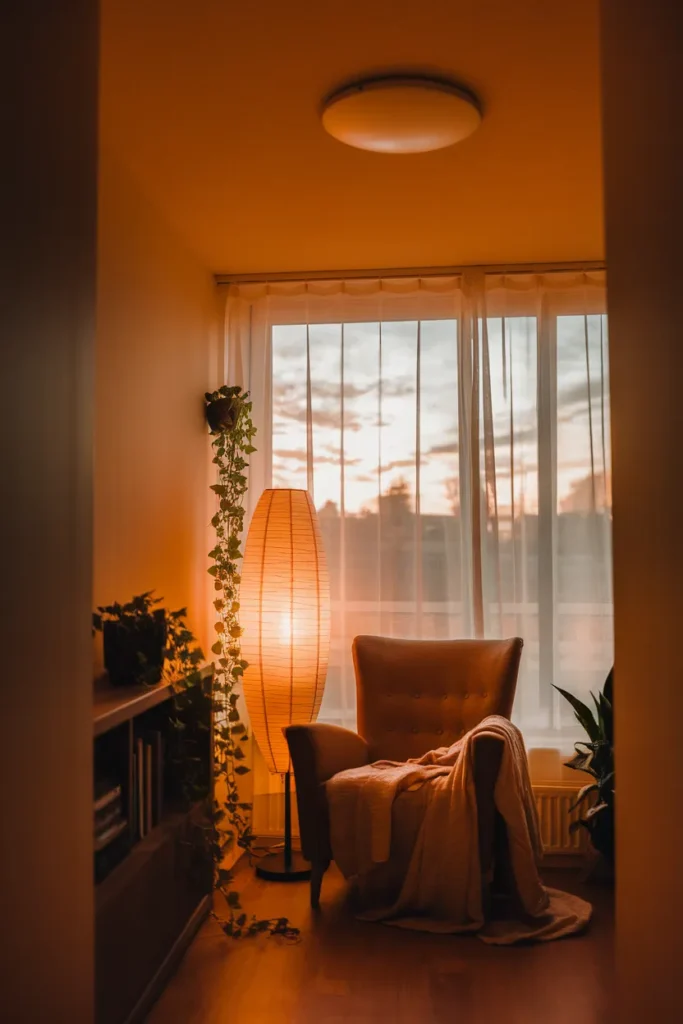
Start With the Bulb: One Setting Warms a Whole Room
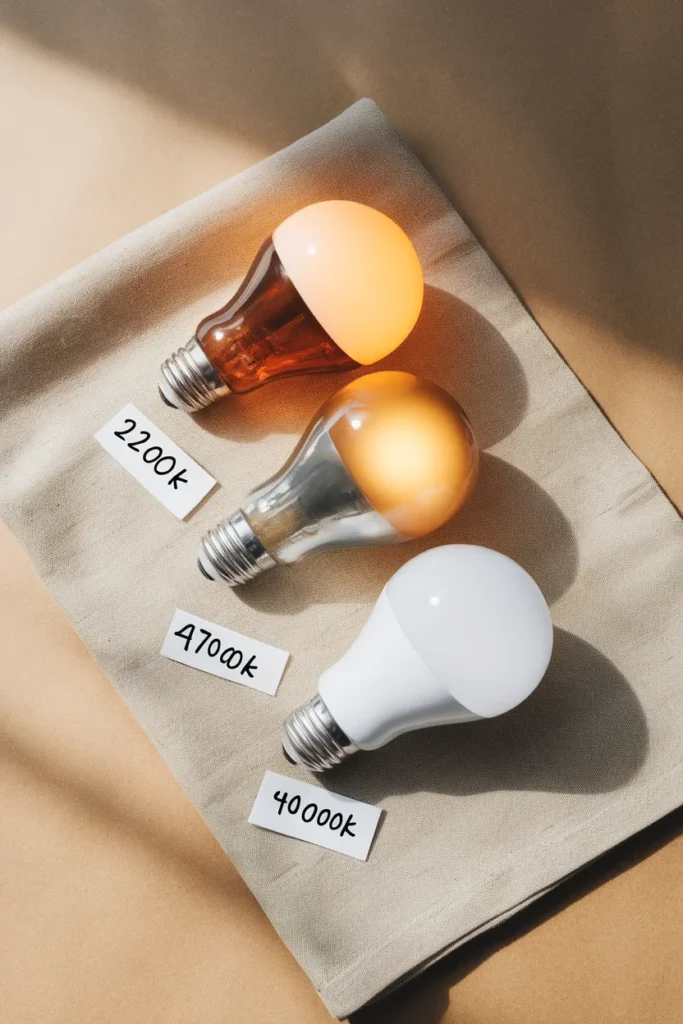
If you change one thing, change your bulbs. Color temperature is measured in Kelvin (K), and lower numbers mean warmer, yellower light. A soft white bulb at 2700K throws the same gold glow as the old incandescents you grew up with. Set your main bulbs there and the room relaxes on its own.
Here is the cheat sheet worth screenshotting:
| Bulb label | Kelvin | The look | Best for |
|---|---|---|---|
| Candle / amber | ~2000-2200K | Deep gold, firelit | Late-night accent, wind-down |
| Soft white | 2700K | Warm, incandescent-like | Living rooms, bedrooms, nooks |
| Warm white | 3000K | Warm but crisper | Kitchens, bathrooms with warm intent |
| Neutral to cool | 4000K and up | White to bluish, office-like | Task only (skip for a cozy room) |
One rule does more than any single bulb: match the Kelvin on every bulb you can see at once. A lamp at 2700K sitting next to a lamp at 4000K reads as broken, one corner gold, one corner cold. Walk the room, read the tiny print on each bulb, and get them all to the same warm number. Call it the one-Kelvin rule.
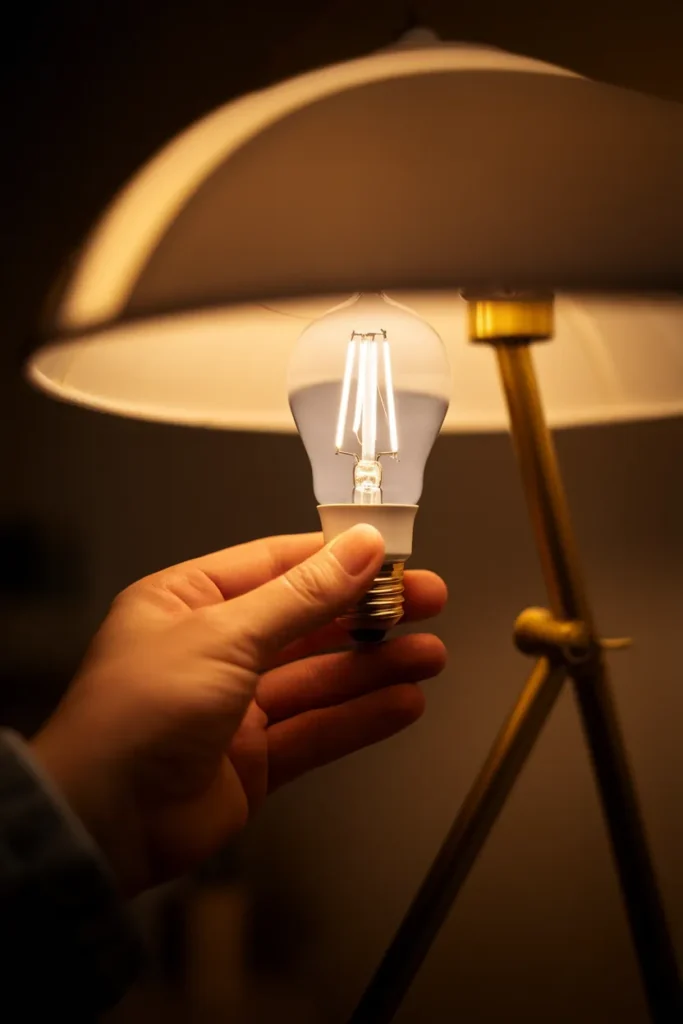
While you shop, check the CRI (color rendering index). A bulb rated 90 or higher makes wood, skin, and a linen throw look rich instead of washed out. Budget bulbs often sit at 80, and you feel the difference even if you cannot name it. For a plain-English breakdown of how bulb color sets a room’s mood, ENERGY STAR’s color and mood guide is the reference I point people to.
I tried 3000K first and the corner still felt like a kitchen, so I dropped to 2700K and it finally softened.
Layer Three Kinds of Light, Not One Big Ceiling Bulb
Designers almost never rely on one light. They stack three kinds, and you can copy it in an afternoon.
Ambient is your soft base glow (a couple of lamps, or the overhead on a dimmer set low). Task is the brighter pool you actually read or chop by (a swing-arm lamp, an under-shelf strip). Accent is the mood layer (a picture light, fairy lights, a candle). Get one of each into a room and it gains depth, like a stage instead of a parking lot.
The single best habit costs nothing: stop flipping the ceiling switch. Leave the big light off after sunset and turn on two or three lamps at eye level or lower instead. Light that sits low, roughly 30 to 60 inches off the floor, feels intimate. Light blasting down from 9 feet feels like a waiting room.
You will hear the room change before you notice it. Voices drop. People settle in. That is layered light doing its quiet work.
Warm Lighting Ideas for Renters (No Drill, No Electrician)
Renting should not sentence you to the ceiling light. Almost every warm-lighting trick has a no-damage version.
Plug-in wall sconces give you that hardwired, built-in look with a cord you tuck behind furniture, no junction box required. Cordless, rechargeable table lamps go anywhere, even a windowsill or a shelf with no outlet nearby, and you top them up like a phone. A smart plug (usually about $10 to $20) turns any old lamp into something you can dim and schedule from the couch.
For string lights and fairy lights, skip the nails. Clear adhesive hooks or low-tack cable clips hold them along a shelf or window frame, then peel off clean on moving day. Swapping a stark white lampshade for a cream or oatmeal linen one is the cheapest warm-up of all, since the shade tints the light before it ever reaches you.
Starting a whole corner from nothing? The same no-drill mindset scales up. Here is a full walkthrough for building a reading nook in any room without touching the structure.
Rough price bands to expect at US retail (ballpark, not gospel): plug-in sconces around $25 to $80 each, cordless table lamps around $30 to $90, dimmable 2700K bulbs a few dollars apiece.
One safety note: if you ever want a sconce truly hardwired into the wall, that is electrician territory, not a weekend project. Hire a licensed pro and keep your deposit intact.
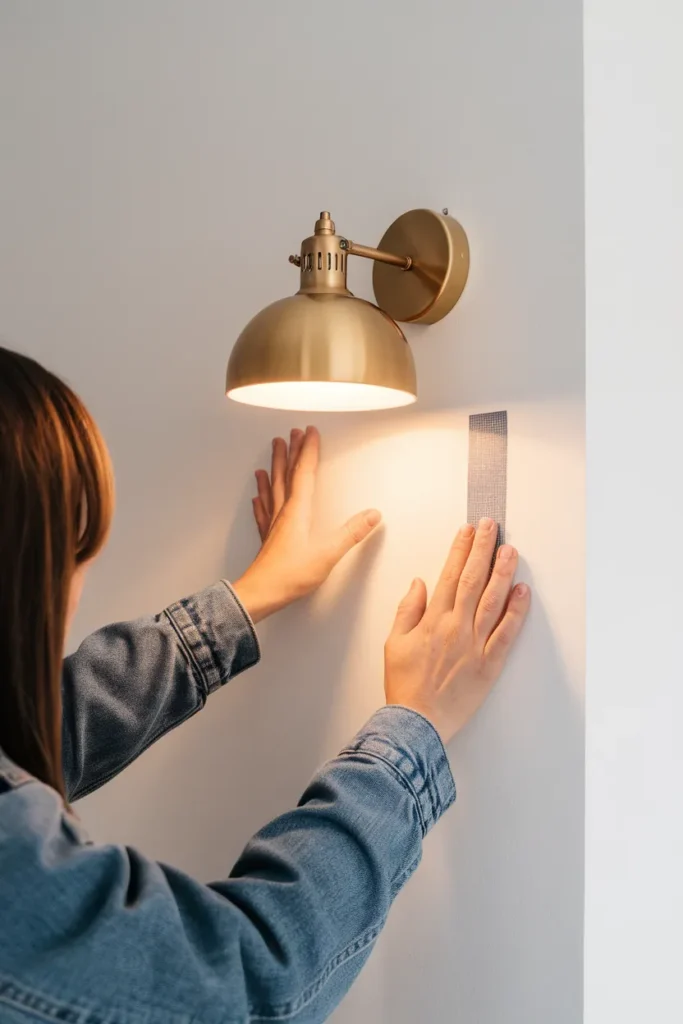
Get the Glow Down to Eye Level
Overhead light flattens a face. Lamp light at eye level flatters it. That is most of the reason a room full of lamps feels warmer than the same room lit from the ceiling.
Spread lamps around the edges so the light wraps a space instead of stabbing down from one point. A floor lamp behind an armchair, a table lamp on a side table, an arc lamp leaning over the sofa: each adds a pool of glow at sitting height. Warm shades in cream, linen, or amber push the color softer still.
Match the brightness to the job. Ambient lamps rarely want a blazing bulb. A 60-watt-equivalent bulb (about 800 lumens) of 2700K light is plenty for a reading spot, and a little less can be better for pure mood. Save the bright stuff for a task lamp you can aim.
Here is the honest trade-off: amber and candle-tone bulbs photograph like a dream, but they are genuinely too dim to read by for long. Keep one brighter, aimable 2700K source in the mix so you are not squinting at chapter three.
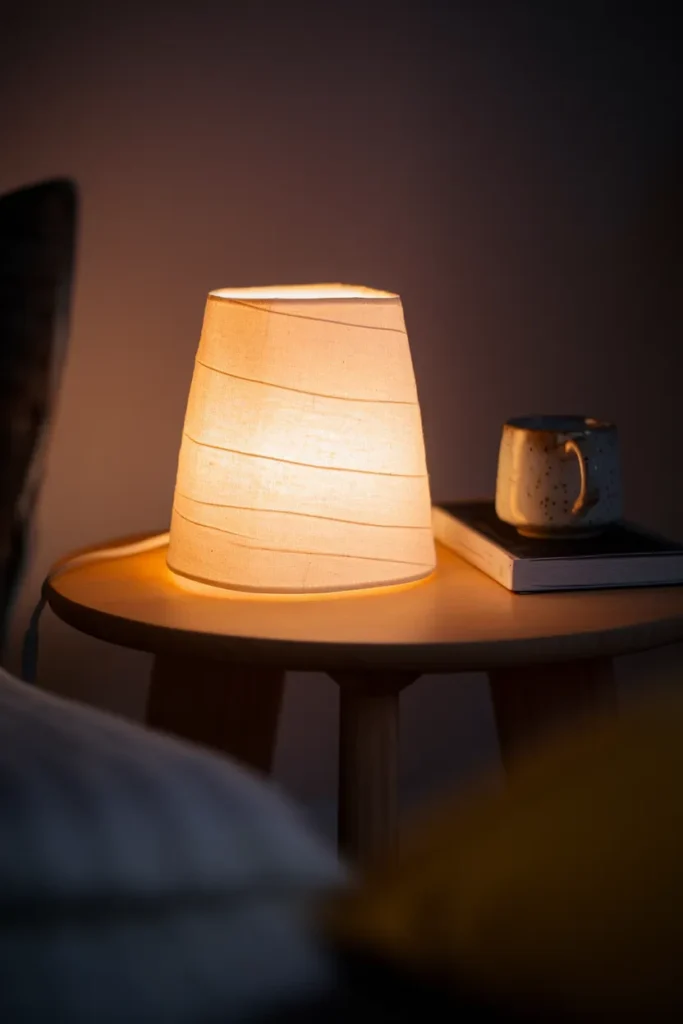
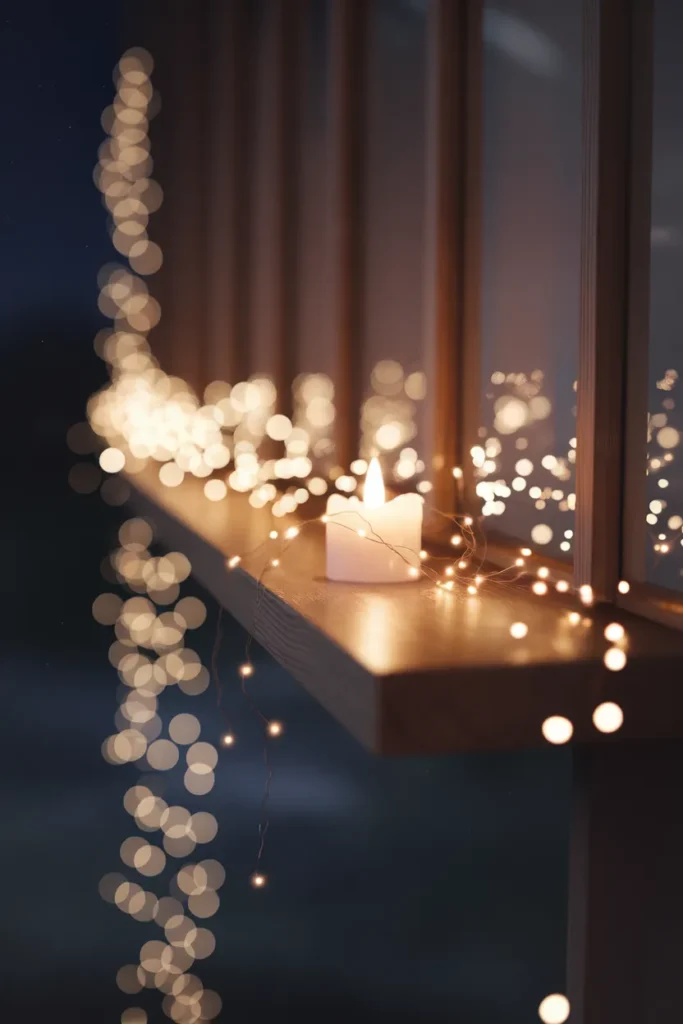
Candlelight, Fairy Lights, and the Low Soft Sources
The lowest, softest sources are where a room turns from lit to lived-in. None of these replace your main light, but together they carry the mood after dark.
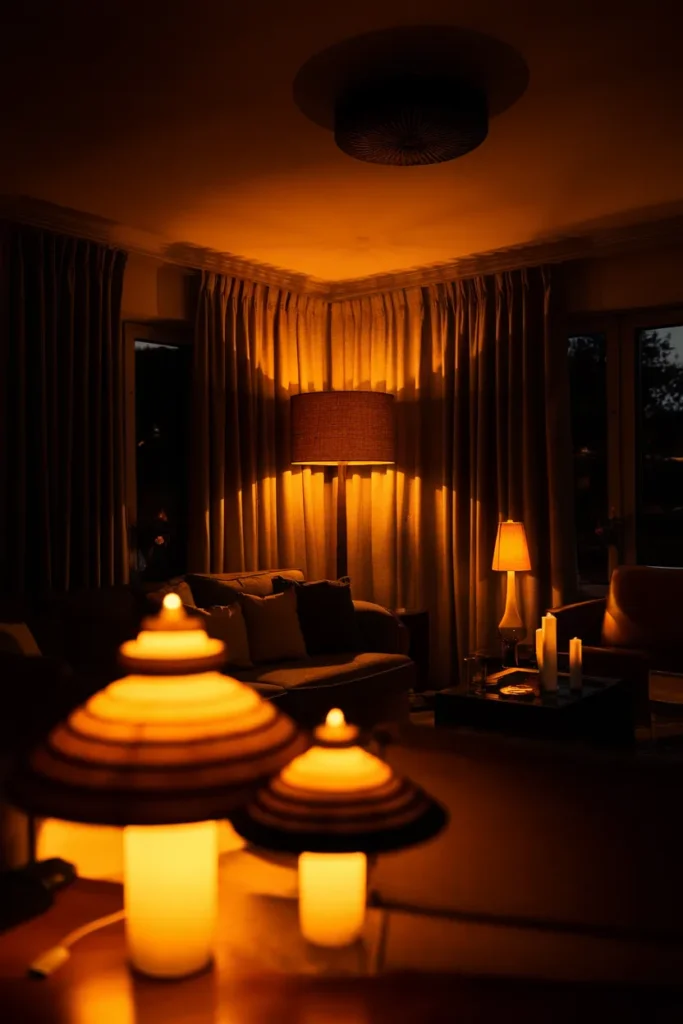
Real candles bring a flicker and a faint warmth nothing electric quite copies, plus scent if you want it. If open flame is a no with pets or little kids, flameless LED candles and candle-warmer lamps (a bulb that melts a scented candle from above) get you most of the way. Fairy lights read best in warm white, draped low along a shelf, a headboard, or a window, never tacked across the ceiling like a dorm.
Lanterns and small Edison-bulb fixtures drop a gold anchor into a corner. Cluster a few at different heights instead of spacing them out evenly, and the grouping feels collected rather than staged. For a corner built entirely around this kind of glow, these soft-glow fairy light setups show the idea in full.
Texture matters here too. A candle behind pebbled glass, string lights through a sheer curtain: the light gets broken up and scattered, which is exactly what makes it read as warm instead of pointy.
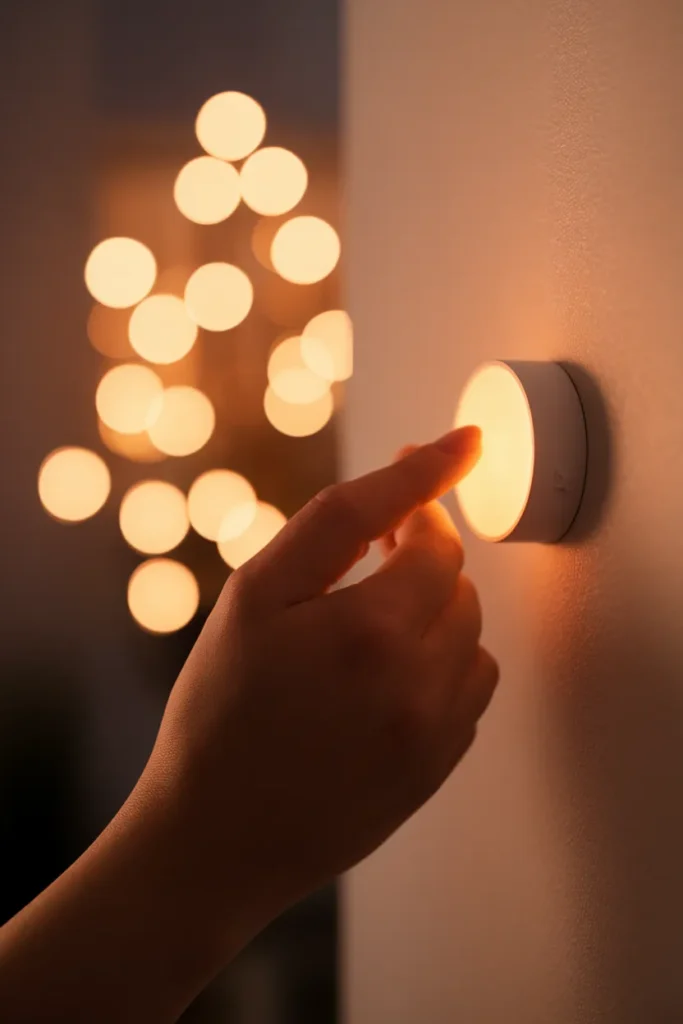
Dimmers and Dim-to-Warm Bulbs: The Trick Designers Rely On
A dimmer is the difference between a room with two settings and a room with twenty. Being able to drop the light for evening is the closest thing to a cheat code for warmth.
Two things to know before you buy. First, an LED bulb has to say dimmable on the box, or it will flicker and buzz on a dimmer. Second, look for dim-to-warm (sometimes labeled warm glow) bulbs: they start around 2700K at full brightness and shift down toward a candle-like 2200K as you dim them, the way old incandescents did. Regular LEDs just get darker while holding the same color, which can look a little gray at low levels.
There is a bonus for anyone watching the electric bill. LED bulbs use at least 75 percent less energy and last far longer than the incandescents they replaced, and they run cool to the touch, so a room full of lamps and string lights costs little and adds no heat. The Department of Energy’s LED lighting overview lays out the efficiency and lifespan numbers if you want the specifics.
The click of a dimmer at night becomes its own small ritual. Light down, shoulders down.
Build One Warm Corner: A Reading Nook Recipe
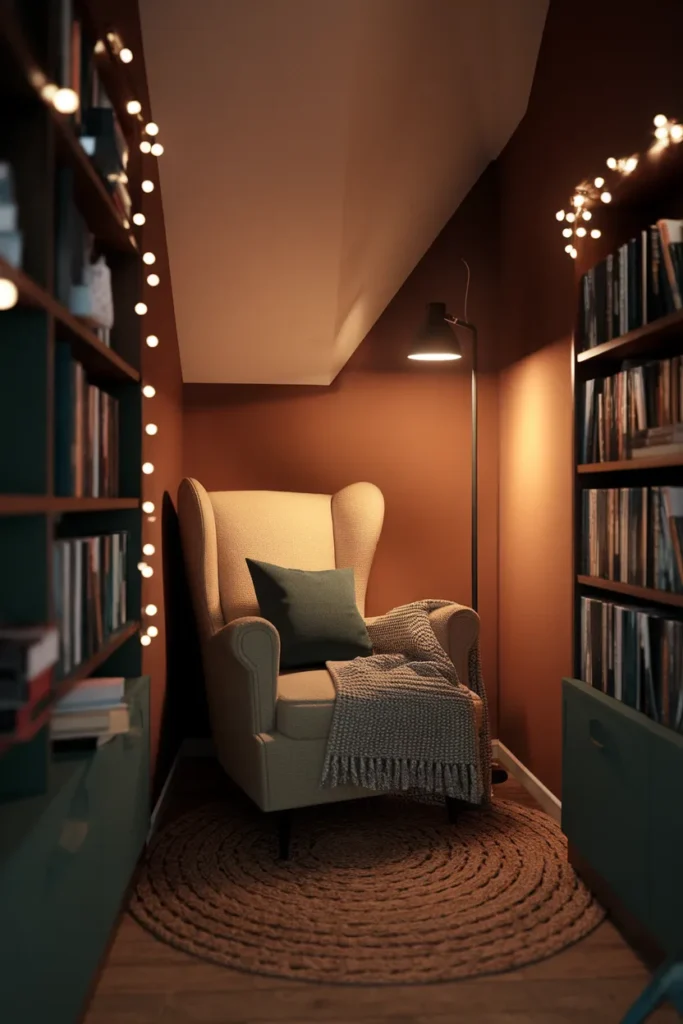
If the whole house feels like a lot, build one warm corner first and let it prove the point. A reading nook is the ideal test because it is small, cheap, and all about the light.
The recipe is short. Start with a chair or a floor cushion tucked into a corner (two walls give you that hidden-away feeling). Add a warm light at reading height, a floor lamp beside the chair or a plug-in sconce on the wall, set to 2700K. Layer one low accent, a short string of fairy lights or a candle on the shelf. Finish with a wool throw and a lumbar pillow so the corner actually invites you to stay.
That is a real warm nook in under an hour, no drilling required. For more setups built entirely around the light, these cozy reading nook lighting ideas give you a dozen variations by style and budget.
Sit in it once at dusk with the big light off. If your shoulders drop and you reach for a book, you nailed the lighting.
Common Warm-Lighting Mistakes (and the 30-Second Fix)
Most cold-feeling rooms make the same handful of mistakes. Here is the Cold-Room Checklist, in the order worth fixing:
- Mixing color temperatures. One 4000K bulb hiding in a lamp makes a whole warm corner look half-cold. Get every visible bulb to 2700K.
- Leaning on one overhead. A single ceiling fixture, however nice, cannot do warm alone. Add two lamps at eye level.
- Buying by watts. The Kelvin number sets the mood, not the wattage. Read the small print on the box.
- Going too bright. A 1600-lumen bulb flattens the feeling. Step down to around 800 lumens, or add a dimmer.
- Skipping the corners. Dark, unlit corners make a room feel smaller and colder. Drop a small accent light into each one.
I ran a 5000K daylight bulb in my main lamp for a month and could not figure out why the room felt tense, until I swapped it and the corner finally exhaled.
Fix these top to bottom and most rooms warm up before you have spent real money.
Warm Lighting Home Decor FAQs
What color temperature is best for warm, cozy lighting?
Aim for 2700K (soft white) as your default. It reads like classic incandescent and flatters almost any room. Drop to about 2200K amber for late-night accent glow, and avoid anything 4000K or higher in a room you want to feel warm.
How do I make my lighting feel warmer without buying new fixtures?
Swap the bulbs to 2700K, add a lamp or two at eye level, and stop using the overhead after dark. A dimmer and a cream lampshade finish the job. You can do all of it without a single new fixture.
Are fairy lights and string lights good for a cozy room?
Yes, as an accent layer, not your main light. Choose warm white (not cool blue-white), drape them low along a shelf or window, and put them on a smart plug so they switch on with the rest of your evening lamps.
How many lamps should a room have?
Think in layers, not a number: aim for at least three separate light sources (ambient, task, accent) so no single fixture carries the room. For most living rooms that lands around three to five lamps plus an accent or two.
Is warm white or soft white better for a living room?
The labels overlap and vary by brand, but soft white (around 2700K) is the cozy pick, and warm white (around 3000K) runs a touch brighter and crisper. For a living room you want to relax in, 2700K wins.
Can warm lighting make a small apartment feel better?
It can. Low, layered light adds depth and hides the “one bright box” flatness that makes small rooms feel like waiting areas. Lighting the corners, instead of just the center, actually makes a small space read larger.
Do warm LED bulbs save energy compared to old bulbs?
Yes. LED bulbs use at least 75 percent less energy than old incandescents and last far longer, so running several warm lamps costs very little and gives off almost no heat.
Start With One Corner Tonight
You do not have to relight the whole house this weekend. Pick one corner. Swap the bulb to 2700K, add a lamp at eye level, and leave the big light off. That is the entire trick, and it works in a rental, a studio, or a forever home.
Once that corner glows, the rest is just repeating the recipe room by room. Warm lighting home decor is less about spending and more about where you point the light, and how low you let it sit.
Note on safety: any hardwired lighting or new wall wiring should be handled by a licensed electrician. When in doubt, use plug-in and cordless options instead.
Keep reading
More cozy nook ideas
 Lighting
Read →
Lighting
Read →
Cozy Living Room Lighting Ideas That Actually Warm Up Your Evenings
Three bulbs, two lamps, one switch. That is the whole build, and it costs less than a decent takeout order. Right now…
 Decor and Styling
Read →
Decor and Styling
Read →
Fairy Lights Reading Nook: 9 Soft-Glow Ideas You Can Copy This Weekend
Picture 9 pm, the overhead light off, and one warm strand tracing the wall behind your chair. That soft amber wash is…
 Decor and Styling
Read →
Decor and Styling
Read →
Best Reading Nook Wall Sconces for Cozy, No-Wiring Corners
Your reading corner is currently lit by a ceiling fan with one yellowed bulb and the cold glow of your phone. That’s…
2 Comments