
Rustic Farmhouse Kitchen Decor: Cozy Countryside Charm on a Budget

Three shopping stops, one Saturday afternoon, about $200. That’s what real rustic farmhouse kitchen decor costs when you buy the right seven things instead of forty cute ones. This guide starts with the full priced plan, then walks through warm bulb numbers, wood layering, one honest open shelf, and a no-drill path for anyone with white builder grade cabinets and a landlord who says no to everything. Screenshot the table, work top to bottom, and stop the moment your counter feels warm instead of staged.
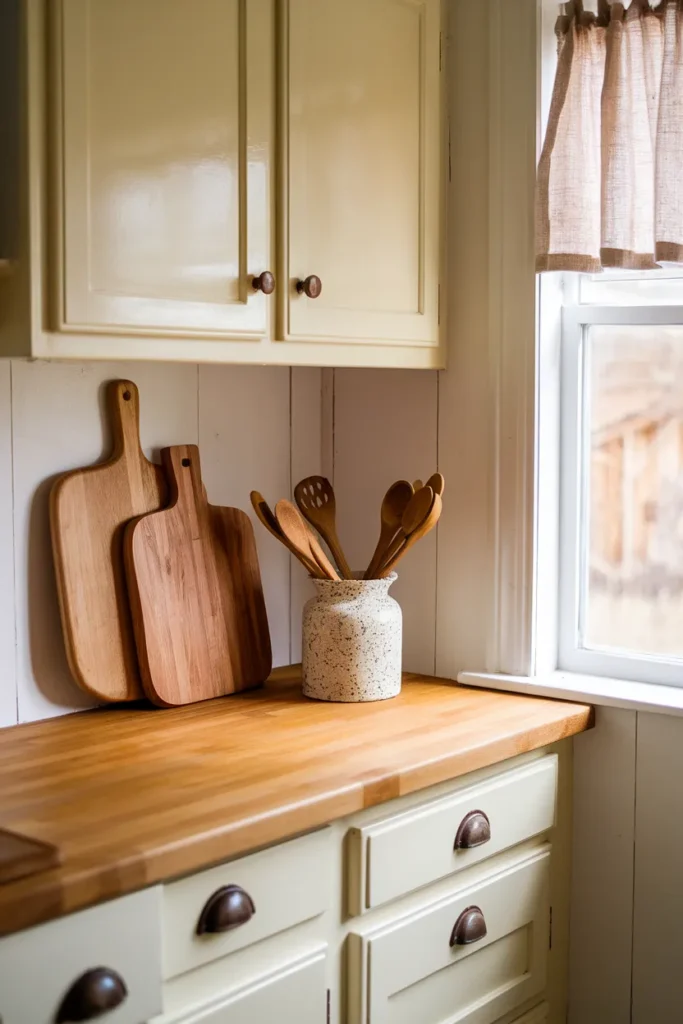
The $200 Rustic Farmhouse Starter Plan (Priced Out)
Most farmhouse kitchen ideas on a budget never show you a total, which is how a “cheap refresh” quietly turns into $600 of throw pillows for a room with no sofa. Here’s the actual list, in buying order, with typical US big box and thrift prices as of mid 2026.
| Buy order | Piece | What to look for | Typical price |
|---|---|---|---|
| 1 | Warm LED bulbs | 2700K, 60W equivalent, 2 to 4 pack | $10 to $15 |
| 2 | Cafe curtain + tension rod | Linen or cotton, hung at half window height | $25 to $35 |
| 3 | Runner | Jute or washable cotton, roughly 2 ft x 6 ft | $30 to $45 |
| 4 | Two wood cutting boards | Mixed tones, one 16 to 20 inches tall | $10 to $25 thrifted, $20 to $35 new |
| 5 | Stoneware crock | 6 to 7 inches, holds utensils | $8 to $20 thrifted |
| 6 | Woven basket | Holds produce, towels, or the mail pile | $15 to $25 |
| 7 | Plug-in swing-arm sconce or clip lamp | Warm bulb inside, cord you can hide | $30 to $45 |
That lands between $130 and $220 depending on how much you thrift, and every item survives a move because nothing on the list needs a drill.
One rule before you spend a dollar: the 3 of 5 materials rule. Rustic farmhouse pulls from five materials, raw wood, stoneware or ceramic, aged metal, woven fiber, and washed linen. Pick three and repeat them everywhere. Grab all five in one shopping trip and the kitchen reads like a craft store endcap by Sunday night.
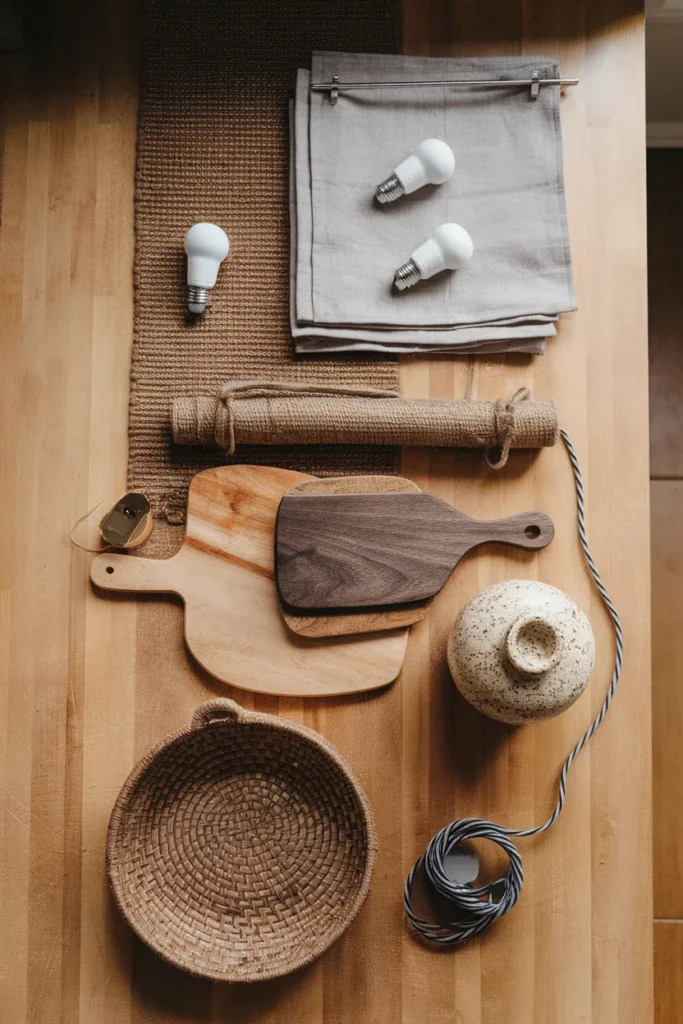
Swap the Light Before You Buy One More Thing
The $12 bulb swap does more for this style than any $80 sign ever will. Rustic farmhouse lives on warm wood and cream tones, and a cool bulb turns all of it gray. Buy 2700K, sometimes labeled soft white. Per the Department of Energy’s lighting terms guide, 2700 to 3000K sits at the warm end of the Kelvin scale and warm light is the range preferred for living spaces because it flatters skin and natural materials.
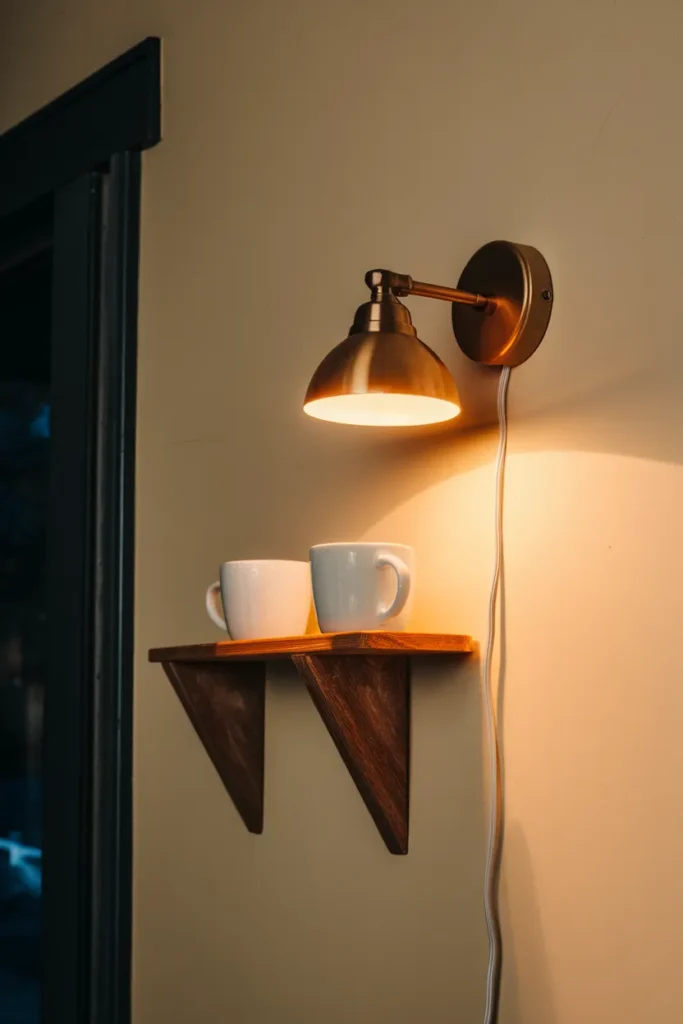
Two details matter. First, never mix temperatures in one room: a single leftover 4000K bulb over the sink makes the whole kitchen read like a break room. Check every socket, including the range hood. Second, renters can add warmth without wiring by putting a 2700K bulb in a plug-in swing-arm sconce beside the window, or sticking a battery LED puck under the upper cabinets for a soft counter glow at night.
If you own your place, a $25 dimmer on the main fixture is the single best money in this whole article. Flip the switch after the swap and watch the oak cutting board go from beige to honey. That shift is the entire style.
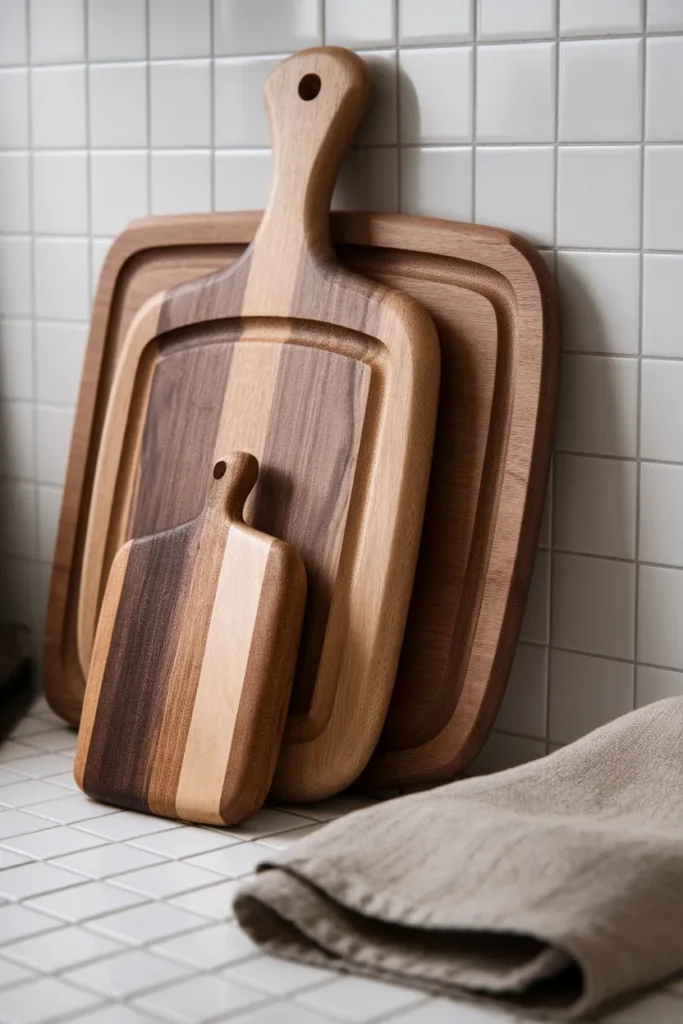
Layer Wood on the Counter: The Three Board Lean
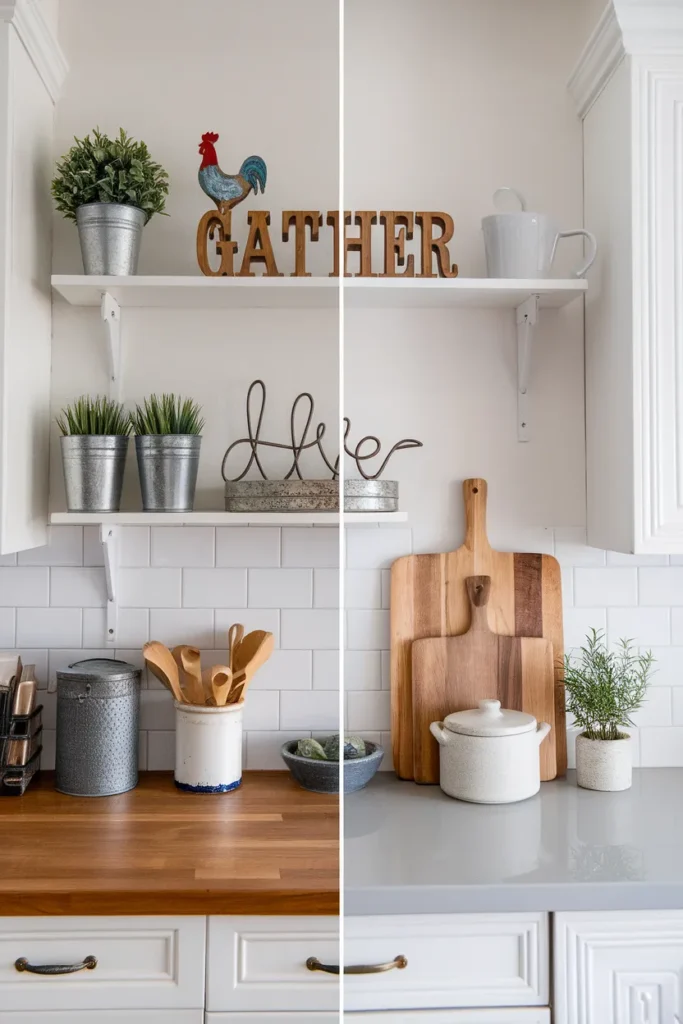
Farmhouse kitchen counter decor comes down to one move done well: the three board lean. Stand your tallest cutting board, 16 to 20 inches, against the backsplash. Lean a mid size board in front of it, offset a few inches. Finish with a small bread board or a wood handled brush at the base. Three pieces, three heights, one 30 second vignette.
Mix the tones on purpose. One pale beech, one honey acacia, one dark walnut looks collected over years. A matched three piece set from the same shelf looks like the store display it was. Thrift stores are full of solid wood boards for $5 to $12; sand any rough one with 220 grit and it’s new again.
Then feed the wood. Rub in food grade mineral oil and let it sit overnight, following the food safe cutting board care guidelines from the University of Maine Cooperative Extension: about once a month, and never cooking oils like olive or vegetable, which go rancid and sticky. I oil mine the first Sunday of the month because that’s the only way I remember.
The faint waxy smell the morning after is oddly satisfying, and the grain darkens two shades on the spot. One warning: boards living within 3 feet of the range collect a fine grease film. Give those a monthly wipe with warm soapy water before it turns tacky.
Style One Open Shelf, Not Five
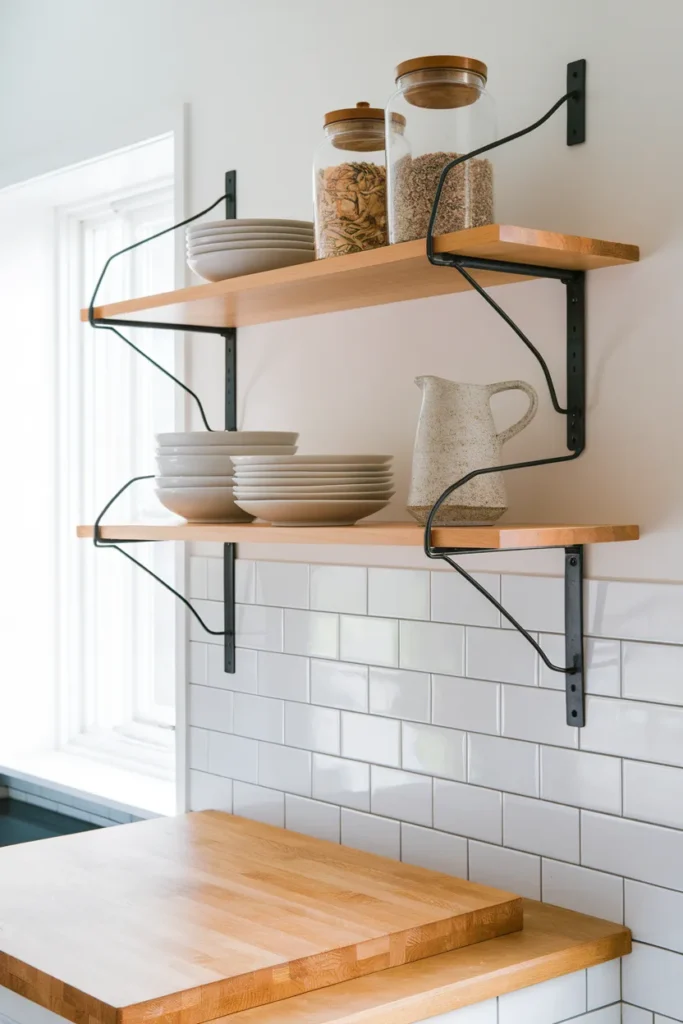
Open shelving is the most copied farmhouse feature and the most regretted, so start with exactly one shelf. A 10 inch depth is the working minimum (dinner plates are 10 to 11 inches), hung about 18 inches above the counter. Anything shallower looks right on Pinterest until you knock a mug off it reaching for the flour.
Load it with things you use weekly: everyday white plates, two glass canisters of oats and rice, one stoneware pitcher, one small wood piece. The logic is identical to these bookshelf styling rules: odd numbers, a third of the shelf left empty, function doing the decorating. Rustic kitchen storage ideas fail when the shelf becomes a museum of things too pretty to touch.
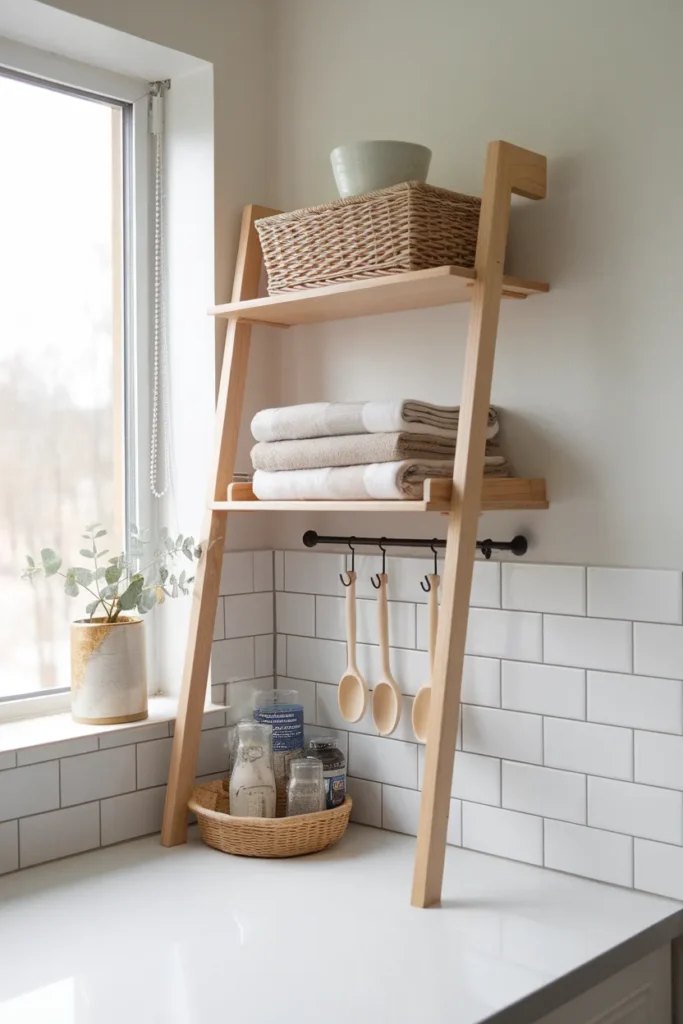
Honesty clause: any open shelf near the stove collects that same grease film, and dust settles on rims you don’t rotate. Everyday dishes solve both, because washing is the cleaning. Renters who can’t put a bracket in the wall get the same look by leaning a ladder shelf, a 5 to 6 foot A frame or leaner, against a free wall. Zero holes, and it moves out when you do.
Hang a Cafe Curtain at Half Height
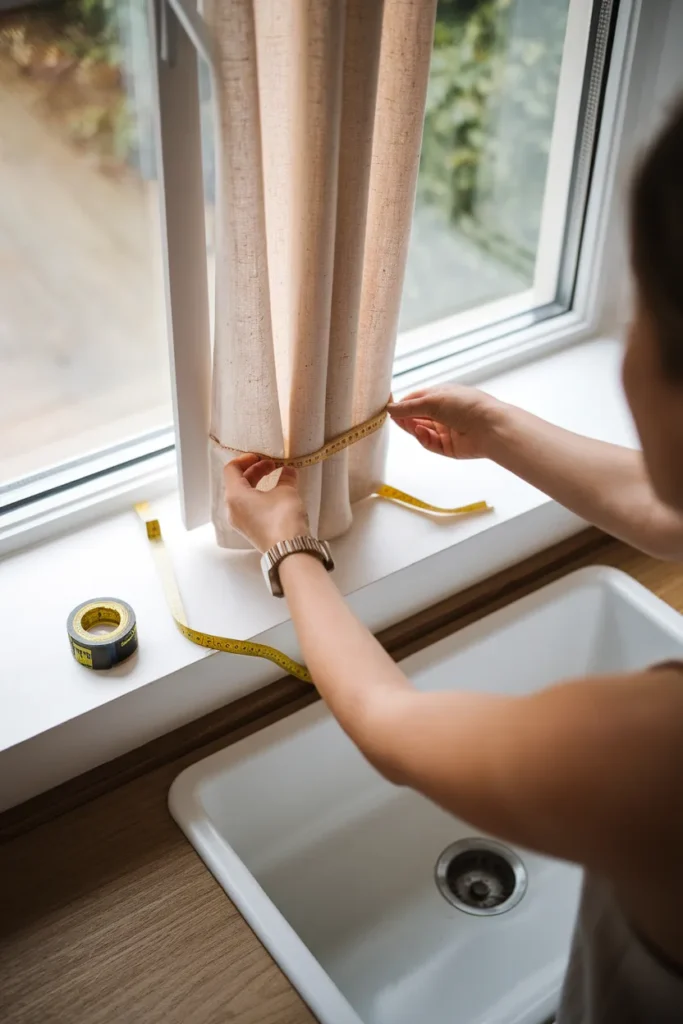
A cafe curtain covers the bottom half of the window, hangs on a $6 tension rod, and takes four minutes to install. Set the rod at the window’s vertical midpoint so light still pours over the top while the street loses its view of your sink. Linen or a cotton linen blend in oatmeal or soft white moves in the breeze when the window’s cracked, which is half the charm.
Skip full length curtains in a kitchen. They grab cooking grease, block counter light, and read formal in a room that’s supposed to feel floury. While you’re in the textile aisle, grab flour sack towels or one plaid tea towel for the oven handle; at $2 to $4 each they’re the cheapest texture in the entire style.
The Renter Playbook: Rustic Farmhouse With Zero Holes
Everything above already avoids the drill, but here’s the full no-drill toolkit in one place. Tension rods handle curtains and can even hold S hooks for mugs inside a cabinet frame. Adhesive hooks manage utensils and towels; check the pound rating on the pack and stay under it, because a 3 lb hook holding a 5 lb pan is a 2 am crash.
Peel and stick backsplash tile works on smooth existing tile and laminate, struggles on textured or freshly painted walls, so test one square behind the toaster for a week before committing. Swapping cabinet knobs needs only a screwdriver: pick unlacquered brass or matte black cup pulls, then tape the originals in a labeled bag inside the sink cabinet so move-out day costs you nothing.
Small rental kitchen, one window, strict lease? The same thinking runs through our small cottagecore kitchen ideas for renters, and the two styles share almost every mechanic, just softer florals there and rougher wood here.
One Vintage Anchor Per Zone
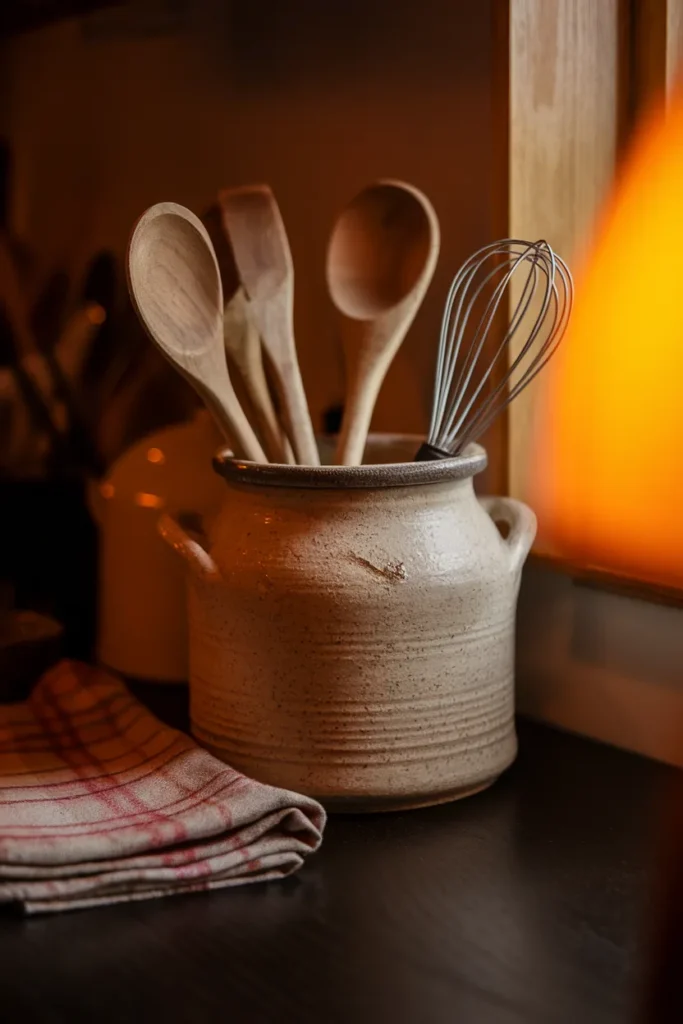
New farmhouse decor gets its soul from exactly one old thing per zone: a chipped stoneware crock by the stove, a worn bread board at the coffee corner, a dented enamelware pitcher on the sill. The thrift math is heavily in your favor. Crocks run $8 to $20 at Goodwill against $50 and up new, and the chip on the rim is the point, not the flaw. Pick pieces with weight; old stoneware feels dense in the hand in a way new ceramic doesn’t.
The discipline is the “per zone” part. One anchor at the sink zone, one at the stove zone, one at the coffee zone, and stop. A vintage piece on every surface stops reading as history and starts reading as a flea market booth. If your taste keeps drifting softer and more floral than weathered, you’re edging toward rustic country kitchen decor’s gentler cousin, and our cottagecore kitchen corner ideas show that version of the same one anchor formula.
What to Skip: The Overdone Farmhouse List
Editing is the cheapest idea in this article. Skip mass produced word signs (Gather, Eat, Bless), rooster themed anything past a single piece, galvanized metal in quantity, and factory distressed furniture where the “wear” repeats in a pattern. None of it is a moral failing; it’s just that these pieces flooded 2018 and now date a kitchen instantly, the way sponge painted walls date 1997.
Run the subtraction test instead. Take one item off every surface tonight, box it, and live with the room for a week. Almost nobody restocks the box. What stays, real wood, real texture, one genuinely old thing, warm light, is the whole style, and most of it you already own.
Add One Living Thing
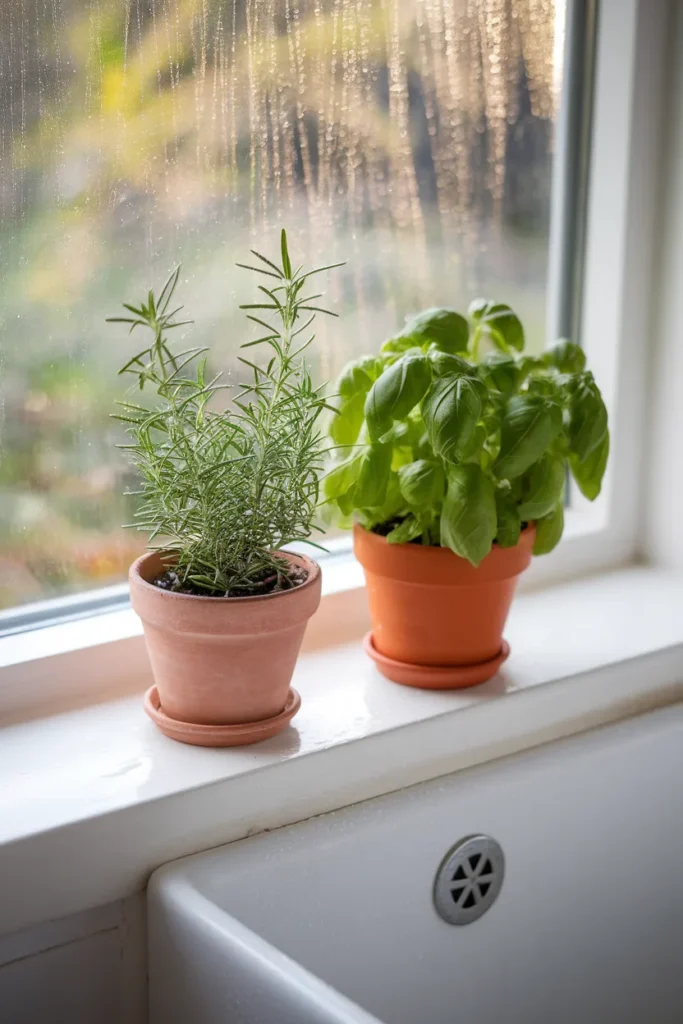
Every rustic farmhouse kitchen needs a pulse. A 4 inch nursery pot of rosemary or basil fits almost any windowsill, costs $4 to $6 at the grocery store, and brushing past rosemary while filling the kettle is a better morning than any candle.
Drop the plastic pot inside a small crock or terracotta and it’s styled. If your window faces a brick wall, preserved eucalyptus in a pitcher lasts a year, but hold faux greenery to the squint test: if it shines like plastic from 3 feet, it reads dollar store and undoes the wood you just oiled.
FAQ: Rustic Farmhouse Kitchen Decor
What’s the difference between rustic and farmhouse decor?
Rustic leans raw: unfinished wood, stone, iron, darker earth tones. Farmhouse refines the same materials with paint, cream palettes, and vintage domestic pieces. Rustic farmhouse blends the two, weathered natural wood inside a warm, lighter, lived in kitchen.
What defines a rustic farmhouse kitchen?
Natural materials doing real work: wood boards you cut on, stoneware that holds spoons, woven baskets that hold produce, warm 2700K light, and one genuinely old piece per zone. It’s function first, with the patina left visible.
Is modern farmhouse going out of style in 2026?
The gray and white, sign heavy 2018 version is fading, and searches are drifting toward warmer cottage and vintage looks. The core elements (wood, apron sinks, shaker cabinets, warm neutrals) predate the trend by a century and aren’t going anywhere. Update the accessories, keep the bones.
What colors work best with rustic farmhouse kitchen decor?
Warm whites and creams as the base, then wood browns from honey to walnut, with sage, deep green, or a faded plaid red as the accent. Skip cool grays and blue whites; they fight the wood under warm light.
How can renters get the look without renovating?
Bulbs, tension rods, and leaning. Swap every bulb to 2700K, hang a cafe curtain on a tension rod, lean boards and a ladder shelf instead of drilling, use rated adhesive hooks, and swap cabinet knobs with a screwdriver while saving the originals for move out.
How much should I budget?
A visible refresh runs $130 to $220 using the starter plan above, less if you thrift the crock, boards, and basket. Single vintage anchors are $8 to $20 secondhand. The bulb swap alone is about $12 and does the most work.
Where to Start This Weekend
Change the bulbs tonight; it’s a $12 decision you can make before bed. Thrift the crock and boards Saturday morning, hang the curtain Sunday, and let the shelf wait until the room tells you it’s ready. And if this kitchen happens to open onto one awkward corner where a chair could live, you already know exactly what we’d do with it.
Keep reading
More cozy nook ideas
 Living Room
Read →
Living Room
Read →
18 Small Apartment Living Room Ideas Worth Copying This Weekend
No extra square feet. No permission to paint. A sofa that already takes up half the floor. You can still make the…
 Kitchen
Read →
Kitchen
Read →
12 Warm Neutral Kitchen Ideas Worth Copying This Weekend
If your kitchen is beige and still feels cold at 8 p.m., the paint probably isn’t the problem. It’s usually the bulb,…
 Nursery & Teen Rooms
Read →
Nursery & Teen Rooms
Read →
8 Montessori Playroom Mistakes to Avoid (and What to Do Instead)
If your Montessori playroom looks calm for about an hour after you set it up, and then every basket ends up dumped…