
Cottagecore Kitchen Ideas: 20 Warm Vintage-Charm Corners to Copy

No farmhouse, no renovation budget, no landlord who returns calls. You can still have a cottagecore kitchen, because the look was never really about the kitchen. It lives in corners: one sunny window with a half curtain, one shelf of mismatched china, one chair angled toward the light.
Below are 20 of those corners, each with a real price, a real measurement, and the mistake that usually ruins it. Most need zero drilling. Several cost less than a pizza night. Pick one, copy it this weekend, and let the rest of the room stay ordinary for now.

1. The Cafe Curtain Window Corner
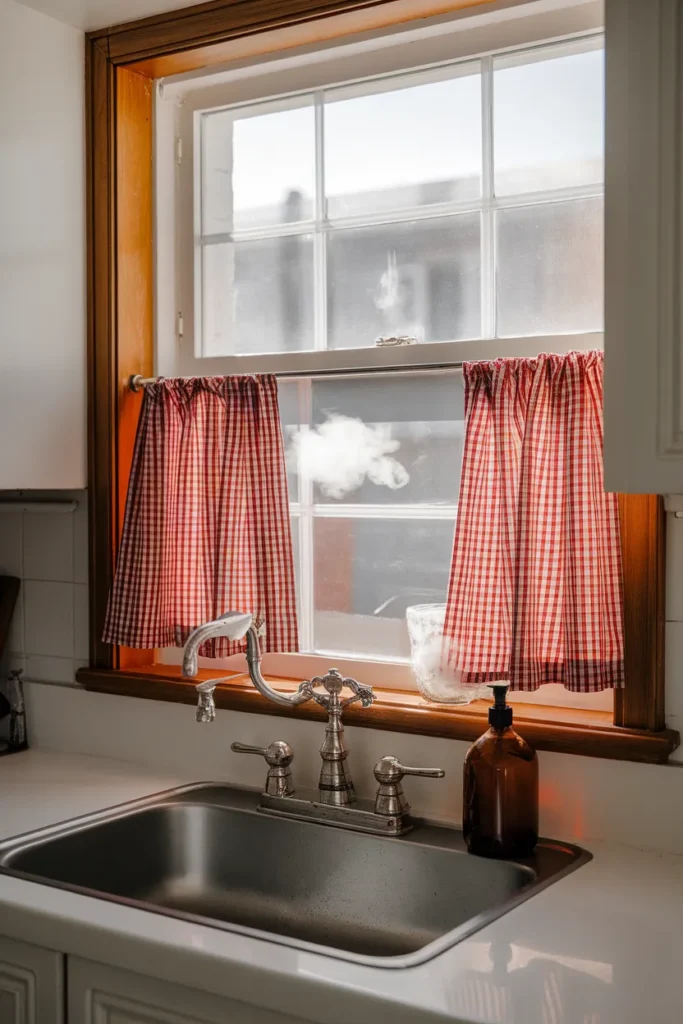
Start here, because nothing changes a kitchen’s mood faster than swapping blinds for a half curtain. A cafe curtain covers only the lower half of the window, so you keep privacy at the sink while light pours in over the top.
Mount a basic tension rod (usually under $15 at any big box store) inside the frame, somewhere between half and two thirds of the way up the glass. Linen looks soft, gingham reads instantly vintage.
The failure mode: full-length drapes beside a sink or stove, which catch splashes and steam and forever look faintly damp. We broke down fabric weights and lengths in our reading nook curtain ideas if you want the same trick in other rooms.
2. Open Shelves With Mismatched Vintage China
One run of open shelving turns everyday dishes into the decor. Keep 12 to 15 inches of vertical space between shelves, and set the lowest one 18 to 20 inches above the counter so the workspace still breathes. Thrifted floral plates, a stack of estate-sale teacups, one ironstone pitcher: that’s the whole shopping list.
Then apply the 30 Percent Air Rule. Leave roughly a third of every shelf empty, because negative space is what separates “collected over years” from “crammed last Tuesday.”
The failure mode is stuffing every inch until the shelf reads as storage instead of styling.
3. The Peel-and-Stick Checkerboard Floor Corner
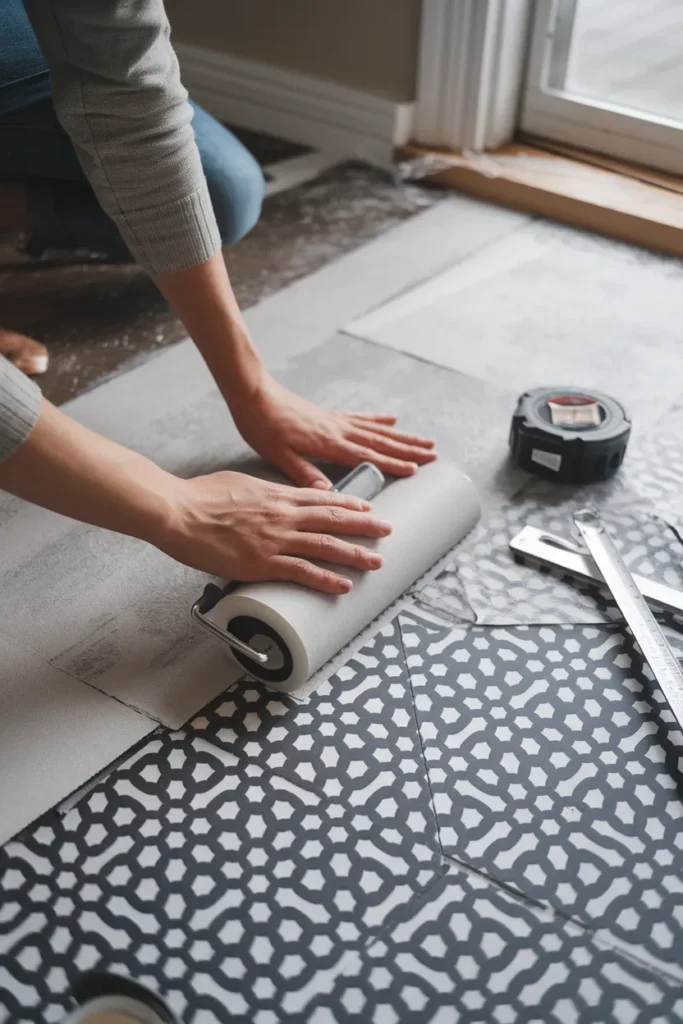
Checkerboard floors are the fastest way to make a small cottagecore kitchen feel intentional, and you don’t need to touch the real floor to get there. ACHIM’s Sterling black-and-white peel-and-stick vinyl runs $48.58 a case at Home Depot right now, which works out to $1.08 per square foot and covers 45 square feet, enough for most galley kitchens or one statement corner.
Wash the floor, rinse the residue, let it dry bone dry, then lay tile from the room’s center line outward. Skip the prep and the corners lift within two weeks; nearly every lifted-corner complaint traces back to a floor that never got degreased.
The same no-drill logic covers the whole aesthetic:
| Drill-and-paint version | Renter-safe swap | Spec that matters |
|---|---|---|
| Tiled checkerboard floor | Peel-and-stick vinyl tile | $1.08 per sq ft, 45 sq ft per case |
| Painted floral wall | Peel-and-stick wallpaper | 30.75 sq ft coverage per roll |
| Hardwired wall sconce | Plug-in swing-arm sconce | Needs one outlet within cord reach |
| Mounted curtain rod | Tension rod inside frame | Fits openings up to about 48 in |
| Repainted cabinets | Removable contact paper on end panels | Test one panel for clean release first |
4. A Floral Wallpaper Nook Wall (Renter-Friendly)
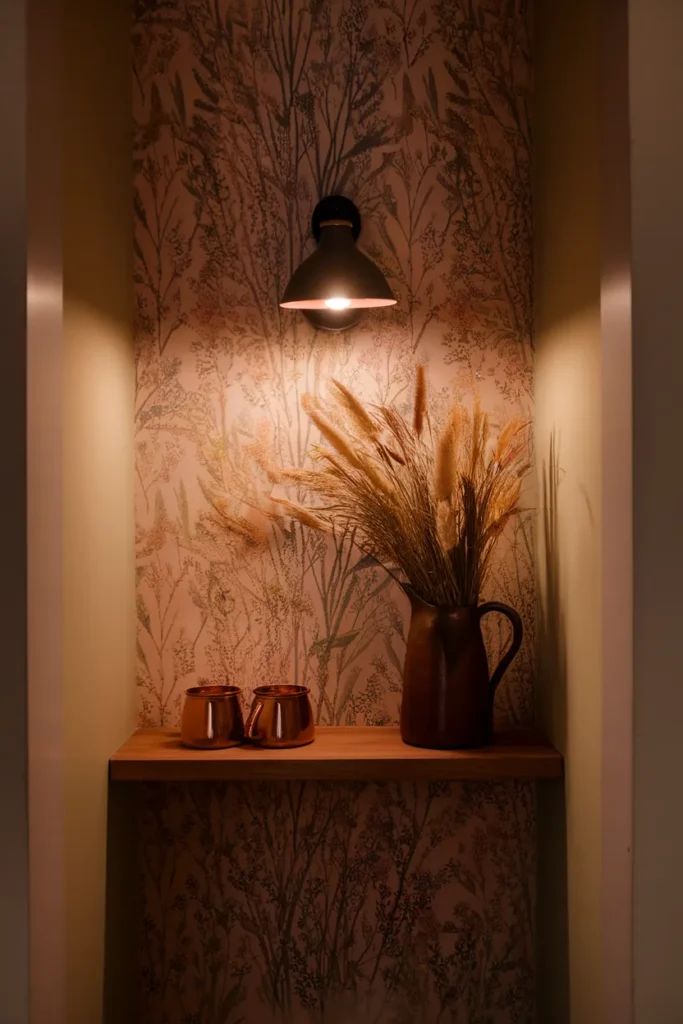
Pick the smallest wall in the kitchen, the awkward one by the pantry or behind the coffee maker, and give it the full meadow treatment. NextWall’s Floral Meadow peel-and-stick roll is $34.99 at Home Depot and covers 30.75 square feet, so one accent wall usually needs two rolls once you match the pattern repeat.
Order the extra roll up front; running short mid-wall means a new dye lot that never quite matches. Smooth from the top down with a plastic card and the vinyl forgives every bubble. We styled a whole corner around this move in our cottagecore reading corner with florals, and the kitchen version works identically.
5. The Farmhouse Sink Moment (No Sink Swap Required)
You don’t need an apron-front sink to borrow its styling. Claim the 12 inches of counter beside any sink and dress it like one: dish soap decanted into an amber pump bottle, a wooden dish brush standing in a jar, a Swedish dishcloth in faded stripes, one bar of olive oil soap on a small terracotta tray.
The smell of that soap does more cottage work than any faucet upgrade. Keep the drying rack elsewhere.
The failure mode is letting the zone collect scrub daddies and takeout cups, because one plastic sponge undoes the entire vignette.
6. A Layered Butcher Block and Bread Board Corner
Lean three or four cutting boards of different heights against the backsplash and the counter instantly gains depth. Estate sales and thrift stores sell worn maple boards for a few dollars apiece, and I’d take one of those over a new board every time; the knife marks are the point.
Look for boards at least three quarters of an inch thick, since thin ones warp against the wall. Rub everything monthly with food-grade mineral oil until the wood drinks it in and smells faintly sweet.
The failure mode: skipping the oil, then watching a $4 treasure crack down the grain by winter.

7. The 2700K Glow Corner (One Bulb, Whole New Room)
Overhead kitchen lighting is where the vintage feeling goes to die.
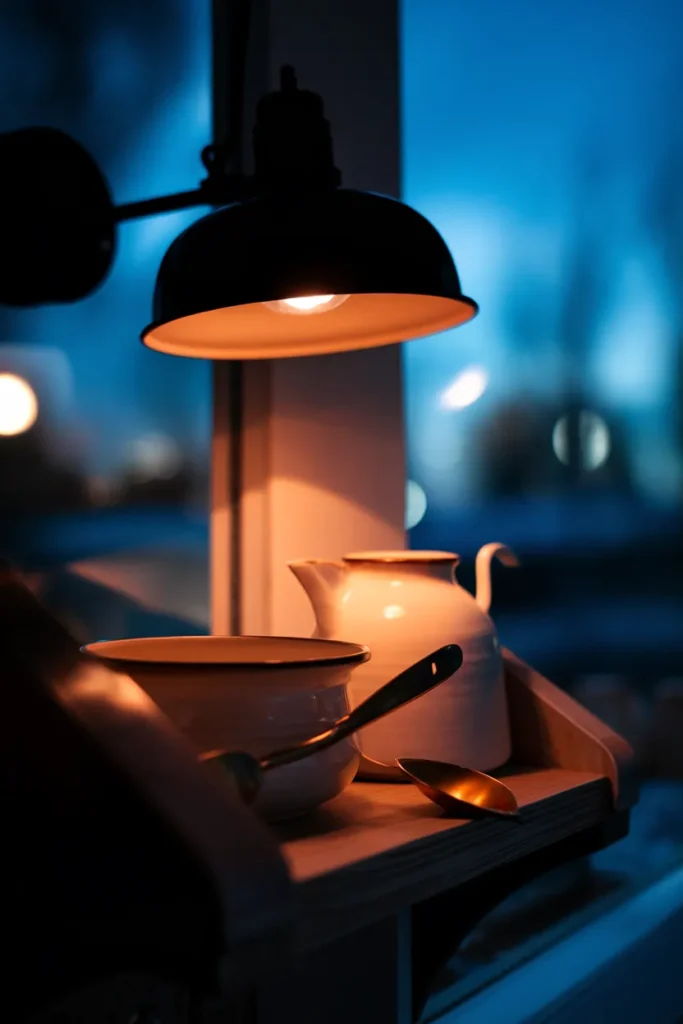
Add one low pool of warm light instead: a plug-in swing-arm sconce over the open shelves, or a small lamp on the counter, fitted with a 2700K bulb in the 450 to 800 lumen range. That color temperature sits at the amber end of white, the same warmth ENERGY STAR’s color and mood guide recommends for relaxing spaces, and it makes wood, brass, and old ceramic glow instead of gleam.
Put it on a plug-in dimmer and evenings get even softer. The failure mode is a 5000K daylight bulb, which turns the same corner into a dental office.
8. The Grandma-Core Plate Wall
Pinterest’s spring report clocked grandma core kitchens up 545 percent, and the buy-in costs almost nothing: five to seven mismatched thrifted plates, hung in a loose cloud on spring-style plate hangers sized to each plate’s diameter. Odd numbers hang easier than even ones.
Mix floral rims with one solid color so the eye gets a place to rest, and let a little chip or crazing stay visible, since the wear is the charm.
The failure mode is buying a matched set in one trip; a plate wall that arrives all at once reads catalog, not inherited.
9. A Windowsill Herb Corner You’ll Actually Use
Three 4-inch terracotta pots on the sunniest sill, basil, mint, and thyme, and suddenly the kitchen smells like a garden every time you brush past.
Herbs want about six hours of direct light, so a south-facing window is the honest requirement; without one, a $20 clip-on grow light keeps the look alive through a US winter.
Water when the top inch of soil is dry, not on a schedule. The failure mode is pots without drainage holes, which quietly drown roots and leave you blaming your thumb instead of the saucer.
10. The Layered Runner Corner Underfoot
Bare vinyl floor is the coldest thing in most rentals, in both senses. A 2-by-6 foot washable runner in a faded Persian-style print fixes the sightline between counter and stove, and a flat jute layer underneath adds the texture cottagecore leans on.
Washable matters more here than anywhere else in the house; this rug will catch oil, coffee, and flour before its first birthday.
Always add a rug pad or the runner becomes a skating rink on smooth floors. The failure mode: a plush pile rug by the stove, which holds crumbs like a grudge and never fully sheds them.
11. The Dark Cottagecore Corner (Up 915 Percent, Still Easy)
Moody is the direction this whole style is heading; dark cottagecore kitchens surged 915 percent in Pinterest’s Spring 2026 trend report. You can test it in one corner before committing a whole room to it.
Panel one small wall in a deep botanical peel-and-stick paper or a sample-pot coat of muddy forest green, then style it with black checkerboard, aged brass, and amber glass. Keep the palette to three deep tones so it reads romantic rather than gloomy.
The failure mode is going dark in a windowless galley without doubling the lamp count first; moody needs glow to push against, or it just reads dim.

12. A Hanging Rail for Copper and Wood
One 18-to-24 inch rail with S-hooks turns utensils into a working display: a copper saucepan, a wooden spoon collection, dried flowers tied with twine, a linen apron.
If drilling is off the table, two heavy-duty adhesive hooks and a wooden dowel fake the same rail on a smooth backsplash. Respect the weight ratings printed on the package; adhesive hooks hold spoons and aprons happily.
The failure mode is trusting cast iron to adhesive, which ends with a 2 a.m. crash you’ll hear from the bedroom.
13. The Decanted Pantry Jar Corner
A shelf of flip-top jars holding flour, oats, dried beans, and pasta might be the most photographed cottagecore move there is, and it earns its keep in daily cooking too.
Decant only what you use weekly, in 32-to-64 ounce jars, and label lids in pencil so contents can change. Square jars waste less shelf depth than round ones in a small cottagecore kitchen.
The failure mode is decanting everything you own, including the specialty flour you bake with twice a year, which then goes stale on display while the jar looks great.
14. The Breakfast Banquette Corner
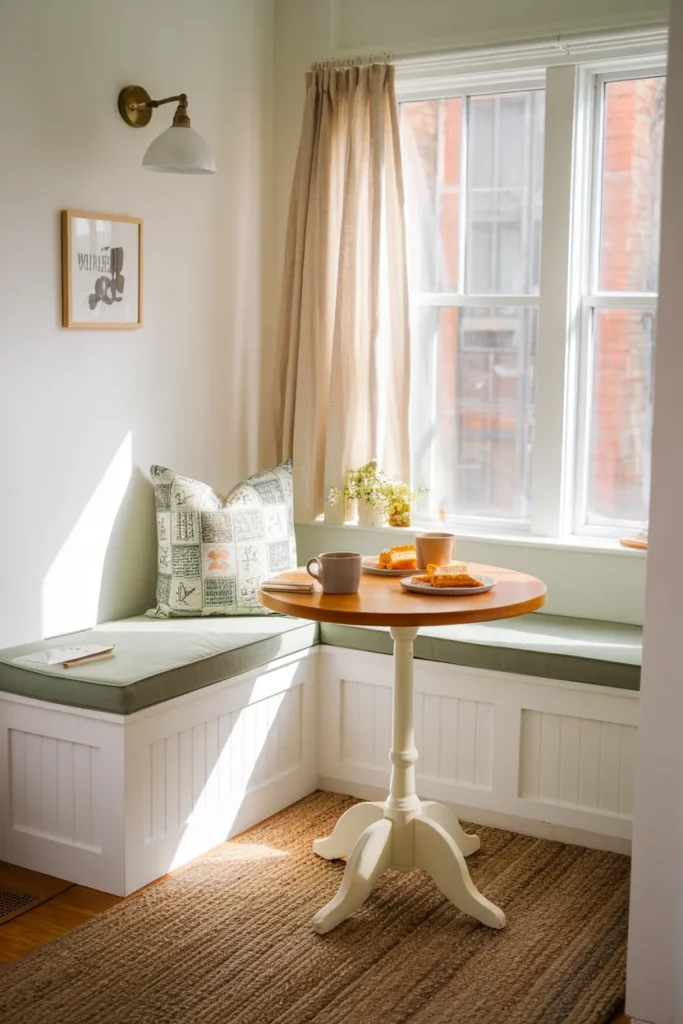
If your kitchen owns even one spare corner, a freestanding storage bench plus a 24-inch bistro table builds a banquette without a contractor. Keep the bench seat 17 to 18 inches deep and 18 inches off the floor; deeper than 20 inches turns breakfast into a slouch pit.
Dress it with a lumbar pillow, a wool throw folded over the arm, and a cafe curtain if a window sits nearby. Storage benches earn their footprint by swallowing table linens and the small-appliance overflow.
The failure mode is a table taller than 30 inches against a standard bench, which leaves everyone eating at armpit height.
15. The Kitchen Reading Corner (Our Favorite Cheat)
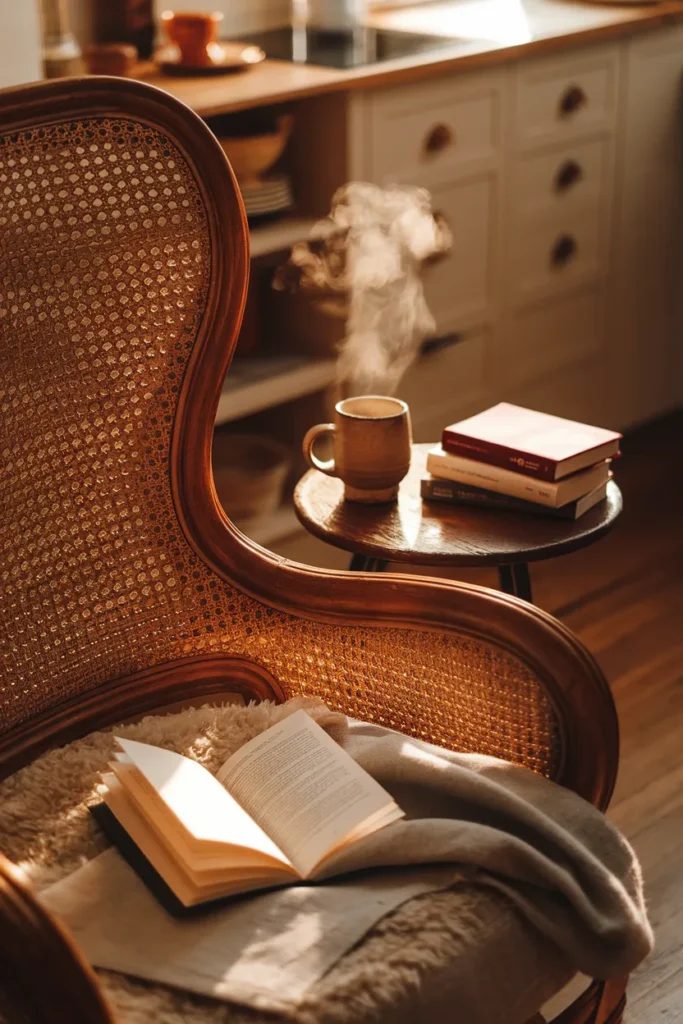
Here’s the corner nobody else on page one talks about: the reading chair that lives in the kitchen. Pinterest searches for comfy reading chairs in small spaces are up 455 percent, and the kitchen version might be the coziest four square feet in the house, close to the kettle, far from the TV, built for curling up between oven timers.
A thrifted armchair works; so does an IKEA Poäng, which runs $119 to $299 depending on cushion. Apply the 18-Inch Reach Rule: park a small side table within 18 inches of the armrest so a mug never has to balance on a book.
Leave 36 inches of clear walkway to the work zone, tuck a linen throw over the arm, and your TBR pile just found a home. Fair warning: this corner makes people late.
We built the caffeinated version of it in our coffee nook reading corner ideas. The failure mode is wedging the chair into the cooking triangle, where it becomes a very charming obstacle.
16. The Retro Kettle Vignette
One vintage-styled appliance carries a whole counter. A cream or sage retro-style electric kettle, the rounded kind with an analog temperature dial, plus a wooden tea box and two stacked enamel mugs makes a working still life in a 12-inch-deep zone.
The click of the switch and the slow rise to a boil become a small daily ritual, which is most of what this aesthetic is selling anyway. Keep the vignette to three objects.
The failure mode is letting the toaster, air fryer, and blender crowd in, because six appliances is a break room, not a cottage.
17. The Leaning Ladder Shelf Pantry
No pantry? A 72-inch ladder shelf leans against any spare wall and builds one in an afternoon, no anchors needed on most models with anti-tip feet.
Load it bottom-heavy: cast iron and crocks on the low tiers, jars in the middle, a trailing pothos and a stack of linen napkins up top. The tier spacing, usually 12 to 14 inches, happens to fit standard 64-ounce jars with room to lift them out.
The failure mode is styling it top-heavy with the pretty stuff at eye level and cast iron above, which makes the whole thing nervous every time the floor creaks.
18. The Mismatched Chair Corner
Two or three thrifted wooden chairs, none from the same decade, gathered around a small table: it’s the cheapest furniture story in this whole list. The trick that keeps it charming instead of chaotic is uniform seat height, 17 to 19 inches, even when the backs argue.
My vote is painting them all one muddy color family and letting the silhouettes do the talking.
Check every joint before buying; a wobble at the store is a collapse at Thanksgiving. The failure mode is mixing seat heights, which no tablecloth on earth can hide.
19. The Cookbook and Market Bowl Corner
Prop one cookbook open on a 10-to-12 inch stand, the copy with the stained, swollen pages, next to a low wooden dough bowl of whatever’s in season: lemons in winter, peaches in July.
Two objects, endless variations, and the corner refreshes itself every market trip for a few dollars. Rotate the open page to whatever you’re actually cooking that week so the vignette stays honest.
The failure mode is display produce you don’t intend to eat; nothing kills storybook charm like the smell of a peach going over.
20. The Candlelit Evening Shelf
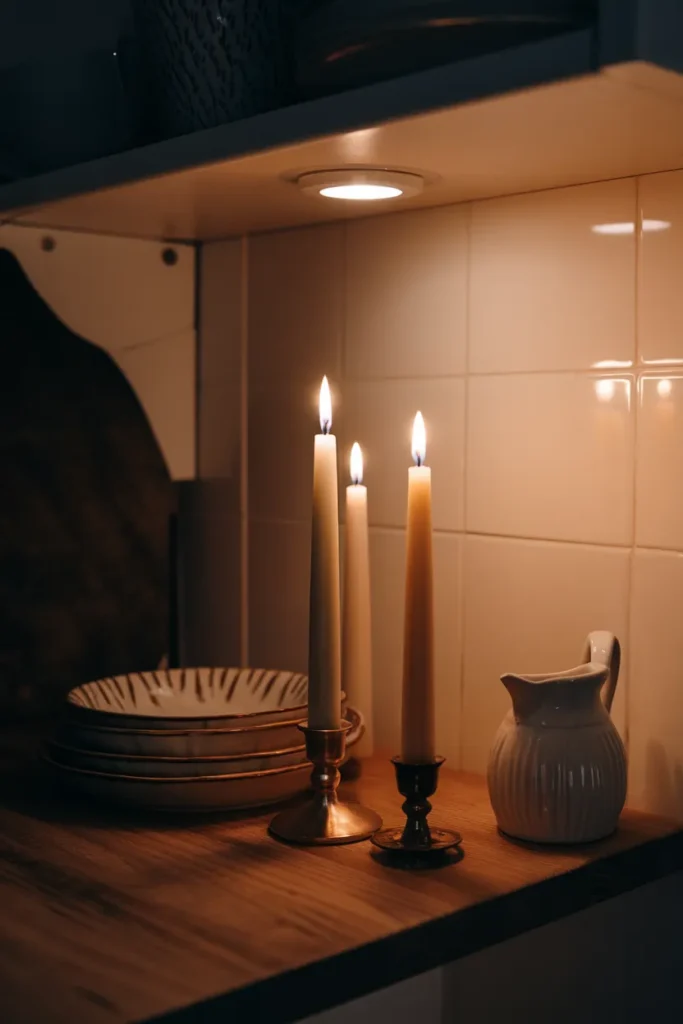
The last corner only exists after sunset. Fit an LED puck light under one shelf, warm setting, and stand two unscented taper candles in brass or wooden holders among the everyday dishes. Unscented matters in a kitchen; dinner should win the room, not a mango-vanilla pillar.
Light the tapers while the oven ticks itself cool, pour the tea, and the same shelf you unloaded groceries onto at noon turns into pure hygge by eight.
The failure mode is a cluster of scented candles fighting your food and each other; keep flame away from curtain fabric and below any wooden shelf edge by a clear 12 inches.
FAQ: Cottagecore Kitchen Questions, Answered
What is a cottagecore kitchen? A cottagecore kitchen borrows the feel of an English or American countryside cottage: warm wood, vintage and secondhand pieces, florals, visible everyday tools, and soft low lighting. The style values things that look gathered over time rather than bought in one weekend.
How do I make my kitchen look like a cottage without renovating? Work in corners instead of projects. A cafe curtain, one run of open shelving styled with thrifted china, a 2700K bulb, and a washable runner will shift the whole room, and every one of those moves is reversible.
Can cottagecore kitchen ideas work in a small kitchen? Small kitchens actually take to this style faster, since the look depends on one or two intentional moments rather than square footage. Vertical moves like a ladder shelf, a plate wall, or a hanging rail add charm without eating counter space.
What’s the most budget-friendly way to get the look? Thrift the decor and spend only where function lives. Secondhand plates, boards, and chairs cost a few dollars each, while the two purchases worth making new are a quality tension rod and warm 2700K bulbs.
How do I mix cottagecore with a modern kitchen? Let the modern parts stay quiet and add warmth in layers: wood boards against a stone backsplash, a floral runner under flat-panel cabinets, amber glass beside stainless steel. Aim for roughly one vintage texture per modern surface so neither side wins outright.
Is cottagecore still popular for kitchens in 2026? Yes, and it’s trending darker. Pinterest’s spring data shows dark cottagecore kitchens up 915 percent and grandma core kitchens up 545 percent, so moody greens, aged brass, and inherited-looking pieces are the current direction.
Start With One Corner
Twenty corners is a menu, not a to-do list. Pick the one that stung a little when you read it, probably the window or that reading chair, and build it this weekend with the measurements above.
Once the first corner works, the second one tends to happen on its own, usually within the month. Save this list for the day the rest of the kitchen asks for its turn, and if the floral wall was your favorite, the floral reading corner post on the blog is the natural next read.
Keep reading
More cozy nook ideas
 Living Room
Read →
Living Room
Read →
18 Small Apartment Living Room Ideas Worth Copying This Weekend
No extra square feet. No permission to paint. A sofa that already takes up half the floor. You can still make the…
 Kitchen
Read →
Kitchen
Read →
12 Warm Neutral Kitchen Ideas Worth Copying This Weekend
If your kitchen is beige and still feels cold at 8 p.m., the paint probably isn’t the problem. It’s usually the bulb,…
 Nursery & Teen Rooms
Read →
Nursery & Teen Rooms
Read →
8 Montessori Playroom Mistakes to Avoid (and What to Do Instead)
If your Montessori playroom looks calm for about an hour after you set it up, and then every basket ends up dumped…