
How to Build a Daycare Reading Corner on a Budget

Three pieces, one weekend, under 150. No drilling into your landlord’s walls, no custom millwork, no design degree. If you run a small program or an in-home daycare and your book area is currently a laundry basket of paperbacks shoved against a wall, this is the fix.
A daycare reading corner does real work. It gives kids a soft place to slow down, and it gives you a spot that signals “we read here.” The trick is getting it done cheaply without it looking like you got it done cheaply.
Here’s the exact build order, the real numbers, and the safety steps most idea posts skip.
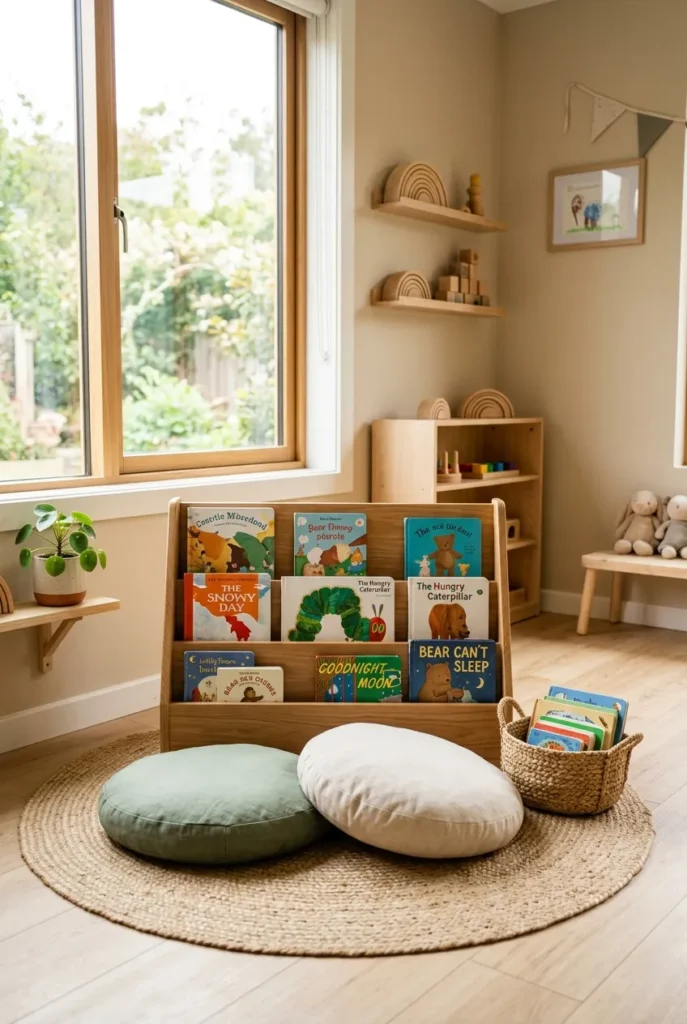
The 3-Piece Budget Setup (Start Here)
This is the promise, cashed up front. You need three things, and all three are renter and landlord safe because nothing gets drilled.
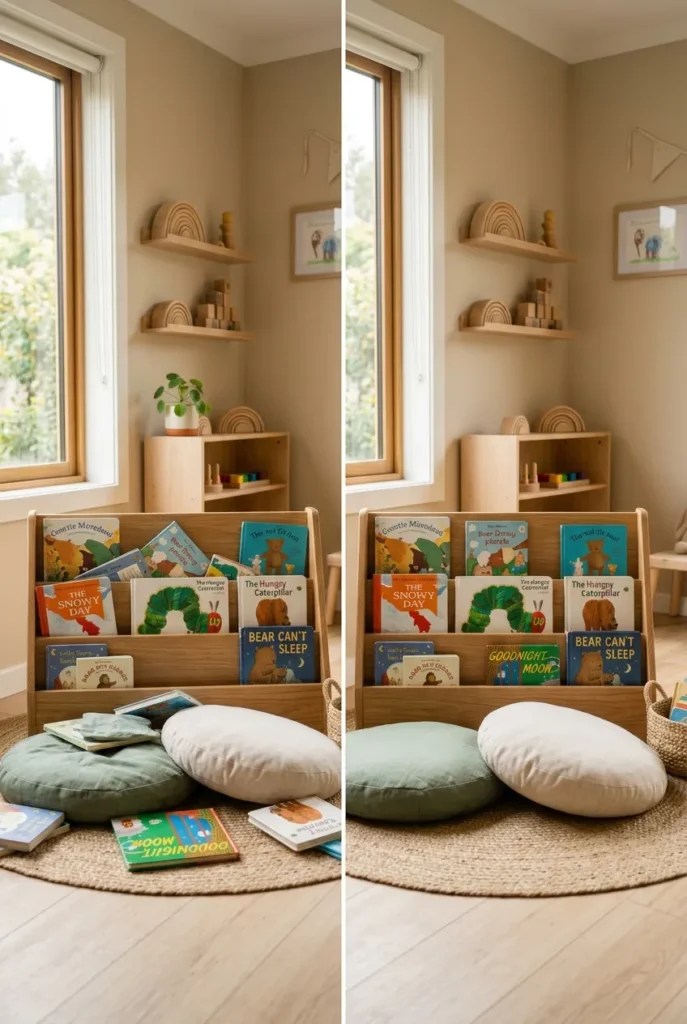
First, a front-facing book display. Kids pick books by the cover, not the spine, so a low sloped shelf or a simple picture-ledge rack does more for a toddler than a tall bookcase ever will. A budget pick here is a small tiered rack around [VERIFY: real width the publisher used, e.g., 24 to 30 inches] wide.
Second, washable floor seating. Two or three round floor cushions or a small bean bag beat a fancy chair for this age. Look for zip-off, machine-washable covers. That one feature saves you every time a kid arrives with sticky hands.
Third, a rug to define the zone. A washable low-pile rug tells kids where the calm area starts and ends. Roughly [VERIFY: real size, e.g., 4 by 6 feet] fits most corners.
That’s it. Set those three down and you already have a corner. Everything after this makes it better, safer, and longer lasting.
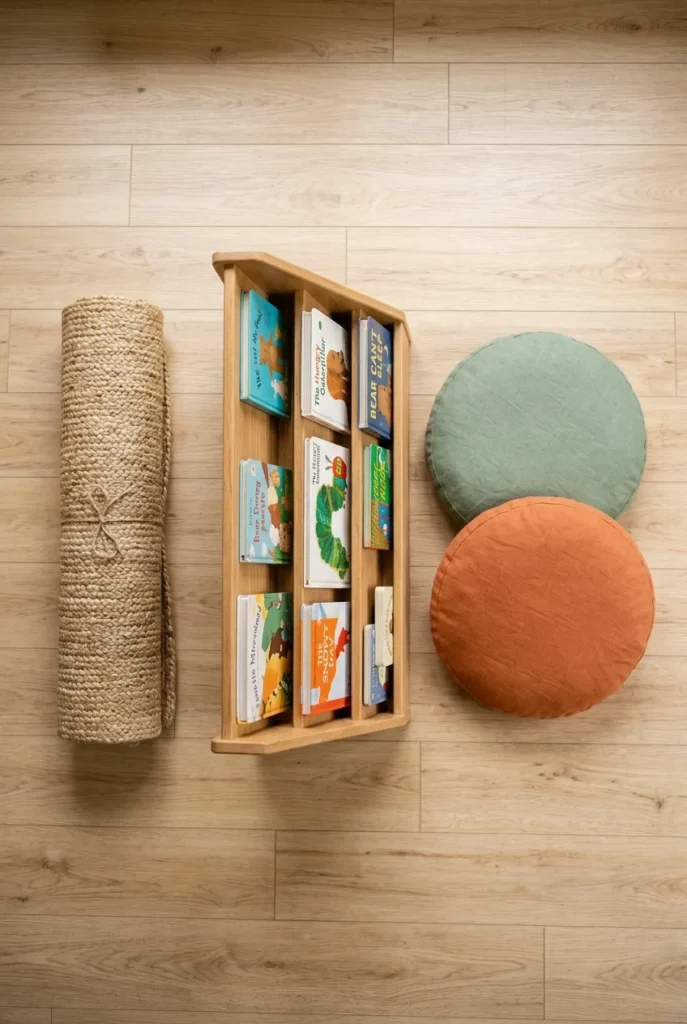
What a Daycare Reading Corner Costs (Real Breakdown)
People search “daycare reading corner cost” and get vague words like “affordable.” Here’s an actual target build the publisher can confirm.
| Item | Budget option | Approx. price |
|---|---|---|
| Front-facing book rack | Tiered wood or sling rack | $[VERIFY: ~$40] |
| Floor cushions (x2 to x3) | Washable zip covers | $[VERIFY: ~$45] |
| Washable rug | Low-pile, 4×6 ft | $[VERIFY: ~$35] |
| Storage baskets (x2) | Woven or fabric bins | $[VERIFY: ~$20] |
| Total | $[VERIFY: ~$140 to $150] |
Books themselves can cost you almost nothing. [VERIFY: real experience, e.g., “I built our whole starter shelf from library book sales and a Little Free Library run, about $12 for 30 board books.”] Your local library card is the single best budget tool you own here.
One honest trade-off: the cheapest floor cushions flatten fast. [VERIFY: real failure the publisher saw, e.g., “The $8 pillows I bought first went pancake-flat in about six weeks of daily toddler use.”] Spend a little more on covers you can wash and refill, and you buy the setup another year.
Pick the Right Spot Before You Buy Anything
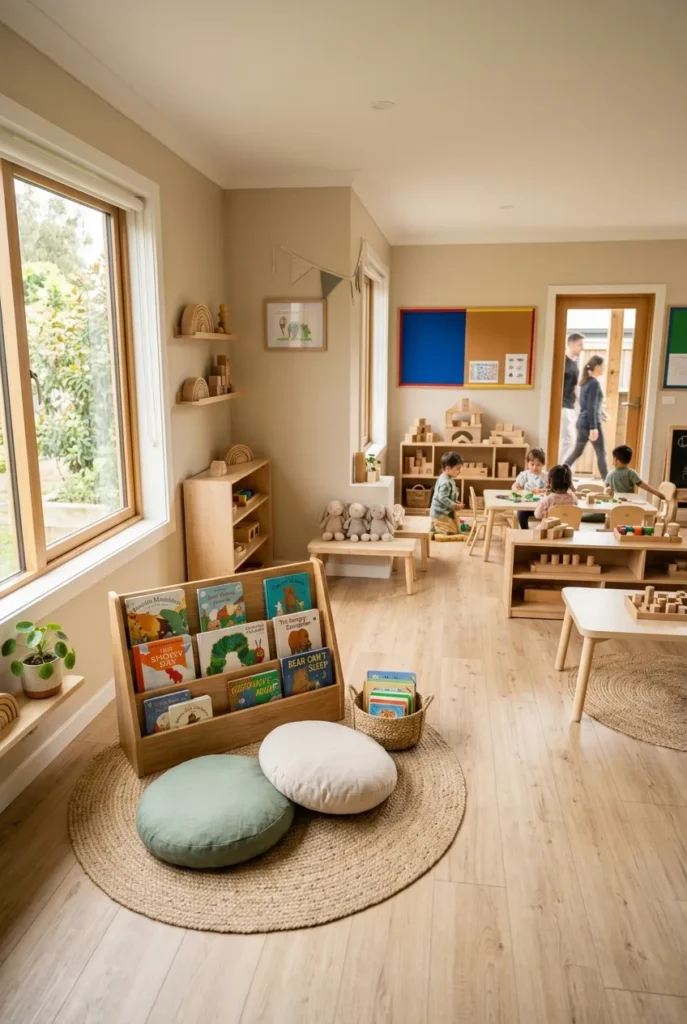
The location decides half of whether kids actually use the corner. Put it in a low-traffic zone, away from the door, the sink, and the block area where things get loud.
Look for a spot with natural light if you can. A corner near a window gives you free warm light in the morning and makes the whole area feel calmer.
Avoid the pass-through. If kids have to walk across the reading rug to reach the bathroom, it will never stay a quiet zone.
Aim for a footprint of about [VERIFY: real dimension, e.g., 5 by 5 feet]. That is enough for two or three kids to spread out without piling on top of each other, which is where most squabbles start.
Choose Seating Toddlers Can Actually Use
Skip the grown-up armchair. Little kids read best low to the ground, so floor cushions, a small bean bag, or a low bench with a washable pad win every time.
Texture matters more than you’d think. A soft sherpa or a nubby cotton cover gives kids something nice to touch while they settle, and that sensory beat helps them stay put longer.
Give each kid a defined spot. Two or three cushions spaced a hand’s width apart cut down on the “she’s touching me” chorus.
Here’s the renter-safe part again: none of this attaches to anything. You can rearrange the whole corner in five minutes when your room theme changes. If you want more low-seating ideas that photograph well and hold up to daily use, our guide to reading nook floor cushion setups breaks down covers and fills that survive real kids.
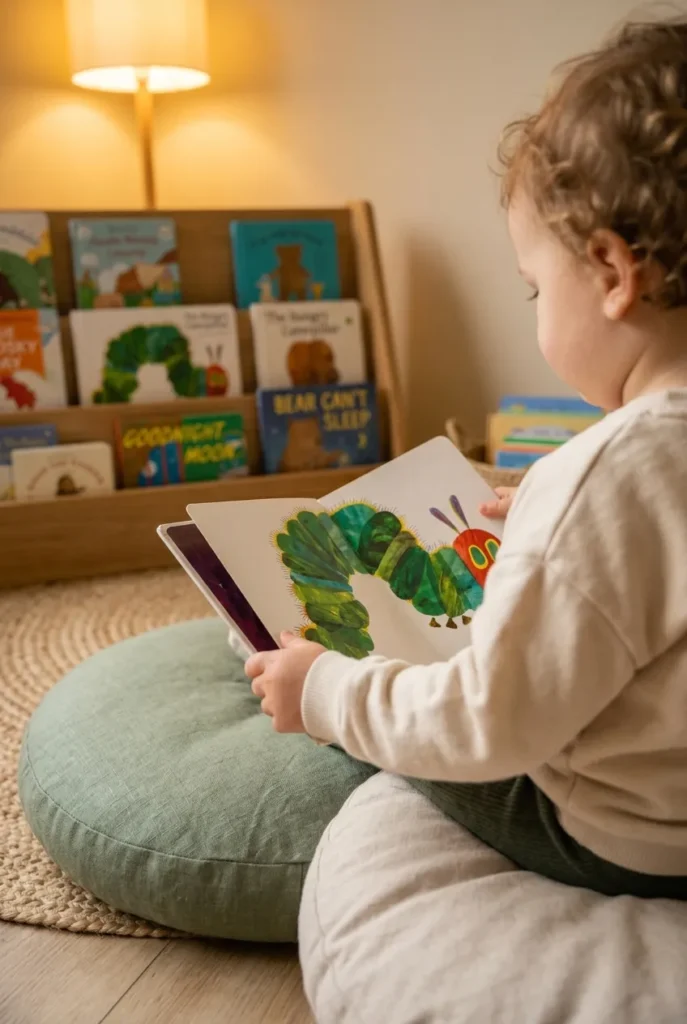
Set Up Book Storage Kids Can Reach
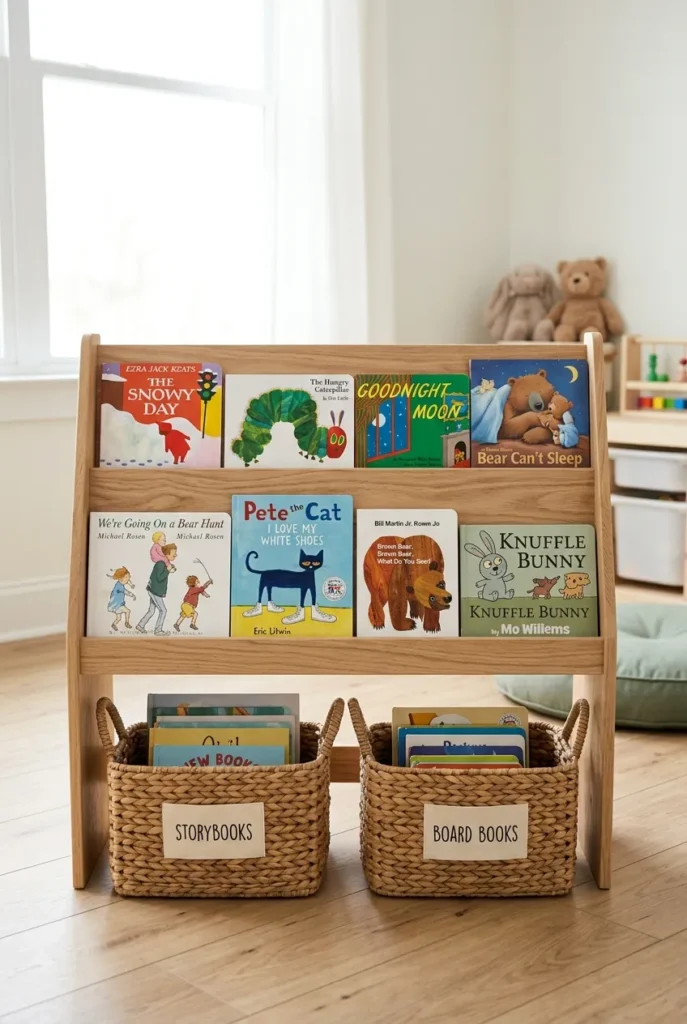
Front-facing beats spine-out for this age, full stop. A toddler cannot read titles, but they will grab a book with a bright cover facing them.
Keep the shelf low, around [VERIFY: real height, e.g., 24 to 30 inches], so every book is at kid reach. If they need you to fetch a book, they’ll stop asking for books.
Rotate the collection instead of overloading it. Put out 8 to 12 titles at a time and swap them every week or two. A small rotating set feels new without costing a cent, and it keeps the shelf from becoming a dumped pile.
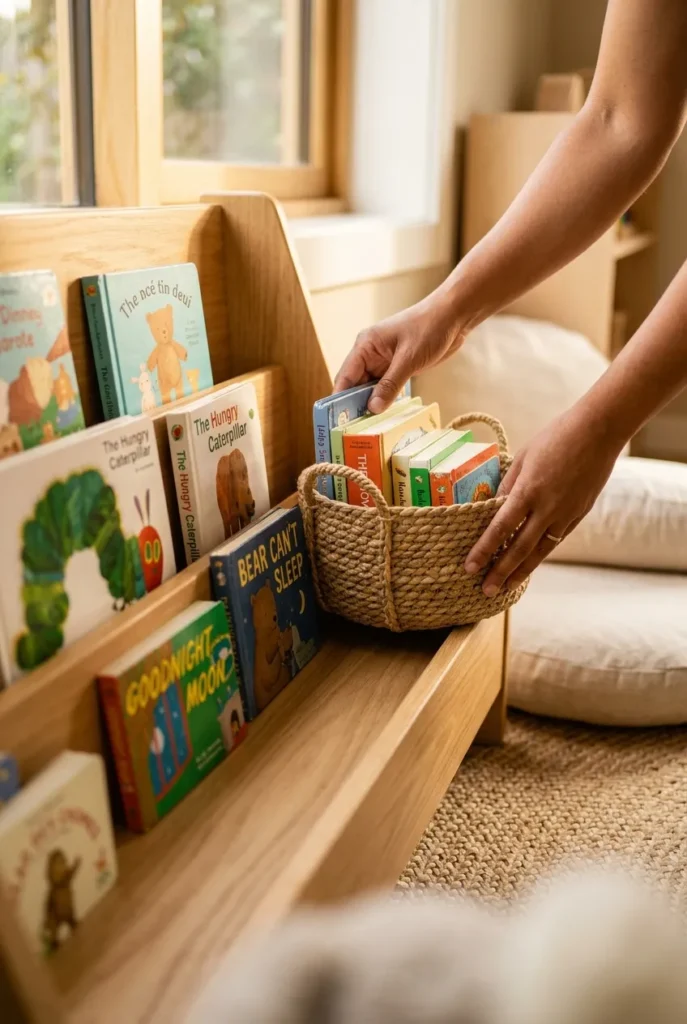
Add two labeled baskets on the floor for “books we’re reading” and “books to put away.” The Montessori reading nook approach leans hard on this child-led, low-and-reachable idea, and it works beautifully in a shared daycare room.
Make It Safe (The Step Idea Posts Skip)
This is the part most reading-corner roundups leave out, and in a daycare it is the part that matters most.
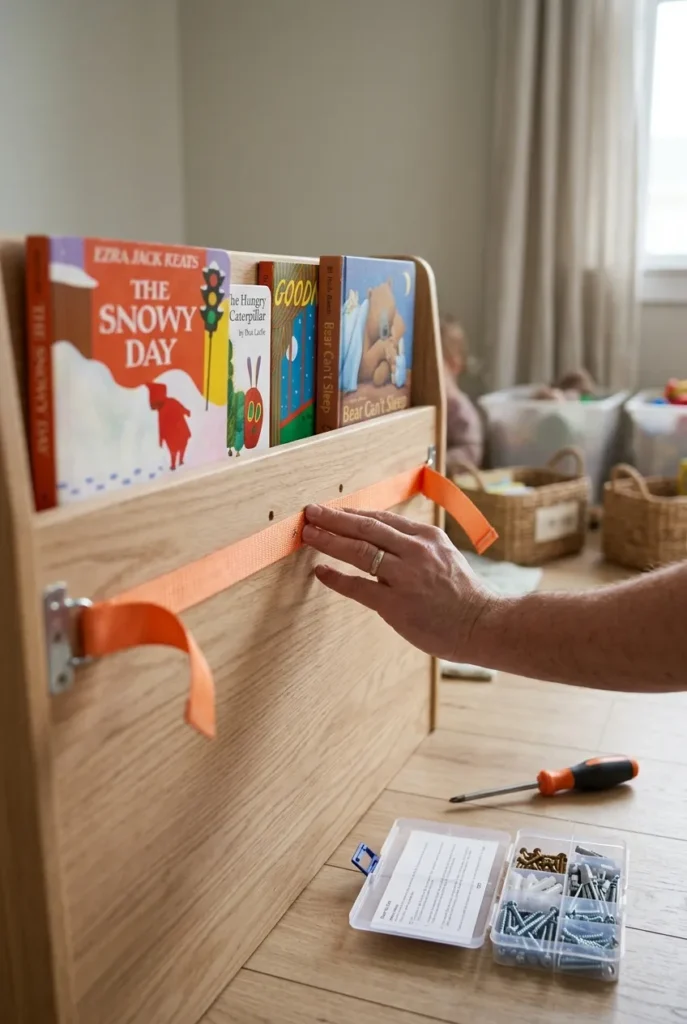
Anchor anything tall. Even a light bookcase can tip if a toddler uses it as a ladder, and tip-overs are a documented cause of child injury. The government’s furniture tip-over prevention guidance walks through anchoring straps and safe placement, and it is worth ten minutes before you open your corner. If you rent and can’t drill, choose short, wide, low-to-the-ground furniture that physically can’t tip, which sidesteps the problem entirely.
Choose washable, wipeable, non-toxic materials. In a shared space, cushions and rugs need to survive regular laundering and sanitizing.
Keep the pathway clear. No cords from lamps snaking across the rug, and nothing on the floor a kid could trip over as they carry a stack of books.
Reading corners also do more than look nice, and it helps to know why you’re building one. According to the American Academy of Pediatrics, shared reading with young children supports early literacy and strengthens caregiver bonds, which is the whole point of giving kids a spot that invites them in.
Add the Cozy Layer (Without Adding Cost)
Now the fun part. Small touches turn a functional corner into one kids ask for by name.
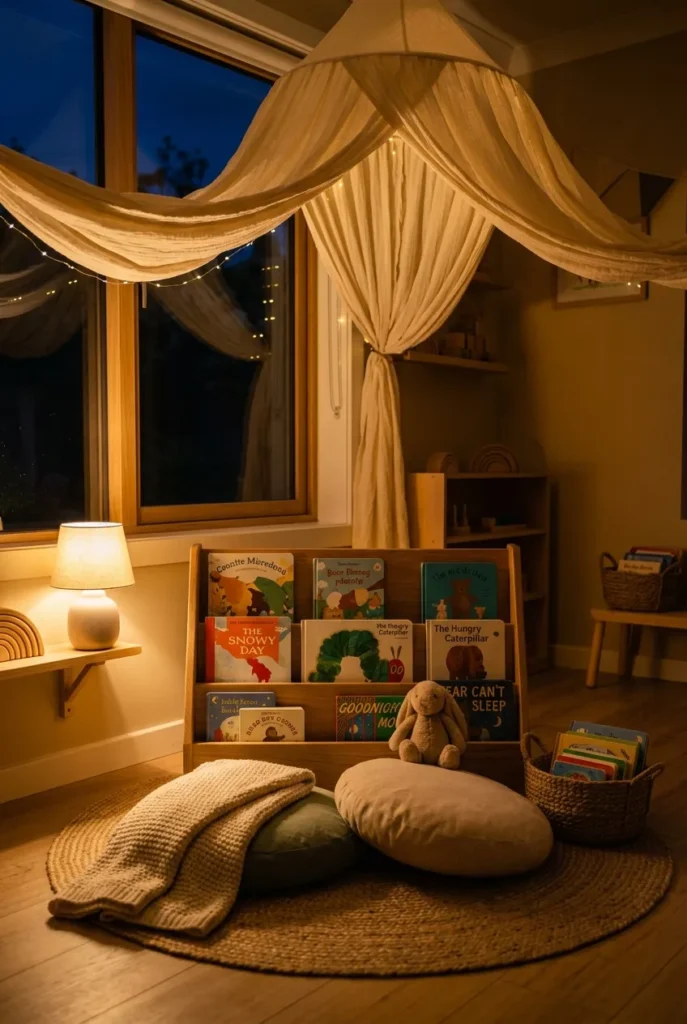
Soften the light. A single plug-in with a warm 2700K bulb, tucked safely out of reach, makes the corner feel like a hideaway on a gray afternoon.
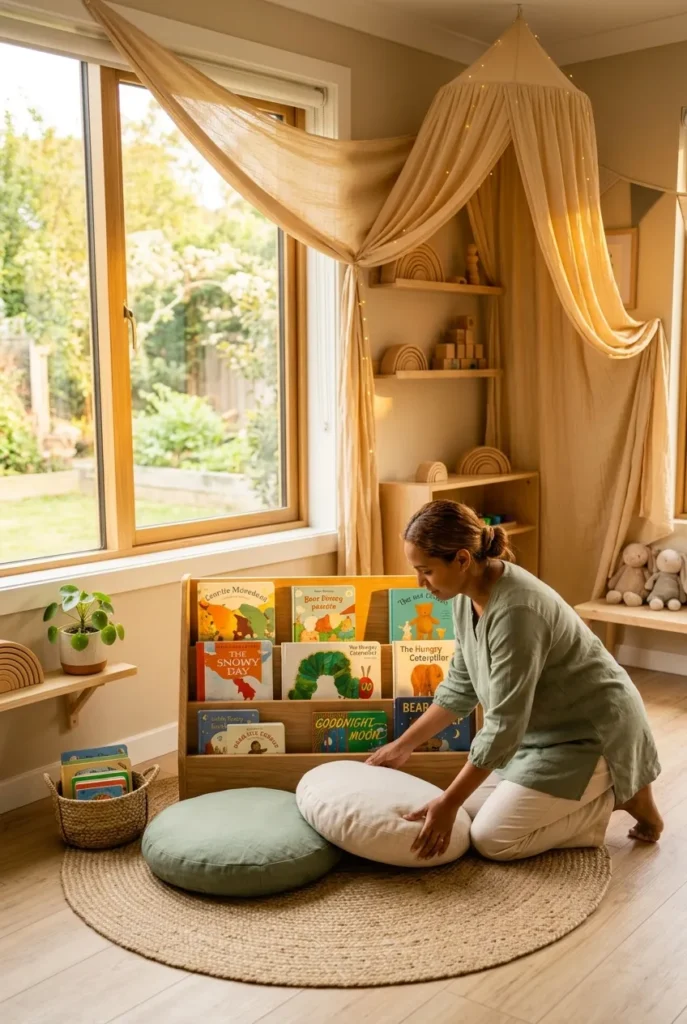
Add one textile beyond the cushions. A folded cotton throw or a small canopy overhead gives a sense of enclosure, which little kids love. A no-sew fabric canopy hung from a wall hook costs almost nothing.
Bring in one soft, quiet element kids can hold: a knit lovey, a small plush, or a texture pillow. It gives busy hands something to do while ears listen.
Keep it uncluttered. A calm corner has room to breathe, so resist stuffing every basket full. For a fuller lineup of low-cost, kid-tested corner ideas from real classrooms, our roundup of classroom reading corner ideas teachers actually use is a good next stop.
Keep It Working All Year
A budget setup only stays great if you maintain it, and this takes about ten minutes a week.
Rotate books on a schedule. Fresh covers on the front rack keep kids curious without new spending.
Wash covers on a rhythm. [VERIFY: real cadence the publisher uses, e.g., “We toss the cushion covers in every Friday.”] Sticky, worn seating is the fastest way a corner gets abandoned.
Reset the zone at the end of each day. Two minutes of re-fluffing cushions and re-facing books means kids walk into a corner that looks ready, not wrecked.
Watch what they actually reach for. The books kids ignore go back to storage, and the favorites earn their front-rack spot.
A Simple Weekend Build Timeline
You do not need a week. Here’s a realistic order.
Friday evening: pick and clear the spot, wipe the floor, hit the library book sale.
Saturday morning: lay the rug, place seating, set the book rack, anchor anything tall.
Saturday afternoon: front-face 8 to 12 books, fill two baskets, add the light and one textile.
Sunday: sit in it yourself for five minutes. [VERIFY: real sensory note, e.g., “Ours smelled like new jute and the afternoon sun hit the cushions just right.”] If it feels like a spot you’d want to curl up in, the kids will feel it too.
Frequently Asked Questions
How do you set up a reading corner in a daycare?
Pick a quiet, well-lit corner away from traffic, lay a washable rug to define the zone, add low floor seating, and use a front-facing book rack at toddler height. Anchor anything tall for safety, then rotate 8 to 12 books at a time.
How do you create a reading corner for toddlers specifically?
Keep everything low and reachable, choose front-facing book display over spine-out shelves, and pick washable, non-toxic materials. Toddlers read on the floor, so cushions beat chairs, and a small canopy adds the cozy enclosure they love.
What should be in a daycare reading corner?
At minimum: a front-facing book display, washable floor seating, a rug to mark the space, and two storage baskets. Add warm light and one soft textile to make kids want to stay.
How much does a daycare reading corner cost?
A solid budget build runs about $[VERIFY: ~$140 to $150] for the rack, cushions, rug, and baskets. Books can be nearly free through library sales and donations.
Why is a book corner important in childcare?
A defined reading spot invites kids to slow down and builds early literacy habits. Shared reading with young children supports language development and strengthens caregiver relationships.
How do you keep a small reading corner from getting messy?
Limit the front rack to 8 to 12 books, use two labeled baskets, and reset the zone for two minutes at the end of each day. Rotating the collection keeps it feeling fresh without piling up.
Your Next Step
You’ve got the plan, the numbers, and the safety steps. Pick your corner this Friday, hit a library sale for books, and give yourself one weekend. Once your corner is up, take it further with our Montessori reading nook ideas for a calm, child-led setup that grows with your kids.
Keep reading
More cozy nook ideas
 Kids
Read →
Kids
Read →
Teen Boy Reading Nook Ideas He Won’t Call Babyish
A teen boy reading nook lives or dies on one thing: it can’t look like it belongs to a nine-year-old. No rainbow…
 Kids
Read →
Kids
Read →
Nursery Reading Nook Ideas for Babies and Toddlers
You stepped on a board book this morning. Then a stuffed bunny. Then something sticky near the crib that you decided not…
 Kids
Read →
Kids
Read →
Classroom Reading Corner Ideas Teachers Actually Use
If your classroom reading corner is a slumped beanbag and a wobbly bin of paperbacks nobody reshelves, this fixes it. You have…