
Nursery Reading Nook Ideas for Babies and Toddlers

You stepped on a board book this morning. Then a stuffed bunny. Then something sticky near the crib that you decided not to investigate. The books your baby loves live in a sideways heap, and story time happens wherever you can clear a spot.
A nursery reading nook fixes that, and you can put the first version together this weekend with three things and zero holes in the wall. No bay window, no reno, no landlord permission slip. That matters, because reading together from birth builds real language and bonding, which the American Academy of Pediatrics backs in its guidance on sharing books with babies.
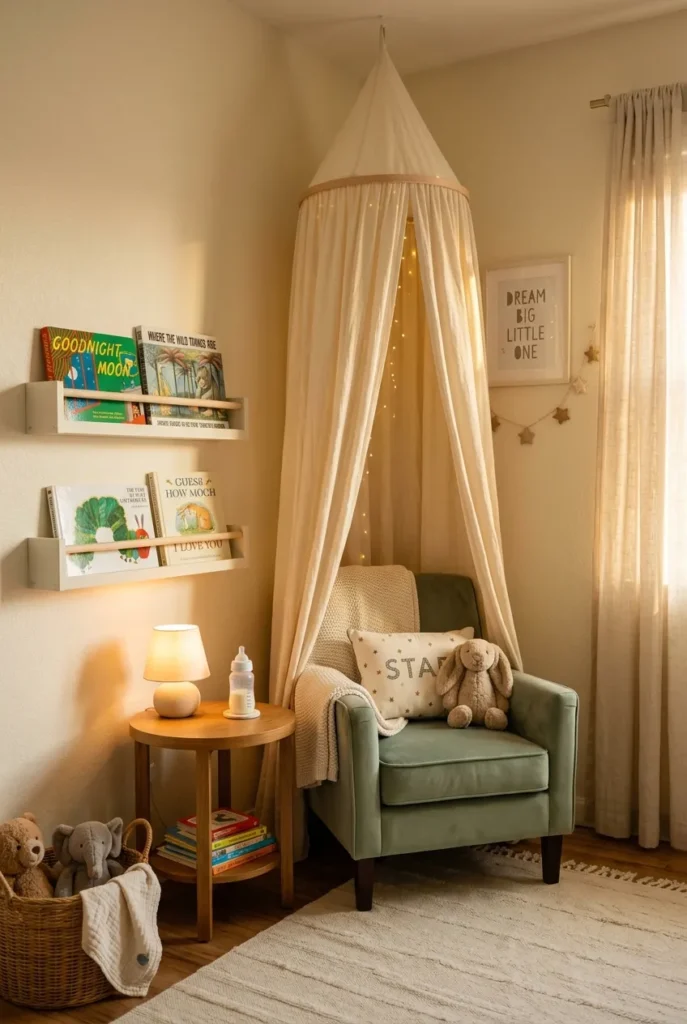
Here’s the plan, mama: start tiny, keep it safe, make it a spot you both want to sink into at 7 pm.
The 3-Piece Starter Nook (No Drilling Required)
If you do nothing else this weekend, do these three. All renter-safe, all reachable on one afternoon.
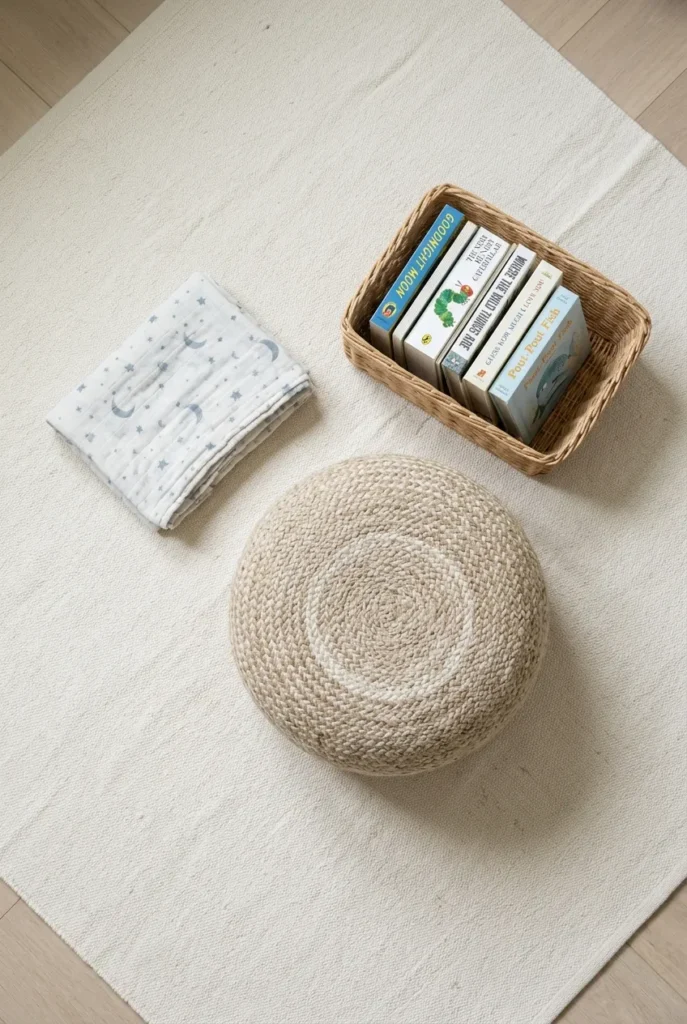
- A soft floor base. A washable rug plus one firm floor cushion or a small kids’ chair. This is the anchor of the whole corner and the first list item because it’s the highest-value move: give the body somewhere to land and the nook gets used.
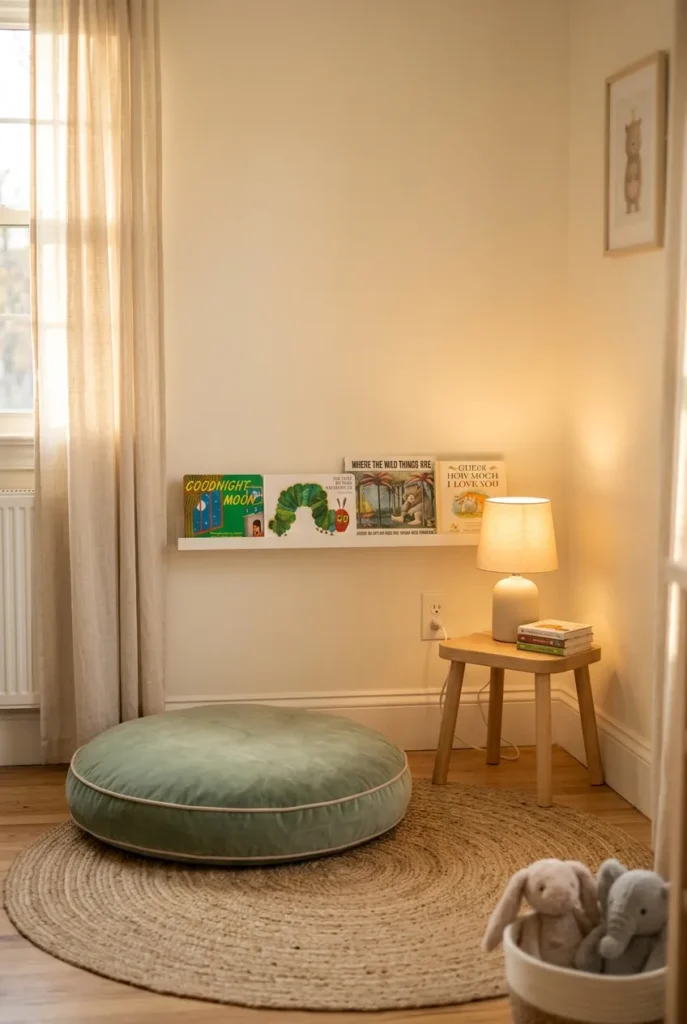
- A front-facing book display. A picture ledge shows covers, not spines, so a pre-reader can “choose” a book. The IKEA MOSSLANDA ledge runs about $9.99 for the 21¾-inch size and about $19.99 for the 45¼-inch, a real archetype you’ll see in most of the pretty nursery pins.
- One warm light. A plug-in lamp with a 2700K bulb. Warm light (2700K) reads gold and calm, not blue and clinical, which is what you want at bedtime.
Renter-safe swap: skip screws entirely. A freestanding cube shelf holds the books, and the ledge can go up with heavy-duty damage-free strips rated for the weight of a few board books.
Nursery Reading Nook Ideas for Small Spaces
Most nurseries are already tight, so your nook has to borrow a corner it doesn’t officially have. Good news: the smallest setups often photograph best and get used most, because everything is within a baby’s arm’s reach.
Tuck the cushion into the corner beside the crib or dresser. Go vertical with two stacked picture ledges instead of a wide bookcase that eats floor space. Keep the footprint under about 3 feet by 3 feet so there’s still room to sit down with your little one on your lap.
One honest trade-off: floor cushions look dreamy in pins, but after a long bedtime story your lower back files a complaint. A small chair or a firm pouf you can actually lean against beats a squashy pillow for the grown-up doing the reading.
For more layouts that squeeze a full setup into a toddler’s room, our safe toddler reading corner setups walk through it room by room.
Add a Canopy or Tent for a Cozy Ceiling
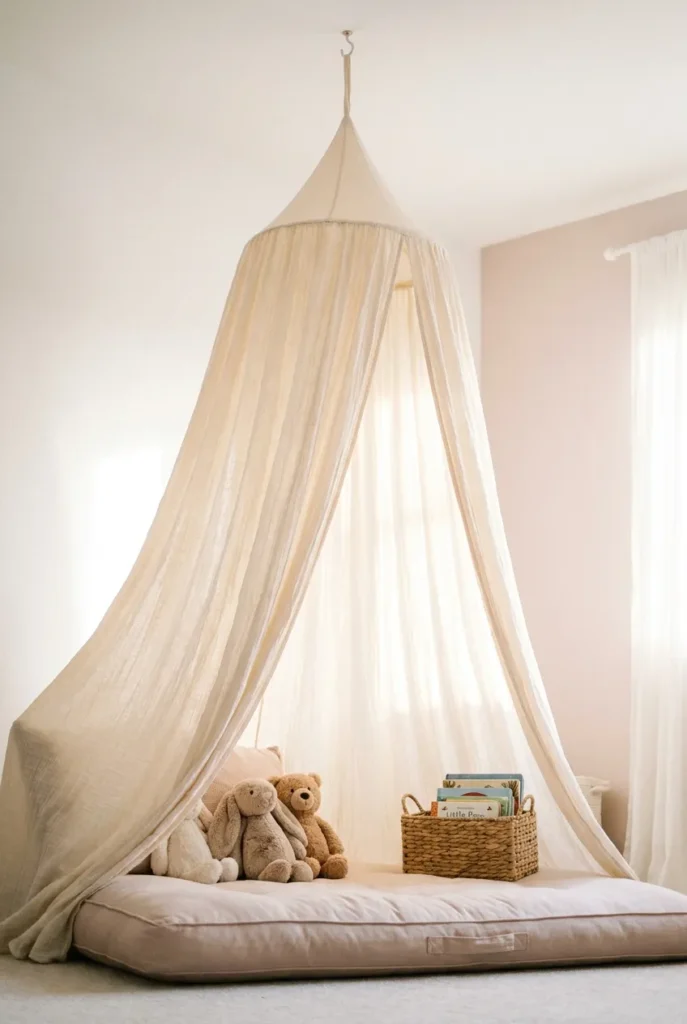
A canopy is the trick that turns a plain corner into a spot that feels tucked away, and “with canopy” is one of the most-searched versions of this idea on Pinterest right now. It draws the eye up, softens a boxy room, and gives the nook a clear “this is our reading place” edge.
Hang a lightweight cotton canopy from a single ceiling hook over the cushion, or stand a small play teepee in the corner for a floor version with zero ceiling work. Keep any fabric well away from lamps and outlets, and make sure a mobile baby can’t pull the whole thing down.
The tent route doubles as a play spot your kid grows into. If you want the full breakdown of styles and safe hanging, see our reading tent and teepee setups for kids.
Book Corners: Displaying Board Books So Little Hands Can Reach
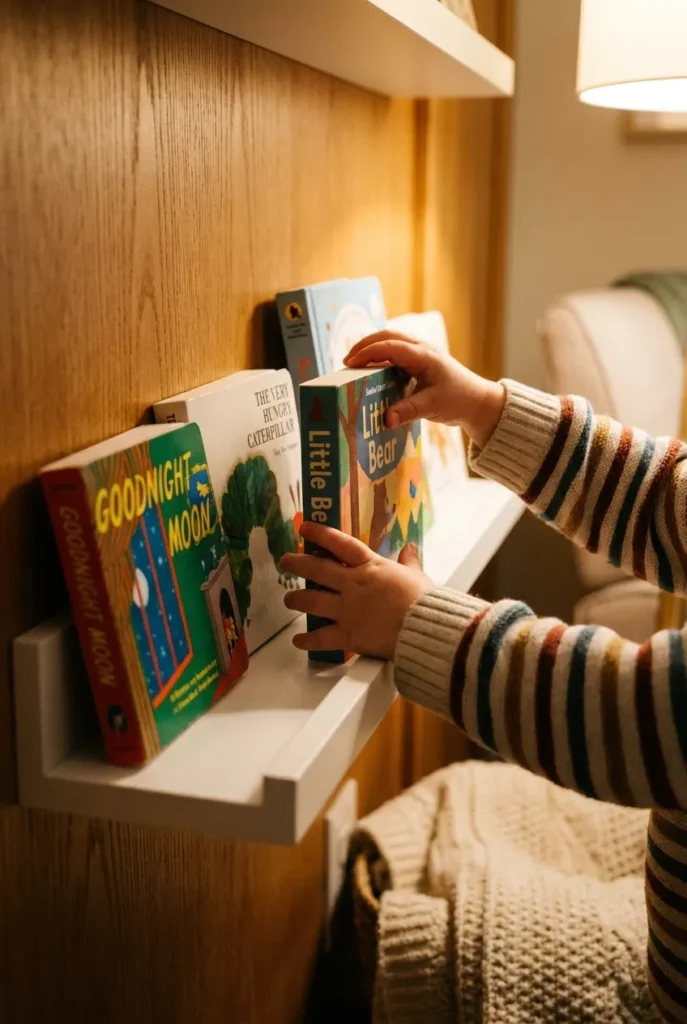
A “book corner” lives or dies on one detail: can your baby see and grab the books without your help? Spine-out shelving looks grown-up but means nothing to a one-year-old. Front-facing wins.
Mount picture ledges low, roughly 12 to 18 inches off the floor for a crawler or new walker, so the covers sit right at their eye line. Rotate five or six books at a time instead of shelving thirty. A small basket on the floor holds the “chew-safe” board-book overflow.
Texture matters here too. A chunky knit cushion, a smooth wooden ledge, the crinkle page of a cloth book: babies read with their hands first, so give the corner things that feel good to touch.
Getting the Light Right (Warm, Not Clinical)
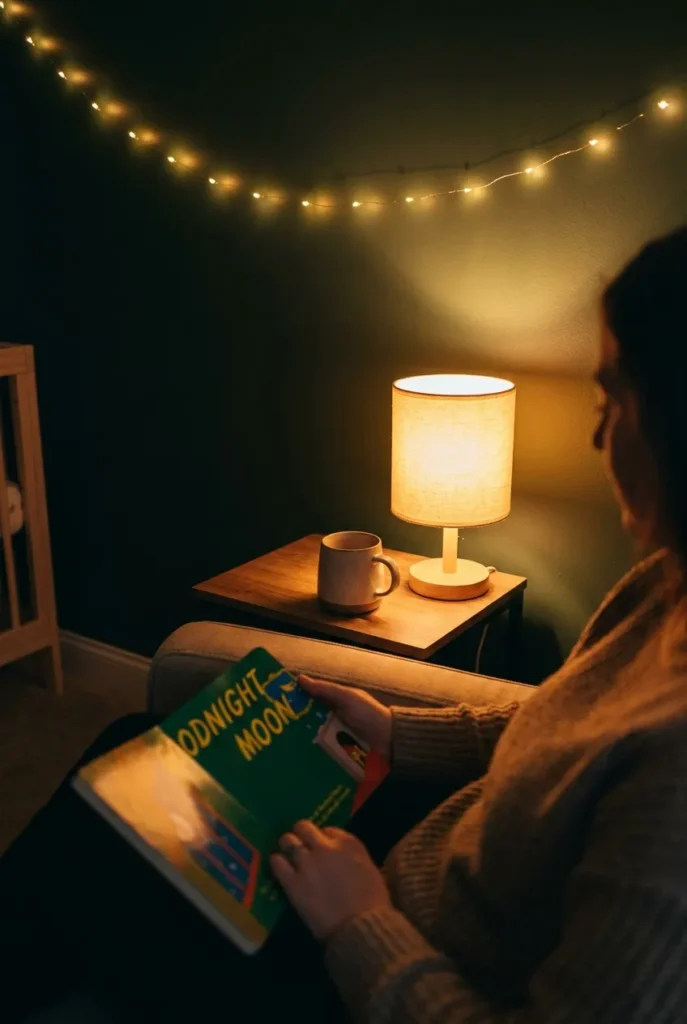
Overhead nursery lights are usually too bright and too blue for winding down. The nook needs its own gentle glow. A plug-in lamp or wall sconce with a 2700K warm-white bulb turns the corner amber, which signals “slow down” far better than a ceiling fixture.
For the soft, twinkly look all over Pinterest right now, a strand of warm fairy lights along the wall behind the cushion does it, mounted with damage-free hooks so a rental stays intact. Keep every cord and light out of the crib zone and out of a baby’s reach.
Our full walkthrough of soft-glow fairy light nook setups shows renter-safe ways to run the strand without a single nail.
Baby-Safe Setup: The Part the Pretty Pins Skip
Here’s the section most nursery nook roundups leave out, and it’s the one that actually matters. A gorgeous corner isn’t worth much if it isn’t safe for a baby who pulls, climbs, and mouths everything.
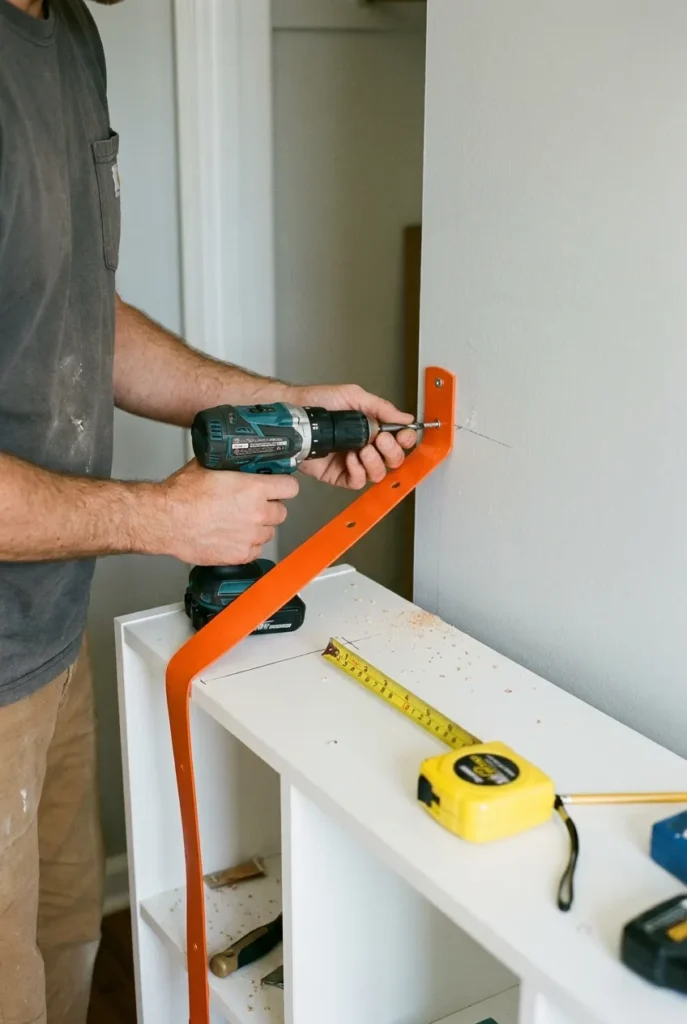
Anchor any shelf or bookcase to a wall stud. The U.S. Consumer Product Safety Commission runs its Anchor It furniture tip-over campaign precisely because unsecured furniture falls on young kids every year. Bolt it, don’t lean it.
Go cordless where you can, or route lamp cords behind furniture and out of reach. Skip glass, sharp corners, and anything with small detachable parts in the nook itself. And keep the whole setup in your sight line from the changing table or crib. Skip the anchoring step and the failure mode is not “messy,” it’s a shelf coming down on a climber, so this is the one rule with no shortcut.
A Real Under-$200 Version
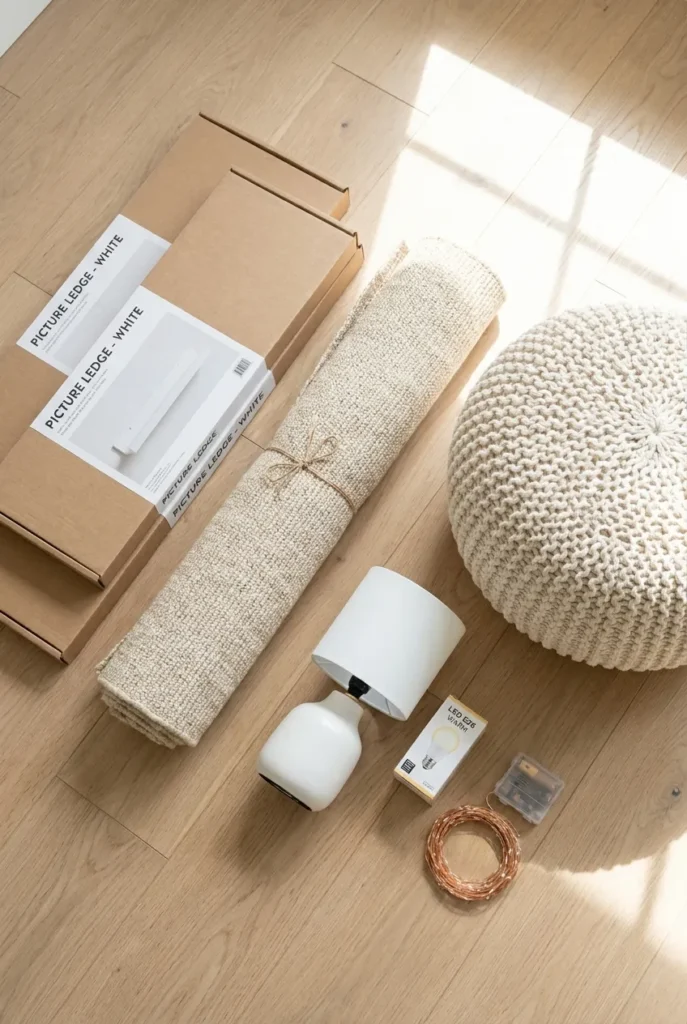
You don’t need a big budget to make this work. A believable starter build, using the archetypes above, comes together like this:
| Item | Archetype | Approx. price |
|---|---|---|
| Picture ledges (x2) | IKEA MOSSLANDA 45¼” | ~$40 |
| Floor cushion or small pouf | Kids’ floor cushion | ~$45 |
| Washable rug (3×5) | Machine-washable nursery rug | ~$50 |
| Plug-in lamp + 2700K bulb | Small table lamp | ~$30 |
| Fairy lights + damage-free hooks | Warm LED strand | ~$15 |
That lands the corner near the $180 mark before books, with real room to go lower if you shop secondhand or already own the rug.
Nursery Reading Nook Ideas for a Baby Boy or Themed Room
Want the corner to match a theme without going full cartoon? Pick one color story and repeat it three times. A “baby boy” nook leans easy in sage, navy, or warm terracotta, carried across the cushion, the throw, and one framed print above the ledge.
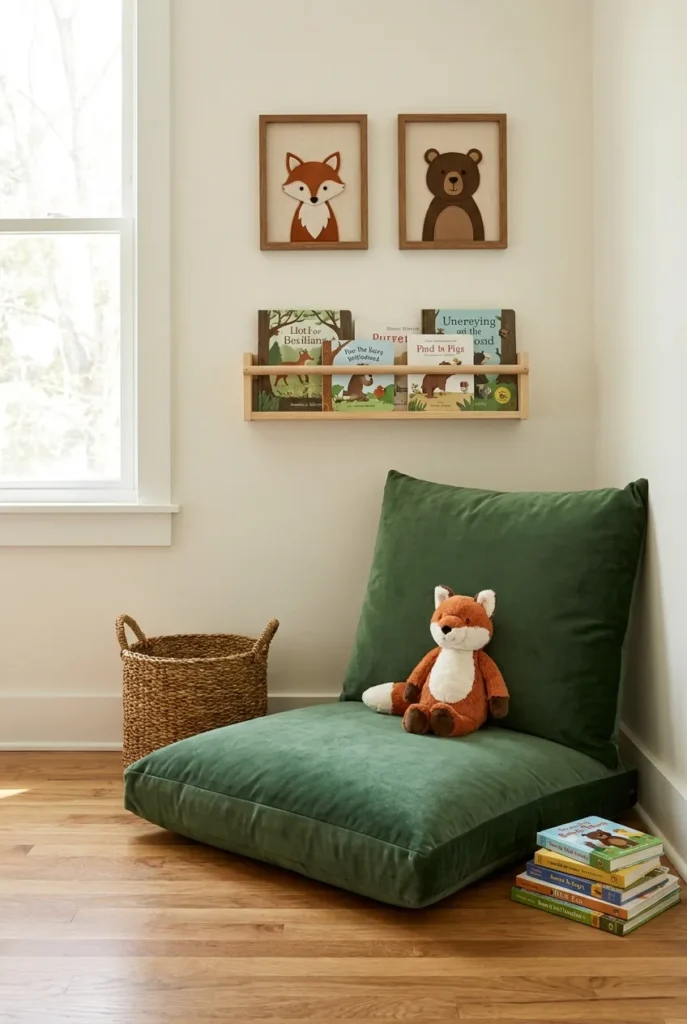
Woodland is the crowd favorite: a forest-green cushion, a couple of felt-animal prints, and books with outdoorsy covers facing out. Keep the walls calm and let the books and one soft toy bring the color, so the space grows with your kid instead of aging out in a year.
Keeping It Cozy Without Clutter
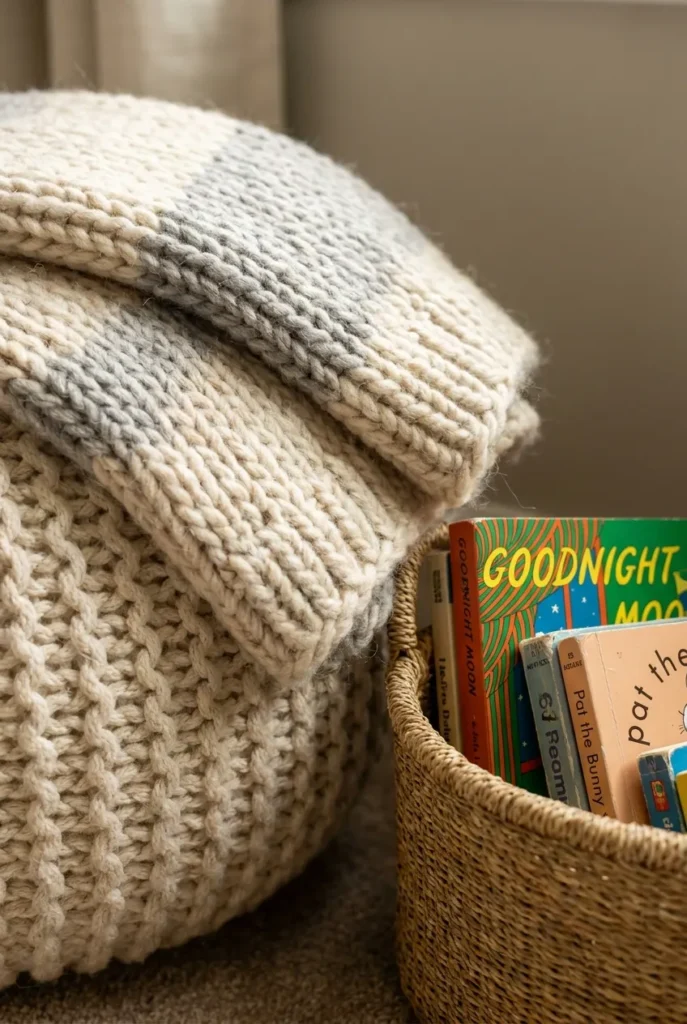
A nook stops working the second it becomes a dumping ground. Give every soft thing a home: one basket for books, one for a couple of plush toys, and a hook for the muslin throw. Sink-into comfort comes from a firm base plus one good throw, not from a pile of pillows a baby will just fling.
The sensory layer is what makes it a retreat: a soft wool-blend throw over your knees, the quiet of a corner away from the door, the warm lamp. That’s the difference between a photo prop and a spot you both actually escape to at the end of the day.
Frequently Asked Questions
What is a reading nook?
A reading nook is a small, dedicated corner set up for comfortable reading, usually a soft seat, good light, and books within reach. In a nursery it’s scaled down for a baby or toddler and their grown-up.
How do you make a children’s reading nook?
Start with three pieces: a soft floor base (rug plus cushion or small chair), a front-facing book display like a low picture ledge, and one warm 2700K light. Anchor any shelving to the wall, keep cords out of reach, and rotate a small set of board books.
What is a reading nook called?
People also call it a book nook, a book corner, or a reading corner. In a baby’s room you’ll often see “nursery book corner” used interchangeably.
What is a nook for kids?
It’s a cozy, kid-scaled hideaway spot, often a corner, tent, or under-window seat, made for reading and quiet play. The point is a defined little space that feels like their own.
How small can a nursery reading nook be?
Around 3 feet by 3 feet is plenty. A single cushion, one or two stacked picture ledges, and a lamp fit a corner that small and still get daily use.
Is a reading nook safe for a baby?
It can be, if you build for it: anchor furniture to the wall (see the CPSC Anchor It guidance), skip cords and small parts near the floor, and keep the nook in your line of sight.
Do you need to drill to set one up?
No. Freestanding cube shelves, floor cushions, a play teepee, and damage-free adhesive hooks give renters a full nook with zero holes.
Your Weekend Starting Point
Start with the three-piece base: soft floor, front-facing books, warm light. Get that in the corner this weekend, anchor anything that could tip, and add the canopy or fairy lights once the bones work. Small and safe beats perfect and someday.
Ready for the next step? Take these ideas into a full room layout with our safe toddler reading corner setups and see what your nook grows into.
Keep reading
More cozy nook ideas
 Kids
Read →
Kids
Read →
Teen Boy Reading Nook Ideas He Won’t Call Babyish
A teen boy reading nook lives or dies on one thing: it can’t look like it belongs to a nine-year-old. No rainbow…
 Kids
Read →
Kids
Read →
How to Build a Daycare Reading Corner on a Budget
Three pieces, one weekend, under 150. No drilling into your landlord’s walls, no custom millwork, no design degree. If you run a…
 Kids
Read →
Kids
Read →
Classroom Reading Corner Ideas Teachers Actually Use
If your classroom reading corner is a slumped beanbag and a wobbly bin of paperbacks nobody reshelves, this fixes it. You have…